‘Chasing Trane’
 I’m going to make no apology for returning to the subject of John Coltrane so soon after writing a short piece in recognition of the 50th anniversary of his death. A few days after posting that piece I was invited to a screening at Ronnie Scott’s Club of a new documentary called Chasing Trane. The 99-minute film gets its first UK cinema release in August, and I strongly recommend that you catch it.
John Scheinfeld, its writer and director, adopts an approach that is likely to please even the most demanding fan. Chasing Trane is neither a thorough biographical investigation nor a poetic reflection in the manner of Kasper Collin’s I Called Him Morgan but a serious-minded inquiry into the meaning and evolution of Coltrane’s art, with reference to his life.
Some of the witnesses provide striking testimony. “He had a deep feeling for higher worlds than this world,” Sonny Rollins says. Kamasi Washington on his sound: “His tone was like looking at the sun — the brightest light you could hear.” Carlos Santana tries to evoke how it felt to hear that sound for the first time: “It was… a vortex of possibilities.” Wynton Marsalis on the impact of the great quartet: “People who heard them, their lives were transformed.” As we watch film of that group, we can only agree with McCoy Tyner, its pianist, who gives a brief but indelible summary of what made it special: “We were committed.”
The critic Ben Ratliff makes an important point about innovation when he talks about Coltrane’s relentless and often controversial stylistic development: “He’s pushing forward… such that he may not even know what he’s pushing forward to.” We’re watching a piece of film from the final Newport Jazz Festival appearance in 1966, and listening to the emotionally unfettered music of the last quintet, when Oran Coltrane, one of his sons (and one of the four children and stepchildren heard from in the film), adds: “Would you want him to tiptoe to where he’s trying to get to?”
Jimmy Heath, Benny Golson, Wayne Shorter and Sonny Rollins, Coltrane’s contemporaries and peers, talk movingly about their long friendships with him. We hear from John Densmore of the Doors and Bill Clinton, formerly of the White House. Coltrane’s own statements, from interviews and sleeve notes, are spoken by Denzel Washington. But some of the most powerful words come from the rapper Common, summing up the complex emotions expressed with such harrowing but elevating directness in “Alabama”, Coltrane’s threnody for the schoolgirls murdered in the Birmingham church bombing in 1963: “The pain that we went through but the hope that we have.”
The “Alabama” sequence is a good example of how, while making effective use of interviews, Scheinfeld remembers to allow the music to speak for itself from time to time. At this stage, I don’t suppose that all those sceptical of the stylistic evolution of his last two or three years (basically from Ascension on) will be converted, but they will not be left unmoved by the sound of the hymn-like “Peace on Earth” over the film’s penultimate sequence, dealing with the group’s visit to Japan in 1966, when 16 concerts in 17 days included a visit to Nagasaki, where Coltrane meditated at the shrine marking the site of the nuclear explosion 21 years earlier.
Japanese listeners seemed to have little problem with that late style, and the saxophonist’s many obsessive fans are represented in the film by Yasuhiro Fujioka, the self-described “world’s number one collector of John Coltrane memorabilia”. Fujioka fell in love with the music as a schoolboy and his hoard became so vast that he had to build a house in Osaka to contain it.
Coltrane’s life was such a big one, and its impact so extensive, that no 99-minute portrait could hope to encompass all its dimensions, never mind subject them to deep analysis. But while skating over the surface of several important aspects of the story, Scheinfeld makes so many good decisions that whatever your level of commitment to this music might be, his film is essential viewing.
* Chasing Trane is to be screened at the ICA Cinema in London from August 11-17.
 One of the things I love about Haruki Murakami’s fiction is the way he uses music to enrich the narrative: all kinds of music, from Haydn to the Beach Boys via Brenda Lee and Sly Stone. But jazz is his main thing, and my favourite example is probably the appearance in South of the Border, West of the Sun of Duke Ellington’s “The Star Crossed Lovers”, the gorgeous saxophone duet for Johnny Hodges’ alto and Paul Gonsalves’ tenor from Such Sweet Thunder, Duke’s 1957 suite on Shakespearean themes.
 What’s so funny about peace, love and understanding? The fiftieth anniversary of the Summer of Love might be a good time to reconsider Nick Lowe’s rhetorical demand. In these harshly polarised times, we might look back with wonder on a brief era when a young generation commanded the world’s headlines with a philosophy that was essentially generous, outward-looking and benevolent.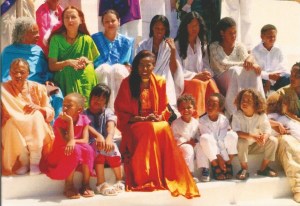
 Last summer I was blown away by
 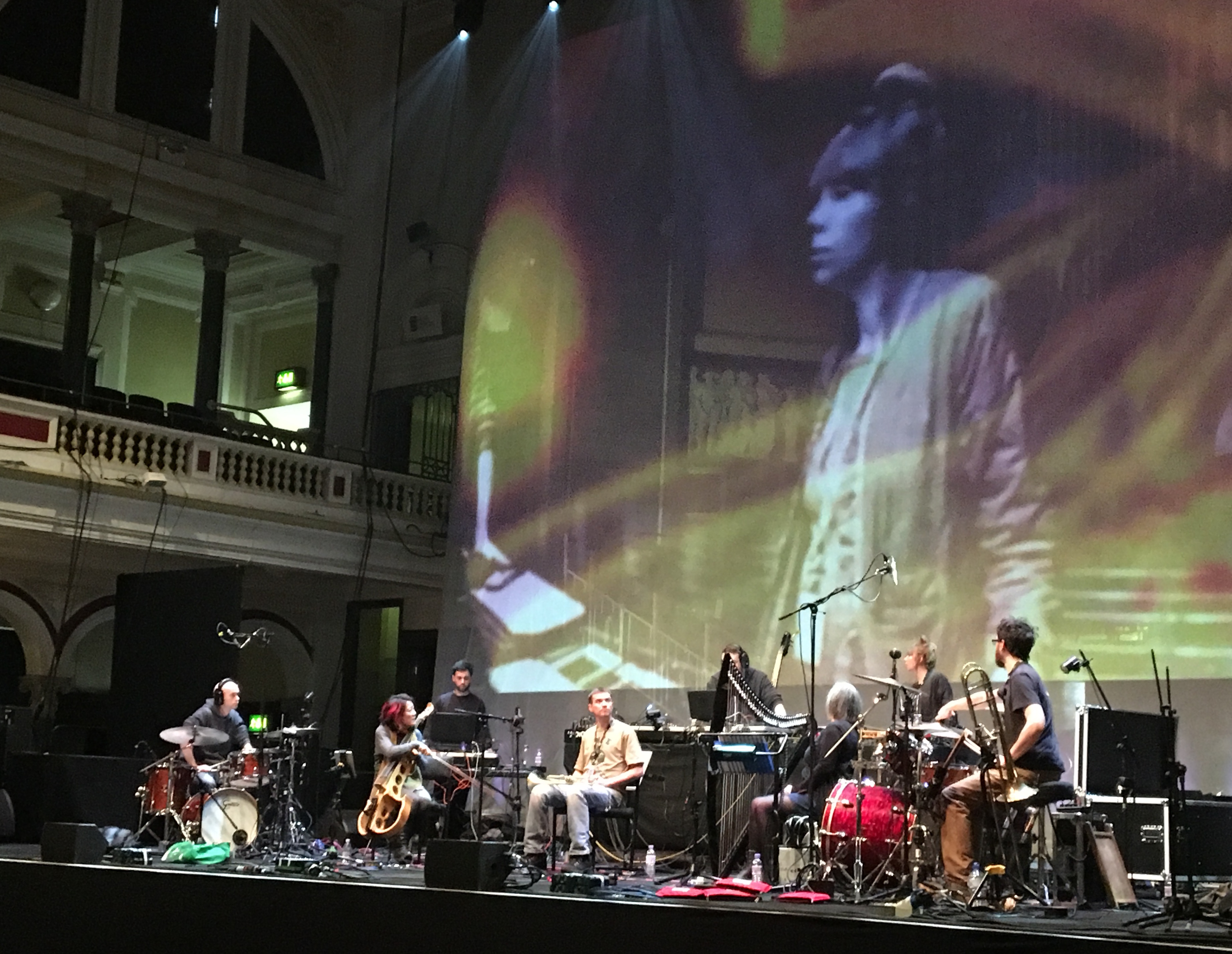 It was with regret that I had to leave Hull after only 24 hours of Mind on the Run, the weekend festival celebrating the life and work of Basil Kirchin, the visionary composer who spent three decades in the city, working in complete obscurity until his death in 2005, aged 77.
 With three hours to go until the inauguration of Donald J. Trump as the 45th president of the United States, the coffee shop I frequent was playing the Staple Singers’ “Respect Yourself”. That’s a record with a lot of American history in it, one way and another: a message delivered by a mixed group of black and white singers and musicians, showing how music can provide encouragement, comfort and even guidance.
 In the final moments of Eat That Question, a documentary in which the director Thorsten Schütte creates a chronological collage of interviews and performance clips from throughout Frank Zappa’s career, we see Zappa with a baton in hand, conducting a piece of his orchestral music. We’re in the early ’90s and, after several years of treatment for prostate cancer, he is close to death. As he waves the stick in a staccato 4/4 pattern, several percussionists play a fascinating jigsaw tattoo. Hearing his score come to life, the composer is clearly entranced. It’s a lovely and touching moment.
 An all-instrumental album from Paolo Conte: that would be like an episode of The Sopranos without Tony, right? Well, not exactly. He doesn’t sing on Amazing Grace (although he does mutter the word “Tips” at the beginning and end of the short track of that name), but in its way this is still an album of full-strength Conte, offering perspectives that don’t normally get exposed.

