Skip to content

Posts from the ‘Uncategorized’ Category

The People’s Palace

roundhouse-1The last few things I’ve seen at the Roundhouse —  Willie Colón on his farewell tour, Bob Dylan on good form, a wonderful performance on authentic instruments of Monteverdi’s L’Orfeo, the reformed Television, and John Cale — seem pretty typical of the musical variety the circular brick building at Chalk Farm has been offering London since Arnold Wesker had the idea of repurposing the old engine shed as a centre for the arts in 1966. Earlier first-hand memories of the place include Nico’s first London concert, the Art Ensemble of Chicago, the Ramones, a Company week featuring Derek Bailey with assorted friends, Gil Evans’s British band, and a Fairport Convention night with Fotheringay and Matthews’ Southern Comfort.

Tomorrow night an excellent BBC4 Arena documentary titled The Roundhouse: The People’s Palace tells the building’s story, starting in 1847, when it began 10 years of service to the railway before being sold to Gilbey’s for use as a gin warehouse, a function it maintained for 100 years. Anthony Wall, the programme’s director, assembles some marvellous archive film, both performance and interview, including footage of the Dialectics of Liberation conference in 1967, with a platform featuring Stokely Carmichael, Allen Ginsberg, Emmett Grogan and a sinister-looking R. D. Laing. Others who flash past through the years include Gyorgy Ligeti, James Brown, Peter Brook and the Clash.

The Roundhouse has struggled to survive at various times during its half-century as a home for arts, but the purchase of the building by the toy manufacturer Sir Torquil Norman began a process that led to the reopening in 2006 and seems to have guaranteed it a future. The film’s climax comes with Vanessa Kisuule reading “Identity Jenga”, the stirring poem with which she won first prize at the Roundhouse’s Poetry Slam competition in 2014. Its impact ensures that the programme does not fade away into nostalgia but properly reflects the role the building plays in the cultural life of contemporary London.

Katie Melua in Fitzrovia

katie-melua-3To be perfectly frank, I didn’t know much about the life and work of Katie Melua before I was invited to a small showcase concert of the music from her new album, In Winter, in which she is accompanied by the 23-strong Gori Women’s Choir from Georgia, the country in which — as I quickly discovered — she was born 32 years ago. I knew even less about the Fitzroy Chapel, formerly part of the Middlesex Hospital, which was demolished a few years ago to make way for — you guessed it — luxury apartments, with the Grade II*-listed chapel at the core of the new complex.

A small red-brick building, erected in 1891, it was never consecrated but was where the hospital’s patients and staff went when they needed a quiet moment. It is also where the body of Rudyard Kipling lay in state in 1936 before his burial in Westminster Abbey. The interior glows with gold mosaic and stained glass, very Eastern Orthodox in style, and thus perfectly appropriate to Georgian voices.

So I suppose it was the combination of the choir and the chapel, rather than Melua herself, that persuaded me to make my way to the showcase on a busy Thursday evening. But I was pleasantly surprised. Melua lived in Georgia until the age of eight, and at the end of last year she returned to spend time in Gori, working with the singers and building a temporary recording facility in a  cultural centre. According to an interview with the Independent‘s David Lister, she came across the choir on Spotify and was “mesmerised by their tone and sonic richness”.

Last night’s five-song programme began, like the album, with “The Little Swallow”, a traditional New Year’s carol from Ukraine, sung a cappella. Arranged by Bob Chilcott and conducted by Teona Tsiramua, the choir then added a glowing penumbra to Melua’s own songs, on which her finger-picked acoustic guitar was discreetly supported by the keyboards of Mark Edwards and the double bass of Tim Harries. “Dreams on Fire” is the new single, with Don Black’s lyric set to Melua’s melody. The pick of them, however, was the striking “Plane Song”, inspired by Melua’s own memories of playing on an abandoned airfield among the hulks of planes damaged during wartime.

The album also has a version of “River”, Joni Mitchell’s deeply ambivalent Christmas song, a Romanian carol sung in the original language with an intriguing minor-mode melody, and an interesting arrangement of extracts from Rachmaninoff’s liturgy commissioned in 1915 by the Russian Orthodox Church. “Personally, I don’t have very strong religious views,” Melua writes in her sleeve notes, “but I am grateful that an organisation filled with stories, real or mythical, helped to bring such a work into the world” — which seems like a pretty sane attitude.

On the surface, there’s nothing about In Winter to frighten Radio 2 listeners. But while the combination of Melua and the Gori choir doesn’t project the sophistication of Jan Garbarek with the Hilliard Singers or the raw emotional impact of Les Voix Bulgares, for a Brit School graduate whose huge early success came under the guidance of Mike Batt it represents an interesting and brave direction — and one that, if she ever feels like heightening the challenge by leading her audience further into Georgian polyphonic choral singing, could be even more rewarding.

‘Eight Days a Week’

beatles-eight-daysTowards the end of Eight Days a Week, Ron Howard’s Beatles new documentary, all reason and proportion briefly fled and I was overpowered by a sense of rage. Those bloody Americans: it was all their fault. With their idiotic 50,000-seater stadiums and their imbecilic urge to misconstrue a perfectly innocent remark about Christianity in a John Lennon interview, they ruined the whole thing.

Not entirely true, of course. The dream was always going to end sometime. But you can see very clearly, in a film that purports to concentrate on the group’s touring years, how the pressure exerted by their immoderate success in the US in particular drove them to fall out of love with what life on the road had come to represent, once the novelty faded. After 1963 they were never able to perform live in an environment that allowed them to show how good they were. All four of them felt that frustration. The Plastic Ono Band, Wings and George’s stint with Delaney and Bonnie were among the consequences.

It’s interesting to speculate what might have happened had America not taken to them. Beatlemania in the UK and Europe would have died down a little, perhaps enough to allow them to continue touring together in more helpful conditions. Would they have been able to spend so much time in the studio, concocting Sgt Pepper and the White Album? Probably so; that’s the way they were heading anyway.

There are many cherishable moments in the film, not least a version of “I Saw Her Standing There” that shows what a blazing little band they were. The picture above, which I’ve grabbed from the trailer, is from that sequence; it captures the feeling. And the final sequence of “Don’t Let Me Down” and “I Got a Feeling” from the concert on the roof of No 3, Savile Row on January 30, 1969 — the first time they’d played live together in public not wearing a band uniform since Brian Epstein became their manager, as well as being the last time they played live together in public at all — is, as ever, deeply sad for the same reason. Imagine if they’d had the sort of rock-concert facilities they lay just around the corner.

As for the film itself, it’s a shame Ron Howard hasn’t learnt the lesson of the great documentary director Asif Kapadia’s work on Senna and Amy: at all costs, avoid showing talking heads on the screen. They slow it down and clutter it up. Elvis Costello and Whoopi Goldberg (particularly) are among those who have genuine insights to impart, but we don’t need to see them when there’s such a richness of archive footage available. But, of course, Eight Days a Week is not to be missed.

‘In C’ at the Barbican

terry-riley-at-80One of the great qualities of Terry Riley’s In C, a foundational work of modern music, is that it can be played by any number of people using any kind of instruments for as long as they choose to make its sequence of 53 motifs last. Since the appearance of the original album in 1968 it has been recorded by a wide variety of ensembles, including the Shanghai Film Orchestra, Acid Mothers Temple, the Salt Lake Electric Ensemble, Adrian Utley’s Guitar Orchestra, and Africa Express with Damon Albarn and Brian Eno. The original album version lasted 42 minutes, but it can be made to go on much longer. (I haven’t heard of an attempt to compress it into the length of a 45rpm single, but I’ll bet someone’s had a go.)

The fact of its remarkable flexibility, however, does not mean that every performance is guaranteed to be successful. Last night the composer himself, looking wonderfully spry for his 81 years, took his place at a prepared piano amid the London Contemporary Orchestra on stage in the Barbican Hall. Just over 70 minutes later the final chord was greeted with an ovation from a full house. I left feeling flat and disappointed.

In its best performances, In C seems to float not just on its famous eighth-note ostinato (suggested to Riley by Steve Reich, and originally the top two Cs of the piano keyboard) but on the moiré patterns created by the combination of instruments, which could be the  brass, reeds and tuned percussion of the original ensemble or the kora, balafon, melodica and calabash of Africa Express. It’s a magical thing — but not an inevitable product of the score.

Last night’s ensemble of 20 musicians, under the direction of Robert Ames, featured bassoon, clarinet, alto saxophone, flute, two guitars (one of them played by Riley’s son, Gyan), flute, violin, viola, cello, viola da gamba, double bass, chamber organ, celeste, and three singers, with a drummer and two percussionists who reproduced the ostinato in a variety of ways, using various implements. This was not far off the 1968 line-up, in which a group of 11 musicians augmented themselves via overdubbing: 10 instruments at the first pass, seven at the second, giving a maximum aggregate of three trumpets, three saxophones, three trombones, three flutes, three oboes, three violas, three vibraphones, two marimbas, two bassoons, two clarinets and piano, a total of 28.

Sheer weight of numbers, then, could not have been the reason I found the Barbican performance so earthbound. For all the panoply of resources, the only element of variety in use seemed to be that of volume. There were soft passages and louder passages, but the rest of it sounded curiously like a big band riffing rather than an ensemble layering and juxtaposing the short motifs provided by the composer. It was all rather prosaic and — despite the composer’s active, if discreet, presence and the ensemble’s evident enthusiasm — hardly true to the spirit of the piece. There was also a rather imprecise attempt at a bravura ending, signalled by the director, which seemed completely inappropriate.

The first half of the evening had consisted of duets by the Rileys, father and son, mostly for piano and electric guitar, although Terry also sang in a deceptively artless voice and played a plaintive-sounding melodica while the nimble-fingered, quick-witted Gyan switched briefly from his Telecaster to an acoustic instrument. Beginning with a loose-limbed piece based on a raga, the set included a song with a strange fantastical lyric which ended with a line about rolling a joint, and which the elder Riley described, to appreciative laughter, as “the national anthem of California”. Cutting through the hippieish mood from time to time were lightning-fast unisons and slashing chordal passages.

At the time Riley conceived In C, in 1964, he was working as a ragtime pianist in the Gold Street Saloon, a waterfront bar in San Francisco, and in his solo passages last night there were frequent echoes and occasional direct hints of blues, stride, boogie-woogie and other vernacular forms. One piece swayed to an elegant habanera rhythm, and contained some lovely filigreed piano/guitar interplay that exposed the substance beneath the charming surface.

The album titled Live that they released a few years ago on Riley’s own Sri Moonshine Music label, featuring duets recorded between 2004 and 2010 in Drogheda, Nantes, Berkeley and Petaluma, is highly recommended. Those interested in looking further into Riley’s vocal music are directed to Atlantis Nath (2002), another self-distributed album, full of fascinating chants and songs with accompaniments including electronics and a string quartet.

* Photo credit: Jean-Pierre Duplan / Light Motiv

Nico: the last journey
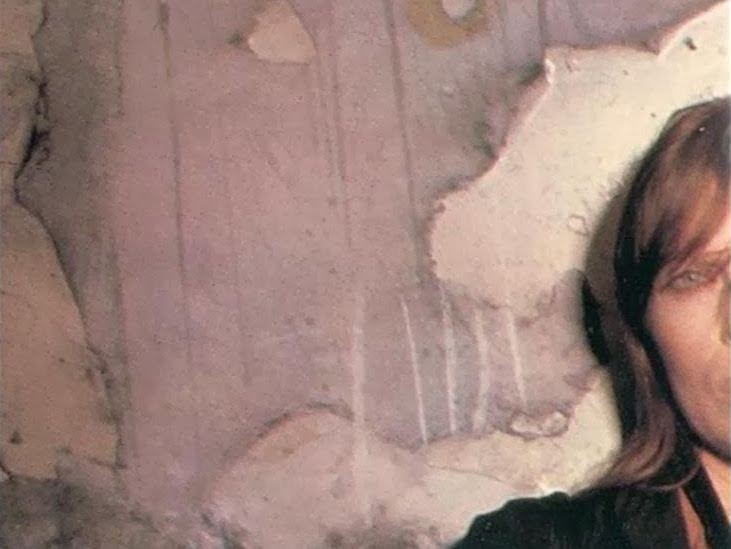
nico-2Nico died in Ibiza, a place she had loved for many years, one hot July day in 1988. Leaving the rented farmhouse where she was staying with her son, Ari, she headed into town, apparently intending to buy some hashish. At some point in the journey she fell from her bicycle and suffered a head injury. It was not until the following day that Ari called the police, gave them a description, and received the news that she had died in hospital.

Stephan Crasneanscki of Soundwalk Collective is not the only one to have found himself trying to visualise that last journey. With a new album called Killer Road, he and his partners in the band, Simone Merli and Kamran Sadegh, together with the composer Jesse Paris Smith, present a cycle of pieces based on Nico’s songs and poetry in which they attempt to evoke the thoughts and sounds that might have been going through her mind as she pedalled through the heat and the noise of crickets. The words are read by Jesse’s mother, Patti Smith.

There is a historical connection. Patti once rescued Nico’s harmonium from a pawn shop and gave it back to her. She is, however, not an idolator. “It influenced us all, to have such a bold delivery of bold songs by a female singer in that period, the early ’60s,” she writes in the sleeve notes, but explains that she doesn’t “identify” with Nico beyond the admiration of someone who worked to find a way of delivering her poetry through the medium of music. Nevertheless her commitment to the project leads her to deliver the words in a way that reflects Nico’s own manner: “half-singing — like a child singing to themselves,” as she puts it. Her mission, she says, was “to just, somehow, represent a small part of her, even though we have different voice tones and no obvious similarities.”

In the event, it would be hard to imagine a more effective interpreter for this project. Smith’s performing experience allows her to imbue the lyrics of “Evening of Light”, “Secret Side”, “My Only Child” and others with quiet drama, using a mostly whispered delivery (exception: “Fearfully in Danger”, which she sings in a raw New Jersey voice). The approach works perfectly against the brooding, shifting electronic soundscapes created by her collaborators, which often summon (without trying to replicate) the effect of the harmonium, Nico’s signature instrumental sound. The original melodies are entirely eliminated. When Smith recites the lyric to “Saeta” against the tinkling of distant prayer-bells and hovering synthesiser sounds, the tune is nowhere to be heard; yet for those who know the song, Nico’s loveliest, it is inescapably present.

This is a album of ghost music: an attempt to pay tribute by creating something as strange, original, atmospheric and appropriate to the material as the arrangements through which John Cale moulded the great trilogy of The Marble Index, Desertshore and The End into something without precedent. The result is subtle, respectful, and wholly successful.

* Killer Road is released on the Bella Union label. The photograph of Nico is from the cover of the 1981 album Drama of Exile and was taken by Antoine Giacomoni.

Philip Clemo at Kings Place

philip-clemoPhilip Clemo did well to attract Arve Henriksen not only to play on his sixth album but to participate as a member of the octet that launched Dream Maps in Kings Cross last night. The Scottish-born guitarist and composer’s work was greatly enhanced by the contribution of the Norwegian trumpeter and singer, who proved himself an excellent team player as Clemo’s soundscapes unfolded beneath a screen on which film of tundras, mountains and oceans gave an indication of the music’s subtexts.
The cellist Emily Burridge, Sarah Homer on clarinets and soprano saxophone, Steven Hill on guitar, Martyn Barker on drums, Simon Edwards on  bass guitar and the singer Evi Vine were the other members of the octet, which concentrated mostly on pieces from the new album. Gently insistent grooves, to which the combined texture of cello and bass clarinet added an interesting flavour, alternated with jangly folk-like structures in which the guitars came to the fore. Henriksen’s improvisations on regular and pocket trumpet were the highlights, but he also joined Vine and Clemo in vocal passages which made use of distortion, both natural and electronic.

Artfully mixed together with recordings of heartbeats and water by the sound engineer Phill Brown, the music washed gently but insistently over the clearly beguiled near-capacity crowd in Kings Place’s Hall 2. A term like “ambient trance” might have been evoked, but there was substance, too. The occasional rough edge betrayed the fact that this was Clemo’s first live gig in 10 years; its success should encourage him. And Dream Maps — on which Henry Lowther, B. J. Cole, John Edwards and others also make appearances — is well worth investigating by anyone who enjoys the territory explored by the likes of Jon Hassell (with and without Brian Eno), Jakob Bro and Henriksen in his various other guises.

Trygve Seim’s ‘Rumi Songs’


OLYMPUS DIGITAL CAMERA

With the arrival of the long-playing record almost 70 years ago, the art of shaping an improvised solo took a serious hit. All those perfectly proportioned solos of eight or 12 bars turned into 10-minute soliloquies, for good and ill. It’s not a lost art — enough of today’s players have listened to Wayne Shorter to understand the powerful effect of concision — but one of the reasons I’m so fond of the playing of the Norwegian saxophonist and composer Trygve Seim is that he seems to have an inbuilt self-editing mechanism which makes his improvisations all the more powerful and memorable.

Born in Oslo 45 years ago, Seim released an album called Different Rivers in 2000, featuring a variety of line-ups, from two to nine musicians, including the trumpeter Arve Henriksen and the drummer Per Oddvar Johansen. This was patient, luminous, ego-free music, finding a perfect balance between composition and improvisation; it sounded to me then like a modern classic, and it still does.

Since then I’ve looked out for his name on records (usually, like Different Rivers, on ECM) and have seldom been disappointed. I’ve seen him live twice, with Manu Katché’s quintet in Paris a few years ago and with the Oslo Festival Jazz Orchestra (also a quintet!) at Ronnie Scott’s last year, and his playing had even more presence in person than on record. Now there seems to be a flood of Seim: he’s on four new albums from ECM, three of them — Sinikka Langeland’s The Magical Forest, Mats Eilertsen’s Rubicon and Iro Haarla’s Ante Lucem — as a sideman.

Ante Lucem is a majestic piece of writing for symphony orchestra and jazz quintet, a fully realised piece in the spirit of the old Third Stream: not so much a blend of jazz and classical practices as a juxtaposition, but a successful one. In my view it also achieves Haarla’s aim of spiritual transcendence. Rubicon is a sequence of well organised pieces for septet, with Olavi Louhivuori from the excellent Finnish band Oddarrang on drums and Eirik Hegdal playing saxophones and clarinets alongside Seim in a two-man front line. The Magical Forest features delicate and often beguiling settings of Langeland’s songs, in some of which she is joined by the three female singers of Trio Mediaeval.

The fourth and last album is Seim’s own Rumi Songs, in which he arranges nine poems by the 13th century Sufi poet for the pure voice of Tora Augestad, the accordion of Frode Haltli and the cello of Svante Henryson. His use of the modern translations by the American poet Coleman Barks will please those who love Barks’s The Essential Rumi, a hugely successful anthology, although I prefer the more traditional renderings of R.A. Nicholson and the more recent and less decorative ones of Nader Khalili.

This is a chamber recital, in which jazz makes its guiding spirit apparent only in the sonorities of Seim’s soprano and tenor saxophones and in the flexibility of the interplay. A tenth track, “Whirling Rhythms”, is an instrumental piece that captures, in less than three minutes, the non-verbal essence of  the project, as well as demonstrating the rewards of Seim’s trips to Egypt and the poet’s birthplace in Anatolia.

It would be a mistake to assume that Rumi’s verses are not suited to the Nordic atmosphere in which these fine musicians operate. If you’re in the right mood, the track called “There Is Some Kiss We Want”, with which the album closes (and which is featured in a little promo clip), might be one of the loveliest things you’ll hear this year.

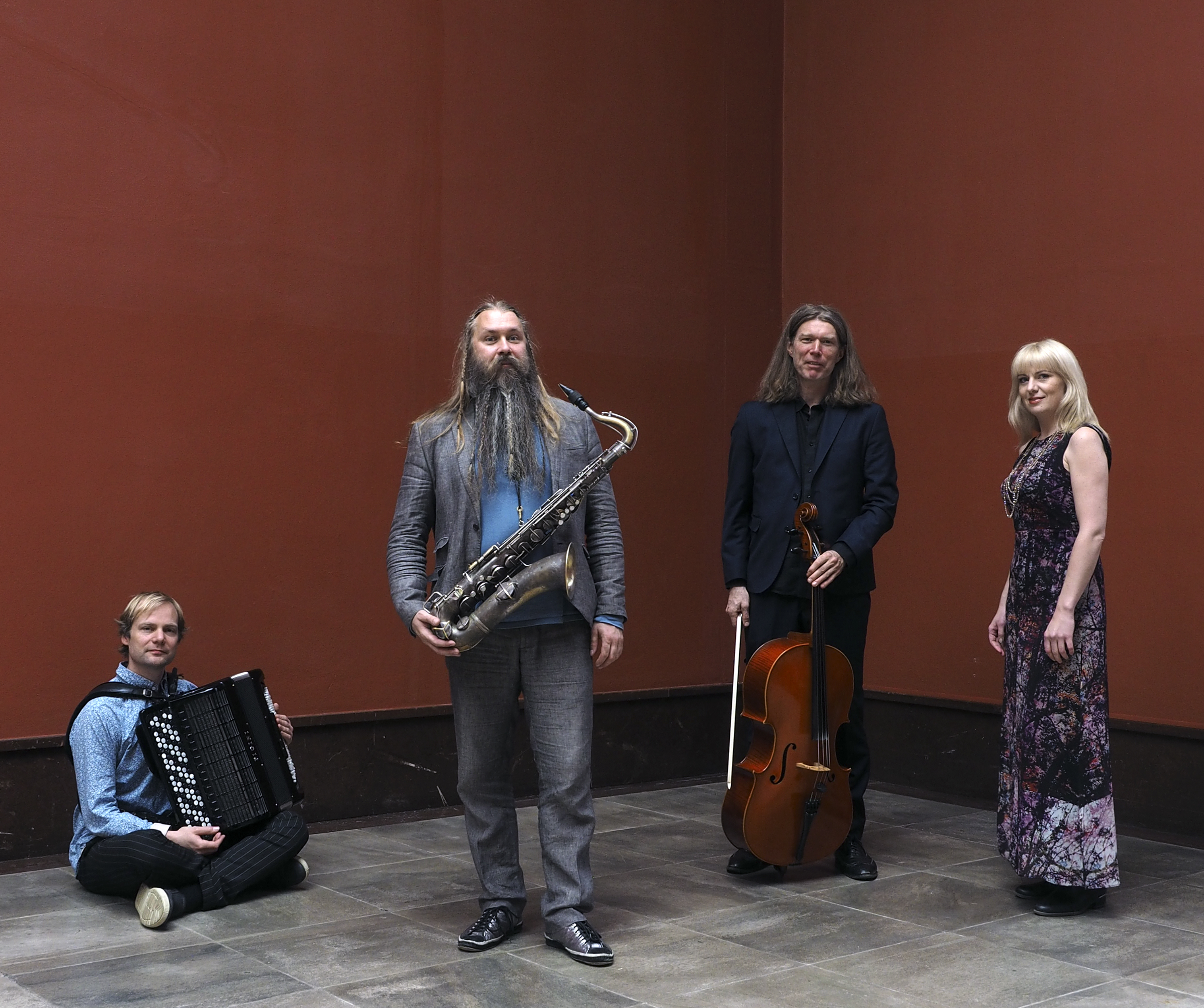
* The photograph above, by Knut Bry, shows the Rumi Songs band: (from left) Frode Haltli, Trygve Seim, Svante Henryson and Tora Augestad.

Drones for peace

Catherine Christer Hennix 2Catherine Christer Hennix studied with La Monte Young and Pandit Pran Nath, which explains her interest in drones. Her music rejects the 12-step octave in favour of what we westerners would call microtonality. Her new album, Live at ISSUE Project Room, released under the name of the ensemble she calls Chora(s)san Time-Court Mirage, is the most emotionally exhilarating and cathartic long-form piece of music I’ve heard in ages.
Born in Stockholm in 1948 of Swedish and American parents, CCH studied contemporary western classical before meeting Young and Pandit Pran Nath in 1970 at the Foundation Maeght gallery in St Paul-de-Vence, during the famous music festival in which Albert Ayler also took part. That encounter changed her approach, which was also affected by studies of the medieval music of Japan (gagaku) and Europe.

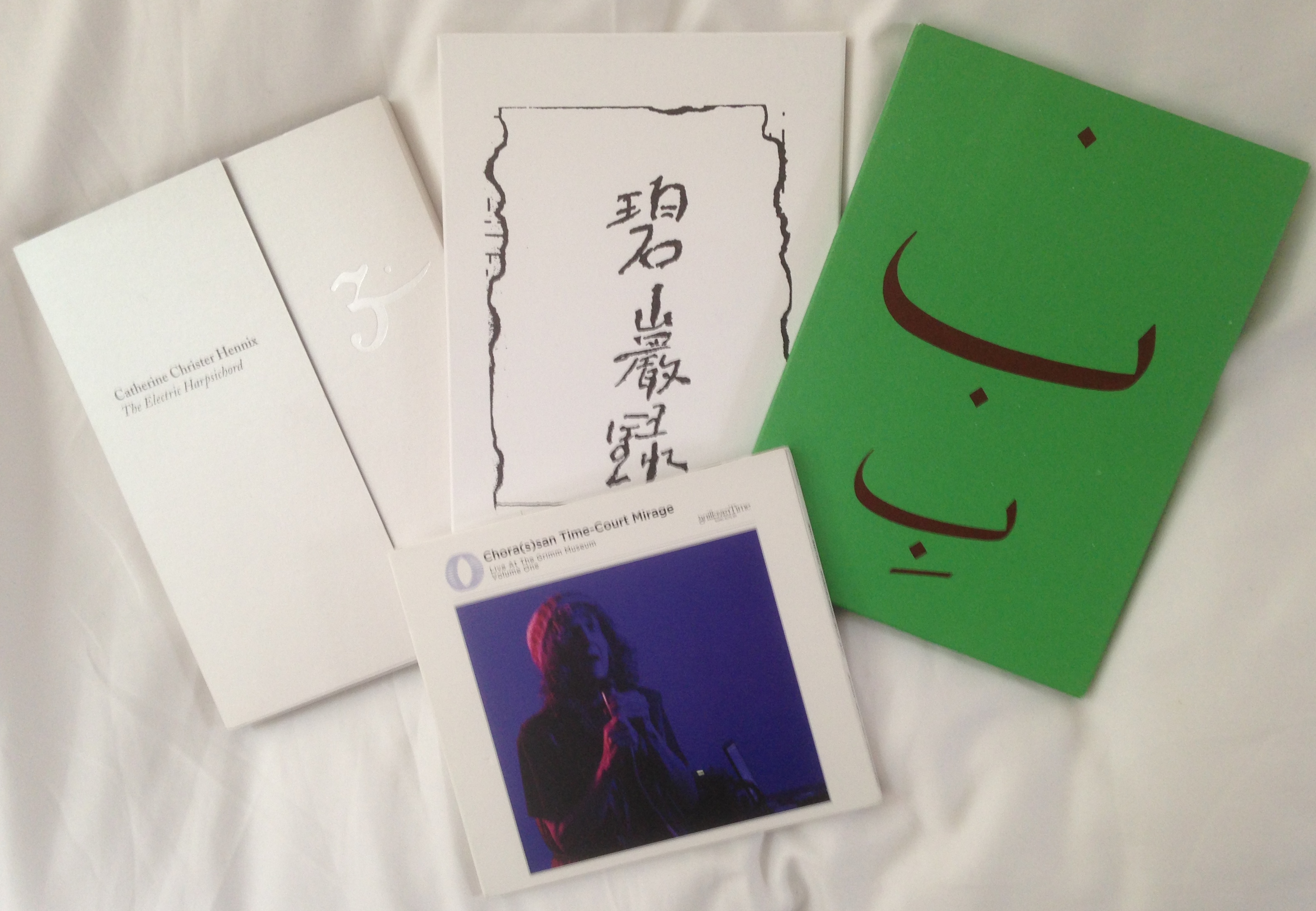
Her most famous work is probably The Electric Harpsichord, a 25-minute piece recorded at a festival of modern music in Stockholm in 1976, on which she is the only performer, playing a keyboard and a sine wave generator. Static but enveloping, it sounds like Nico’s harmonium processed through a machine introducing the sonorities of bells, gongs and finger cymbals, with a gentle undertow of cello-like sounds. It was reissued by Die Schachtel in 2010, in a special edition including several haiku-like poems by Young and an essay by CCH’s friend Henry Flynt (the dedicatee, back in the mid-’60s, of Young’s composition X for Henry Flynt, which John Cale seized upon during his time at Goldsmiths College).

The other albums of which I’m aware are Central Palace Music From 100 Subjects for H, in which Hennix meets Peter Hennix (renaissance oboe) and Hans Isgren (sheng), and Chora(s)san Time Court Mirage’s Live at the Grimm Museum Vol 1, recorded by a five-piece ensemble in Berlin in 2011. Both are released on the Important label, the latter in collaboration with the Dutch festival Sonic Acts.

Live at ISSUE Project Room, also on Important, is a different kettle of fish altogether, a much more extensive exploration of resources. The musicians involved at this Brooklyn concert in 2014 were Hennix, Imam Ahmet Musin Tüzer and Amirtha Kidambi (voices), Amir Elsaffar and Paul Schwingenschlögl (trumpets), Hilary Jeffrey (trombone), Elene Kakaliagou (French horn), Robin Hayward (microtonal tuba) and Stefan Tiedje and Marcus Pal (computers and live electronics).

The single 80-minute piece, which is titled “Blues Alif Lam Mim in the Mode of Rag Infinity / Rag Cosmosis”, begins conventionally enough with tambura-like drones (presumably produced by electronic means) setting the scene for the introduction of elegant vocal ululations. Thereafter the music evolves in long, slow waves, its textures gradually thickening and then being pared away, the brass chorale and electronics coming and going beneath the voices: sometimes delicate and reticent, sometimes reaching a mindquaking intensity. This is a different kind of wall of sound, one on which an ever-changing variety of colours and images can be projected.

The listener might be occasionally made aware of the use of an unfamiliar tonality, but it is never remotely disconcerting. I have no idea of the belief system from which this music originates, but I do know that it stirs and nourishes something in my spirit. In its richness, in its patience, in its emotional generosity, a piece which seems to come from another world ends up feeling like the most natural sound imaginable.

The Sokratic method

Sokratis Sinopoulos's lyraGenerally speaking, the chances of one of the gigs of the year taking place as part of an academic seminar titled “Sounds of the Hellenic World, Ancient & Modern” would probably be pretty slim. But that’s what happened yesterday evening at King’s College London, when the Greek lyra virtuoso Sokratis Sinopoulos brought his quartet — completed by Yann Keerim (piano), Dimitris Tsekouras (double bass) and Dimitris Emanouil (drums) — to make their UK debut in the Great Hall in front of an audience whose members had spent the day discussing Homer, Xenakis, Keats and Satie’s Socrate.

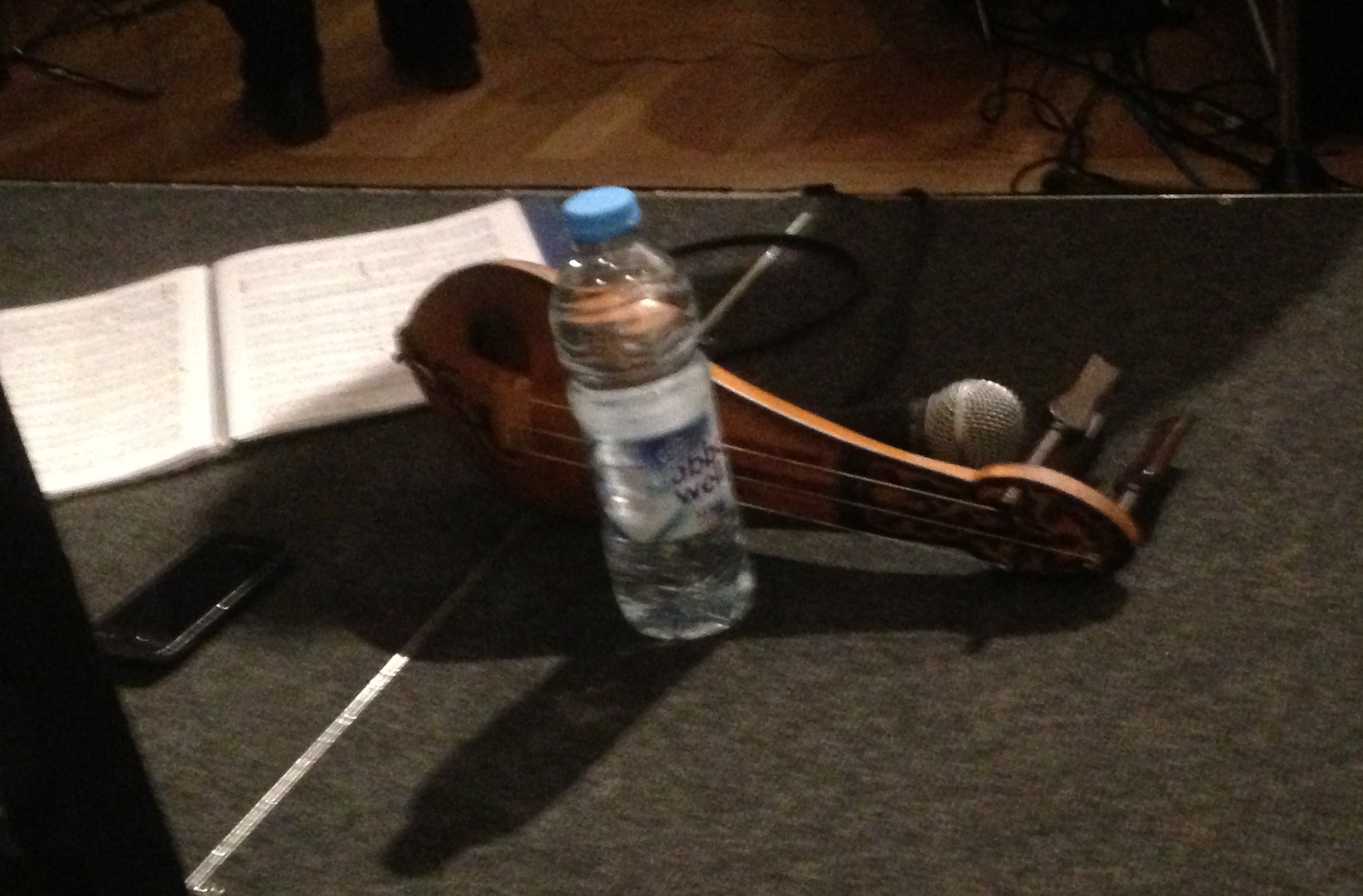
The traditional lyra is a tiny instrument that stirs big emotions. It has three strings, tuned by large wooden pegs, and its pear-shaped body contains its fingerboard. Today’s performers usually tune the strings a fifth apart and play it with a violin bow. Sinopoulos tunes his strings to a fifth and a fourth. (See footnote)

I first heard him as a member of the Charles Lloyd group that performed Wild Man Dance at the Barbican in 2014 and then in Berlin last November (a recording of the piece’s premiere, at the Jazztopad festival in Warsaw in 2013, was released by Blue Note). The lyra added a wonderful extra colour to the band (as did the cembalom of Lukács Miklós), and Sinopoulos’s solos were impressive. So I jumped the opportunity to attend last night’s concert.

The quartet’s first album, Eight Winds, was released by ECM last year, and they played several pieces from it, together with a couple of new ones. The live performance added an extra dimension of immediacy to compositions that had already made a strong impression on record, ranging from keening laments through elegant romantic melodies to exuberant dances.

But it was the sound of the lyra that filled the listeners’ hearts. Played straight, it more or less resembles a violin. Its available range of timbre and texture, however, is very different. Sometimes, when Sinopoulos bows near the bridge, the parched tone makes the instrument sound as though it’s been sitting on a windowsill under a burning Greek sun for a thousand years, left to gather dust and memories.

* In the original version of this post, I described Sinopoulos’s instrument as a Cretan lyra, and said that he followed the modern practice of tuning in fifths. A couple of readers challenged the description, so I checked with Sokratis himself. There are several variants of the lyra, he pointed out. His the very similar  Constantinople lyra — but he adds: “I prefer to name my instrument just ‘lyra’, which for most Greeks connects directly to the Cretan lyra, which is the most popular of all.”

Bernie Worrell 1944-2016

I saw Bernie Worrell twice, and both occasions were memorable. The first time was with Talking Heads at Hammersmith Palais in 1980: after starting the set as the basic four-piece with “Psycho Killer”, they added musicians at regular intervals until they’d become (I think) a 10-piece and were whomping out a kind of supercharged avant-funk. The second was at the Knitting Factory in NYC sometime in the mid-’90s, soon after the club had moved to Tribeca, with Third Rail, a band featuring Bill Laswell on bass guitar, James Blood Ulmer on guitar, Worrell and Amina Claudine Myers on keyboards, and — on this night, as I recall — Ronald Shannon Jackson on drums.

Like everyone, however, I’ve listened to Worrell on countless records. And the one that always sticks out is Parliament’s “Chocolate City”, which he co-wrote in 1975 with George Clinton and Bootsy Collins, and to which he contributes absolutely superlative gospel-funk piano. It’s among the most powerful records of its era, not just musically — taking that fractured funk pioneered by Sly Stone to a new level — but in its message, both tough and witty, about the potential upside of “white flight” from the cities (specifically Washington DC) to the vanilla suburbs:

“And when they come to march on ya, tell ’em to make sure they got their James Brown pass / And don’t be surprised if Ali is the White House / Reverend Ike, Secretary of the Treasury / Richard Pryor, Minister of Education / Stevie Wonder, Secretary of Fine Arts / And Miss Aretha Franklin, the First Lady…”

And this, of course: “They still call it the White House, but that’s a temporary condition, too.”

Listen to it again, and marvel at the sheer creativity involved in piecing the whole thing together. And then listen once more, this time just for the piano, the binding ingredient of the track, digging in against the guitars of Garry Shider, Eddie Hazel and others, and the trumpet and tenor of Randy and Mike Brecker, then dancing free in the last minute and a half. Hard to believe that it’s more than 40 years old.