Skip to content

Archive for

Asha Puthli at the Barbican

The 2006 EFG London Jazz Festival got off to slightly strange start for me. Why did I buy a ticket for Asha Puthli’s concert at the Barbican Hall? Curiosity, mostly. Because I’d interviewed her back in 1972, out of an interest in meeting the person Ornette Coleman had invited to sing on a couple of tracks of Science Fiction, his recently released LP, and because last night’s guest artists included the trumpeter Yazz Ahmed, the sitarist Anoushka Shankar and the tabla drummer Sarathy Korwar.

To be frank, I hadn’t kept tabs on Puthli over the past five decades, although I knew that she’d featured in the disco and fashion worlds. What I remember of meeting her was that she came from a privileged background in Bombay (now Mumbai), studied the tarana style of Hindustani classical singing from childhood, fell in love with jazz, arrived in New York in 1969 with scholarship to study dance with Martha Graham, and told me, in startlingly explicit terms, a story about being propositioned by a well-known free jazz musician (not Coleman).

Last night’s concert was billed as a “Cosmic Voyage”, and I had no idea what that might entail. I lasted an hour, during which Puthli — now 81 — turned up looking and sounding like a cross between Dame Edna Everage (diamante-encrusted spectacles), Daphne Guinness (extreme fashion sense), Amanda Lear (Studio 54 vibe), and Mae West (occasional dirty wisecrack). She fumbled through the running order and required reminders to introduce her guests, and her singing was not strong, needing the help she received from a supporting female singer.

Her six-piece band kept things in order, providing a platform for the cut-and-paste contributions of her guests. Ahmed played a couple of poised trumpet and flugelhorn solos, Shankar shredded — I think that’s the right term — on a cover of Bobby Hebb’s “Sunny”, and Korwar’s brief showcase suggested to me what a concert been devoted solely to the three guests might have achieved.

I don’t really know what the “Cosmic Journey” was all about, or what the almost-capacity audience was thinking as they laughed along at her semi-audible jokes. Maybe it all became clear after the interval. The man across the aisle who came as Truman Capote certainly seemed to enjoy himself. But I thought of other performances I’ve witnessed by female singers in their seventies and eighties, and I remembered how Mabel Mercer and Mavis Staples in particular could work around the inevitable loss of technical resources and still express their essence. That, I’m afraid, didn’t seem to be happening here.
Stevie Wonder in Docklands

In February 1966 the 15-year-old Little Stevie Wonder astounded a packed crowd of 200 or so kids at the Dungeon Club in Nottingham, a gig which retains its place in local legend. Many of my friends were there, although I wasn’t. Probably I was working an evening shift on the local paper. But when I was told about it afterwards, I promised myself never to miss him whenever the opportunity arose.

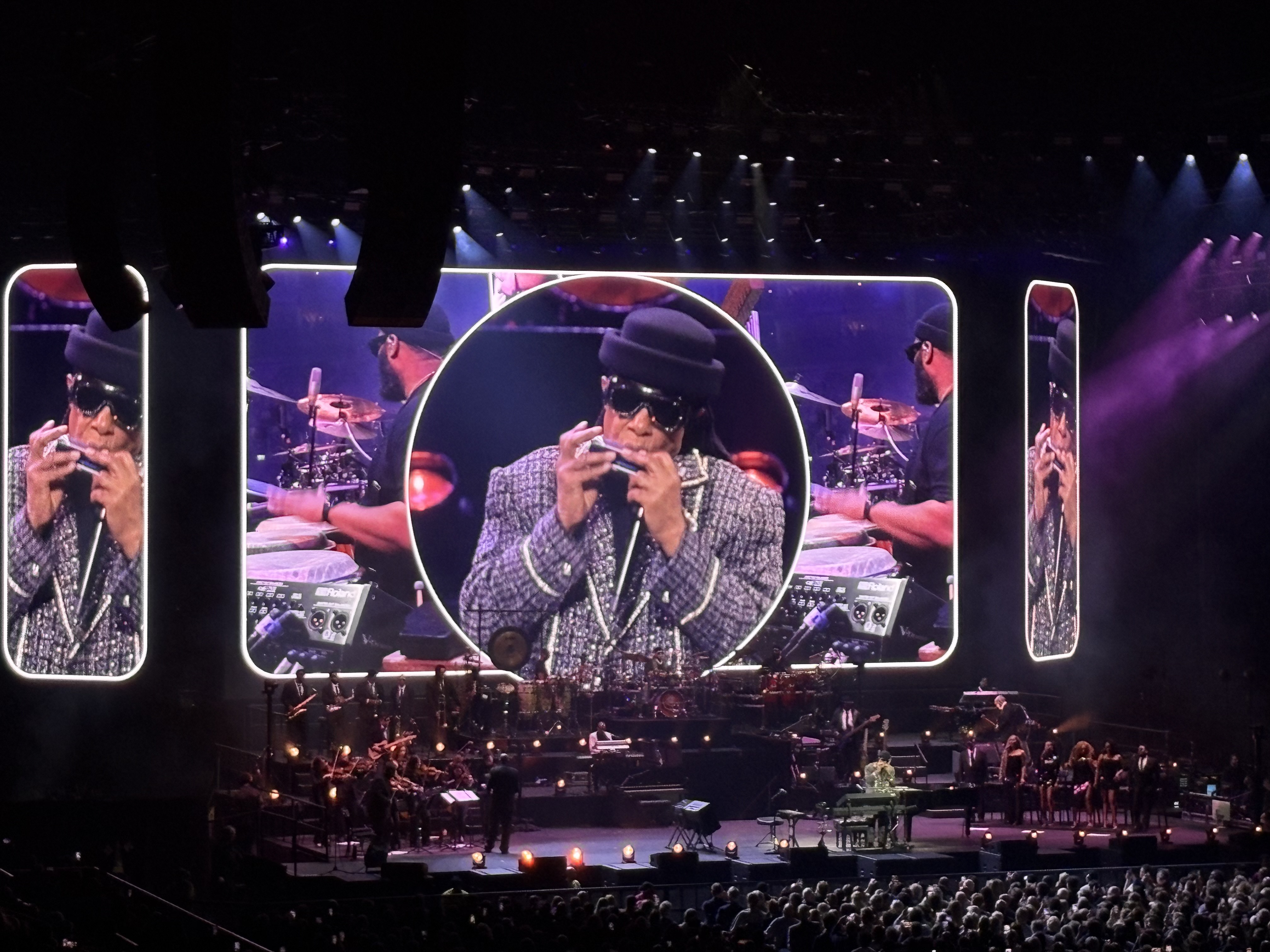
Luckily for me, there have been several such occasions, including a fabulous mini-concert at a theatre in Cannes during a music business festival in 1974, a storming show with greater resources at Earl’s Court a decade later and a little semi-impromptu solo performance at Abbey Road Studios, whose nature and date I forget. Last night, in front of 20,000 people at the O2, he celebrated the 50th anniversary of Songs in the Key of Life by running through the entire album, including bonus tracks omitted from the original release.

I detest the O2. As a venue for music, it has all the intimacy and charm of an out-of-town shopping mall — which is basically what it is. But it was very good to see that the great majority of the audience could not have been born when Songs in the Key of Life was released in 1976. The place came to life as soon as he appeared, in front of a band that filled the stage. And it was instructive to hear how the audience joined in his call-and-response passages in a way that had been quite beyond his listeners at Earl’s Court in 1984.

He always brings great musicians, and the current touring outfit rests on the foundation provided by Stanley Randolph on drums and Nathan Watts on five-string bass guitar. There are five horns (two trumpets, trombone, alto and tenor saxophones), two guitarists, two keyboard players (one of then Greg Phillinganes), two percussionists, a harpist, a double string quartet (four violins, two violas, two cellos), and six backing singers (four women, two men). It’s enough to say that they made many of the songs sound more powerful than the recorded versions, despite the rather strident amplification. And there was a little between-songs riff on “Billie Jean” that, as I think Wonder said, could have gone on for ever.

He is 76 now, and his voice has lost a little of its elasticity, but not its musicality. He never did sound quite like anyone else, and he still doesn’t. It was at its best on the two songs that provided the highlights for me: first a rampaging “I Wish”, with those smeary horns figures digging into the chattering funk provided by the rhythm section, and second “Pastime Paradise”, which floored me when I first heard it — sounding like nothing I’d ever heard before — and was even more affecting last night with the live string section and a more aggressive edge.

In 1972, on the eve of the release of Music of My Mind, I had the privilege of talking to him on BBC2’s The Old Grey Whistle Test. He was the most thoughtful and interesting interviewee you could imagine. And although his songwriting output slowed after that astonishing run of albums in the ’70s, he remains the true successor to Duke Ellington: a musician who brings it all together and makes it his own.

Tom Rush at the Union Chapel

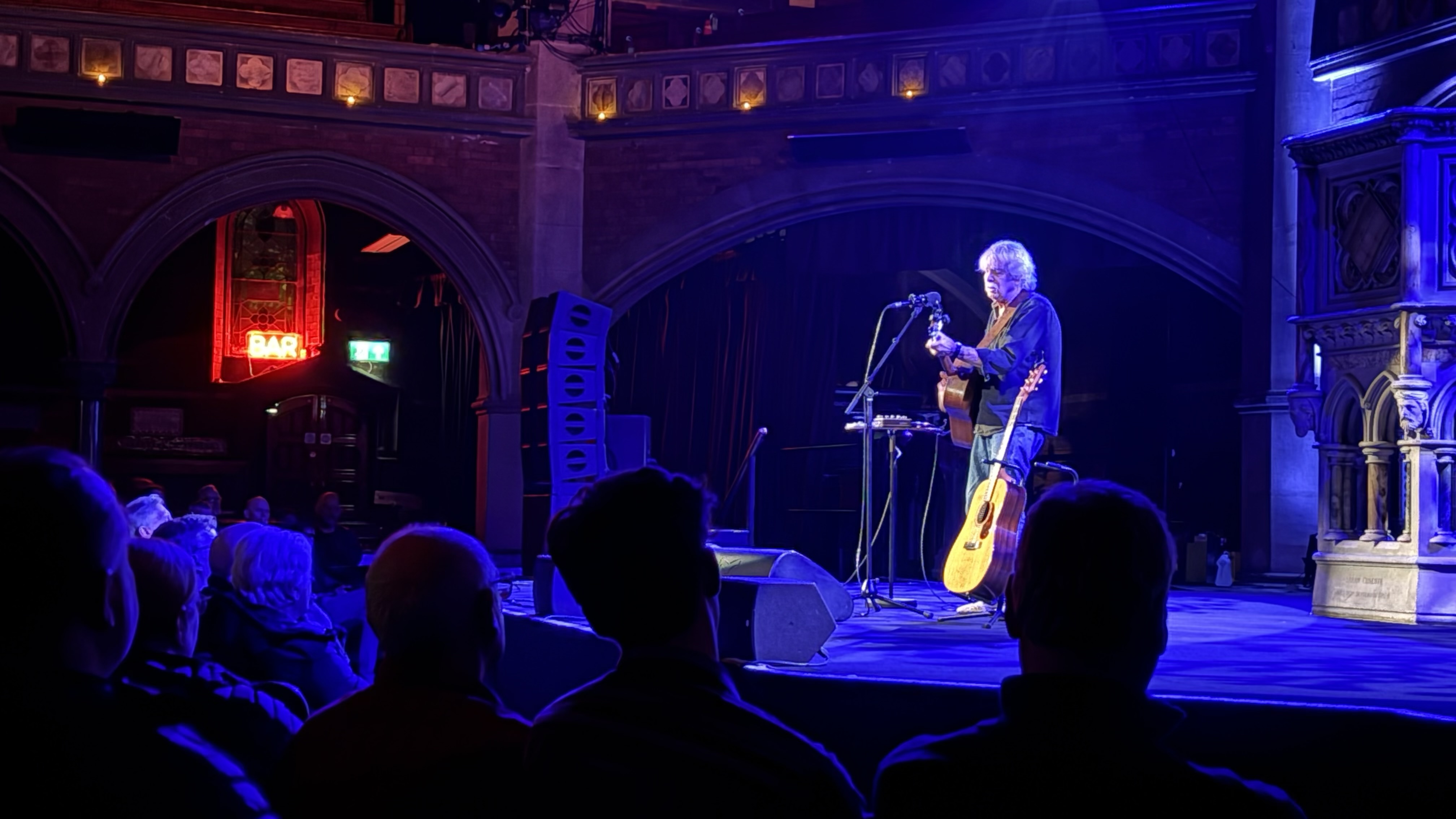
As we listened to Tom Rush interpreting Jackson Browne’s “These Days” on Sunday night, it was impossible not to reflect that here was an 85-year-old man singing a song written in 1964 by 16-year-old. All time is eternally present, as the poet wrote.

Rush recorded “These Days” in 1970. He wasn’t the first, but Browne was among the songwriters whose work he promoted by placing their songs on his albums when they were still little-known. Others were James Taylor, who saw him as a mentor, and Joni Mitchell, whose “Urge for Going” was also in Sunday’s repertoire in Islington’s beautiful Union Chapel.

Renarkably, this was Rush’s first London gig since the 1960s, when he was one of many singer-songwriters touted as the “new Dylan”. Goodness knows why he’d never been back, because — for those who’d never seen him before — he turned out to be a wonderfully humorous raconteur as well as a still-agile guitarist and a singer who knows how to work around the limitations imposed by age.

We were reminded that here is a man who learned “Drop Down Mama” from Sleepy John Estes and “Panama Limited” from Bukka White at a time in the 1960s when he was at Harvard and sharing the stage of Boston’s Club 47 with those blues legends. And then he could veer off into the rousing country of Lee Clayton’s “Ladies Love Outlaws”, made famous by Waylon Jennings, or to the knowing senior-citizen wit of his own “The Remember Song”. “Siena’s Song”, written for his daughter when she was a child, proved enough to give doting fatherhood a good name.

And, of course, there was the song for which he will always be remembered: “No Regrets”, recorded for The Circle Game in 1968, made a hit by the Walker Brothers in 1975, its cadences now subtly reshaped by the lightly grizzled baritone of the man who wrote it, and still among the very finest of letting-go songs.

* Tom Rush’s most recent album, Garden Old, Flowers New, is available via his website: http://www.tomrush.com

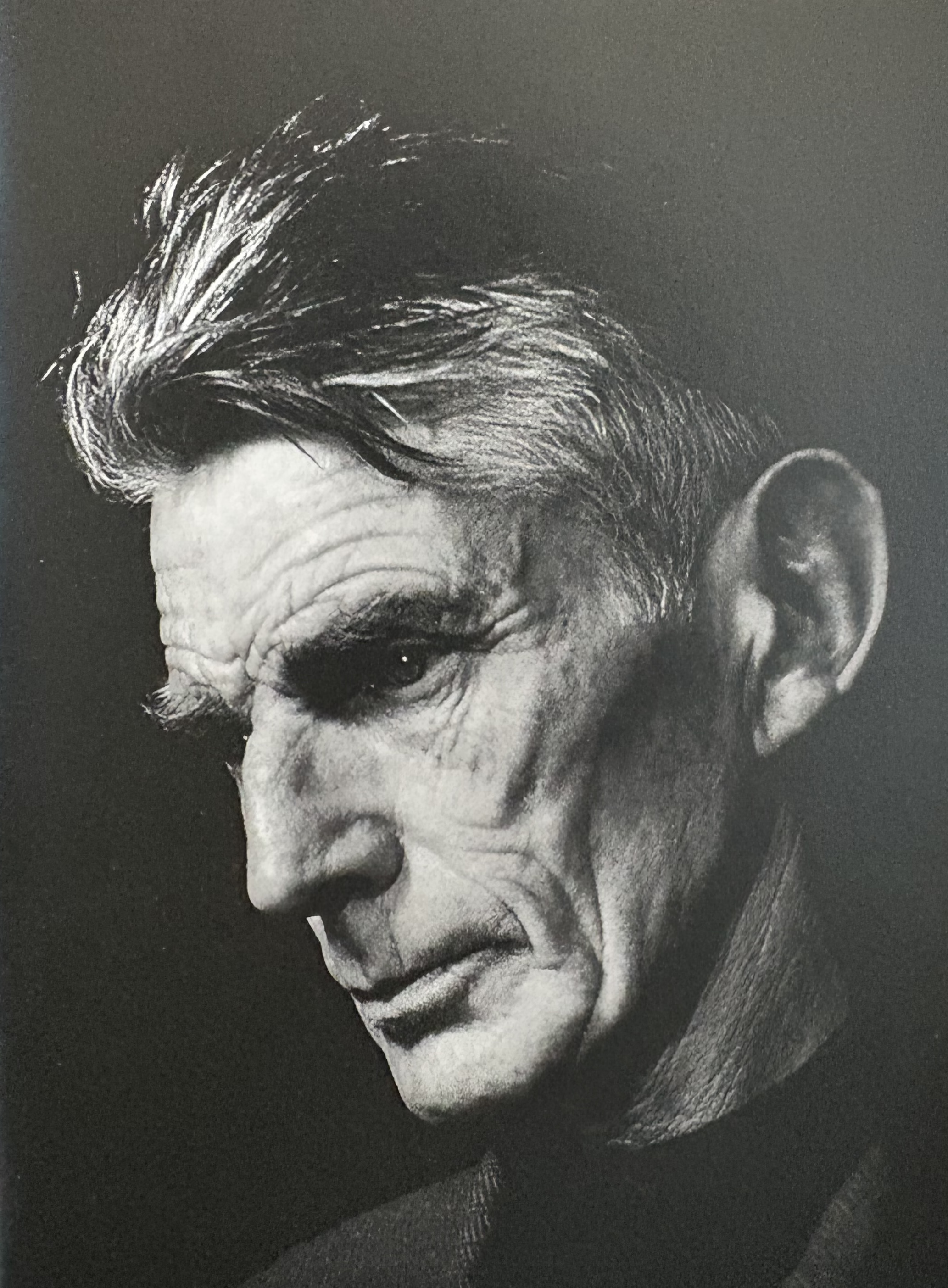
Stirring Beckett

If Mark Rothko’s paintings represent a visual approach to the condition of music, then Samuel Beckett’s poems, plays and prose are the literary equivalent. Not just the music of words: a music suggested by the words, beyond them yet intrinsic to their sounds and rhythms.

Stirrings Still was Beckett’s last piece of prose: nine pages, about 2,500 words, written between 1983 and 1987, which means it was finished two years before his death. And that’s what it seems to evoke: a man quietly contemplating his own mortality, time and loss and things undone, summoning flawed memories. As it opens, he sits at a table, watching himself “rise and go”.

Paul Griffiths reads Stirrings Still on a new album of that title, the words divided into 18 sections separated by music for string quartet written by the American composer Trevor Bača. Griffiths, whom I knew when he was the chief classical music critic for The Times in London throughout the 1980s, is a much decorated author (including three novels), librettist and lecturer.

He is not an actor, which means that inflection of the text is limited, and mostly the better for it. His is an ordinary voice, suited to calm reflection, not drawing attention to itself and therefore a good fit for this Beckett piece. The quasi-incantatory repetitions are allowed to speak for themselves, while a little trouble with his Rs adds a touch of imperfection and character. A Bill Nighy or an Ian McKellen might “sell” the lines better but the result would not seem so true.

What the speaker avoids in terms of drama and variety, Bača’s music supplies. The Jack Quartet — Christopher Otto and Austin Wulliman (violins), John Pickford Richards (viola) and Jay Campbell (cello) — provide a repertoire of scrapes and swoops and sawing, unsettling harmonics, microtonal drones, hurtling zigzag patterns, and glissandi that judder like a train jumping its tracks, all laid out with beautiful timing and, in Manfred Eicher’s production, a sense of space and air. Only at the end do the narration and the music overlap, an understated effect to close a remarkable piece of work.

* Stirrings Still is out now on the ECM New Series label. The text is available, along with that of Company, Ill Seen Ill Said and Worstward Ho, in a volume published by Faber & Faber as Company Etc. The photograph of Beckett is from the cover of Stirrings Still and was taken by Rosemarie Clausen.