Skip to content

Archive for

John Tilbury, home and away
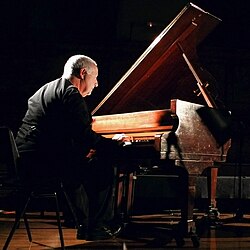
It isn’t often that I get to write about the noise of dust — which, in a form amplified by the Austrian soundartist Klaus Filip, turns out to be a sort of gentle crackling, used to accompany John Tilbury’s piano on a piece included in an elegant new boxed set called At Home. This beautifully designed little coffret features a mixture of recordings made at Tilbury’s house in Deal on the Kent coast and archive pieces dating back to 1970, when the pianist was already well established as a gifted interpreter of the compositions of Morton Feldman and John Cage and a collaborator with such adventurous spirits as Cornelius Cardew and other members of the improvising group AMM.

In the summer of 2022, Tilbury was to have taken part in the final appearance of AMM, held at Cafe Oto as part of the celebrations of the percussionist Eddie Prévost’s 80th birthday. Instead, health considerations led him to announce his retirement from public performance, meaning that his participation in the event was restricted, as I wrote here, to samples of his playing triggered by the guitarist Keith Rowe. That decision prompted Simon Reynell of the Another Timbre label to ask Tilbury if he would be prepared to collaborate on what became the contents of the box, selecting archive pieces and recording new ones. Over the course of 24 pieces and about 300 minutes, it provides a fine summary of what this master of keyboard minimalism has been up to when communing with his piano over the last six decades, with occasional assistance from partners.

Most of the music here is performed solo, but collaborators include the pianists Tania Chen, Sebastian Lexer, and (on Feldman’s Piece for Four Pianos), Philip Thomas, Mark Knoop and Catherine Laws. There are also the electronics of Rowe, on an improvisation recorded in a Leeds church in 2004, and Filip, on the piece from 2019 called “Dust and piano”.

The shortest standalone piece is Erika Fox’s “J.T. Bagatelle”, which fills its 1 minute and 55 seconds with elegant and unhurried figurations, composed earlier this year as a present for Tilbury’s 90th birthday and also commemorating their first encounter on their first day at the Royal College of Music in 1952. The longest, at 41:39, is “Sycamore”, a 2023 piece by John Lely, a former student of Tilbury, in which intervals — mostly minor seconds, it seems to me — are struck and allowed to resonate, sometimes overlapping; it’s like sitting by a pond and tossing in small pebbles two at a time, watching the effect of the ripples as they meet, merge and vanish — deadpan, but mesmerising.

The box’s first disc opens in the 14th century, with a concert recording of four pieces by Guillaume de Machaut arranged for the pianos of Tilbury and Chen by György Kurtág. Also represented are Feldman, Cardew, Howard Skempton, Christian Wolff, Christopher Hobbs, Michael Parons, Catherine Kontz and others. Several pieces are for the clavichord, which Tilbury acquired in 2015 and whose sound gives the music a slightly rickety ancient-to-the-future appeal.

There are also a couple of pieces in which Tilbury intones texts by Samuel Beckett. “What Is the Word”, Beckett’s final poem, written in 1988, was recorded to very dramatic effect with the organ in the chapel of King’s College, Cambridge, during a concert in 2015. The fathomless pessimism of the second, “Pour rien”, is very affectingly delivered agsinst a plain setting for clavichord by Mark R. Taylor. There is also “For Samuel Beckett”, a 28-minute improvisation for the pianos of Tilbury and Lexer, recorded during a London Musicians Co-op festival in 2005.

At the moment my favourite pieces from the set are Cardew’s “Volo Solo”, written in 1965, recorded around five years later in unknown circumstances, full of abrupt angles and quick contrasts, bristling with the excitement of the new, and Mark R. Taylor’s “Five Nocturnes” (2014-16), which are at the opposite end of the emotional scale in their deliberate but never heavy-handed lyricism. In all these we hear the wonderful touch and timing of a man who, amid what he calls “the new dark ages”, has described himself as “a small island of archaic conservation”. This is much more than that.

* John Tilbury’s At Home: Domestic and Archive Recordings is on the Anothet Timbre label: http://www.anothertimbre.com
Dolly Parton 1946-2026

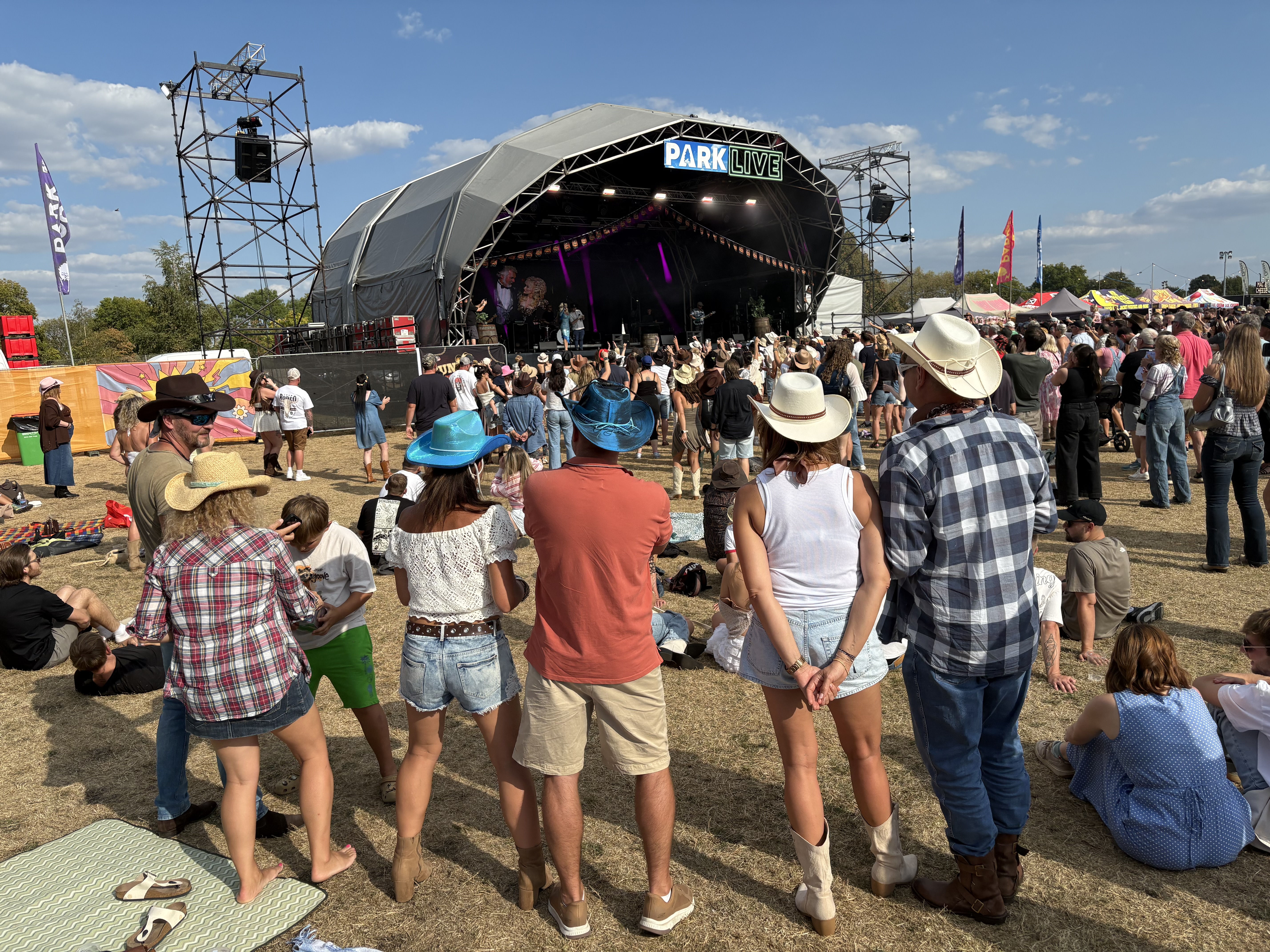
In the heat of Sunday afternoon I happened to find myself at a country music festival by the Thames, listening to Definitely Dolly — a Dolly Parton impersonator and her four-piece band. When I told an American neighbour where I was going, she predicted that there would be “heartbreak — and trucks.” She was wrong about that. Instead there were hats and boots. And beer. And a lot of people having a good time listening to decent renderings of immortal songs like “I Will Always Love You”, “Jolene” and “Coat of Many Colors”, while laughing at stage patter based on Parton’s much loved jokes about her hair, her body and her clothes, delivered in a passable imitation of that bright East Tennessee drawl.

Definitely Dolly lost me when she inserted “We Are the Champions” into the repertoire, but she won me back near the end when she shattered the fourth wall by suddenly announcing, in a broad Scouse accent, that she was actually Dani Graham from Liverpool, before reverting to a Dollyness which had led her, during the course of an hour-long show, through at least four costume changes.

I didn’t think much of country music until Bob Rafelson’s Five Easy Pieces came out in 1970, with its brilliant use of Tammy Wynette’s records in the soundtrack. Then I went to Nashville, and it all made complete sense. It’s still not something I listen to often, but I wouldn’t want to be without Kathy Mattea’s “Eighteen Wheels and a Dozen Roses”, Martina McBride’s “Independence Day”, Charlie Rich’s “A Woman Left Lonely” or Billie Jo Spears’ “’57 Chevrolet”, or everything by the Stanley Brothers.

Or those songs of Dolly’s, of course. The obituaries are saying what an extraordinary person she was, inspired by her tough background to live her life with the sort of generosity that is being officially discouraged in her native USA. “I love the poorly educated,” said Trump. “Give them books,” said Dolly, the child of a father who never learnt to read, and then she did something about it. I hope Dani Graham and others like her keep singing her songs for many years to come.

The Miles Davis Prom

After a somewhat lacklustre first half and a similarly underwhelming resumption, last night’s Prom concert commemorating the centenary of the birth of Miles Davis finally took wing in a sold-out Royal Albert Hall with a sultry version of “Once Upon a Summertime”, Michel Legrand’s melody delivered with understated elegance by the great trumpeter Ambrose Akinmusire in front of the BBC Concert Orchestra, conducted by Miho Hazama.

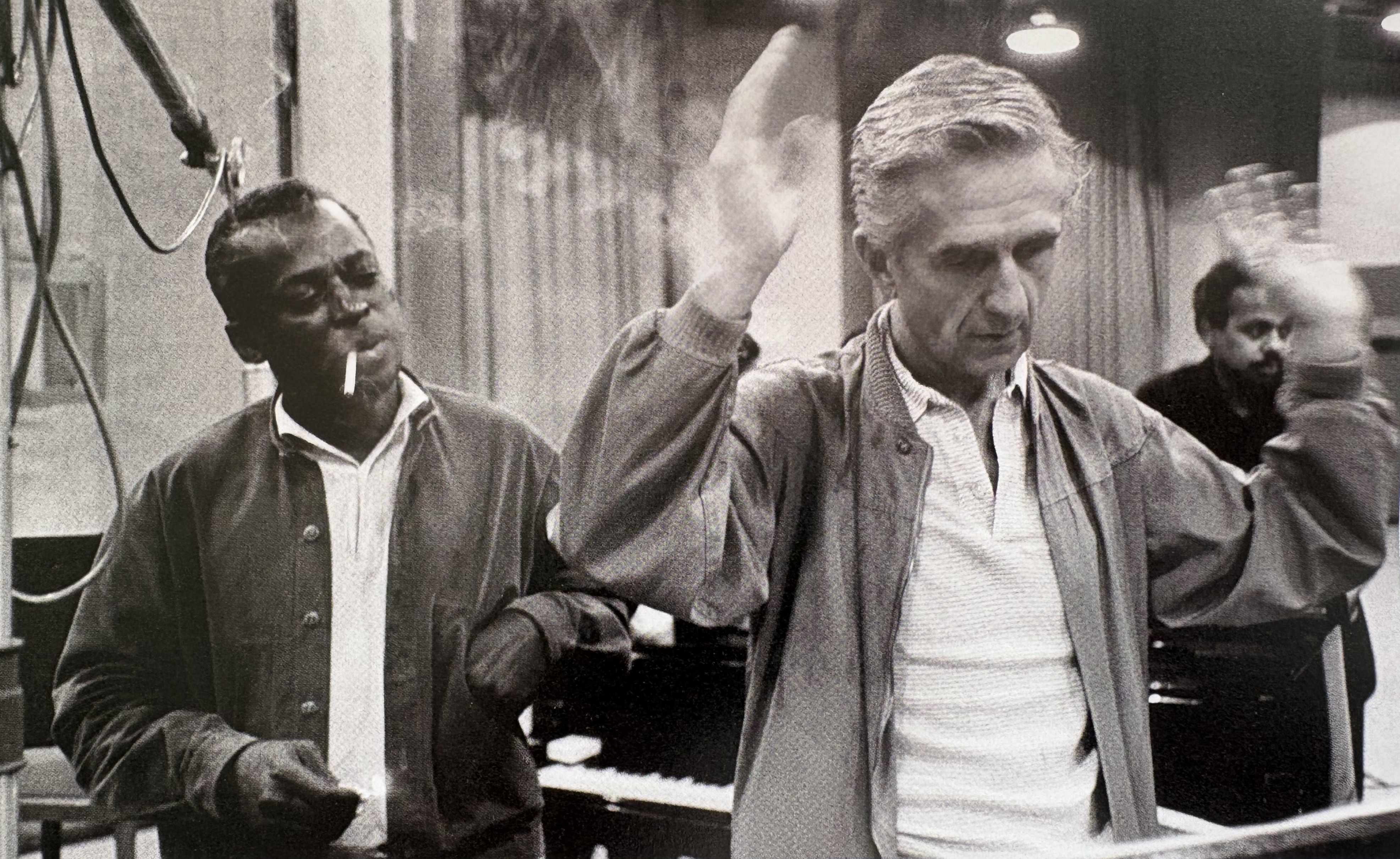
Miles recorded the tune with Gil Evans in 1962 for Quiet Nights, which turned out to be his most disappointing album. He’d come across it through the singer and pianist Blossom Dearie, who in turn had found it during a stay in Paris in 1954. She was introduced to it through the sponsor of her trip, the record executive Eddie Barclay, who had co-written the original words with the lyricist Eddy Marnay. It was known as “La Valse des Lilas”. Back in the US, Johnny Mercer wrote an English lyric for her to sing. Whenever her friend Miles showed up to hear her in a night club, he’d tell her, “Play me my song.” Now, in a different century, it had a new role to play.

The idea of the Prom was that Hazama, a skilful and experienced conductor, composer and arranger, would take the work Davis and Evans accomplished together between the late ’40s and early ’60s and refashion it into something befitting the larger resources of the Concert Orchestra and Akinmusire’s quartet: a sort of concerto grosso setting.

Was that ever a good idea? It did, after all, answer a need. Only once — at Carnegie Hall in 1961 — did Davis and Evans get to perform a few of the charts, meaning that whenever the original arrangements are performed, they tend to be received with gratitude and reverence by those with a special love for Miles Ahead, Porgy & Bess and Sketches of Spain. I have a fond memory of a performance of the entire Porgy suite by the Royal Academy of Music alumni under Nick Smart at St John’s, Smith Square in 2019, and of a socially distanced recreation of the Concierto de Aranjuez by Ryan Truesdell’s Gil Evans Project in New York in 2020. On the evening before last night’s Prom, in a similar homage 6,000 miles away, Evans’s original scores were performed at the Hollywood Bowl by a band including Herbie Hancock and Ron Carter, two of Davis’s greatest alumni.

But to try and expand Evans’s carefully conceived and refined work, which made such revolutionary use of instrumental combinations and contrasts, might seem at best foolhardy. The addition of a full string section, in particular, carried significant risk, as it always does in jazz. Hazama had her work cut out.

The first half began with pieces from the Gershwin opera: “Bess, You Is My Woman Now”, “Summertime” and “I Loves You, Porgy”, plus Evans’s own “Gone”, While the new orchestrations were sometimes ingenious, the additions were often superfluous, occasionally verging on a bombast that would have been anathema to Evans. Moving on to other material, they meant that Hazema’s variations on “Boplicity” sacrificed much of the 1948 original’s cool agility and gained nothing from a quote from the James Bond theme. Her arrangement of “Blue in Green”, from Kind of Blue, was mostly notable for the space it created for a fine solo by the pianist Taylor Eigsti.

The late critic Max Harrison famously described Evans’s unique approach to existing material not as arrangement but as “recomposition”. As the first half ended with a medley of pieces from Manuel de Falla’s El Amor Brujo, from which Evans extracted “Will o’ the Wisp” for Sketches of Spain, it began to feel that recomposing a recomposition might not be such a great idea, even though Hazema slipped a few measures of the “Milestones” theme into the closing up-tempo section. There were moments when, as my companion said, it felt “a bit lounge”, and I could only agree.

That uneasy feeling re-ermerged after the interval, when the re-recomposition of Kurt Weil’s “My Ship” included one passage that sounded like a Disney soundtrack, albeit followed by a full-strength collective workout for Akinmusire’s stellar quartet, with the oustanding Eigsti (a late replacement for Sam Harris) on piano, Harish Raghavan on bass and Kendrick Scott on drums, temporarily freed from orchestral encumbrance — which, on an arrangement of the next tune, “Miles Ahead”, included a weird passage for Hollywood strings.

At that point I was wishing that the arranger’s job had been handed to Michael Gibbs or Maria Schneider. But then came a thoroughly decent “Once Upon a Summertime”, which settled things down. That seemed to encourage the quartet to take off on their own with an Akinmusire composition called “Henya”, recast from its original recording on the album Owl Song as a spellbinding ballad in slow 3/2 time, its constantly cycling harmonic contour and sense of infinite space drawing the best solos of the night, as well as magnificent distant rolling thunder from Scott.

On, then, to the great set-piece, Evans’s historic 17-minute recasting of the Adagio from Joaquin Rodrigo’s guitar concerto. And here, in the Concierto de Aranjuez. Hazema made better sense of the possibilities of the expanded instrumentation, creating a section in which Akinmusire improvised beautifully through and around sombre and carefully placed stop-time figures, and using the strings to give extra drive to the fantastic crescendo with which piece reaches its climax. No complaints there, and none for the vociferously demanded encore, Ahmad Jamal’s “New Rhumba”, in which Hazema faithfully reproduced the trombone section’s stabs — Evans’s subtle imitation of Red Garland’s comping in Miles’s first great quintet –behind Eigsti’s spirited solo.

In an interview in the concert programme, Akinmusire spoke of the challenge of playing Davis’s role. “I love this music so much that I’ll be thinking, what if Miles was sitting in a seat in the Royal Albert Hall? What would he expect, and what would make him walk away with a smile? I don’t think he’d want me to play like him.” The easy response is that Miles, the enemy of sentimental recreation, wouldn’t have been there at all. But Akinmusire, the most gifted jazz trumpeter of his generation, met the demand with skill and humility. His virtuosity allowed him to make allusions to the rounder tone of the flugelhorn Davis used on some of the recordings with Evans, and to find the sobbing tone that Kenneth Tynan, in his 1961 profile of Miles, quoted his young daughter describing as “like a little boy who’s locked out and wants to get in.”

It was hard to tell whether he was entirely comfortable in the role. There were a few fluffs, and not always did his own sense of space seem to match that of the arrangements. A long sequence of squeezed high notes in the de Falla piece, for instance, didn’t mean much. But as the evening went on, he was able to infiltrate more of himself into the necessary task of interpretation, occasionally doing what he often does in more natural circumstances, unloosing figurations that emerge from somewhere below the horn’s known lowest notes and spiral up via fantastical shapes to end in the uppermost register. And sometimes he found the pathos to match the careful diminuendos with which Hazema closed a few of the pieces.

Those were moments of genuine grace. In the end, despite doubts about how Davis himself would have viewed the project, and although it’s hard to accept that a satisfactory homage to Gil Evans would ever involve rewriting him, there were enough of those to carry away and remember with pleasure.

* The concert is on BBC4 tonight at 8pm. The audio will be available for the next 52 days on BBC Sounds: https://www.bbc.co.uk/sounds/play/m003029j The photograph of Miles Davis and Gil Evans was taken by Don Hunstein.

Tunes of peace

Earlier today I closed the last page of Regime Change, Maggie Haberman and Jonathan Swan’s epic dissection of the first 15 months of Donald Trump’s second term at president of the United States. It’s a close-quarters observation of megalomania operating in real time, reaching its climax as the US/Israeli attack on Iran founders in the Strait of Hormuz, a hubristic miscalculation which one profoundly hopes will eventually define Trump’s reputation in the eyes of history. One can only wonder at the identity of the source who gave the two New York Times reporters such extraordinary material.

Now I need something to listen to, and here at hand is Peace Anthems, a new album of 10 short pieces by artists associated with Red Hook Records, the label founded five years ago by the producer Sun Chung, whose first release was Hanamichi, by the late pianist Masabumi Kikuchi. The new release, timed to coincide with the anniversary, is specially commissioned by Chung from the artists, who were invited to contribute pieces inspired by the theme of peace.

The trumpeter Wadada Leo Smith and the pianist Amina Claudine Myers, whose album Central Park made many best-of-the-year lists in 2024, provide two sketches, “Sonic Requiem X” and “Reflections on Palestine”. Smith also appears on “Three Years Later” with the drummer Andrew Cyrille and the modular synthesiser player Qasim Naqvi, whose solo piece, “Al Badawi”, opens the album. Moor Mother’s invocations and BlankFor.ms’ electronics combine on “Imaginary Lines”. The singer Martha Deribe and the pianist Simone Maggio are heard on “War Is Over”. The guitarist Taylor Deupree, the trombonist Kalia Vandever and the bassist Thomas Morgan contribute Deupree’s composition “Wither Light and Airy”. Kit Downes gets two chances to demonstrate his skill with a pipe organ on “Into the Woods — Three Weary Calls” and “Closing Meditation for OM”, the second of which concludes the sequence.

The mood is restrained and reflective, as if the performers agreed that the message would be allowed to find its way gently into the listeners’ ears. These are little tone poems whose delicacy is their strength. And nowhere is that more apparent than on a piece called “The River of Imjin” by the Korean saxophonist and composer Sungjae Son (photographed above), whose previous release, Near East Quartet, appeared in 2016, at a time when Sun Chung was an in-house producer for the ECM label.

“The River of Imjin”, bearing a name made famous by a battle between Chinese and UN (predominantly British) forces during the Korean War in 1951, finds Son overdubbing his tenor, bass clarinet and pump organ on two choruses of something that sounds like an old Methodist hymn tune. If you have fond memories of Thelonious Monk’s “Abide With Me”, John Surman’s “Doxology” or Don Cherry’s “Desireless”, then this fits right alongside them. After 414 pages describing Trump’s attempt to drag the world into his own darkness, sometimes two minutes and 15 seconds of music is all it takes to switch the light back on.

* Peace Anthems is out now on Red Hook Records. All proceeds will go to the International Red Cross: https://redhookrecords.bandcamp.com/album/peace-anthems