Skip to content

Archive for

Looking for Mr Moonlight

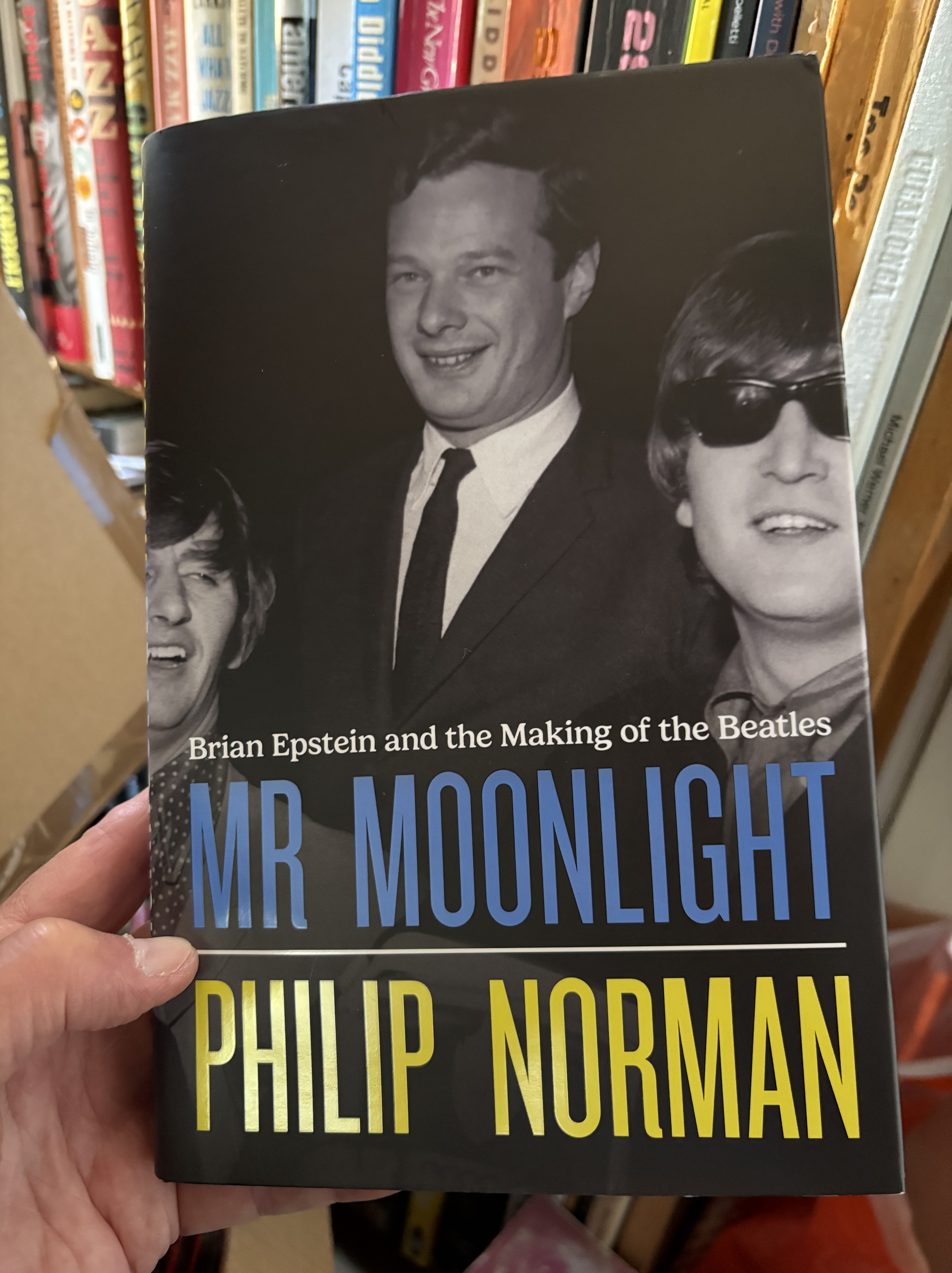
While listening to Philip Norman discussing his new biography of Brian Epstein last night, during a recording of the Books Podcast at the Owl bookshop in Kentish Town, I started thinking not about the author’s revelations — for instance that the Kray twins had once expressed an interest taking over the Beatles’ management — but about the suggestion that Epstein had erected and maintained a protective wall around the group. On the way home I thought about it some more, and it began to seem clear that Epstein’s real impact was of a far greater, although less easily definable, kind.

He may have been a deficient manager in certain important respects, accepting a poor (although industry-standard) recording contract with EMI in 1962 and failing to renegotiate it at the height of Beatlemania, and then royally screwing up the US merchandising rights to Beatle product (wigs, plastic guitars, etc), for which he gave away 90 per cent of the gross. When the producers of A Hard Day’s Night, preparing to offer the group 25 per cent of the film’s receipts, asked him what he wanted, he tentatively suggested seven and a half per cent, which they accepted with alacrity.

But he did give the Beatles something in exchange for his own 10 per cent of their earnings (rising to 15 per cent once they were each making £120 a week). And that something was class.

Not that they didn’t have it, individually and collectively. Their varied but always inquisitive intellects and their shared sense of humour (sardonic, surrealistic, but also warm) were among the aspects of the group that appealed to him, along with their attractive appearance and the irresistible energy of their stage performance. But it was perhaps partly because he came to them as an outsider, with no experience of what he was about to undertake, that he was able to add, without thinking about it, a veneer of sophistication to the presentation that they made to a surprised world between the release of “Love Me Do” in October 1962 and the Ed Sullivan Show in February 1964.

For all Epstein’s commercial missteps, what he never did was cheapen them. He didn’t reduce them to mere members of a stable of acts, like that run by Larry Parnes. He didn’t derail their musical progress by prioritising a series of duff Hollywood movies, as Tom Parker did with Elvis. Having recognised their inherent specialness, he treated them in a way that enhanced it.

A man who loved the theatre and classical music, he understood their adventurous creative instincts. When they made that first film, it was directed by the innovative Dick Lester rather than a Wardour Street hack. When the sleeve art of their second album was being prepared, he guided them towards Robert Freeman, whose photos of John Coltrane he had admired and who listened to the group when they showed him Astrid Kirchherr’s black and white chiaroscuro Hamburg photographs as a potential template. In both cases, Epstein got the Nouvelle Vague resonance and didn’t insist on something more garish or blatantly commercial. And they, in turn, knew that although he was a bit older than them, had short hair and wore a suit and tie, he understood what they were trying to do.

Somehow, partly through the existence as their manager of a hitherto unknown figure who had not risen through the ranks of the London pop scene but was a privately educated member of a well-to-do family from Liverpool’s Jewish community, the world accepted that this group’s ascent to pop stardom was not the result of manipulation, and that Beatlemania was a natural thing. Which, if you happened to be around at the time, you’ll know it was.

Brian Epstein wasn’t the Fifth Beatle. His terrible deals cost them a great deal of money at the time and would lead, after his death in 1967, to schisms and unhappiness. But what he contributed to their rise is worth reconsidering.

* Philip Norman’s Mr Moonlight: Brian Epstein and the Making of the Beatles is published by Simon & Schuster (£30).

The mundane and the sublime

It’s hard to imagine a Beach Boys fan — a real Beach Boys fan, that is — who doesn’t have a warm place in his or her heart for 15 Big Ones and The Beach Boys Love You, the two widely ignored and often derided albums they recorded and released in 1976 and ’77 respectively in their new Brother Records studio in Santa Monica. The superficial view took them as acts of desperation following years in which only greatest-hits albums like Spirit of America and Endless Summer kept their name alive.

The first was an album of mostly covers, the second an attempt to haul Brian Wilson back into a role front and centre of the group’s activities in the studio. Both were recorded in an atmosphere of uncertainty over what they needed to do in order to reassert themselves as a creative and commercial force.

Neither album had a lot of polish, certainly not at the level of Surf’s Up or Holland, their studio predecessors. And there were certainly few vestiges of the rapt introspection of Pet Sounds or the fascinating brainstorms of Smiley Smile. Instead, 15 Big Ones and Love You came from a place between Little Deuce Coupe and Beach Boys’ Party! — only made by guys a decade older, with all the tensions the intervening years had introduced.

I liked both albums a lot, for all their rough edges, and play them often. The doo-wop/R&B covers on 15 Big Ones — the Five Satins’ “In the Still of the Night”, the Six Teens’ “A Casual Look” and Little Willie John’s “Talk to Me” — are in the class of their earlier versions of the Students’ “I’m So Young” and Bobby Freeman’s “Do You Want to Dance”. The originals on Love You — “Let Us Go On This Way”, “The Night Was So Young”, the lovelorn “I’ll Bet He’s Nice”, the witty “Johnny Carson”, the duet between Brian and his first wife on “Let’s Put Our Hearts Together” — match the quality of those on, say, Sunflower.

A new three-CD package called We Gotta Groove: The Brother Studio Years collects outtakes from 15 Big Ones, the original masters and outtakes from Love You, various cassette demos made by Brian, plus tracks recorded later in for Adult/Child, an aborted album planned by Brian as a sort of tribute to the Four Freshmen, one of his original inspirations.

Most of the Love You outtakes and alternate mixes are scarcely worth the trouble: they include a cover of “Ruby Baby” that can’t live with the Drifters, Dion or Donald Fagen, a charming-but-silly two-minute ditty called “Marilyn Rovell” dedicated to Brian’s aforementioned first wife, and an attempt to create a one-man “You’ve Lost That Lovin’ Feeling”, with Brian doing all the singing and all the playing, from drums and jingle bells to Minimoog bass and electric harpsichord. A vocals-only mix of “The Night Was So Young” exposes the beauty of Carl Wilson’s lead. “We Gotta Groove” is a very tedious track, and making it the title of the album is an idea so bad it must have come from Mike Love, who sings lead on the song. As for the 15 Big Ones outtakes, the versions of “Mony Mony”, “Running Bear”, “On Broadway”, “Sea Cruise” and others were correctly omitted from the final release.

The handful of Adult/Child tracks are curiosities and nothing more. The arrangements are by Dick Reynolds, who orchestrated the Four Freshmen albums that Brian enjoyed in his youth and who contributed charts to the Beach Boys’s 1964 Christmas album. The first of these tracks, “Live Is For the Living”, an upbeat Brian original, is almost a parody of a lounge singer’s mannerisms. A version of “Deep Purple” has nothing to recommend it. Two lovely Brian ballads, “It’s Over Now” and “Still I Dream of It”, fare worse than in their solo demo versions. As a project, it was a mistake — and it’s useful to have the proof that this was not another long-buried masterpiece.

But here’s the good news: Brian’s cassette demos for Adult/Child and Love You are something else altogether. It’s very moving to hear him at the piano singing “It’s Over Now”, “Let’s Put Our Hearts Together”, “I’ll Bet He’s Nice” and “Still I Dream of It”, all ballads, and each of which he wrote without the aid of a lyricist — no Roger Christian or Tony Asher or Van Dyke Parks. They’re almost heartbreaking in that he sounds so alone, but they’re also hugely affirming of the extraordinary creativity of his songwriting, which finds the perfect spot between Broadway-era chromatic invention and pure pop chord changes.

As brilliant an arranger and producer as he was, as innovative an assembler of choral resources and previously unheard instrumental combinations, his genius is evident even in these completely stripped-down, unadorned performances. In many of these songs (as when “Still I Dream of It” opens with the singer feeling peckish at the end of a long day before evolving quite naturally into a meditation on the eternal), he could somehow find a link between the mundane and the sublime. It’s a process that began with “Surfer Girl”, and never really stopped.

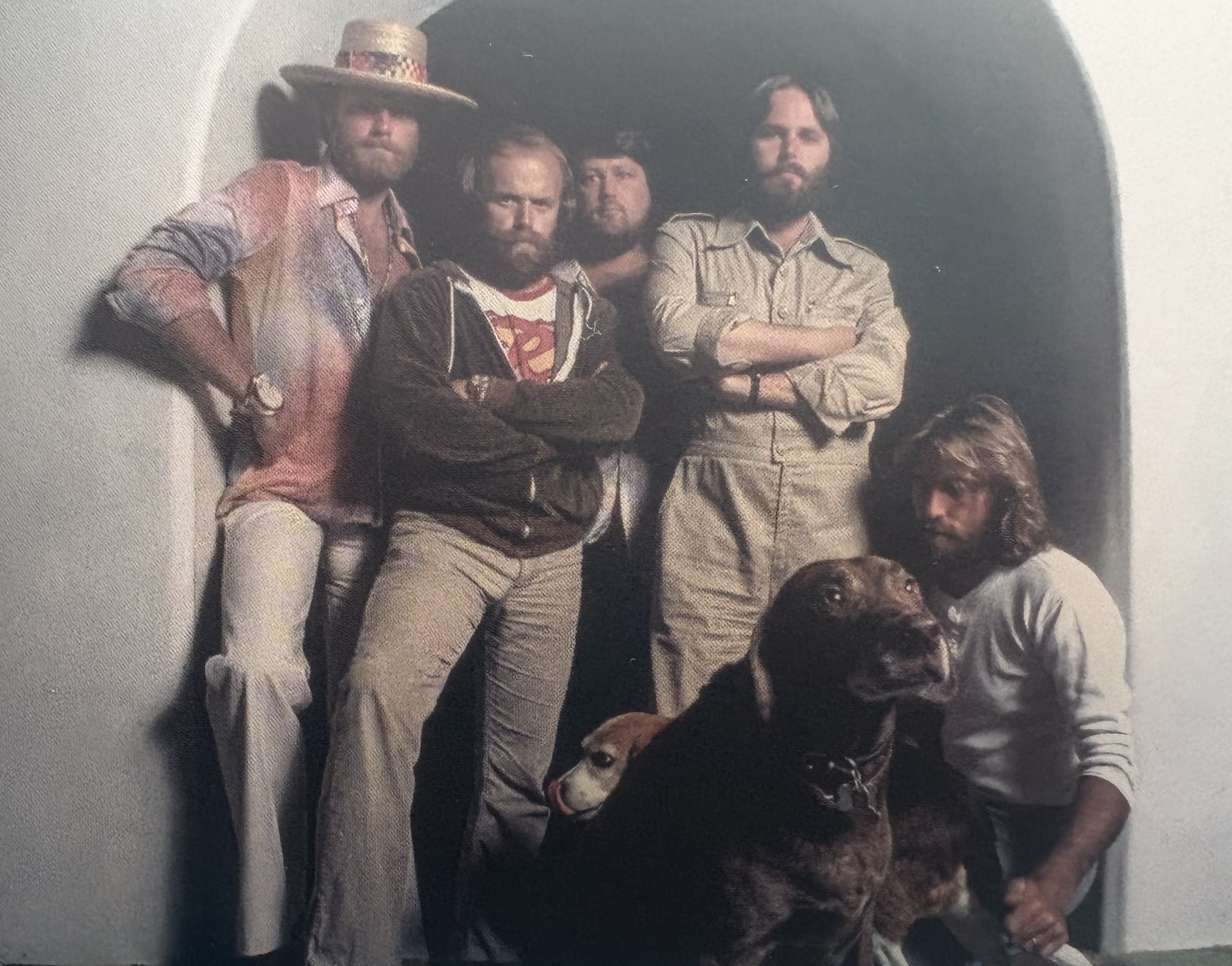
* Not wanting a version of We Gotta Groove (released by Capitol Records) that involved two CDs and a vinyl LP in a 12×12 package, I spent 40-odd quid on a Japanese three-CD release. A warning: the downside is that the accompanying booklet is scaled down, and the useful sleeve essay and very interesting recording details are therefore in minuscule type. The uncredited photograph is taken from the brochure.

Sarah Tandy at Ronnie Scott’s

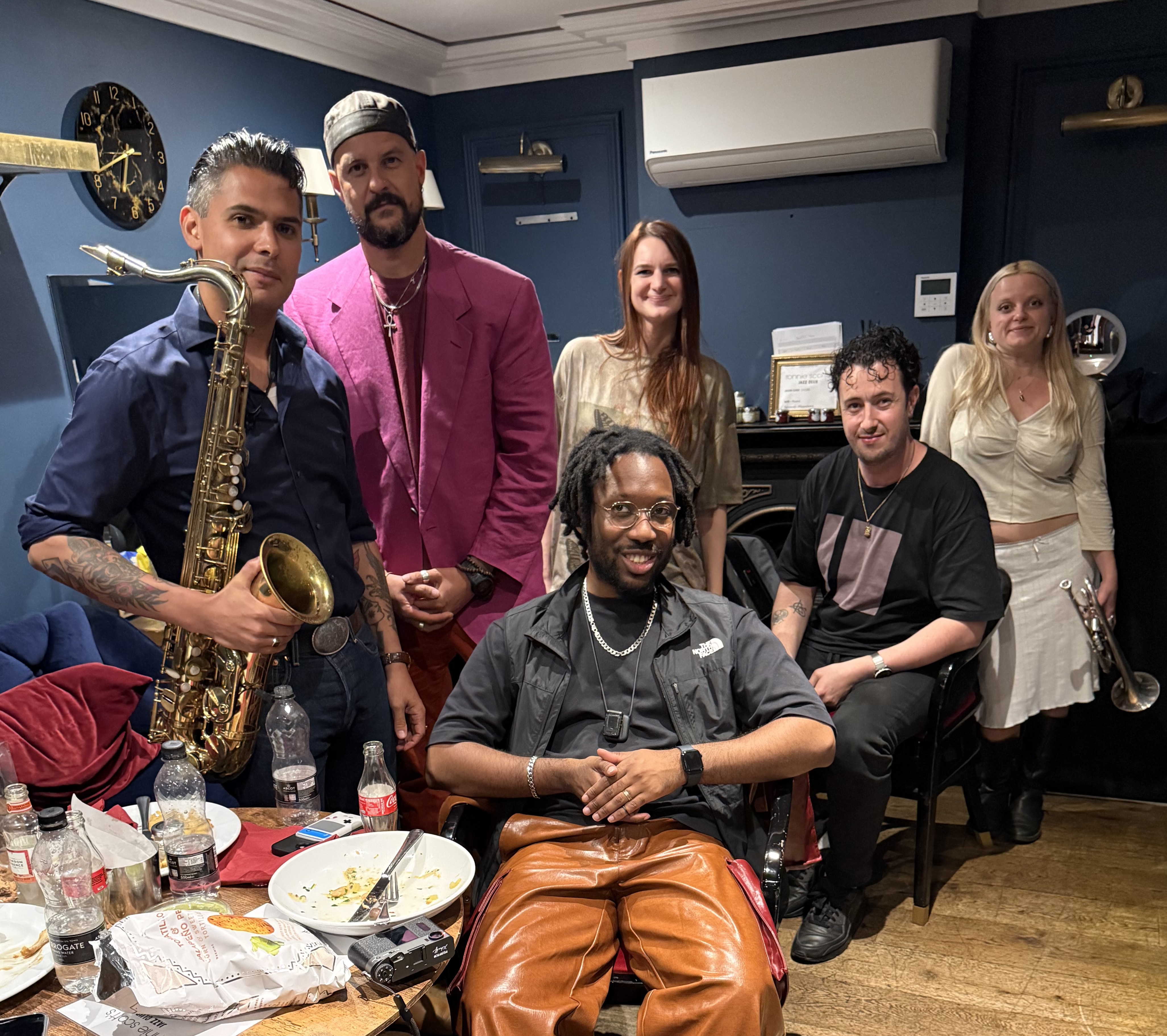
From left: Binker Golding, Jihad Darwish, Tee Peters, Sarah Tandy, Jamie Murray, Poppy Daniels (photo: Paul Pace/Ronnie Scott’s Club)

All Sarah Tandy has to do to make me happy is sit down at a good piano and play a standard ballad. But she’s an ambitious bandleader and composer, and it was those aspects of her musical journey that were explored at Ronnie Scott’s last night. As she did when her debut album, Infection in the Sentence, came out seven years ago, she brought her quintet to the Frith Street temple to showcase some of the material from its successor, to be released later this year.

Now with Poppy Daniels on trumpet, Binker Golding on tenor saxophone, Jihad Darwish on bass and Jamie Murray on drums, the band launched the first set with “Unleash the Beast”, whose introduction quickly gave way to a raging up-tempo blast over what sounded like a modern variation on the structure of Miles Davis’s “Milestones”. Tandy’s opening solo set the tone, chorus after dizzying chorus, like a dancer leaping and pirouetting across a tightrope with no safety net, laying down the challenge for Golding and Daniels to meet.

The next new piece, “Aftermath”, began with Darwish switching to bass guitar and using loops and other effects on an unaccompanied introduction before the band settled into a late-night funk groove, like something you might find on one of the better CTI albums. The piece ended with the dying fall of Daniels’ nicely poised solo — no recapitulation of the theme or arranged coda, which is typical of Tandy’s interesting approach to the architecture of her compositions.

By contrast, the set ended with the thunder of Murray’s drum improvisation at the conclusion of “Bradbury Street”, from the first album, a witty exercise in staccato syncopation which seem to have tilted over the years in favour of the Second Line rhythms of New Orleans and gave Murray the chance to demonstrate how to employ formidable chops with discretion.

After the break, Tandy turned to her electric piano and synthesiser for two new funk-based instrumental pieces, “Princess Peachy” and “Keep Dreaming”. The former featured a Daniels solo in which the trumpeter set aside her liking for extended multi-noted flurries in favour of well-shaped phrases with a tone that reminded me of the young Donald Byrd, while the latter showed Golding at his most trenchant. Then Tandy introduced an MC, the good-natured Tee Peters, who rapped with impressive flow over compositions called “You Need to Heal” and “Rematch”, the latter apparently inspired — to the delight of at least a portion of the audience — by Arsenal FC’s recent exploits.

Tandy likes to have fun making and sharing music. To close the evening, she announced that they were going to play some jazz. Not, she added, that everything they’d already played hadn’t been jazz. But you could see what she meant as soon as she launched into a gloriously unfettered stride-piano introduction to “On the Sunny Side of the Street”, kicking the band into one last burst of high-energy two-beat action, with Golding front and centre.

On the night of a Tube strike, it was good to see the main room at Ronnie’s packed full for this young London-based band. Full, that is, not just of patrons but of attention and enthusiasm, of response to the nuances as well as to the roof-raising bits, with enough of both elements to satisfy just about everyone.

* Sarah Tandy’s new album, titled Delicious Capricious, will be released in the autumn, distributed via Kartel.