Skip to content

Archive for

René Urtreger 1932-2026

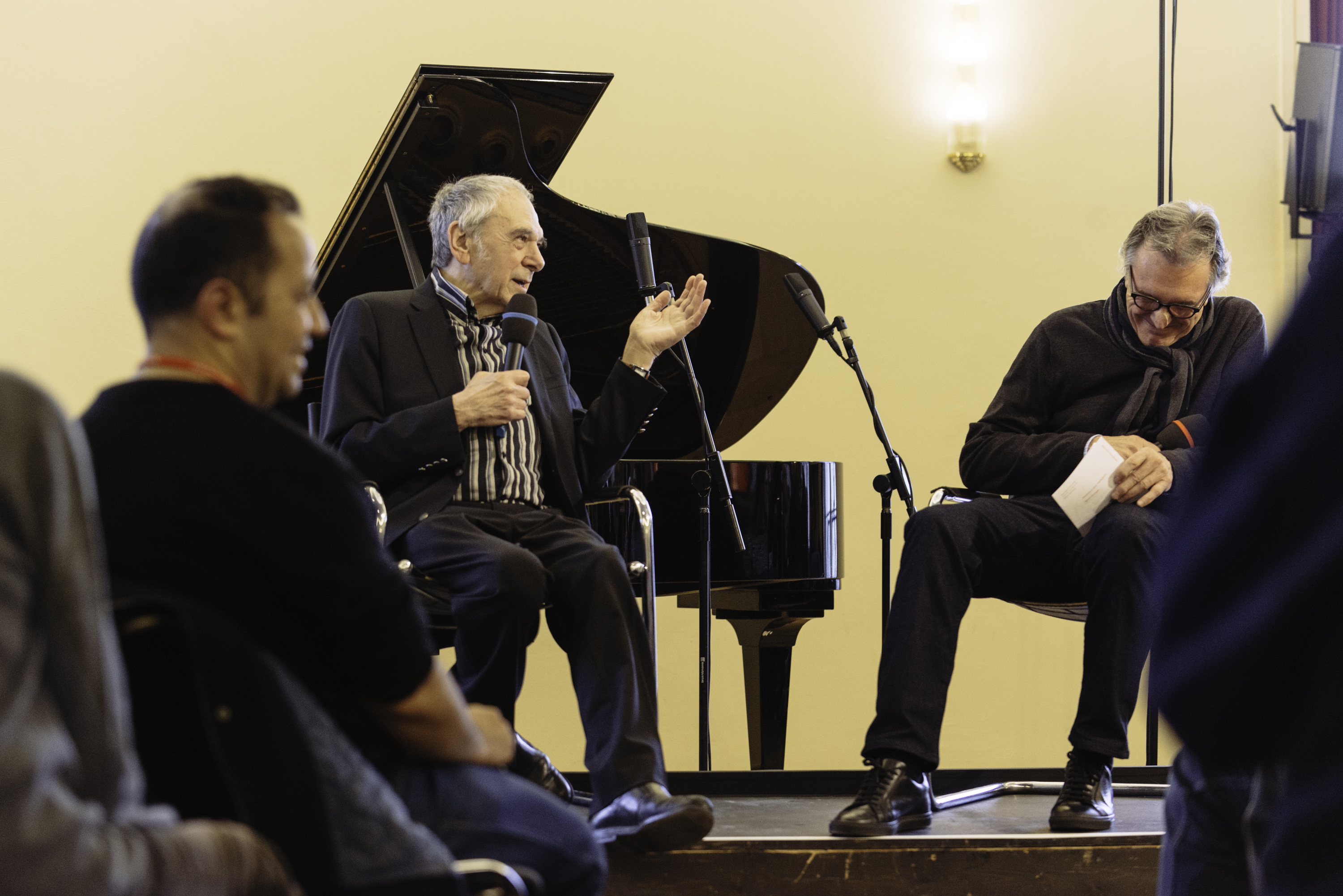
The photo above was taken at the Institut Français in Berlin in 2017, during a Q&A session with the pianist René Urtreger following a screening to celebrate the 60th anniversary of Louis Malle’s Ascenseur pour l’échafaud (released in the UK as Lift to the Scaffold and in the US as Elevator to the Gallows). The last surviving member of the quintet with which Miles Davis recorded the soundtrack for that classic film, René had accepted my invitation to come to JazzFest Berlin for the event, and to play and then talk in front of an audience. What he’s just said has clearly cracked me up. It may have been his observation about Thelonious Monk — a great composer, he said, but an absolutely terrible pianist.

He said it with a twinkle, but he meant it. René was a bebop purist. Bud Powell was his idol and his model. He knew Powell, of course, from Paris in the 1960s; one of his early trio albums was called René Urtreger Plays Bud Powell, including his versions of “Dance of the Infidels”, “Parisian Thoroughfare”, “Celia” and so on. He never lost that allegiance.

René died last week, aged 92. Back in 2014, after I’d brought him to London to play at a private event, I wrote here about his career. I won’t repeat myself, but I will say that if you don’t know his playing, the discovery will be worthwhile, whether it’s on that great soundtrack album (just given a de luxe vinyl reissue on Blue Note/Fontana), on the live album from his 1957 Salle Pleyel concert with Miles (Fresh Sound, 2023), on his beautiful album of solo ballads titled Tentatives, released in 2006 on the Minium label, or on his 2017 album with the singer Agnès Desarthe.

Desarthe, incidentally, was also the author of his biography, published in 2016 (in French only) under the title Le Roi René. It told his fascinating story, including the long and ultimately successful battle against his heroin addiction, the yé-yé years with Claude François and Serge Gainsbourg, the soundtracks he composed for the films of his childhood friend Claude Berri, and his eventual return to the idiom he loved. He was a delightful man, and one of the greatest European jazz pianists.

* The photograph was taken by Camille Blake. Le Roi René is published by Odile Jacob.

Brian Case 1937-2026

When Brian Case joined the Melody Maker in 1978, at my invitation, he dubbed himself “Junior Beret” in tribute to Max Jones, the paper’s senior jazz writer, who habitually covered his bald pate with just such a piece of jaunty headgear. Brian died oin Monday, aged 88. I hope to write more about him elsewhere, but for now I’ll just say how much I loved his work, which was as full of surprises as the music he described.

It was my privilege to supply the foreword to a collection of pieces about his favourite subjects (On the Snap, published in 2015 by Caught by the River), including Dexter Gordon, Sam Fuller, Rahsaan Roland Kirk, Norman Mailer, Jimmy Smith, Al Pacino, Ian Dury, and Gerry Mulligan. And, of course, Art Pepper. Here’s Brian opening a feature on the great saxophonist with a description of his long-awaited UK debut at a London church in 1979:

Few among the congregation who rose to their feet and applauded before a note was played at St. Paul’s Church, Hammersmith, could have had much idea of what that ovation meant to the performer. They wouldn’t have learned much from his face, but they were to hear it in his music. It was one of those spontaneous exchanges of gifts that achieve a rare, fulfilling parity, a love for a love, and not the love-all of those exchange & mart comebacks with the bombardiering boxed orchids. The tribute to Art Pepper was compounded of respect for his endurance, his artistry, and — for those who understood the shifting symmetry of anguish and elegance in his playing — an acknowledgement of the toll of that equation. Real music costs.

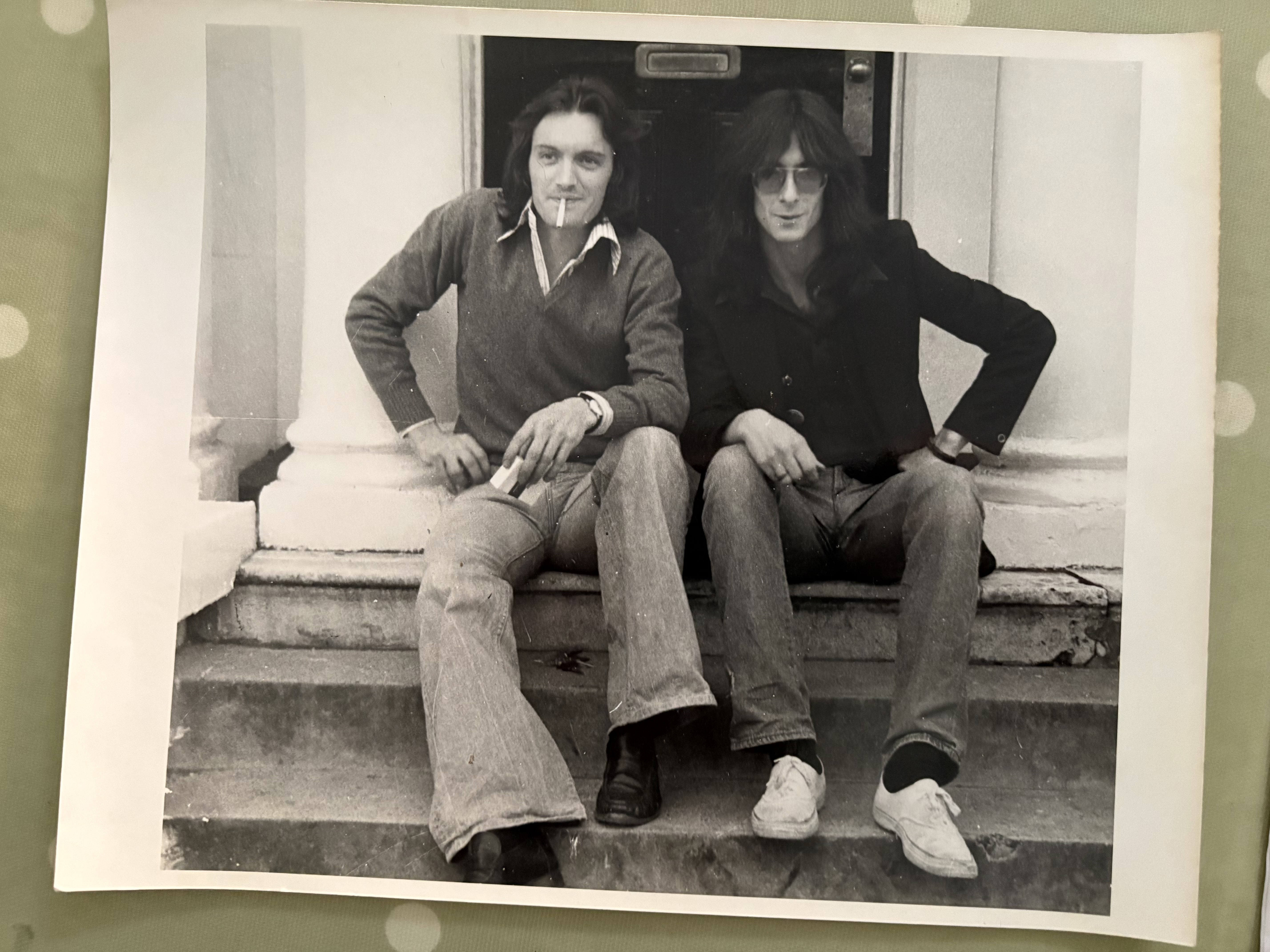
Afterwards Brian told Ronnie Scott he should get Pepper in for a season. Knowing Pepper’s reputation as a major junkie who had spent years in and out of Chino, Folsom, Lexington and San Quentin, Scott was dubious. But a year later it happened. The photograph above was given to me by Jak Kilby, who took it backstage at Ronnie’s one night in 1980. Pepper is in the middle, Brian is on the right, I’m on the left. Happy times. Be seeing you, Junior Beret.

Henry Lowther at 85

It seemed entirely typical of the trumpeter Henry Lowther that, during last night’s concert in celebration of his 85th birthday, he should wait to deliver his first solo until the third piece of the evening. As ever, his improvisation was beautifully conceived and perfectly flighted, with that perfect tone. But Henry is a man whose modesty is as deeply rooted as his talent, despite a career that has made him one of the most remarkable figures in contemporary British music.

Born in Leicester, Henry learned to play the cornet with a Salvation Army band. He came to London to study the violin at the Royal Academy of Music but gave up those studies in favour of a life in jazz and related fields. I wrote a bit about his remarkable CV five years ago, when he turned 80 and played the Vortex with his quintet, Still Waters, but here at the American International Church in Tottenham Court Road there was a chance to hear his compositions for large ensemble interpreted by the London Jazz Composers Orchestra, of which he has been a member for 30 years.

The 19-piece band — five trumpets, four trombones, five reeds, four rhythm — was last night conducted by Scott Stroman, the orchestra’s co-founder back in 1991 with Noel Langley, who was sitting next to Henry in the trumpet section. Other distiguished members and soloists included the saxophonists Pete Hurt and Tori Freestone, the bassist Callum Gourlay, the pianist Liam Noble, the drummer Paul Clarvis and the guitarist Nick Costley-White. The lead altoist, Matt Sulzmann, is the son of another founder member, the great Stan Sulzmann.

Having played in aggregations led by John Dankworth, Kurt Edelhagen, Mike Westbrook, Graham Collier, Mike Gibbs, Kenny Wheeler, Gil Evans, George Russell, Stan Tracey and others, Henry knows what makes a big-band arrangement work. It’s a field in which opportunities today are limited, to say the least, so this was a wonderful opportunity to hear compositions such as “Primetime”, “Shropshire Glad” and “Can’t Believe, Won’t Believe” in their fullest form. His familiarity with so many kinds of music, from free improvisation to the wonderful, unclassifiable albums of Talk Talk, isn’t in evidence in these compositions, which represent what we used to call modern jazz operating at an extremely high level. There are a few brassy climaxes, but also woodwind passages of subtle grace along with some clever combinations, like a pair of muted trumpets and a pair of flugelhorns, or bass and bass clarinet. And there is always the spirit of Gil Evans, of whose London Orchestra he was a member, aerating the voicings.

His pieces tend to run between eight and 10 minutes, which allows space for introductions, variations, backgrounds, recapitulations and codas, with soloists carefully encouraged and deployed. At one point during a suite whose movements are titled “Jadran”, “Emona” and “Golovec”, The tenors of Hurt and Freestone engaged in a lengthy and particularly fruitful dialogue. But there was always something interesting going on and, on an unusually joyful occasion, the absence of amplification combined with the modern church’s friendly acoustic to enable us to hear it all.

* All the compositions I’ve mentioned, and some others, are contained in Primetime, a new vinyl double-album with basically the same personnel, released to coincide with Henry’s birthday. Recorded in 2022 at Morley College Studio, it’s on the Analogue October Records label, mastered and pressed to audiophile standards in an edition of 300 copies: https://analogueoctober.com/product/ljo-henry-lowther-primetime/. Henry’s 1970 debut album, Child Song, is due to reappear later this year as part of a Universal Music Group programme of vinyl reissues of British jazz albums on the Deram and Argo labels.

Rubén Blades at the Roundhouse

A heatwave on the streets of Camden, tipping over 30 degrees. Inside the Roundhouse, the relief of air-conditioning. Until Rubén Blades took the stage, at which point the temperature soared even higher as a packed crowd welcomed the great singer, actor and sometime politician.

They cheered the opening strains of “Plasticó”, from Siembre, his 1978 collaboration with Willie Colón which became the biggest selling salsa album in history, a preface to a career which has brought Blades a dozen Grammys and countless other awards, and they never let up through a 20-song set in which every member of the audience appeared to be word-perfect.

As Blades observed during one of his between-songs monologues, no one is a success without the help of others, and the 20-piece band was sensational. Based in Panama City, where Blades himself was born 77 years ago to a Cuban mother and a Colombian father, and led by Roberto Delgado, the bass guitarist and arranger, they offered a widescreen version of every Latin orquesta you’ve ever dreamed of hearing. Piano and keyboards to the left, bass guitar and kit drummer to the right, three percussionists — bongos, timbales and congas — lined up in front of a stretched-out wall of horns: five saxophones (two altos, two tenors, baritone), four trombones, four trumpets. A majestic, magnificent noise, full of blare and clatter, overflowing with virtuosity, a giant expression of the clave rhythm come to life, with all the trimmings.

In his black suit, shirt and hat, Blades presented himself as one of the black-clad band, frequently retreating to add maracas to the percussion section during trumpet or piano solos, stepping forward again to swap vocal phrases in the long montuno sections with his coro, formed of the reed section and others. He was in wonderful voice, too. I found it impossible not to be reminded of the enduring vigour of Bruce Springsteen, and of a similarity in the way the two singers conduct their relationships with their musicians and their audiences.

Blades paid tribute to figures from his early career, including Colón (who played a farewell gig on the same stage almost 20 years ago), the flautist and bandleader Johnny Pacheco, the singer and percussionist Pete “El Conde” Rdoriguez, with whom he made his first recording in 1969, and Hector Lavoe, who made his song “El Cantante” a huge Latin hit in 1978. The only false note came with a very off-the-peg big band arrangement of Michel Legrand’s “Watch What Happens”, from the 2021 album Salswing!. Since he was in London, Blades observed, he felt he had to sing a song in English; honestly, there was no need.

But it was mostly a blazing set, two and a quarter hours long, its highlights including the song — “Emigrantes”, I think — in which he gave a shout-out to Central and South American nations, to be rewarded with loud cheers and waving of the appropriate flags. And around the fringes, on the floor and even in the balcony, couples danced together with that special Latin fluency and grace, lost in their own bliss.

Raising John Brown

The only time I can remember seeing the 19th century abolitionist John Brown mentioned in a jazz context was in a piece called “The Day John Brown Was Hanged”, written by George Russell for the altoist Hal McKusick’s 1956 album Jazz Workshop. In that intricate seven-minute composition for quartet, Russell interpolated lines from the melody of “John Brown’s Body Lies a-Mouldering in His Grave”, the marching song sung by Union soldiers during the American Civil War, a conflict whose prefatory skirmishes included a Brown-led assault on a federal armoury at Harper’s Ferry, Virginia, in 1859.

A white man, and an evangelical Christian, Brown believed in the Declaration of Independence’s words about all men being created equal, and came to the conclusion that violence offered the only way to overthrow slavery and everything it represented. He had hidden escaped slaves and helped them along the Underground Railroad to freedom, and already led anti-slavery forces in several conflicts. The attack on the armoury, intended to capture weapons with which slaves could be armed for an insurrection, involved an elaborate plan devised with the support of Harriet Tubman (although not that of Frederick Douglass, who disapproved of the tactics). A bloody failure, it led to Brown’s capture and trial, after which he became the first man to be executed in the United States on a charge of treason.

He was hanged on the morning of December 2, 1859, in a small field in Charles Town, Virginia. Onlookers included the future Confederate generals Robert E. Lee and Stonewall Jackson, John Wilkes Booth, the future assassin of Abraham Lincoln, and Walt Whitman, who mentioned it in his poem Year of the Meteors. In a speech in 1881, Frederick Douglass — an escaped slave become statesman and orator — said that whereas his own abolitionist zeal was “bounded by time, (Brown’s) stretched away to the boundless shores of eternity. I could live for the slave, but he could die for him.”

Now comes the distinguished American tenor saxophonist and composer Chris Potter with an album titled Alive With Ghosts Today, a suite of pieces for septet inspired by the continuing resonance of Brown’s story. There’s nothing programmatic about it — no quotes from the Battle Hymn of the Republic (except in the use of “Mine Eyes” as the title of one piece) — but it’s a work that seems somehow marinated in American history, from then to now, in the way jazz somehow always is, being perhaps that turblent story’s most remarkable single outgrowth.

I have a special fondness for medium-sized groups, from seven to 10 pieces, led by people such as Charles Mingus, Slide Hampton, John Surman, Jef Gilson, George Coleman, Keith Tippett, Steve Lehmann and Vijay Iyer. In the right hands, they combine power with flexibility and a range of tone colour. Potter says he was looking for the sound of a “slightly unruly village band”, and besides himself the group is completed by Rane Moore on clarinet, Zekkereya El-Magharbel on trombone, Bill Frisell on guitar, Sara Caswell on violin, Burniss Travis on bass and Nate Smith on drums. It’s an unusual line-up, and a perfect one for his purposes, which was to have “Copland, blues and gospel and African rhythm all living in the same space.”

The eight tracks are carefully wrought, making fine use of the individual timbres, and inevitably of Frisell’s ability to use his guitar and pedals as an orchestral resource, colouring the backgrounds with purpose and restraint. In fact the album that Alive With Ghosts Today most reminds me of is Frisell’s Blues Dream, his classic septet album from 2001, and praise doesn’t come much higher than that. A sense of conciseness in endemic to Potter’s writing, but also a sense of space; density is counterbalanced by ease of delivery. The mood ranges from sombre to playful. sometimes within the same piece. On “Mine Eyes”, Potter produces his finest solo over lively backgrounds before an interlude for trombone, guitar and drums leads to a hymn-like ensemble passage prefacing a return to the nimble theme.

There’s nothing hectoring about Potter’s album, despite its origins. The musical atmosphere is warm and companionable, with just enough surprise to keep you on your toes. But thinking about the source of his inspiration, the parallels with our own world are unavoidable. Acknowledging the complexity of the story, Potter concludes: “I have no easy answers, I only feel that ours is a beautiful, heartbreaking country, where we are still living with these ghosts.” This music, rather than firework displays, military flypasts or cage-fighting contests on the White House lawn, might represent a better way to commemorate America’s 250th birthday.

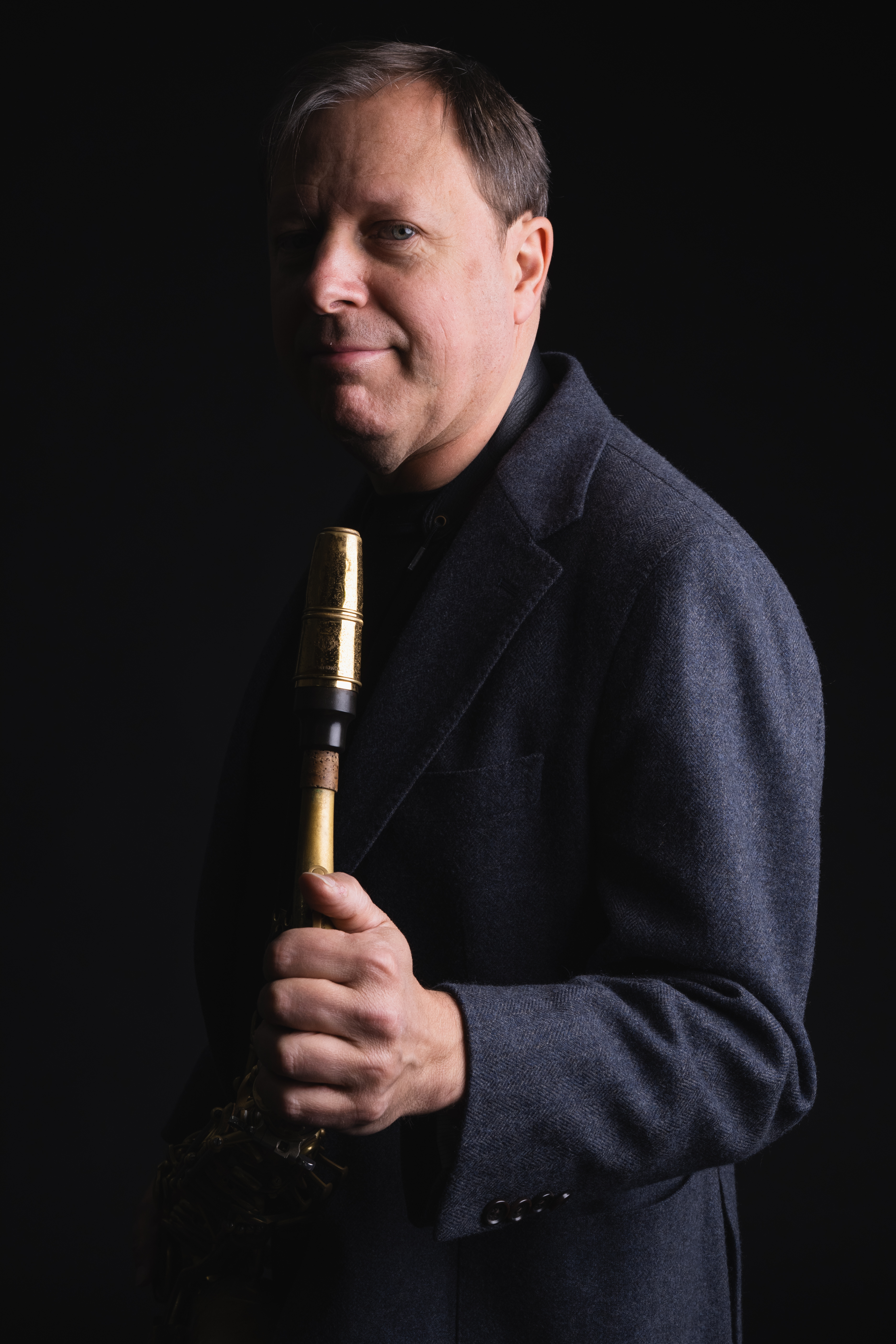
* Chris Potter’s Alive With Ghosts Today is out now on the Edition label. The photograph of Potter is by Dave Stapleton. Bandscamp link: https://chrispotterjazz.bandcamp.com/album/alive-with-ghosts-today

John Hiatt says goodbye (maybe)

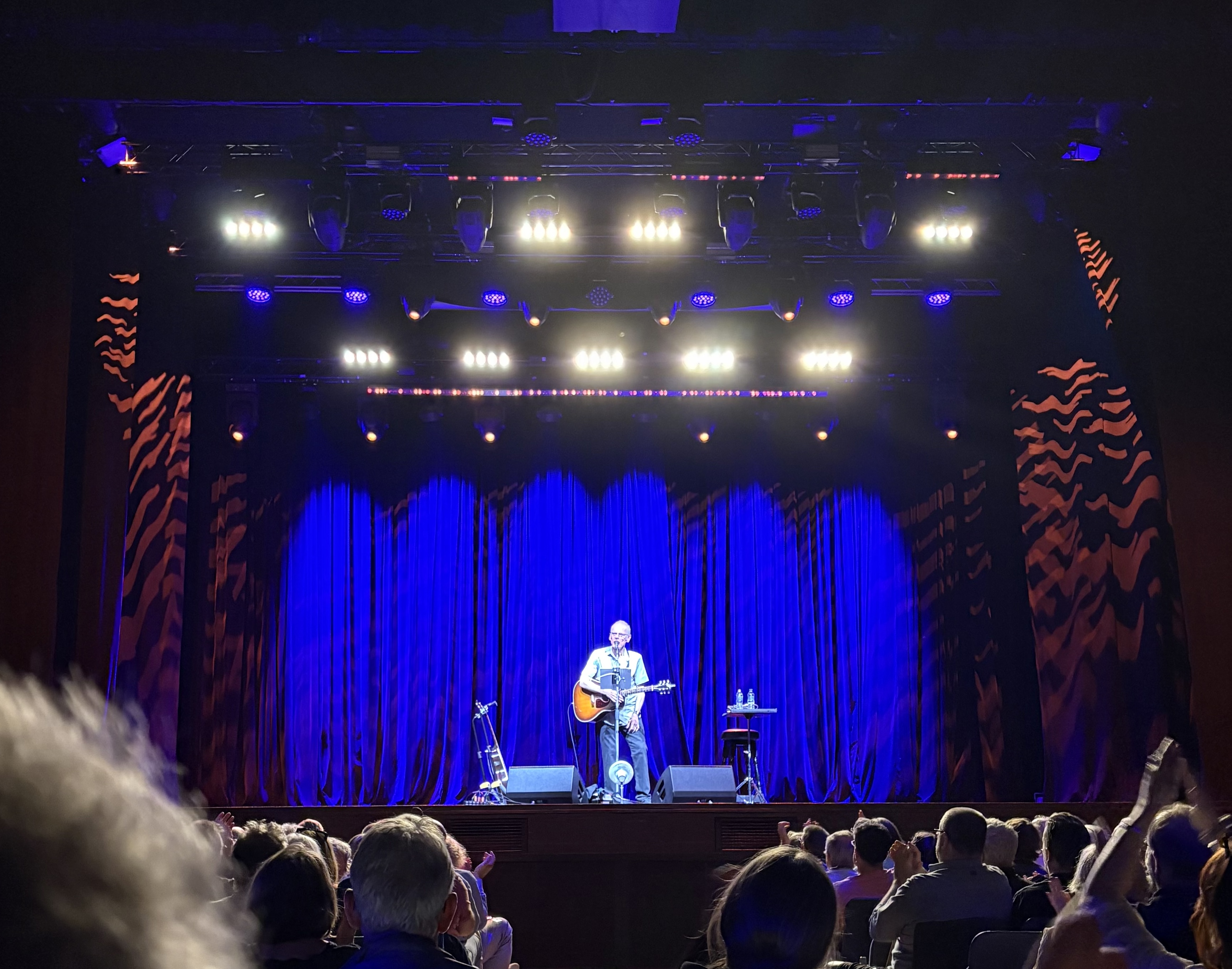
Last night’s gig at the O2’s Indigo was prominently billed, John Hiatt pointed out, as being part of his Farewell Tour. “If I come back next year,” he said, “what are we going to call it?” Or words to that effect.

I’m inclined to think that whoever thought up the title might have been correct. At 73, quite frankly, Hiatt doesn’t have much of a voice left. The straining to hit the higher notes wasn’t helped, early in the set, when his tuning gizmo misled him into tweaking his whole guitar a semitone high. It wasn’t until a dozen of the 20 songs had gone by that his use of a harmonica revealed the error. Somebody came up with a replacement gizmo, the tuning was corrected, and the last run of songs sounded more comfortable.

So perhaps he will be back, encouraged by the warmth of the response from those who had made the journey to the ghastly O2’s more intimate performance space and who feel an enormous fondness towards a man who may never have achieved the solo stardom many forecast as he went from label to label during his early years but who, despite all the many successful covers his songs have racked up, remains the best interpreter of songs that tend to stay in the heart.

Here we had a selection of compositions dating from 1987 to 2010, plus a brand-new one, the sentimental ballad “Weightless in My Arms”. His choice included the title tracks of the albums Slow Turning, Perfectly Good Guitar, Riding with the King, Crossing Muddy Waters, Master of Disaster and The Open Road. There were the big earners: “Thing Called Love”, “Have a Little Faith in Me” and “Tennessee Plates”, which Ridley Scott used in the soundtrack to Thelma & Louise. There were beauties like “Miles to Go”, “Real Fine Love”, “Long Time Comin'”, “Thunderbird”, “The River Knows Your Name”, “Lift Up Every Stone”, “Adios to California” and “Feels Like Rain”. There was a special welcome for “Memphis in the Meantime”, from Bring the Family, the 1987 album which, with accompaniment by Ry Cooder, Nick Lowe and Jim Keltner, really established his reputation.

I was particularly grateful for “Across the Borderline”, the song he wrote in 1982 with Cooder and Jim Dickinson for Tony Richardson’s film The Border. I remember him singing it at Hammersmith Odeon with Cooder, Lowe and Keltner in 1992, when they were known as Little Village, and the effect it had. It was covered in concert by Dylan and Springsteen, and I wrote a long piece about it at the time, which gave birth in the Independent on Sunday (thanks to Tim de Lisle, then the paper’s arts editor) to a much-imitated series called Lives of the Great Songs. It’s a song to rank with Woody Guthrie’s “Deportee (Plane Wreck at Los Gatos)” for its poignancy and enduring relevance.

Had this been a request show, what would I have asked for that Hiatt didn’t select from his reportoire of songs about cars, rivers and the mysteries of human heart? Oh, “Icy Blue Heart”, “Lipstick Sunset”, “Unoriginal Sin”. “The Way We Make a Broken Heart”. And “All the Lilacs in Ohio”, from his last album, Leftover Feelings, with the great Jerry Douglas.

If you were there last night without knowing anything about him, which seems unlikely, you might have been made uncomfortable by the frailty of the singing and the lengthy tuning difficulties. (But you might have enjoyed his joke about adopting Guy Clark’s approach to tuning, which involves selecting the one string that’s definitely out and tuning the rest to that.) Mostly I think, we were just grateful to see him, to hear those wonderful songs from the man who wrote them, and to say hello. Or goodbye. Or whatever it was.