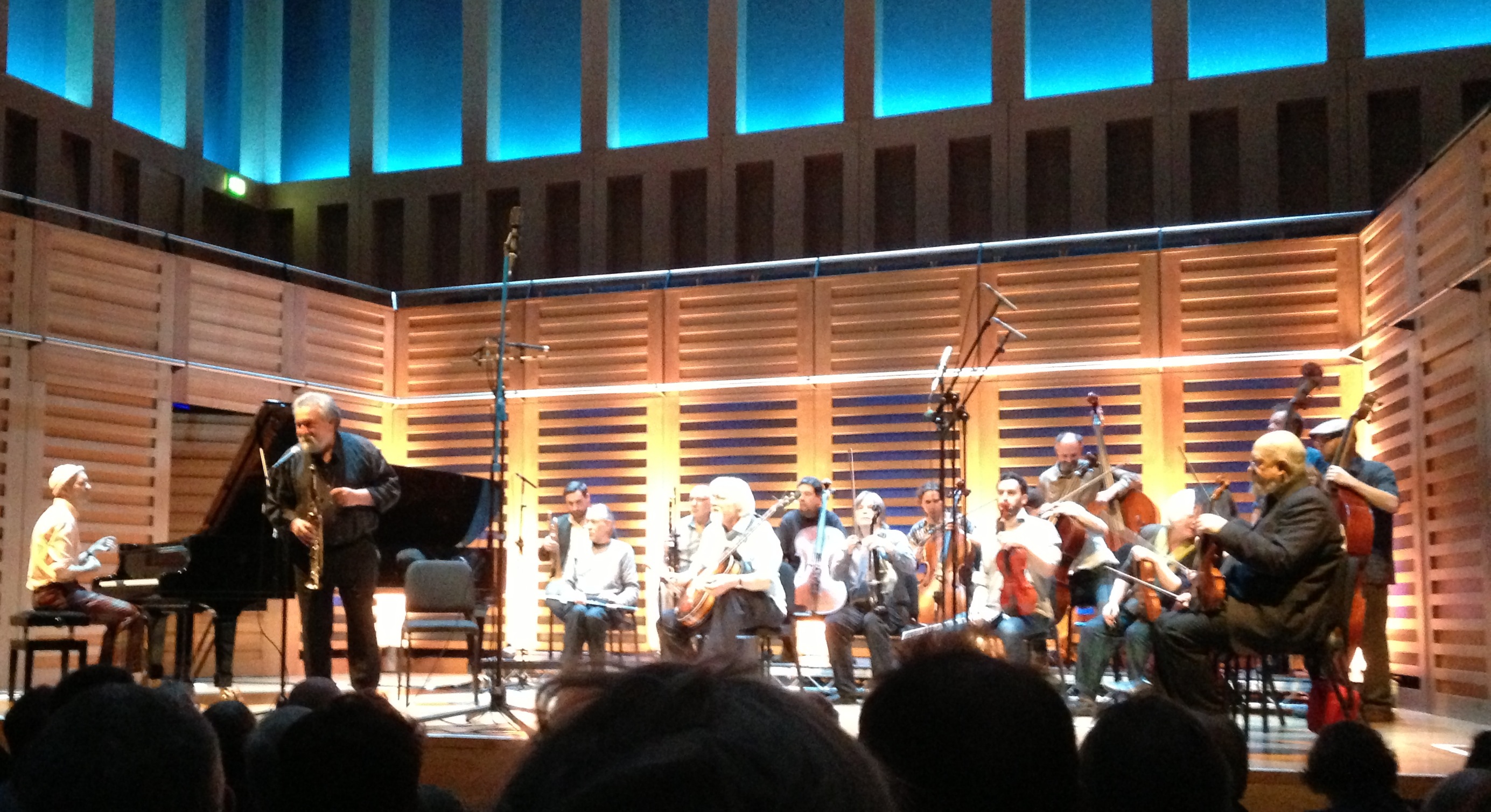
ECM in London
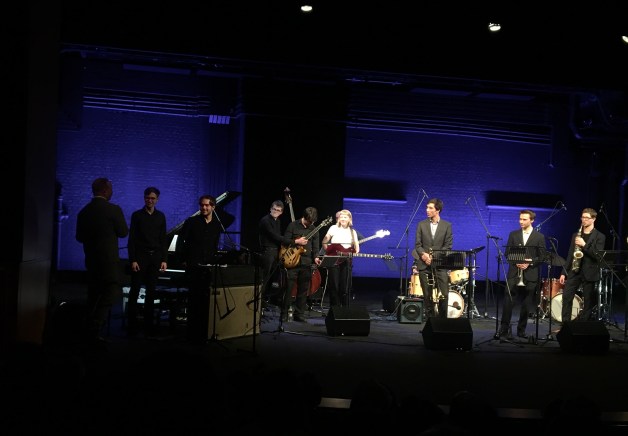
No apologies for returning, one last time, to the continuing celebrations of ECM’s 50th anniversary. For a short festival at the Royal Academy of Music, the director of the jazz programme, Nick Smart, invited several of the label’s luminaries — the bassist Anders Jormin, the pianists Craig Taborn and Kit Downes, the singer Norma Winstone and the saxophonist Evan Parker — to spend a week working with students before presenting the results in two public concerts on Thursday and Friday night.
Jormin’s compositions — very much what many people would think of as archetypal ECM music, with a restrained lyricism that seemed to have its deepest roots in Nordic folk music — were played by a septet notable for the outstanding singing of Ella Hohnen-Ford and Alma Naidu. Downes and his colleagues in the trio called ENEMY, the bassist Petter Eldh and the drummer James Maddren, enhanced their tricky compositions with arrangements for string quartet, three woodwind and two percussionists, of which the most successful were “Last Leviathan”, a piece from Downes’s ECM debut, Obsidian, fetchingly rearranged for strings and piano, and Eldh’s eventful “Prospect of K”, cunningly scored by Ole Morten Vågan.
For the festival’s closing set, Smart led the Academy big band through a sequence of rare and unheard compositions by the late Kenny Wheeler, another ECM stalwart, featuring Winstone, Parker and Stan Sulzmann. The juxtaposition of the two tenors of Parker and Sulzmann created a contrast that exemplified the breadth of Wheeler’s conception — although their thunder was almost stolen by the alto saxophone of Lewis Sallows, a student whose long solo displayed a disinclination to plump for stylistic orthodoxy and a powerfully dramatic imagination. The crisp and flexible drumming of Ed Richardson, an Academy graduate, also took the ear.
Twenty four hours earlier, Sallows had also been part of the 12-piece band (pictured above) which provided the festival’s highlight. Craig Taborn is already known as one of the most creative and original pianists of the current era; those who were present at the Vortex for his solo gig last year speak of it in awed tones. Friday’s set showed him to rank alongside Steve Lehman, Vijay Iyer, Mary Halvorson and Eve Risser as an adventurous composer-leader who knows how to exploit the resources of a larger ensemble while retaining all the spontaneous interaction of a small group.
Although this was music of great sophistication, there were times when its sheer fire put me in mind of those great Mingus units of the late ’50s and early ’60s, when the members of the Jazz Workshop learnt their parts by ear and took it from there. The trombonist Joel Knee, the trumpeter Laurence Wilkins and the two altoists, Sallows and Sean Payne, threw themselves into the project with enormous skill and gusto, and the ear was also taken by the guitarist Rosie Frater-Taylor, whose opening solo was strikingly thoughtful and who made significant contributions to the riff-ostinatos on which several of the pieces were built.
Taborn’s own solos on acoustic and Fender-Rhodes pianos demonstrated his gift for gathering all the energy once associated with Cecil Taylor and using it to activate the coiled springs of his own imagination. During an unaccompanied introduction, he made the Rhodes roar in a way that completely divested the instrument of its familiar role as a provider of a cool funky background sound. It was one of many moments, individual and collective, that made the event such a success.

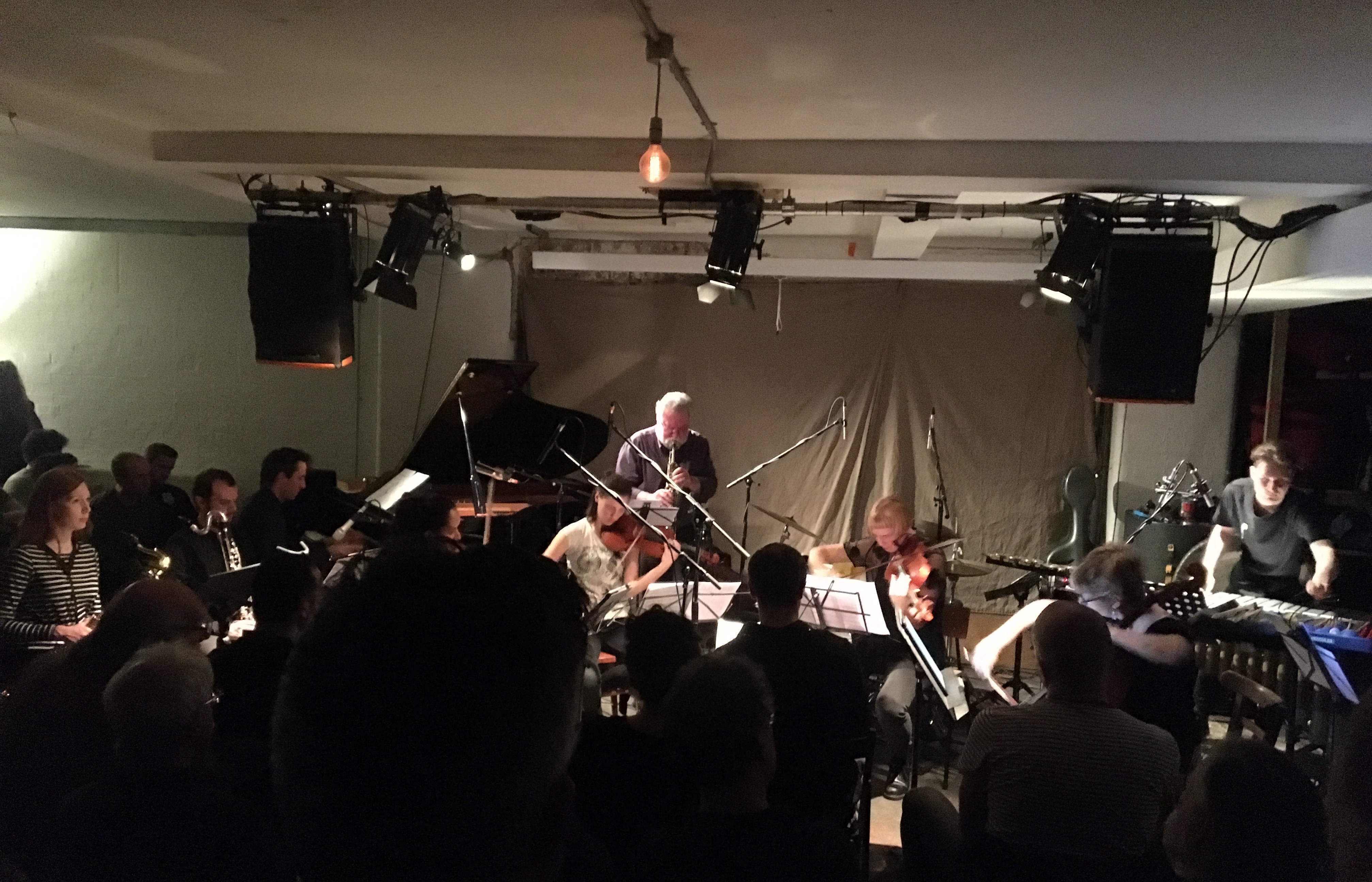
 If I were given the freedom to design a place at which people could gather for the purpose of playing and hearing music, it would probably end up very much like Cafe Oto. Some of the Dalston venue’s features include an entrance straight off an interesting side street, chairs and tables on the pavement for use during the intervals between sets, large picture windows to give passers-by a glimpse of the goings-on inside, an informal and intimate performance space with no stage, with discreet lighting and perfect sound, a good piano, the option to sit or stand, unselfconscious interaction between musicians and listeners, excellent refreshments, bike parking. And, most important, an audience equipped with open ears and minds, not drawn from a single demographic.
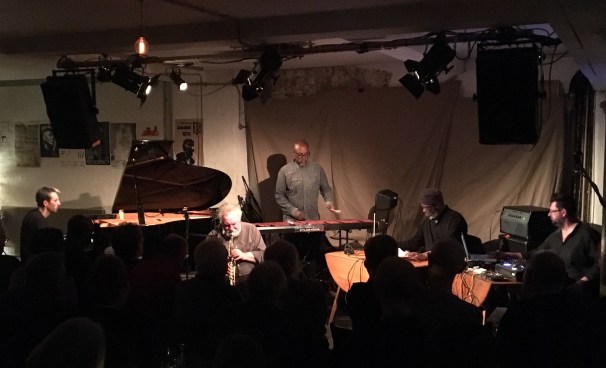
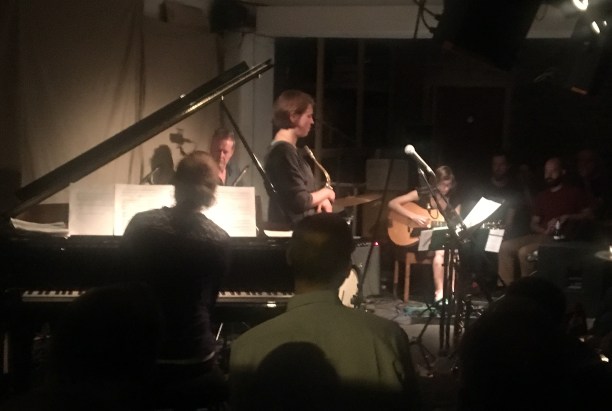

 Free improvisation is a complex business. Is the idea to create something from nothing that nevertheless sounds as though it was pre-composed? Surely not, although that can be an occasional effect. The reissue of Karyōbin, the SME’s second album, taped in February 1968, shows the music in an embryonic state, when individuals were still mixing and matching their discoveries and feeling their way towards a true group music.
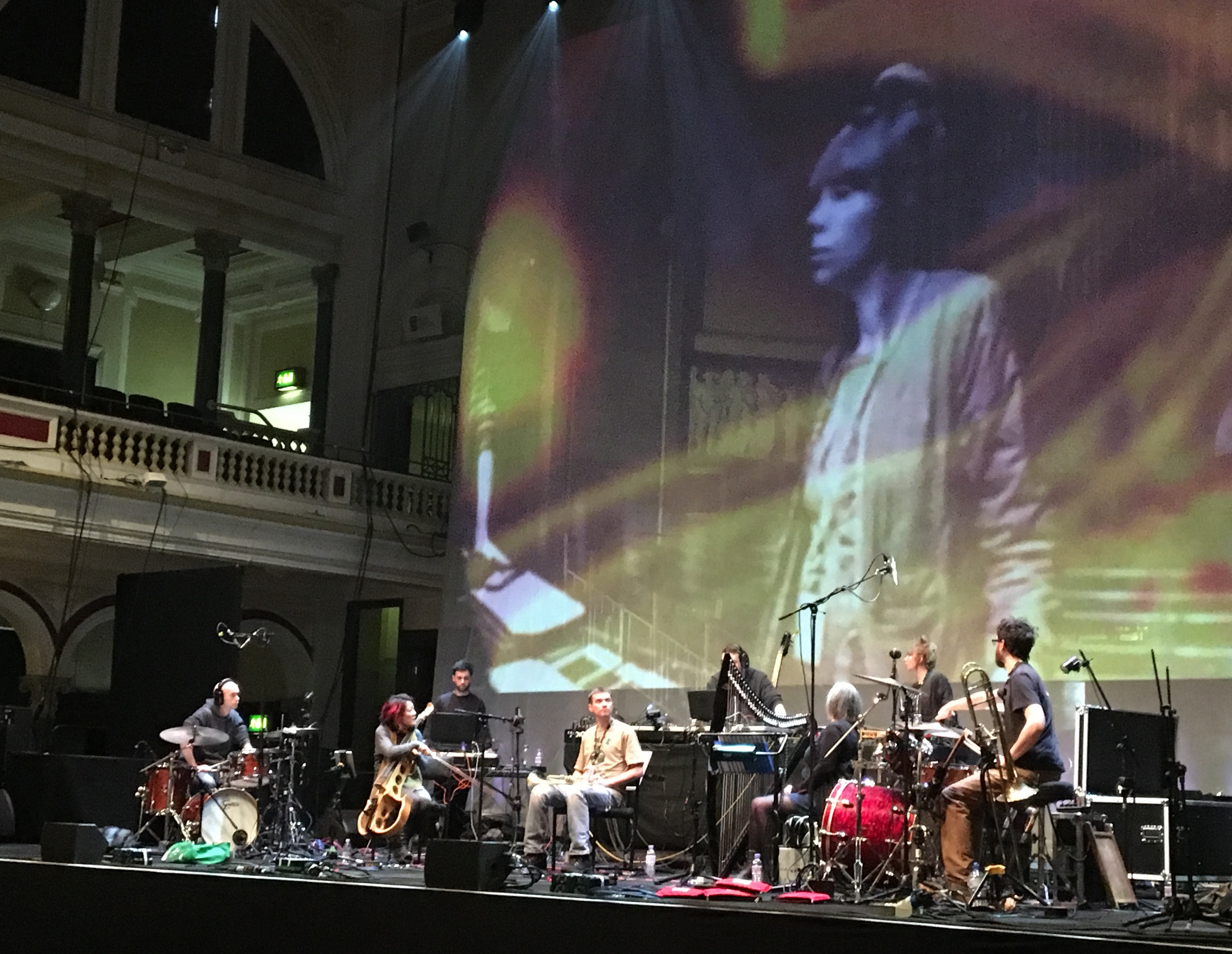 It was with regret that I had to leave Hull after only 24 hours of Mind on the Run, the weekend festival celebrating the life and work of Basil Kirchin, the visionary composer who spent three decades in the city, working in complete obscurity until his death in 2005, aged 77.
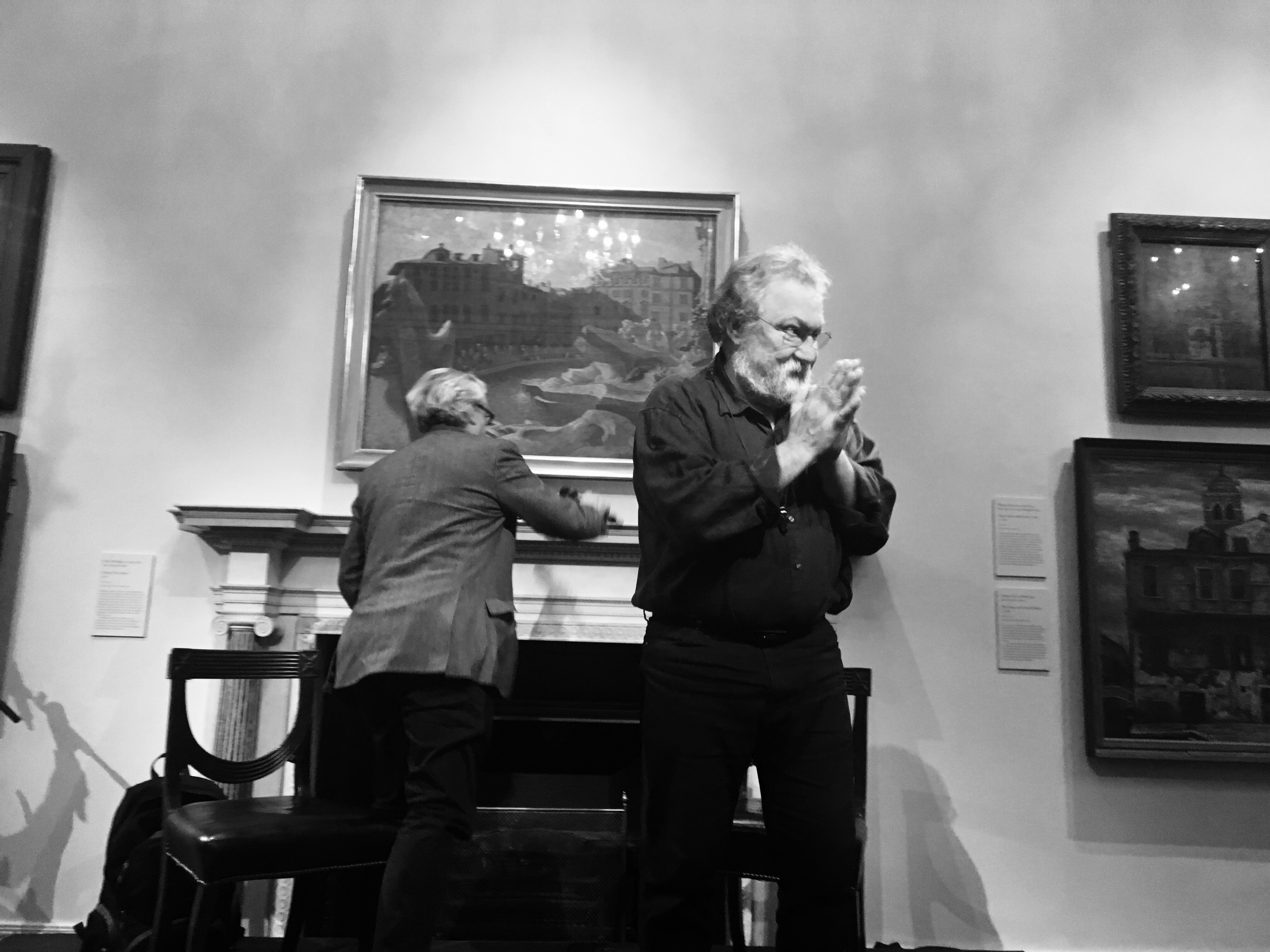 As I was on the way to see the blockbuster Abstract Expressionism show at the Royal Academy the other day, it was pointed out that jazz and AbEx seem to share a special relationship. I suppose that has something to do with synchronicity. Franz Kline and Mark Rothko were creating their revolutionary canvases at the same time as Charlie Parker and Thelonious Monk were making the music that changed everything, and the two developments seemed to share a sensibility. It’s easy to imagine Kline or Rothko playing “Ornithology” or “Well, You Needn’t” while working on a canvas in a Greenwich Village studio.
 Alexander Hawkins and Evan Parker were two of the winners at the recent Parliamentary jazz awards: the former for being the instrumentalist of the year, the latter for, well, being Evan Parker. Last week they appeared together at the Vortex. Alex is 35; Evan is 72. What they gave us was a demonstration of the special ability of jazz-based free improvisation to span the generations without forcing the younger man to play the older man’s music, or vice versa. Musica franca = lingua franca, you might say.
 Jez Nelson’s monthly Jazz in the Round nights at the Cockpit Theatre in Marylebone are as good a way to hear improvised music in London as anyone has yet devised. A couple of hundred listeners settle themselves down in mini-bleachers on all four sides of the floor, where the musicians set up to face each other, creating an unusual degree of intimacy radiating through 360 degrees. As a member of Empirical — I think it was Nathaniel Facey, the alto saxophonist — told last night’s audience, it makes you play differently. In a good way.