Skip to content

Posts from the ‘Uncategorized’ Category

A Thousand Ancestors

A Thousand AncestorsThe picture of the oarsman was taken by the Costa Rican photographer Michelle Arcila, and is part of project called A Thousand Ancestors, conceived with her husband, the Norwegian bassist Eivind Opsvik, at their base in Brooklyn. The results are out now in a 12×12 box containing 10 of Arcila’s prints and a matching number of Opsvik’s short solo pieces for bass, organ and other instruments, included in both vinyl album and CD forms.

According to a piece on Opsvik’s excellent website (which also includes links to the music he makes in a group called Overseas with the saxophonist Tony Malaby, in a duo with the singer/songwriter Aaron Jennings, and with others), the individual pieces of music correspond to specific images. The artists describe it as “an exploration of family history and the continuing influence of ancestral narratives on the present generation.”

The aim, they say, is to “slow time for the observer, and allow him/her to perhaps uncover distant buried memories of their own during the encounter.” Here’s an example: an image and a piece titled “A Strange Gratitude”.

The images and the music are as easy and rewarding to appreciate separately as together. Arcila’s photographs — whether portraits, landscapes, interiors, or close-ups of flowers and graves — display a cool, poised vision that certainly encourages you to spend time examining them (here’s her Flickr gallery). Opsvik’s miniatures incorporate a certain amount of relatively gentle noisemaking while also featuring solo and overdubbed arco strings in passages of powerful lyricism, sometimes using systems-like structures, occasionally floating free. Like his partners’ photographs, they’re austere but approachable.

Both elements are strong on atmosphere. I’d sign Opsvik up for a film soundtrack tomorrow. And I might very well ask Arcila to shoot it, too.

* A Thousand Ancestors is released on Opsvik’s Loyal label. The details are on his website: eivindopsik.com.

Lush laments in Dalston

Hakon Stene at Cafe OtoIf I had to persuade you to buy one album this year by someone of whom you’ve probably never heard, it would almost certainly be Håkon Stene’s Lush Lament for Lazy Mammal. I wrote about it here in March, and last night Stene brought his four-piece Ensemble to the Cafe Oto.

In addition to the leader on marimbas and guitars, the group comprised Tanja Orning on cello, Heloisa Amaral on piano and organ, and Sigbjørn Apeland on harmonium. They played through the compositions by Laurence Crane, Gavin Bryars and Christian Wallumrød that make up the CD, opening them up to the further possibilities inherent in the act of live performance, even when the performers are reading from a score.

Crane’s gorgeously drifting compositions, such as “Prelude for HS”, and “Blue Blue Blue”, feature dreamlike slow-motion harmonic shifts that, in these tintinnabulating interpretations, made me think of some lost blueprint for the instrumental tracks of the ballads from Pet Sounds. The same composer’s “Bobby J” — which we were told had been inspired by the Tour de France rider Bobby Julich — saw Stene apply his electric guitar to a similar format. The darker colours and hovering surges of Bryars’ “Hi Tremelo” created a mood of subdued ecstasy, while Wallumrød’s two pieces opened up the structures a little, and on one of them, called “Low Genths”, Stene made use of his second marimba, tuned a quarter-tone away from the first. In all, an hour of extremely beautiful and compelling music.

In a modest sort of way, the evening was a showcase for Hubro, the interesting young Norwegian label which released Stene’s album and has a catalogue that also includes recordings by Huntsville, the trio called 1982 (which includes the Hardanger fiddle virtuoso Nils Økland), the piano trio Moskus, Erik Honoré, and others.

An opening set was played by Sigbjørn Apeland, whose Hammond-size single-manual harmonium was placed front and centre of the performance floor so that the audience could watch his hands as he moved between gentle Nordic folk and hymnal elements, at one point tearing and folding pages from what looked like the London Overground timetable and stuffing them between the keys to create middle-register drones on which then he elaborated at the extremes of the instrument’s range. He has a new album, too. It’s called Glossolalia, and if it’s anything like last night’s recital, it will be worth investigating.

Abelardo Barroso

Aberlardo BarrosoI had to laugh the other day when I read an obituary of Oscar de la Renta, the Spanish-born designer of expensive frocks. A man who understood the language of clothes, de la Renta said that he always wore a tie “because I have this complex that if I walk into a place wearing a colourful shirt, someone will stop me and say, ‘I’m sorry, but the Latin band comes through the other door.'” He could have been thinking of Abelardo Barroso — pictured above, in an illustration from the 1950s — and Orquesta Sensación.

Barroso’s story is one with which I was not familiar until the arrival of Cha Cha Cha, a new World Circuit compilation of hits from the latter part of his career. In the 1920s and ’30s, Barroso had been one of Cuba’s most popular singers. Then fashions changed and he hit hard times until a meeting with Rolando Valdes, the leader of Orquesta Sensación, in the mid-’50s restored his fortunes.

His speciality was charanga, Cuba’s popular music before the arrival of salsa. The basic formula is two violins, a flute, piano, bass, two or three percussionists, two or three backing singers, and a lead vocalist who gets a chance to improvise when the band leaves the statement of the song behind and drops into a swaying montuno, or vamp, giving the lead singer a chance to engage in call-and-response improvisations with his chorus. It’s not as brash as Latin music became when trumpets and trombones came along to replace the violins, and it has a special charm, in part deriving from the sense that the singers are engaged in a conversation, whether about that chica who just strolled past or the taste of pancakes with sugar syrup and coconut.

The 14 tracks include “El Manisero” (better known to most of us as “The Peanut Vendor”) and a sweetly mournful song called “La Hija de Juan Simón”, the story of a gravedigger who has to bury his own daughter (listen to it here). There’s also a wonderful thing called “La Reina del Guaguancó”, featuring just voices and percussion weaving around each other in a three-minute masterpiece of raw Cuban soulfulness which will be appreciated by fans of Ray Barretto’s immortal “El Watusi”. It’s worth the price of the album alone.

Barroso was in his fifties when he made these recordings, and in fine voice. He died in 1972, a few years after an operation on his vocal cords had robbed him of his ability to sing. Compiled by World Circuit’s Nick Gold, the man behind the Buena Vista Social Club phenomenon, Cha Cha Cha is a nice way either to remember him or, if you’re like me, to make his acquaintance.

* The painting of Abelardo Barroso is from the booklet accompanying Cha Cha Cha. It is uncredited. 

Pieces of Robert Wyatt

The Amazing BandWhen I read, in the new issue of Uncut magazine, that Robert Wyatt has decided to stop making music, I felt an immediate pang of dismay. So I rang him up to see if he really meant it. His reply was to tell me a little story about the novelist Jean Rhys, who, after a long period of inactivity, responded to her publisher’s gentle suggestion that she might like to write another book by asking him if he’d enjoyed her last one. “Yes, of course,” he answered. “Well, read it again,” Rhys said.

We could all do a lot worse than work our way through Robert’s albums, starting with 1970’s End of an Ear, which includes his fabulous deconstruction of Gil Evans’s “Las Vegas Tango”, and concluding with 2010’s magnificent ‘…for the ghosts within’, on which he shares the credit with the saxophonist Gilad Atzmon and the violinist/arranger Ros Stephen. And we could cherish memories of live performances stretching, in my case, from the Soft Machine at Croydon’s Fairfield Halls in 1970 to Robert’s guest appearance — singing and whistling on “Rado de Nube” and playing cornet on “Song for Che” — with Charlie Haden’s Liberation Music Orchestra as part of Ornette Coleman’s Meltdown season at the Festival Hall in 2009.

We can also read Marcus O’Dair’s Different Every Time, an “authorised biography” of Robert, published today. Diligently researched and sympathetically told, it gives us the best all-round view we’re likely to get of the man who came to attention baring his torso behind a drum kit with Soft Machine everywhere from UFO to the Proms before the accident in 1973, at the age of 28, that cost him the use of his legs and propelled him into a different sort of existence, the one that produced Rock Bottom, “I’m a Believer”, Ruth is Stranger than Richard, “Shipbuilding”, “At Last I Am Free”, Old Rottenhat, Dondestan, Shleep and Comicopera, as well as collaborations with the likes of Carla Bley, Brian Eno, the Raincoats, Scritti Politti, Hot Chip and many others, most of them listed in O’Dair’s discography.

I say “most of them” because I’ve noticed an omission: a 1970 session with the Amazing Band, featuring the great cartoonist/illustrator Mal Dean on trumpet, Rab Spall on violin and accordion, Maia Spall on voice, Mick Brennan and Chris Francis on alto saxophones, Jim Mullen on bass and harmonica and Wyatt on drums and voice. Soon after they recorded it, Robert gave me an acetate of the proposed album, with a sleeve he’d made up himself, featuring the collage you see above. It wasn’t until 1997 that the music — just under 40 minutes of free improvisation — finally saw the light of day, released under the title Roar on the FMR label.

I listened to the acetate again last night and it remains a lovely example of the kind of open-minded, non-idiomatic, anti-materialistic music that was in the air back then. And still is, if you look hard enough. I’m sorry, of course, that seemingly there won’t be any more of it from Robert himself. But what he’s given us is quite enough to be going on with.

* Different Every Time is published by Serpent’s Tail (£20). Robert Wyatt will be talking to Marcus O’Dair at the Queen Elizabeth Hall on November 23, as part of the EFG London Jazz Festival.

A night with Mississippi Records

Mississippi RecordsEric Isaacson lives in Portland, Oregon, where he founded Mississippi Records in 2003, releasing vinyl LPs that anthologised pieces of music from some of the thousands of 78s he had been collecting, building up a picture of vernacular music during the first half-century of recorded sound. As a child, he had created his own Beatles LPs on tape by copying down the running order of each album and recording every track off the radio on cassette before dubbing them into the correct sequence. That occupied him between the ages of seven and 10. After that, he never looked back. Or perhaps that’s not quite the right way to put it.

He was the host of an event at the Cafe Oto in London last night, presenting three of the artists featured on his label: the singer and guitarist Brian Mumford, performing as Dragging an Ox Through Water, the cellist Lori Goldston, who toured with Nirvana in the year before Kurt Cobain’s death, and the lap-steel player Marisa Anderson. But he opened the evening with an illustrated talk titled “A Cosmic and Earthly History of Recorded Music According to Mississippi Records”.

A man of strong opinions, who doesn’t like saxophone solos and thinks that “very little good music” was recorded between 1933 and 1952, in other words between the depths of the Great Depression and the heyday of Moe Asch’s Folkways label, he proved entertaining company. After playing sounds alleged to be those of a dying star and of the potter’s grooves inscribed in a Grecian urn, he reminded us of the epidemic of “laughing” records that proved popular in the 1890s, a phenomenon which survived at least into the 1950s, when I remember listening to Children’s Favourites, the BBC Light Programme’s Saturday-morning show, in the hope that it would feature “The Laughing Policeman”.

The centrepiece of Isaacson’s address came in a 20-minute collage of film clips edited from his own collection, illustrating African American music more or less in the raw. It began with wonderful footage of the Staple Singers (pictured above), with the teenaged Mavis in staggering form, and included bits of Bo Diddley, street and church singers, the Ronettes, James Brown, Sister Rosetta Tharpe and Claude Jeter with the Swan Silvertones before climaxing with Mahalia Jackson singing “Trouble of the World” in front of a congregation including Lana Turner and Sandra Dee during the funeral scene from Douglas Sirk’s 1959 melodrama Imitation of Life. He added with a clip of Nina Simone in riveting free-association mode at the Montreux Jazz Festival (you can find it here, from 37:30 to 44.40).

Of the live performers, I was taken by Lori Goldston’s powerful arco pieces, all skirling double and triple stops, her cello run through a Fender Twin amp, and the way her more delicate pizzicato work made the instrument sound like an oud. Brian Mumford/Dragging an Ox Through Water performed in the dark, without stage lighting, and made me think of what the late guitar visionary Sandy Bull might have sounded like, had he been subjected to the influence of Suicide and Metal Machine Music: tremulous rockabilly vocals completely masked by distortion, heavily reverbed chords bleeding into each other at high volume, a seemingly arbitrary but nonetheless dramatic sense of structure.

The danger is that such music becomes merely picturesque, no more than the sum of its references. Goldston and Mumford get beyond that. But Mavis Staples, Mahalia Jackson and Nina Simone: those are hard acts to follow.

Coltrane in the Temple

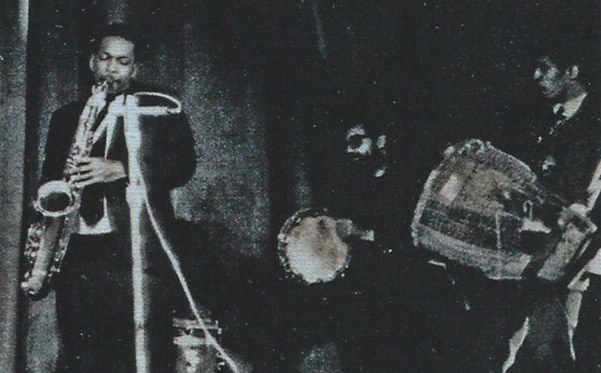
John Coltrane : Temple UThe final period of John Coltrane’s career is the great unresolved topic of jazz, and the arguments over its meaning and value will probably never cease. How could someone who in 1964 had reached the plateau of apparent artistic perfection represented by Crescent and A Love Supreme then make such a radical transition into the area of turbulence and uncertainty that he occupied in the period until his death in 1967, and which is embodied in a new two-CD set titled Offering: Live at Temple University?

I suppose the answer is that Crescent and A Love Supreme did not represent a plateau at all. That was just an illusion created by the fact that Coltrane went into a recording studio on those particular days, laid down the music on which he had been working, and then saw the results released by his record company, subsequently to be reviewed by critics, bought by his fans, and slotted neatly into a narrative of one man’s artistic evolution. The jazz public, particularly in Europe, has always seen the history of jazz as a progression from one recorded artefact to another; that is not, in general, how the musicians experience it. Whereas we think of A Love Supreme as one of the great music’s pillars, to Coltrane it may have been nothing more than a milestone that had already disappeared from his rear-view mirror by the time of its appearance in the record stores.

Offering is a complete and official release of a 1966 concert previously available only in partial and bootleg form. The combined production staff of Impulse Records, Coltrane’s label at the time, and Resonance Records, who specialise in unearthing previously hidden gems, have restored the tapes originally made by WRTI-FM, the radio station at Temple University in Philadelphia, during an event that was by all accounts poorly attended and received a mixed response from those who did turn up. Ashley Kahn tells the fascinating story in his sensitive and erudite sleeve note, piecing together the details of an evening on which three members of Coltrane’s regular band — Pharoah Sanders, Alice Coltrane and Rashied Ali — were joined by Sonny Johnson, depping for Jimmy Garrison. More significantly, the leader was happy to welcome a platoon of auxiliary percussionists (Robert Kenyatta, Algie DeWitt, Umar Ali and perhaps others) and to give space to solos by a couple of spirited young alto saxophonists, Steve Knoblauch and Arnold Joyner, whose impromptu appearances that evening represent the only mark they made on jazz history. 

Indistinct as the sound of the rhythm section might still be on the restored recording, the acoustic effect is probably very much as the audience experienced it that night. More important, the solo voices come through with great clarity, and none to better effect than that of Coltrane, whose tenor improvisations on the long, free-associative versions of “Naima” and “Crescent”, which constitute the first of the two discs, are strong in tone, wonderfully poised and — as Kahn points out — dense with closely argued motivic development. The title track is one of his lovely prayer-ballads. But during “Leo”, on which he is heard on soprano, tenor and flute, and on the closing “My Favourite Things”, he also uses his voice, chanting and apparently thumping his chest in an attempt to produce the sound he was after: trying to get closer, it seems, to speaking in tongues.

We know that he was strongly influenced by the music of Albert Ayler, who used his saxophone as a tool with which to attain spiritual transcendence. It has often been said, too, that the use of LSD was a factor in the creative decisions underlying Coltrane’s final years. Had he lived beyond his 41st year, he might one day have sat down and explained his thinking in detail. Since that won’t happen, we’re left to work it out for ourselves. Offering can’t answer all the questions, but it’s a big chunk of priceless evidence. And it contains some incontestably majestic saxophone-playing.

* The photograph is a cropped version of one that appears in the booklet with Offering: Live at Temple University (Impulse/Resonance), where it appears by courtesy of the University of California’s Special Collections and Archives and the Frank Kofsky Archives.

Postscript: A benefit for Kenny Wheeler

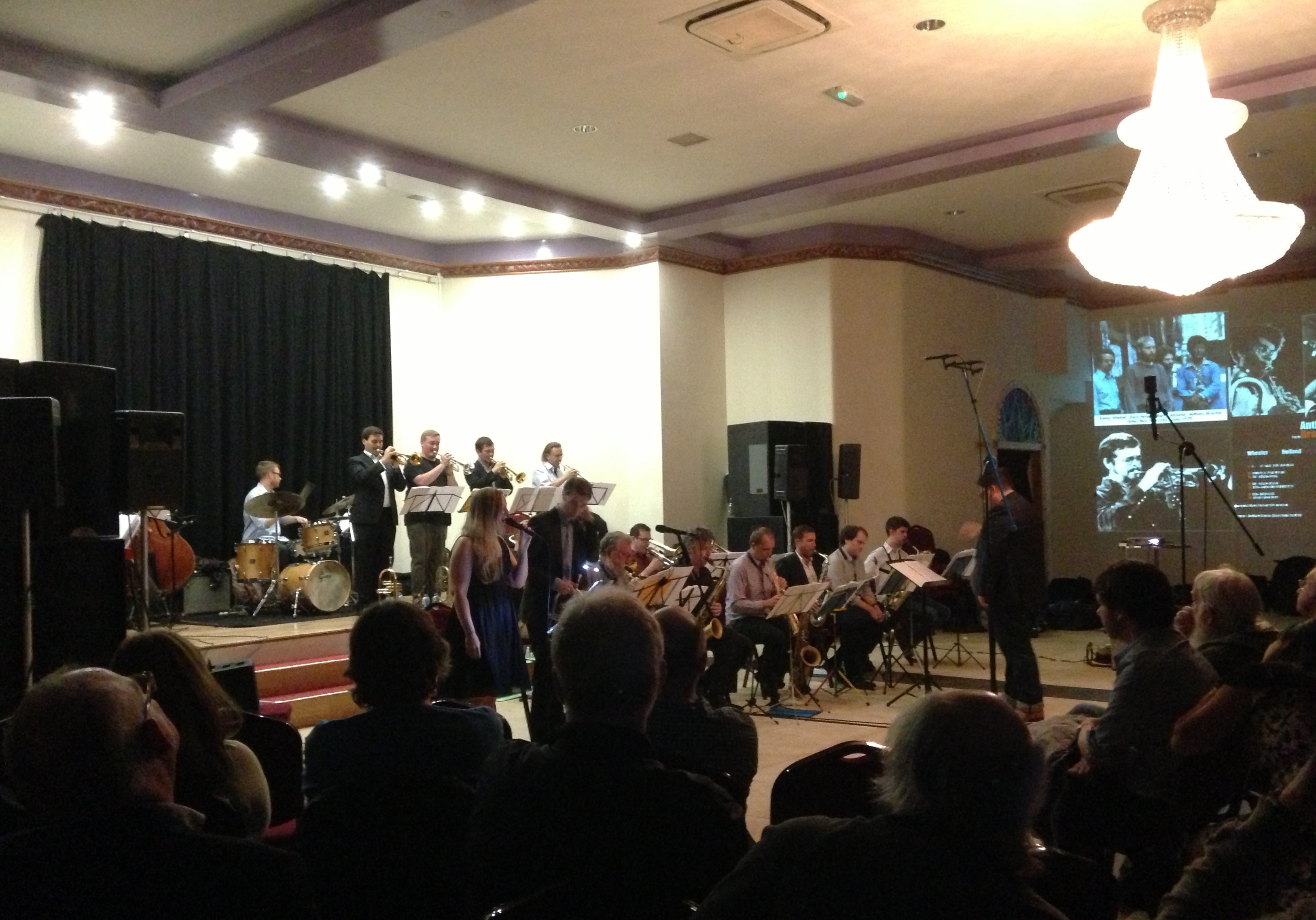
Reuben Fowler Big Band 2The concert organised for the benefit of Kenny Wheeler in East London on Friday night ended with an astonishing set from the Reuben Fowler Big Band. The 22-strong outfit played three of Wheeler’s compositions — “The Jigsaw”, “Sea Lady” and The 2005 Suite — and mastered their complexities with a verve and precision that would have delighted the composer, had his health permitted his attendance at the old Dalston Odeon cinema, now known as Epic.

Fowler, only 24 years old, left his trumpet in its case on this occasion but proved to be an adept conductor, exerting a degree of control that allowed the music to breathe. He began his musical life in brass bands in his native Yorkshire, which may be why he responded at an early age to Wheeler’s music, with its love of brass sonorities (here articulated by five trumpeters, all doubling flugelhorn, and four trombones). 

Wheeler’s role was played successively by Steve Fishwick, Martin Shaw and George Hogg, all of whom performed with distinction, as did Brigitte Beraha, singing the parts originally written for Norma Winstone. Evan Parker’s soprano saxophone introduction to “Sea Lady” was even more striking than on its original appearance as part of Wheeler’s 1990 ECM album, Music for Large & Small Ensembles. The suite, written by Kenny for his 75th birthday tour and originally featuring Lee Konitz, has never been recorded; that oversight should be rectified as soon as possible, preferably with the musicians who did it such justice on Friday.

The evening also included a remarkable set by the Alison Blunt Ensemble, in which the violinist led her dozen musicians — all strings, with the exception of Mark Sanders on drums and Neil Metcalfe on flute — produced striking interpretations of some of Wheeler’s compositions, with the benefit of a mere hour’s rehearsal but much empathy and spirit. 

A lot of people had taken considerable trouble to make this a memorable event, not least Parker, the principal organiser, and Blanca Regina, whose projections on a side wall provided a constant reminder of the evening’s subject. All the money raised will go towards defraying the costs of health care for Kenny and his wife, Doreen. When I wrote a piece on this blog in advance of the concert, some readers abroad asked how they could make a contribution. There is now a PayPal account for that purpose; its email address is friendsofkennywheeler@gmail.com. Go to http://www.paypal.com and click on “Send Money”.

A benefit for Kenny Wheeler

Kenny WheelerFew important musicians have made more noise with less fuss than the trumpeter, flugelhornist, composer and bandleader Kenny Wheeler. A vital figure on the British scene since his arrival in London from his native Canada in 1952 at the age of 22, he emerged from early employment with dance bands to create a reputation that flourished despite a temperament for which such words as “modest” and “retiring” seem entirely inadequate.

Kenny is a musician of immense range. I’ve been listening to some of his early work lately, with the saxophone-playing racing driver Buddy Featherstonhaugh’s excellent pianoless quintet of 1956, which recorded a couple of EPs for Pye, and also to his classic ECM album of 1997, Angel Song, with a fabulous quartet completed by Lee Konitz, Bill Frisell and Dave Holland. In between he contributed to any number of great records, among which I particularly cherish two classics of the early British avant-garde, as nurtured at the Little Theatre Club: the Spontaneous Music Ensemble’s Karyobin (Island, 1968) and Tony Oxley’s The Baptised Traveller (CBS, 1969). 

Problems with his own and his wife’s health have meant that, at the age of 84, Kenny has been unable to play for some months. For his benefit, his old friend and colleague Evan Parker has organised a concert tomorrow night — Friday, August 15 — at a place called Epic, 13-15 Stoke Newington Road, London N16 8BH (admission £12-£10). A stone’s throw from the Vortex and Cafe Oto, the gig will feature the altoist Ray Warleigh’s quartet, a group with Parker, Steve Beresford, Olie Brice and Mark Sanders, the Alison Blunt Ensemble (including the violinists Dylan Bates and Phil Wachsmann), and Reuben Fowler’s big band playing some of Kenny’s charts.

Kenny won’t be playing, but John Coxon of Spring Heel Jack — with whom he also recorded to great effect — will be at the turntable between the sets, playing some of his records and reminding us of his audacious imagination, as well as the purity of tone and elegance of articulation that put him alongside Booker Little in a line of trumpeters stretching from Joe Wilder to Ambrose Akinmusire. 

* The photograph of Kenny Wheeler was taken by W. Patrick Hinely (Work/Play) for the booklet accompanying Angel Song (ECM 1607).

Rubén Blades: time and tango

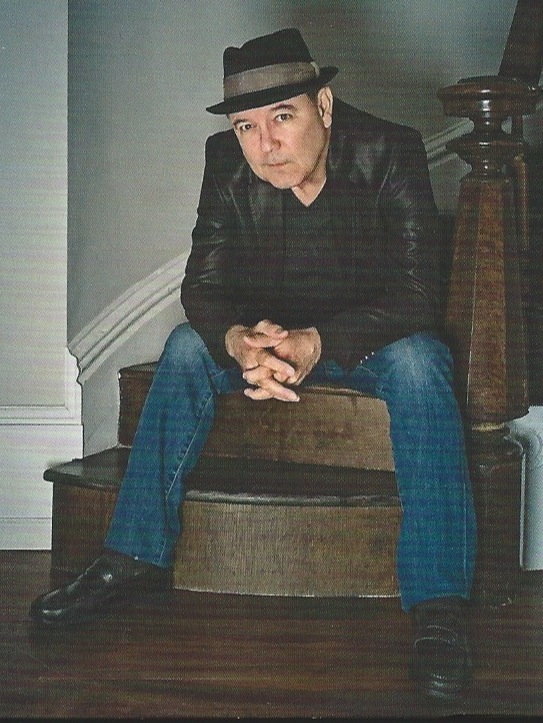
Ruben BladesRubén Blades is one of the most interesting survivors of the salsa explosion of the 1970s. Born in Panama City in 1948, the son of a Cuban mother and a Colombian father, he moved to New York in his mid-twenties, joining Jerry Masucci’s stable of emerging stars at Fania Records, he had started work in the classic manner, with a job in the company’s mail room.

Barely on the radar at the time I was trying to get a British audience interested in salsa via a couple of Island compilations of Fania material in the mid-’70s, he would soon be enjoying success via collaborations with Larry Harlow, Ray Barretto and Willie Colón, and through regular appearances with the the hugely popular Fania All-Stars. His song “El Cantante”, recorded by the brilliant but ill-fated Hector Lavoe, became a massive hit, and his 1978 album with Colón, Siembra, was for a while the most successful album in the history of salsa, said to have sold 25 million copies.

With a great-uncle who had fought against Spain in Cuba’s war of liberation, Blades’ compositions often displayed a strong political consciousness. In 1984 the A&R people at Elektra Records saw his potential to reach a wider audience. Soon after moving from Fania to his new home he recorded Escenas, with a new band called Seis del Solar, winning a Grammy for best Latin album. There was another one in 1988 for Antecedente, one my favourite albums of that decade.

While making these records he followed up his law degree from the University of Panama with a masters from Harvard. He also pursued an acting career, appearing in Robert Redford’s The Milagro Beanfield War, Spike Lee’s Mo’ Better Blues, and several other films. In 1994 he stood for the presidency of Panama, winning 18 per cent of the vote, and 10 years later he served a term as the country’s minister of tourism.

But he never stopped making music, and now he has released a new album, which sees him exploring the music of one of the countries of Latin American with which he does not, so far as I know, have ties of blood. Tangos consists of well known Blades songs recast in the Argentinian idiom by the arranger and conductor Carlos Franzetti, using a variety of means: a group of four bandoneon players accompanied by a string orchestra, a classic tango nuevo quintet (à la Astor Piazzolla), and the City of Prague Symphony Orchestra. 

Familiar pieces such as “Juana Mayo”, “Pablo Pueblo” and “Pedro Navaja” fit perfectly into this new format. “Perhaps these tunes were always tangos,” Franzetti remarks in his brief sleeve note. In some cases, like gorgeous opening “Paula C” and closing “Tiempos”, they gain in drama from the elegant orchestrations, which inspire Blades to a series of exceptional vocal performances, his tone and phrasing beautifully controlled. Almost 80 years after the great Carlos Gardel died in an air crash in Medellín, Rubén Blades unexpectedly presents himself as a thoroughly credible heir.

* The photograph of Rubén Blades is taken from the cover of Tangos and was taken by Vincent Soyez.

Charlie Haden 1937-2014

Charlie HadenThe night before Barack Obama’s first US presidential election, back in November 2008, Charlie Haden’s Liberation Music Orchestra opened a week’s residency at the Blue Note on West 3rd Street in Greenwich Village. It was 40 years since the ensemble had begun its mission of performing politically conscious music, and before the first set began Charlie told the audience about a remark made by Joe Daley, the band’s long-serving tuba player, in the dressing room while they were readying themselves. “If Obama gets elected,” Daley asked Haden, “can we call it a day?”

Everyone laughed, not least the band. And when I went back the following night, with Obama’s success assured, the set was infused with a special sense of joy. But there was no question of calling it a day. Six months later most of them were in London, chosen by Ornette Coleman to appear during the Meltdown festival at the Festival Hall, where their numbers were rounded out by Jason Yarde (alto), Andy Grappy (tuba), the incandescent young Shabaka Hutchings (tenor) and Robert Wyatt, who sang Silvio Rodriguez’s “Rabo de Nube” and played cornet on a spellbinding version of Haden’s “Song for Che”, first heard on the band’s self-titled debut album, which is one of the great classics of large-ensemble jazz (or any kind of jazz, for that matter). 

Both in New York and London they concentrated on material from what I guess will turn out to be their final album, 2005’s Not in Our Name, with which they brought their protests home in pieces like Pat Metheny, Lyle Mays and David Bowie’s “This Is Not America”, Ornette’s “Skies of America”, a sardonic treatment of “America the Beautiful”, a wonderful recasting of Samuel Barber’s Adagio for strings, and Bill Frisell’s “Throughout”, which at the Blue Note featured the tenors of Chris Cheek and the amazing Tony Malaby. As ever, the music was arranged by Carla Bley.

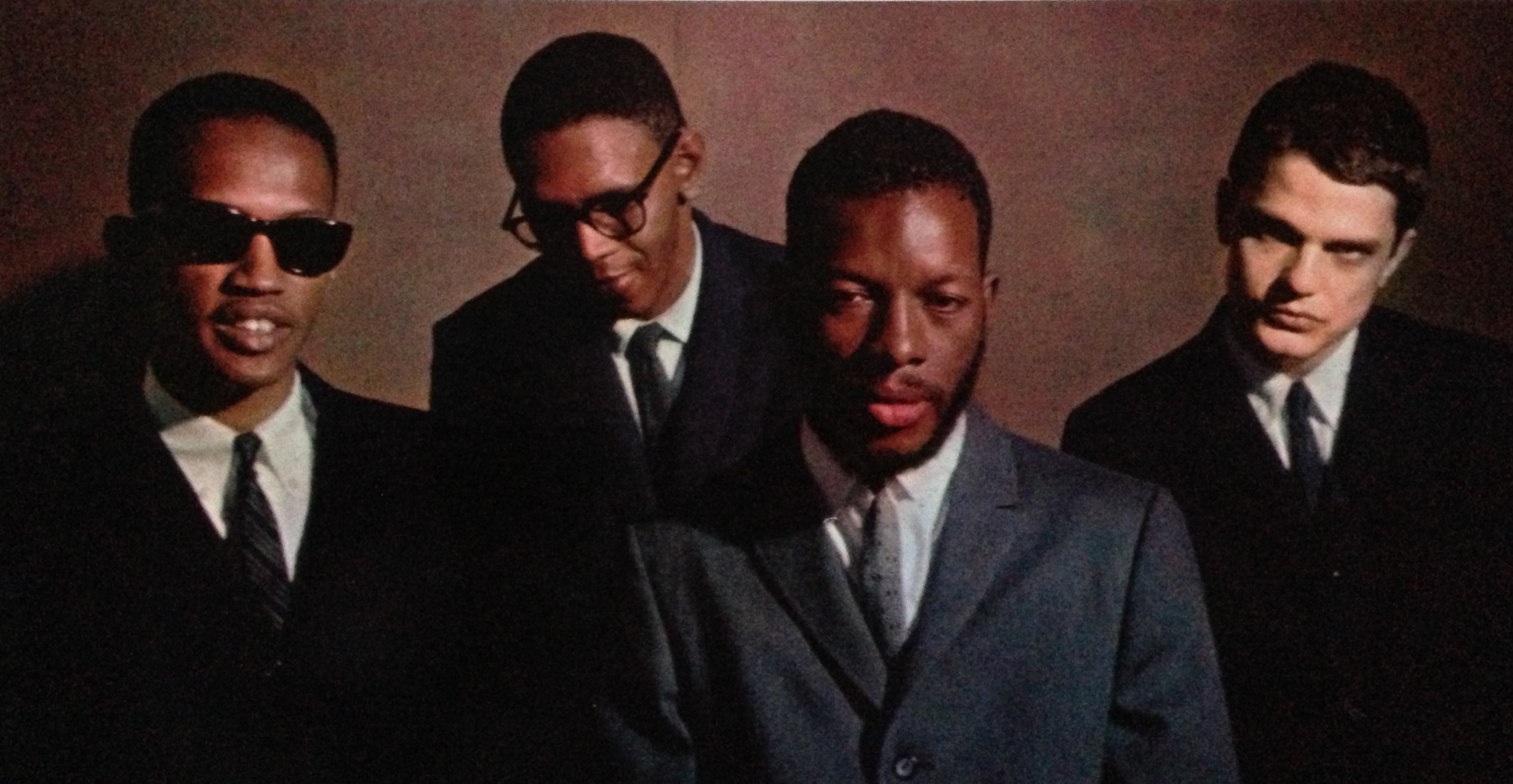
Charlie Haden died on Friday, aged 76. For more than 50 years he was one of the most important musical figures in my life, ever since I first clapped eyes on him as the skinny white kid over on the right hand side of the Lee Friedlander’s photograph on the cover of Ornette’s This Is Our Music. It’s still probably the coolest picture of a group of musicians ever taken, but there was much more it than that. I loved his sound on the double bass, which was dark without being heavy, the resolute economy (probably no great modern bassist played fewer notes) that sometimes gave way to dark strummed solos, and the way he seemed to be able to follow the improvisations of Ornette and Don Cherry so closely despite the absence of formal guidelines. (If you want to know how that happened, read Ethan Iverson’s fascinating 2008 interview with Haden here.)

Mostly, however, it was the sheer weight of emotion he conveyed in every note he played and in everything played by any band he led or with whom he performed. The Atlantic recordings of Ornette’s 1959-60 quartet are up there with Armstrong’s Hot Fives and Sevens and Parker’s Dials and Savoys, of course. But I also loved the way his Quartet West delved into the noir moods of post-war Los Angeles (particularly on Haunted Heart in 1991 and Always Say Goodbye in 1993), his collaborations with pianists such as Paul Bley, Hampton Hawes, Hank Jones, Chris Anderson, Kenny Barron and Keith Jarrett (notably on the recently released Last Dance), and the albums by Old and New Dreams in the late ’70s and early ’80s.

And, of course, there are the Liberation Music Orchestra’s five albums, four made in the studio and one live, essential documents reflecting current and historical liberation struggles in Spain, Central and South America, South Africa, Portugal and its colonies Mozambique, Angola and Guinea, and elsewhere. Here were the songs and hymns of the International Brigade, the Sandinistas, the MPLA, the ANC: this was music that mattered, its attention firmly fixed a greater scheme of things. It was an attitude that got Haden arrested by the Portuguese secret police while on tour with Coleman in 1971.

He was unique, absolutely, but he was also completely emblematic of the very best of America’s musical gift to the world. Born in Shenandoah, Iowa, he spent much of his childhood singing country and folk songs with the Haden Family Band, a background he revisited six years ago in Ramblin’ Boy, a well received album that featured his son, Josh, who leads the band Spain, his triplet daughters, Rachel, Petra and Tanya (whose own bluegrass album appeared a few months ago), and many other guests, including Ricky Skaggs, Vince Gill, Jerry Douglas and Bruce Hornsby. From those beginnings he made his way to the leading edge of jazz at a very early age.

He had a wonderful life and a marvellous career, despite health problems that began with childhood polio, and he left so much for us to enjoy and to contemplate. I suppose if any single performance sums him up, it must be his playing on Ornette’s “Ramblin'”, recorded in October 1959 and released the following year on Change of the Century. Haden had just turned 22, and no one had heard anything like this before: the daring combination of harmonically free 4/4 walking and a powerful strumming that seemed to carry the echoes of all sorts of folk music. That combination of sophistication and deep soulfulness turned out to be typical. Thanks, Charlie, for all of it.