 It’s 30 years today since Richard Manuel took his own life in his room at the Quality Inn motel, Winter Park, Florida, a few hours after a gig. Born 42 years earlier in Stratford, Ontario, Manuel was both the owner of one of the most emotionally direct and affecting voices in the history of rock and roll and a member of what had been, by common agreement of most of the people I know, its finest band.
Last night a crowd of people gathered at Rough Trade East in Brick Lane to celebrate the publication of Small Town Talk, Barney Hoskyns’ new book about Woodstock’s musical history. Graham Parker, long a resident of upstate New York, and Sid Griffin talked and played. The atmosphere was warm and the anecdotes amusing, but there was no disguising the fact that the lives of a lot of the people we were hearing about had ended prematurely.
In one of his earlier books, Across the Great Divide, Barney told the story of the incarnation of five men — Manuel, Levon Helm, Rick Danko, Garth Hudson and Robbie Robertson — first as the Hawks and then as the Band; it remains, in my opinion, the finest single account of what compelled young white boys in the 1950s and ’60s to adopt the musical language of black people as their own, with world-altering consequences. It is also the story of a slow-motion tragedy.
There was a lot about Manuel in that first book, of course, and the new one — which is fascinating, and ranges far and wide — contains plenty of reminders of how brightly the fire burned before it began to consume him. His last gig was with Danko, Helm and Hudson in the reformed version of the Band at Winter Park’s Cheek-to-Cheek Lounge, quite a fall from places such as the Royal Albert Hall and the Academy of Music, where the full five of them had played to such unforgettable effect in their heyday.
Back in 1967/68 Richard co-wrote “Tears of Rage” and “I Shall be Released” with Bob Dylan and sang them on Music from Big Pink. He also wrote that album’s “In a Station”, “We Can Talk” and “Lonesome Suzie”. On its successor, The Band, he co-wrote “When You Awake”, “Whispering Pines” and “Jawbone” with Robertson. There were two co-writes on Stage Fright (“Sleeping” and “Just Another Whistle Stop”), and no compositional contribution at all to Cahoots, the fourth album. And that, in miniature, is the story of the Band: the slow disintegration of a sense of communal purpose, eroded by distractions and asymmetrical ambitions.
Eric Clapton once wrote this about Richard: “I wanted so much to be like him, to be able to express with such power and frailty.” Beneath the party-animal exterior, Clapton had spotted “an incredible vulnerability”.
I’m listening to an album called Whispering Pines: Live at the Getaway, Saugerties, NY, recorded on October 12, 1985, five months before Richard’s death. By that time he had ended an unhappy stay in Malibu and relocated to the more familiar and congenial surroundings of Woodstock. “I love it here,” he said in this interview conducted by Ruth Albert Spencer in March 1985. “I love the season changes. I love to see all that. California is just like one season with the weather changing.”
It’s an informal club session and he sings Band songs and a handful of standards: “Grow Too Old”, “You Don’t Know Me”, “Georgia on My Mind” (which the Band had recorded and released as a single to support Jimmy Carter’s presidential campaign) and “Miss Otis Regrets”, plus J.J. Cale’s “Crazy Mama” and Ray Charles’s “Hard Times”. The album was not released until 2002, three years after the passing of Danko, who joins his old friend on four of the 17 songs. Those two voices, seriously ravaged now by comparison with their youth (and “struggling”, as Hoskyns puts it, with heroin habits), nevertheless combine on “Tears of Rage” to summon an echo of that old heart-piercing impact, the sound of two gifted, wayward boys who never quite grew up.
Finally, here’s a sweet, sad thing you might not know: a modest and tender version of “Country Boy” that Richard also recorded in October 1985 and which turned up, elaborately arranged in post-production, on the Band’s 1993 album, Jericho. His final time in a studio, I’d guess.
* The illustration of Richard Manuel is by Jack Dutieux and is taken from the cover of Whispering Pines, as is the quote from Eric Clapton’s sleeve note. Small Town Talk is published by Faber & Faber.
 When the Great Director pulls back to frame the ultimate long shot of Bob Dylan’s career from start to finish, it will be interesting to see what the perspective tells us about his two albums of standards associated with Frank Sinatra. My suspicion is that last year’s Shadows in the Night and the new Fallen Angels will be seen as parallel works to the pair of albums, Good As I Been To You and World Gone Wrong, with which, in the early 1990s, he revisited the blues.
 During a public conversation at the ICA a couple of weeks ago, Brian Eno mentioned his interest in churches as potential performance spaces. After all, he pointed out, they were built with the idea of providing an environment for reflection. The truth of his words was evident in London last night, when the Norwegian trumpeter Arve Henriksen presented the music from his 2014 album Places of Worship in the Jerwood Hall at LSO St Luke’s, the deconsecrated and repurposed Anglican church built in Clerkenwell by Nicholas Hawksmoor and John James in 1733.
 Little Richard is said by his attorney to be “annoyed” at the rumours of his death which spread this week. He survived a heart attack in 2013 and underwent a hip replacement operation more recently, but apparently he’s otherwise fine at 83. Let’s hope so.
 Somewhere in West London, there is said to be a dealer in second-hand hi-fi equipment whose face lights up every time Brian Eno walks in. Eno’s interest in speakers of all types and sizes was on show this morning in his Notting Hill studio, where a small audience gathered to listen to a 15-channel 3D mix of his new album, The Ship. After the playback, I took the photograph above in order to give a partial sense of the configuration.
 They were only invited at the last minute after their compatriot Mette Henriette had been forced to withdraw from the Jazzahead! festival in Bremen, but the women of Trondheim Voices provided me with what is likely to be the most lasting musical memory from this year’s event. Based in a city famous for the open-minded young musicians produced by the jazz courses taught at its adventurous and well resourced music conservatory, they have been going, with various changes in size and personnel, since 2001. Over the past year they’ve begun to explore the possibilities of individual sound-tailoring devices created by the mixing engineer and sound designer Asle Karstad: the singers wear discreet wireless boxes on their belts, with controls enabling them to modify their own output in real time.
 The beautiful Union Chapel in Islington proved to be the perfect final stop for the Necks’ short UK round of pipe organ concerts last night. They were sharing the series, titled The Secret Life of Organs, with James McVinnie, who opened the evening with two pieces by Philip Glass and two short suites by Tom Jenkinson (better known to electronica fans as Squarepusher).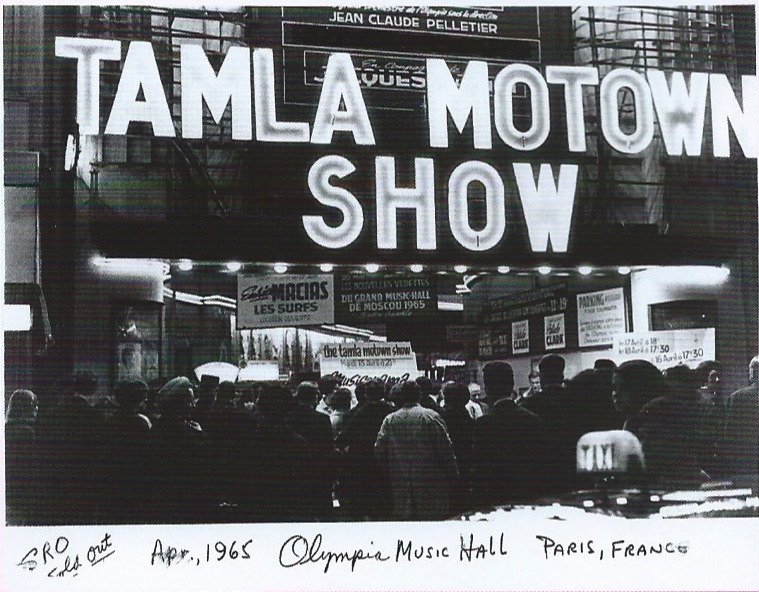
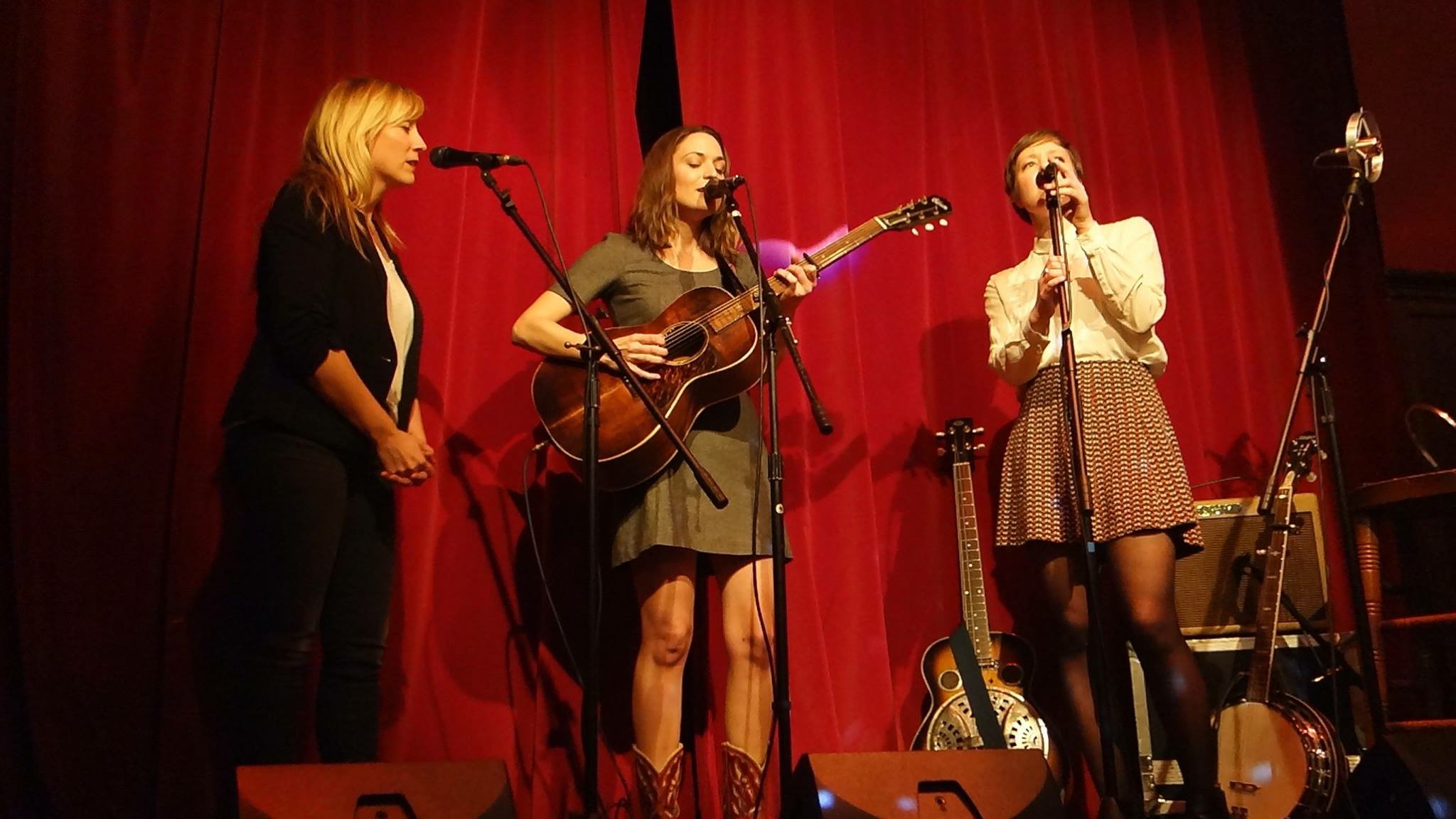 Applewood Road, a trio of female singer-songwriters, recorded their first album around a single microphone. Last night they went one better, clustering around an upright piano at the side of the stage in the Exmouth Market Centre to perform their encore with no amplification whatever.

