Sgt Pepper at 50
 They’ve kept Studio 2 at Abbey Road looking much the way it did in 1967. The walls and movable screens are still covered with the sort of perforated acoustic pasteboard once found in record-shop listening booths. If you look up, you’ll see the window high in the wall through which George Martin looked down from the control room on “the boys”, as he always called them. Behind the cupboard doors you might even find random things to scrape or shake, as the need arises. There are scuffs and stains; like the interior of a vintage car, it has a patina.
It’s a tourist attraction now, of course; apparently you can have your wedding there, which is useful for EMI since the demand for big recording studios is no longer what it was. But there can’t be a better place in the world to listen to the 50th anniversary edition of Sgt Pepper’s Lonely Hearts Club Band, which was almost entirely recorded there before being sent out into the world on June 1, 1967.
Last Monday, half a century later, about 100 people gathered in Studio 2 to listen to Giles Martin, son of George and inheritor of the mantle of sonic curator of the Beatles’ legacy, as he talked about remixing Sgt Pepper and then played the 96kHz/24bit result over a rather lavish sound system.
Some of those to whom the record always sounded pretty decent in any circumstances will inevitably harbour reservations about such a project. On the other hand, it sounded fantastic — as it was almost bound to do, given the emotional resonance of the setting. But there’s no doubt that the ministrations of Martin fils have exposed elements of the music inevitably obscured in the original mixdown from the four-track tape, and by the perfunctory way the original stereo mix was achieved at a time when only the mono version really mattered.
As often happens when you listen really closely to the Beatles, the most striking thing is what a great band they were, irrespective of all the trappings. “They really dug in,” Martin observed. “They didn’t play quietly ever.” That’s a bit of an exaggeration, but the vicious guitars on the introduction, the wonderful swing-time bass on “With a Little Help From My Friends”, the fabulous tangle of sitars, tamburas and dilrubas on “Within You, Without You”, and the great drumming on “Lovely Rita” and the Lennon sections of “A Day in the Life” are all brought to the fore or otherwise enhanced by the subtle rebalancing of individual levels. An album so rich in incidental detail — to a degree arguably beyond the capacity of the technology then available — can certainly benefit from such restoration, if handled with care and sensitivity.
I remember being in a record shop on the morning that Sgt Pepper arrived. I’d once had a Saturday job there, so I was allowed to take the first copy out of EMI’s brown cardboard box, put it on the shop turntable, and listen while examining the lavish packaging. I found it impressive, of course, but nowhere near as engaging as Rubber Soul, Revolver, Help! or With the Beatles. I still feel that way. Giles Martin calls these sessions “the pinnacle of their collaboration — the happiest time they ever had in the studio”, and presumably he had his father’s word for that. The songs and the approach to presenting them were certainly a product of what he calls “the accelerative universe” in which they were living at the time. But, while admiring the artistry and the breadth of imagination that went into “Being for the Benefit of Mr Kite” or “When I’m Sixty-four”, I wouldn’t care if I never heard half Sgt Pepper‘s songs again.
“A Day in the Life” and “She’s Leaving Home” are masterpieces, of course (and it took Monday’s playback to make me realise what a great line “Leaving the note that she hoped would say more” is). As, it goes without saying, are “Strawberry Fields Forever” and “Penny Lane”, recorded at the start of the album sessions in November 1966 and included in the various formats in which the 50th anniversary edition will appear in the last week of May (full details here) — although Martin dismissed the notion that those two tracks should now be inserted into some kind of revisionist running order. That was just one of the “spiritual and technical challenges” he talked about having faced, and on this one he made the right call.
What can safely be said is that Giles Martin has done Sgt Pepper no harm. He hasn’t sprinkled some kind of artificial digital fairydust on the masters, and he hasn’t distorted the internal workings of the music. And anyone who would rather listen to a mono vinyl copy on a Dansette is still quite at liberty to do so.
 Like the Jaynetts’ “Sally Go ‘Round the Roses”, the Dixie Cups’ “Iko Iko” and Shirley Ellis’s “The Name Game” and “The Clapping Song”, Rufus Thomas’s “Walking the Dog” was one of a bunch of early-’60s hits that made reference to playground songs. It was also a great R&B record, one of those that all British groups of the time had to learn.

 The man who took the photograph that appeared on the cover of The Freewheelin’ Bob Dylan died on March 18, aged 88.
 Last summer I was blown away by
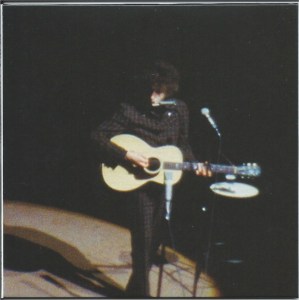 I suppose I’ve always thought of the man who shouted “Judas!” at Bob Dylan in Manchester in 1966 as a dull-witted denier of truth and progress. To my astonishment, however, after spending the last couple of months listening, on and off, to the 36-disc box of the surviving music from that tour, I’ve come to see things a little differently.
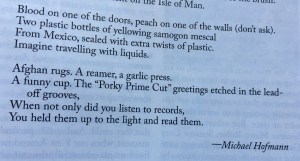 There’s an interesting new poem by Michael Hofmann in the latest issue of the New Yorker. It’s called “Lisburn Road” and it’s about surveying the scattered detritus of a life. In the final stanza there’s a reference that might be puzzling to some of the magazine’s readers: The ‘Porky Prime Cut’ greetings etched in the lead-off grooves…
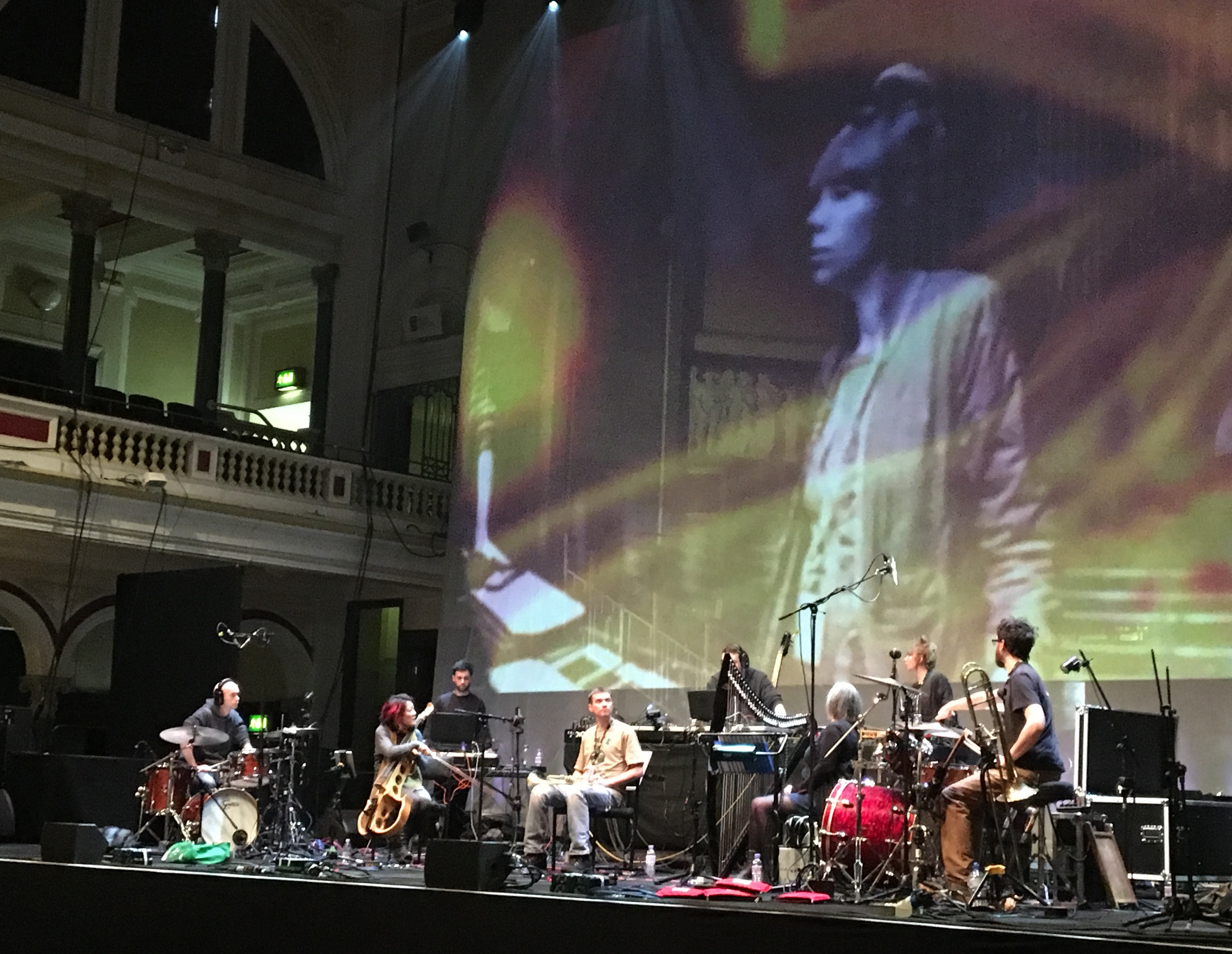 It was with regret that I had to leave Hull after only 24 hours of Mind on the Run, the weekend festival celebrating the life and work of Basil Kirchin, the visionary composer who spent three decades in the city, working in complete obscurity until his death in 2005, aged 77.
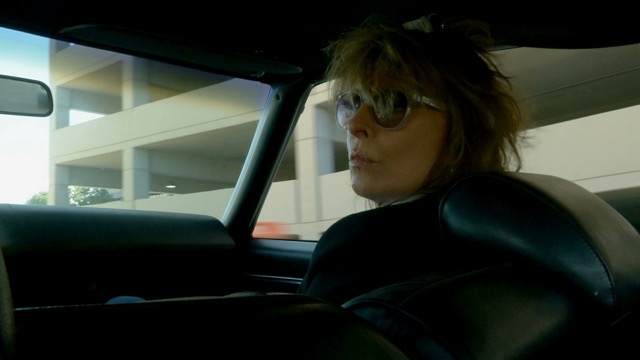 There’s an hour-long Arena documentary about Chrissie Hynde on BBC4 this week. During a preview of a longer 90-minute version the other day, I remembered that what I always liked about her was the subtlety underlying the ferocious four-piece rock and roll attack of the Pretenders’ music. It was present in February 1979, when — at the urging of my friend and Melody Maker colleague Mark Williams — I went to see them at the Railway Arms in West Hampstead, a room once known as Klooks Kleek but then renamed the Moonlight Club.


