Greenwich Village, February 1963
 The man who took the photograph that appeared on the cover of The Freewheelin’ Bob Dylan died on March 18, aged 88. Don Hunstein’s obituary in the New York Times tells us that he bought a Leica while serving with the US Air Force in England, and attended classes at the Central School of Art and Design. After returning home he eventually became a staff photographer at Columbia Records, at a time when that meant working with Miles Davis, Billie Holiday, Glenn Gould, Thelonious Monk, Duke Ellington, Leonard Bernstein and many others.
He was in Columbia’s studios when Davis recorded Kind of Blue and Holiday recorded Lady in Satin. But no image of his turned out to have greater cultural resonance than the one he took in a Greenwich Village street on a cold February day in 1963. He had already taken the picture for the cover of Dylan’s debut album (which the art department had flipped, so that Dylan’s guitar looks to be strung for a left-handed player and his coat buttons are on the wrong side). For the second session, Hunstein turned up at the singer’s top-floor apartment at 161 West 4th Street in Greenwich Village.
Suze Rotolo, Dylan’s 19-year-old girlfriend, was present, and a few photographs were taken indoors before the three of them stepped out into the slush-lined streets. Dylan, thinking of his image, put on a thin suede jerkin over his denim shirt. Rotolo sensibly opted for a warm dark-green belted coat. On a nearby side street, Hunstein got them to walk towards him, arm in arm, and started snapping away.
When I interviewed Suze at the time of the publication of her excellent autobiography (A Freewheelin’ Time) in 2008, she told me of a recent conversation with the photographer in which they had disagreed about the precise location of the shot that ended up on the cover. Hunstein said it was on Cornelia Street. She insisted it was Jones Street, a bit further up West 4th. “So that’s going to have to remain a mystery for all those Dylanologists,” she chuckled.
I liked her enormously. When I asked her how it felt to listen now to all those songs written when she and Dylan were together (“Don’t Think Twice”, “Boots of Spanish Leather” and so on), she responded to the sort of crass journalistic question she’d been avoiding for four and a half decades with words that I found very moving. “I can recognise things,” she said. “It’s like looking at a diary. It brings it all back. And what’s hard is that you remember being unsure of how life was going to go — his, mine, anybody’s. So, from the perspective of an older person looking back, you enjoy them, but also think of them as the pain of youth, the loneliness and struggle that youth is, or can be.”
She died in 2011. She and Dylan had stayed in intermittent touch, she told me. A few years after their painful breakup he helped her out when her apartment was destroyed by fire. Among her lost possessions were the coat she had worn that day in 1963, and one of his Gibson guitars.
 Last summer I was blown away by
 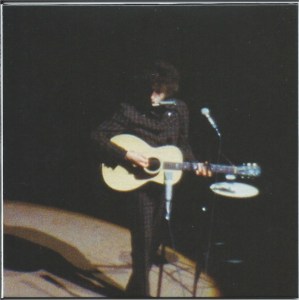 I suppose I’ve always thought of the man who shouted “Judas!” at Bob Dylan in Manchester in 1966 as a dull-witted denier of truth and progress. To my astonishment, however, after spending the last couple of months listening, on and off, to the 36-disc box of the surviving music from that tour, I’ve come to see things a little differently.
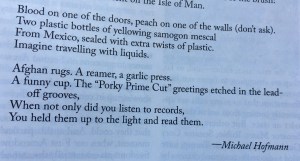 There’s an interesting new poem by Michael Hofmann in the latest issue of the New Yorker. It’s called “Lisburn Road” and it’s about surveying the scattered detritus of a life. In the final stanza there’s a reference that might be puzzling to some of the magazine’s readers: The ‘Porky Prime Cut’ greetings etched in the lead-off grooves…
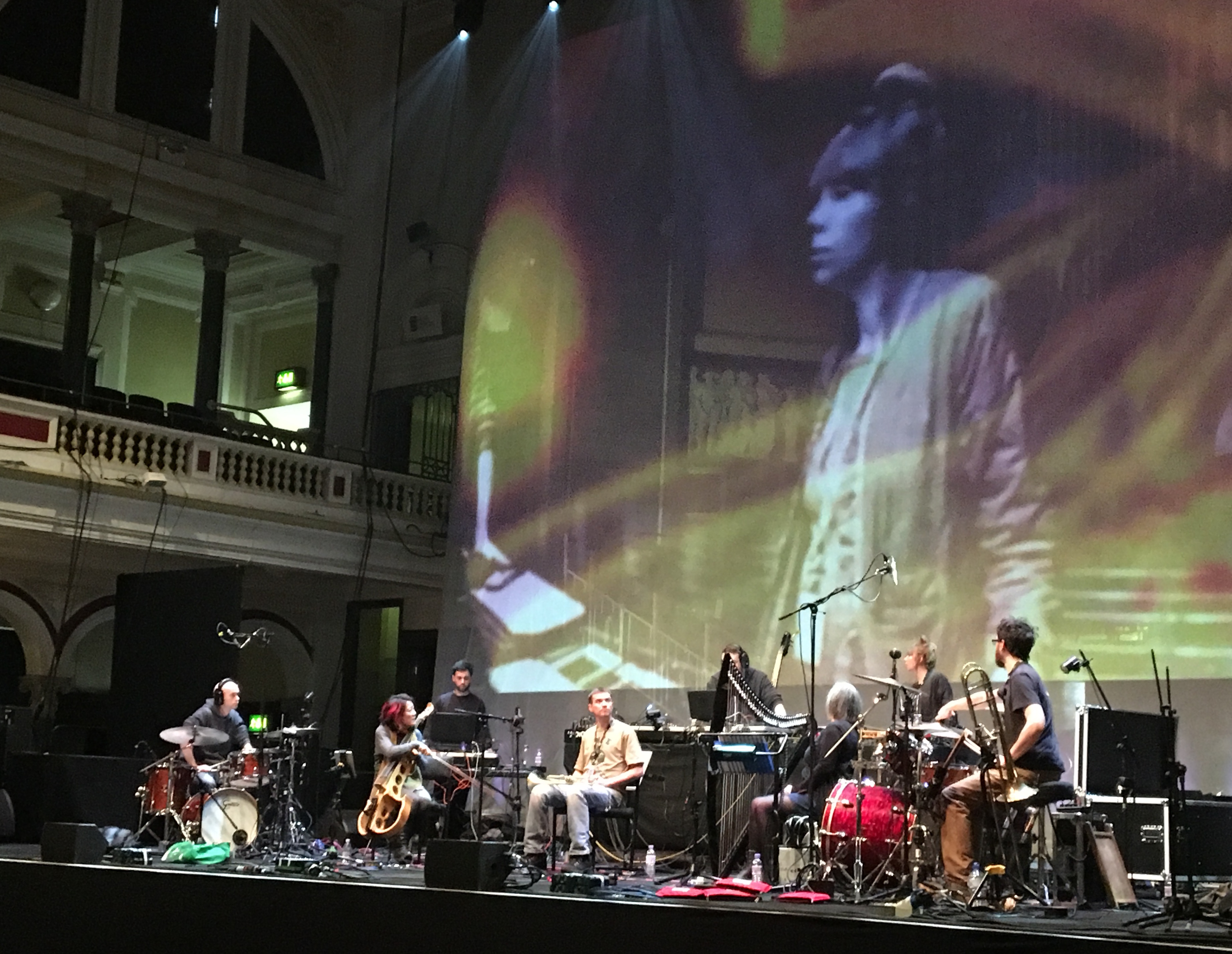 It was with regret that I had to leave Hull after only 24 hours of Mind on the Run, the weekend festival celebrating the life and work of Basil Kirchin, the visionary composer who spent three decades in the city, working in complete obscurity until his death in 2005, aged 77.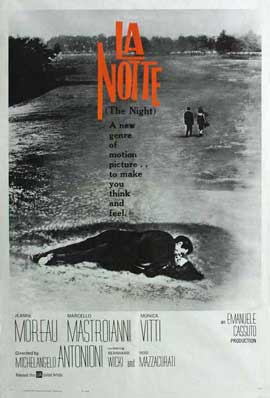
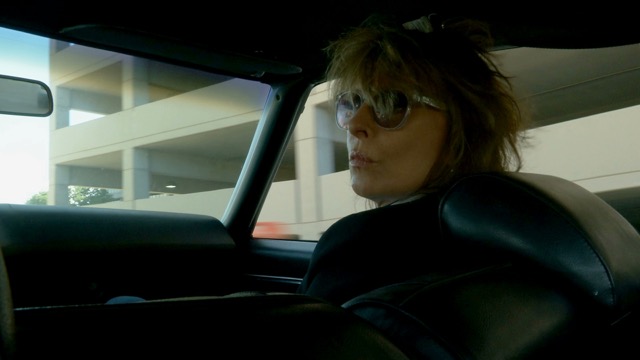 There’s an hour-long Arena documentary about Chrissie Hynde on BBC4 this week. During a preview of a longer 90-minute version the other day, I remembered that what I always liked about her was the subtlety underlying the ferocious four-piece rock and roll attack of the Pretenders’ music. It was present in February 1979, when — at the urging of my friend and Melody Maker colleague Mark Williams — I went to see them at the Railway Arms in West Hampstead, a room once known as Klooks Kleek but then renamed the Moonlight Club.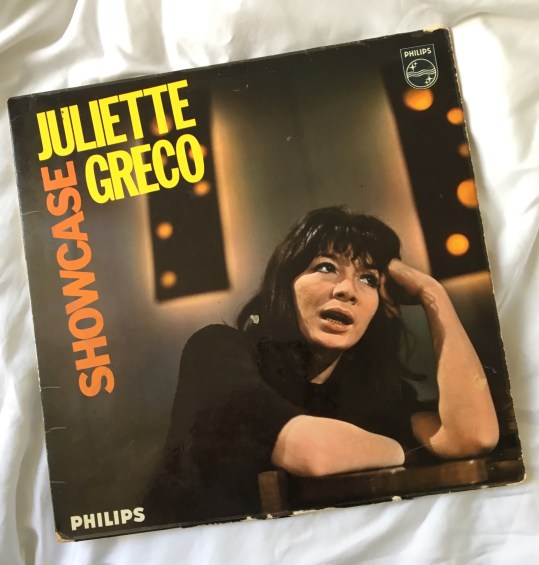
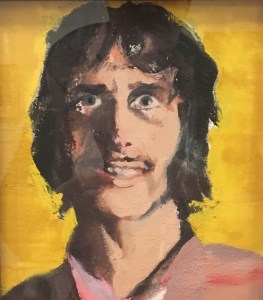 It came as a bit of a surprise to walk into a high-end London art gallery this week and discover a small portrait of Arthur Brown, the madcap rocker of the late ’60s, taking its place in an extensive exhibition of the work of the late English painter Michael Andrews.
 Dennis Coffey is still playing Tuesday nights at a Detroit club called the Northern Lights Lounge. It’s what he and his 1963 Gibson Birdland have been doing for the best part of 50 years. He started making a local reputation as a session man in the mid-’60s when he played on Darrell Banks’s “Open the Door to Your Heart” and the classic sides on the Golden World label by J. J. Barnes and others. Later in the decade he was absorbed into the Motown studio band, adding the rock-influenced sounds of a wah-wah pedal and a fuzz box to the more classic approaches of the established Hitsville USA guitarists: Robert White, Eddie Willis and Joe Messina.

