With three hours to go until the inauguration of Donald J. Trump as the 45th president of the United States, the coffee shop I frequent was playing the Staple Singers’ “Respect Yourself”. That’s a record with a lot of American history in it, one way and another: a message delivered by a mixed group of black and white singers and musicians, showing how music can provide encouragement, comfort and even guidance.
The saxophonist Charles Lloyd and the singer Lucinda Williams have chosen to mark today’s events by releasing an eight-minute version of Bob Dylan’s “Masters of War”, streamable on Spotify here. It was recorded live at the Lobero Theatre in Santa Barbara, California, on November 28 last year, three weeks after the election, with Bill Frisell on guitar, Greg Leisz on pedal steel, Rueben Rogers on bass and Eric Harland on drums. That’s a real A Team, and together they give Dylan’s song the full treatment: harsh, menacing, an ebb and flow of emotions but underneath simmering with rage.
As a teenager in Memphis in the 1950s, Lloyd played with B. B. King, Howlin’ Wolf and Bobby Bland. He is 78 years old now, and has performed in public through 12 presidencies, counting this latest one. “The world is a dog’s curly tail,” he says in the press statement accompanying the release. “No matter how many times we straighten it out, it keeps curling back. As artists we aspire to console, uplift and inspire. To unite us through sound across boundaries and borders and to dissolve lines of demarcation that separate us. The beautiful thing is that as human beings, even under the most adverse conditions, we are capable of kindness, compassion and love, vision and hope. All life is one. Who knows, maybe one day we’ll succeed. We go forward.”
When the great ballad singer Jimmy Scott returned to action in the early ’90s, in a rediscovery primed by appearances on Lou Reed’s Magic & Loss and in David Lynch’s Twin Peaks, the surge of interest resulted in his recordings becoming widely available. They ranged from carefully curated collections of his work for Decca and Savoy in the 1950s (when he was known as Little Jimmy Scott) to new albums produced for Sire and Milestone by Tommy LiPuma, Mitchell Froom, Todd Barkan and others. There was also, finally, the reappearance of two legendary albums from the 1960s suppressed when Herman Lubinsky, the notoriously vindictive owner of Savoy, claimed that Scott had recorded them in breach of an existing contract: Falling in Love is Wonderful, produced in 1962 by Ray Charles for his own Tangerine label, and The Source, supervised by Joel Dorn for Atlantic in 1969.
Lubinsky’s action cost the singer what should have been the prime years of his career, but we were lucky to have him for the last 20 years of his life, until his death in 2014 at the age of 88. In that final phase, hardly surprisingly, his pipes were not what they had once been, but it wasn’t mawkish to feel that the signs of ageing added an extra poignancy to his interpretations. His marvellous phrasing was certainly unimpaired, and the wide vibrato still touched the heart.
Now, three years after his death, comes an album called I Go Back Home, the fruit of his final recording sessions, held in 2009, in which the German producer Ralf Kemper surrounded him with sympathetic musicians, arrangements, and guests. Sometimes, as in “Poor Butterfly”, Scott speaks the lyric, allowing the French harmonica player Grégoire Maret to add melodic decoration. Elsewhere, as on “Sometimes I Feel Like a Motherless Child” and “How Deep is the Ocean”, his singing has a surprising strength. There are duets with Dee Dee Bridgewater on “For Once in My Life”, with Oscar Castro Neves on “Love Letters”, and with Renee Olstead on “Someone to Watch over Me”. There are tracks featuring other distinguished instrumentalists: the pianist Kenny Barron, the organist Joey DeFrancesco, the tenorist James Moody, and the trumpeter Till Brönner (who displays a delicate lyricism on “If I Ever Lost You”). There are gentle and wholly appropriate string and woodwind arrangements by Mark Joggerst. There is a beautifully warm and clear mix by Phil Ramone.
The big surprise, however, comes in one of the two songs that do not feature Scott at all but are billed as “tributes” by other singers. It’s a version of “The Folks Who Live on the Hill”, the Kern/Hammerstein song that Scott recorded — featuring the seldom-sung introduction — during a 1972 Dorn-produced session which remained unheard until the release of a Rhino/Atlantic album titled Lost and Found in 1993. But this time the singer, paying tribute to his old friend and influence, is the actor Joe Pesci.
We know that Pesci grew up in New Jersey alongside Frankie Valli, and that he had early ambitions as a singer. In 1968 he released an album under the name Joe Ritchie titled Little Joe Sure Can Sing! on the Brunswick label, produced by Artie Schroeck (who arranged Valli’s “Can’t Take My Eyes Off You”), featuring covers of things like the Bee Gees’ “To Love Somebody”. When it didn’t make waves he switched first to stand-up comedy and then to an acting career that took him to the heights of Raging Bull, Goodfellas and Casino.
His dead-slow version of “The Folks Who Live on the Hill” — one of my very favourite ballads — is good enough to make you wonder what might have happened had he stuck with the singing thing. His delivery is very much in Scott’s pleading high-tenor register, with subtle echoes of that distinctive vibrato, and occasional manipulations of timbre that seemed to echo the muted-trumpet obligato provided on the track by DeFrancesco, switching to his second instrument. Joggerst’s arrangement exudes a glowing serenity, particularly when the rhythm section lays out for a rubato statement of the six-bar bridge before Barron’s piano, the bass of Michael Valerio and Peter Erskine’s brushes pick it up for the final 12 bars.
I never thought I’d hear a treatment of this song to rival the enchanting version recorded by Peggy Lee with Nelson Riddle in 1957. This one does. I’ve been playing it for friends, without divulging the identity of the singer. They’ve all been amazed.
Pesci also appears in a duet with Scott on “The Nearness of You”, and if you’re only half-listening you might not even notice where one begins and the other ends. So that’s an unexpected reason for investigating I Go Back Home, which stitches the final notes of a fabulously gifted and original singer, one matched as an interpreter of torch songs only by Billie Holiday and Shirley Horn, with tender care into a loving hour-long tapestry of sound.
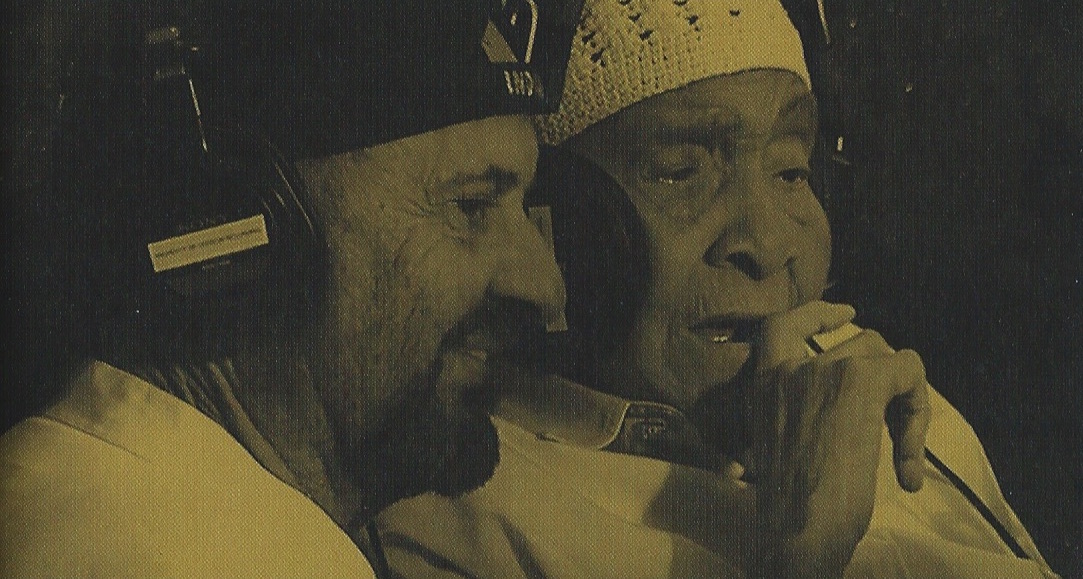
* The photograph of Joe Pesci and Jimmy Scott together in the studio is from the booklet accompanying I Go Back Home, which is released on January 27 on the Eden River label.
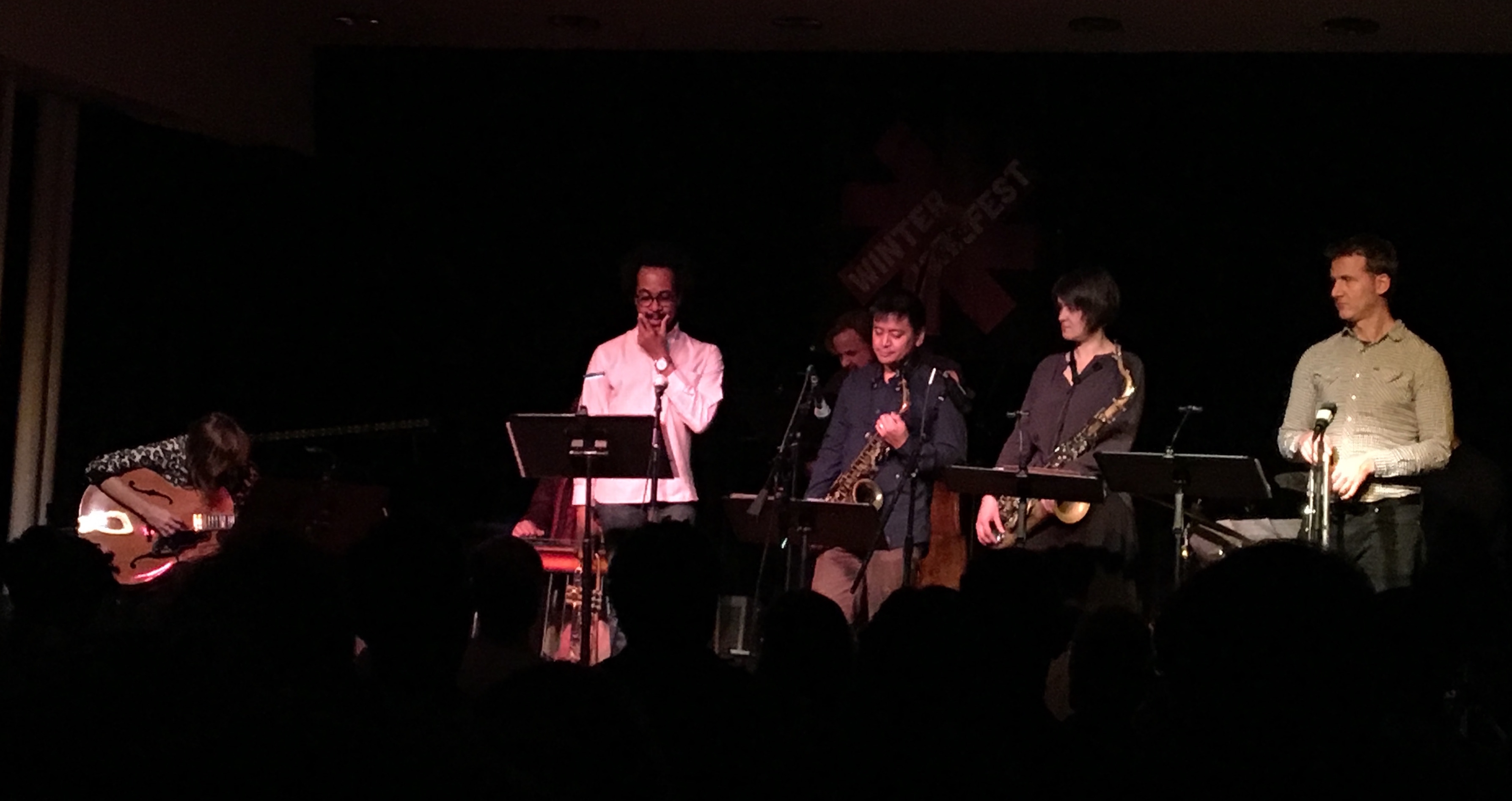
Darcy James Argue introduces Secret Society during the 2017 Winter Jazzfest in New York
“Welcome to the resistance,” Darcy James Argue said on Friday night to the packed audience at Subculture, a basement club on Bleecker Street. Then the Canadian-born, New York-based composer and bandleader turned to his 18-piece ensemble, Secret Society, and, with deft flicks of his wrists, guided them into the opening of Real Enemies, his cycle of pieces based on the theme of state-sponsored paranoia. A few hours earlier, in another part of New York City, Donald Trump had been forced to listen to the representatives of the CIA and the FBI presenting evidence that Russia’s government and secret services had helped to get him elected as president of the United States.
“Social justice” was the theme of the event in which Argue was participating: the 2017 edition of Winter Jazzfest, the annual showcase featuring a two-day marathon of more than 150 groups at about a dozen venues centred on Greenwich Village. Different bandleaders expressed their attitude to the topic in different ways. The pianist and composer Samora Pinderhughes led his 11 musicians through an extended piece titled The Transformations Suite, a profoundly moving contemporary take on themes no less relevant than when they were explored half a century ago in Max Roach’s We Insist! Freedom Now Suite. The Indian-American singer and harmonium player Amirtha Kidambi performed a piece inspired by the death of Eric Garner at the hands of NYPD officers in 2014; she announced that all proceeds from that night’s sales of the new CD by her quartet, Elder Ones, would go to the fund supporting four members of the NAACP arrested earlier in the week for protesting against Trump’s nomination for attorney general of a man who has campaigned against voting rights. The trumpeter Peter Evans called for the recognition of musicians — he gave Matana Roberts as an example — who have a record of campaigning on these issues.
Others preferred to let the music speak for itself, but there was never any doubt of the continuing role that jazz musicians have to play in exposing issues, raising consciousness, and maintaining morale in difficult times. Their inherent independence of spirit, their understanding of the need to reconcile individual and collective action, their roots in an idiom that came from suffering and exploitation, and their acceptance of the need to fight against the commercial odds make them ideally suited to the task.
To get back to the music, Argue is a young man with an intriguing approach both to personal style (he looks as though he might relax at the weekend by putting on a cravat) and to finding new solutions to the problems inherent in playing jazz with a large ensemble. Throughout the performance of Real Enemies, he used a tablet to trigger sound bites from such people as Oliver North and Dick Cheney. With Ingrid Jensen among the trumpeters and Chris Speed among the reeds, the writing contained echoes of Elmer Bernstein, Bob Graettinger and Gil Evans: lots of drama, lots of complexity, lots of variety (particularly in the instrumental colours: a grouping of piccolo, flute, two clarinets and a bass clarinet, for instance, or a trumpet lead supported by four flugelhorns). It would be an important and pathfinding work at any time, never mind now.
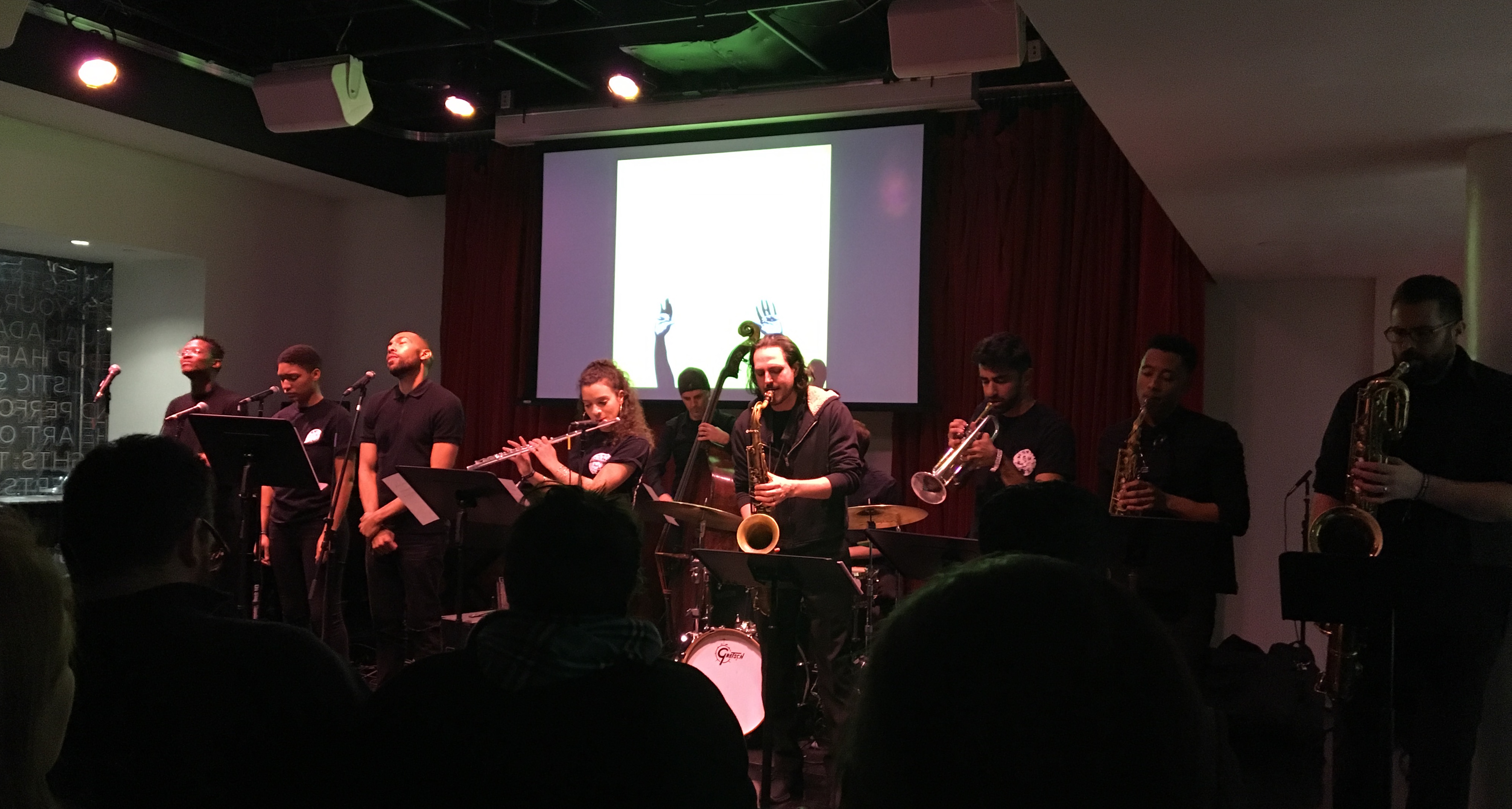
From left: Vuyo Sotashe, Jules Latimer, Jeremie Harris, Elena Pinderhughes, Clovis Nicolas, Lucas Pino, Riley Mulherker, Braxton Cook and Tony Lustig perform The Transformations Suite
Pinderhughes’ The Transformations Suite did not enjoy the same degree of attention when the recorded version came out last year, but it made a deep impression in the New School’s Glass Box space late on Friday night. There was nothing ironic here: the wounds of 400 years of slavery and its aftermath were allowed to bleed openly in the poems and lyrics delivered by the actor Jeremie Harris (who wrote some of the words), the wonderfully soulful South African-born singer Vuyo Solashe, and most of all by Jules Latimer, a young Juilliard drama student who took the considerable risk of acting out grief and fear without restraint. “Swing Low, Sweet Chariot” occasionally popped up as a leitmotif, and Pinderhughes’ lean but succulent writing for his five-piece horn section provided a platform for improvisations by his extravagantly talented 21-year-old sister Elena, who might just be on her way to becoming the finest flautist jazz has produced, the tenorist Lucas Pino, and Braxton Cook, who took the roof off the place with a roaring alto solo.
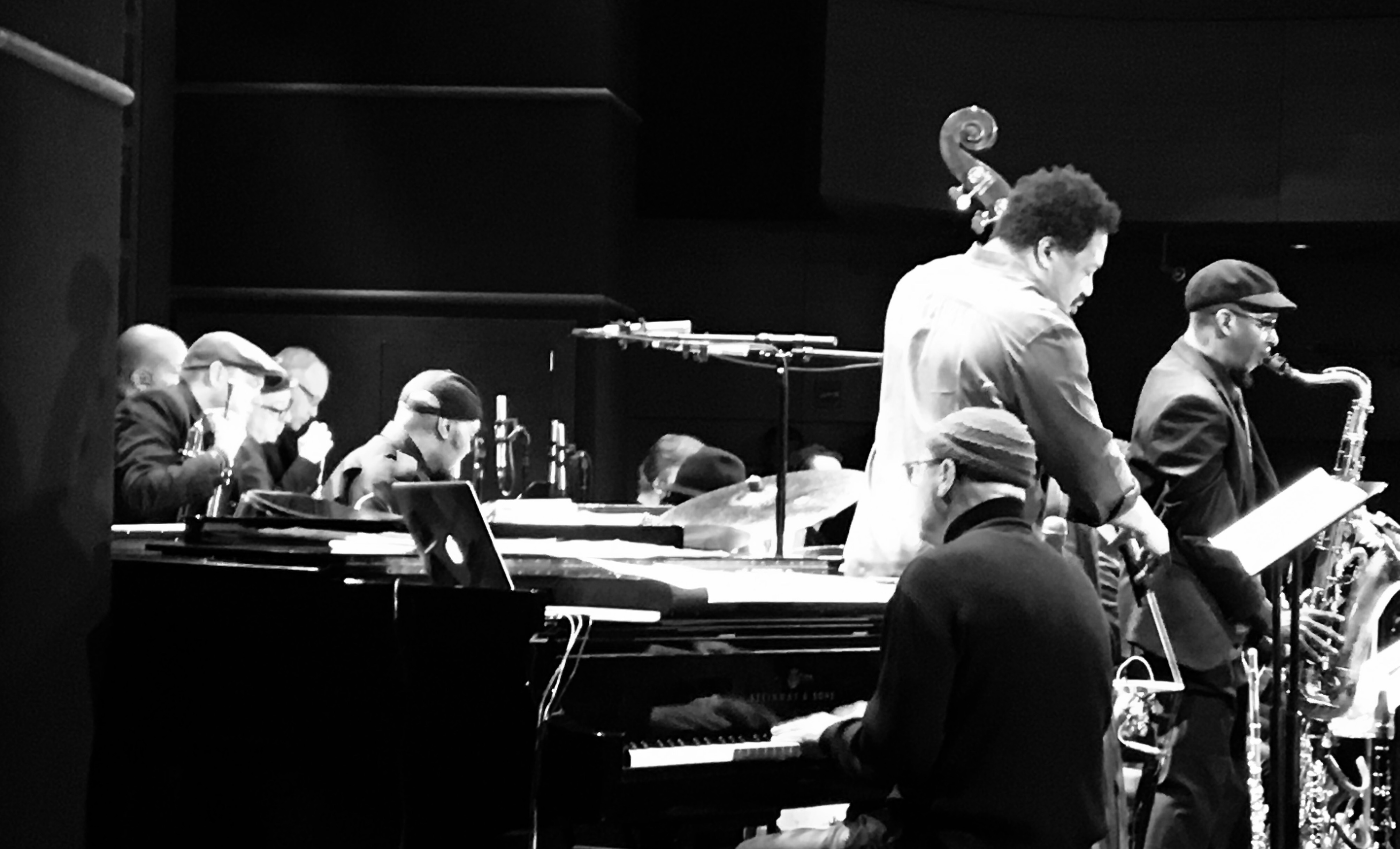
MONK’estra with John Beasley at the piano, James Genus on bass and Greg Tardy on tenor
John Beasley’s MONK’estra performed their empathetic, swinging and sometimes hiphop-tinged revisions of Thelonious Monk tunes at Dizzy’s Club Coca-Cola in Lincoln Centre on Thursday night, in front of a window with a view of Trump Tower. Luckily the arrangements and the solos — notably by the always creative tenorist Greg Tardy, the trombonists Frank Lacy and Conrad Herwig, and a guest from France, the fine harmonica player Grégoire Maret — were more than enough to divert attention away from the new epicentre of American values. And, as Beasley reminded us, Monk himself had grown up literally only a stone’s throw away, on West 63rd Street.
Mary Halvorson (left) with Jonathan Finlayson, Jon Irabagon, Ingrid Laubrock and Jacob Garchik at the New School
As impressive as anything I heard during three crowded days was the octet led by the guitarist Mary Halvorson, which features not just a bunch of great players (including the trumpeter Jonathan Finlayson and the tenorist Ingrid Laubrock) but the leader’s extraordinary interplay with the pedal steel player Susan Alcom, which elevates the music to a whole different realm of texture and emotion. Halvorson’s compositions are fascinating enough in any case: sounding as though they are through-written, they have the impact of great short stories, full of surprising twists of plot and mood, never quite ending where you expect but always resolving brilliantly.
While the festival was taking place, the great jazz critic Nat Hentoff died in New York at the age of 91. Through his liner notes, his pieces for Down Beat, the Jazz Review and the Village Voice, and books such as Hear Me Talkin’ To You (co-authored with Nat Shapiro) and Jazz Is, he helped shaped the view of several generations of listeners. He was also a lifelong fighter for social justice. And in 1960, for his own short-lived label (which released classic albums by Charles Mingus and Booker Little), he produced Cecil Taylor’s sublime trio version of “This Nearly Was Mine”, which alone would earn him a place wherever the good ones go.
* All the music mentioned above is out now on CD. Darcy James Argue’s Real Enemies is on the New Amsterdam label. Samora Pinderhughes’ The Transformation Suite is on Gray Area. John Beasley’s MONK’estra Vol. 1 is on Mack Avenue. The Mary Halvorson Octet’s Away With You is on Firehouse 12. “This Nearly Was Mine” is on The World of Cecil Taylor, on the Candid label.
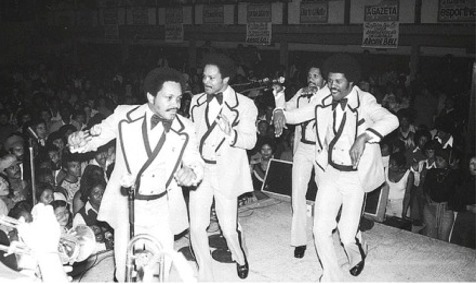
Among the select group of great pop singles that last no more than two and a quarter minutes, “Here I Go Again” by Archie Bell and the Drells stands pretty much supreme. From Bobby Eli’s electric sitar opening to the jammed fade, not a single one of its 135 seconds is wasted.
It was written and produced in Philadelphia in 1969 by Kenny Gamble and Leon Huff, and arranged by Bobby Martin and Thom Bell. The principal musicians will have been Eli and his fellow guitarist Norman Harris, Ronnie Baker on bass guitar, Earl Young on drums and Vince Montana on vibes (or possibly, in this instance, xylophone). I give them special prominence because the heart of the record is not to be found in the vocal verse and chorus but in the little four-bar instrumental interludes that punctuate the song so memorably.
The record starts with a 12-bar intro featuring Eli’s Danelectro Coral electric sitar before going into the 16-bar verse and the eight-bar chorus, all built on an E flat-A flat-B flat sequence and a blithe backbeat with double-time bass guitar fills. That’s followed by the first of the four-bar interludes, in which the rhythmic emphasis changes subtly but significantly, driving deeper into the “one”, anchored by a grunting baritone saxophone; more important, there’s also a radical harmonic shift from the E flat base (by my amateur musical forensics, which someone more expert might well correct) to a G-B-A-D pattern*. The combined effect of the two elements gives an exhilarating lift to this mini-break, somehow heightened by the absence of a solo instrument.
The effect is like suddenly changing the lighting in a room — and then back again, just as suddenly, when the tension is released by a return to the original mode. They run through the 16-8-4 pattern again, and then the chorus is repeated once more before the instrumental section returns and is played three times, with Archie Bell wailing on top this time, to the fade. And then it’s over, quite abruptly, and you want to play it again.
When it came out on a 45 in the US in 1969 it was as the B-side to “A World Without Music”, which failed to make the US Top 1oo. Three years later, however, it was discovered by Northern Soul dancers, who took it into the UK pop charts, where it peaked at No 11. Archie told Blues & Soul magazine that when he was informed of its belated and unexpected success, he had trouble recalling the song.
It’s included in Let’s Groove: The Archie Bell & the Drells Story, a new 2-CD anthology on Big Break Records. The compilers include the obvious hits, beginning with the first from 1967, introduced thus: “Hi, everybody, I’m Archie Bell and the Drells, from Houston, Texas. We don’t only sing, but we dance just as good as we want. In Houston, we’ve just started a new dance called the Tighten Up. This is the music we Tighten Up with…” That rough but irresistible debut single, “Tighten Up Pt 1”, duly went to No 1 in the pop and R&B charts.
I confess that I never kept the closest watch on their career, and among the 44 tracks are many that are new to me, including “A Soldier’s Prayer 1967”, a ballad in which Archie — who was wounded in Vietnam — sings about the experience of thinking about his family while preparing to go into combat. (This turns out not to be quite true: see the comment below from Blaise Pascal.) There’s also the charming “Archie’s in Love”, written by Philip Mitchell, produced by Brad Shapiro and Dave Crawford, and introduced with a nostalgic snatch of a country waltz before snapping into a hip-swinging 1971 disco beat.
The second disc includes a selection of the dancefloor favourites they recorded for Gamble and Huff’s Philadelphia International label in the second half of the ’70s, many of them produced by John Whitehead and Gene McFadden. In”Let’s Groove”, “The Soul City Walk”, “Dance Your Troubles Away” and the rest, the textures are smoother, the grooves slinkier, and the instrumental breaks much longer. It’s the generic disco music of its time, washed in the spangled rays of a mirror ball, beautifully executed and captured by a great bunch of session musicians and studio engineers. But nothing, I have to say, beats the magical 135 seconds of “Here I Go Again”.
* It’s quite possible that the speed of the track was altered during mixing or even mastering, and that the respective chord sequences might originally have been E-A-B and A flat-C-B flat-E flat.
I met Davitt in 1977, when he was a charming 20-year-old New Yorker just down from Oxford University and deeply immersed in soul music, and I was editing Time Out. He suggesting contributing a weekly column of disco listings: a great idea, although there was stern resistance from a majority of the rest of the editorial staff, who were basically into pub-rock and a bit of punk. Anyway, we went ahead. The following year I moved to the Melody Maker and he wrote pieces for me there, too, including a terrific early piece on Chic, for whom we shared a great admiration.
In 1980 he started making records himself, for Michael Zilkha’s Ze label. His first single, “I Never Fall in Love”, seemed bound to be a hit, and I’m not the only one who still finds himself humming it, savouring the witty lyric, and wondering why the hell it wasn’t. (And somewhere I think I’ve still got a box of the 45s, just in case its time comes around.)
What neither “I Never Fall in Love” nor “It’s a Big Country” — which was featured (alongside the Waitresses’ “Christmas Wrapping”, Alan Vega’s “No More Christmas Blues” and Cristina’s “Things Fall Apart) on The Ze Christmas Record in 1981 — shows is that he had a great feel for a white-boy version of street-funk. When he didn’t get a hit he moved on to writing songs for other artists and to producing, his credits including the Bangles’ third album, Everything, which included the hit “Eternal Flame”. In the ’90s he served briefly as president of Polydor and EMI/Chrysalis, and as chairman of Island in the US.
At some point I remember him telling me that he was writing speeches for politicians, and in 2004 he published a novel called Faithful, which was probably intended to make him the successor to Jay McInerney and Brett Easton Ellis. That was the last I heard of him.
So what is it that I like so much about “It’s a Big Country”? It’s the way the writer, like Chuck Berry and Hal David, uses American place-names to signpost the narrative, which is then guided by a very nice jangling rhythm track at a tempo that is not exactly hurried but suggests that the protagonist might still have more cards to write and calls to make. It’s the conversational tone, and the mention of “me and Ann” (I’ve spent quite a lot of time over the years trying to decide whether she should have an e, like L. M. Montgomery’s Anne Shirley, or not, like Ann Sevier in Hans Koningsberger’s An American Romance). And it’s the fact that whenever I hear “Got an uncle in Los Angeles / Beverly Hills, to be precise,” it makes me smile.
If you’re out there, Davitt, merry Christmas. And to everyone else, as well.
She knows there’s no success like failure, and that failure’s no success at all.
Sometimes even the president of the United States must have to stand naked…
Like William Shakespeare, whom he mentioned in his acceptance speech at the Nobel awards ceremony, Bob Dylan has lodged more phrases in the collective consciousness than you could begin to count. To me, that’s one cast-iron argument in favour of awarding him the Nobel Prize in Literature. The announcement met some opposition, much of it incoherent, but it seemed to me like one of the very few bright public moments in a notably dark year.
The appearance of Dylan’s friend Patti Smith at the ceremony in Stockholm, performing “A Hard Rain’s A-Gonna Fall”, was wonderfully moving, and her description of the experience was equally affecting. As she delivered the line “I saw guns and sharp swords in the hands of young children,” I thought of the report I’d read that morning about the two girls, possibly as young as seven or eight, said to have been used as suicide bombers in the market of Maiduguri, a city in north-eastern Nigeria, the previous day. While I can’t imagine Dylan ever thinking in terms of prophecy, his words have a way of retaining, even deepening, their resonance through time and space. And that’s what literature does.
(Another occasion on which an old song seemed to find a new place in history was Bruce Springsteen’s intense performance of “American Skin (41 Shots)” at Wembley Stadium in June. Written after the killing of Amadou Diallo and now rededicated to Trayvon Martin, it formed a stark interlude in the middle of an otherwise euphoric concert on a warm midsummer evening. I’m hoping, without much confidence, that next year’s most memorable moments will be unshadowed by such concerns.)
Live performances
1. Eve Risser’s White Desert Orchestra (Cité Universitaire, Paris, January)
Georgie Fame at the Cinnamon Club, Manchester, in 2007 (photo: William Ellis)
You wait decades for a proper anthology of Georgie Fame’s best stuff, and then two of them come along almost at once. Last year there was the beautifully produced five-CD box called The Whole World’s Shaking, including his first four albums for the Columbia label between 1963 and 1966 — Rhythm & Blues at the Flamingo, Fame at Last, Sweet Thing and Sound Venture, each with bonus tracks — plus a fifth disc of rarities and oddities from the period. Now there’s an equally handsome new six-CD set, also released on Universal/Polydor, called Survival: A Career Anthology 1963-2015, which ranges from the Blue Flames’ first two instrumental 45s for the R&B label to the lovely album, Swan Song, which came out last year, and which he billed as his last (although I gather he might be having second thoughts on that). This new box is so full of good stuff that I hardly know where to begin, although I suppose I should point out some of the less obvious highlights.
I was at Island Records in the mid-’70s when Chris Blackwell signed him, to the surprise of those at the company who thought his adventures in the middle of the road during his time with CBS (“The Ballad of Bonnie and Clyde”, and so on) had destroyed his credibility. From a commercial perspective, the Island liaison was a failure. First, with J. J. Cale taking over from Mose Allison as the dominant influence on his music, Blackwell sent him to Tulsa with Denny Cordell to make an album that never saw the light of day, and then Glyn Johns took over for one that was released but made no impact. There’s a whole disc from those sessions, including the slinky blues “Ozone” and a high-stepping version of Bobby Womack’s “Daylight”.
But what we also have from the Island vaults are seven tracks from the previously unheard tapes recorded at a Lyceum gig in the autumn of 1974 with an expanded 12-piece all-star Blue Flames line-up, including Marc Charig alongside Eddie “Tan Tan” Thornton on trumpets and Elton Dean in a saxophone section also including Alan Skidmore, Stan Sulzmann, Steve Gregory and Bud Beadle. Brian Odgers (bass guitar) and Brian Bennett (drums) are the rhythm axis, with Colin Green and Bernie Holland on guitars and Lennox Langton on percussion. Thanks to careful remixing supervised by Tristan Powell, one of Georgie’s talented sons, it’s a treat to hear them roar through “Point of No Return”, “Parchman Farm” and so on in front of an enthusiastic audience at a venue that was once a great place for gigs, before The Lion King took up permanent residence.
The other big surprise to me was a track from his sole album for Pye, Right Now, produced in 1979 by the rather unlikely team of Karl Jenkins, then midway between Soft Machine and the knighthood earned for his classical compositions with Latin titles, and Jimmy Parsons, for many years the suave maitre d’ of Ronnie Scott’s. The song is called “Eros Hotel”, and Georgie wrote it with the UK-based American poet Fran Landesman, best known for her lyrics to “Spring Can Really Hang You Up the Most” and “Ballad of the Sad Young Men”. A gentle reverie, swathed in strings, it’s a most elegant evocation of seduction in London, and it makes me want to seek out the album from it comes.
We know what Fame can do with other people’s songs, but “Eros Hotel” is a reminder of what an accomplished composer he became. From “Getaway” through “Flamingo Allnighter”, “Vinyl” and “Mose Knows”, his stuff is hip. There’s another example of his lovely ballad-writing in “A Declaration of Love”, one of the 11 tracks here from the fine New York sessions supervised by Ben Sidran in the early ’90s. The eight-minute title track, the bluest of blues on altered changes, comes from those sessions: you can imagine how much he enjoyed sharing the studio with A-Teamers Richard Tee (piano), Robben Ford (guitar), Will Lee (bass) and Steve Gadd (drums).
An abundance of great material among the 111 tracks includes items from the two tremendous live albums, Name Droppin’ and Walking Wounded, recorded live at Ronnie’s in 1997. There’s also a glorious “Since I Fell For You” on which he’s accompanied only by his Hammond B3 and Guy Barker’s trumpet, and a fine “Funny How Time Slips Away” from the Pye session, and tons of other things that you might never have heard before but will be very pleased to meet in the course of a journey through a wonderful life in music, in which even the occasional misstep was simply the preface to a graceful recovery.
The team who put this exemplary package together — Tristan Powell, the disc jockey Dean Rudland and the Universal A&R man Chas Chandler — deserve the highest commendation. The blemishes are few: the Basie drummer Sonny Payne is mistranscribed as Sonny Cain, Bill Eyden is wrongly identified as Phil Seamen (the man he replaced as the Blue Flames’ drummer) in a caption to one of the many fine photographs in the accompanying 48-page hardback booklet, and I’d have liked the generally comprehensive musician credits to have extended to identifying those who played on the Island studio sessions. But those are quibbles. If I didn’t already have Survival, it would be the only thing I’d want or need for Christmas.
In the final moments of Eat That Question, a documentary in which the director Thorsten Schütte creates a chronological collage of interviews and performance clips from throughout Frank Zappa’s career, we see Zappa with a baton in hand, conducting a piece of his orchestral music. We’re in the early ’90s and, after several years of treatment for prostate cancer, he is close to death. As he waves the stick in a staccato 4/4 pattern, several percussionists play a fascinating jigsaw tattoo. Hearing his score come to life, the composer is clearly entranced. It’s a lovely and touching moment.
I interviewed Zappa a couple of times around 1970, and found it an uncomfortable experience. This was, after all, a man who said that rock criticism was people who couldn’t write writing for people who couldn’t read, or something like that. And I was a rock critic (of sorts). It has always seemed to me a stupid remark, a dismissal of a lot of worthwhile work from some talented and enthusiastic people, but it was probably the result of a series of bruising experiences.
He was intensely clever, of course, and he was funny, if not always as funny as his most fervent admirers found him. The Zappa I had liked at the beginning was not the ironist and satirist but the Zappa who wrote “Memories of El Monte” for the Penguins, who created Ruben and the Jets, and who got the Mothers of Invention to juxtapose sleazy East LA doo-wop with homages to free jazz on Uncle Meat. That was a Zappa who clearly loved his sources. I lost interest when Hot Rats came out; it seemed to me that other people were doing that sort of jazz-rock thing a lot better, and I never properly re-engaged.
But I came out of Eat That Question feeling a whole lot more sympathetic to him. I loved the clip from the eye-wateringly funny appearance on the Steve Allen Show in 1963 where the totally unknown Zappa demonstrates the music he’s devised to be played with drumsticks and violin bow on a pair of bicycles (the whole thing is on YouTube). I was interested by his suggestion that all his pieces might in fact together comprise one single composition, and also by his definition of his philosophy of writing music: “Any thing, any time, any place, for no reason at all.” His excoriation of communism is gob-smacking, his exchange with Tipper Gore’s parental-ratings committee hilarious. I was touched by the film of his visit to Prague in 1990, when he is welcomed by Vaclav Havel and a member of a Mothers of Invention-inspired band called Electrobus recounts how, in the Soviet era, he had been told: “We will take your Zappa away — you will not spread his ideology here.”
Throughout the film, Zappa’s sparring sessions with TV interviewers are generally thoughtful and good-natured, sometimes in the face of complete incomprehension (although the interview with NBC’s Today show, taped during his final days, is very sensitive). It made me wish I’d liked him, and his music, more.
Put a guitar in my hands and you’ll get the “Smokestack Lightnin'” riff until you rip the instrument away from me and smash it over my head. That’s part of having been a teenager in the early ’60s, and equipped with a certain set of instincts. It doesn’t leave you.
That’s what the Rolling Stones demonstrate, rather more expertly, on Blue & Lonesome, their 23rd studio album, recorded in three days at Mark Knopfler’s British Grove studio at the end of an alley in Hammersmith. It’s the best thing they could have done — in fact probably the only thing they could have done to rekindle my interest.
I’ve been reading an old Record Mirror piece by Norman Jopling, dated May 11, 1963. The intrepid reporter had been to see the Rolling Stones at the Station Hotel in Richmond-upon-Thames, and had talked to them afterwards about their repertoire, which was based largely on the recorded works of Chuck Berry and Bo Diddley. They told him they had no interest in using original material. “After all,” an unidentified Stone told him, “can you imagine a British-composed R&B number? It just wouldn’t make it.” The sounds like Brian Jones to me. And within a year, of course, he would be eating his words as Andrew Oldham coaxed Mick Jagger and Keith Richard into producing “Tell Me”, “Good Times, Bad Times”, “Satisfaction” and the rest.
Of course they wrote some great songs. But that well dried up many years ago, and it was an intelligent decision to go back to where they came from and make an album of blues covers. I admire the fact that they chose comparatively obscure songs; how simple would it have been to make an album out of the likes of “Smokestack Lightnin'”, “Boom Boom” and “Big Boss Man”? Instead they’ve gone for Jimmy Reed’s “Little Rain”, Howlin’ Wolf’s “Commit a Crime” and Lightnin’ Slim’s “Hoo Doo Blues”, songs known only to the cognoscenti.
And, like the bluesmen they worshipped, they’ve got better with age. Play these tracks next to recordings from their early years like “Honest I Do”, “I’m a King Bee” and “Little Red Rooster”, and you can’t miss the improvement the years have brought. Production quality has something to do with it, of course. Don Was and the engineer Krish Sharma are a cut above whoever recorded the first Stones tracks at Regent Sound on Denmark Street. In partnership with the musicians, they know exactly how to distress the sound, dirtying up the guitars and providing a great sonic perspective that evokes the 1950s Chess recordings of the Muddy Waters Blues Band. This is rough music, and that’s how it comes across here.
I’m sorry that they don’t credit the individual guitar solos (Hubert Sumlin would have given a pat on the back to whoever gets the starring role on Little Johnny Taylor’s “Everybody Knows About My Good Thing”). But Jagger gets an extra star for some excellent harmonica-playing — which he needed to do, given that three of songs are plucked from the repertoire of Little Walter Jacobs, a gob-iron immortal.
My only complaint about an otherwise thoroughly worthwhile album concerns the sleeve. How difficult could it be to design a fantastic cover for a blues album by the Stones? If you don’t have any ideas of your own, Mr Art Director, just go back to their first LP, with its moody chiaroscuro group photograph by Nicholas Wright, or its very similar successor, for which David Bailey did the honours. Instead we get a piece of artwork based on the tired old “tongue” logo — so crass as to be actively repulsive. And I’d have liked an Andrew Loog Oldham sleeve note, too.
* The photograph of Mick Jagger and Ron Wood is from the inside of the album sleeve, and is uncredited.
An all-instrumental album from Paolo Conte: that would be like an episode of The Sopranos without Tony, right? Well, not exactly. He doesn’t sing on Amazing Grace (although he does mutter the word “Tips” at the beginning and end of the short track of that name), but in its way this is still an album of full-strength Conte, offering perspectives that don’t normally get exposed.
It is, he says, a collection of “recordings made at different times (from the ’90s to the present day), for soundtracks of theatre productions and for study and experimental purposes, that I had very carefully tucked away at the back of various drawers”. He was right to decide that they needed to be exposed to the light of day.
There are 23 pieces, ranging in length from 61 seconds to six minutes, and in style from clarinet ballads and a tango for piano and bandoneon to romantic string quartets and soulful wind chorales and a sweeping orchestral piece, and a lovely, pensive fragment for solo piano called “Gli Amici Manichini” that sounds like it was recorded on primitive equipment in some deserted hotel ballroom 100 years ago. That last item is one of six written for a theatre piece called Il Ballo dei Manichini, of which the final work is the only song of the set: a jaunty pop number called “Changes All in Your Arms” sung by two women, Ginger and Rama Brew, as if they’re gathered around a pub piano.
Maybe the best of all is a track called “P.U.B.S.A.G. (Passa Una Bionda Sugli Anni Grigi)”, its lyrical theme stated by the trumpet of Alberto Mandarini and the clarinet of Massimo Pitzianti, supported by Jiri Touche’s double bass and Daniele Di Gregorio’s drums, Conte’s piano nudging them along with simple and unhurried but exquisitely timed phrases. And it’s followed immediately by the title track, another gloriously melodic reverie in the form of a trio for piano, bass and Di Gregorio’s vibes.
Perhaps I wouldn’t swap these pieces for favourite songs like “Alle Prese Con La Verde Milonga” or “Los Amantes Del Mambo”, but it’s amazing how the pungency of his character comes through even when he denies us the pleasure of the rasping voice, with its characteristic combination of world-weary wisdom and irrepressible youthfulness, of a man — a unique and precious jewel of our musical world — who will turn 80 next month.
* The photograph is by Dino Buffagni. Amazing Game is out now on the Decca label.
 With three hours to go until the inauguration of Donald J. Trump as the 45th president of the United States, the coffee shop I frequent was playing the Staple Singers’ “Respect Yourself”. That’s a record with a lot of American history in it, one way and another: a message delivered by a mixed group of black and white singers and musicians, showing how music can provide encouragement, comfort and even guidance.
 When the great ballad singer Jimmy Scott returned to action in the early ’90s, in a rediscovery primed by appearances on Lou Reed’s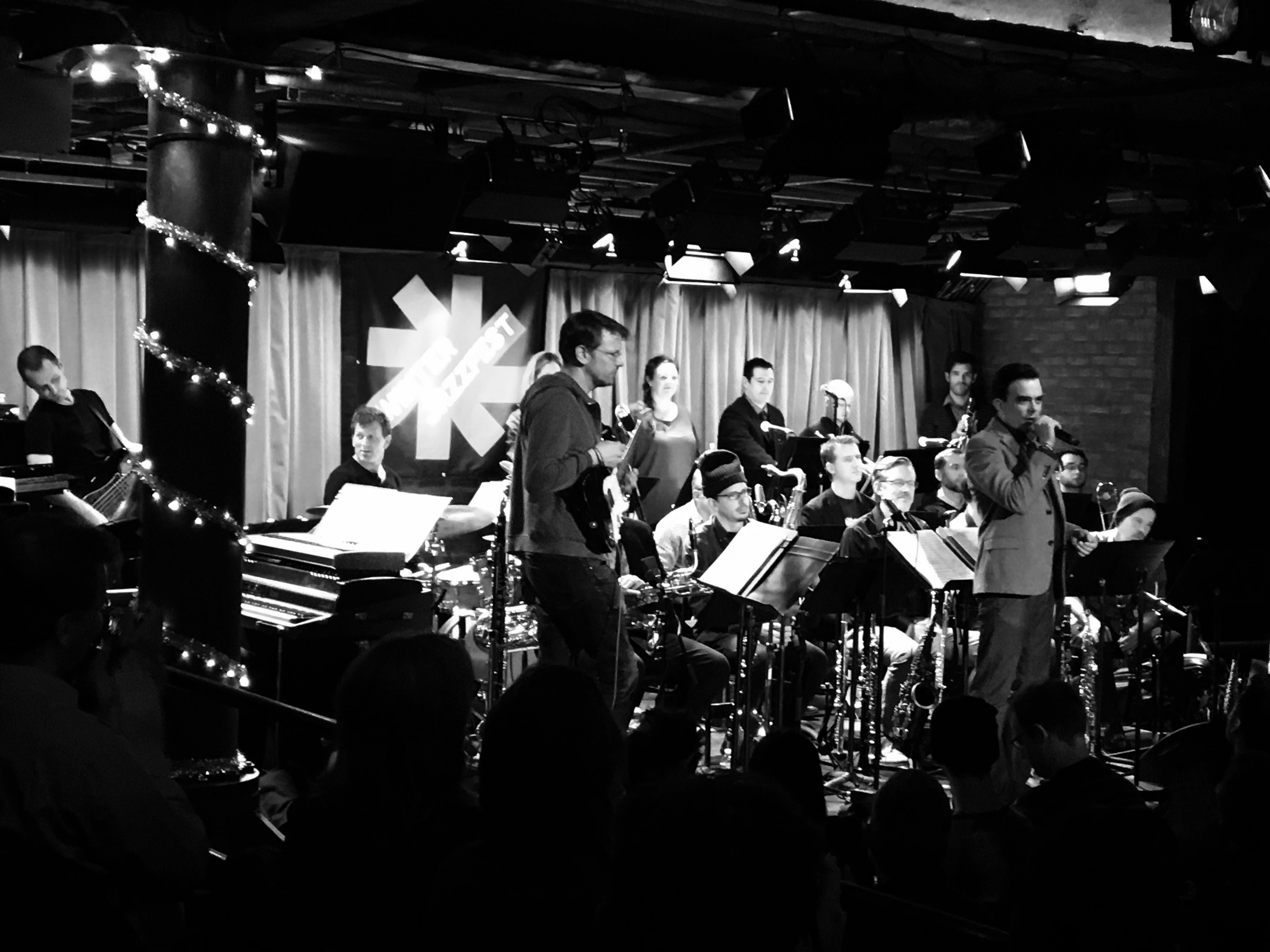
 In the final moments of Eat That Question, a documentary in which the director Thorsten Schütte creates a chronological collage of interviews and performance clips from throughout Frank Zappa’s career, we see Zappa with a baton in hand, conducting a piece of his orchestral music. We’re in the early ’90s and, after several years of treatment for prostate cancer, he is close to death. As he waves the stick in a staccato 4/4 pattern, several percussionists play a fascinating jigsaw tattoo. Hearing his score come to life, the composer is clearly entranced. It’s a lovely and touching moment.
 Put a guitar in my hands and you’ll get the “Smokestack Lightnin'” riff until you rip the instrument away from me and smash it over my head. That’s part of having been a teenager in the early ’60s, and equipped with a certain set of instincts. It doesn’t leave you.
 An all-instrumental album from Paolo Conte: that would be like an episode of The Sopranos without Tony, right? Well, not exactly. He doesn’t sing on Amazing Grace (although he does mutter the word “Tips” at the beginning and end of the short track of that name), but in its way this is still an album of full-strength Conte, offering perspectives that don’t normally get exposed.

