Skip to content

Posts from the ‘Uncategorized’ Category

Piano music

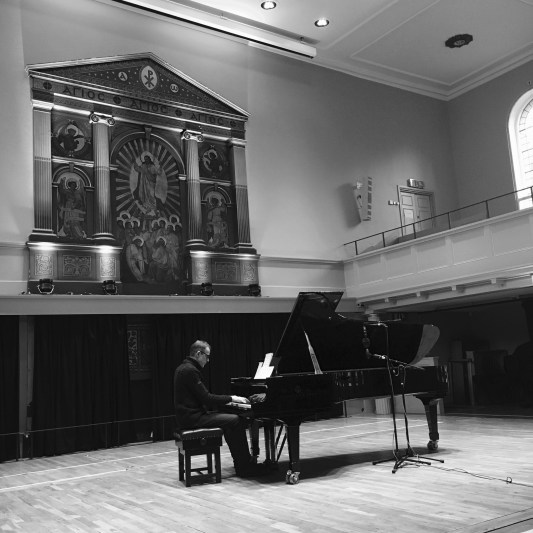
PJ piano St Georges 1

Most of the time, Pete Judge is a trumpeter. He’s based in Bristol and plays in three interesting bands: the quartet Get the Blessing, the trio Three Cane Whale and the duo Eyebrow, whose records I’m particularly fond of. He’s just released his second album of solo piano pieces, Piano 2. Here’s what he said in the brief liner note to its predecessor, a couple of years ago:

I come from a long line of piano players, though I’m not really one myself, having rebelled at an early age and inexplicably chosen the trumpet instead, but my favourite piece of furniture in my grandmother’s house was always the old upright piano in the front room, which later became my mum’s piano, and lived with her on the North Kent coast. Now it’s in Bristol, and these tunes were all composed on it, with the soft pedal permanently applied (initially for neighbourly reasons, and now just because that’s the sound that suits them). So this is a ‘piano’ album in both senses of the term.

Piano and Piano 2 were both recorded in St George’s, Bristol, a deconsecrated 1820s church reopened a few years ago as a concert space. I liked the first volume, but the second one I love.

It consists of 16 pieces, ranging in length between one and five minutes. Titles include “Darkening Hills”, “Wheatfield With Crows” and “Gurney’s Oak”. If you took that to suggest a rather literal English pastoralism, you’d be wrong. The music is non-generic — it’s not jazz, it’s not classical. It’s sturdy but also delicate. It’s melodic and austere at the same time. It’s inviting but not ingratiating. It takes its time. It’s not virtuosic at all, although Judge has a lovely touch. It’s satisfyingly well proportioned but not predictable. It’s quietly but firmly unsentimental. It has lots of things inside it — hymns, folk songs — but they’re metabolised so completely that the components aren’t visible.

I haven’t felt so close to a solo piano record since Keith Jarrett’s The Melody at Night, With You, the one he made when he was recovering from illness and wasn’t afraid to show his vulnerability. Piano 2 has a similar honesty. It’s not trying to wig you out or teach you something. It’s just there, like a friend. And at the moment it feels like the perfect music for the times we’re living through.

* The photograph of Pete Judge recording at St George’s is by Tim Allen. You can find Piano 2 on Bandcamp: https://petejudge.bandcamp.com/

Bob Dylan’s ‘Murder Most Foul’

A combination of chopped-up newsreel and fever dream, “Murder Most Foul” is Bob Dylan’s most striking piece of work in years. This is the author of “Desolation Row” populating a 17-minute song with a lifetime of remembered cultural fragments, zooming out and panning back and forth from the single pivotal event of the Kennedy assassination, plucking references out of the heavy air.

The voice is sombre, the mood subdued, occasionally lit by flashes of the absurd. Images like frames from the Zapruder film — date, time, location, automobile, wound, wife — are gradually eased aside to make room for mordant couplets: “Hush little children, you’ll understand / The Beatles are comin’, they’re gonna hold your hand”, “I’m going to Woodstock, it’s the Aquarian Age / Then I’ll go to Altamont and sit near the stage”, “Tommy, can you hear me? I’m the Acid Queen / I’m riding in long black Lincoln limousine”, “What is the truth, where did it go? / Ask Oswald and Ruby, they oughta know.”

A mosaic of references emerges. “Wake up, Little Susie”. Ride the Pink Horse. Terry Malloy. Patsy Cline. It Happened One Night. Dealey Plaza. “Lucille”. Deep Ellum. Nightmare on Elm Street. “Take It To the Limit”. “Goin’ Down Slow”. Air Force One and Love Field. What’s New, Pussycat?.

Eventually Dylan calls on Wolfman Jack, the great radio DJ of the Sixties, to play one record after another: John Lee Hooker, Slim Harpo’s “Scratch My Back”, Dicky Betts, Stevie Nicks, even “Art Pepper, Thelonious Monk, Charlie Parker and all that junk / All of that junk and all of that jazz / Play something for the Birdman of Alcatraz.” “Play ‘Misty’ for me and ‘That Old Devil Moon’ / Play ‘Anything Goes’, and ‘Memphis in June’. ” “Play me that ‘Only the Good Die Young’ / Take me to the place Tom Dooley was hung.” “Play it for the reverend, play it for the pastor / Play it for the dog that’s got no master.”

Its template is “‘Cross the Green Mountain”, the eight-minute song Dylan wrote for the soundtrack of the 2003 movie Gods and Generals, in which he put himself inside the mind of a dying Confederate soldier. In turn, that song followed the pattern of “Sad Eyed Lady of the Lowlands”, verse succeeding verse like gentle waves seemingly without end. “Murder Most Foul” is a tempo-less ballad: its instrumental accompaniment — I’m guessing viola, acoustic piano, semi-submerged harmonium and bowed double bass — follows the cadences of Dylan’s speech, a slow rubato weave and ripple of sound almost imperceptibly shifting in intensity, joined after two minutes by a drummer playing freely with great subtlety.

Here’s how it ends: “Play ‘Love Me or Leave Me’ by the great Bud Powell / Play ‘The Blood-Stained Banner’, play ‘Murder Most Foul’.” Well.

Punkt postponed

Punkt 1

The news that this week’s Punkt festival in Birmingham has been postponed is no surprise. Live music of any sort in a public setting is going to be unavailable to most people for some time to come, but the loss of this two-day event will be keenly felt. As I discovered at its Norwegian home in Kristiansand last year, Punkt is a very special event, conceived by Jan Bang and Erik Honoré as a vehicle for the exploration of the possibilities of live remixing.

Among those due to perform in Birmingham were the trumpeter/singer Arve Henriksen, the guitarist Eivind Aarset, the singer Maja S. K. Ratkje, the saxophonist Trish Clowes and the drummer Mark Sanders. Also on the schedule was a live remix of The Height of the Reeds, the piece specially commissioned to accompany walks across the Humber Bridge during Hull’s year as Europe’s city of culture in 2017.

I can think of only one direct way of making up for the loss of the festival, and that’s by listening to new albums by some of the Punkt’s principal figures. Snow Catches on Her Eyelashes finds Aarset and Bang creating a series of beguiling soundscapes that feature contributions from the singer Sidsel Endresen, the trumpeter Nils Petter Molvaer, the pianist Hilde Norbakken, the percussionist Anders Engen and the bassist Audun Erlien, with Honoré making an appearance on synthesiser. Bang and Aarset specialise in making electronic music that never forfeits its humanity to science. “Before the Wedding”, featuring Norbakken, has a lyrical simplicity that is as lovely as anything you’ll hear this year.

Arve Henriksen’s The Timeless Nowhere is a box containing four vinyl LPs, each in its own sleeve, each recorded under different circumstances. Towards Language was recorded live at Kick Scene in Kristiansand during Punkt in 2017 with the basic quartet complete by Bang, Aarset and Honoré. Acousmograph is a series of overdubbed solo explorations for trumpet, vocal, keyboards and field recordings. The rapt tone poems of Captured Under Mountainsides make it a close cousin to Henriksen’s classic Places of Worship. And Cryosphere involves Bang in exquisite remixes of pieces from earlier projects.

There are many different strategies here. Henriksen’s music can morph from stateliness to pathos, from reflection to disquiet, sometimes layering contradictory states. But it feels all of a piece: a tapestry of beautiful moments woven together by a unique controlling sensibility of superlative aesthetic instincts.

Meanwhile, the chaos around us at the moment prompts all sorts of thoughts. One is that musicians are going to suffer badly from this enforced hiatus, and a way of continuing to support them is to buy their physical records. Another is this: what happens to music that was never played?

* Snow Catches on Her Eyelashes is on Jazzland Records. The Timeless Nowhere is on Rune Grammofon. The photograph — taken in Kristiansand’s cathedral, the Domkirken, last year — shows (from left) Jan Bang, Arve Henriksen, Eivind Aarset and Erik Honoré.

A happy birthday

Steve Beresford 1

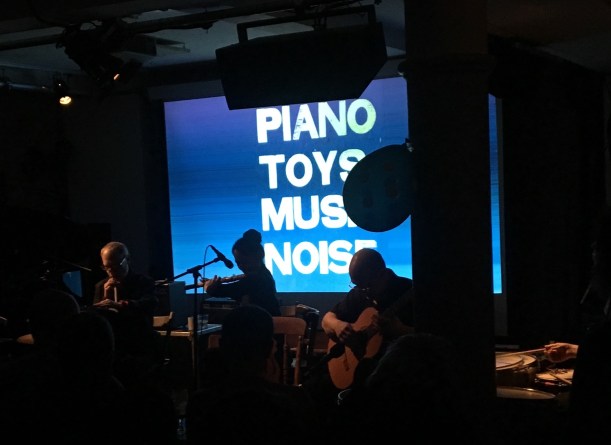
The pianist Steve Beresford is celebrating his 70th birthday this weekend with three shows at Cafe Oto, mixing and matching friends and colleagues each night under the rubric PIANO TOYS MUSIC NOISE. The bill is a fine reflection of the generosity of spirit that has made Steve a key figure in the London scene for four and a half decades, whether as a collaborator with Derek Bailey, the Flying Lizards, John Zorn, Tristan Honsinger, Evan Parker, the Dedication Orchestra and countless others or in his role as a senior lecturer at the University of Westminster.

Last night I particularly enjoyed a half-hour set by a quartet of musicians (pictured above) who hadn’t played as a unit before. Douglas Benford played various instruments, including bowls and a miniature harmonium; Hyelim Kim played a taegum, a big-bore bamboo flute from Korea; Martin Vishnik played an acoustic guitar; and Crystabel Riley played a drum kit with no cymbals and two bass-drum pedals. It was the sort of collaboration that gives free improvisation a good name: all four musicians listening hard, giving each other space, alert to signs, not afraid to gives cues of their own. The playing was exquisite, making effective use of the silence, the breathy sounds and the bell tones that this music has absorbed from Far Eastern idioms (most obviously Buddhist rituals), grounded in Riley’s truly extraordinary contribution: an underscore of rumbling and tapping, permanently in movement without seeming restless or overbearing, always alert to shifts in the music’s density and trajectory and ready to orchestrate, with Vishnik’s help, a truly gorgeous ending.

Steve himself played first with the violinist Satoku Fukuda and later with David Toop and Peter Cusack, his old colleagues from Alterations. Tonight and tomorrow the programmes will include a performance of John Cage’s “Indeterminacy”, Steve’s duo with the violinist Mandhira De Saram, and the pianist Pat Thomas playing Ellington. Not a bad birthday party, all told.

* Details of tonight’s and tomorrow’s programmes on the venue’s website: http://www.cafeoto.co.uk/events/

Lyle Mays, soundpainter

As Falls Wichita

This September it will be 40 years since Lyle Mays and Pat Metheny went into a studio with the producer Manfred Eicher to piece together the 20-minute work that gave its name to an album: “As Falls Wichita, So Falls Wichita Falls”. A sidebar to their work together as members of the Pat Metheny Group, it soon became recognised as a remarkable free-standing piece of work.

Crudely put, it functions as the soundtrack to an imaginary film: starting with the babble of voices — a sports crowd? a street market? a political demonstration? — and the thrumming of a bass guitar, evolving into gorgeous tunes built sometimes simply of chords, sometimes of melodies whistled or played on a berimbau (a heartbreaking twang). All sorts of soundscapes are evoked, and all sorts of weather, through textures that are constantly shifting and blending. The sound of Metheny’s various guitars and Mays’s keyboards and synths is of its time, but timeless, too. The berimbau is played by Nana Vasconcelos, who also contributes percussion and is the only other musician present.

It’s a beautiful American tone poem, epic in its sweep but also intimate in its approach to the listener. Later in the decade Metheny’s group would record the great “Last Train Home”, which felt then, and still feels, like a coda to the longer piece.

Lyle Mays died on February 10, aged 66, after a long illness. “As Falls Wichita, So Falls Wichita Falls” is likely to live as long as people are still listening to the recorded music of the twentieth century.

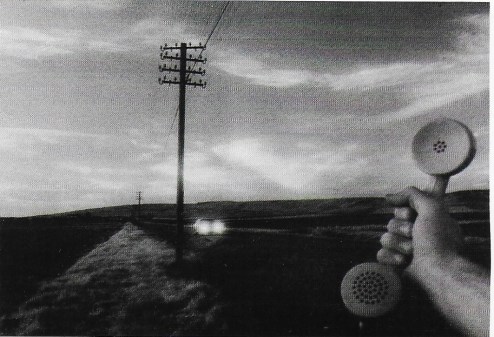
* The album As Falls Wichita, So Falls Wichita Falls was released in 1981 on the ECM label. The photograph, taken by Klaus Frahm (father of Nils), is from the cover.

The Henrys’ ‘Paydirt’

90585149_640

It’s my theory that Meghan and Harry haven’t fled the UK for Canada to get away from the red-tops. I think it’s because they know that the Henrys and the Weather Station have new albums out this year, and they’ll get more chances to see these great Canadian musicians playing gigs in actual Canada.

I don’t know when Tamara Lindeman intends to put out the new Weather Station album, but the Henrys released theirs this week. It’s their sixth, it’s called Paydirt, and it’s another one guaranteed to delight those who’ve acquired a taste for the understated, beautifully shaped music of the band led by the guitarist Don Rooke, who is probably best known outside his homeland as a key contributor to Mary Margaret O’Hara’s small but bejewelled discography.

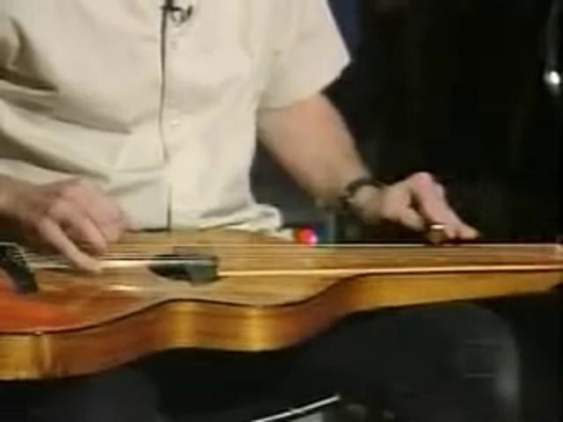
When Rooke visited the UK before Christmas, we took a train journey to Nottingham together, during which I asked him which, out of all his collection of guitars, was the one he’d be most reluctant to lose. Unsurprisingly he nominated his original Weissenborn, a soft-shouldered Hawaiian lap steel made in Los Angeles before the second world war. Don plays all sorts of guitars, but the mellow, unhurried twang of this one makes it the best-suited to his particular form of self-expression .

Unlike its predecessors, Paydirt is not available on CD. Sixteen tracks can be downloaded, 11 of which are also available on a vinyl disc. Whichever you choose, you’ll get a quietly eventful ramble through a landscape in which folk, country and blues meet and mingle, the conversation varying in stylistic emphasis but held together by a firm sense of collective understanding. To apply familiar terms like “backwoods” or “backporch” would not be entirely inappropriate, although it would probably overemphasise the bucolic nature of music that feels no need to advertise its sophistication.

Alongside Rooke are Davide DiRenzo on drums, Joseph Phillips on acoustic bass, John Dymond and Paul Pasmore on bass guitars, Jonathan Goldsmith on piano and pump organ, Joey Wright on guitar and mandocello, John Sheard on organ and pump organ and Hugh Marsh on violin. That sounds like a lot of musicians, but they share the work around and the sound is always spare and intimate. There are no guest singers this time, but every track sounds like a song.

The tunes are all Rooke’s. You might feel as though you’ve known them your entire life. You haven’t. If I had to pick a favourite, it would probably be “Ruby I Realize”, a relaxed shuffle in which the infiltration of Sheard’s light-fingered organ makes them sound like a chilled-out Booker T and the MGs, in the best possible way. Or the hymn-like dignity of “Stolen Border”. Or the blithe, skipping tune of “Bounty Jumpers”. Or the yearning lyricism of “It Was Old But We Knew”. Or the dobro and pump organ of “The Church Picnic”. Or the lightly funky second-line rhythm of “His Weakness Was Slender Arms”. Like just about every note I’ve ever heard from this source, Paydirt is highly recommended.

* Paydirt can be acquired via Bandcamp: https://thehenrys.bandcamp.com/album/paydirt

ECM at 50

manfred-eicher

By the end of the 1960s, jazz had gone right out of fashion. If it was by no means dead in creative terms, it was no longer good business for the music industry. So the arrival of a new jazz record label was quite an event, which is why I can remember quite clearly the first package from ECM arriving on my desk at the Melody Maker‘s offices in Fleet Street, and opening it to extract Mal Waldron’s Free at Last. I knew about Waldron from his work with Charles Mingus, Eric Dolphy and others. But an album from the pianist, recorded in Europe and packaged with unusual care on an unfamiliar label based in Munich, came as a surprise.

Pretty soon it was followed by Paul Bley with Gary Peacock, and then by Marion Brown’s Afternoon of a Georgia Faun. Before 1970 was out further packages had included an album by the Music Improvisation Company (with Evan Parker and Hugh Davies) and Jan Garbarek (Afric Pepperbird). It became obvious that something special was happening under the aegis of ECM’s founder, Manfred Eicher.

I guess it was in 1971, with solo piano albums from Chick Corea and Keith Jarrett, Terje Rypdal’s first album and two albums of duos teaming Dave Holland with Barre Phillips and Derek Bailey, that the label’s character really became clear. Eicher stood for jazz with a high intellectual content, saw no reason to privilege American musicians over their European counterparts, and set his own high standards in studio production and album artwork. All these things — particularly his fondness for adding a halo of reverb to the sound of acoustic instruments, inspired by how music sounded in churches and cathedrals — were eventually turned against him by the label’s critics. The sheer volume of great music produced over the past 50 years is the only counter-argument he ever needed. His greatest achievement has been to make us listen harder, deeper and wider.

ECM’s golden jubilee is being marked by events around the world. On January 30 and February 1 there will be a celebration over two nights at the Royal Academy of Music in London, featuring the pianists Craig Taborn and Kit Downes, the bassist and composer Anders Jormin and the Academy’s big band playing the music of Kenny Wheeler with guests Norma Winstone, Evan Parker and Stan Sulzmann. I thought I’d add to the festivities by choosing 20 ECM albums that have made a particularly strong impression on me since that first package dropped on my desk half a century ago; they’re listed in chronological order. Although there are many other contenders, I stopped at 19; the 20th is for you to nominate.

1 Terje Rypdal: Terje Rypdal (1971) The guitarist’s debut was an early sign of Eicher’s determination to capture and promote the new sounds coming from northern Europe, and from Norway in particular. Rypdal was one of the first to present himself as a wholly original voice.

2 Paul Bley: Open, to Love (1972) For my money, the finest of ECM’s early solo piano recitals, with Bley examining compositions by Carla Bley (“Ida Lupino”), Annette Peacock (“Nothing Ever Was, Anyway”) and himself.

3 Old and New Dreams: Old and New Dreams (1979) Don Cherry, one of Eicher’s favourites, is joined by Dewey Redman, Charlie Haden and Ed Blackwell in this homage to the music of their former colleague, Ornette Coleman. The 12-minute “Lonely Woman” is astonishingly lovely.

4 Leo Smith: Divine Love (1979) The trumpeter and composer Wadada Leo Smith was among the squadron of American innovators who arrived in Europe at the end of the ’60s and whose influence gradually became apparent in the ECM catalogue. Divine Love is a classic.

5 Bengt Berger: Bitter Funeral Beer (1981) A Swedish ethnomusicologist, composer and percussionist, Berger put together a 13-piece band — Don Cherry being the only famous name — to record this strange and compelling multicultural mixture of jazz and ritual music.

6 Charlie Haden / Carla Bley: Ballad of the Fallen (1983) Fourteen years after the historic Liberation Music Orchestra, Haden and Bley reunited for a second studio album featuring music of resistance.

7 John Surman: Withholding Pattern (1985) A solo album in which Surman developed his skill at overdubbing soprano and baritone saxophones, piano and synths, this opens with “Doxology”, in which Oslo’s Rainbow studio is turned into an English church.

8 Bill Frisell: Lookout for Hope (1988) One of several guitarists whose careers were nurtured at ECM, Frisell recorded this with a lovely quartet — Hank Roberts (cello), Kermit Driscoll (bass) and Joey Baron (drums) — before moving on.

9 Keith Jarrett Trio: The Cure (1991) Includes an eight-minute version of “Blame It on My Youth” in which Jarrett, Gary Peacock and Jack DeJohnette achieve perfection, no matter how many times I listen to it in search of flaws.

10 Kenny Wheeler: Angel Song (1996) In a dream line-up, the Canadian trumpeter is joined by the alto of Lee Konitz, the guitar of Bill Frisell and the bass of Dave Holland.

11 Tomasz Stanko: Litania (1997) The Polish trumpeter interprets the compositions of his compatriot and sometime colleague Krzysztof Komeda. A wonderful group features the saxophonists Joakim Milder and Bernt Rosengren, with a core ECM trio — Bobo Stenson (piano), Palle Danielsen (bass) and Jon Christensen (drums) — as the rhythm section plus Terje Rypdal’s guitar on two of the tunes.

12 Trygve Seim: Different Rivers (2000) Most ECM music is for small groups, but here the Norwegian saxophonist and composer permutates 13 musicians in an exploration of subtle textures and gestures. The great trumpeter Arve Henriksen is among the soloists.

13 Manu Katché: Neighbourhood (2005) Ever listened to Herbie Hancock’s “Maiden Voyage” and wished there had been more post-bop jazz with that kind of relaxed intensity and melodic richness? Here it is. Tomasz Stanko and Jan Garbarek are the horns, Marcin Wasilewski and Slawomir Kurkiewicz the pianist and bassist.

14 Masabumi Kikuchi: Sunrise (2012) Kikuchi, who was born in Tokyo in 1939 and died in upstate New York in 2015, was a pianist of exquisite touch, great sensitivity and real  originality: a natural fit with Eicher, who recorded him with the veteran drummer Paul Motian and the quietly astounding bassist Thomas Morgan.

15 Nik Bärtsch’s Ronin: Live (2012) The label that released Steve Reich’s Music for 18 Musicians in 1978 is the perfect home for the group led by the Swiss pianist and composer, who explores the spaces between minimalist repetition and ecstatic groove, between gridlike structures and joyful improvisation.

16 Giovanni Guidi: This Is the Day (2015) With equal creative contributions from Thomas Morgan and the drummer João Lobo, the young Italian master leads a piano trio for the 21st century: always demanding close attention but never short of refined lyricism.

17 Michel Benita + Ethics: River Silver (2016) Led by an Algerian bassist, a quintet including a Japanese koto player (Mieko Miyazaki), a Swiss flugelhornist (Matthieu Michel), a Norwegian guitarist (Eivind Aarset) and a French drummer (Philippe Garcia) create music that incarnates the ECM ideal of reflective, frontierless beauty.

18 Roscoe Mitchell: Bells for the South Side (2017) A double album recorded live in Chicago in 2015, featuring Mitchell with four trios — including the trumpeter Hugh Ragin and the percussionist Tyshawn Sorey — who finally come together in a memorable celebration of the legacy of the Art Ensemble of Chicago.

19 Vijay Iyer Sextet: Far From Over (2017) Knotty but exhilarating compositions, solos packed with substance from Graham Haynes (cornet), Steve Lehman (alto) and Mark Shim (tenor): a statement of the art as it moves forward today.

20

* The photograph is a still from the 2011 film Sounds and Silence: Travels with Manfred Eicher, by Peter Guyer and Norbert Wiedmer. There’s a chapter containing further thoughts on ECM’s place in the evolution of modern music in my book The Blue Moment: Miles Davis and the Remaking of Modern Music, published in 2009 by Faber & Faber.

Flutter and wow

toop-guitar.b66383ff

After several books in which he perceptively explored the place and meaning of sound in our lives — including Oceans of Sound, Exotica, Haunted Weather, Sinister Resonance and Into the Maelstrom — now David Toop tells us how he came by his deep love and remarkable understanding of music. Flutter Echo: Living Within Sound, first published two years ago in Japan, where he has a devoted following, is now available in an English edition, and will provide valuable reading for anyone interested in the breadth of Toop’s interests.

That certainly includes me. If Toop is interested in something, the chances are that I will be, too. As signposts to the journey he describes, he appends a list of stuff he liked at the time. The period 1967-70, for instance, when he was in his late teens, includes Junior Wells’s Hoodoo Man Blues, Nico’s The Marble Index, the SME’s Karyobin, and Laura Nyro’s Eli and the Thirteenth Confession. Ten years later he was listening to Little Beaver’s “Party Down”, Cachao y su Descarga, Dr Alimentado’s “Ride on Brother”, Walt Dickerson’s Peace and Evelyn Champagne King’s “Shame”. And so on. Our kind of person, I think.

His book is the story of how a boy from London’s northern suburbs found the music that gave volume, depth and direction to his life. Because his story parallels the experience of so many, and because Toop writes equally well about epiphanies and tragedies, it invites and secures the reader’s empathy.

As a journalist, Toop wrote for many publications (The Face, The Wire and others) and was heavily involved in two magazines, Musics and Collusion, that — among other things — chronicled the activities in the 1970s and early ’80s of the “second generation” of British free improvisers, of whom he was a prominent member, along with his frequent collaborators Steve Beresford, Paul Burwell, Max Eastley, Peter Cusack and others.

Their work is featured in Further Perspectives and Distortions, an excellent three-CD box subtitled “An Encyclopedia of British Experimental and Avant-Garde Music 1976-1984”. Its time-frame means that it includes the wilder work of people associated with jazz-rooted free improvisation, contemporary classical, punk rock and post-punk, from AMM through Gavin Bryars and Alternative TV to This Heat, the Pop Group and Henry Cow. Other mavericks include the Roberts Wyatt and Fripp, Bob Cobbing, Ron Geesin, David Cunningham and Fred Frith.

The way I’ve listened to it is mostly to let each disc run — the tracks are sequenced alphabetically, by artist — and not to bother with checking the origin of each item. Sometimes I couldn’t help myself from wanting to know that a brilliant drum solo was from a Soft Machine track (John Marshall, presumably), or that an irresistible electro-groove was This Hear’s “24 Track Loop”. I enjoyed the 4min 28sec of silence halfway through the second disc, titled “(Extract from) The Compassion and Humanity of Margaret Thatcher” and credited to No Artist.

Those highlights aside (and there are, of course, others), the way I’ve chosen to listen means that the rustlings and bangings and jagged guitars and squeals and howls and pneumatic drilling and rantings and mutterings blend into each other like a mosaic-portrait of an edgy, difficult and often stimulating time, when almost everything was political. Maybe we’re heading that way again.

* The photograph of David Toop is by Fabio Lugaro, and is on the cover of Flutter Echo, which is published by Ecstatic Peace Library. The box set Further Perspectives and Distortions is on the Cherry Red label.

2019: The best bits

Osipova

It’s a source of lingering personal regret that I haven’t spent more time at the ballet. Over the years, rare outings to see the Nederlands Dans Theater performing Twice (Sock It to Me) to James Brown’s music at Sadler’s Wells in 1970, Mikhail Baryshnikov and Gelsey Kirkland with American Ballet Theatre at the Coliseum in 1977, Twyla Tharp’s Nine Sinatra Songs at the Riverside Studios in 1994 and Matthew Bourne’s all-male Swan Lake at Sadler’s Wells in 1996 felt like journeys into a universe where the air was very different. This year’s adventure was another visit to Sadler’s Wells to see Natalia Osipova, the Bolshoi-trained principal dancer with the Royal Ballet, presenting Pure Dance, a programme of seven short pieces from different choreographers.

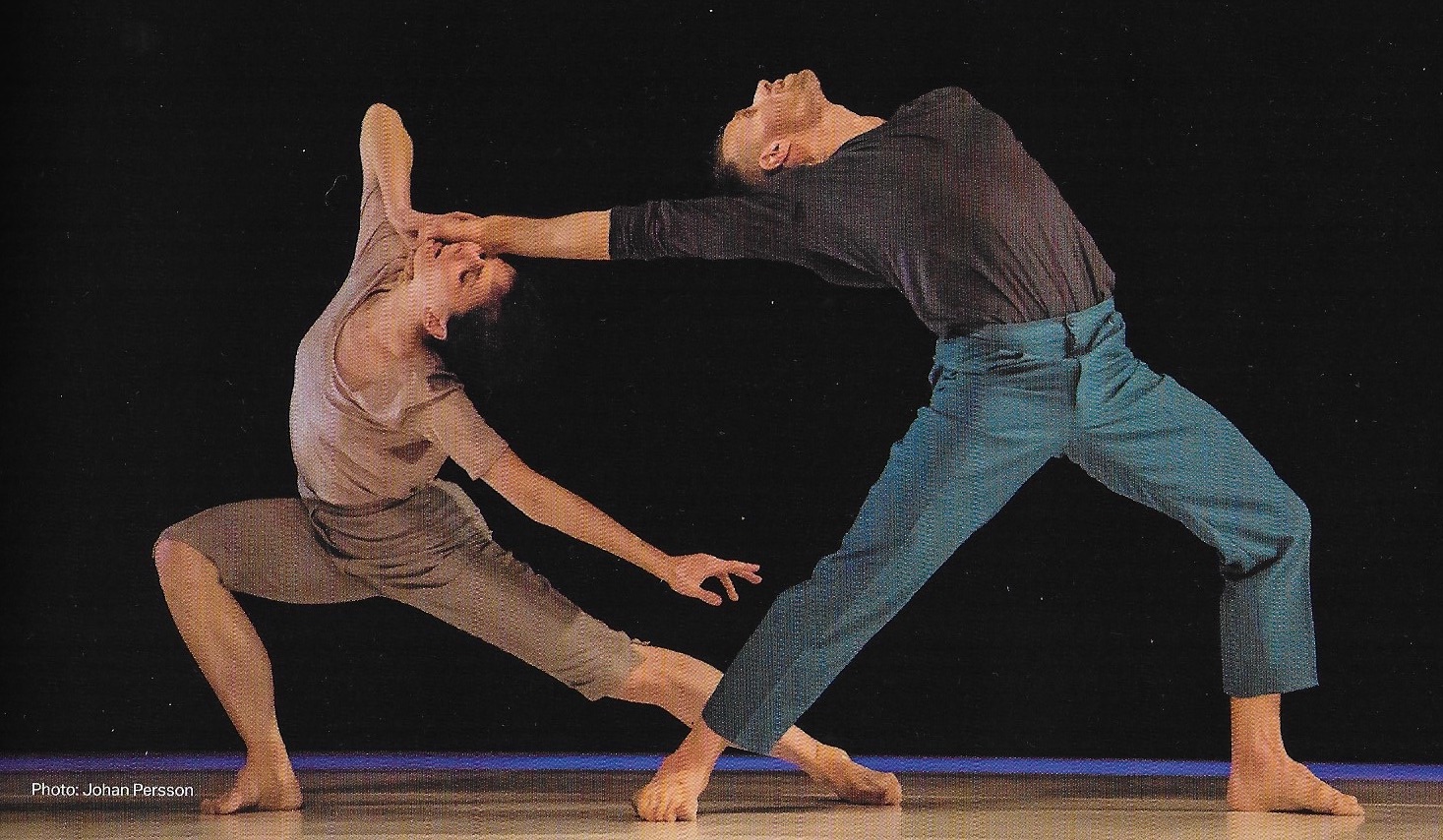
Among them was Six Years Later, created by Roy Assaf and danced by Osipova with Jason Kittelberger. Over the course of 22 minutes, it depicted the moods and responses of two people meeting after a lengthy estrangement: the range of gestures was considerable, from fond touches and entwinings to pushing, slapping and shoulder-barging. The first music was Beethoven’s Moonlight Sonata, played straight but eventually treated (with great subtlety) by Deefly, twisting into a brief electronic episode that led to a big surprise: the strummed intro to “Reflections of My Life”, the 1969 hit by the Marmalade, the Scottish pop band who loitered successfully on the fringes of psychedelia. That in turn gave way to the final section and a third piece of music: Handel’s Dove Sei, Amato Bene? sung by Marilyn Horne. I found the emotional arc engrossing and the understated fluidity of the dancers’ movements compelling in their fluctuations between intimacy and distance. The real ballet critics were indifferent, so what do I know?

Beyond category

Amazing Grace: Aretha Franklin with James Cleveland and the Southern California Community Choir (dir. Sidney Pollack & Alan Elliott)

Live performances

1 Rhiannon Giddens / The Ensemble (HM Prison Wormwood Scrubs, Nov)

2 Royal Academy of Music alumni & soloists: Gil Evans’s Porgy & Bess (St John, Smith Square, Nov)

3 Binker Golding Quartet (Cockpit Theatre, Oct)

4 Nik Bärtsch / Sophie Clements (Barbican, Nov)

5 Soweto Kinch’s The Black Peril (Hackney EartH, Nov)

6 Bill Frisell + Harmony (Cadogan Hall, Oct)

7 Julia Hülsmann Quartet (Purcell Room, Nov)

8 Punkt.Vrt.Plastik (Vortex, Oct)

9 The Necks (Hackney EartH, May; St John, Bethnal Green, Oct)

10 Louis Moholo-Moholo’s Five Blokes (Cafe Oto, Aug)

11 Lucia Cadotsch’s Speak Low (Purcell Room, Nov)

12 Kim Myhr (Kilden, Oslo, Sept)

13 Zbigniew Namysłowski (JazzCafé POSK, Dec)

14 Thurston Moore (Kick Scene, Oslo, Sept)

15 Erland Apneseth Trio (Spice of Life, Nov)

New albums

1 Terri Lyne Carrington + Social Science: Waiting Game (Motéma)

2 Matana Roberts: Coin Coin Chapter 4: Memphis (Constellation)

3 Tyshawn Sorey + Marilyn Crispell: The Adornment of Time (Pi)

4 SEED Ensemble: Driftglass (jazz:refreshed)

5 Christian Lillinger: Open Form for Society (Plaist Music)

6 Kronos Quartet / Terry Riley: Sun Rings (Nonesuch)

7 Solange: When I Get Home (Columbia)

8 Arve Henriksen: The Timeless Nowhere (Rune Grammofon)

9 Guillermo Klein & Los Guachos: Cristal (Sunnyside)

10 Isildurs Bane & Peter Hammill: In Amazonia (Ataraxia)

11 Michael Kiwanuka: Kiwanuka (Polydor)

12 Giovanni Guidi: Avec le temps (ECM)

13 P. P. Arnold: The New Adventures of P. P. Arnold (e*a*r)

14 Laura Jurd: Stepping Back, Jumping In (Edition)

15 Angélique Kidjo: Celia (Verve)

16 Art Ensemble of Chicago: We Are on the Edge (Pi)

17 Que Vola?: Que Vola? (Nø Førmat)

18 Beth Gibbons / Polish NRO / Penderecki: Górecki’s Symphony No 3 (Domino)

19 Allison Moorer: Blood (Autotelic)

20 Gebhard Ullmann’s Basement Research: Impromptus & Other Short Works (WhyPlayJazz)

21 Wadada Leo Smith: Rosa Parks / Pure Love (TUM)

22 Nérija: Blume (Domino)

23 Jaimie Branch: Fly or Die II: Bird Dogs of Paradise (International Anthem)

24 Lana Del Rey: NFR! (Interscope)

25 Corey Mwamba: Nth (Discus)

Archive & reissue albums

1 Various: This is Lowrider Soul (Kent)

2 John Coltrane: Blue World (Impulse)

3 Various: Further Perspectives & Distortions: An Encyclopedia of British Experimental and Avant-Garde Music 1976-84 (Cherry Red)

4 Wes Montgomery: Back on Indiana Avenue: The Carroll DeCamp Recordings (Resonance)

5 John Coltrane: Impressions / Graz 1962 (ezz-thetic)

6 Anne Briggs: Anne Briggs (Topic Treasures)

7 Jan Garbarek / Bobo Stenson Quartet: Witchi-Tai-To (ECM)

8 Various: Yesterday Has Gone: The Songs of Teddy Randazzo (Ace)

9 Bob Dylan: The Rolling Thunder Review / The 1975 Live Recordings (CBS Legacy)

10 Various: Dave Godin’s Deep Soul Treasures Vol 5 (Kent)

11 Johnny Burch Octet: Jazz Beat (Rhythm and Blues)

12 Nat King Cole: Hittin’ the Ramp (Resonance)

13 Various: Sacred Sounds: Dave Hamilton’s Raw Detroit Gospel 1969-74 (Kent)

14 Bob Dylan: Travelin’ Thru 1967-69 (CBS Legacy)

15 Don Cherry / Ed Blackwell:  El Corazón (ECM)

Films

1 Varda by Agnès (dir. Agnès Varda)

2 The Image Book (dir. Jean Luc Godard)

3 The Irishman (dir. Martin Scorsese)

Music documentaries

1 Country Music (dir. Ken Burns)

2 Miles Davis: Birth of the Cool (dir. Stanley Nelson)

3 Hitsville: The Making of Motown (dir. Benjamin Turner & Gabe Turner)

Books about music

1 Booker T. Jones: Time Is Tight (Omnibus)

2 David Toop: Flutter Echo (Ecstatic Peace Library)

3 Emma John: Wayfaring Stranger (Weidenfeld & Nicolson)

4 James Pettifer: Meet You in Atlantic City (Signal)

5= Will Birch: Cruel to Be Kind: The Life & Music of Nick Lowe (Constable)

5= Ian Penman: It Gets Me Home, This Curving Track (Fitzcarraldo Editions)

Exhibitions

1 Ivon Hitchens (Garden Museum, London & Pallant House, Chichester)

2 Lee Krasner: Living Colour (Barbican)

3 Natalie Daoust: Korean Dreams (Beecroft Gallery, Southend)

4 Ed Ruscha (Tate Modern)

5 Various: Another Me (South Bank Arts Centre)
Nik Bärtsch at the Barbican

Nik Bartsch Barbican

This is how is began, with a seven-foot Steinway marooned on a dais in a lagoon of water installed on an enlarged stage at the Barbican Hall, silhouetted against a rhombus of light projected on to the back wall. As the house lights dimmed to blackness, the Swiss pianist and composer Nik Bärtsch, as usual shaven-headed and dressed in the black robes of a ninja monk, emerged from the wings and made his way to the instrument across a causeway which was then removed by stagehands. Bärtsch settled himself before launching into an hour-long piece called When the Clouds Clear, a “light and sound poem” created in conjunction the London-based visual artist Sophie Clements.

Bärtsch’s music is utterly sui generis: a highly personal version of minimalism that is most often expressed with the other musicians of his quintet Ronin, a project developed over almost 20 years at weekly sessions in a Zurich club that he co-owns. Each of his compositions is titled “Modul” and given a number. This mirrors the seemingly industrial precision with which they are conceived and performed, based on small melodic cells and exacting rhythmic overlays whose teasing syncopations generate tension, but it gives no idea of the emotion generated when, on a sudden shouted cue, one locked groove instantly gives way to another, the intensity rising exponentially.

All this was reflected in his unaccompanied playing last night, opening with a single repeated note tested for overtones and modified for attack and decay before evolving through an hour of contrasting moods and densities, often displaying his highly personal use of the prepared-piano techniques now common among those of his and subsequent generations of acoustic keyboard improvisers. Bärtsch can stun a note so that it acts like a rimshot from Philly Joe Jones or Clyde Stubblefield, laying it against a frantic weave of arpeggiation or letting it punctuate in a moment of silence. Sometimes he reached inside the instrument to make it hiss or growl, before building fantastic cataracts of sound that forfeited all note-definition and seemed about to burst the walls of the auditorium.

Sophie Clements’ lighting and projections began with minimalistic monochrome geometries creeping across the set before she introduced backdrops of waves and skies, washed in blue or grey. This seemed worryingly literal — waves of water, waves of sound — but only for the briefest moment until it became apparent how beautifully the visuals and the music were creating (to paraphrase Wallace Stevens) something beyond them, but themselves. Towards the end, drops of water began to fall from the roof into the lagoon: an illusion of the elements invading the music. (There was some wry amusement about this afterwards, given that parts of Britain had spent the week battling floods.)

The  austere, almost hieratic air of Bärtsch’s music and self-presentation is utterly deceptive; its end product is human warmth, and the prolonged ovation he shared with Clements was generated by art that, for all its refinement of technique and conception, communicated on the most immediate level. I’d be surprised if there were a soul in the hall who, having absorbed a genuinely extraordinary experience, wouldn’t have been happy to sit through it all again straight away.

* Nik Bärtsch and Sophie Clements were appearing on the first night of the 2019 EFG London Jazz Festival. This was the second performance of When the Clouds Clear, which was co-commissioned by the Enjoy Jazz Festival and the Barbican and received its première in Mannheim earlier this year.