Flutter and wow
After several books in which he perceptively explored the place and meaning of sound in our lives — including Oceans of Sound, Exotica, Haunted Weather, Sinister Resonance and Into the Maelstrom — now David Toop tells us how he came by his deep love and remarkable understanding of music. Flutter Echo: Living Within Sound, first published two years ago in Japan, where he has a devoted following, is now available in an English edition, and will provide valuable reading for anyone interested in the breadth of Toop’s interests.
That certainly includes me. If Toop is interested in something, the chances are that I will be, too. As signposts to the journey he describes, he appends a list of stuff he liked at the time. The period 1967-70, for instance, when he was in his late teens, includes Junior Wells’s Hoodoo Man Blues, Nico’s The Marble Index, the SME’s Karyobin, and Laura Nyro’s Eli and the Thirteenth Confession. Ten years later he was listening to Little Beaver’s “Party Down”, Cachao y su Descarga, Dr Alimentado’s “Ride on Brother”, Walt Dickerson’s Peace and Evelyn Champagne King’s “Shame”. And so on. Our kind of person, I think.
His book is the story of how a boy from London’s northern suburbs found the music that gave volume, depth and direction to his life. Because his story parallels the experience of so many, and because Toop writes equally well about epiphanies and tragedies, it invites and secures the reader’s empathy.
As a journalist, Toop wrote for many publications (The Face, The Wire and others) and was heavily involved in two magazines, Musics and Collusion, that — among other things — chronicled the activities in the 1970s and early ’80s of the “second generation” of British free improvisers, of whom he was a prominent member, along with his frequent collaborators Steve Beresford, Paul Burwell, Max Eastley, Peter Cusack and others.
Their work is featured in Further Perspectives and Distortions, an excellent three-CD box subtitled “An Encyclopedia of British Experimental and Avant-Garde Music 1976-1984”. Its time-frame means that it includes the wilder work of people associated with jazz-rooted free improvisation, contemporary classical, punk rock and post-punk, from AMM through Gavin Bryars and Alternative TV to This Heat, the Pop Group and Henry Cow. Other mavericks include the Roberts Wyatt and Fripp, Bob Cobbing, Ron Geesin, David Cunningham and Fred Frith.
The way I’ve listened to it is mostly to let each disc run — the tracks are sequenced alphabetically, by artist — and not to bother with checking the origin of each item. Sometimes I couldn’t help myself from wanting to know that a brilliant drum solo was from a Soft Machine track (John Marshall, presumably), or that an irresistible electro-groove was This Hear’s “24 Track Loop”. I enjoyed the 4min 28sec of silence halfway through the second disc, titled “(Extract from) The Compassion and Humanity of Margaret Thatcher” and credited to No Artist.
Those highlights aside (and there are, of course, others), the way I’ve chosen to listen means that the rustlings and bangings and jagged guitars and squeals and howls and pneumatic drilling and rantings and mutterings blend into each other like a mosaic-portrait of an edgy, difficult and often stimulating time, when almost everything was political. Maybe we’re heading that way again.
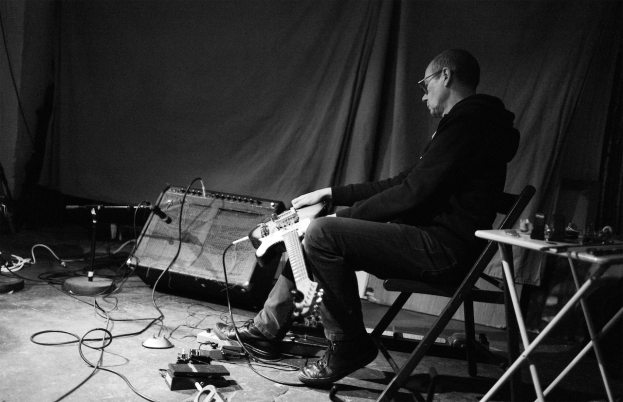
* The photograph of David Toop is by Fabio Lugaro, and is on the cover of Flutter Echo, which is published by Ecstatic Peace Library. The box set Further Perspectives and Distortions is on the Cherry Red label.

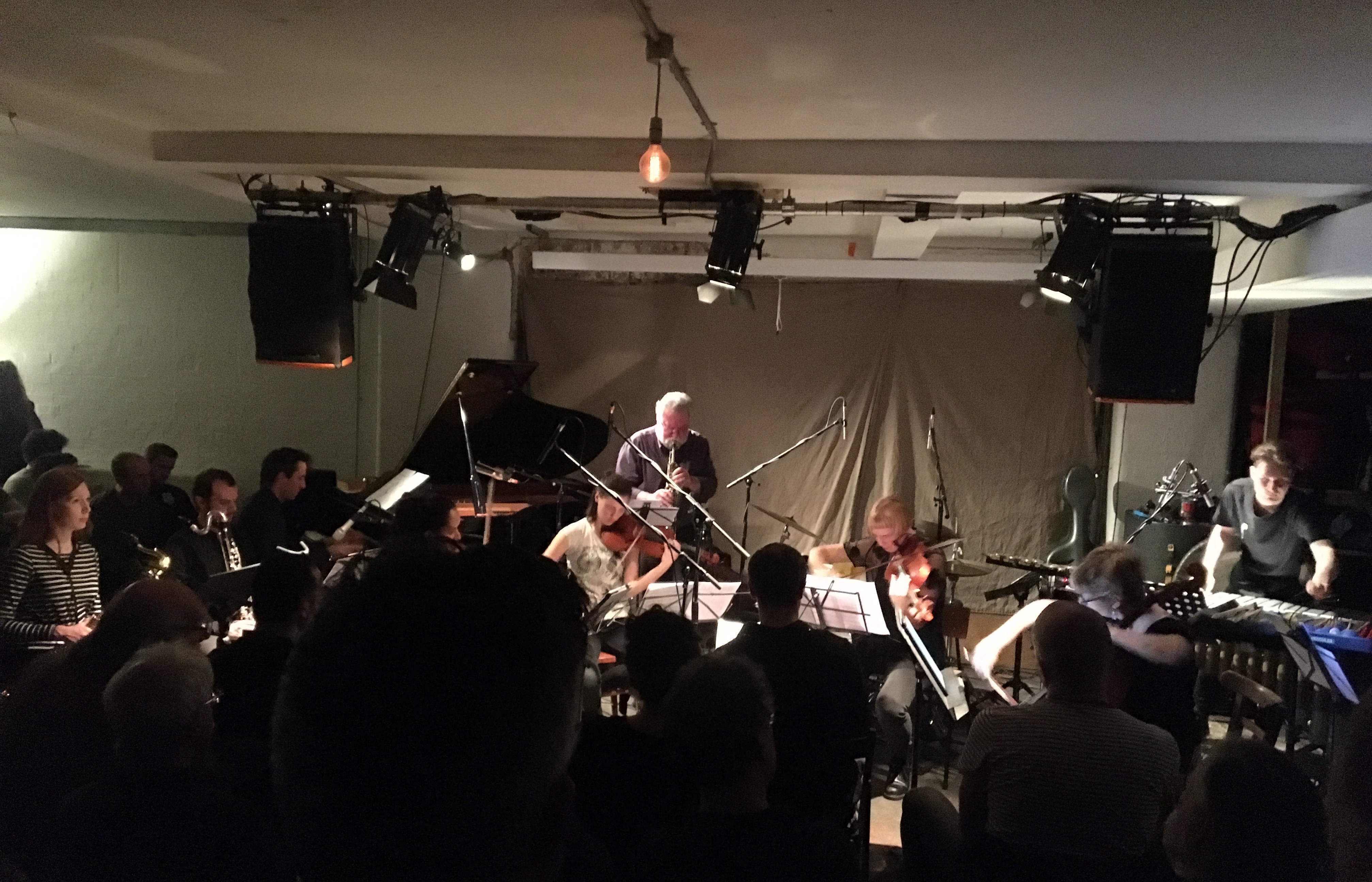

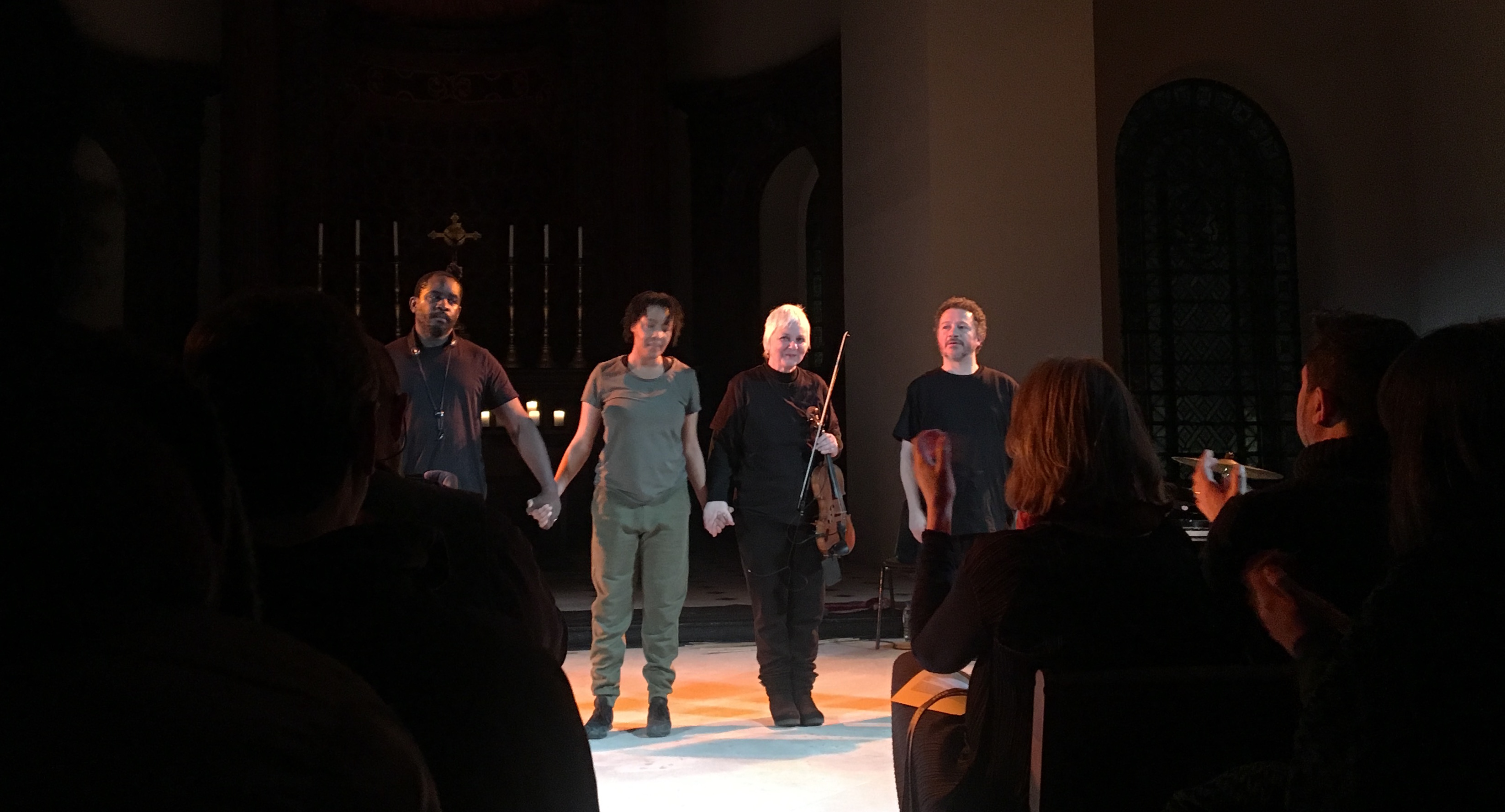 The architect Nicholas Hawksmoor completed St George’s, Bloomsbury, one of his half-dozen London churches, in 1730, at a time when the transport of slaves from Africa to the New World was booming, with Britain the biggest trafficker. It was built to serve a prosperous parish, although its tower can be glimpsed in the background of Hogarth’s ‘Gin Lane’ engraving of 1751, the artist’s depiction of the low-life inhabitants of the Rookery, as the tenements of nearby St Giles were known. More recently, in 1937, the church welcomed Emperor Haile Selassie at a requiem for the dead of the Second Italo-Abyssinian war, a particularly bloody three-year conflict featuring the use of mustard gas by Mussolini’s troops on the Ethiopian army.
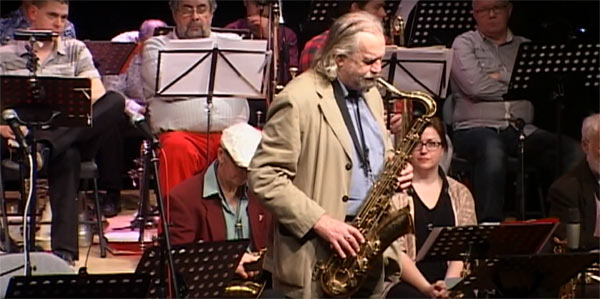 Lou Gare held his tenor saxophone aslant, like Lester Young, whose light-fingered articulation and disdain for the obvious he shared. Gare was born in Rugby but it was in Plymouth in the early 1960s that he first played with the band of the young Mike Westbrook, alongside the even younger John Surman. In London in 1965 he became a founder member, with Eddie Prévost, Cornelius Cardew and Keith Rowe, of AMM, one of the seminal groups of the first generation of British free improvisers. Lou was on their debut album, AMMMusic, recorded at Sound Techniques in Chelsea and released by Elektra Records in 1966. Six years later, with the group reduced to a Gare-Prévost duo, they performed at Harvey Matusow’s International Carnival of Experimental Sound event in London, their set released initially in part on an Incus EP as AMM at the Roundhouse and then in full on a Matchless CD under the same title.

 If you were to draw a straight line connecting Hank B. Marvin to Jimi Hendrix and then extend it a bit further, the next point on the line would be Terje Rypdal, the Norwegian guitarist and composer who celebrated his 70th birthday this weekend with a couple of concerts at Oslo’s Victoria Nasjonal Jazzscene, an old cinema converted into a 300-capacity theatre for improvised music. I went to the first of the concerts, in which Rypdal was joined by the trumpeter Palle Mikkelborg, the keyboardist Ståle Storløkken and the drummer Pål Thowsen. It was an unforgettable evening, and a reminder of his singular importance.


