Skip to content

Posts tagged ‘Tubby Hayes’

‘An Unexpected Pleasure’
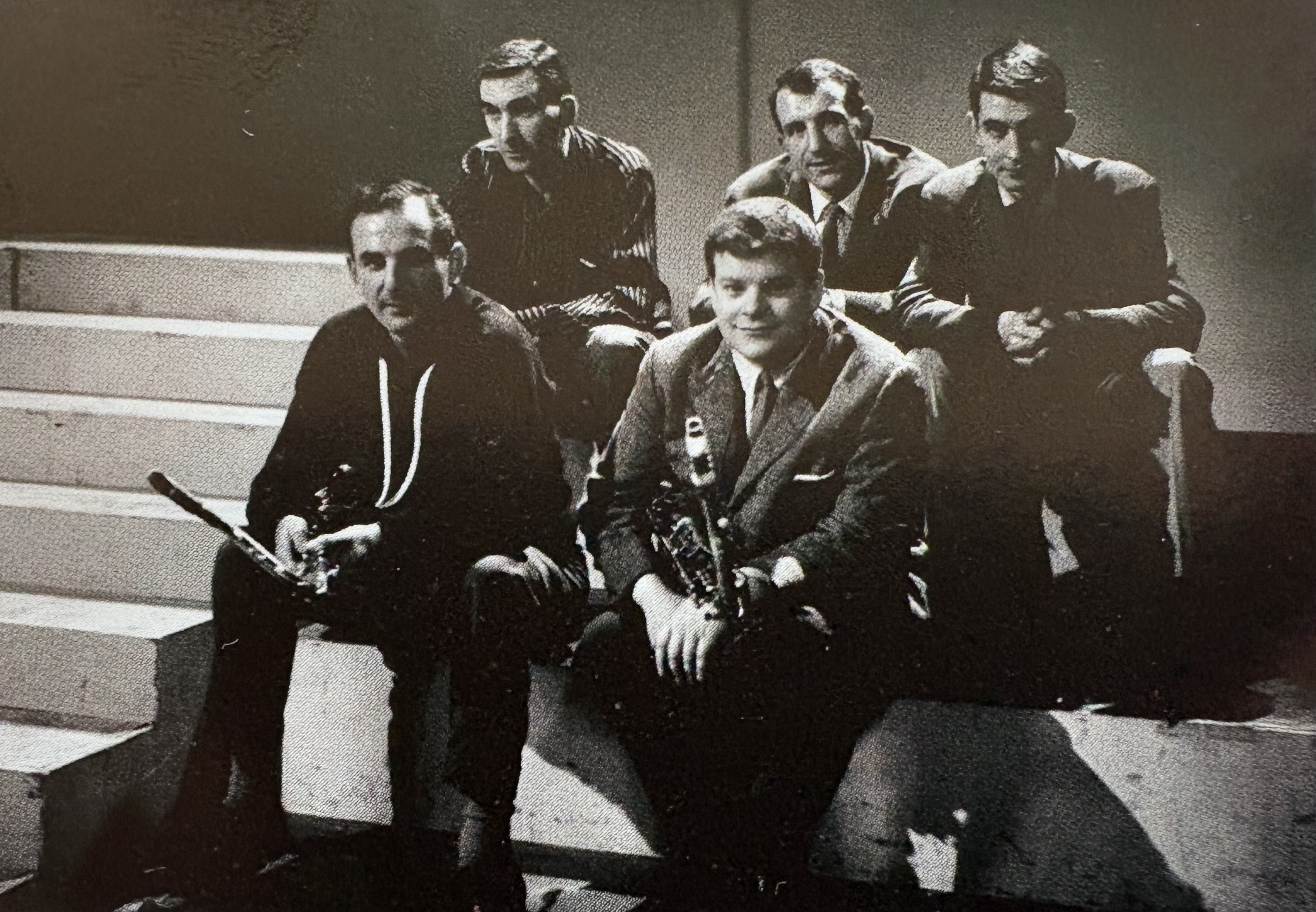
The Jazz Couriers (left to right): Ronnie Scott, Bill Eyden, Tubby Hayes, Colin Bates, Terry Shannon

In his heyday, Tubby Hayes was universally accepted as the the finest jazz musician Britain had produced. Good enough to perform at the Half Note in New York in 1961 (in front of an opening-night audience including Miles Davis) and to take the place of an indisposed Paul Gonsalves in Duke Ellington’s saxophone section at the Royal Festival Hall in 1964: these were the sort of accolades that entered local legend.

There have been several generations of British jazz musicians since Hayes died in 1973, aged 38, after a heart operation, and it’s no longer unusual to hear world-class music from local players. There’s also no shortage of recordings from remind us how good Hayes really was, and now there’s a new three-CD box, titled An Unexpected Pleasure, containing unreleased studio and live sessions from 1958 to 1972, full of further evidence of his stature.

It was co-compiled and annotated by Simon Spillett, a tenor saxophonist who is the appointed curator of the Hayes story and published a definitive biography, The Long Shadow of the Little Giant, back in 2015. As long as Spillett is around, time will be not be allowed to erase Hayes’s name from the historical record, and the new box does a useful supporting job in that regard.

Based largely on sessions for BBC’s weekly Jazz Club, it opens with half a dozen crackling tracks from 1958 by the Jazz Couriers, the two-tenor quintet co-led by Hayes and Ronnie Scott, with the young Jeff Clyne replacing Colin Bates on bass in the line-up seen in the photo above. Their version of “Just One of Those Things” is about as hip as such things got back then, its rocket-propelled tempo suiting Hayes perfectly. Three tracks recorded as a guest with the Kurt Edelhagen Big Band at a German festival the following year include a gorgeous arrangement of “Round Midnight”. A jump to 1962 shows the influence of Kind of Blue on “Modes and Blues”, a Hayes original from a fine BBC session with his quintet, with Jimmy Deuchar on trumpet, augmented by three extra brass, and the leader doubling on vibes.

The second disc opens with four tracks the quintet in 1964, Hayes now adding flute to his armoury, before the scene switches to Oslo and a 1966 version of “100% Proof”, Hayes’s 12-minute multi-themed big-band tour de force, here performed with the orchestra of Thorleif Østereng — well played if indifferently recorded, showing glimpses of an engagement with the avant-garde in some of the tenor work. The disc closes with four standards recorded by a new quartet with Mike Pyne on piano, Bruce Cale on bass and Tony Levin on drums.

Finally, the third disc covers the period between his arrest and conviction for possession of heroin in 1968, for which he was given a suspended prison sentence and put into a rehabilitation programme, and his death five years later. It begins with an exhilarating — asome might say slightly overexcited — remake of “100% Proof”, now retitled “200% Proof”, with his own big band, packed with British talent, including Kenny Wheeler and Peter King, and a thunderous double bass-and-drums team of Ron Matthewson, Jeff Clyne, Spike Wells and Tony Levin. Two closing quartet sessions, from 1969 and 1972, provide evidence of his interest in the work of John Coltrane and, particularly, Joe Henderson.

The set is a reminder of the days when the BBC recorded jazz groups at such places as the Aeolian Hall in Bond Street, the Paris Theatre in Bond Street, the Maida Vale Studios and the Hippodrome in Golders Green, with sympathetic producers and skilled sound engineers. It’s a blessing that many of these recordings, some of them taken home after the sessions by the musicians as copy tapes, are being brought into the light once again.

Hayes also features — along with Scott, Stan Tracey, Ronnie Ross, Dudley Moore, Tony Coe and many others — in Spillett’s latest book, Further Shadows. Subtitled “Essays on British Modern Jazz 1950-1975” and rich in anecdotes, it’s out this month, published by Jazz in Britain, on whose label An Unexpected Pleasure also appears. The book is accompanied by a two-CD set of its own featuring the stars of the time in various BBC and club locations, providing glimpses of many whose reputations might not match that of Hayes, but who were certainly worth their place alongside him.
Old and new gospel

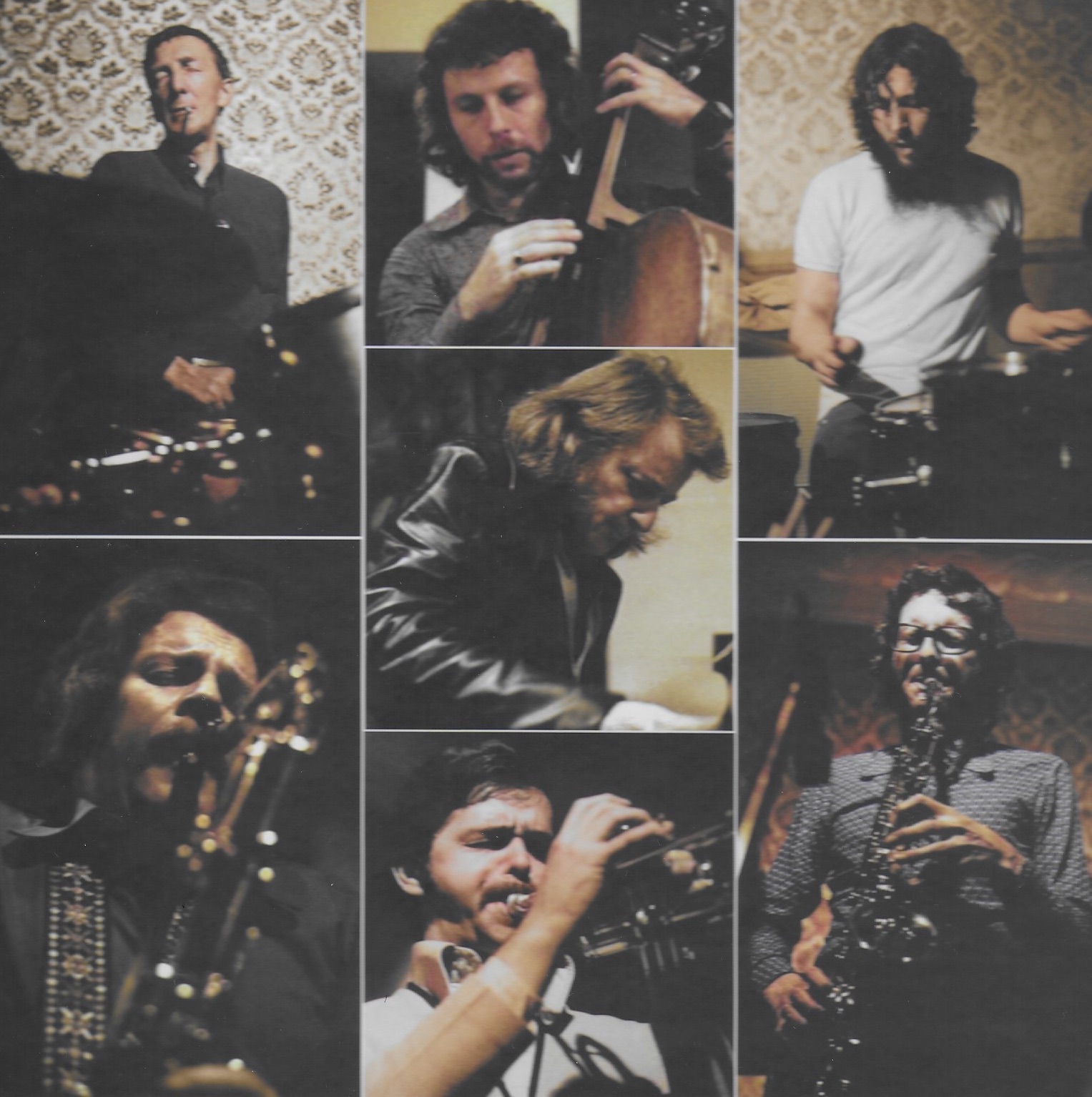
Among the many projects initiated by the inspirational drummer and educator John Stevens between the creation of the Spontaneous Music Ensemble in 1966 and his early death in 1994, the most unexpected was a septet called Splinters, convened in 1972 to bring together musicians spanning the bebop and avant-garde sectors. From the older generation came the tenorist Tubby Hayes, the drummer Phil Seaman and the pianist Stan Tracey. Representing the newer thing were Stevens himself and the altoist Trevor Watts, his SME co-founder. Straddling the eras were the trumpeter Kenny Wheeler and the bassist Jeff Clyne, both of whom had played with the SME but were equally comfortable with the music of Hayes, Seaman and Tracey.

I remember the excitement of their debut at the 100 Club in May that year, and the realisation that it was working much better than might have been imagined, thanks to the commitment of all the musicians involved. About 80 minutes of music from that night was released a dozen years ago by Reel Records on a CD titled Split the Difference, long unavailable. Now the whole 100 minutes is to be found on a handsome three-CD package issued by the Jazz in Britain label, along with just over an hour from a gig by the same line-up at the Grass Roots club in Stockwell, South London four months later, both performances taped by Watts on a cassette machine with a couple of decent microphones.

Hayes, the giant of British modern jazz, stood at the pinnacle of a virtuosic tradition, and had only recently recovered from serious illness, but he was able to throw himself into the collaboration with great generosity, finding a place for himself in a music that operated according to very different parameters. For Tracey, who came from the language of Monk rather than that of Bud Powell, assimilation was also possible. And Stevens’ boundless admiration for the greatness of Seaman helped to ensure that the two of them found a common vernacular founded in a kind of swing falling somewhere between Max Roach and Ed Blackwell.

For Watts and Wheeler, this kind of time-based free improvisation, rooted in the discoveries of Ornette Coleman, was home territory, and both play with great distinction, but the success of the project was really ensured by the presence of Clyne, a bassist with all the necessary instincts and virtues honed to the highest degree. He had made his reputation alongside Hayes and Ronnie Scott in the Jazz Couriers, but listening to him with this band, you can easily believe that he could have depped for Charlie Haden with Coleman at the Five Spot in 1959 or for Reggie Workman or Jimmy Garrison with John Coltrane at the Village Vanguard a couple of years later without any appreciable loss of quality. He was a remarkable musician and his death in 2009, aged 72, left a big hole.

Although full of vigour and substance, the music Splinters played at the 100 Club gig sounds almost tentative by comparison with the Grass Roots set. By the time of the later gig they seem to have relaxed into the format, producing the kind of uninhibited, exuberant shout-up which characterised that era, and which had its roots in the influence of Chris McGregor’s Blue Notes as well as of Coleman’s Free Jazz and Coltrane’s Ascension. Hayes plays a superlative solo, Clyne is phenomenal, and the wildly exciting stuff Seaman and Stevens get up to towards the end could give drum battles a good name.

Historically speaking, this is an important release. Seaman died four weeks after the Grass Roots gig, aged 46. Hayes died the following June, aged 38. It’s interesting that these two should have chosen to plunge into an environment offering such a different sort of test. In a lengthy essay contained within the beautifully produced 12″x12″ hardbacked sleeve, Simon Spillett describes the background to the project, sketching in the histories of the Jazz Centre Society, which organised the Monday-night series at the 100 Club, and the Musicians’ Action Group, which ran Grass Roots, and the crosscurrents of the London jazz scene at the time, using material from archive interviews and fresh testimony from Watts, now the only survivor of a fascinating experiment.

* Splinters’ Inclusivity is on the Jazz in Britain label, available as a digital download as well as the three-CD set (www.jazzinbritain.co.uk). The photographs are from the album’s cover, and were taken by Jak Kilby. Clockwise from top left: Phil Seaman, Jeff Clyne, John Stevens, Trevor Watts, Kenny Wheeler and Tubby Hayes. Centre: Stan Tracey.