Skip to content

‘The Monk Watches the Eagle’

My last memory of Keith Tippett comes from a night in Berlin in 2015, when he brought his octet to play a new suite, The Nine Dances of Patrick O’Gonogon. He was always edgy before a performance, and this concert was no exception. There was a fine new 9ft Steinway for him to play, tuned twice during the day — once before the afternoon soundcheck, once after. An hour before the start of the concert, however, he went back to the piano, played a few notes, and came to me with an urgent request that it be retuned.

At that point the only thing a festival director can do is keep the artist happy. The piano tuner had gone home hours before. But his home number was found, and he was summoned in time to give the instrument another going-over. (After completing the task, he muttered to me that it had remained perfectly in tune.) Keith and his musicians proceeded to play a glorious set that delighted the audience, who were transfixed when Julie Tippetts, Keith’s wife, materialised next to the piano towards the end to sing “The Dance of Her Returning”. It was a triumph, one of many in his long career.

Keith was a wonderful man and one of the finest British composers of his generation. Following his death n June 2020, the first posthumously released Tippett recording is a piece of which he was specially proud: The Monk Watches the Eagle, a cantata for two saxophone quartets, the BBC Singers, and his wife, Julie, who provided a libretto evoking the last earthly thoughts of a holy man on his deathbed.

The recording is of its first and only performance, performed in 2004 as part of the Norfolk and Norwich Festival, which had commissioned it, and recorded for broadcast by BBC Radio 3 in Norwich Cathedral. Dedicated to his late father, the nature of the work and the setting of the performance remind us that Keith’s early musical experience included spells as a chorister and church organist in his native Bristol.

His whole career showed us that he was comfortable in many idioms, from his astonishing solo piano improvisations to his appearance with King Crimson on Top of the Pops and his marshalling of the extraordinary 50-piece Centipede. The Monk Watches the Eagle finds him flying free of genre, blending the gestures of contemporary classical choral music with perfectly integrated saxophone improvisations — by Paul Dunmall (soprano), Kevin Figes (alto), Ben Waghorn (tenor) and Chris Biscoe (baritone) — and Julie’s powerfully affecting singing.

Keith’s use of his resources here is flexible and imaginative. His deployment of the singers is in a very English tradition of choral music, the voices sometimes soaring up to the 12th century cathedral’s vaulted stone ceiling. There are times when he makes the saxophones sound like a pipe organ powered by human breath; even more astonishing is a passage where you imagine you’re hearing distant gongs and bowed cymbals.

The 40-minute piece is continuous, but for our convenience the CD is programmed with seven divisions. The fourth of them, a 14-minute passage, contains some of the most moving music I’ve heard this year: a series of slow movements featuring lean a cappella vocal writing, a dissonant slow upward swirl of voices and reeds giving way to a glowing melody emotionally related to John Tavener’s “The Lamb”, Julie’s mbira (thumb piano) and her wonderfully poised vocal solo over saxophone harmonies, and the return of the choir, with Biscoe’s soft baritone tiptoeing gently between their legato phrases.

“Now it is silent, and words hang warm,” they sing in this section. “All is calm. All that remains… All that remains in my heart is still. All is still. Now in the quiet — and quite alone — not alone!” But the luminous serenity is disturbed by a writhing Dunmall soprano solo, emerging from a babble of voices, demonstrating that the inherent possibilities of such collaborations did not end with Jan Garbarek and the Hilliard Singers. The parallel harmonies of the closing movement have an unadorned elegance reminiscent of plainsong.

It’s a work of great spiritual depth and power, radiating its beams of light as though shining through stained glass — the motif of the cover design. I remember Keith telling me about it with special pride. Now everyone can hear it, and join the long applause that filled the cathedral at the conclusion of a marvellous performance that reveals a different and very precious facet of the soul of a great musician.

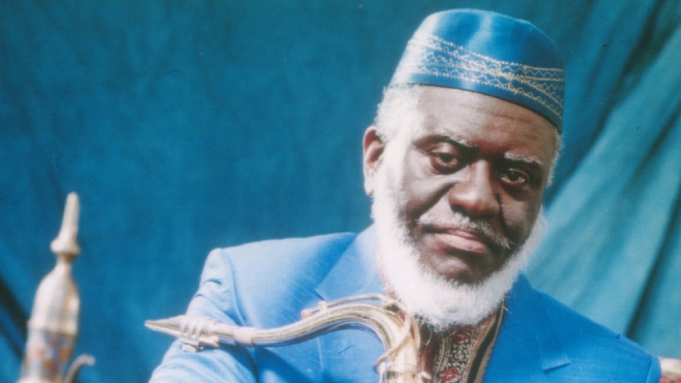
* Keith Tippett’s The Monk Watches the Eagle is released on the Discus label. The photograph of Tippett, by Paolo Soriani, is from the CD sleeve.

Happy birthday, Dionne Warwick

Dionne Warwick was spotted by Burt Bacharach while she was singing background on the Drifters’ “Mexican Divorce” with her sister Dee Dee, her aunt Cissy Houston and their friend Doris Troy in the summer of 1961. She was 20 years old. A year later she recorded “Don’t Make Me Over”, the first of her string of hits written by Bacharach and his lyricist, Hal David.

She had grown up singing gospel music alongside members of her family in the Drinkard Singers and the Gospelairs before studying music at a college in West Hartford, Connecticut. Her musicianship enabled her to cope with the unusual interval leaps and mixed time signatures that Bacharach introduced to the pop music of the early 1960s, blending R&B with Broadway; her poise, her control, her distinctive timbre and her avoidance of gospel gestures such as extravagant melisma and roughened texture made her voice the perfect instrument for this unique purpose.

I love almost everything Dionne ever did, from the early Bacharach masterpieces of “Anyone Who Had a Heart” and “Walk On By” right up to “I Can’t Wait Until I See My Baby’s Face” with Jerry Ragovoy and “His House and Me” with Thom Bell. But there’s a special place in my affections for an album called Here I Am, released in 1965, in which the Bacharach/David/Warwick combination reaches a series of peaks.

A couple of those peaks are ballads, written, arranged and performed with exquisite delicacy: “In Between the Heartaches” and “If I Ever Make You Cry”. But even more remarkable to my ear is “(Here I Go Again) Looking With My Eyes (Seeing With My Heart)”, an epic of orchestra pop remarkable not just for the double set of brackets in its title but for an astonishing swirling momentum driven not so much by a conventional rhythm section as by the strings, the choir and periodic fusillades of percussion: tympani, tubular bells, boo-bams. And on top of it all, Dionne is doing as she always has done, negotiating Bacharach’s melodic twists, inhabiting Hal David’s words, singing like a real person who happens to be in possession of a divine gift.

Today, it’s exactly 80 years since Marie Dionne Warrick was born in Orange, New Jersey. A very happy birthday to her, with deepest gratitude.

Back on Highway 61

Generally speaking, I prefer Bob Dylan to make his own cover versions, just the way he’s been doing for the best part of 60 years. There are maybe not even a dozen exceptions, mostly the obvious ones: Presley’s “Tomorrow is a Long Time”, Jimi’s “Watchtower”, Stevie’s “Blowing in the Wind”, the Fairports’ “Si tu dois partir”, Ferry’s “Hard Rain”, Betty LaVette’s “Things Have Changed”. But now there’s a definite addition to the list: Dave Alvin’s version of “Highway 61 Revisited”, a highlight of From an Old Guitar, his new album of rare and unreleased stuff.

To be honest, I haven’t followed the career of the singer/guitarist from Downey, California who started out at the very end of the ’70s with the Blasters and more recently led bands known variously as the Guilty Ones and the Guilty Women. My bad, as the young people say. From an Old Guitar is full of great stuff, drawing on country, blues, R&B and, in Lil Hardin Armstrong’s “Perdido Street Blues”, old-time jazz, with other songs from Mickey Newbury, Earl Hooker, Doug Sahm and Marty Robbins.

Dylan’s parable is set to a low-riding shuffle beat, the layered guitars of Alvin and Greg Leisz howling, nudging and screeching from multiple perspectives as the magnificent verses are recited in appropriately biblical tones. Alvin’s voice is one that wears its bruises, scars and calluses lightly, weighting and timing every line perfectly, drawing out the dark humour, simultaneously absurdist and apocalyptic. The video is well assembled and cut, particularly the chase towards the end between a hot rod and a Highway Patrol car on a two-lane blacktop.

My other favourite is a song called “Peace”, credited to Willie Dixon. It bears no resemblance to a song of the same name that gave the title to a 1971 Dixon album, but it carries the hallmarks of the composer of “Hoochie Coochie Man” and “The Seventh Son”. The buried hook — the thing that makes we want to listen to it again, straight away — is a funky little chorded figure from Joe Terry’s electric piano: peeping through two or three times, it seems to want to take the song in a different direction before thinking better of it and withdrawing.

I can happily listen to this album from start to finish, and then over again. Even better, I imagine, would be to wander into some bar or other — Dingwalls, perhaps, or the old Tramps on 15th Street in NYC — and drink a beer or two while listening to Alvin and his band working their way through the whole thing. One day, maybe. But whatever, that “Highway 61” is going to stick around.

* Dave Alvin’s From an Old Guitar is out now on the Yep Roc label.

It’s a disco night (don’t stop)

So disco’s back. “The golden years, the silver tears / You wore a tie like Richard Gere’s…” Sophie Ellis-Bextor’s “Crying at the Discothèque” is a remake of a 1980 record by Alcazar, which borrowed the Chic-produced rhythm track of “Spacer”. The new disco-revival albums from Ellis-Bextor and Kylie Minogue take me back to the late ’70s, when my friend Howard Thompson, then recently relocated to New York, taped shows from all-disco WKTU (92.3 FM) and mailed the cassettes to me in London. The 12s I bought in those days mostly came from Groove Records on the corner of Greek Street and Bateman Street in Soho. Here are a dozen lasting favourites, not exactly unpredictable, from that time. 

1. Odyssey: “Native New Yorker” Sandy Linzer and Denny Randell, formerly collaborators on “A Lovers’ Concerto” and “Let’s Hang On”, with the help of the great arranger/producer Charlie Calello, created a whole movie in a song: “It’s the thought you had / In a taxicab that got left on the kerb / When he dropped you off at East 83rd…” I love the uptown 25-35 lead vocal of Lillian Lopez — born, as it happens, in Connecticut — and the slight Latin emphasis in this extended mix, particularly the piano playing of Richard Tee.

2. Evelyn Champagne King: “Shame”  I’d be happy to die now if I knew I’d be reincarnated as one of the guitarists behind Ms King, extending this sublime track into eternity.

3. Harold Melvin & the Blue Notes: “Bad Luck” Teddy Pendergrass in his pre-solo pomp, with Ronnie Baker on bass, Earl Young on drums and Vince Montana Jr on vibes, and a rap on Nixon closing perhaps the best breakdown in history. 

4. Norma Jean: “Saturday” An early Chic production, from a time when Nile Rodgers and Bernard Edwards found a different keyboard or tuned percussion lick for every hit. Here it’s Dave Friedman’s vibes.

5. Gladys Knight: “Baby Don’t Change Your Mind” The impossibly prolific Van McCoy wrote this one for Gladys, and it’s a perfect fit: “Your ex is back in town / What you gonna do when she comes around / And she starts going through her act…” 

6. Sheila (and) B. Devotion: “Spacer” Chic’s Rodgers, Edwards and Tony Thompson again, this time confecting perfect Euro-disco with a French singer. The strings were conducted by Gene Orloff, 30 years after he played violin with the Neil Hefti Orchestra behind Charlie Parker on “Repetition”.

7. Cheryl Lynn: “Got to Be Real” (12-inch version) Toto’s David Paich produced this with his dad, Marty, a fine jazz pianist and arranger who worked with Chet Baker, Mel Tormé and countless others. Ray Parker Jr plays guitar and James Gadson is on drums. Cheryl was barely 21 when she wrote this with David P. and David Foster. Tracking herself on backing vocals, she sounds like a trumpet section in full flare.

8. Oliver Cheatham: “Get Down Saturday Night” A snare flam sets up the top-of-the-beat groove that provides minimalist support for a living-for-the-weekend song (gotta have one of those). No idea who mixed this, but they did a wonderful job.

9. Melba Moore: “This Is It” (Tom Moulton mix) More Van McCoy magic. Melba is the daughter of the bandleader Teddy Hill, with whom Dizzy Gillespie paid his first visit to London in 1937, and who went on to manage Minton’s Playhouse in Harlem in ’40s, providing an after-hours home for Gillespie and his fellow bebop pioneers Thelonious Monk, Kenny Clarke and Charlie Christian.

10. Philippé Wynne: “We Dance So Good Together” The death of the former (Detroit) Spinners lead singer from a heart attack on stage in Oakland, California in 1984 removed one of the most creative soul singers of his generation. This track, from his 1980 solo album, was produced by George Clinton and ex-Motown/Invictus songwriter Ronnie Dunbar, with Bernie Worrell on synths, and written by James Dean (co-composer of “What Becomes of the Brokenhearted”) and John Glover. 

11. Candi Staton: “Victim” “I told you young hearts run free…” In Dave Crawford’s bespoke lyric, Candi sings about being “a victim of the very songs I sing.” This is almost too much of a song to be danced to: “Oh well, I guess I’ll end up in the lost-and-found / It looks like love and me, we’ve lost another round.” But the groove and the vibes touches are irresistible, as is the backing singers’ “doo doo-wap” interlude.

12. Vera: “Take Me to the Bridge” Fabulously tacky Euro-disco from Montreal. Music and production by Louis Toteda, words by Don Saunders. The identity of the lead singer is disputed. Goodness knows which or what “bridge” is the subject of her erotically charged plea (I don’t think it’s the middle eight), but the record’s hook is the double-pop of the bass in the chorus. 

Re-reading Brian Eno’s diary

Many of these new words suggest the dissolution of a certain quality of public discourse that we have taken for granted since the Enlightenment, which hinged on the possibility of reaching evidence-based concensus — albeit even temporary — about what constitutes reality. The post-modern scepticism of any distinction between ideologically derived value systems and evidence-driven science is now grasped at gratefully by libertarians, populists, identitarians and tax evaders the world over: “Why shouldn’t there be a special reality just for me?” they demand. An early warning sign of this attitude creeping into politics was when a member of Dubya’s entourage, questioned about the veracity of some claims he’d made in support of the Iraq war, said: “We’re an empire now, and when we act, we create our own reality.”

It’s interesting to watch that kind of hubris crash up against a little strand of RNA — and conspicuously lose the battle. As I write this, we’re five months into the Covid pandemic, and it turns out that even an empire can’t change biological reality. I wonder if it will make any difference to how we view the role of leadership in the future, when we evaluate the various national responses to Covid and notice that the people who dealt with it most successfully were not the macho braggarts, not the “we-make-our-own-reality” brigade, not the “man-up” populists, not the Panglossian libertarians, but the people who had the humility to listen to the science and the humanity to care enough to act upon it.

Those words are taken from the new introduction to a 25th anniversary edition of A Year with Swollen Appendices, Brian Eno’s diary of 1995, and form part of a commentary on a list of words and terms created since the original publication: AI, Airbnb, Alexa, algorithm, alt-right, alternative facts, Amazon and so on — several pages of them, fact, all the way to zero-hour contract, zero-tolerance, Zooming and zoonotic.

The original diary, written in a different world, records collaborations with David Byrne, Dave Stewart, U2 and the band James, conversations about drugs with an Eritrean taxi driver and presenting the Turner Prize with Nicholas Serota, outings to judge Andrew Logan’s Alternative Miss World competition and to lunch with Bono and Eve Hewson at the Colombe d’Or in the hills above Nice, digressions on stuff like the art market, the Bosnian conflict, the language of car horns and the three principal debts to African music (pushed rhythm, flattened scales and call-and-response), chat about buying a computer for his young daughters and looking at Dan Flavin’s neon tubes in the Guggenheim, repeating a very good Tommy Cooper joke, and then another.

He’s a serious thinker but his sense of humour is never far away, along with a gentle self-mockery (17 April: Lou Reed, Lenny Henry and David Bowie all called. Enjoying Tricky CD. He didn’t call21 December: At the party, Rob Partridge said to me: ‘You gave hope to other balding men.’ My new epitaph: ‘Co-wrote a couple of decent songs and went bald shamelessly’).

All this makes it well worth reading, or re-reading, today, for both entertainment on trivial matters and the application of critical thinking and common sense to some of the big problems of our time. And it prompts me to wonder how different our lives would be right now, had Brian Eno spent 2020 as Secretary of State for Health and Social Care. Failing that, I hope he’s at least been compiling another diary.

* The new edition of A Year with Swollen Appendices is published by Faber & Faber.

The sound of London 2020

Guitarist Shirley Tetteh at Church of Sound during the EFG London Jazz Festival

Half an hour into BBC4’s special Jazz 625 programme on Saturday night, the journalist Emma Warren remarked that everybody in London’s new jazz scene has their own role to play. You might be making your contribution as a musician, or taking the money on the door. Or, she suggested, your role might be as the first person on the dance floor that night, leading the way for the rest of the audience to join in. That sense of collective commitment was strong throughout the programme.

Timed to coincide with the 2020 London Jazz Festival, the 90-minute show featured many of the most prominent names of the current scene: the drummer Moses Boyd and his band Exodus, the tenor saxophonist Nubya Garcia’s quartet, the trumpeter Sheila Maurice-Grey’s irresistible Kokoroko, the singer Poppy Ajudah with a searing Black Lives Matter song, the powerful Ezra Collective, the drummer Sarathy Korwar, the clarinetist Shabaka Hutchings with Sons of Kemet, the tuba-player Theon Cross with the rapper Consensus, and others. There were interludes exploring the work of Gary Crosby’s Tomorrow’s Warriors project in mentoring so many of the new generation, and a shift up to Manchester reflected the contributions of the trumpeter Matthew Halsall and the saxophonist Nat Birchall.

Boyd co-hosted the show with Jamz Supernova, and something he said was also striking. Every young black jazz musician, he remarked, knows what it feels like to play to a room full of middle-aged white people. And that’s fine, he added. But sometimes you want to play to people like yourself. A sequence of clips from Steam Down in Deptford, the Fox & Firkin pub in Lewisham, Total Refreshment Centre in Hackney Downs and other London venues in pre-pandemic times showed what he meant.

This music restores a sense of jazz’s old physicality. While strong on a belief in the tradition, it blends in elements of the music absorbed by younger players: hip-hop and its offshoots, reggae, Afro-beat. In that way, too, it recalls jazz’s origins as a musical broth, a bouillabaisse, a gumbo, embracing influences rather than distilling the flavour out of them.

It believes in rhythm and it believes in warmth. Communication is the priority, but without compromise. Lessons from the more abstract directions of contemporary jazz are deployed as extra tools. There are rough edges and signs of what some older listeners might see as naivety. But to watch and listen to the development of these musicians, to hear them stretching their limbs and discovering their own potential, is a thing of wonder and infinite pleasure.

In Saturday’s show the various groups were playing without an audience and in a socially distanced format. The same was true of the livestreams of the festival gigs I was able to watch. What really impressed me was that a movement nourished by the spontaneity and feedback of an intimate live setting proved able to flourish in a completely different environment. If they were being set a test, they passed it en bloc, with distinction.

The BBC4 programme is available now on iPlayer. Some of the livestreams from the festival are also free to watch, like the Charlie Parker centenary tribute from Church of Sound in Hackney, featuring Gary Crosby’s Groundation, with Nathaniel Facey on alto, Shirley Tetteh on guitar, Hamish Moore on bass and Moses Boyd on drums: a quicksilver set of Bird tunes and originals. Facey’s own quartet, completed by two of his fellow members of Empirical, the drummer Shaney Forbes and the bassist Tom Farmer, and the guitarist Dave Preston, were captured at the Green Note in Camden Town, letting air and light into knotty themes by the leader and the guitarist. And at Total Refreshment Centre the impressive young trumpeter/singer Emma-Jean Thackray led her quintet — Lyle Barton on keyboards, Matt Gedrych on bass guitar, Dougal Taylor on drums and Crispin Robinson on percussion — through a wholly absorbing, convincing and thoroughly contemporary investigation of the moods suggested by Bitches Brew 50 years ago.

Tickets were £12.50 to livestream Cassie Kinoshi’s SEED Ensemble and their guests performing an 80th birthday tribute to Pharoah Sanders at the Barbican, and that’s what it’ll cost you to catch up with it via the Barbican’s website. I can only urge everyone do make the investment, since Kinoshi presents an hour of music of the highest quality, carefully devised and packed with all the best qualities of the new London scene.

The core SEED line-up — Kinoshi (alto), Sheila Maurice-Grey and Jack Banjo-Courtney (trumpets), Joe Bristow (trombone), Hannah Mbuya (tuba), Chelsea Carmichael (tenor, flute), Shirley Tetteh (guitar), Rio Kai (bass) and Patrick Boyle (drums) — kicked off with the ever-hypnotic riff of “Upper and Lower Egypt” before being joined by the clarinet of Shabaka Hutchings (on a beautifully flighted “Astral Travelling”), the pianist Ashley Henry (a heartfelt “Greeting to Saud”), the percussionist Yahael Camara-Onono (“Elevation”) and the singer Richie Seivwright (“Love Is Everywhere”). The horn arrangements were perfect, the rhythm section subtle and skilful, each of the soloists offering something of substance.

“Catch you soon, when life is normal again,” Kinoshi told her invisible audience at the end of the set. But if it was sad not to be able to witness this music in person, to share the experience with the players and to make them feel the listeners’ response, it was wonderful to be able to hear it all, staged and played and recorded so beautifully in all the venues.

If you browse the festival’s website, you’ll find other fine performances available: the trumpeter Yazz Ahmed, the guitarist Hedvig Mollestad and the poet Moor Mother with Irreversible Entanglements are some of them. But maybe watch Jazz 625 first, all the way through. At a time when the streets of the city are drained of life, it’s a reminder of what’s waiting around the corner. If it doesn’t fill you with the kind of optimism that’s been in short supply for the past nine months, I’ll be very surprised.

(Not quite) almost like being in love

One evening in the late ’70s I was at home watching The Shirley Bassey Show on BBC1 — not such a terrible idea, since she presented some interesting guests, from Mel Tormé and Janis Ian to Stan Getz and Johnny Nash — when something Bassey herself was singing stopped me in my tracks.

“Almost Like Being in Love” was written by Frederick Loewe and Alan Jay Lerner for their musical Brigadoon in 1947. It was a hit for Frank Sinatra, and became a standard. Shirley Bassey has sung it throughout her career, and on YouTube you’ll find several versions in conventional upbeat, ring-a-ding-ding arrangements celebrating the singer’s delight at half-concealing the rapture of love.

On this occasion, however, she and her musical director, Arthur Greenslade, did something different. They recast the song in a minor key, with slightly modified melodic and harmonic contours, setting it to a languid, understated Latin rhythm. I hadn’t heard it from then until now, more than 40 years later, but it always stayed in my head as the way the song ought to be sung.

So here it is, miraculously preserved, with its chiming vibes and pattering congas, hovering strings and 12 bars of beautiful Getzian tenor saxophone (Tony Coe, maybe?), and a bitter-sweet vocal performance that hints at layers of emotional complexity beneath Mr Lerner’s words. It sounds just as exquisite and ambiguous as I remembered. Imagine how cool it would be if Sade, Tracey Thorn or Paula Morelenbaum took this arrangement and recorded it today. Cool, yes, but no cooler than Ms Bassey.

‘Ronnie’s’ on BBC4

Val Wilmer’s classic portrait of Ronnie Scott leaning against the entrance of his Frith Street club captures the man as most of us thought we knew him: the epitome of Soho cool. Ronnie’s, a new documentary written and directed by Oliver Murray, goes deeper to show us the man known to his intimates. Something that could easily have been banal and superficial becomes a sensitive and finely nuanced depiction of a life lived under pressures both external and internal.

The film is being shown on BBC4 this weekend and should be watched by everyone who ever set foot in the club, or even wished they had. It starts out conventionally enough, as if it is going be a straightforward celebration of the 60-year-old institution that has played host to Miles Davis, Sonny Rollins, Ella Fitzgerald, Dizzy Gillespie, Nina Simone, Chet Baker, Sarah Vaughan, Buddy Rich, Count Basie, Roland Kirk, Bill Evans and so many other famous names. Before long, however, it is describing the relationship between Ronnie and Pete King, his business partner, the man who kept the wheels turning when times got tough, as they often did.

They’re both gone now, but Murray brings them back to life through their own words and those of others, building a picture of two men united by stoicism, sardonic wit, and a love of music and (mostly) musicians. Ronnie’s complex character is fully explored, including his near-ruinous gambling habit and the depression that afflicted him — which, combined his inability to play the saxophone following extensive dental treatment, probably led to his death from what the coroner described as “an incautious dose of sedatives”.

Clips of many great musicians at the club keep things swinging along, but darker undertones gather in the second half and the final section is elegiac and extremely affecting. By acknowledging the darker truths, this superlative film makes us cherish the continued existence of Ronnie Scott’s Jazz Club even more.

* Ronnie’s is transmitted on BBC4 this Sunday, November 15, at 9pm. Here’s the trailer. Val Wilmer’s photograph is used by her kind permission.

Sounds from the silence

The challenge of putting on a jazz festival in November 2020 would be hard to overestimate. But for four days last week the 57th edition of Jazzfest Berlin presented music to the world with imagination and ingenuity, making the most of the available technology to bring musicians and listeners together in the era of social distancing.

The event’s customary home, the Haus der Berliner Festspiele, is currently being refurbished, so the festival’s director, Nadin Deventer, built a digital bridge between her alternative choice of home venue, Silent Green (a repurposed crematorium in the Wedding district), and the Roulette club in Brooklyn. Bands played in both spaces, alternating sets. Forty separate performances totalled 1,500 minutes of music, all of it broadcast via the ARTE Concerts network (and available to view for the next 12 months).

So, for instance, from Berlin we got to hear two of the expatriate American drummer Jim Black’s groups, a trio and a sextet, and the saxophonist Silke Eberhard’s expanded Potsa Lotsa band playing pieces by Henry Threadgill, who was to have been the festival’s special guest until the pandemic made physical travel from the US impossible. From Brooklyn we heard the intense saxophone/piano duo of Ingrid Laubrock and Kris Davis, the drummer Thomas Fujiwara’s sextet, with Ralph Alessi on trumpet and Mary Halvorson on guitar, the altoist Lakecia Benjamin paying homage to Coltrane, and the pianist Craig Taborn’s new trio, with Halvorson and the drummer Ches Smith. And many others in both locations.

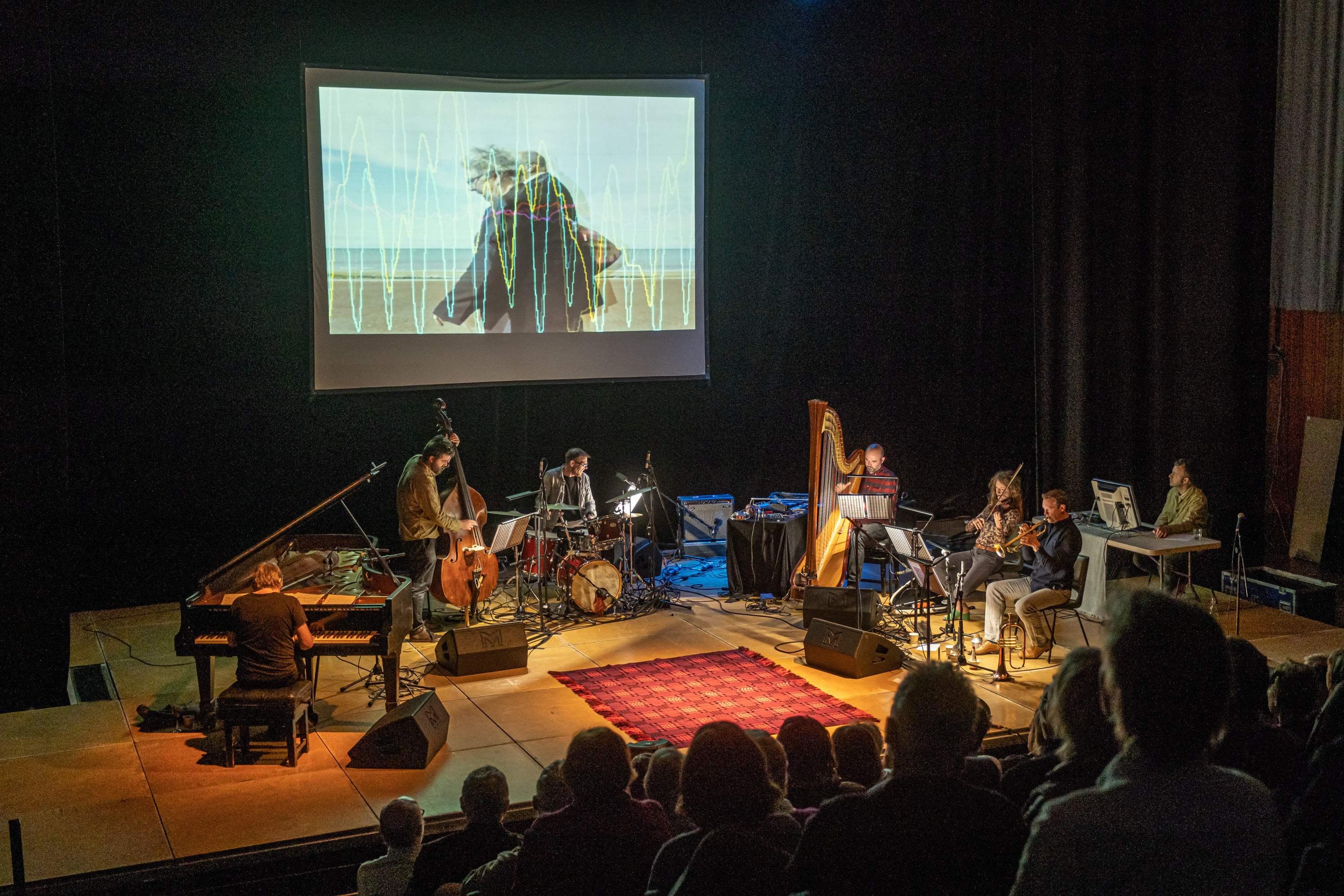
The set that nailed my attention was a 57-minute composition/performance by the British pianist Alexander Hawkins and the Berlin-based Lebanese poet, rapper and visual artist Siska, whose collaboration had to overcome the enforced inability of Hawkins and his two UK-based collaborators, Matt Wright (electronics) and Shabaka Hutchings (clarinet), to travel to Berlin. Instead they recorded their contributions to the piece, with Siska, the trumpeter Lina Allemano and the bassist Nick Dunston located in Silent Green and improvising on the template of Hawkins’s graphic and notated score, with the occasional appearance of film of First and Third World scenes and social rituals on a suspended screen sharing the space with the musicians and a large mirror ball used as a reflective light source.

The recent explosion in Beirut, Siska said, had inspired him to use Arabic lyrics he had written in the Lebanese capital between 2001 and 2008. Allemano contributed strikingly expressive interludes and accompaniments, while Dunston provided sonorous arco playing, a fluid drive when necessary and, to introduce the final section, a memorable solo of his own.

The composition began with plain electronic drones and overtones like something from a La Monte Young installation or a Necks studio album. Slowly unrolling through passages supported by prepared gamelan-like patterns, a clarinet ostinato and the whirring of a 16mm projector, it gradually gained emotional weight until achieving something very like catharsis in its closing passages: imagine, if you can, a fruitful meeting between the Art Ensemble of Chicago and Arthur Jafa, with a global perspective. If the meaning of Siska’s urgently whispered and muttered words was inscrutable to non-Arabic speakers, the accretional impact of the whole work was undeniable, at least in this corner of the digital auditorium. Here it is.

* To see recordings of all the livestreamed performances from Jazzfest Berlin 2020, go to https://www.arte.tv/de/videos/RC-020309/jazzfest-berlin/

Count Basie in his own write

Jeremy Marre made so many great documentaries about music and musicians that a full retrospective would probably fill a 24-hour TV channel for the rest of the year, from Roots Rock Reggae in 1977 and Rhythm of Resistance (which inspired Paul Simon to write and record Graceland) two years later to profiles of Roy Orbison, Otis Redding, the Grateful Dead, Youssou N’Dour and countless others, plus Soul Britannia, Reggae Britannia and episodes of the Classic Albums series, including the one dedicated to Amy Winehouse’s Back to Black. When he died in March, aged 76, Marre left us a parting gift: a film on the life of the enigmatic Count Basie, shown on BBC4 last week and now available on iPlayer.

Bill Basie’s music was anything but enigmatic. Rooted in the cadences of the blues and the imperatives of 4/4 swing, it avoided the sophistication found in the work of Duke Ellington and Jimmie Lunceford and demanded nothing of those looking for straightforward enjoyment, as I found when I was lucky enough to see a late edition of the band at the Roseland Ballroom in New York City almost 50 years ago. Nevertheless it invited study that was always rewarded.

In 1930s recordings like “One O’Clock Jump” and “Taxi War Dance”, the Basie band brought the concept of riffing — as an armature for soloists and a lure for dancers — to a peak. And by pairing the contrasting elemental approaches of the tenor saxophonists Lester Young (air) and Herschel Evans (earth), the leader created one of the great stylistic juxtapositions. His own piano-playing, a minimalist reduction of his entire orchestral concept, epitomised the creative use of economy.

In public, however, Basie wore a mask. A genial, gracious mask, but still a mask. His greatest contemporary wore one, too, but Ellington’s relative effusiveness conveyed the illusion of intimacy with his audience. Basie was never aloof, but he gave away nothing of his own feelings.

The masterstroke of Marre’s film is to give us an insight, through the use of letters, autobiographical notes and home movies, into Basie’s existence offstage, and in particular with his family. He was, of course, out on the road almost all his adult life, but the revelation of the close relationship he and his second wife, Catherine, shared with their daughter Diane, who was born severely handicapped by what would now be diagnosed as cerebral palsy, is extraordinarily moving.

Count Basie Through His Own Eyes concentrates on the man rather than the music, which is lightly sketched through an excellent selection of clips and interviews with associates, including the drummer Harold Jones and the arranger Quincy Jones, and the critics Gary Giddins and Will Friedwald. The man himself comes alive in his own words and in those of surviving relatives.

Ten months a year on the road for 30 years took the man once billed as the Sepia Swing Sensation from the grind of touring the kind of towns where hotels turned blacks away to the sort of acclaim that enabled him to buy a retirement home in the Bahamas. He died in 1984, almost exactly a year after Catherine, whom he had met soon after his arrival in New York in the late ’30s, when she was a 15-year-old exotic dancer (her active involvement in the civil rights movement led her to take part in the March on Washington in 1963).

Marre takes us behind the imperturbable half-smile Basie wore while sharing the stage with Frank Sinatra or becoming the first African American to receive a Grammy (for The Atomic Mr Basie in 1958), showing us a man whose 42-year marriage had its ups and downs and who, as Jones puts it, “loved anything he could gamble with.” If I don’t quite buy Friedwald’s claim that Basie’s band was the favourite of the Luftwaffe’s wartime fighter aces, that’s a small hiccup in a valuable piece of work.

* Jeremy Marre’s Count Basie Through His Own Eyes can be seen until late December on BBC iPlayer: https://www.bbc.co.uk/iplayer/episode/m000nnyq/count-basie-through-his-own-eyes