Something about Mary Wells
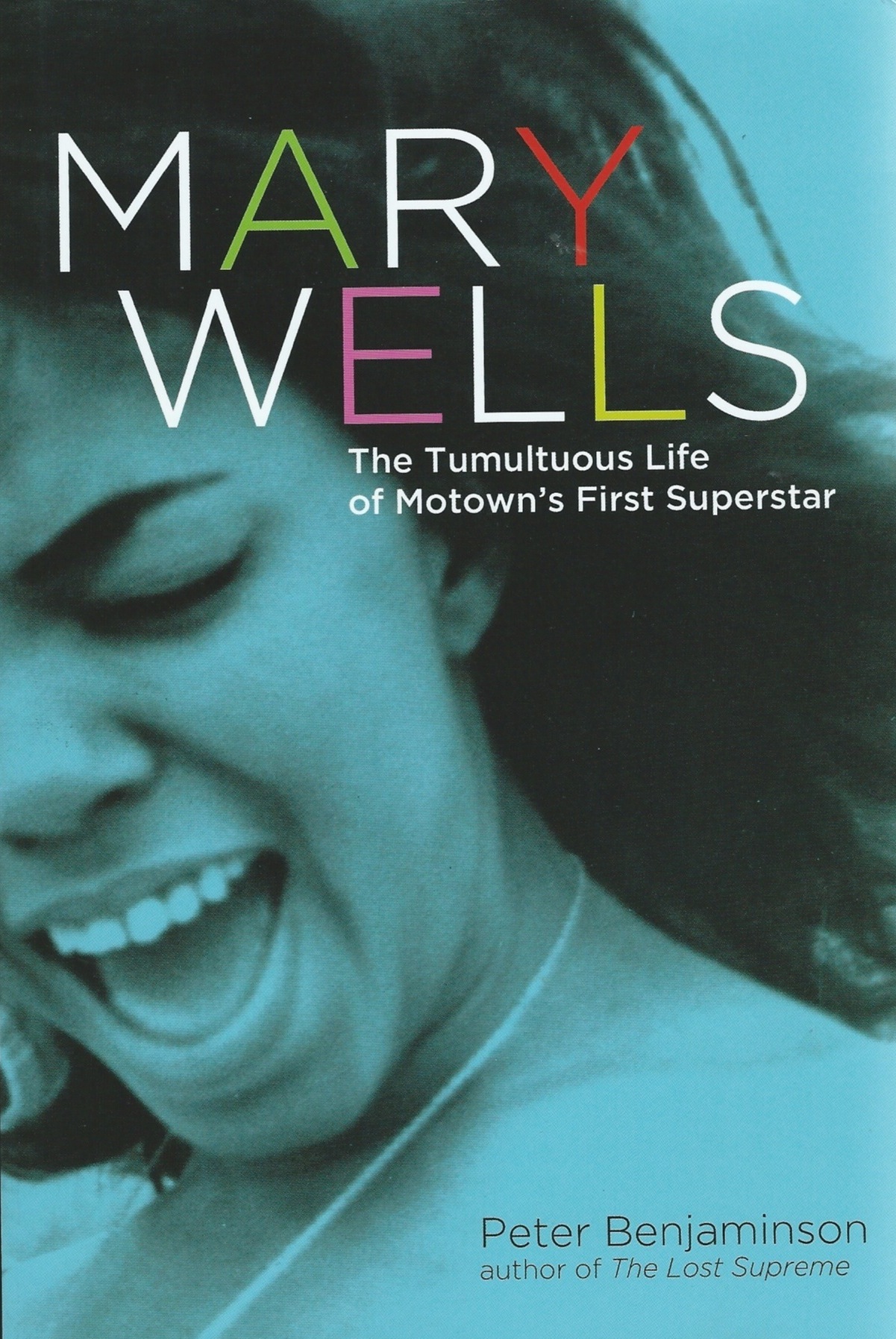
In the hearts of the first generation of Motown fans, there’s a special place for Mary Wells. During the period between 1960 and 1964 she became Berry Gordy Jr’s first female star, lending her voice to a series of songs, the majority of them written and produced by William “Smokey” Robinson, that helped define the company’s sound – and that of soul music itself.
From those days I have precious memories of owning “Two Lovers”, one of Smokey’s masterpieces, on the old black, white and yellow Oriole label, and the later Stateside coupling of “You Lost the Sweetest Boy” and “What’s Easy For Two”, which stands in my estimation alongside Elvis’s “His Latest Flame”/“Little Sister” and the Beatles’ “Strawberry Fields Forever”/“Penny Lane” among the greatest double A-side 45s in pop history.
“You Lost the Sweetest Boy” was an early product of the Holland-Dozier-Holland team, as were like Martha and the Vandellas’ “Heat Wave”, Marvin Gaye’s “Can I Get a Witness” and the Miracles’ “I Gotta Dance to Keep from Crying”, all of which which burst on to the airwaves at around the same time in the glorious year of 1963 to demonstrate how Gordy’s writers and producers were blending their gospel and R&B ingredients with a new pop sensibility.
Yet I finished Mary Wells: The Tumultuous Life of Motown’s First Superstar, a new biography by Peter Benjaminson (Chicago Review Press), with very mixed feelings. I knew that Wells’s career had not gone well following the fateful decision to leave Motown after “My Guy” had given her a worldwide smash in 1964. I was aware, too, of a couple of marriages, including one to the man who encouraged her to switch labels from Motown to 20th Century, and another to Cecil Womack, who died earlier this month. And I knew that she had been treated for throat cancer in the 1980s, and had died in 1992, aged 49. But I had no idea of the extent to which a part of her life had been controlled by her various addictions to heroin, cocaine, methadone and alcohol.
Although I’m grateful to Benjaminson for compiling the details of her life, however distressing they may be, I wish he’d also been able to say something interesting about the music that made her famous. So it was with a sense of something like relief that I found a different way of remembering Mary Wells by putting on Something New, a two-CD collection of her obscure and unreleased Motown recordings compiled by Harry Weinger for Universal’s Hip-O Select imprint.
Some of these tracks, shelved when she left Motown and Gordy turned his attention to Diana Ross, turned up in 1966 on an album called Vintage Stock, but most people still won’t be familiar with such treats as “I’ve Got a Story”, a slice of pop-soul heaven written by Marvin Gaye, William Stevenson and Hank Cosby; Holland-Dozier-Holland’s plaintive “Guarantee (For a Lifetime)”; and Smokey’s “To Lose You” and his Miracles colleague Ronald White’s “Forgive and Forget”, both underpinned by light Latin rhythms (as had been “Two Lovers”).
It’s not all great. A couple of unreleased duets with Gaye are hardly spectacular, while the lacklustre versions of 13 standard songs originally intended for an album to be titled The Second Time Around demonstrate that Gordy’s judgement was by no means infallible. But there’s enough here to show that the Beatles were right in 1964 when they invited Wells to join them on tour, making her the first Motown artist to appear on a UK stage.


