Skip to content

Posts by Richard Williams

Tandyn Almer: sunshine and psychodramas
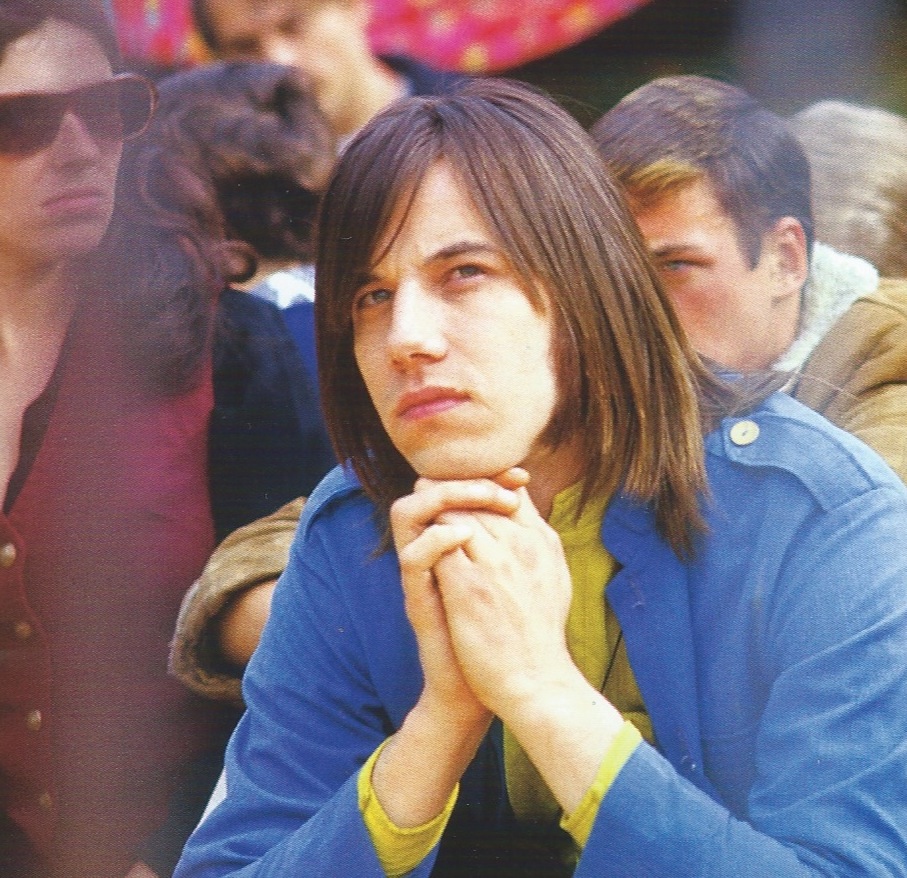
Tandyn AlmerAs far as I’m concerned, Tandyn Almer deserves a place in the history of rock and roll simply on the basis of “Along Comes Mary”, the song he wrote for the Association in 1966. Together with Norma Tanega’s “Walkin’ My Cat Named Dog”, the Mamas and Papas’ “California Dreamin'” and a couple of others, it was one of a small group of unmistakeably white pop records that managed to infiltrate themselves between the latest from Motown and Stax in the clubs I was attending at the time. This was music that hinted at the psychedelic revolution to come, while still working within the disciplines of conventional pop music. “Along Comes Mary” had a lovely light and highly danceable groove created by an acoustic guitar and what sounds like an electric harpsichord, intelligent bass playing, pushing drums and party handclaps on the backbeat, with fine group vocals, a baritone saxophone almost buried in the background, the flute/recorder/ocarina solo that seemed to be obligatory that season (e.g. “California Dreamin'” and the Troggs’ “Wild Thing”), a half-hidden reference to marijuana in the title and a tumbling, bewildering lyric: “And when the morning / Of the warning’s past / The gassed and flaccid kids / Are flung across the stars / The psychodramas and the traumas gone / The songs have all been sung/And hung upon the scars.” It was, I believe, the first time I had encountered the term “psychodrama”.

Tandyn Almer was born in Minneapolis in 1942, studied music there, spent his teenage years listening to John Coltrane and Eric Dolphy, harboured ambitions to become a jazz pianist, and moved to California in the early 1960s, attending Los Angeles City College before striking out as a songwriter and record producer. He smoked dope, took acid, and became a member of the interesting clique that included Curt Boettcher (who arranged “Along Comes Mary”), Mason Williams, Van Dyke Parks, John Phillips and Brian Wilson, with whom he co-wrote “Marcella” for the Beach Boys’ Carl & The Passions — So Tough in 1972 and “Sail On, Sailor” for Holland the following year. He was a regular scenemaker at Doug Weston’s Troubadour club in West Hollywood and wrote and/or produced records with obscure outfits such as the Paper Fortress, the Garden Club and Pleasure.

Around the time of “Along Comes Mary” he was signed to a small LA publishing company, Davon Music, whose owner had demos of his compositions made by studio singers and musicians (a common practice in those days: remember those demos of songs by Nick Drake, John Martyn and Mike Heron made by the pre-fame Elton John at his publisher’s studio in 1968?). A number of the resulting tracks were compiled into an album to be sent to artists and producers who might have been interested in recording them. The output from that period has now been lovingly reassembled by Parke Puterbaugh, a former Rolling Stone journalist, and released by the Sundazed label, specialists in the “sunshine pop” of the middle and late ’60s. And the 15 songs on Along Comes Tandyn are enough to prompt a serious reassessment of the composer’s talent.

I don’t want to overrate Almer’s music by proclaiming it to be the fruit of genius, but it’s full of interest. His tunes are ingenious yet memorable, their structures quite intricate, and the lyrics are always literate and sometimes amusing in the rather fey manner of the time, frequently demonstrating an urge to break away from traditional pop themes: “psychodramas and traumas” indeed. The tumble of words in “Anything You Want” is strongly reminiscent of Dylan’s “It’s Alright Ma”. “Victims of Chance” could have been recorded by Harpers Bizarre. “Where Will They Go” is a protest song in an style that might be called sunshine punk. At times there’s some sort of a coincidental affinity with the very early Pink Floyd, perhaps most obviously in the coyly titled “Alice Designs” (try saying it in an LA drawl). Even the inevitably anonymous — although generally adequate — contributions of the hired singers and backing musicians cannot dim the songs’ merits, although the one truly committed performance comes in the only non-demo, a version of the driving “Bring Your Own Self Down” released on the MGM label by the Purple Gang, an LA band. The most adventurous song of the set is the cool, jazzy “I Get High”, which is not unlike the Doors in “Riders on the Storm” mode and reverses Almer’s normal practice by using druggy terms to describe conventional emotions. The most ambitious is “Sunset Strip Soliloquy”, a Hollywood protest song in the form of a mid-tempo narrative ballad occupying the space between Dylan’s “Desolation Row”, P.F. Sloan’s “The Sins of the Family” and Sonny Bono’s “I Just Sit There”: not a bad place to be.

He left Los Angeles in the mid-’70s and disappeared to northern Virginia, where he seems to have spent the rest of his life. (Puterbaugh fills in as many biographical gaps as possible in his very comprehensive sleeve essay.) I followed an internet lead a few years ago — prompted, I think, by the Spectropop website — and found some very strange pages. His Wikipedia entry says that he invented a high-tech bong called the Slave-Master. At any rate, having given permission for these tracks to be assembled and released, and after a period of poor health, he died last January, aged 70. Maybe “Along Comes Mary”, “Marcella” and “Sail On, Sailor” — three exceptionally beautiful songs — will be enough for most people to remember him by. But the demos show that they were no accidents.

* The photograph of Tandyn Almer is taken from the cover of Along Comes Tandyn.
Bert Stern: an eye on jazz

Six weeks before Marilyn Monroe died in the summer of 1962, Bert Stern spent three days in a Los Angeles hotel room taking the photographs that will forever make it difficult to believe that the actress took her own life. Not surprisingly, it was the story of the Monroe sessions that led the obituaries marking his death last week, at the age of 83, such as this one in the New York Times and this one in the Guardian. And here I am, falling for the same temptation.

Four years earlier, however, Stern, then a top advertising photographer, had earned the permanent gratitude of jazz fans when he travelled to Rhode Island to record the Newport Jazz Festival for a feature film titled Jazz on a Summer’s Day. Thanks to him, and his co-director and editor Aram Avakian, we have a beautifully shot first-hand record of how Louis Armstrong, Chuck Berry, Jimmy Giuffre, Thelonious Monk, Mahalia Jackson and many others looked as well as sounded in performance at that point in their careers.

Most of the famous sequences from the film were shot during the hours of daylight, capturing the garden-party atmosphere of the early Newport festivals. That’s certainly what you get in the clip of Anita O’Day above. Look a bit harder on YouTube, however, and you’ll find a night-time sequence of the magnificent Big Maybelle, dressed as if for her own wedding, singing “I Ain’t Mad at You”, with a band led by Buck Clayton, who takes the trumpet solo. For some technical reason I can’t share it with you here, but a simple search should lead you to it. Better still, buy the whole thing on DVD, and say a little thank-you to the late Mr Stern.

La vida tombola

Manu Chao

Despite the urging of various friends, I came late to Manu Chao, and I’ve been trying to make up for it ever since. If I were my kids’ age, I probably wouldn’t have been listening to much else for the past decade. La Radiolina (2007) is one of my very favourite albums of recent years, songs such as “13 Dias” and “Besoin de la Lune” forming an endless source of energy-renewal. So I’m pleased to have been reading Peter Culshaw’s Clandestino, a biography of the singer who, more than anyone, accepted the responsibility of carrying the spirit of Bob Marley into a new century. It’s been telling me most of what I needed to know about the creator of a music that blends first world languages, third world rhythms, and a rebel soul also heavily influenced by the British punk movement of the late 70s.

Subtitled “In Search of Manu Chao”, the book (published by Serpent’s Tail) incorporates a full account of the subject’s life and career from his birth in a Paris suburb in 1961 as the son of Basque and Galician parents and his early life as a street kid through his early success with the band Manu Negra to his solo superstardom. The focus often shifts, however, to become the story of the author’s engagement with the artist and his music, which takes him around the world, from Algeria to Brazil to New York to Brixton, and through many encounters and conversations.

Culshaw never bothers to hide the fact that he is awestruck by Manu Chao, and I can’t find it in me to criticise him for that. His enthusiasm is so transparently genuine that it’s impossible to get too exasperated by paragraphs that begin like this: “I ring up Manu’s management in Paris to try and find out where Manu might be. No word. So I hole up on the beach for a few days, in a fishing village called Prea, a really tranquil place. It’s so beautiful that I feel the urge to express my gratitude to someone, and who better than the deities? Signs and portents seem to be everywhere…” He’s taking a gamble that this discursive approach will match the unstructured existence it describes, and he just about brings it off.

I’m not absolutely certain that Manu Chao’s “La Vida Tombola” (also from La Radiolina) is the best song ever written about a footballer, but I’d suggest that its only rival is Jorge Ben’s “Filho Maravilha”. Maybe that’s just another version of the endless Maradona v Pele debate: Argentina versus Brazil. One day I’ll have more to say about the great Jorge Ben. But here’s Manu Chao serenading the great albiceleste No 10 in person with the song he dedicated to him, in the poignant final scene from Emir Kusturica’s superb film titled Maradona, released in 2008. “If I were Maradona,” the lyric goes, “I’d live like him / A thousand fireworks, a thousand friends, and whatever happens at a thousand per cent / Life is a game of chance…” The subject of the song looks on, the hint of a smile on his lips giving no clue to the thoughts hidden behind his shades.

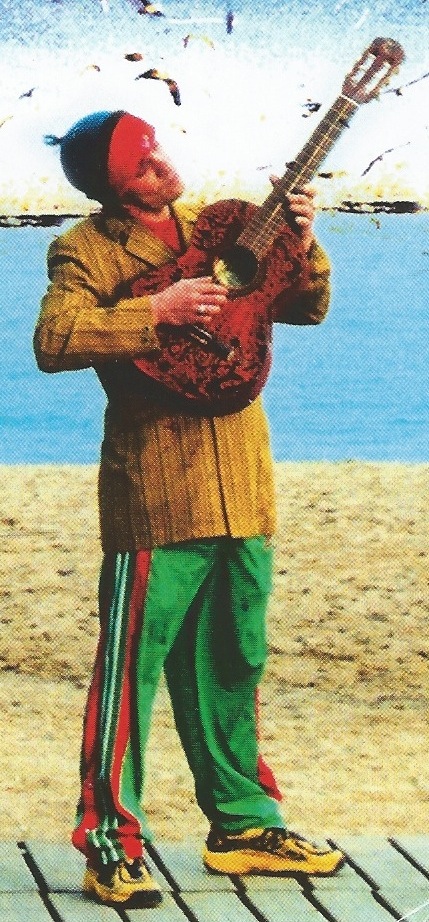
* The photograph of Manu Chao is taken from the cover of Proxima Estacion: Esperanza, his second solo album, released in 2001.

Roll over, Anton Webern

John O'GallagherThe name of John O’Gallagher was not a familiar one to me when I took his new CD, The Anton Webern Project, out of the packet and slid it into the player. O’Gallagher is a 48-year-old alto saxophonist who was born in California and raised in Washington State; he has spent the last 20 years in New York scene, playing with the likes of Maria Schneider, Tony Malaby and Richie Beirach while pursuing a parallel career as an educator (he has conducted workshops at institutions including the New England Conservatory and the Royal Academy of Music). His speciality appears to be the integration of jazz and serial composition, something I wrote about on this blog back in March while recommending a new recording based on Stockhausen’s Tierkreis by the pianist Brun0 Heinen.

Earlier this year O’Gallagher’s book Twelve Tone Improvisation was published in Germany, and it seems that The Anton Webern Project , released on the Whirlwind label, is a practical demonstration of his theories concerning improvisation on tone rows. If that makes it sound forbidding, it isn’t. I can personally testify that you don’t need an intimate familiarity with the Webern compositions on which these eight pieces are based, or even with dodecaphony in general, in order to enjoy a very stimulating experience.

O’Gallagher’s band consists of himself plus Matt Moran (vibes), Pete McCann (guitar), Russ Lossing (keyboards), Johannes Weidenmuller (bass), Tyshawn Sorey (drums) and Margaret Grebowicz (voice). I’m not sure I’d be able to pick the leader’s playing out of a crowd of contemporary altoists — the closest I can get to a description of his tone is to say that he sounds something like a cross between Ornette Coleman and Phil Woods — but his solos are full of substance and his sidemen are excellent, with Lossing’s imaginative contributions on Hammond organ and Fender-Rhodes electric piano and Sorey’s finely textured work being outstanding. As you might expect, given the source of its inspiration, the music is intense and highly detailed, but it never sounds overwritten or corsetted. Quite often the chamber-jazz mood is completely dispelled: on something like “Five Pieces”, for instance, the players are free to produce something that might have come from Dark Magus-period Miles Davis or even Tony Williams’ Lifetime. On parts of “The Secret Code”, the longest piece of the set, there’s an enormous amount going on, without any sense of overcrowding. The essential spontaneity of jazz pervades this music — which, given the degree of preparation involved, is quite an achievement.

* The photograph of John O’Gallagher is taken from the sleeve of The Anton Webern Project, for which Don Mount and Ben Lieberman took the images. 

* On its first publication, thanks to a bit of authorial brain-fade, this piece said that Tierkreis was composed by Schoenberg rather than Stockhausen. I’ve corrected it.

The art of the songwriter

Bacharach 1The biggest mistake Burt Bacharach ever made was to place an international call to Hal David one day in 1972 and tell him he wanted a bigger share of the five per cent royalty due to the pair from their songs for the film Lost Horizon, a misbegotten musical remake of Frank Capra’s pre-war classic. Until that point the composers of “Anyone Who Had a Heart”, “Do You Know the Way to San Jose?” and so many others had split the proceeds of their work straight down the middle. But suddenly it occurred to Bacharach that here he was, working himself to the bone in the studio on the arduous task of recording the songs and the background score, while David, having done his job by furnishing the lyrics, was down in Mexico, playing tennis. In Bacharach’s view, a 3:2 split would more accurately reflect the relative amounts of effort involved.

David’s answer, quite understandably, was a brusque negative. From the lyricist’s standpoint, it was the suavely handsome and charismatic Bacharach who had already been attracting the lion’s share of the personal publicity accruing from their success; he was the one who appeared in concerts and on television and made his own albums devoted to instrumental albums of their songs. By contrast, David was a charisma-free zone, but the words he provided were certainly as important as the music in what had become known, to his quiet chagrin, as “Bacharach songs”. And that dispute marked, to all intents and purposes, the end of one of the greatest songwriting partnerships in the history of 20th century popular music.

Bacharach tells the story in Anyone Who Had a Heart: My Life and Music, an autobiography ghosted by Robert Greenfield and just published by Atlantic Books. He’s a classic unreliable narrator, a fact tacitly acknowledged by the inclusion of sometimes corrective first-person testimony from ex-wives, lovers and former collaborators, but he leaves us in no doubt that he rues his hot-headed decision to reply to David’s refusal with these words: “Fuck you and fuck the picture.” In the short term, it led to Dionne Warwick suing both of them for their failure to come up with the songs promised for her next album, her first for Warner Brothers; there were countersuits, and the three of them didn’t speak to each other, let alone work together, for 10 years. “It was stupid, foolish behaviour on my part and I take all the blame for it,” Bacharach says now. Later in the book he ruminates on how many great songs might have been lost to that sudden rupture.

Ah well, the years of full production were wonderful while they lasted. It would be impossible to  convey to a young person the shock and awe one felt on hearing Dionne’s “Anyone Who Had a Heart” for the first time in 1963: it sounded like a completely new form of music, something that blended the grown-up sophistication of the great Broadway songwriters with the emotional directness and urgency of the combination of R&B and gospel that was at that moment giving birth to soul music. Bacharach recognises how fortunate he was to find Warwick, the perfect interpreter of their songs, but if there is one thing missing from the book, it is his considered analysis of why black voices were in general so much more effective that white ones on the songs he and David wrote. There were exceptions, of course (one thinks of Dusty Springfield’s versions of their early songs, particularly “The Look of Love”, Herb Alpert’s “This Guy’s in Love With You” or Gene Pitney’s “Twenty Four Hours from Tulsa” and “Only Love Can Break a Heart”), but Warwick, the Shirelles, Lou Johnson, Chuck Jackson and Jimmy Radcliffe added an uptown quality that gave the material a priceless extra dimension.

There’s interesting stuff in the book about Bacharach’s childhood and apprentice years, about his time spent as Marlene Dietrich’s musical director, and a great deal about his four wives — including the actress Angie Dickinson, the second, and the songwriter Carole Bayer Sager, the third — and his many lovers. It’s seldom less than interesting, and when it comes to the description of the life and tragic death of Nikki, his daughter with Dickinson, who was born and lived most of her 30 years with undiagnosed Asperger’s syndrome, it is deeply upsetting.

The stuff about the music is less detailed. I’d have liked much more about the thinking behind, say, his preference for legit-toned rather than jazz-toned saxophones and his liking for twangy guitars, but there are still plenty of nuggets about such topics as his fondness for using a pair of flugelhorns (e.g. on Dionne’s “Walk On By”, which also has a pair of pianos, played by Paul Griffin and Artie Butler), a few enlightening bits and bobs about the sessions in New York and London, and some insights into the variety of approaches he and David employed in order to dovetail their contributions. There doesn’t seem to have been a strict music-first or words-first formula; the constant, we are led to believe, was Bacharach’s insistence on finding the right note and harmonic colouration for each word. It’s a shame they got sidetracked by the lure of Broadway musicals and the movies, a temptation which eventually did for them. The business of crafting their jewel-like individual songs should have been enough, as Bacharach now seems to recognise.

I’m pleased that he devotes a couple of pages to the album he made with Ronald Isley in 2003 for the DreamWorks label. Here I Am, which borrows its title and its lovely title song from my favourite Dionne Warwick LP, is a magnificent recital of mostly familiar material, with quite startlingly exquisite versions of “Alfie” and “Anyone Who Had a Heart” in particular, all recorded live in the studio — vocals and orchestra at the same time, with only the tiniest bits of vocal patching required. Listen to “Alfie”: you won’t hear better singing anywhere, and it was a first take. Unfortunately, as Bacharach relates, the album came out just as DreamWorks was being bought by Universal and got lost in the shuffle. It’s a half-buried classic.

Probably even fewer people heard Bacharach’s last solo album, At This Time, released in 2005. Most of the lyrics were written by Tonio K, and some by Bacharach himself. Interestingly, they express his anger at the crimes of George W. Bush’s neo-con gang. It’s a reminder that he and David also produced a couple of the Sixties’ gentlest protest songs: “What the World Needs Now Is Love” and “The Windows of the World”. What a pity circumstances conspired to silence their collaboration.

Just about to start a short tour of the UK, Bacharach is promoting the book and a new six-CD box called The Art of the Songwriter, whose compilers have made some pretty strange choices, such as the complete absence of anything by Lou Johnson, who came close to becoming the male equivalent of Dionne Warwick, and whose early work with Bacharach and David is compiled on a fine Ace disc titled Incomparable Soul Vocalist. Bacharach is appearing in concert at the Royal Festival Hall in London on Wednesday, Glasgow on Friday, Edinburgh on Saturday, Bournemouth on July 5 and the Festival Hall again on July 7, which is when I hope to hear him.

In the meantime, here’s my all-time Bacharach top 10: 1 Chuck Jackson: “Any Day Now” 2 Dionne Warwick: “(Here I Go Again) Looking With My Eyes (Seeing With My Heart)” 3 Ronald Isley: “Alfie” 4 Burt Bacharach Orchestra: “Wives and Lovers” 5 Fifth Dimension: “One Less Bell to Answer” 6 Dionne Warwick: “If I Ever Make You Cry” 7 Lou Johnson: “Kentucky Bluebird (Message to Martha)” 8 Herb Alpert: “This Guy’s in Love With You” 9 Dusty Springfield: “The Look of Love” 10 Jimmy Radcliffe: “Long After Tonight is All Over”.

Farewell to Psi

Gerd DudekThe guests of honour at Evan Parker’s gig at the Vortex in East London last night were Martin and Mandy Davidson, creators and custodians of the Emanem label, founded in 1974 as a vehicle for music by the free improvisers who could loosely be called the Little Theatre Club school: Derek Bailey, John Stevens, Paul Rutherford and so on, plus such non-British soulmates as Steve Lacy, Anthony Braxton and Bobby Bradford. The Davidsons are shortly to leave London for Spain, and although the activities of Emanem will continue from their new headquarters, their departure marks the end of another valuable project: Psi Records, the label founded by Evan Parker in 2001, and run with Martin’s assistance.

Back in the early Seventies it was Parker who, with Bailey and Tony Oxley, formed Incus Records, one of the first musician-owned labels in the free jazz field. Incus released some historic albums before internal disagreements put an end to its story, and Psi was Evan’s next step. Over the past dozen years the label has produced about 80 CDs, many of them featuring Parker but others under the leadership of the likes of Kenny Wheeler, Han Bennink, Alex von Schlippenbach, Ray Warleigh, Agusti Fernandez, Aki Takase and so on. Now Psi’s founder has decided that it’s time to pause and think again.

Like many of the best jazz labels, from Blue Note and Riverside to ECM and Rune Grammofon, Psi developed its own identity, visual and tactile as well as musical. Parker’s concern for the visual side has been apparent in the unified (rather than uniform) design, in which clean typography is married to the fine photographs of Caroline Forbes and, on several recent releases, the very beautiful abstract paintings of Rina Donnersmarck. One such painting can be found on the cover of what turns out to be the very last Psi release, Day and Night by the German tenor saxophonist Gerd Dudek.

I mentioned Dudek in my last post, apropos of the Gordon Jenkins song “Good-Bye”, and it’s good to have another excuse to talk about a veteran who has never received the proper degree of recognition. He graduated from the Kurt Edelhagen band in the mid-Sixties, joining Manfred Schoof’s quintet and then becoming a member of Schlippenbach’s Globe Unity Orchestra, in whose ranks he encountered Parker. Although Dudek never took his playing as far “out” as some of his tenor-playing contemporaries in Europe, such as Peter Brotzmann, Willem Breuker or indeed Parker, he remained a wonderfully creative improviser in the post-Coltrane idiom.

He was 73 when Day and Night was recorded in January last year, in the company of Hans Koller (piano), Oli Hayhurst (bass) and Gene Calderazzo (drums), but his playing has the vigour — physical and intellectual — that you might associate with a musician half his age, although I think his exceptionally handsome tone has softened slightly over the years. It’s never a bad sign when an album starts with one of Herbie Nichols’s deliciously idiosyncratic tunes, in this case “Step Tempest”, and the repertoire is indeed well chosen: Ornette Coleman’s “Congeniality”, Wayne Shorter’s “Blues a la Carte”, Mingus’s “Duke Ellington’s Sound of Love”, Coltrane’s “Blues to You”, two tunes by Kenny Wheeler, and Koller’s arrangement of J.S. Bach’s chorale “Der Tag mit seinem Lichte” (on which Dudek switches to soprano). The quartet had played at the Vortex the night before going into the studio, and the session has a lovely combination of freshness, relaxation, and intense concentration.

Psi is/was a label largely devoted to genres in whose titles the word “free” appears, and by its normal standards this is a relatively conservative album. No instrumental vocabularies are extended here. But when you listen to Hayhurst and Calderazzo playing with the time behind Dudek on “Congeniality”, you know that this is as “free” as music gets.

* The photograph above was taken by Caroline Forbes and appears on the inner jacket of Day and Night. Left to right: Gene Calderazzo, Oli Hayhurst, Gerd Dudek, Hans Koller.

The long “Good-Bye”

Good-ByeAccording to Martha Tilton, a featured singer with the Benny Goodman Orchestra in the late 1930s, Gordon Jenkins wrote “Good-Bye” — which became Goodman’s sign-off theme — after the death of his first wife in childbirth. No wonder Alec Wilder, in his magisterial survey American Popular Song, called it “as sad a song as I know”. It is also, Wilder noted, a thing of remarkable beauty. So beautiful, in fact, that I’ve taken to collecting versions of it, and there are many, since it is a song that appeals strongly to jazz musicians of a certain sensibility, not least for providing the illusion of being through-composed, rather than repeating its individual sections in the AABA manner of conventional standards.

Goodman recorded it for the Victor label in 1935; the label describes it as a Fox Trot, in this case a distinctly gentle and smoochy one (and here it is). Since there is no vocal refrain, nothing except its minor key alerts the listener to the heartbreak inherent in Jenkins’ composition. It’s just the thing for a nice slowish dance to finish a romantic evening at the Glen Island Casino or the Balboa Ballroom, the sort of places that incubated the Swing Era.

But I first heard it, as with many other great American popular songs, in a version recorded by Frank Sinatra, in this case on an LP called Frank Sinatra Sings for Only the Lonely, recorded in Hollywood in 1958. Arranged by Nelson Riddle, the album is the singer’s torch-song masterpiece, and “Good-Bye” is its most exalted moment. Riddle slows the song down almost to a standstill, applying his most sensitive orchestral touch, employing juxtapositions and combinations of cor anglais, cello, bassoon, various kinds of clarinet, tightly muted trumpets, French horns and muted strings as well as great sweeping ensemble flourishes to inspire his singer. Sinatra responds with a performance of concentrated sobriety that puts to perfect use the lessons in bel canto phrasing that he learnt from listening to the trombone playing of Tommy Dorsey and the violin of Jascha Heifetz. All those underwater lengths he swam in order to master his breath-control find their reward here. And, of course, we get the lyric, an essay in elegant despair, fully comprehended by the arranger: as Sinatra sings “So you take the high road, and I’ll take the low / It’s time that we parted, it’s much better so” for the second time, Riddle’s bassoons parp out a jaunty little even eighth-note pattern that underlines the sense of physical parting, the tone of the chosen instrument somehow leaving us in no doubt that the jauntiness is assumed and false. The melody carrying those particular lines, by the way, is as  finely shaped as any I can think of, especially in terms of the relationship of each individual note to its chord — the sort of thing that seldom bothers the little heads of today’s songwriters.

So much, as far as I’m concerned, for vocal versions of “Good-Bye” (I use the hyphen and the second capital letter because that’s how it appeared on the label of Goodman’s original recording, although it’s mostly now rendered as “Goodbye”). After Sinatra, whose version is a certainty for my desert-island selection, I have no interest in listening to those by Ella Fitzergerald or Diane Krall, the latter recorded a couple of years ago with Charlie Haden’s Quartet West. What Sinatra and Riddle did was definitive. Which nevertheless leaves the way open for instrumental treatments.

It’s a song whose modulations clearly appeal to pianists. Among the most interesting versions known to me are those by McCoy Tyner (on Reaching Fourth, his 1962 trio album with Henry Grimes and Roy Haynes), Paul Bley (with Jay Anderson and Adam Nussbaum on If We May, 1994), Keith Jarrett (on his duo album with Haden, Jasmine, recorded in 2007), Bobo Stenson (from the 2005 album Goodbye, with Anders Jormin and Paul Motian), and Bill Carrothers (on the Dave King Trio’s I’ll Be Ringing You, recorded last year, which I wrote about on this blog a couple of months ago). Tyner’s is in some ways the most unusual — he brings to his reading what the English pianist Alex Hawkins, in an email to me the other day, described as “beautifully luminous post-Tatum harmony”. Bley starts off at an even slower pace than Riddle and Sinatra, then takes the risk of doubling the tempo and introducing familiar blues phrases into his variations, and brings it off. Jarrett is Jarrett, in an intimate conversation with an old friend. Stenson is the pick of the bunch, for my money: wonderfully eloquent, lucid and absolutely cliche-free, highly attentive to the song’s ambiance as well as its structure. Carrothers and his partners come up with the most intriguing group-improvisation approach.

The brilliant French tenor saxophonist Barney Wilen loved the song so much that he recorded it at almost every opportunity. I have three of his versions: with a quintet on La Note Bleue (1987), in a duo with the pianist Alain Jean-Marie on Dream Time (1991) and on Double Action in another quintet with the guitarist Jimmy Gourlay (1999). They’re all good but the first has a special luminosity.

Another saxophonist who got something out of Jenkins’ tune was Cannonball Adderley, who recorded it in 1961 on an album called Know What I Mean? with Bill Evans, two years after they had been members of Miles Davis’s Kind of Blue sextet. Not the most obvious of partners, they manage to find the common ground between the altoist’s ebullience and the pianist’s cerebrality. Actually, Evans is the more ebullient of the two here, laying strings of single-note lines at double and triple tempo over the imperturbable MJQ rhythm team of Percy Heath and Connie Kay. The closing chorus is especially lovely.

The interpretations that would have shocked Jenkins most profoundly are probably the two recorded by Jimmy Giuffre’s trio in 1961, the first on the LP Thesis and the second at a concert in Bremen, at a time when the clarinettist was making his own highly original investigation of free and free-ish improvisation in close partnership with Paul Bley and Steve Swallow. The application of their evolving principles to a standard ballad makes for a stimulating experience on both occasions, with Swallow on particularly fine form on the double bass, making one regret for the umpteenth time his decision to abandon the acoustic instrument. Quite probably Giuffre, being a clarinet-player, had first heard the tune in Goodman’s version. He and Bley returned to it in 1975, on an album called Quiet Song, this time with the guitarist Bill Connors rounding out the trio and Bley making slightly strange noises on an electronic keyboard.

Following more directly in Goodman’s footsteps, there have also been further versions by larger ensembles. Chet Baker recorded it successfully in 1953 as part of a septet session arranged by Jack Montrose: the alto, tenor and baritone saxes of Herb Geller, Montrose himself and Bob Gordon provide an attractive chorale behind Baker, who enunciates the melody with evident respect before producing a pleasant and completely appropriate solo (the track is currently to be found on the CD titled Grey December). Maynard Ferguson, a trumpeter at the other end of the scale in terms of technique and taste, recorded Don Sebesky’s arrangement on his album Maynard ’61, at which time the Canadian-born bandleader was approaching the height of his fame. If it’s not particularly subtle, then it’s by no means grotesque, thanks not least to a gorgeous tenor solo from the always underrated Joe Farrell. Much better is the version recorded on an album called Live in Japan ’96 by Alexander von Schlippenbach’s Berlin Contemporary Jazz Orchestra, arranged by Willem Breuker and with a stirring solo by another often overlooked tenorist, Gerd Dudek.

To finish with, a recording suffused with as much sadness as Martha Tilton’s account of the song’s origin: the one made by the great Chicago tenor saxophonist Gene Ammons, the son of the celebrated boogie-woogie pianist Albert Ammons, in March 1974. This was the final tune recorded on the last day of sessions held over three consecutive days for Prestige Records in New York, meaning it was the last piece of music the big-toned tenorist ever recorded (shortly afterwards his cancer was diagnosed and he died four months later, aged 49). Although he had no way of knowing it, this really was his goodbye, and he fills the track’s four and a half minutes with a brusque tenderness that brings another shade of emotion to a song which tends to draw the best out of those who approach it in the proper spirit.

Darkness on the edge of London

BruceBruce Springsteen took everyone by surprise with the announcement, about an hour into last night’s Wembley concert, that he and the E Street Band were going to stop answering requests and instead play Darkness on the Edge of Town, his great LP from 1978, in its entirety, from start to finish. This, after all, was a stop on the Wrecking Ball tour, promoting his latest album; it’s two and a half years since the documentary recounting the making of Darkness was released, with a great deal of attendant publicity. But what a fabulous decision it turned out to be.

The group of musicians on stage,  nowadays numbering about 17, was stripped back to something closer to the original E Street line-up as they set off into “Badlands”, hardly drawing a breath until the last chord of the title song died away three-quarters of an hour later. They gave the 10 songs a performance of unbroken seriousness and intensity, with several emotional peaks. For me, those came with a brutal “Adam Raised a Cain”, the shiver-inducing slalom through “Candy’s Room”, the finest reading of “Racing in the Streets” I’ve ever heard him give, and a majestic conclusion with “Darkness” itself.

For most artists, those 45 minutes would be enough to justify taking the audience’s money. Springsteen, however, gave us another two and a half hours of fun, games, and tears. I wished Curtis Mayfield had been alive to hear “People Get Ready” appended to the set-opening “Land of Hope and Dreams” as a coda and benediction; he would have been proud and delighted to hear his great anthem put to such fine use. The communal singing of the first verse of “Hungry Heart” and various bits of “Dancing in the Dark” reminded me for the umpteenth time that Springsteen is happy to give everyone in the audience a chance to share the experience of being the lead singer with the E Street Band. “Twist and Shout” came in a cowbell-paced version that would have pleased Bert Berns, the song’s co-writer and the master of bringing Latin accents to uptown pop-R&B, and might have come off a 1966 Bang Records 45. And to finish off, after the band had left the stage for the last time, their leader returned, alone with an acoustic guitar and a harmonica harness, to do that other trick of his: bestowing upon you the illusion that he’s chosen one of the night’s song just for you, personally. On this occasion it was a lovely unadorned version of “Thunder Road”, the first song he played on his London debut — his first concert outside the United States, in fact — back in 1975.

I have couple of criticisms. While the idea of replacing the sadly departed Clarence Clemons with a five-piece horn section is a good one (and Jake Clemons, Clarence’s nephew, does a lively job of filling the hole left by his uncle’s sound and personality), there are now too many musicians on stage: the sound is often too full, too massive, with Max Weinberg’s technically flawless big-band drumming filling too many holes, and the ensemble loses the precious sense of mobility and flexibility that was its hallmark (and which was immaculately reconstituted on the Darkness songs). On this night, too, from my pretty good seat, the sound was affected by a strong echo reflecting back from the stadium’s upper tiers, by a frequent indefinable booming sound in the lower frequencies, and by an occasional lack of muscle in the midriff.

That’s small stuff, however, when compared with the pleasures of an evening spent in the company of a man whose humanity and generosity of spirit continue to make his every concert a unique experience.

Notes on Modernism

Ben Sherman 2The archetypal Mod was male, sixteen years old, rode a scooter, swallowed pep pills by the hundred, was obsessed by cool and dug it. He was also one hundred per cent hung up on himself, on his clothes, hair and image; he thought of women as a completely inferior race. In every way, he was a miserable narcissistic little runt.

Richard Weight uses those words by Nik Cohn, from a 1989 essay, as an epigraph to the final chapter of his book Mod: A Very British Style, just published by Bodley Head. There could hardly be a more authoritative source: Cohn was in London when it all happened, he became a close friend of Pete Townshend, and his books Awopbopaloobam Alopbamboom and I Am Still the Greatest Says Johnny Angelo were arguably the first really credible works of literature to come from the pen of an author whose background was in writing about post-war pop music, long before Nick Tosches, Peter Guralnick, Stanley Booth or Greil Marcus could be found between hard covers. I’ve always loved his stuff. But in this case I disagree with almost every word.

Mod has passed into socio-cultural history as a set of codes, mostly to do with appearance and attitude: the scooters, the purple hearts, the mohair suits, the parkas, the roundel T-shirt, the blocked stare, the fights with rockers in Margate and Brighton. That was one dimension of the Mod world, for sure, and you’ll find it immortalised and exploited in any of the thirty-odd Ben Sherman stores currently doing business around the world, not to mention in the persons of such celebrated revivalists as Paul Weller and Brad Wiggins. But in reality that wasn’t more than a part of the story; it just happened to be the part that appealed to the media and won space for itself in the magazines, the tabloid newspapers and the TV news.

If I tried to tell you that from my perspective, living through it and feeling strongly as though I were a part of it, Mod had nothing to do with scooters or misogyny, and not much to do with pills, you probably wouldn’t want to believe me. You might be like the newspaper editor in The Man Who Shot Liberty Valance, who tells his companion: “This is the West. When the legend becomes fact, print the legend.” And I might respond by telling you about a conversation I had a few years ago with a man who figured in a book I’d written. Rather foolishly, I asked him if he’d read it. “No, Richard,” he said. “I haven’t. I don’t need to. I was there.”

Mod was certainly Sabre knitwear, boots from Raoul, hard-edged graphic design, trying to imitate Alain Delon’s haircut and perfecting the right kind of nonchalant dance, based on little more than the almost imperceptible oscillation of the right knee. But it was also L’Etranger and Kind of Blue. There was more to Mod than a class-based movement: it was much subtler and more various. And it was not, from where I was standing, remotely misogynistic; quite the opposite, since girls shared the obsessions on an equal footing.

Richard Weight’s book examines the era in question but also goes much further. It is an investigation into the various movements that dominated British youth style over the last 60 years, taking in glam, punk, new romanticism and Britpop as well as the Mod revival. To Weight, the attitudes that gave rise to Mod provide the connective tissue, and this is a work of social anthropology as much as a history of style. It may be merely a reflection of my limited outlook that I’d have preferred an authorial focus more clearly based on the promise of the book’s title, in other words concentrating on a period that began for me in 1962 — the first Chelsea boots — and ended in 1967, when the ominous tinkle of Tibetan prayer bells was heard in the land.

Since this blog is supposed to be about music, and since music was the most potent of all the factors that united the people who thought of themselves as Mods, here’s a list of 20 club records that, while not necessarily being my absolute favourites, summon the mood and the spirit of the era as I remember it. They are in no order.

1 Bobby Parker: “Watch Your Step” 2 John Lee Hooker: “Boom Boom” 3 Earl Van Dyke: “All For You” 4 Rex Garvin and the Mighty Cravers: “Sock It to ‘Em, J.B.” 5 Billy Preston: “Billy’s Bag” 6 The Drifters: “At the Club” 7 The Hit Pack: “Never Say No to Your Baby” 8 Solomon Burke: “Everybody Needs Somebody to Love” 9 Jimmy Hughes: “Goodbye My Love” 10 Jr Walker and the All Stars: “Road Runner” 11 The Astors: “Candy” 12 Jackie Ross: “Selfish One” 13 Marvin Gaye: “Take This Heart of Mine” 14 Jimmy McGriff: “The Last Minute” 15 James Brown: “Night Train” 16 Martha & the Vandellas: “In My Lonely Room” 17 Roy Head: “Treat Her Right” 18 Soul Sisters: “I Can’t Stand It” 19 Stevie Wonder: “Love A Go-Go” 20 Doris Troy: “Whatcha Gonna Do About It”.

* The Ben Sherman shirt pictured above, vintage 1966, belongs to the author.

Reading music: jazz + prose

IMG_0922doneI’ve always had a soft spot for jazz and poetry: Jack Kerouac with Zoot Sims, Kenneth Patchen with the Chamber Jazz Sextet, Langston Hughes with Charles Mingus, Christopher Logue with Tony Kinsey, LeRoi Jones with the New York Art Quartet. It must be the beatnik in me, or the hopeless optimist, because not much of it has outlived its time. But here’s something new: jazz and prose. Or, to be more precise, jazz both with and without prose, at the same time. The Moss Project’s What Do You See When You Close Your Eyes?, just released on the Babel label, consists of five pieces of music written by the London-based guitarist Moss Freed and a sixth by his colleague Ruth Goller, recorded by his group, and then given to half a dozen writers to produce short stories or poems inspired by what they’ve heard. A handsome hardback book contains the CD and the printed words (which can also be heard, read by the authors, on a download from the artist’s website).

The writers who responded to Freed’s invitation are Naomi Alderman, Colum McCann, James Miller, Lawrence Norfolk,  Joe Dunthorne and Hanan al-Shaykh. The musicians, apart from Freed, are the members of his quartet (pictured above) — Ruth Goller on bass guitar and double bass, the drummer Marek Dorcik and the singer and violinist Alice Zawadzki — plus a guest, the near-ubiquitous Shabaka Hutchings, on tenor saxophone and bass clarinet. The six pieces are bookended by an brief instrumental prelude and a song for voices and instruments with words and music by Freed.

On a purely musical level, the CD gets better as it goes along: after a somewhat self-conscious beginning with “The Bubble”, the first full-length piece, and the gentle pastorale of “Anniversary”, to which Goller’s double bass makes an outstanding contribution, the blood starts flowing and the playing seems to loosen up. (This may have nothing to do with reality, in the sense of bearing a relationship to the order in which the pieces were recorded, but it happens to be this listener’s experience.) The fourth and sixth pieces, the intricate title track and an adventurous slow invention called “The Angel”, on which Freed explores various instrumental effects, are the picks for me. These are carefully constructed compositions that sound entirely contemporary while generally avoiding the tricksiness — usually expressed as a perversely wilful angularity — that can afflict the current generation of young, conservatory-trained jazz musicians (Freed studied at Edinburgh and Berklee). The blend of the leader’s guitar and Zawadzki’s violin is an extremely happy one, subtly enhanced by the addition of bass clarinet on “Caravans”, while Goller and Dorcik keep the music’s sinews taut (their handling of irregular metres on “What Do You See…” is as calm and frictionless as their switching between time to no-time in “Postscript: Lose Ourselves”).

And the written words? Freed suggests they can be read at the same time as the music is playing, or before, or after, or just listened to in the writers’ recitations (find them at http://www.mossfreed.com). I can’t honestly say that reading them greatly affected my response to the music, but I enjoyed McCann’s meditation on a woman’s visit to an old church (“Anniversary”), which really does fit with its music, and Norfolk’s miniature account of two characters on a slightly tense road trip (“Caravans”). A worthwhile experiment, attractively presented.

* The photograph above is by Barbara Bartz. Left to right: Ruth Goller, Marek Dorcik, Moss Freed and Alice Zawadzki.