Where the time went
Sandy Denny was shy, impulsive, proverbially clumsy, liked a drink a bit too well, and was loved despite her frailties and peccadilloes by all who came under the spell of her voice and her songs. She died in 1978, aged 31, after a fall at home, the promise of a songwriter capable of coming up with “Who Knows Where the Time Goes” at the age of 18 sadly unfulfilled and her solo career destined to remain the subject of regretful conjecture. For all that, she remains a great figure of British music, as successive generations continue to discover.
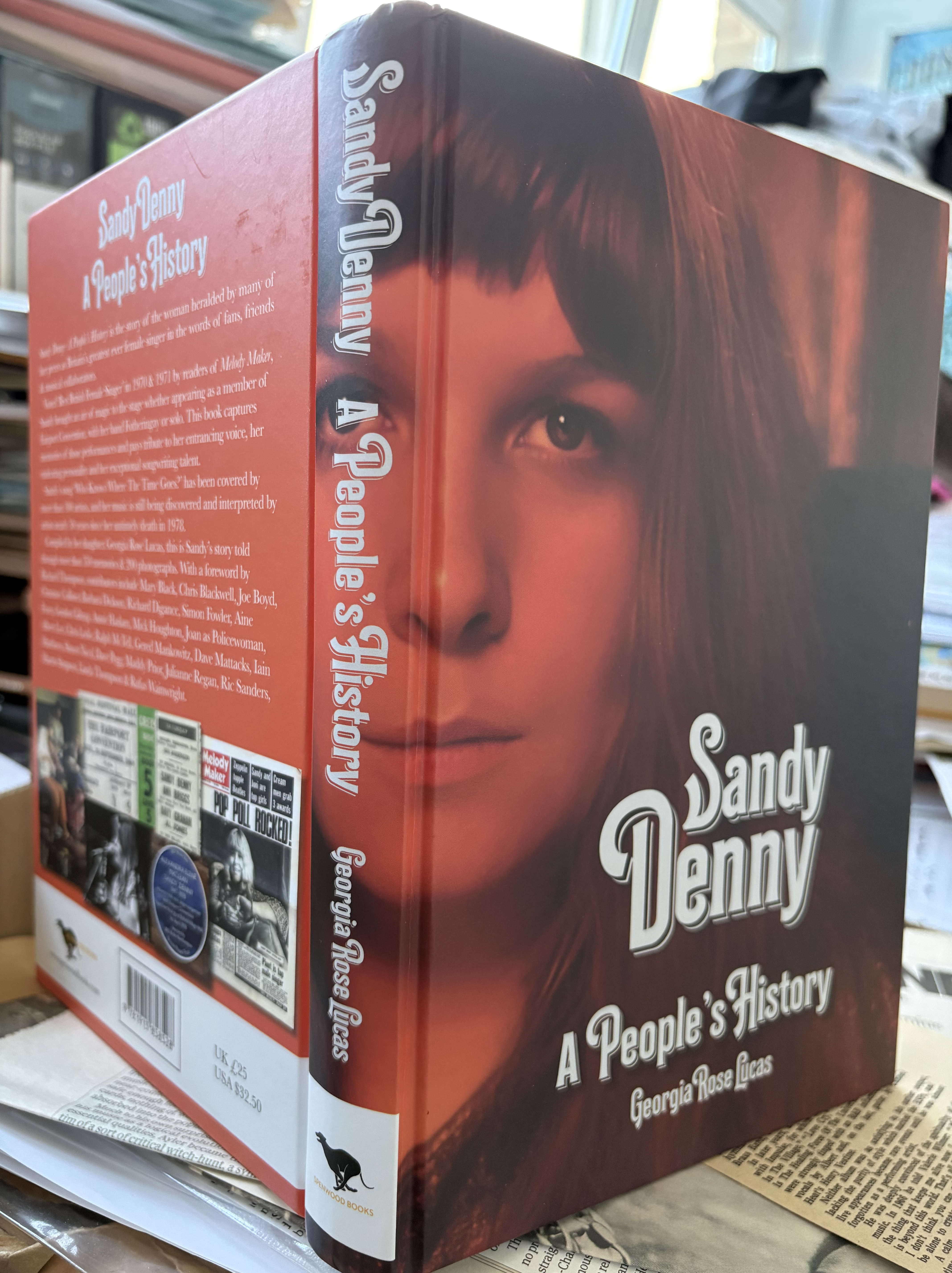
Although Mick Houghton’s I’ve Always Kept a Unicorn, published in 2015, is likely to remain the standard biography, a new book titled Sandy Denny: A People’s History is a most valuable addition to the record. Compiled and edited by her daughter, Georgia Rose Lucas, who was nine months old when Sandy died, it consists of oral and sometimes written testimony from dozens and dozens of those who encountered the singer at every level of engagement, from fellow members of the Strawbs, Fairport Convention and Fotheringay, studio engineers and producers to old boyfriends, college mates, students’ union social secretaries and fans who worshipped from a distance.
Of the latter class, there’s the tale told by a man called Steffan Wennerlund, who saw in a British music paper a notice saying that Fairport would be playing a garden fete at Cropredy to raise funds for the village hall roof in the summer of 1977 and jumped on a flight from Sweden. As he made his way down a path, he saw Sandy getting out of a car with her husband, Trevor Lucas. She was wearing a long white dress. He wanted to say something as she passed, but found himself tongue-tied. She didn’t perform, which disappointed him. But there was a lasting compensation: “A beautiful picture I have in my memory of Sandy coming towards me on the path, in the evening light, in her white dress.”
There is a witness to her final public performance, at Byfield village hall a couple of weeks before she died. One of an audience of about 30 people, Lou Hart heard a solo set that closed with “Who Knows Where the Times Goes”.
Dave Cousins remembers the lines he wrote in a song about her: “Every time I hear your name, my eyes moist up with years / As every word you ever sang comes ringing down the years.” Joe Boyd, not surprisingly, has a shrewd analysis: “Sandy was a very confident musician but lacked confidence as a person. She was insecure about her looks and worried that she couldn’t keep Trevor by her side without giving him power and responsibility over her career, first in Fotheringay and then as producer.”
Linda Thompson has a lovely story about spending a day with Sandy at Muriel’s, the notorious Soho drinking club. Richard Thompson remembers how Sandy always got him to change her guitar strings — “as if this was a masonic ritual beyond her powers of understanding.” Dave Pegg points out that life touring with the Fairports wasn’t easy for her: “We never made it big enough to get the limo treatment and had to stay in basic hotels. She put on a brave face and became one of the chaps most of the time.”
Simon Nicol remembers “sleeping with her”. But to get more on that episode you’ll have to read this very worthwhile book, which is also pleasingly full of photographs, posters, tickets and cuttings — the memorabilia of a tragically short but extraordinary life.
* Sandy Denny: A People’s History by Georgia Rose Lucas is published by Spenwood Books: http://www.spenwoodbooks.com


When she was a forceful solo performer on the folk circuit – that brave if lonely life – I met her train at Maidenhead station and walked her the two miles to our folk club. She didn’t say a word and refused my offer to carry her guitar. I think maybe she was expecting a car, not a gawky teenager. But her performance – guitar playing as well as singing – was memorable, intense and kind of faultless.
Expertly said as ever. Sandy’s best song for me was Late November , the bleak transition to Winter lyrics haunting and mysterious. The BBC performance of this song impossible to watch dry eyed.
“Fotheringay” and “Autopsy”, two of Sandy’s compositions for Fairport Convention, are among the most delicately beautiful songs to come out of that era. Looking forward to getting this new book.
Immediately ordered this after reading your review. Thank you for the recommendation
Thank you, Richard.
I thoroughly enjoyed Mick Houghton’s biography and look forward to reading this new compilation.
I purchased the book weeks ago on Amazon, and when it finally arrived felt sad I had not posted my memories of seeing Sandy solo in Manchester and in Fotheringay at the late lamented Manchester Free Trade Hall.
Thank you Richard for a lovely review. You’ve captured the tenderness we all feel towards Sandy.
Nice one, Richard!