Apropos of Barney Wilen
 Louis Malle’s Lift to the Scaffold begins a season at the BFI in London this week, providing an opportunity to enjoy the conjunction of the director’s (and his cinematographer, Henri Decae’s) images and Miles Davis’s historically significant soundtrack. A classic of French film noir, made in 1957, it looks and sounds wonderful — particularly when experienced on a big screen in a proper cinema.
Miles recorded the music in a Paris studio, using four musicians with whom he had just embarked on a short tour: Rene Urtreger on piano, Pierre Michelot on bass, Kenny Clarke on drums, and — a surprising choice, and a particularly inspired one — the 20-year-old tenor saxophonist Barney Wilen, a prodigy who would become one of the most significant European jazz musicians of his generation. Together they took the conceptual leap that would lead Davis, within a couple of years, to Kind of Blue.
Wilen’s story is a fascinating one. Born in Nice in 1937 to a French mother and an American father, he left France with his family in 1940 and spent the next six years in America, where an uncle gave him a saxophone. On returning to Nice at the end of the war, he developed his interest in music; at 13 he was already playing with local jazz bands and at 16, having moved to Paris, he was performing at Le Tabou in Saint-Germain-des-Pres with his fellow saxophonist Bobby Jaspar and the pianist Henri Renaud. In 1957, a few weeks before answering Davis’s call, he made his first recordings under his own name, for the Vogue label: reissued on CD a few years ago under the title Tilt, they show a young man clearly fascinated by the compositions of Thelonious Monk and completely at ease with such pieces as “Round Midnight”, “Think of One”, “Hackensack”, “We See”, “Blue Monk”, “Let’s Call This” and “Misterioso”.
His style was never one that cried out for attention, but it evolved into an approach that could hold its own among the hard-bop giants of the day, such as Roy Haynes, Milt Jackson and Donald Byrd, with whom he also recorded during the 1950s. (In 1959 he wrote a film soundtrack of his own, for Edouard Molinaro’s Un Temoin dans la ville, which he recorded with a band including the trumpeter Kenny Dorham.) Although his playing never lacked strength, there was no sense of trying to grab the listener by the lapels. He could swing forcefully while still seeming to take his time, and it’s hard to think of anyone who would have fitted so beautifully into the soundtrack recording with Miles, where subtlety and light-footedness were crucial. He had a lovely tone and a frictionless sense of swing; if there were a missing link between Lucky Thompson and Wayne Shorter, perhaps it would be him. He knew how to be cool without being cold.
He also possessed an inquiring and unorthodox mind, and was keen to venture beyond the confines of an idiom he had so quickly mastered. Seduced by the possibilities of free jazz, and encouraged by the adventurous German record producer Joachim-Ernst Berendt, in 1968 he recorded an album called Auto Jazz: The Tragic Destiny of Lorenzo Bandini, in which he and his quartet improvised against a recording of the commentary from the previous year’s Monaco Grand Prix, during which Bandini had been burnt to death at the wheel of his Ferrari. It was released on the MPS label, and is now hard to find.
“I have a French passport and I live in Paris,” he once observed. “I consider myself a musician of the world, temporarily French.” In 1969, having grown his hair, adopted a more relaxed wardrobe and befriended such leading lights of the Parisian counter-culture as the film director Philippe Garrel and the actor Pierre Clementi, he and his girlfriend, the English-born model Caroline de Bendern, went to Africa, where they spent several months travelling in a Land Rover through Morocco, Algeria, Niger, Mali, Upper Volta and Senegal, recording with with local musicians as they went. The first results were issued under the title Moshi in 1972, on the Saravah label; about a year ago de Bendern issued a second instalment of this fascinating Afro-funk trance music — with bits of conversation and street song interpolated and overlapping — under the title Moshi Too, on the Sonorama label.
Then, in effect, he disappeared. The next couple of decades were apparently spent back on the Cote d’Azur, where he played occasionally with a local group, effectively off the scene and out of the mainstream. Until, in 1988, an illustrator named Jacques de Loustal and my old friend Philippe Paringaux, a former editor of Rock & Folk magazine, collaborated on what we would nowadays call a graphic novel titled Barney et la note bleu, a romanticised version of Wilen’s life as an itinerant saxophonist on the jazz scene. Stylish and evocative, it was a huge hit (it’s still in print) and prompted Wilen to record a new album, titled La Note Bleu and using Loustal’s artwork. Accompanied by an excellent rhythm section, he proved that his old skills — particularly as a ballad player, on Gordon Jenkins’ “Good-Bye” and a short unaccompanied version of “Besame Mucho” — had not atrophied. His tone was, if anything, even more perfectly formed.
People suddenly remembered how good he was, and he was invited to make more recordings. I have a lovely quartet recording with the guitarist Jimmy Gourley from 1987 (Double Action, on the Elabeth label) and a fine duo album with the pianist Alain Jean Marie, his longtime associate, from 1992 (Dreamtime, on Nocturne). Both, coincidentally, contain versions of “Good-Bye”; along with “Besame Mucho”, it’s among my very favourite songs, and although his fondness for revisiting both these tunes at every opportunity is not why I’m such a fan of his, it probably helps.
According to Blue Melody, a short biography written by Yves Buin and published in France by Castor in 2011, Wilen already knew that he was suffering from stomach cancer by the time he travelled to the US in 1994. There he recorded an album called New York Romance at Rudy Van Gelder’s studio, with an A-team rhythm section: the pianist Kenny Barron, the bassist Ira Coleman and the drummer Lewis Nash. The following year he made Passione with his own musicians plus the Italian trumpeter Enrico Rava. It would be his last recording; the man who was as great a ballad player as any produced by the European jazz scene died on May 25, 1996, aged 59. Go and see Lift to the Scaffold and marvel not just at an ageless film but at how good Barney Wilen had already become when his 20th birthday was still a recent memory.
And if you want to know more, spend 55 minutes watching The Rest of Your Life, Stephane Sinde’s terrific biographical film, made in 2005:
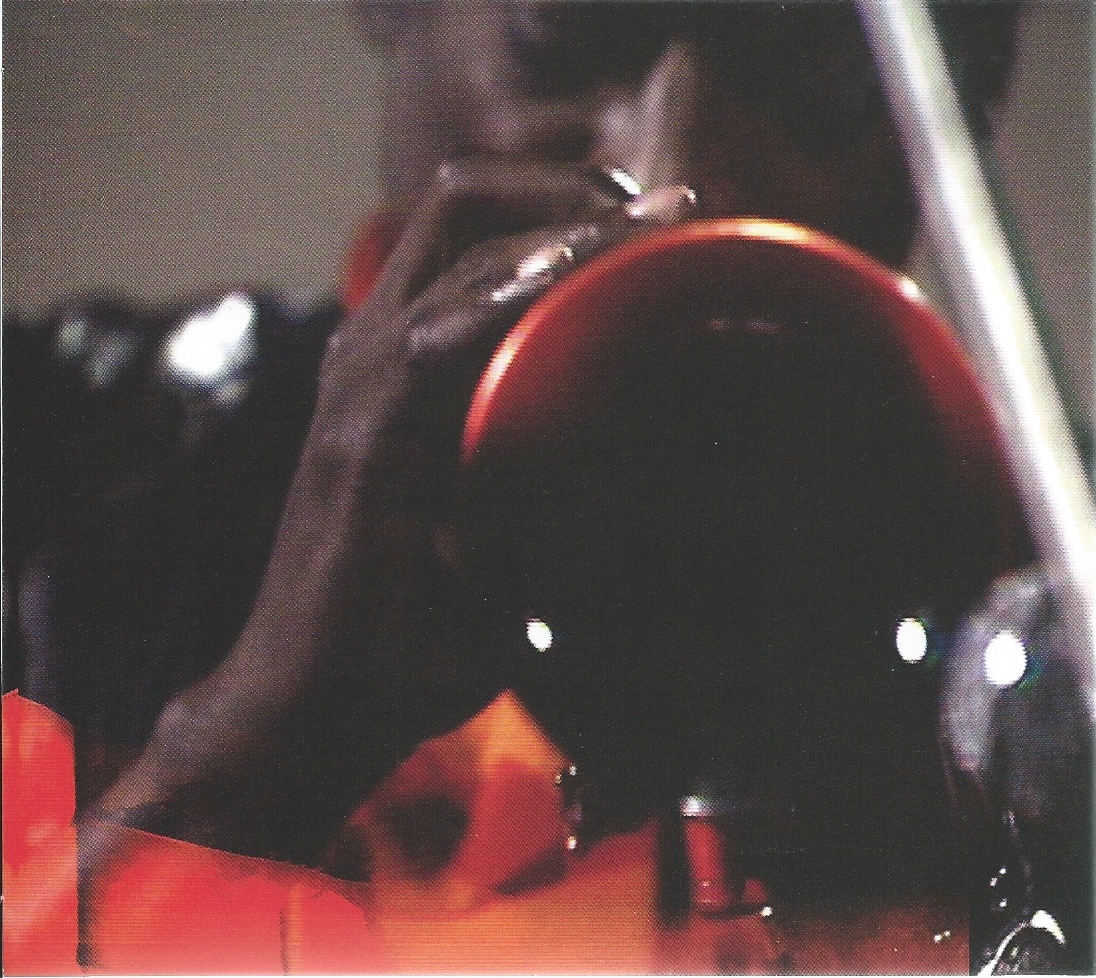
* The photograph of Barney Wilen (and the bassist Beb Guerin) is from the back cover of Auto Jazz: The Tragic Destiny of Lorenzo Bandini and was taken by Jean Maurice Pioton on February 13, 1968 while the musicians improvised the soundtrack as they watched the footage on a screen in the Tonstudio Bauer, Ludwigsburg.