Harmolodics: the truth at last
 So I’m wandering into Mayfair on Monday, on my way to the launch party for this year’s EFG London Jazz Festival, and I have 10 minutes to spare. On Dover Street there’s an antiquarian book shop called Peter Harrington. I’ve never been in there before but there’s some nice stuff in the window so I open the door.
Within a couple of minutes I’ve forgotten all about the stuff in the window. There are clues to what’s about to happen in a shelf of jazz-related publications, including Johnny Otis’s Listen to the Lambs, a signed copy of Dizzy Gillespie’s To Be or Not to Bop. and a complete set of Les Cahiers du Jazz, 1959-64. But then I see a display case. Inside it — alongside a signed photograph of Sonny Rollins mowing a lawn in Sweden, taken by the famous jazz critic Randi Hultin, rather incongruously juxtaposed with an autographed and dedicated copy of Marc Bolan’s volume of poetry, The Warlock of Love — is a sheet of manuscript paper. The word scrawled at the top is “Harmolodics”. The signature at the bottom is that of Ornette Coleman.
Harmolodics was Ornette’s system of musical organisation — one apparently based on a highly personal disregard of regular methods of transposition for wind instruments. You knew it when you heard it: it was what made his music sound the way it did. But whenever interviewers asked him to explain it — and I was among their number myself — the answer was so gnomic and cryptic as to be beyond normal comprehension. Which was certainly not to say that there was anything wrong with it.
Anyway, this piece of manuscript paper headed “Harmolodics” contains eight staves of musical annotation and looked as if it might explain something. Seeking enlightenment, I sent my snapshot of it to the pianist Alexander Hawkins, who shot back a reply within an hour. It turned out that, by coincidence, he had just been transcribing some chords from Prime Design/Time Design, Ornette’s piece for string quartet and drums, dedicated to Buckminster Fuller and recorded in 1985 at the Caravan of Dreams festival in Fort Worth. Interestingly, he was immediately struck by certain similarities. Here’s an extract from his reply:
On the third line up from the bottom on the Ornette manuscript, that Eb-Gb minor 10th/compound minor third interval… is embedded in the string quartet harmony. Ornette’s chromatic scale (4th stave down) yields this harmony when it is read with different clefs. So that first pitch (the flattened note on the bottom line of the staff) of course reads as the Eb in the treble clef, and as a Gb in the bass clef. If you then invert that interval of the minor third, you get a major sixth; and sure enough, a major sixth is the voicing between the ‘cello and viola in the quartet… This system of ‘equivalences’ you can also see in Ornette’s bottom two staves. The arpeggio which he spells out – bottom line, first four notes – reads Eb – G – Bb – D in the bass clef, or Cb (=B) – E – Gb – B in the treble clef. Hence, perhaps, the next four notes on that bottom line, which in the bass clef read of course B – Eb – Gb – Bb. (Although I can’t at present explain with this isn’t B – E natural – Gb – B natural: it seems unlikely that Ornette would slip up on two accidentals)…
I was told by the bookseller that the manuscript was the property of the dedicatee, a man who had helped Ornette with archiving his papers and had been given it as a present. It may have been lying around on Ornette’s floor; there’s what seems to be the faint trace of a footprint, possibly from a trainer, on the right-hand side.
In case you’re thinking that it might be a nice thing to have hanging on the wall, here’s the sticker price:
£10,000.
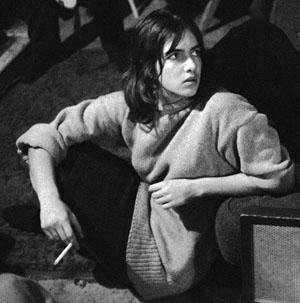
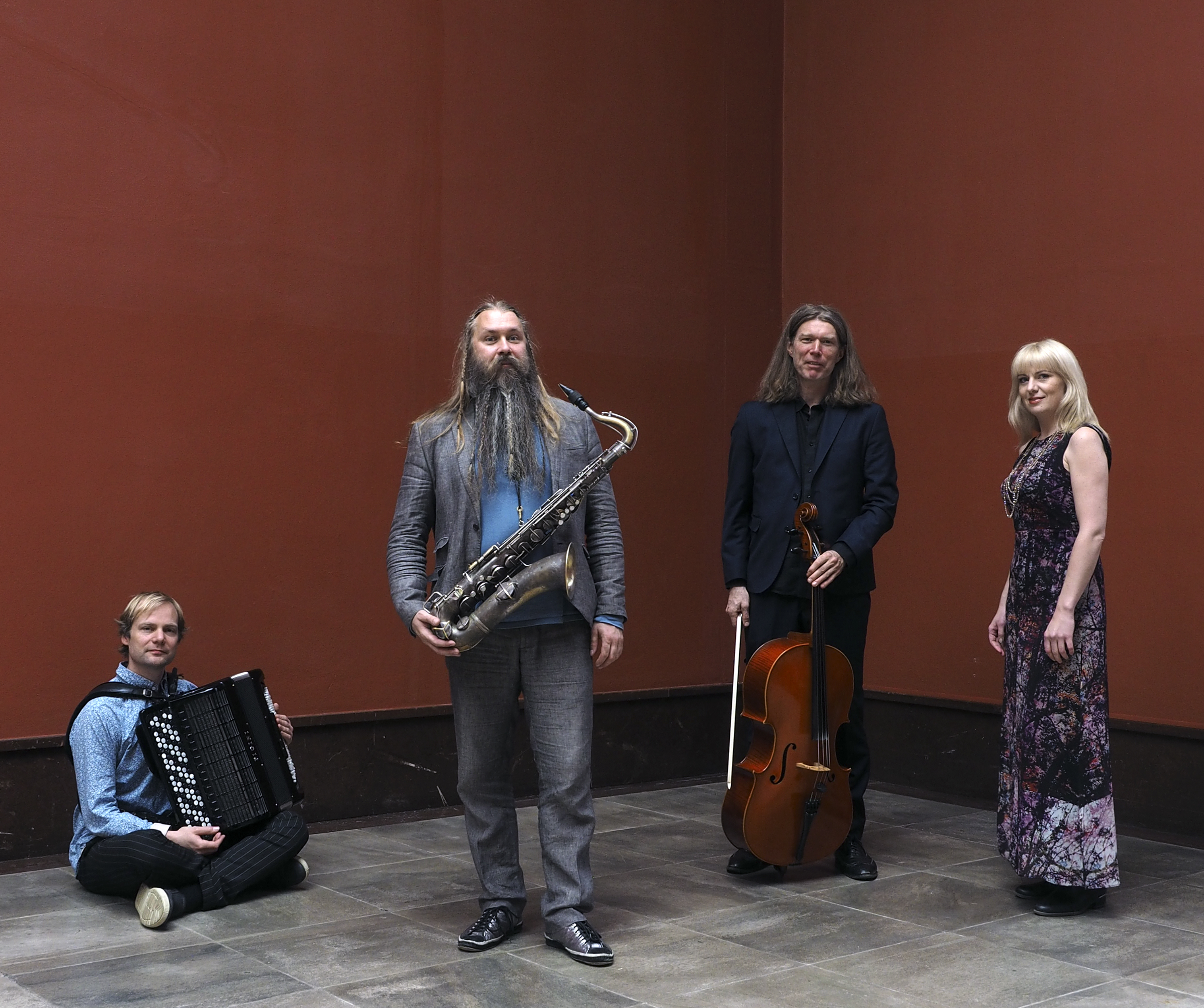
 The Canteen was a jazz club at 4 Great Queen Street, on the eastern fringe of Covent Garden: a narrow single-fronted space on the ground floor, backing on to Parker Street. It functioned for probably not much more than a year in the early 1980s, after which it became Blitz, the headquarters of the New Romantics, then Browns, a sort of celebrity discothèque. Now it’s a “gentlemen’s club” called the Red Rooms. Among the musicians I saw there during its jazz incarnation were Ahmad Jamal, Slim Gaillard, Lee Konitz, Howard McGhee, Bill Perkins and Esther Phillips, who was backed by a tidy little band including Tim Hinkley on keyboards and Mel Collins on tenor saxophone. The club’s energetic publicist was a man called K.C. Sulkin, whose father had been a society bandleader in Boston between the wars.
 Since Rio de Janeiro is the focus of a lot of the world’s attention at the moment, and since I’ve just watched The Girl from Ipanema: Brazil, Bossa Nova and the Beach, the cumbersomely titled but otherwise mostly pleasant BBC4 programme presented by Katie Derham, it feels like a good time to alert you to the version of Tom Jobim’s “Águas de Março” performed by João Gilberto on Getz/Gilberto ’76, a newly discovered set of 40-year-old live recordings from San Francisco’s Keystone Korner released a month or two ago on the Resonance label.
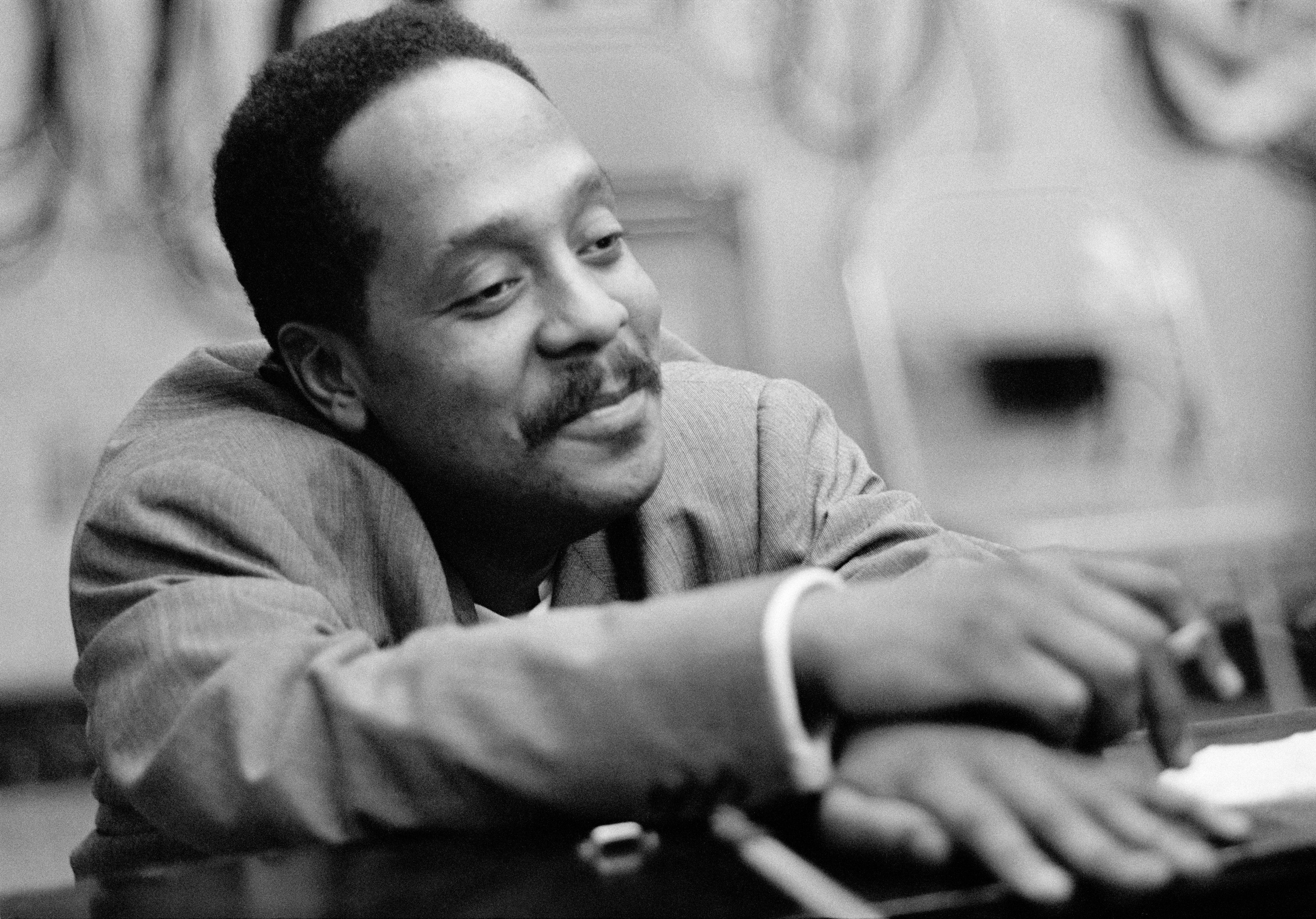 Bud Powell never made being a genius look easy. Fifty years ago tomorrow — on July 31, 1966 — his death at the age of 41 put an end to an existence that seems to have been defined by two factors: first, his extraordinary talent; second, an incident that took place when he was not even 21, and which began the process of stifling his brilliance.

