Skip to content

Posts from the ‘Uncategorized’ Category

Mose in middle age

I’d bought my first Mose Allison record in about 1962. It was an EP on the Esquire label, licensed from Prestige, and it contained all 10 atmospheric piano-trio miniatures making up Back Country Suite, the title of his first album, recorded five years earlier. Allison was clearly aware of Bud Powell and Thelonious Monk, but he was also steeped in the country blues that he’d heard growing up small-town Mississippi before studying English and philosophy at Louisiana State University. The result was was strong but fine-boned music, light on its feet, sultry as a southern night but as open as a big sky.

By the time I finally got to see him, during one of his many appearances at the Pizza Express in London in the 1980s, he’d moved on. He still sang the songs that had entranced the likes of Georgie Fame and Pete Townshend in the ’60s — his own “Parchman Farm”, Percy Mayfield’s “Lost Mind” and Mercy Dee’s “One Room Country Shack”. But his piano-playing had taken a wild left turn into a territory located somewhere between those staked out by Lennie Tristano and Cecil Taylor. A couple of time during a set he would suddenly rage up and down the keyboard, creating a torrent of two-fisted sound from waves of chromatic runs. Seems unlikely? If it was the antithesis of his early minimalism, it was certainly thrilling. Anyone turning up to hear the back-porch philosopher who sang “Well a young man ain’t nothin’ in the world these days” with such laconic resignation was in for a shock. I’m only sorry that I didn’t get to hear him many more times before his death in 2016, aged 89.

The young Mose could be heard on a 3-CD box set released on Fresh Sound in 2014, a compilation of the six albums he recorded for Prestige between 1957 and 1959: Back Country Suite, Local Color, Young Man Mose, Ramblin’ with Mose Allison, Creek Bank and Autumn Song. They formed the basis of the reputation that persuaded Nesuhi Ertegun to sign him to Atlantic in 1964 and to record 10 albums with him over the next dozen years. Those albums — I Don’t Worry About a Thing, Swingin’ Machine, The Word from Mose, Wild Man on the Loose, Mose Alive!, I’ve Been Doin’ Some Thinkin’, Hello There Universe, Western Man, Mose in Your Ear and Your Mind is on Vacation — have now been coupled with two subsequent recordings for Elektra, Middle Class White Boy and Lessons in Living, in a new 6-CD box.

Seven of the 10 Atlantic albums stay with the trio format, featuring such fine musicians as the drummers Osie Johnson and Paul Motian and the bassists Earl May and Red Mitchell. Two of those trio sets were recorded live, one at the Lighthouse in Hermosa Beach in 1965 and the other at In Your Ear in Palo Alto five or six years later. The latter album, Mose in Your Ear, contains a track called “Powerhouse”, almost nine minutes long, which perfectly exemplifies the kind of pianistic eruption I mentioned earlier, ranging across almost all significant approaches to jazz pianism — stride, boogie-woogie, barrelhouse, bebop, Monk-to-Cecil angularity — while somehow retaining Allison’s signature.

The same album also has perhaps his best recorded version of Jimmie Davis’s “You Are My Sunshine”, one of the standards he loved to examine over and over again, nudging the tune’s melodic planes until he has reshaped it into something completely his own, an almost total reinvention.

Of the three Atlantic albums in which horns are added to the trio, the 1976 set called Your Mind Is on Vacation is the most interesting and fully realised. With Al Porcino on trumpet, David Sanborn on alto and Joe Farrell on tenor, Allison takes chances with his arrangements. “One of These Days” is a slow altered blues played in the style of a Mingus small band imitating the late-’50s Ray Charles outfit, with enigmatically stretched silences at odd moments. “Fires of Spring” is a sophisticated cabaret song, the sort of thing Fran Landesman used to write, with a brilliant rubato treatment and a conversation-stopper of an ending.

Lessons in Living, recorded live at the Montreux Festival in 1982, is the more interesting of the two Elektra albums, with Jack Bruce on bass and Billy Cobham on drums, both commendably concerned to accompany rather than draw attention to themselves, and there are guest spots from Eric Gale on guitar and Lou Donaldson on alto. A wild up-tempo version of Willie Dixon’s “Seventh Son” — another old favourite — flirts with a wonderful chaos in the piano interlude, and there’s a perfectly weighted treatment of “Everybody’s Cryin’ Mercy”, in which he dispenses cosmic truth with that wry fatalism.

A lot of Mose, then, but certainly not too much, because he was a true original who work deserves to be brought to the attention of new generations of listeners. After the reissue producer Jordi Puyol’s fine work on the Prestige/Fresh Sound collection, Bob Fisher’s compilation and annotation of this Atlantic/Elektra set is immaculate, as is the stylish package design and artwork by Michael Robson. Now all we need is for someone to compile the eight albums for Blue Note and one for Verve, mostly produced by Ben Sidran, and one for Anti-, supervised by Joe Henry, that represent the balance of his recording career, spanning 1987 to 2010. Not too much to ask, I hope.

* Mose Allison: The Complete Atlantic/Elektra Albums 1962-1983 is on Cherry Red’s Strawberry label.

RIP Jon Hassell 1937-2021

From The Times, 25 November 1981

His tongue on fire

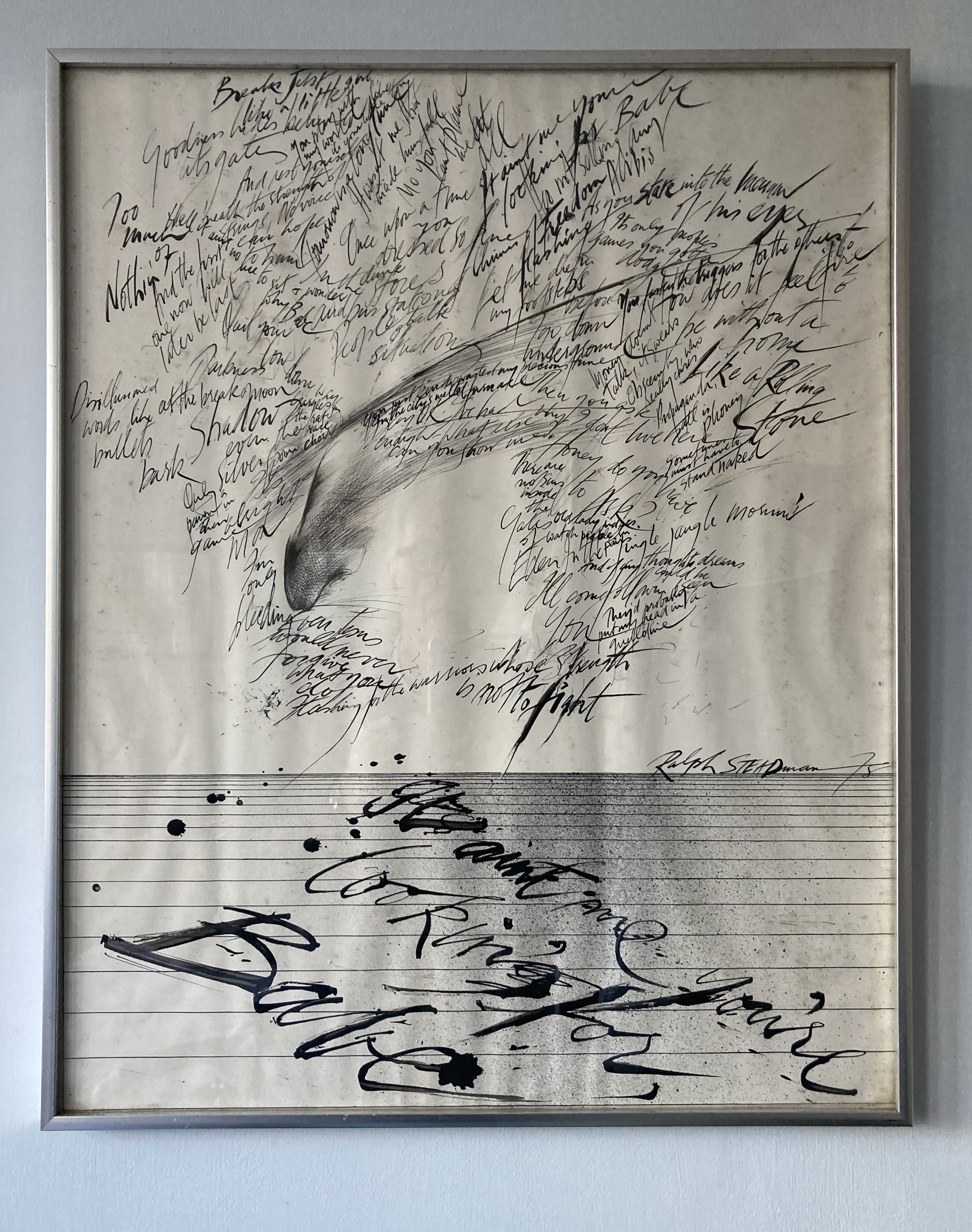
Bob Dylan turns 80 today. I commissioned this ink drawing for an issue of Time Out celebrating Dylan’s arrival to play at Earl’s Court in 1978, his first London shows in a dozen years. Ralph Steadman chose to make his image out of Bob’s words. When I left the editorship a few months later, the staff very kindly acquired the original from Ralph and gave it to me as a leaving present. As you might imagine, it’s a precious possession, although not quite as precious as all the songs Bob has placed in the common memory over the past six decades. Many happy returns to him.

Many accents, one voice

Just about the first thing I discovered when I began a three-year term as artistic director of Berlin’s historic jazz festival in 2015 was that I would be required to explain myself. More specifically, I would be asked to describe my “concept”. This was a little disconcerting since I didn’t really have one, at least not in any worked-out form.

What I came up with, thinking on my feet, was a definition applicable to the kind of festival I wanted to make. “Jazz,” I told my inquisitors, “is any music that couldn’t exist if jazz hadn’t existed.”

I’ve never been quite sure whether I invented that aphorism simply out of expediency, in order to cover myself and to explain some of the music I wanted to present, in which the elements of traditional forms of jazz were sometimes attentuated or modified almost to invisibility. Eventually I decided that I believed it enough to feel comfortable about using it whenever it was necessary to justify something.

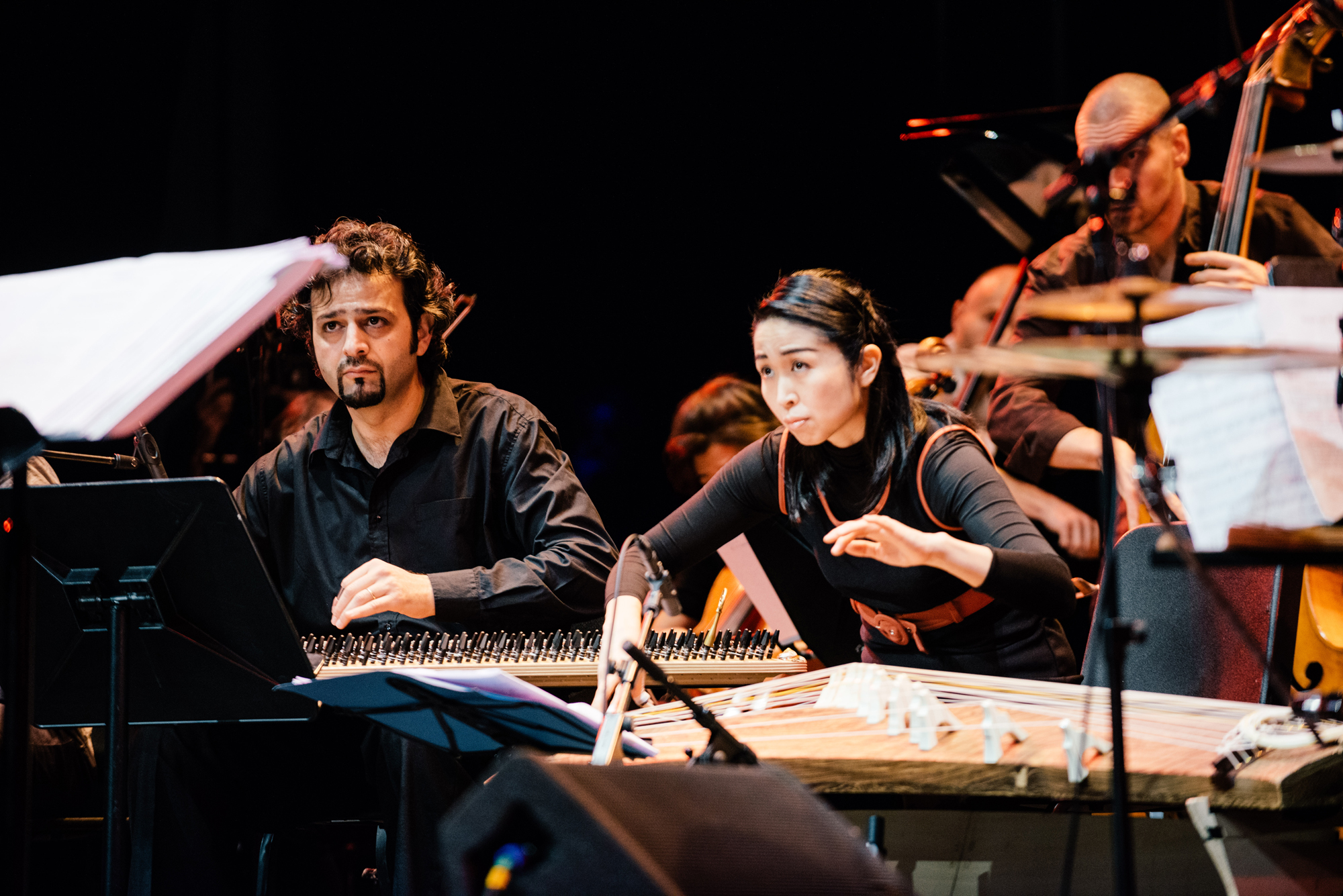
In my first year, the best example was provided by Divan of the Continents, a 22-piece band jointly led by Cymin Samawatie, a singer born in Berlin to Iranian parents, and Ketan Bhatti, a drummer born in India. Both graduates of jazz courses at Berlin’s University of the Arts (the UdK), together they had devised an ambitious project to bring together a large ensemble of locally based musicians from various ethnic backgrounds, from the principal viola-player of the Berlin Philharmonic and an English free-jazz trombonist to virtuosos of the sheng, the oud, the ney, the kanun and the koto. The aim was to work at creating music which honoured the essence of each player’s respective genre while (and this is the important bit) aiming for something genuinely new. What it would not be was an example of musical tourism. It wouldn’t be obviously “jazz”, either. But you could even see this as being a modern version of jazz’s origin story, in which elements of African and European musics came together to form a hybrid that took on a life of its own.

Since the music was complex, it seemed right to arrange for them to have three days of rehearsals in the small concert hall at the UdK’s Jazz Institute, open to students and the public. Then, on the festival’s closing night, they gave a performance in the 1,000-seater hall of the Berliner Festspiele, leading off a bill completed by Louis Moholo-Moholo’s Four Blokes and Ambrose Akinmusire’s quartet with the singer Theo Bleckmann. It was, I think, a success: the audience gave every appearance of being intrigued, particularly by the settings of poetry sung by Samawatie and two other female singers.

Now Samawatie and Bhatti have made an album of that music, and other pieces, with an ensemble of similar size and instrumentation, containing about half the original personnel. In the meantime, the project been retitled: the album is called Trickster Orchestra. But the concept is the same, and the time spent in preparation has resulted in something rather extraordinary: a music in which the sheng of Wu Wei and the viola of Martin Stegner have equal weight, in which the double bass of Ralf Schwarz can emerge with a walking 4/4 line and the various items of tuned percussion can set up rhythm patterns reminiscent of Steve Reich. The words of the songs range from Psalm 130 to the Sufi poet Rumi and the contemporary poet Efe Duvan, and are sung in Farsi, Hebrew, Arabic and Turkish. The lyricism is always poised and sometimes swooning, but the serenity can be punctured by a fusillade of drums, subtly coloured by electronics.

It’s not a mosaic, but it is a kaleidoscope. Each musician retains her or his own tuning and vocabulary. The various tones, textures and idiomatic accents are overlapped, juxtaposed and filtered through each other, creating something much more interesting than a flavourless fusion. I think it would have interested the founder of Berlin’s jazz festival, the late Joachim-Ernst Berendt, a man with a strong belief in the potential value of opening jazz up to new relationships with the music of other cultures. Trickster Orchestra is an impressive example of where that kind of thinking has led, giving musicians of high skill and inquiring minds the chance to find new paths.

* Trickster Orchestra by Cymin Samawatie and Ketan Bhatti is out now on the ECM label. The photograph of Bassem Alhouri (kanun), Naoko Kikuchi (koto) and Ralf Schwarz (bass) is from their 2015 concert in Berlin and was taken by Camille Blake.

The sound of two

Daniel Cano is a Spanish trumpeter who was born in Huelva in 1983 and has lived in London since 2014. Doug Sides is an American drummer who was born in Los Angeles in 1942, moved to Europe in 1989 and now lives, improbably enough, in Ramsgate, a fishing and ferry port on the eastern tip of Kent. This week they released a four-track digital EP called Duplexity.

It slots into the modern tradition of trumpet-and-drums duets stretching back to Don Cherry and Ed Blackwell, taking in Bobby Bradford and John Stevens and going all the way to Eyebrow, the contemporary Bristol-based pair of Pete Judge and Paul Wigens. If it reminds me of anything, it’s of the best parts of the duo concert by Max Roach and Dizzy Gillespie at the Maison de la Culture de Seine Saint-Denis, released as Max + Dizzy: Paris 1989 by A&M. That’s an album which came a little too late in the careers of two great men, making you wish they’d done it 30 or 40 years earlier, when the fires were burning brightest. Duplexity, by contrast, seems to have been made at exactly the right time.

Cano, whose involvements as a leader and a sideman include membership of the London Improvisers Orchestra, studied at the conservatoire in San Sebastián. His groups — including an Ornette Coleman tribute band — have won festival prizes. Sides studied at the University of South California, New York University and Berklee College in Boston, where he was taught by the great Alan Dawson, a mentor of Tony Williams. Over a long career which featured an early stint as the house drummer at the Lighthouse in Hermosa Beach, he has played with Illinois Jacquet, John Handy, Teddy Edwards, Phineas Newborn, Bobby Hutcherson, Abbey Lincoln and many others.

Recorded last October at Big Jelly Studios in Ramsgate, Duplexity is a fine showcase for the evidently strong relationship between a trumpeter whose warm, bright open tone evokes the hard-bop masters of the ’50s and ’60s and a drummer with a light touch and a supple sense of swing. Restricted means, in terms of instrumentation, but the result is a rich experience with no sense of austerity — or of overplaying to fill the spaces.

Trajectories and densities are chosen to make the most of the available resources. The session feels informal and spontaneous, with the rough edges left in. Two of the pieces were composed by Sides and two by Cano, and none of them, ranging from four and a half to six minutes, outstays its welcome. Most of all, it’s good to hear two musicians from different generations and of such diverse backgrounds revelling in the common language.

* Duplexity is available at www.danielcanomusic.bandcamp.com (click on the track “Perpetual Motion” to see a video). Cano and Sides will perform together in a livestream from Ronnie Scott’s Club on April 15: http://www.ronniescotts.co.uk/scheduledaily/2021/April/15. The photograph is by Martin Goodsmith.

The Weather Station live from Toronto

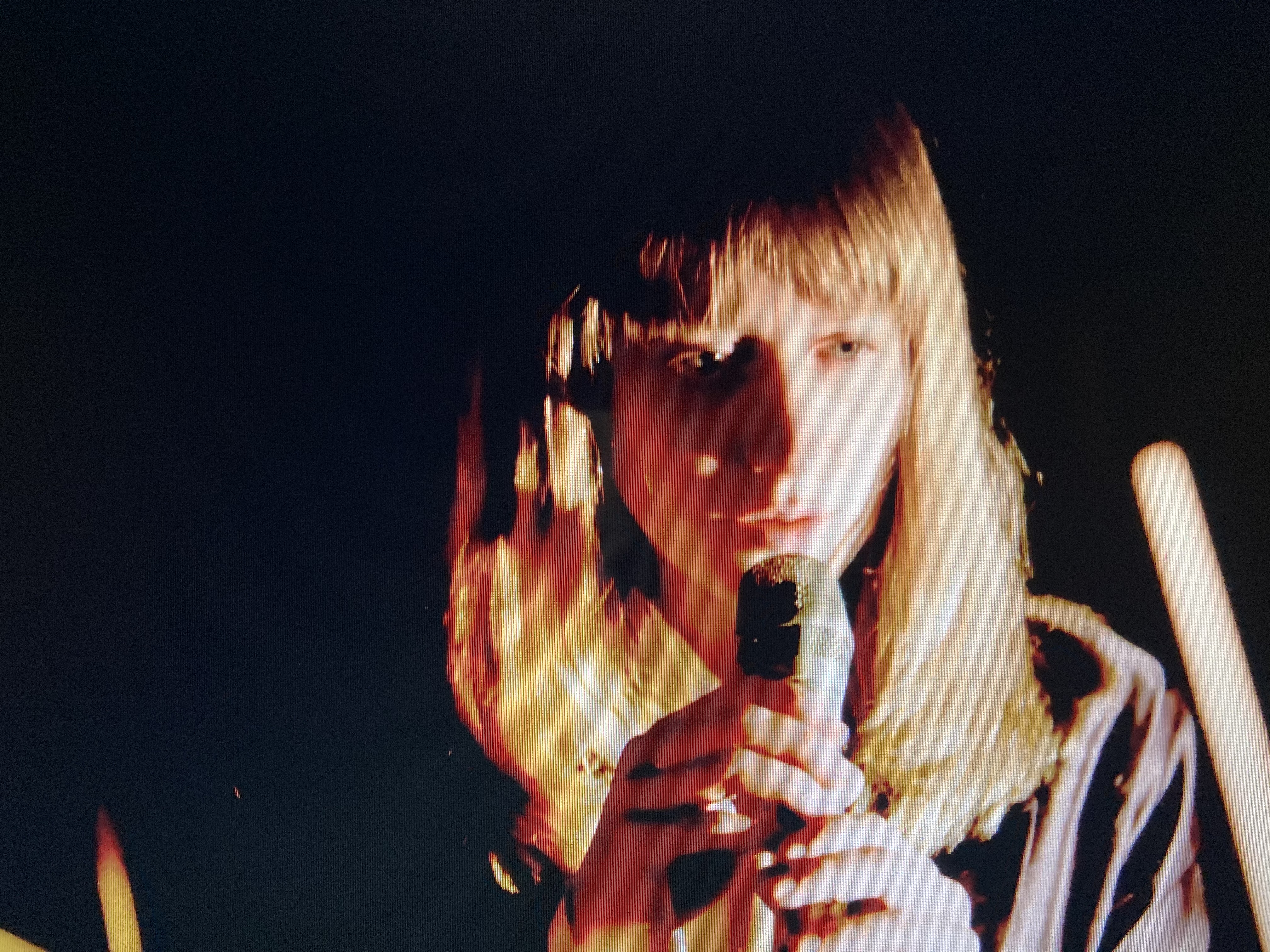
A year to the day since I was last able to see musicians performing in person, the Weather Station’s livestreamed concert from Toronto on Thursday provided a reminder of what’s been missing. Tamara Lindeman and her musicians were performing the 10 songs from her new album, Ignorance, shuffled in order but retaining the enigmatic allure that I wrote about in the March issue of Uncut.

I won’t repeat what I said in that review, except to note that the arrival of Marcus Paquin as Lindeman’s co-producer has brought a new perspective to her songs, which are now driven less — not at all, in fact — by strummed or finger-picked acoustic guitars and more by drums and bass, and decorated by subtle use of keyboards, electronics and wind instruments (and, on the album, a string trio). The new songs confront loss, both intimate and global: the departure of a lover, the disappearance of a species. These concerns, with their very different time-scales, are like messages lightly inscribed on two transparent sheets. They slide over each other, clarifying or converging, a pair of palimpsests coming in and out of focus over the band’s momentum.

It was a treat to be able to watch her and the band tackling this fascinating material. The live performance — in Toronto’s Revolution Recording Studios — turned out to emphasise the similarities rather than the differences between the songs, making the whole thing feel satisfyingly coherent. I was particularly struck by the restless swells of “Loss”, Christine Bourgie’s fine guitar solo on “Subdivisions”, the spellbound poise of “Trust”, the galloping rhythm of “Heart”, and the closing free-ish jam between Brodie West’s alto saxophone and Lindeman’s piano on “Robber”, where Ben Whiteley’s bass guitar and Kieran Adams’s drums conjured something like an alt-rock version of one of Norman Whitfield’s Temptations epics. (Here’s the album version of “Robbery”, in case you haven’t heard it.) The other musicians were Johnny Spence (piano), Will Kidman (guitar, keyboards), Ryan Driver (flute), Philippe Melanson and Evan Cartwright (percussion) and Felicity Williams, whose voice shadowed Lindman’s to particularly good effect on “Heart”.

Perfect sound (by Brenndan McGuire) and a restrained approach to lighting (Louise Simpson) and camerawork (Lulu Wei) ensured that the qualities which make the Weather Station so special were allowed to speak. In a little prologue, a just-recognisable Lindeman lay on a pebble beach under a sheet, reading a book, while a dancer wheeled and turned in the distance. We were taken back to that setting at half-time, just where you’d be turning over a vinyl album, and again at the very end, for Lindeman to read short verses by the American poet Ed Roberson. Nicely done, but the real pleasure was in witnessing her own poetry brought to life by musicians, with masks but no headphones or baffles, playing together in real time, so beautifully.

Cats, herded

Alexander Hawkins and Evan Parker (photo: Dawid Laskowski)

Organising free improvisers might seem like a fool’s task. Why would the special breed of players who spend their lives resolutely creating music from scratch suddenly want to submit to the will of a composer? Nevertheless, history proves that sometimes it works: notable successes were recorded by Michael Mantler with the original Jazz Composer’s Orchestra, Alexander von Schlippenbach with his Globe Unity Orchestra and Barry Guy with the London Jazz Composers’ Orchestra. Each project depended to some extent on the leader/composer’s familiarity with the techniques of contemporary European straight music, but the idea was given new impetus with the introduction of the looser and perhaps more organic-to-the-idiom technique of “conduction”, pioneered by the late Butch Morris and pursued by George Lewis and Tyshawn Sorey, among others. Slightly to one side were the adventures of the British duo Ashley Wales and John Coxon, known as Spring Heel Jack, who created stimulating modern environments for many individual improvisers, including Wadada Leo Smith and John Tchicai.

The first sound heard on Togetherness Music: For Sixteen Musicians, Alexander Hawkins’ new album, is that of Evan Parker’s soprano saxophone, unwinding its always surprising coils of sound, the seemingly unbroken skeins of notes punctuated by split-second darts and lurches into other registers. As usual, it’s exhilarating and mesmerising, particularly when the sound of the isolated soprano blooms with reverberation, which may or may not be the natural property of Challow Park Studios in Oxfordshire, where the set was recorded. But then Hawkins introduces his other resources: the five string players of the Riot Ensemble and nine other musicians, including the trumpeter Percy Pursglove, the saxophonist and flautist Rachel Musson, the cellist Hannah Marshall, the bassist Neil Charles, the drummer Mark Sanders, and Matthew Wright on electronics, all conducted by Aaron Hollway-Nahum. Gradually they add sombre pedal-points, heightening the atmosphere before Parker drops out and the strings begin to slip and slide until the piece ends, after almost 10 minutes, with several of them holding a tentative D natural.

Sanders and Pursglove are the next to get the concerto grosso for improvisers treatment, a layer of restless percussion under the silvery trumpet continuing into a dialogue with written lines for flute/bass clarinet and viola/cello. On the third piece Parker returns for a pointilliste conversation with Hawkins’ scrambling piano in which the Riot Ensemble make their full presence known, soaring and churning as the music holds itself together through some mysterious centripetal force.

Hawkins, the 16th musician, is featured on the fourth piece, against a walking line played by two basses (Charles and Marianne Schofield) and possibly one of the two cellos, too. Showing the pianist at his most inventive and hyper-alert, it has the loping gait and harmonically ambiguous flavour of the music created by young Cecil Taylor and the bassist with his early groups, Buell Neidlinger, before Parker pipes up with a reminder of another early Taylor collaborator, Steve Lacy, in a passage of ensemble agitation that resolves into an elegant, ruminative diminuendo.

The strings dominate the fifth piece, a collective statement in which the individual instruments glide around each other as if in mismatched orbits, the fine details of tone and timbre revealed within an aural space that feels busy yet uncluttered. The sixth and final composition opens with a trio of Charles, Sanders and Wright, bass and drums working around light electronic taps, thuds and crackles. Pursglove and Hawkins emerge with staccato trumpet figures and a purposefully wandering single-note piano line, continuing as Sanders briefly dominates with thrashing brushwork before the other musicians reappear in a crescendo of exultant sound. A graceful withdrawal gives the last word to Parker and Hawkins, two improvisers who share a near-infallible instinct for an ending.

The six pieces are titled, in order, “Indistinguishable from Magic”, “Sea No Shore”, “Ensemble Equals Together”, “Leaving the Classroom of a Beloved Teacher”, “Ecstatic Baobabs” and “Optimism of the Will”. I’ve described them in such details because the more you listen, the more distinctive they become: each one a living organism with its own cellular structure, texture and micro-climate. I’ve said before that Hawkins has a rare understanding of how to combine composition and improvisation, and here, in this very special recording, we have a perfect example of his gift.

Perhaps I’ve found Togetherness Music particularly valuable because I’ve missed attending live performances of free improvisation very much over the past year. Recordings of small groups, however excellent, aren’t the same thing as hearing and seeing this music conjured in front of you. But by framing improvisation so creatively, Hawkins brings it to life in a different way.

* Alexander Hawkins’ Togetherness Music is out now on the Intakt label (www.intaktrec.ch)

Collarless Beatles

Pierre Cardin was “perhaps best known for giving four mop-topped Liverpudlians their collarless matching suits,” according to the obituary of the French clothes designer in The Times this morning. Wanting something closer to the truth, I asked the peerless Beatles historian Mark Lewisohn how it really happened.

Inevitably it was their friend Astrid Kirchherr, a photographer with an instinct for the avant-garde, who started it off. Astrid put her boyfriend, Stuart Sutcliffe, into a round-collared jacket in Hamburg in March 1961, shortly before he left the Beatles to study painting at art college while the others went back to England.

That October, on a trip to Paris, Paul McCartney and John Lennon saw Cardin’s collarless suits and liked them. But it was not until March 1963 — between “Please Please Me” and “From Me to You”, their second and third singles — that they approached the tailor Dougie Millings to ask him to make matching suits for them to a similar design in a silk and mohair blend. Millings was based in a first-floor cutting room at 63 Old Compton Street in Soho, a couple of doors away from the 2 is coffee bar, where other clients, including Cliff Richard, had made early appearances.

The Beatles’ radical new suits were worn that year, in either pale grey or dark fabrics, for stage shows, TV appearances and photo shoots, teamed with white shirts and black ties. Many of us started saving money for cheap copies of those jackets.

It would be tempting to imagine that their habitually well dressed manager played a part here. Not so. “Brian Epstein had no part in any of this,” Mark told me, “but criticism that he made the Beatles wear such stage suits was levelled against him ever after.” By 1965, when they made their famous appearance at Shea Stadium, they were still wearing matching uniforms, but now the ties had gone, the pale beige lapel-less Millings jackets had stand-up Nehru collars and military epaulettes, and the trousers were a contrasting black.

In 2004 one of McCartney’s original by-Millings-after-Cardin pale grey suits was put up for auction at Christie’s in New York. With no reserve, and an estimate of $8-10,000, it was knocked down for $53,775.

* The first volume of Mark Lewisohn’s three-part history of the Beatles, Tune In, was published in 2013 by Little, Brown.

2020: the best bits

A still from Lovers Rock, part of Steve McQueen’s Small Axe series

The end of a year that left a lot of holes: so many gone, to be mourned only at a distance. People I loved, people I worked for and alongside, people whose artistry — whether expressed in one 45rpm disc or across the entire arc of a long career — affected my life. Musicians including Keith Tippett, whom I knew for 50 years, and Little Richard and Gary Peacock, to whom I’d been listening for even longer. Ennio Morricone. Juliette Gréco. McCoy Tyner. Lee Konitz. Andy Gill. Betty Wright. Henry Grimes. Florian Schneider. Jimmy Cobb. Tommy DeVito. Roy Head. Hux Brown. And on, and on.

Between the start of 2020 and the onset of the pandemic in mid-March I saw a handful of memorable gigs: Craig Taborn at the Royal Academy of Music, an extremely on-form Bryan Ferry at the Albert Hall and a riotous benefit for Louis Moholo Moholo at the Vortex. And that was it for the live experience. Thank goodness for streaming, which gave many musicians a route to their audience and made unanticipated introductions — in my case to the Welsh guitarist Toby Hay, whose series of improvised outdoor morning and evening ragas lifted the spirits during the spring lockdown.

There was special gratitude, too, to the people who make high-quality television programmes, a near-universal balm this year. So let’s start with them.

TV SERIES

1 Normal People (BBC) I watched it week by week, rationing myself, wanting to extend the experience of this perfectly written, designed, filmed and acted adaptation for as long as possible. Afterwards I read Sally Rooney’s novel for the first time and discovered that Daisy Edgar-Jones and Paul Mescal were inhabiting the characters on the page: a reciprocal benefit.

2 Call My Agent (Netflix) High comedy of great wit and style, with a parade of mostly female French stars — Juliette Binoche, Béatrice Dalle, Nathalie Baye, Françoise Fabian, the Isabelles Huppert and Adjani — lining up to take the piss out of themselves. The regular cast — Camille Cottin, Thibaut de Montalembert, Liliane Rovère, Grégory Montel and the rest — were equally magnificent.

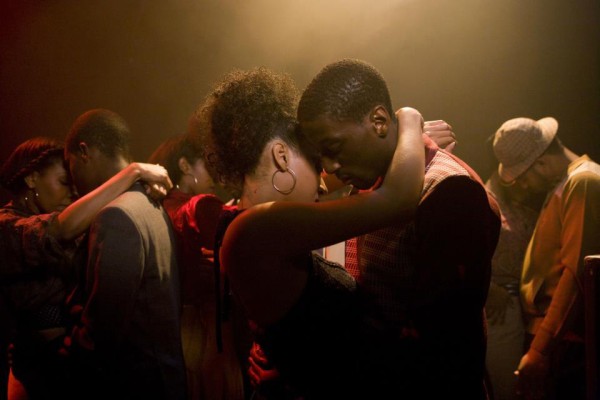
3 Small Axe (BBC) For me, the highlight of Steve McQueen’s sequence of five feature-length films was Lovers Rock, in which lighting, camera movement, editing, diagetic music and Mica Levi’s score largely took the place of dialogue as a superb cast — including Michael Ward, Amarah-Jae St Aubyn, Kedar Williams-Stirling and Shaniqua Okwok — established a mood that seemed to hang around for days.

4 The Bureau (Amazon Prime) A story in The Times recently quoted a French military chief’s complaint that the external branch of his country’s secret service — the DGSE — habitually screws everything up. That would come as no surprise to fans of The Bureau and its magnificent cast, not just Mathieu Kassovitz but particularly Florence Loiret-Caille and Jean-Pierre Darroussin. I haven’t finished it yet, so don’t tell me how it ends.

5 Once Upon a Time in Iraq (BBC) An exemplary reconstruction of the Bush/Blair intervention, at its most harrowingly effective when allowing the Iraqis to tell their own stories. The interviews with American military personnel are all the evidence anyone might need that no lessons at all were absorbed from the experience of Vietnam.

NEW ALBUMS

1 Bob Dylan: Rough and Rowdy Ways (Columbia)

2 Ambrose Akinmusire: On the Tender Spot of Every Calloused Moment (Blue Note)

3 The Necks: Three (RnR)

4 Irreversible Entanglements: Who Sent You? (International Anthem)

5 Keith Tippett: The Monk Watches the Eagle (Discus)

6 Maria Schneider: Data Lords (ArtistShare)

7 Sault: Untitled (Rise) (bandcamp)

8 Hedwig Mollestad: Ekhidna (Rune Grammofon)

9 Bruce Springsteen: Letter to You (Columbia)

10 Matana Roberts / Pat Thomas: The Truth (Otoroku)

11 Mary Halvorson’s Code Girl: Artlessly Falling (Firehouse 12)

12 Eyvind Aarset / Jan Bang: Snow Catches on Her Eyelashes (Jazzland)

13 The Henrys: Paydirt (Bandcamp)

14 Pete Judge: Piano 2 (PJM)

15 Robert Cray Band: That’s What I Heard (Thirty Tigers)

16 Lucia Cadotsch: Speak Low II (We Jazz)

17 Martin Pyne: Spirits of Absent Dancers (Discus)

18 Carla Bley / Andy Sheppard / Steve Swallow: Life Goes On (ECM)

19 Jasper Høiby: Planet B (Edition)

20 Matt Rollings: Mosaic (Dualtone)

21 Dave Alvin: From an Old Guitar (Yep Roc)

22 Soft Machine: Live at the Baked Potato (Moonjune)

23 Misha Mullov-Abbado: Dream Circus (Edition)

24 Diana Krall: This Dream of You (Verve)

25 Hailu Mergia: Yene Mircha (Awesome Tapes from Africa)

ARCHIVE / REISSUE

1 Richard & Linda Thompson: Hard Luck Stories (Universal)

2 Mike Westbrook: Love and Understanding (My Only Desire)

3 Charles Mingus: Bremen 1964 & 1975 (Sunnyside)

4 Roberta Flack: First Take (50th anniversary edition) (SoulMusic)

5 Solomon Burke: The King of Rock ’n’ Soul (SoulMusic)

6 King Crimson: The Complete 1969 Sessions (DGM)

7 Bryan Ferry: Live at the Royal Albert Hall 1974 (BMG)

8 Kenny Carter: Showdown (Kent)

9 Carla Thomas: Let Me Be Good to You (SoulMusic)

10 Jon Hassell / Farafina: Flash of the Spirit (tak:til)

MUSIC BOOKS

1 Aaron Cohen: Move On Up: Chicago Soul Music and Black Cultural Power (Chicago University Press)

2 Andy Neill: Ready Steady Go! The Weekend Starts Here (Universal)

3 Magdalena Grzebałkowska: Komeda: A Private Life in Jazz (Equinox)

4 Craig Brown: One Two Three Four: The Beatles in Time (4th Estate)

5 Luc Sante: Maybe the People Would Be the Times (Verse Chorus Press)

6 Philip Nanton: Riff: The Shake Keane Story (Papillote Press)

7 Edwin Prévost: An Uncommon Music for the Common Man (Copula)

8 Duncan Heining: Stratusphunk: George Russell, His Life in Music (Jazz International)

9 Ian Preece: Listening to the Wind: Encounters with 21st Century Independent Record Labels (Omnibus)

10 Maureen Mahon: Black Diamond Queens (Duke University Press)

OTHER NON-FICTION

Ed Caesar: The Moth and the Mountain (Penguin Viking)

FICTION

David Diop: At Night All Blood Is Black (Pushkin Press)

POETRY

Caroline Bird: The Air Year (Carcanet)

FILM

Portrait of a Lady on Fire (dir. Céline Sciamma)

EXHIBITION

Charlotte Salomon (Jewish Museum, London)

‘The Monk Watches the Eagle’

My last memory of Keith Tippett comes from a night in Berlin in 2015, when he brought his octet to play a new suite, The Nine Dances of Patrick O’Gonogon. He was always edgy before a performance, and this concert was no exception. There was a fine new 9ft Steinway for him to play, tuned twice during the day — once before the afternoon soundcheck, once after. An hour before the start of the concert, however, he went back to the piano, played a few notes, and came to me with an urgent request that it be retuned.

At that point the only thing a festival director can do is keep the artist happy. The piano tuner had gone home hours before. But his home number was found, and he was summoned in time to give the instrument another going-over. (After completing the task, he muttered to me that it had remained perfectly in tune.) Keith and his musicians proceeded to play a glorious set that delighted the audience, who were transfixed when Julie Tippetts, Keith’s wife, materialised next to the piano towards the end to sing “The Dance of Her Returning”. It was a triumph, one of many in his long career.

Keith was a wonderful man and one of the finest British composers of his generation. Following his death n June 2020, the first posthumously released Tippett recording is a piece of which he was specially proud: The Monk Watches the Eagle, a cantata for two saxophone quartets, the BBC Singers, and his wife, Julie, who provided a libretto evoking the last earthly thoughts of a holy man on his deathbed.

The recording is of its first and only performance, performed in 2004 as part of the Norfolk and Norwich Festival, which had commissioned it, and recorded for broadcast by BBC Radio 3 in Norwich Cathedral. Dedicated to his late father, the nature of the work and the setting of the performance remind us that Keith’s early musical experience included spells as a chorister and church organist in his native Bristol.

His whole career showed us that he was comfortable in many idioms, from his astonishing solo piano improvisations to his appearance with King Crimson on Top of the Pops and his marshalling of the extraordinary 50-piece Centipede. The Monk Watches the Eagle finds him flying free of genre, blending the gestures of contemporary classical choral music with perfectly integrated saxophone improvisations — by Paul Dunmall (soprano), Kevin Figes (alto), Ben Waghorn (tenor) and Chris Biscoe (baritone) — and Julie’s powerfully affecting singing.

Keith’s use of his resources here is flexible and imaginative. His deployment of the singers is in a very English tradition of choral music, the voices sometimes soaring up to the 12th century cathedral’s vaulted stone ceiling. There are times when he makes the saxophones sound like a pipe organ powered by human breath; even more astonishing is a passage where you imagine you’re hearing distant gongs and bowed cymbals.

The 40-minute piece is continuous, but for our convenience the CD is programmed with seven divisions. The fourth of them, a 14-minute passage, contains some of the most moving music I’ve heard this year: a series of slow movements featuring lean a cappella vocal writing, a dissonant slow upward swirl of voices and reeds giving way to a glowing melody emotionally related to John Tavener’s “The Lamb”, Julie’s mbira (thumb piano) and her wonderfully poised vocal solo over saxophone harmonies, and the return of the choir, with Biscoe’s soft baritone tiptoeing gently between their legato phrases.

“Now it is silent, and words hang warm,” they sing in this section. “All is calm. All that remains… All that remains in my heart is still. All is still. Now in the quiet — and quite alone — not alone!” But the luminous serenity is disturbed by a writhing Dunmall soprano solo, emerging from a babble of voices, demonstrating that the inherent possibilities of such collaborations did not end with Jan Garbarek and the Hilliard Singers. The parallel harmonies of the closing movement have an unadorned elegance reminiscent of plainsong.

It’s a work of great spiritual depth and power, radiating its beams of light as though shining through stained glass — the motif of the cover design. I remember Keith telling me about it with special pride. Now everyone can hear it, and join the long applause that filled the cathedral at the conclusion of a marvellous performance that reveals a different and very precious facet of the soul of a great musician.

* Keith Tippett’s The Monk Watches the Eagle is released on the Discus label. The photograph of Tippett, by Paolo Soriani, is from the CD sleeve.