Skip to content

Posts from the ‘Uncategorized’ Category

Late Lee

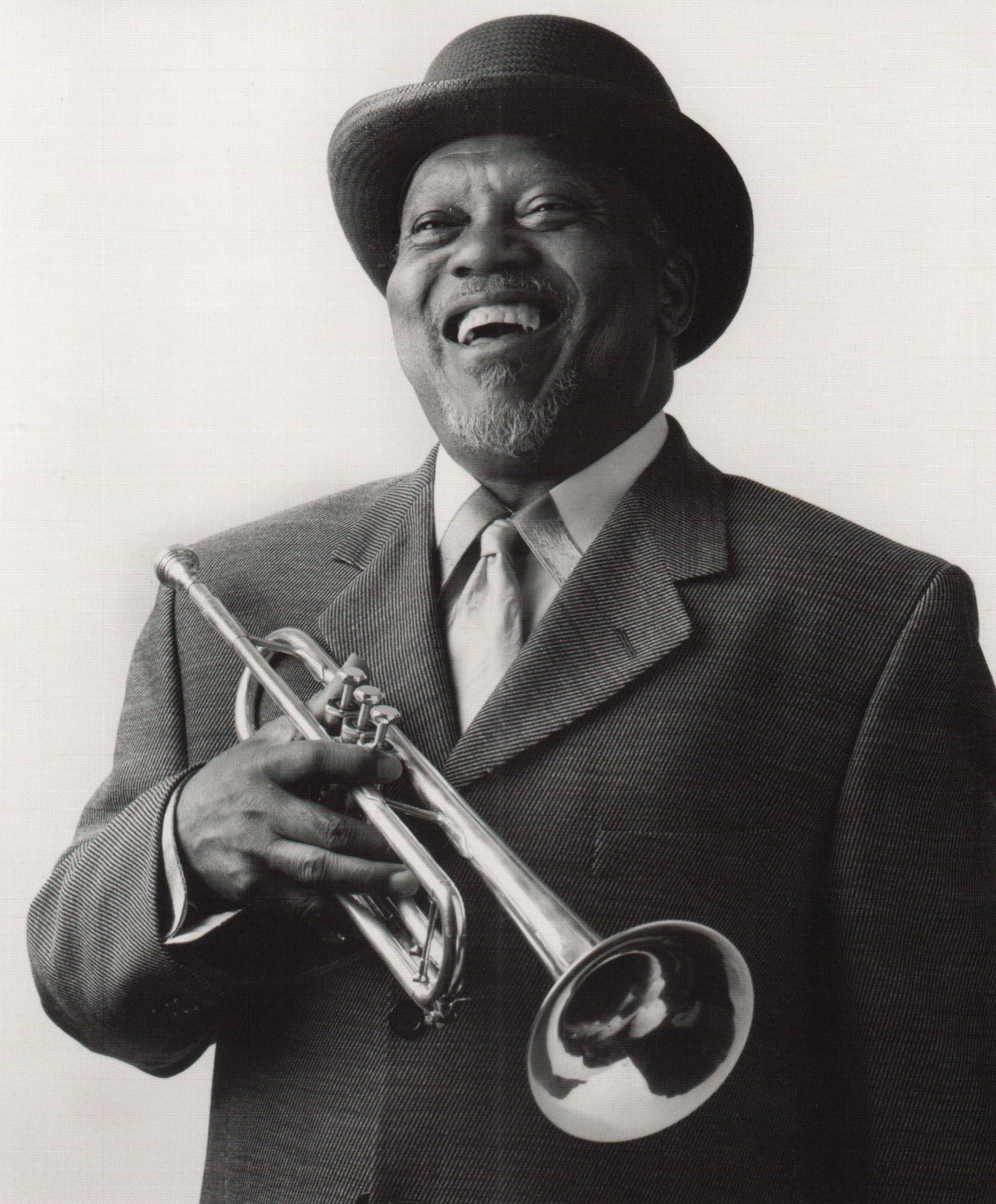
Lee Konitz A TraneThis is Lee Konitz, the great alto saxophonist, reflected in the window of A-Trane, a small jazz club in Berlin that was packed to the gunwales for his performance last night.

Konitz was born in 1927; it is almost 70 years since, aged 18, he replaced Charlie Ventura in Teddy Powell’s big band. Before he was 21 he had begun his studies with Lennie Tristano and taken a starring role first in the Claude Thornhill Orchestra, playing Gil Evans’s arrangements of bebop tunes, and then in Miles Davis’s nonet, which became known as the Birth of the Cool band. These days he plays less than he did, in the sense that he lets his sidemen — and, on this occasion, a guest singer, Judy Niemack — carry quite a lot of the weight, and much of his own performance is taken up with his own weightless scat-singing, but every note that comes from his saxophone is worth hearing.

A couple of years ago I wrote here about my admiration for his late work. The repertoire doesn’t change: variations on “Stella by Starlight”, “All the Things You Are”, “Out of Nowhere” (in the Tristano variation called “312 E 32nd St”). There was also “Kary’s Trance”, which Konitz wrote in 1957 on the chords of “Play Fiddle Play”. At one point he invited his extremely sensitive and adept accompanists — the pianist Florian Weber, the bassist Jeremy Stratton and the drummer George Schuller, plus Niemack — to create a collective improvisation from scratch, tacitly reminding us that in 1949 he was part of the Tristano group which, with two pieces called “Intuition” and “Digression”, made the first attempts at such a thing.

And then, alone with the rhythm section, he sat and played a version of “Body and Soul” that made an old, tired song sound completely fresh and new, all the accumulated wisdom of his long career poured into a few frail but beautifully shaped phrases.

Eggleston’s Memphis

EgglestonWilliam Eggleston’s Stranded in Canton is a portrait of Memphis, Tennessee in 1973, shot in black and white in bars and on street corners. Best known for his colour-saturated still photographs, such as the one of the blood-red motel-room ceiling used on the cover of Big Star’s second album, Radio City, Eggleston used an early Sony Portapak camera for this project, giving the result a blurred, flaring immediacy.

Restored and re-edited by Eggleston in collaboration with the author Robert Gordon, the 77-minute film was screened last night at the Barbican art gallery in London as part of Doug Aitken’s Station to Station, a 30-day festival of happenings and installations featuring a range of artists from Kenneth Anger to Olafur Eliasson. Aitken invited Jason Pierce — J. Spaceman of the band Spiritualized — to provide a live score, which might seem an odd request since Stranded in Canton already has a soundtrack of its own, including performances by the bluesmen Furry Lewis and Johnny Woods and the pianist Jim Dickinson.

Pierce brought along two fellow members of Spiritualized, the guitarists John Coxon and Tony Foster, a/k/a Doggen, and a drummer, Rupert Clervaux, who has played both with Spiritualized and with Coxon’s project Spring Heel Jack. The three guitarists and the drummer formed an inward-facing circle on a low stage in the middle of the gallery, with the film projected on to one main screen and on to the other three white walls. The audience sat on benches and beanbags, or on the floor, or on the edge of the stage.

Using a pedal, Pierce could control the volume of the film while cueing the band to play against certain sequences, usually those in which an indistinct ranting seemed to be going on. He had prepared a set of instrumental pieces that could have been off-cuts from Exile on Main Street: a variety of after-hours drone-boogies using distorted arpeggios (Pierce), scrubbed chords (Coxon) and moaning slide figures (Doggen). Clervaux paced the music with elegant simplicity, using a reduced kit and, occasionally, a glockenspiel.

The spirit of the Rolling Stones at their most dissolute, a kind of  quaalude-deadened sluggishness interrupted by random bursts of menacing craziness, hangs over the whole film — there is even a glimpse of Eggleston’s friend Stanley Booth, the author of the best book about the band — so it was appropriate that the live soundtrack should contain things that sounded like half-remembered versions of the backing tracks from “Love in Vain” and “Wild Horses”. And Pierce devised a brilliant nerve-jangling crescendo to counterpoint the look-away finale, which moves from a competition to bite the heads of live chickens to a concluding episode of terrifyingly casual gunplay.

Not quite concluding, actually. The credits feature stills of the participants, with captions describing their subsequent fates, most of them — such as that of the transvestite “Lady Russell” — unhappy. But this is not a happy film. It’s a jagged, intimate, handheld portrait of a disturbing time in which certain forces set free in society created a sizeable amount of collateral damage. As a work of art, Stranded in Canton resembles a sequence of picaresque doodles: Hogarth on Beale Street. At last night’s screening, however, Pierce found a way of adding a dimension that made it feel much more complete. They should do it again.

* You can find extracts from Stranded in Canton here.

The Wrecking Crew

Wrecking CrewRoger McGuinn tells a great story in the course of The Wrecking Crew, Denny Tedesco’s film about the Hollywood session musicians behind countless hits of the ’50s, ’60s and ’70s. He’s recalling the frustration of the other members of the Byrds when they discovered that they’d been replaced for the recording of “Mr Tambourine Man” by a group of session men, including Leon Russell and Hal Blaine. McGuinn himself was permitted to sing and play 12-string guitar on the track, which was completed in a couple of passes. He was the only Byrd on the record. A few months later, now established as one of the world’s biggest groups, the whole band were allowed into the studio to play on “Turn, Turn, Turn”. They needed 77 takes. Enough said.

The film is a loving project, in every sense. The director is the son of the late Tommy Tedesco, whose guitar graced many of those hits (including Jack Nitzsche’s “The Lonely Surfer” and the Sandpipers’ “Guantanamera”), and whose presence gives the work its bookends. But there’s plenty of space for encounters with others, including Blaine, his fellow drummer Earl Palmer, the saxophonist Plas Johnson, the bass-guitarists Carol Kaye and Joe Osborn, the trombonist Lou McCreary, the percussionist Julius Wechter, the pianist Don Randi, the guitarists Bill Pitman, Glen Campbell and Al Casey, and many others, including the engineers Stan Ross and Larry Levine, as well as Brian Wilson, Herb Albert, Cher, Jimmy Webb and Lou Adler. The project was started by Denny Tedesco many years ago; several of his interviewees — including Palmer, McCreary, Wechter, Ross, Levine and Casey, as well as his father — have died since he filmed them.

Inevitably, there’s a touch too much boosterism. Hollywood isn’t the only place where the making of the great pop hits of the ’60s was facilitated by great session men. But these certainly were fantastic musicians, most of them jazz-trained but ready to dial down their chops to whatever the producer required, be it Phil Spector or Snuff Garrett. Once or twice you get a hint of less positive feelings about the tasks that were put before them, but there seems to have been a genuine enthusiasm for the imagination Brian Wilson brought with him into the studio — although, of course, Wilson’s sessions at the time of Pet Sounds and Smile tended to go on for weeks at a time, ensuring a steady revenue stream.

Wechter tells a fond story about Alpert, whose first Tijuana Brass session was not registered with the union, enabling him to pay the musicians below the standard rate, which was all he could afford. When “The Lonely Bull” became a massive hit, the first thing the trumpeter did was go round to the union, fill in the forms, and pay the musicians the full scale.

Somebody relates how, at the time of “These Boots Were Made for Walking”, Nancy Sinatra and her father were both appearing at separate Las Vegas venues. Irv Cottler, Frank Sinatra’s veteran drummer, discovered that Blaine, whose bass-drum fills had provided “Boots” with one of its hooks, was being paid $2,500 a week to leave the studio and back up Nancy on stage. He, Cottler, was making $700 a week.

The guys who spent their lives shuttling from Gold Star to Western to Capitol to Radio Recorders got rich in the process, which leads Blaine himself to tell the saddest story. The studio income from a career including 50 No 1 hits and six consecutive records of the year at the Grammy awards (including “Strangers in the Night”, “Up, Up, and Away” and “Mrs Robinson”) had brought him a mansion in Beverly Hills, a motor yacht and and a Rolls-Royce. They were all taken away by a divorce settlement that coincided with the ending of the boom time for session men. Out of music, he left Los Angeles and worked for a while at a menial job somewhere in Arizona. But then in 2000 he and Palmer, his mentor, were inducted into the Rock and Roll Hall of Fame, and his life in music restarted.

Back in 2011 Blaine gave a great quote about the experience of listening to oldies stations to Marc Myers of the Wall Street Journal. “You hear your youth,” he told Myers. “I hear a day at the office or a divorce.” But that’s just a session man’s humour. The film is full of warmth and remembered pleasure, like the moment Carol Kaye shows us how she came up with the walking bass riff that made Sonny and Cher’s “The Beat Goes On” into a great record rather than just a decent song.

The Wrecking Crew was premiered at the South by Southwest festival in 2008 but a long campaign for Kickstarter funds was required in order to to pay the song licensing fees before it could be allowed out on a proper, if limited, release around the world (I saw it at the Art House cinema in Crouch End, North London). It’s not as polished a cinematic artefact as Standing in the Shadows of Motown or Muscle Shoals, but that’s part of its appeal. As an addition to the historical record, it’s priceless.

Amy

Amy WinehouseIt took a while to get over the impact of Asif Kapadia’s Amy. I went to a lunchtime preview on a sunny day in Soho, and when I came out two hours later the place didn’t look quite the same. So affecting was the director’s portrait of a doomed life that it was a struggle to raise much of a smile for the rest of the day. Kapadia’s Senna had much the same effect on its audience, even on those who had no prior interest in the world it described. He and his co-workers — notably his editor, Chris King — have recalibrated our expectations of the biographical documentary.

In the end, though, what interests me about Amy — which opens in the UK this week — is not so much how it describes the life as what it tells us about the work. While it was always obvious, even to slightly detached listeners like me, that the songs on Back to Black were nakedly autobiographical, the film ties them into the reality of her short life in a way that makes them even more powerful.

The essentially asymmetrical nature of her relationship with her father makes the line “My daddy says I’m fine” bear an even more tragic resonance. Of course, no film-maker, even one as skilful and sensitive as Kapadia, can really get to the essence of something so intimate and complex and known to only two people, but Mitch Winehouse’s objections to the film have been less than entirely convincing.

A layer of understanding is added to other important songs by the clips of Amy together with her husband, Blake Fielder-Civil. Disastrous he may have been, but the film makes it clear how deeply she loved him for exactly that, and how perhaps the disaster was therefore unavoidable. Her reading of the affair, as conveyed by her lyrics, now seems even more extraordinarily vivid and poetic.

No British songwriter of her generation has matched her use of vernacular. Lines such as “When I catch myself I do a one-eighty”, “I’ll be some next man’s other woman soon”, “I should be my own best friend / Not fuck myself in the head with stupid men” and “I’m in the tub, you on the seat / Lick your lips as I soap my feet” are intensified by her habit of slurring and sliding the words, which makes them sound like half of a conversation between two people whose intimacy doesn’t require precise enunciation.

“Tears Dry on Their Own” was how I came to Amy Winehouse. I’d resisted her until then. When I heard it, the effect was like stepping into a different world, moving at a different speed, with different colours. That wonderful surge when the staccato stop-time verses, so beautifully channeling late-’60s Motown, give way to the backbeat-riding chorus (“He walks away, the sun goes down…”) is one of her triumphs. The song has that happy/sad thing going beyond words, even though the words of the song were so blazingly eloquent.

Maybe the best thing about Amy is that although it resolutely avoids hagiography or myth-making, the person who comes out of it best is the film’s subject. By using his feel-good, feel-bad movie to deepen our respect for her talent and achievements as a musician as well as our compassion for her destiny, Kapadia seems to have given us something as close to a balanced view as we’re ever likely to get.

Terry Riley at 80

Terry RileyA couple of weeks ago I watched the 10 members of the Richard Alston Dance Company perform a piece called Overdrive, set to Terry Riley’s “Keyboard Studies No 1”. The inventiveness of the choreography and the supple energy of the dancers — notably the remarkable Liam Gillick — made Riley’s steadily shifting patterns, composed in 1964, sound as though they had been minted that morning.

Riley celebrates his 80th birthday today: June 24, 2015. He’s been one of my heroes since I heard the first recording of his composition In C at the end of the ’60s. It’s a pivotal piece in the evolution of modern music: a key element of the evolutionary burst that emanated from the apartment behind a Chinese laundry on West 55th Street in New York City where Gil Evans, George Russell, John Lewis and others gathered to discuss the direction of music in the late ’40s, coming up with new thoughts that were focused through the lens of Miles Davis’s Kind of Blue, whose radical approach to harmonic structure and temporal perception provided the inspiration for everything from James Brown’s “Cold Sweat” through the so-called minimalists — Young, Riley, Glass and Reich — to the Velvet Underground’s “Sister Ray” and much more.

Anyway, that’s an old story now. Riley’s music, however, never gets old. I wouldn’t want to be without the music he created in Paris in 1963 for Ken Dewey’s play The Gift, manipulating a tape of Chet Baker’s quartet, or the sampling exercises “You’re No Good” and “Bird of Paradise”, using the eponymous disco hit by Harvey Averne and a fragment of Jr Walker’s “Shotgun” respectively. Or the endlessly influential A Rainbow in Curved Air, or his collaboration with John Cale on Church of Anthrax, or his lovely 2011 album of live performances with his son, the guitarist Gyan Riley. Or the many solo improvisations with titles like Shri Camel, Poppy Nogood and his Phantom Band, Descending Moonlight Dervishes and Persian Surgery Dervishes. Or every version of In C that I can find, including the one recorded by Africa Express in Mali last year. Or, by no means least, the vinyl bootleg of his wonderful duo performance with Don Cherry, recorded in Cologne in 1975.

And then there are his string quartets, including no fewer than 27 works commissioned by the Kronos Quartet over the past 35 years. In 2002 I travelled to the University of Iowa to hear the world premiere of one of them, and to write a piece for the Guardian (here it is). The piece was called Sun Rings, and it was built around noises recorded by NASA’s Uranus probes as they travelled the galaxy. These sounds — a collection of random chirps and whistles — were controlled by the four members of the quartet, using touch devices. They were augmented by a 60-piece choir, using a key phrase from the writer Alice Walker: “One earth, one people, one love”, against back-projections devised — with the aid of NASA’s library — by the stage designer Willie Williams.

One Earth, One People, One Love is the title given to a celebratory five-CD box of Kronos/Riley collaborations released in the US this week and in the UK on July 10. Four of the discs contain the previously released versions of Salome Dances for Peace (1989), Requiem for Adam (2001) and The Cusp of Magic (2008), but the fifth — also available as a single CD — takes its title from a new recording of the first piece Riley wrote for the quartet, Sunrise of the Planetary Dream Collector (1980), and also includes Cadenza on the Night Plain (1983), plus other bits and pieces.

Among those bits and pieces is the movement from Sun Rings called “One Earth, One People, One Love”, which, taken in isolation, presents itself as one of the most beautiful and moving pieces in Riley’s catalogue. Featuring a prominent cello melody against the whooshes of the electron particles captured by NASA’s sensors and the gentle tolling of what sounds like a prayer bell from a Shinto temple, with the voices of Walker and the astrophysicist Don Gurnett in the background, it’s a piece of extraordinary depth and poignancy. (Here’s a version recorded at a Kronos concert in Germany in 2010.)

It’s the kind of thing, in fact, that makes you think a little harder about the world around you. But even when the content of Riley’s music has been less explicit, it’s always had the knack of doing that. And sometimes, too, it inspires people to dance. So best wishes to him for a happy birthday, and for many more of them.

* The photograph of Terry Riley was taken by Fabio Falcioni and is the cover image of Fabrizio Ottaviucci’s album of his piano pieces, Keyboard Studies 1-2 / Tread on the Trail, released on the Stradivarius label in 2008.
The Henrys at 21

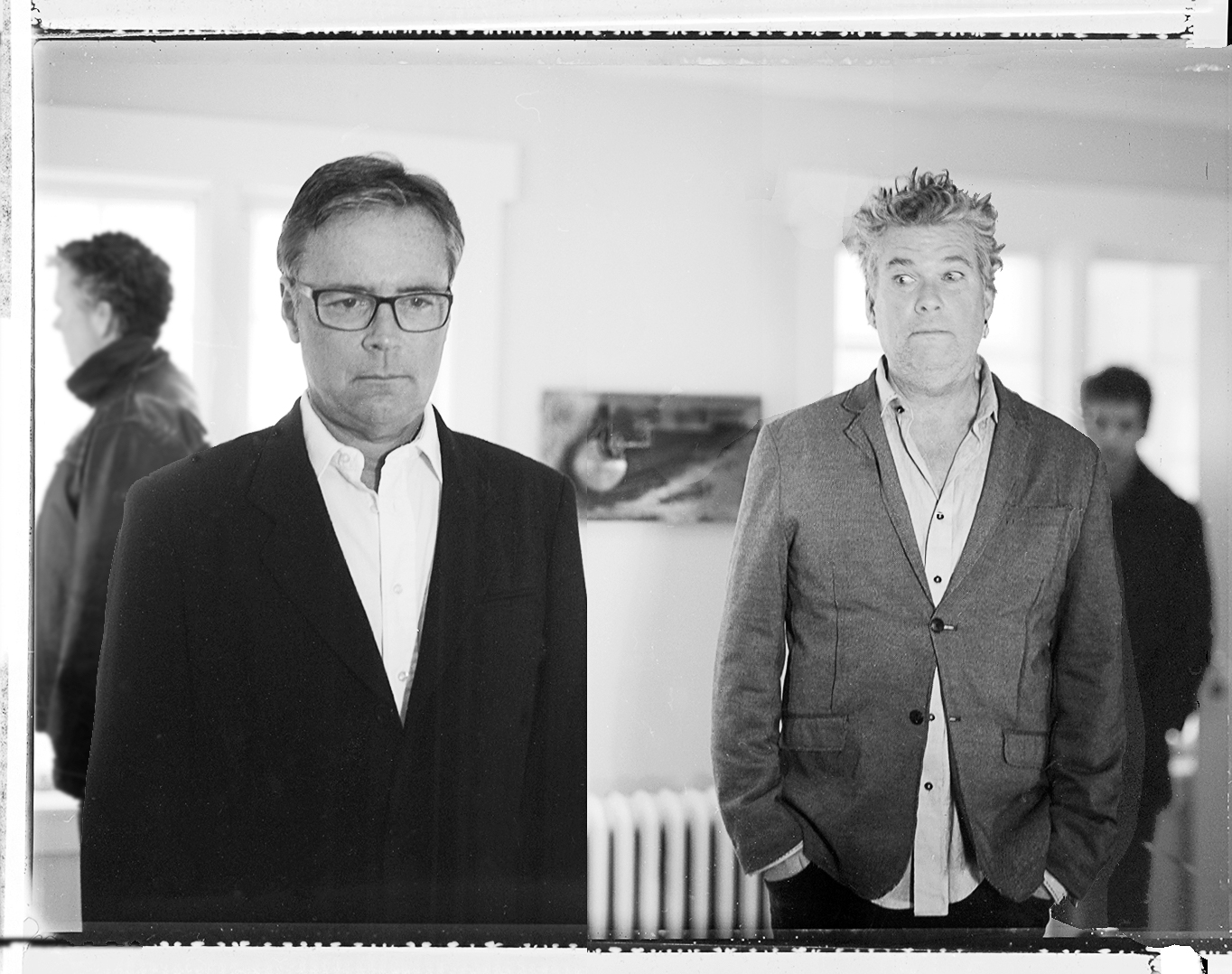
the_henrys_2015For some years now the Henrys have been one of my stock answers to the question, “What’s your favourite band?” Since they’re celebrating their 21st anniversary with this week’s release of their first album since 2009, it’s probably time I wrote something about them.

I say “them”, but the Henrys are really Don Rooke, a resourceful guitarist and songwriter, with a floating group of like-minded musicians gathered at his base in Toronto. Rooke will be known to some people for his contributions to the regrettably slender discography of the elusive singer-songwriter Mary Margaret O’Hara, an authentic genius whose sole full-length album, Miss America, and two London concerts around 25 years ago are still vivid in the memory.

MMO’H appears as a guest on earlier Henrys records — Puerto Angel (1994), Chasing Grace (1996), Desert Cure (1997), Joyous Porous (2002), and Is This Tomorrow (2009) — and if you click on http://www.thehenrys.ca/listen.html and scroll down down to “God Moves on the Water”, you’ll hear one of their finest moments together. But she’s not on the new one. The lead singing on Quiet Industry is done by Gregory Hoskins, with John Sheard on pump and electric organ, Hugh Marsh on violin, Jonathan Goldsmith on “muted piano”, Andrew Downing on bass, Davide DiRenzo on drums, and Tara Dunphy on backing vocals.

The music of the Henrys has what always seems to me to be a typically Canadian quality: like that of the Band and the Cowboy Junkies, or the musicians who used to travel with the McGarrigle sisters, it sounds as though it’s being played in your front room by musicians who wouldn’t be put out if you asked them to swap instruments. I don’t know a better way of describing the sense of ease that lubricates their creativity.

The tone may be set by the timbres of a slide guitar, a pump organ and drums that sound like they were made from a set of well-travelled cardboard suitcases from the 1930s, but the music isn’t revivalist or retrospective in any way. It’s devised and directed by a person who seems to have spent a lifetime cultivating good listening habits and distilling them into a personal vision of the way things might sound.

So while the noise the Henrys make is full of creaks and sighs, these are an indication of carefully chosen textures rather than of an attempt to counterfeit the patina of age. Rooke himself, an unassuming virtuoso on various kinds of guitars, including a Weissenborn koa-wood model, has a better command of acoustic sonorities than just about any guitarist I can think of, along with an absolute disinclination to show off. About a dozen years ago he made an album of instrumental pieces under his own name called Atlas Travel, also highly recommended.

Rooke has excellent taste in singers (Becca Stevens was also featured on Is This Tomorrow), and Hoskins, a veteran of the Canadian folk-rock scene, has a sidelong, semi-private delivery that suits the songs almost as well as O’Hara’s more gestural approach once did. And these are really beautiful songs. Once you get past the exquisitely detailed settings, like the dancing organ on “Was Is” and the shadowy doubled vocal on “Burn the Boat”, there are many things to admire in the finely turned melodies and the thoughtful lyrics, such as this payoff verse from “Dangers of Travel”, a great edge-of-breakup song: “The light is pretty now / But soon it will fade / So put the bags down / Please put the bags down / Your dinner’s been made.”

Here’s a film they made to go with the album’s opening track, “The Weaker One”. Here’s a clip of “When That Far Shore Disappears”, a song that illustrates some of their subtler virtues. And as a bonus, here they are in an earlier incarnation, playing a piece called “VF61” from Joyous Porous on an Ontario TV station in 2002, with David Pilch on bass and Michael White on trumpet.

There’s a special strength, intimacy and sense of proportion to this music, along with great inventiveness. Quiet Industry may be the product of the Henrys’ 21st year, but it’s a great place to start. And they’re still one of the answers to that question.

* Pictured above, the Henrys as heard on their new album: (left to right) John Sheard, Don Rooke, Gregory Hoskins and Andrew Downing.

The Weather Station

The Weather StationIt was the liquid sound of a song called “Way It Is, Way It Could Be” that snagged my attention. The track was featured on one of those monthly-magazine sampler CDs (Uncut, in this case) that force you to take great care not to rip the cover as you remove it, and then leave you with a blob of sticky stuff to dispose of.

This time the stuff that really stuck was the track in question, by something calling itself the Weather Station. This turned out to be a 30-year-old Canadian woman called Tamara Lindeman, a singer and songwriter (and actress) based in Toronto: a new name to me. It seems that the Weather Station was a band once but is now just her, helped by friends such as Afie Jurvanen and Robbie Lackritz, who joined her to co-produce the new album, Loyalty, from which “Way It Is…” is taken.

The sound is nothing unusual, in a sense: light, folk-based, with fluid finger-picked guitars, gently supportive bass and pattering drum. It would be hard to carbon-date with any accuracy. As would Lindeman’s grave, thoughtful voice, which comes from the school of somewhere between Judy Collins and Sandy Denny.

But it had some strange quality about it that didn’t evaporate when the music stopped. I played it again a few more times, and then bought the album. I’m very glad I did. There’s more of the same, but from different trajectories, almost every song exuding a strong and individual musical personality, each one wrapped in a carefully shaped arrangement. A couple of tracks use small groups of woodwind and strings, very discreetly: just a wash of colour.

Those groups are actually just one player each (Jeremy Strachan and Anthony Wallace respectively), overdubbed. Lindeman plays guitars, keyboards, banjo and — for the final note of the album, in a lovely touch — vibraphone. Jurvanen adds drums, bass and more keyboards. And that’s all. The music never sounds cluttered, or even full. Economy of means is a significant factor here.

Then I started catching some of the words and decided that I wanted to know what she was singing about. Her voice, although pure and uninflected, sometimes obscures the lyrics. That may be intentional: like someone who talks softly to get you to lean in. What I could hear sounded interesting. When I started reading the words, my interest in the album redoubled — just like that.

She prints them on the sleeve as if they were prose, and they read like short stories. “You looked small in your coat, one hand up on the window, so long now you’d been lost in thought. No snow on the road — we’d been lucky and it looked like we would be well past Orleans”: that’s how “Way It is…” starts out. Here’s the opening of “Floodplain”: “All spring I was driving. Every river was flooded with rain, every stream a torrent. Over the highway bridges that run high across the plains, flooded. ‘Half the Maritimes,’ they say, ‘is running this way.'”

A little bit of Cormac McCarthy scene-setting, and then you come across something reminiscent of the plain-spoken intimacy of Raymond Carver’s poetry. From “I Mined”: “It started small — a simple thought. That there was something wrong. And if it’s caught I could set it right, or at least I could try.” From “At Full Height”, the song that ends with the single vibraphone chime: “If he don’t mean it, he won’t say it, and I can tell. If I don’t mean it, I can’t say it, and his face fell. But it’s so seldom I believe it — it takes a clear kind of day. Like air so cold it hurts to breathe it. (And the colour comes to my face.)”

That’s how she punctuates them. Punctuation in a song! Doesn’t happen often, even implicitly (I think of the first verses of “Thunder Road” and “The Boys of Summer”). And it works perfectly. These turn out to be short stories in prose-poem form, arranged with great scrupulousness and performed with imaginative sensitivity. At the moment I’m finding it hard to listen to anything else.

Marcus Belgrave 1936-2015

Marcus BelgraveIt would be hard to exaggerate the influence, or indeed the excellence, of the small bands Ray Charles led in the late 1950s and early 1960s. One by one, their members have disappeared. (Rather movingly, three of Charles’s great saxophone players, Hank Crawford, David “Fathead” Newman and Leroy “Hog” Cooper, died within days of each other in January 2009.) Now another one has gone: the trumpeter Marcus Belgrave, who joined Charles in 1958 and stayed five years, playing on the sessions that produced “What’d I Say” and the immortal Genius Sings the Blues album.

I particularly love Belgrave’s playing on Fathead, Newman’s first solo album and the initial release in Atlantic’s “Ray Charles Presents…” series, produced in 1959 by Ahmet Ertegun and Jerry Wexler, with Charles on piano and Crawford, playing baritone, rounding out the three-man front line. It’s a typical and wonderful fusion of R&B feeling with mainstream jazz and bebop structures: completely natural and unaffected music, totally satisfying on every level. The warm-toned trumpet solos are deftly formed and joyously lyrical: it’s no accident that Clifford Brown was one of Belgrave’s early idols.

An excellent obituary by Mark Stryker of the Detroit Free Press (read it here) tells us that Belgrave was born in Chester, Pennsylvania in 1936. His cousin Cecil Payne, one of the handful of the outstanding baritone saxophonists of the bop era, taught him how to play the new music, and he played with Brownie — who was six years older — in a student band in Delaware. It was with Ray Charles that he learned to play fewer notes.

Tired of life on the road, he turned down offers from Duke Ellington, Horace Silver and Charles Mingus and settled in Detroit in 1963. It is said that he played on a few Motown hits of the period, including “Dancing in the Street”, and he certainly became an important figure on the local jazz scene, both as a player and as a teacher. Those he mentored included the pianist Geri Allen (with whom he appeared on several albums) and the saxophonist Kenny Garrett. He was also a guest soloist with Was (Not Was), the great boho-disco band led by Don and David Was in Detroit in the 1980s (that’s him on their classic dancefloor 12-inch “Wheel Me Out”).

Marcus Belgrave was one of those figures who ensured the continuity of the jazz tradition, taking what he had learnt from his elders and passing it on to later generations. He was, by all accounts, much loved in his community: when a thief took his custom-made copper-belled horn from his car earlier this year, the pawn shop in which it was spotted waived the $350 that it would normally have cost him to reclaim it, given that they had not been aware they were acquiring stolen property.

One way to remember him would be to enjoy his contributions to the solo sequences on “Hard Times” and “Weird Beard”, a couple of tracks from Fathead. Just beautiful, I hope you’ll agree.

Taking on the British Invasion

Bobby Comstock

Fifty years ago this month, Bobby Comstock’s version of Bo Diddley’s “I’m a Man” was trying and failing to make it into the US and UK charts. It’s interesting to me not just as a favourite record from an almost freakishly fruitful year but as an example of one response to the British Invasion: an American artist copying a British approach to an American idiom.

Born in 1941 in Ithaca, New York, Bobby Comstock is a singer and guitarist who nibbled at the fringe of the Top 50 in 1958 with a lightly rocked-up treatment of “Tennessee Waltz”. It was released on the Triumph label, started by Herb Abramson after his departure from Atlantic Records, and since the 17-year-old Comstock’s early patrons also included Alan Freed and Dick Clark, it’s a little surprising that he didn’t do better. Five years later, having fallen in with the successful publisher Wes Farrell and the songwriting/production team of Bob Feldman, Jerry Goldstein and Richie Gottehrer, he released “Let’s Stomp” on the Lawn label. Despite climbing no higher than No 57, it became a party favourite and was widely covered over the years. Thanks to his association with Feldman, Goldstein and Gottehrer, he also played guitar on the Angels’ wonderful “My Boyfriend’s Back”, a girl-group classic.

“I’m a Man” is something very different and vastly superior: a raw blue-eyed R&B record with a crunching guitar/bass/drum riff, sinister organ, and lashings of echo on Comstock’s very impressive vocal. I don’t know who plays the eight bars of jagged guitar solo — probably Bobby himself — but it’s as impressive as anything Jimmy Page produced in his days as a teenaged session man over on the other side of the Atlantic.

Comstock grew up in the middle of the doo-wop era, and his earliest heroes included Chuck Berry, but I’d guess that “I’m a Man” sounds the way it does because in the summer of 1964 he and his band, the Counts, had supported the Rolling Stones on a handful of East Coast dates, finishing at Carnegie Hall. As he watched the chart-storming English longhairs delivering their interpretations of hard-core R&B songs to audiences in Pittsburgh, Pennsylania and Harrisburg, West Virginia as well as on Seventh Avenue in New York City, he must have felt he’d been given a licence to try it himself.

The single came out on Ascot Records in the US and United Artists in the UK; the copy I bought back then is pictured above. I had a Saturday job in a record shop at the time, and I guess that’s how I first heard it, while checking out the new releases. It certainly didn’t get much, if any, radio play.

Comstock had no more hits but made a good living for the rest of his career as a performer and backing musician — to artists including Chuck Berry and Bo Diddley — on the rock and roll revival shows promoted by Dick Clark and Richard Nader. He’s now living in retirement in Southern California, leaving the rest of us to carry on listening to “I’m a Man”, a highlight of his 24th year.

Gary Peacock: The place of the bass

Gary PeacockRight from the earliest days of jazz, its musicians have humanised the instruments on which they play, particularly those instruments whose identities were formed in the European classical tradition. If the phenomenon is most obvious with members of the brass and reed families, it is no less true of instruments that do not depend on breath to generate their sound. And next to Charles Mingus and Charlie Haden, the musician who most clearly imbues the double bass with the inflections of the human voice is Gary Peacock, who celebrates his 80th birthday tomorrow.

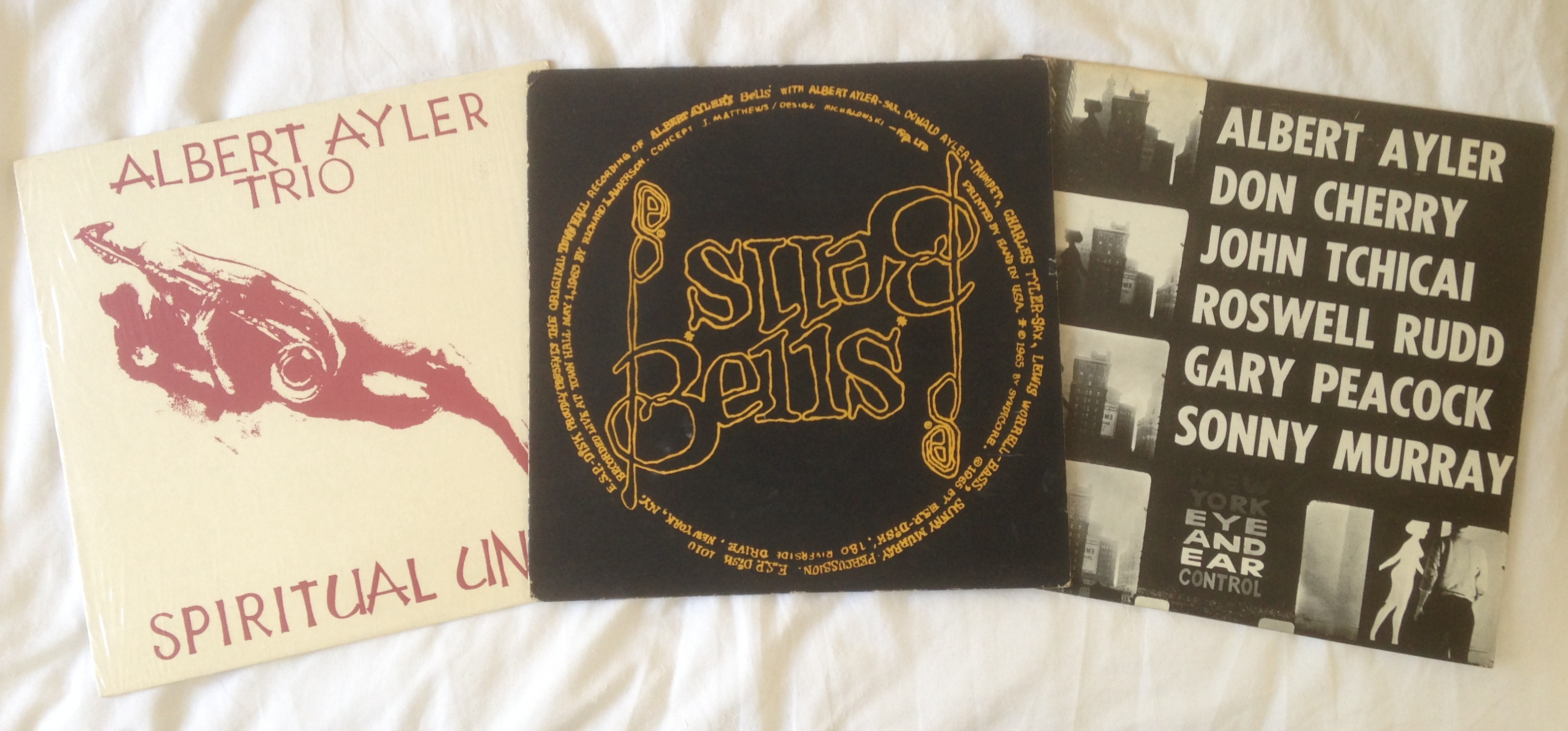
What is impossible to miss in Peacock’s playing is a profound emotional weight, expressed with a lightness of touch, a lithe, sinewy phrasing and a lyricism reaching far beyond that term’s usual connotations. He has always seemed to be as comfortable playing free jazz with Albert Ayler and Sunny Murray (on the world-changing Spiritual Unity in 1964) as finding new angles on the show tunes and jazz classics he plays with Keith Jarrett and Jack DeJohnette, his fellow members of the long-lived Standards Trio.

He was born in Burley, Idaho on May 12, 1935, and came late to the bass, after studying piano and percussion at music college in Los Angeles. It was with a US Army band in Germany that he first picked it up, aged 21, and — according to a recent interview — “just sort of figured it out” for himself, a remark that gives no hint of the great sophistication of his playing but might explain its prevailing air of naturalness.

In 1962, while still based in Los Angeles, he made his recording debut with the quartet of the trumpeter Don Ellis and the trio of the pianist Clare Fischer. The first time I heard his work was on Tony Williams’s great Life Time album in 1964, where he, Richard Davis and Ron Carter were the three bassists, and he suffered not at all from the comparison. He was on Williams’s equally brilliant follow-up, Spring, alongside Wayne Shorter and Sam Rivers. Then came Spiritual Unity and the quartet Ayler co-led with Don Cherry. With Bill Evans on Trio 64, Peacock confirmed his standing as the natural heir to the late Scott LaFaro, whose dexterity and imagination he shared, and worked for the first time with Paul Motian.

The piano trio has always been the context in which he is most likely to be found, whether with Paul Bley, Masabumi Kikuchi or Marilyn Crispell, the line-up most often completed by Motian until the drummer’s death in 2011. Now This, the new album released to coincide with Peacock’s birthday, is also by a trio, featuring the pianist Marc Copland, a long-time associate, and the drummer Joey Baron.

Recorded in Oslo in the summer of 2014, it includes seven of Peacock’s compositions, some of them familiar from earlier versions. The striking “Moor”, for example, was first recorded with Bley and Motian in 1968, followed two years later by a reading with Kikuchi and the drummer Hiroshi Murakami on an album called Eastward, recorded for CBS/Sony in Tokyo. The restless “Requiem” made its debut in 1971 at a further session in Tokyo with Kikuchi and Murakami, released on an album titled Voices; later it was featured on other albums, including Crispell’s Amaryllis, and with other instrumentations.

I mention those two Japanese albums because they are relatively obscure but outstanding, particularly Eastward. So is a third album recorded during the several years that Peacock spent in Japan: Silver World, in which the trio were joined by the shakuhachi virtuoso Hozan Yamamoto; here’s part of the lovely title track, and here’s a piece called “Stone Garden of Ryoan Temple”.

Perhaps it’s too obvious to suggest that Peacock’s study of Zen philosophy exerted a significant influence on his music, which exudes a wonderful sense of calmness and balance even at its most complex and impassioned. Going back and listening to his pre-Japan records, however, you’d have to say that it was there from the beginning: a defining characteristic of a remarkable musician who still, on the evidence of Now This, has much to say.

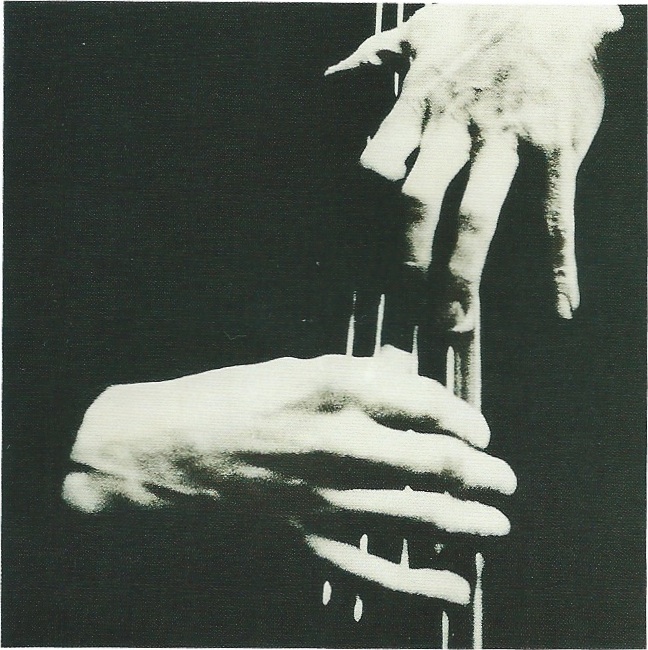
* The photograph of Gary Peacock’s hands is from the sleeve of Eastward, recorded and and first released in 1970. Now This is released tomorrow by ECM Records.