
L to R: Veryan Weston, Alison Blunt, Hannah Marshall and Trevor Watts
No musicians get more of my admiration than those working in the field of jazz-derived free improvisation. An idiom under development for more than 50 years, it has never offered public acclaim or material reward to its practitioners, despite requiring levels of creative imagination and technical ability far beyond the norm in other genres. For the attentive and sympathetic listener, nothing offers quite the same degree of reward as the experience of hearing a group of musicians — or even a solo improviser — imagining the music from scratch, relying on their inner resources from start to finish and (in the case of ensembles) on an extreme sensitivity to the other individuals and to the group dynamic.
It’s a music best heard live, when the listener is able to witness that dynamic at work and watch the musicians exploring the extended instrumental vocabularies developed during the music’s long period of evolution. Given the sounds and skills involved, too, visual evidence sometimes helps in sorting out who is playing what. And so, no less than a Bob Dylan studio album, a recording of free improvisation is a snapshot of a moment.
Sometimes, however, the snapshot can carry a lasting meaning that makes it more than just a souvenir. In the second section of this piece I’ll deal with an album that has carried such significance for half a century. But this part is about a new recording from a group of experienced improvisers who have been playing together for a while, and which seems to me to convey a value beyond the hour it took to play it.
The saxophonist Trevor Watts was one of the originators of British (and European) free music, as a founder member of the Spontaneous Music Ensemble in 1966 with his former RAF colleague John Stevens. Trevor’s passionate alto playing was heard on the SME’s first album, Challenge, recorded soon after their formation, and later in his own groups, including Amalgam and Moiré Music. Now approaching his 79th birthday, Trevor retains the combination of finely tuned energy and emotional generous energy that has always distinguished his work.
His latest venture is a co-operative quartet with the violinist Alison Blunt, the cellist Hannah Marshall and his long-time musical partner, the pianist Veryan Weston. Last year Watts and Weston released a fine duo album called Dialogues for Ornette (a reminder that 50 years earlier Challenge contained a track titled “2B Ornette”). The new quartet’s debut is titled Dialogues with Strings, but it would be a mistake to assume the existence of any kind of hierarchy, or even the feeling of a pair of duos.
This is densely woven music, sometimes hectic, sometimes legato, but motivated, whatever the velocity or trajectory, by a sense of urgency from four musicians playing together as unit for the first time. It isn’t the heavy-metal variety of free jazz; there are passages of wonderful delicacy, but the overall impression throughout the album’s three pieces, recorded last spring at Cafe Oto, is one of a powerful momentum that continues to surge even through the occasional silences. It’s full of the kind of magic that the best free improvisers can conjure when they work together in the right environment.
 Free improvisation is a complex business. Is the idea to create something from nothing that nevertheless sounds as though it was pre-composed? Surely not, although that can be an occasional effect. The reissue of Karyōbin, the SME’s second album, taped in February 1968, shows the music in an embryonic state, when individuals were still mixing and matching their discoveries and feeling their way towards a true group music.
Recorded at the behest of Island Records’ Chris Blackwell for a short-lived label called Hexagram, produced by the engineer Eddie Kramer in a single evening using free after-hours time at Olympic Studios in Barnes, this Watts-less version of the band features — from left in the photo above — Dave Holland (bass), John Stevens (drums), Evan Parker (soprano saxophone), Kenny Wheeler (trumpet and flugelhorn), and Derek Bailey (guitar). The album captures the sound of the musicians as they were heard in many different combinations at the Little Theatre Club in Covent Garden, a crucible of the new jazz.
The individual musicians are at various angles in their relationship to this music, but their personal voices are unmistakeable: Wheeler’s liquid squiggles, Bailey’s surreptitious scrabbling, Parker’s terse flutter and stutter, Stevens (on his skeletal Launcher kit, adopted to bring his playing down to the prevailing volume level of this unamplified music) alternating dry tapping with the pings of cymbals and small gongs. Each of these adventurous approaches would eventually be widely imitated as other musicians joined the cause.
Remastered from the original master tapes, now in Parker’s possession, and cleaned up and rebalanced by Adam Skeaping, this new reissue of the only LP to appear on the Hexagram label is a vastly better proposition than earlier efforts (a Japanese reissue, for instance, was dubbed from a vinyl album), and is matched by packaging which retains the original artwork but adds new essays and a selection of previously unseen black and white photographs taken with Parker’s camera during the session.
It’s a cornerstone of this music and has repaid repeated listening throughout its long life. If you don’t know what happened after Karyōbin, and want to find out, get hold of the 2014 reissue of the SME’s third album, Oliv, recorded in 1969 for Giorgio Gomelsky’s Marmalade label, coupled with an unissued session from the previous year featuring an extended piece called Familie. Both feature Watts back in the fold alongside various other additions, including the bassists Johnny Dyani and Jeff Clyne and the singers Maggie Nichols, Pepi Lemer and Norma Winstone.
It’s all the stuff of history. And, thanks to Watts and others, history is still being made.
* Dialogues with Strings is on the FSR label. The photograph of the quartet is from the album’s jacket, and was taken by Mark French. The reissues of Karyōbin and Oliv & Familie are on Emanem. The photograph of the SME is from the sleeve of the former and was taken by Jak Kilby. Evan Parker and Dave Holland, the only survivors of the Karyōbin quintet, will be playing at the Vortex in Dalston on Friday March 2, in a benefit for the club (www.vortexjazz.co.uk).

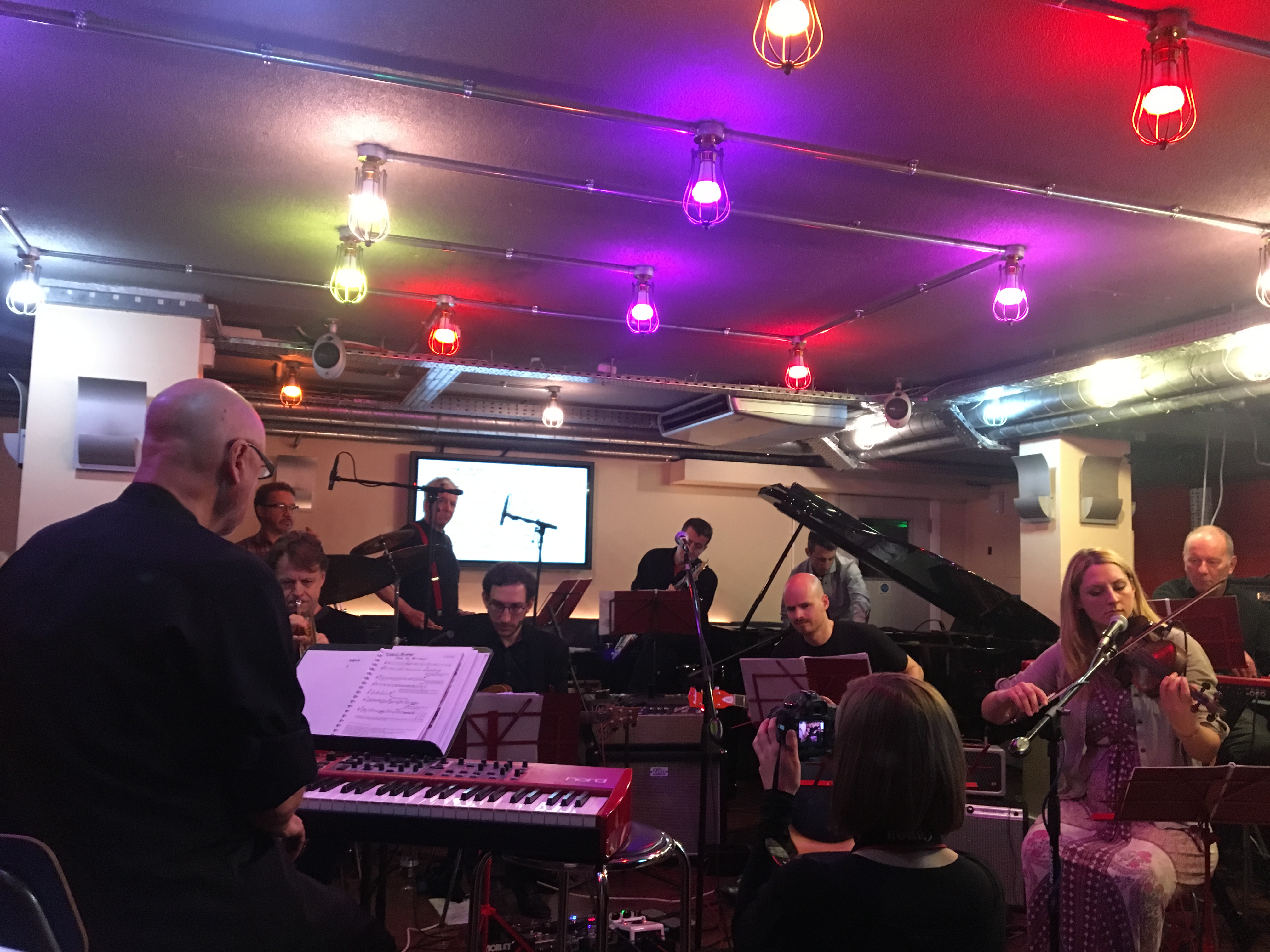
 Darcy James Argue’s Real Enemies is a piece for our time, unfortunately. The Canadian composer’s 90-minute suite for his Secret Society big band is a reflection of the creeping paranoia that began in the post-war years of Joe McCarthy, J. Edgar Hoover and Area 51, and is once again in full spate.
 Petula Clark turns 85 today. When I saw that information in the Birthdays column of the Guardian this morning, I thought immediately of an album called …in other words, recorded in 1962. That record, not her No 1 hit with “Downtown” two years later, is the reason I think fondly of her.
 If the EFG London Jazz Festival were ever required to stand up in a court of law and produce a convincing justification for its existence, it could point to its habit of bringing Paolo Conte to the South Bank on a regular basis. Last night the 80-year-old former lawyer from Asti was greeted with applause so warm and prolonged that it practically stopped the show on several occasions and was brought to an end only when the singer drew a forefinger across his throat to indicate that there was no more to give.
 Lou Gare held his tenor saxophone aslant, like Lester Young, whose light-fingered articulation and disdain for the obvious he shared. Gare was born in Rugby but it was in Plymouth in the early 1960s that he first played with the band of the young Mike Westbrook, alongside the even younger John Surman. In London in 1965 he became a founder member, with Eddie Prévost, Cornelius Cardew and Keith Rowe, of AMM, one of the seminal groups of the first generation of British free improvisers. Lou was on their debut album, AMMMusic, recorded at Sound Techniques in Chelsea and released by Elektra Records in 1966. Six years later, with the group reduced to a Gare-Prévost duo, they performed at Harvey Matusow’s International Carnival of Experimental Sound event in London, their set released initially in part on an Incus EP as AMM at the Roundhouse and then in full on a Matchless CD under the same title.
 If you’re ever at a loose end in Berlin on a Monday night, my advice would be to head for A-Trane, the jazz club in Charlottenburg, where Andreas Schmidt, a pianist, composer and teacher at the city’s Jazz Institut, holds a weekly free-admission session featuring a changing cast of friends and students.
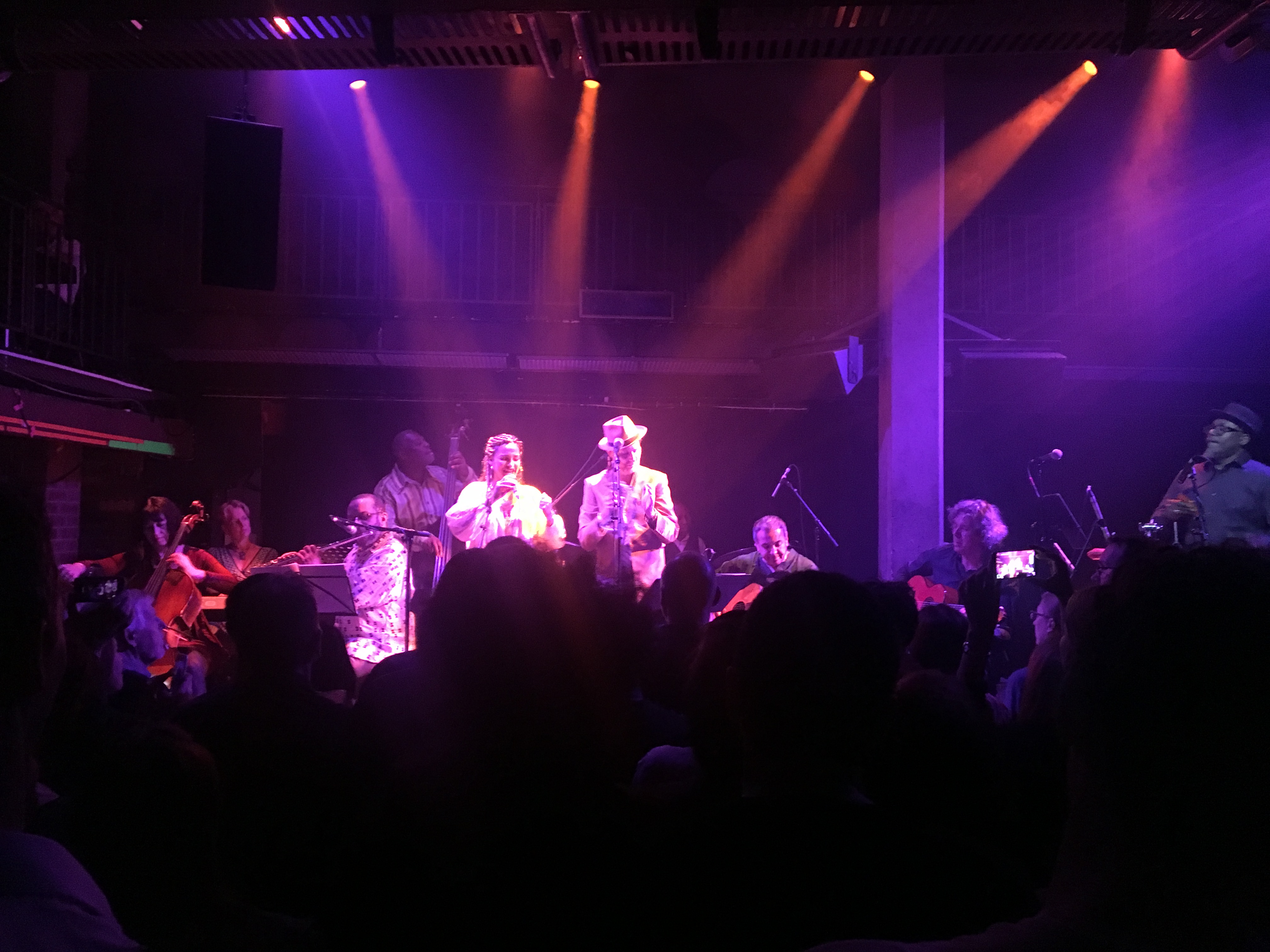 If your name isn’t Van Morrison, it takes some kind of courage to tackle Astral Weeks, one of the sacred texts of the late ’60s. No one has ever really explained how the singer, his American musicians and Larry Fallon, the arranger and conductor, and his producer, Lewis Merenstein, came up with the unique blend of idioms that make the album so distinctive. Jazz, folk, rock and blues are all in there, but so thoroughly metabolised that the eight songs create, for the length of a long-playing record, an idiom of their own. In his lyrics, too, Morrison plunged head-on into a new world of poetic spirituality.
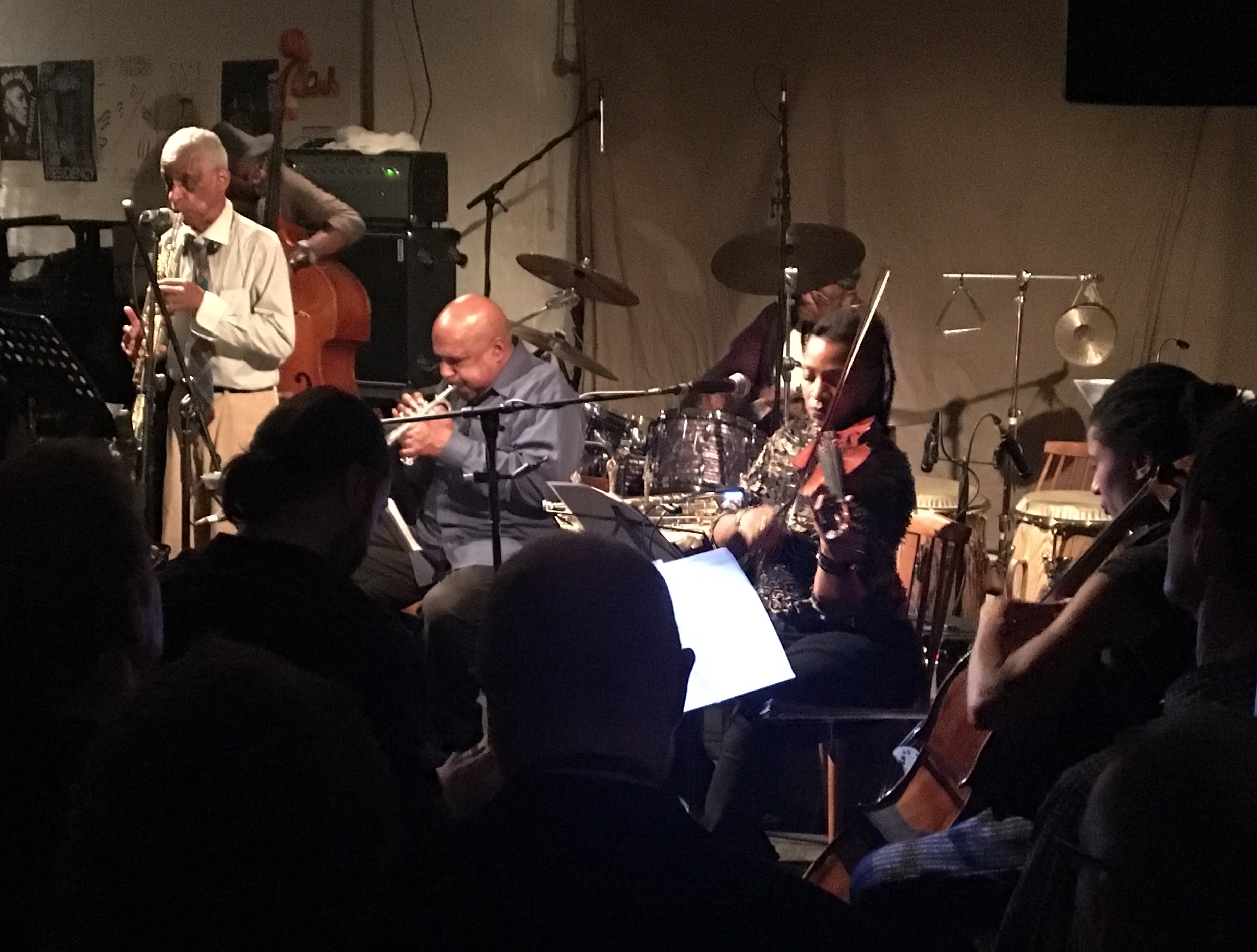 Amid the strangest weather in 30 years, with sand from the Sahara and dust from Iberian wildfires turning the air in London dark red at lunchtime on the hottest October 16th since records were first kept, there was another surprise awaiting the audience for the second of the Art Ensemble of Chicago’s three sold-out nights at Cafe Oto this week.

