Skip to content

Posts tagged ‘Chris Potter’

Raising John Brown

The only time I can remember seeing the 19th century abolitionist John Brown mentioned in a jazz context was in a piece called “The Day John Brown Was Hanged”, written by George Russell for the altoist Hal McKusick’s 1956 album Jazz Workshop. In that intricate seven-minute composition for quartet, Russell interpolated lines from the melody of “John Brown’s Body Lies a-Mouldering in His Grave”, the marching song sung by Union soldiers during the American Civil War, a conflict whose prefatory skirmishes included a Brown-led assault on a federal armoury at Harper’s Ferry, Virginia, in 1859.

A white man, and an evangelical Christian, Brown believed in the Declaration of Independence’s words about all men being created equal, and came to the conclusion that violence offered the only way to overthrow slavery and everything it represented. He had hidden escaped slaves and helped them along the Underground Railroad to freedom, and already led anti-slavery forces in several conflicts. The attack on the armoury, intended to capture weapons with which slaves could be armed for an insurrection, involved an elaborate plan devised with the support of Harriet Tubman (although not that of Frederick Douglass, who disapproved of the tactics). A bloody failure, it led to Brown’s capture and trial, after which he became the first man to be executed in the United States on a charge of treason.

He was hanged on the morning of December 2, 1859, in a small field in Charles Town, Virginia. Onlookers included the future Confederate generals Robert E. Lee and Stonewall Jackson, John Wilkes Booth, the future assassin of Abraham Lincoln, and Walt Whitman, who mentioned it in his poem Year of the Meteors. In a speech in 1881, Frederick Douglass — an escaped slave become statesman and orator — said that whereas his own abolitionist zeal was “bounded by time, (Brown’s) stretched away to the boundless shores of eternity. I could live for the slave, but he could die for him.”

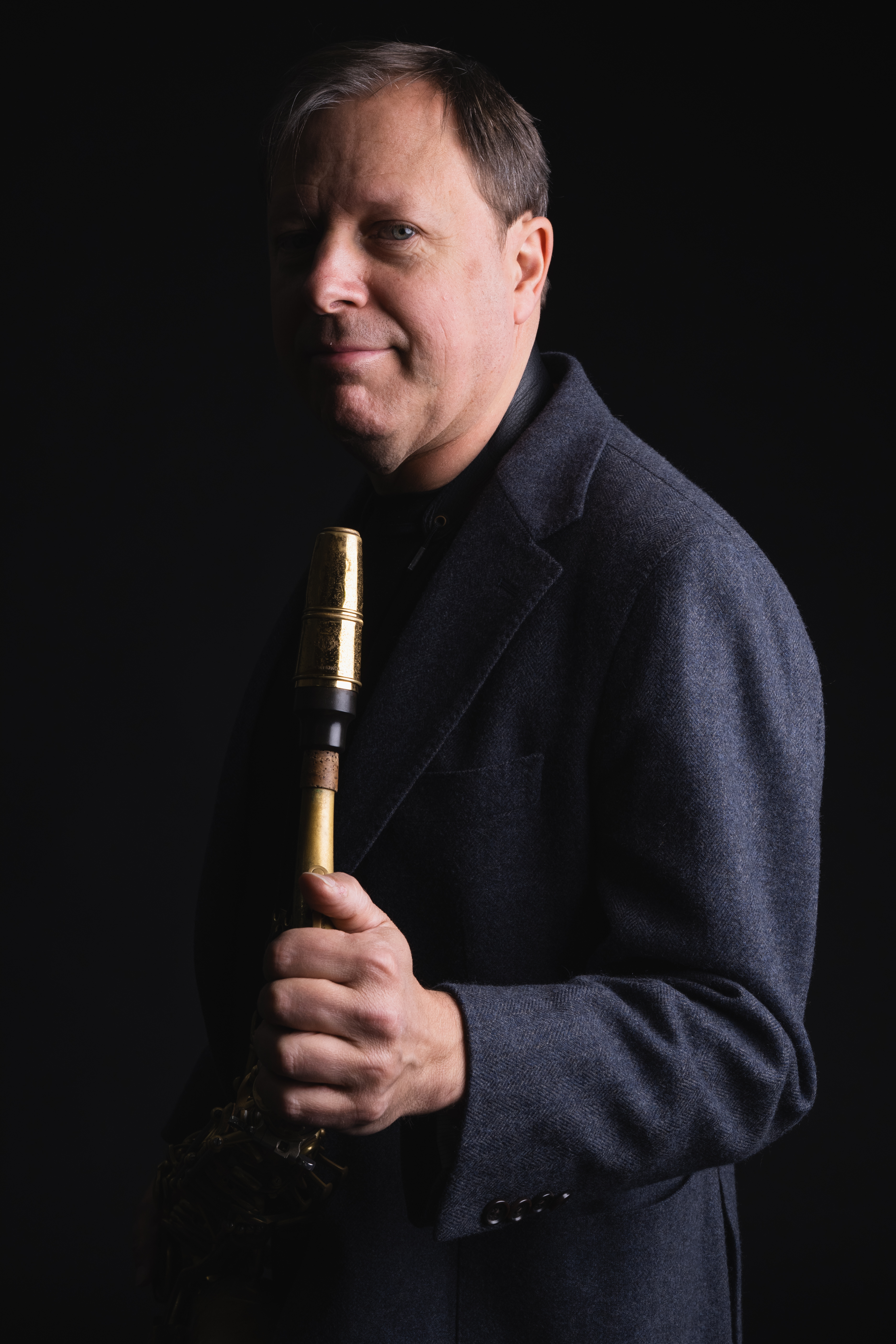
Now comes the distinguished American tenor saxophonist and composer Chris Potter with an album titled Alive With Ghosts Today, a suite of pieces for septet inspired by the continuing resonance of Brown’s story. There’s nothing programmatic about it — no quotes from the Battle Hymn of the Republic (except in the use of “Mine Eyes” as the title of one piece) — but it’s a work that seems somehow marinated in American history, from then to now, in the way jazz somehow always is, being perhaps that turblent story’s most remarkable single outgrowth.

I have a special fondness for medium-sized groups, from seven to 10 pieces, led by people such as Charles Mingus, Slide Hampton, John Surman, Jef Gilson, George Coleman, Keith Tippett, Steve Lehmann and Vijay Iyer. In the right hands, they combine power with flexibility and a range of tone colour. Potter says he was looking for the sound of a “slightly unruly village band”, and besides himself the group is completed by Rane Moore on clarinet, Zekkereya El-Magharbel on trombone, Bill Frisell on guitar, Sara Caswell on violin, Burniss Travis on bass and Nate Smith on drums. It’s an unusual line-up, and a perfect one for his purposes, which was to have “Copland, blues and gospel and African rhythm all living in the same space.”

The eight tracks are carefully wrought, making fine use of the individual timbres, and inevitably of Frisell’s ability to use his guitar and pedals as an orchestral resource, colouring the backgrounds with purpose and restraint. In fact the album that Alive With Ghosts Today most reminds me of is Frisell’s Blues Dream, his classic septet album from 2001, and praise doesn’t come much higher than that. A sense of conciseness in endemic to Potter’s writing, but also a sense of space; density is counterbalanced by ease of delivery. The mood ranges from sombre to playful. sometimes within the same piece. On “Mine Eyes”, Potter produces his finest solo over lively backgrounds before an interlude for trombone, guitar and drums leads to a hymn-like ensemble passage prefacing a return to the nimble theme.

There’s nothing hectoring about Potter’s album, despite its origins. The musical atmosphere is warm and companionable, with just enough surprise to keep you on your toes. But thinking about the source of his inspiration, the parallels with our own world are unavoidable. Acknowledging the complexity of the story, Potter concludes: “I have no easy answers, I only feel that ours is a beautiful, heartbreaking country, where we are still living with these ghosts.” This music, rather than firework displays, military flypasts or cage-fighting contests on the White House lawn, might represent a better way to commemorate America’s 250th birthday.

* Chris Potter’s Alive With Ghosts Today is out now on the Edition label. The photograph of Potter is by Dave Stapleton. Bandscamp link: https://chrispotterjazz.bandcamp.com/album/alive-with-ghosts-today

Remembering Laura Nyro

Laura Nyro 1Laura Nyro had missed her intended flight from New York to London, forcing her to take a plane that arrived at six o’clock in the morning. Now here she was, barely 12 hours later, warming up before recording a performance in front of an invited audience in a small auditorium at the BBC’s Television Centre, for a series called In Concert.

This was in May 1971, three months after she had made her British debut at the Royal Festival Hall, giving a solo concert in which the first set was performed by her then boyfriend, Jackson Browne, who was also appearing in the UK for the first time. It had been a wonderful recital: she started with “Stoney End”, included “Timer”, “Been on a Train”, “Emmie”, “Map to the Treasure” and “Christmas in My Soul”, read a poem called “Coal Truck”, and finished with a lovely medley of “He’s Sure the Boy I Love” and “Spanish Harlem”. Such range, such composure, such deep connection with her audience seemed exceptional in one who was still only 23 years old.

She readied herself for the BBC’s cameras in a voluptuously flowing mauve and lilac dress with lace half-sleeves: a typically dramatic costume. As she sat at the piano, I was struck by the way that she could turn her head to look like at one moment like a exquisitely soulful contessa from a Velasquez painting and at the next like a lusty young maid from one of Chaucer’s tales.

As well as her manager of the time, Richard Chiaro, there was a new boyfriend along for the ride. “You’ve got to sit somewhere I can see you,” she told him. But a few minutes later she was scolding him for singing along while she ran through some of her numbers.

In such an intimate setting, the evening was unforgettable: opening with a medley in which “Ain’t Nothing Like the Real Thing” sandwiched “Natural Woman”, she sang “Buy and Sell”, “Stoned Soul Picnic”, the then-unrecorded “I Am the Blues”, “Christmas in My Soul”, a medley of “Timer”, “Ooo Child” and “Up on the Roof”, and “Mother Earth”; she delivered “Stoney End” as an encore. It was transmitted on BBC2, but in the intervening years it seems to have vanished. Long ago I asked Alan Yentob, a senior arts person at the corporation, to see if he could unearth it, but there was no trace.

It was 23 years later, in November 1994, that Laura made her final British appearance, accompanied by her three backing singers in the ideal 19th century Gothic environment of the Union Chapel in Islington. The set finished with her lovely version of “Walk on By”. And then she was gone, to be carried away by ovarian cancer in 1997 at the age of 49.

She remains a powerful and enduring presence among those who fell under the spell of her extraordinary talent. One of those fans is Billy Childs, an American jazz pianist — known for his work with Freddie Hubbard and Dianne Reeves, among others — who has just released an album called Map to the Treasure, on Sony’s Masterworks label, in which his arrangements of 10 Nyro songs are delivered by different singers.

It’s a risky undertaking. Nyro’s first success came with other people’s versions of her songs (the Fifth Dimension’s “Stoned Soul Picnic” and “Wedding Bell Blues”, Blood Sweat & Tears’ “And When I Die”, Barbra Streisand’s “Stoney End”, Three Dog Night’s “Eli’s Coming”), but it didn’t take long for her listeners to realise that the composer’s own versions far outstripped those of her interpreters. Nyro’s full-strength personality suffused her writing, as became apparent in her two masterpiece albums, Eli and the Thirteenth Confession (1968) and New York Tendaberry (1969), and their successors. Only she could properly explore the duality of the Madonna/streetchild persona (which she encouraged through her choice of jacket photos for those two albums). So to attempt cover versions at this stage of the game might seem otiose. Who, after all, can add anything new to such cherished pieces as “The Confession” and “Upstairs by a Chinese Lamp”?

Amazingly, Childs manages it — not by attempting to match or emulate the raw, romantic power of the originals, but by looking for facets of the songs to which he can apply his considerable resources, and by recruiting a group of singers who do not set out to sound like Nyro but bring their own voices, along with an unmistakeable admiration for the source of the material.

A string quartet appears on every track, with guests soloists featured alongside the singers: Wayne Shorter’s soprano saxophone with Esperanza Spalding on “Upstairs by a Chinese Lamp”, Chris Botti’s trumpet with Shawn Colvin on “Save the Country”, Steve Wilson’s alto saxophone with Susan Tedeschi on “Gibsom Street”, and Jerry Douglas’s dobro with Alison Krauss on “And When I Die”. Childs is the pianist throughout, supported by the impeccable rhythm team of Scott Colley (double bass) and Brian Blade (drums).

Childs jumps in straight at the deep end by opening the album with “New York Tendaberry”, one of Nyro’s most personal songs, delivered by the operatic soprano Renée Fleming and the cellist Yo Yo Ma. So right away you know we’re not in for a set of mere recreations. The beauty of Fleming’s tone and the sensitive formality of her phrasing takes the piece away from Nyro’s uptown-soul sensibility and into a different dimension.

That’s one of the highlights. Another comes straight afterwards, with Becca Stevens’s equally poised but comparatively uncorseted tilt at “The Confession”. At the centre of the whole thing, in structural and emotional terms, is Rickie Lee Jones: out of all the singers in the project, she is the one who most resembles Nyro in style and delivery (and, as she has often said, is most influenced by her), making her perfectly suited to bring out the tragedy of “Been on a Train”, helped by a most imaginative arrangement for the string quartet. Her presence makes me wish Childs had also called upon Mary Margaret O’Hara, the other singer I think of as an heir to Nyro’s legacy.

But once you get the measure of what Childs is up to, there isn’t a bad track here. What he gives us is a beautifully conceived and meticulously executed song cycle, a fitting tribute to one of the most original and gifted artists of our time. Yes, it’s a carefully polished thing, far more polished than Nyro’s own records ever were, but that polish is no superficial gloss: it’s the patina of a profound respect. And beneath it beats the heart of an extraordinary woman.

Laura Nyro BBC ticket

* The photograph of Laura Nyro comes from the cover of her 1984 album Mother’s Spiritual and was taken by Irene Young. The ticket for the 1971 BBC TV concert is mine. Anyone who loves Nyro’s music and hasn’t already read Michele Kort’s excellent biography — Soul Picnic: The Music and Passion of Laura Nyro, published by Thomas Dunne Books in the US in 2002 — should do so. And here, for free, is a link to an interesting piece by an academic, Patricia S. Rudden, from a 2006 edition of the newsletter of the Emily Dickinson Society (you’ll need to scroll down to the third page). Clips of Nyro on YouTube tend to get taken down quickly, but here’s a beauty: her performance of “Poverty Train” at the Monterey Pop Festival in 1967, giving the lie (despite a lame band of session men) to the myth that it was a total disaster. And here’s a real oddity from 1969.