Skip to content

Posts from the ‘Jazz’ Category

Jazz Abstraction

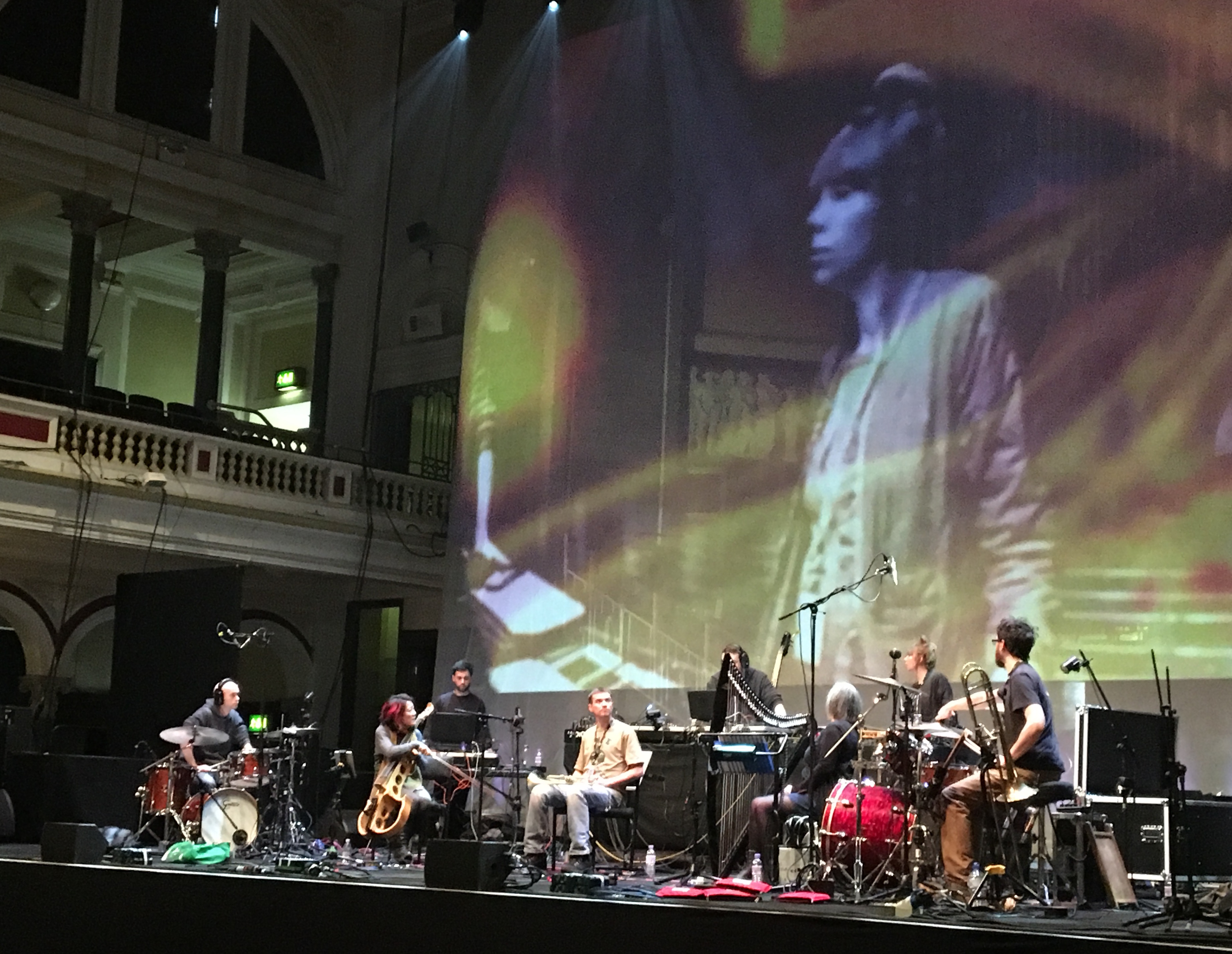
evan-parker-at-raAs I was on the way to see the blockbuster Abstract Expressionism show at the Royal Academy the other day, it was pointed out that jazz and AbEx seem to share a special relationship. I suppose that has something to do with synchronicity. Franz Kline and Mark Rothko were creating their revolutionary canvases at the same time as Charlie Parker and Thelonious Monk were making the music that changed everything, and the two developments seemed to share a sensibility. It’s easy to imagine Kline or Rothko playing “Ornithology” or “Well, You Needn’t” while working on a canvas in a Greenwich Village studio.

Easy, but probably misleading. I seem to remember reading that Jackson Pollock listened to Brahms while working on his drip paintings. Yet when Nesuhi Ertegun, the producer of Ornette Coleman’s Atlantic recordings, asked the collector and gallerist Sidney Janis for permission to reproduce Pollock’s “White Light” on the cover of Free Jazz in 1961, he was establishing a link that seemed to contain an emotional truth, if not a literal one. And Coleman’s double-quartet recording was by no means the only modern jazz album to make use of abstract expressionism on its cover: see the art of Martin Craig on the pianist Herbie Nichols’ two 10-inch LPs for Blue Note in 1955, The Prophetic Herbie Nichols Vols 1 & 2, for example.

At the RA, the breathtaking Pollock rooms are the strongest part of an exhibition that also gave me a greater appreciation of Robert Motherwell and Sam Francis. The much-vaunted assembly of giant Clifford Still canvases left me curiously unmoved, and the round space devoted to Rothko resembles an oligarch’s car-boot sale. The final couple of rooms are curiously incoherent. But of course it has to be seen.

The link with jazz was reaffirmed last night when, as one of the opening events in this year’s EFG London Jazz Festival, Evan Parker gave a short solo concert and a conversation with David Ryan under the heading “Jazz Abstraction”– a title adapted from that of a 1961 Atlantic album by Coleman, John Lewis, Gunther Schuller and others (and which, come to think of it, also has an abstract expressionist painting by John Jagel on the cover).

Parker’s improvisations were as astounding as ever in their combination of fine detail and hurtling momentum. Later he remarked, non-judgmentally, that one difference between the AbEx painter and the free improviser is that in the case of the music, the process is the work.

The conversation also produced a couple of self-deprecatory gems. If La Monte Young, while still playing sopranino saxophone, had discovered circular breathing as a means of tying together the repeated motifs with which he was working, the world might never have heard of Evan Parker (who then gave us a demonstration of practising the breathing technique). And had the artist Alfreda Benge not introduced Evan to John Stevens one night in 1966, he might, as he put it, “still have had my nose pressed against the window”. Or so he claimed.

What the painters and the jazz musicians of Parker’s generation and slightly earlier had in common was not just the reassurance of an environment in which they could afford to live cheaply but a powerful belief in the value of their work, whatever valuation the world initially placed upon it. It’s just a pity that today’s commercial market doesn’t view them in the same light.

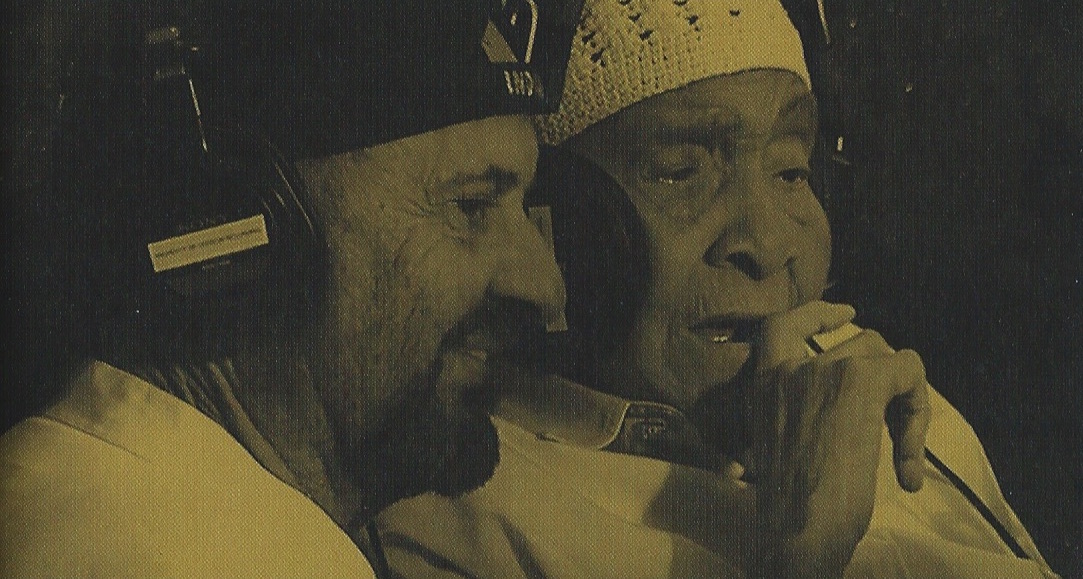
* Abstract Expressionism is on at the Royal Academy of Arts, Burlington House, Piccadilly, London W1 until January 2. Evan Parker’s latest album is As the Wind, with Mark Nauseef (percussion) and Toma Gouband (lithophones), released on the Psi label. The photograph is of Parker (right) and David Ryan at the RA.

Coltrane’s ‘Alabama’ in the time of Trump

ravi-coltrane1Probably I’m not supposed to write about the music at a festival I curate, but something happened in Berlin on Saturday night that made me want to ignore the rules of etiquette. It occurred during the hour-long set by the trio of Jack DeJohnette, Ravi Coltrane and Matthew Garrison, when they slipped into the theme written by John Coltrane as a response to the deaths of four schoolgirls — Addie Mae Collins, Cynthia Wesley, Carole Robertson and Carol Denise McNair, all aged between 11 and 14 — in the bombing of the 16th Street Baptist Church in Birmingham, Alabama by white supremacists on September 15, 1963.

John Coltrane called his piece “Alabama”, and included a studio version on the album titled Live at Birdland in 1964, released as he was approaching the height of his fame. Sombre and stately in its lamentation, with moments that hint at violence and others in which a great healing serenity breaks through, the piece is one of his finest creations: an artist protesting against against intolerance in the best way he knows how. It’s like a great war poem or painting, a “Guernica” in miniature.

DeJohnette played with John Coltrane. Ravi is John’s son. Matthew Garrison is the son of Jimmy Garrison, the bassist with the great Coltrane quartet. DeJohnette has known the two younger men since they were children. Together they took “Alabama”, stretched and turned it gently, made allusions to and abstractions of the theme, and turned it into a hymn for the era of the Black Lives Matter movement. When DeJohnette swapped his sticks for mallets, you knew he was thinking of the way Elvin Jones played on the original. And when Ravi hinted at the theme, the echo of his father’s voice filtered through the son’s own tenor saxophone sound was enough to make the scalp tingle.

In this of all weeks, when the future seems to depend on whether a man who symbolises intolerance can succeed in lying and bullying his way into power, the music took on an almost unbearable weight of feeling.

* The photograph of Ravi Coltrane at the Haus der Berliner Festspiele during Jazzfest Berlin was taken by Camille Blake.

The house of Buddy Bolden

buddy-boldenThe other day I read two stories about famous people’s homes. One was about the house in Austria in which Adolf Hitler was born. Finally the authorities are thinking of razing it to the ground, to prevent its use as a neo-Nazi pilgrimage site (although they’re nervous about it being interpreted as an attempt to erase the country’s dark past). The other was about Buddy Bolden’s house in New Orleans, which is lying derelict in the grounds of a mega-church and could be demolished at any moment to make way for car parking.

A piece by John McCusker in The Lens, a New Orleans news website, depicted the single-storey wooden house at 2309 First Street in Central City, a once poor quarter now in the process of rapid gentrification. It was where the great cornetist lived with his mother and sister until he was taken away to spend the last 25 years of his life in the Louisiana State Insane Asylum, where he died in 1931, aged 54.

Anyone familiar with Michael Ondaatje’s great book Coming Through Slaughter, a wonderfully vivid imagining of Bolden’s life, will feel something stirring while looking at McCusker’s photographs of the house. They might even feel moved to write to Bishop Paul Morton of the Greater St Stephen Full Gospel Baptist Church, which shows no sign of making good on its promise to restore the building in recognition of its history — or even simply to stop it falling to bits and put up a commemorative plaque.

Gil Evans once told me that Louis Armstrong told him that Miles Davis’s tone reminded him of the way Bolden sounded. Armstrong, of course, had heard Bolden at first hand. You and I have no idea of whether he really was, as his legend suggests, the first jazz musician. But there are enough verifiably true elements of the legend to make him a valuable symbol of America’s great art form. Is there still time for Barack Obama to make some sort of presidential decree?

‘I Called Him Morgan’

lee-and-helen-morganTwo voices dominate I Called Him Morgan, Kasper Collin’s new documentary about the trumpeter Lee Morgan, which was screened at the weekend as part of the London Film Festival. The first is that of Morgan’s horn, of course. The second is that of Helen Moore, who rescued him from heroin addiction in the late ’60s and then, seemingly driven to distraction by his infidelity, shot him dead in front of his own audience at Slugs’ Saloon on New York’s Lower East Side one midwinter night in 1972.

Morgan’s trumpet voice is familiar to anyone who heard him, live or on record, with Art Blakey’s Jazz Messengers when he was barely out of his teens, or who is familiar with “The Sidewinder”, the title track from one of the two dozen albums he recorded for the Blue Note label as a leader before his death at the age of 33, a boogaloo composition which provided him with an unexpected hit in 1963 — or with some of the many other Blue Note albums on which he appeared as a sideman, including Blue Train, the classic John Coltrane album from 1957. Inspired by Dizzy Gillespie (his first employer) and Clifford Brown, from the very beginning he was an improviser whose precocious technical fluency enabled him to articulate the seemingly endless string of ideas thrown up by an uncommonly fertile melodic imagination. Very subtly, but to a greater extent than the somewhat deadpan delivery of his contemporaries among hard-bop trumpeters, his sound also provided a reminder of the way early jazz musicians consciously vocalised their instrumental tones.

The voice of Helen Moore — or Helen Morgan as she became known — comes to us only through a cassette tape on which she gave an interview in the month before her own death in 1996. This was long after she had served a short sentence for second-degree manslaughter, left New York, and devoted herself to the affairs of a church in Wilmington, North Carolina.

Moore had originally left North Carolina to go to the city, and the South stayed in her voice, a parched drawl which comes out of the tape machine again and again throughout the film, sometimes leaving phrases and sentences unfinished and hanging in the air but absolutely compelling in its testimony. Without the interview — recorded by a friend of her later years, Larry Reni Thomas, a local radio announcer — Collin’s film would have been very difficult to make as anything other than a standard biographical documentary.

Back in 2006 Collin made My Name is Albert Ayler, a very fine film about another doomed jazz musician. The Swedish director likes to bathe his subjects in atmosphere, and much of the mood of the Morgan film is set by the snow which lay thick on East 3rd Street on the night of the murder. As well as filming interviews in New York, Collin also stuck around to shoot a snowstorm which provides a useful visual accompaniment, both at ground level and from high up (presumably the top of a skyscraper), adding a perspective recalling that of Wim Wenders’ angels in Wings of Desire.

Other interviews are with Morgan’s fellow musicians, including the saxophonists Wayne Shorter and Billy Harper and the drummers Albert “Tootie” Heath and Charli Persip. A few of them took some persuading. At least one, the trombonist Curtis Fuller (who was close to Morgan and played alongside him on Blue Train and on the trumpeter’s own City Lights), retains such strong negative feelings about Helen Morgan that he declined to contribute.

It’s a much less complete portrait of the musician than the one provided in Lee Morgan: His Life, Music and Culture, a mostly excellent biography by the British writer and educator Tom Perchard. The film doesn’t have very much to say about the music itself and other significant dimensions are given scant attention, including the origins of the trumpeter’s heroin addiction during his early days with the Messengers and his later social and political involvement with the Collective Black Artists, the Jazz and People’s Movement, and the Harlem Jazzmobile (his later compositions included “Mr Kenyatta”, a dedication to the first leader of post-colonial Kenya, and “Zambia”, named for the former Northern Rhodesia).

The director knows the story he wants to tell, and it’s basically the Ballad of Lee and Helen. He tells it with sensitivity and a fitting awareness of the poetry of the voices for whom he provides a sympathetic setting.

The photograph of Lee and Helen Morgan, taken by an unknown photographer, is from the poster for I Called Him Morgan. The film will be released in UK cinemas in 2017. Tom Perchard’s Lee Morgan: His Life, Music and Culture was published by Equinox in 2006. Larry Reni Thomas’s The Lady Who Shot Lee Morgan was published in 2014 by Pomegranate Books. 

Moses Boyd at Frieze

moses-boyd-at-tt-bwIt’s Frieze week in London, meaning that the streets of the more fashionable quarters of the city are thronged with art people. Last night some of them made their way to a party thrown by the Timothy Taylor Gallery in a Soho basement beneath the Phonica vinyl record shop on Poland Street, where the music was provided by a quartet under the leadership of the drummer Moses Boyd.

I’ve written about Boyd’s much-praised duo with the tenor saxophonist Binker Golding and, more recently, about his contribution to Orphy Robinson’s salute to Bobby Hutcherson, but this was something very different. Completing the quartet were Golding, the guitarist Shirley Tetteh and the keyboardist Niji Adeleye, and they started as they meant to go on: with Moses setting a groove that got the room moving, and the others joining in at full throttle. That’s where they stayed for the best part of an hour of unbroken music, with the groove shifting gears a couple of times but the volume and the intensity staying high.

If you can imagine a cross between the wildly distorted noise of the early Lifetime and the sophisto-funk of those Grant Green albums recorded live in 1970-71 at down-home joints like the Cliché Lounge in Newark, New Jersey and the Club Mozambique in Detroit, you’ll be part of the way to imagining what they sounded like. There were rough edges all over the place, but in a good way. Shirley Tetteh’s playing sound like it might be heading towards an interesting blend of Green’s plain-spoken bluesiness, the fluid rhythmic stutter of Hux Brown from Coxsone Dodd’s Studio One rhythm section, and the floaty lyricism of King Sunny Adé’s guitars. It’ll be interesting to see where she takes it.

Anyway, they blew apart any notion of what a conventional Frieze week social occasion organised by a high-end Mayfair gallery might be. “Party” is what it said on the invitation, and a party is what they made it. If the four of them can get the sense of unstoppable energy on to a record, you’ll be able to have that party in your very own home.

Remembering Bobby Hutcherson

orphy-robinsonOrphy Robinson must have known he’d had a great idea when he put together an octet to celebrate the music of the late Bobby Hutcherson at the church of St James the Great in Hackney on Thursday night. But I don’t think he can have expected the large crowd who turned up to respond in quite the way they did.

Fans of contemporary jazz generally listen to their music with a silent attentiveness, occasionally applauding a solo but mostly reserving their signs of approval until the end of a piece. That wasn’t the case on Thursday. The unusual fervour of the music was matched by the response of the listeners, who shouted approval and encouragement during solos in a manner associated with the tenor battles of the 1940s.

Somehow, on this occasion, the musicians had accessed a different spirit. To me, it was the spirit of gospel music: the wave of emotion that can lift you to another level of feeling, in which inhibitions are broken down. Doubly appropriate, given the venue and the fact that the organisers were the promoters of a series known as Church of Sound.

Putting together the evening’s repertoire, Orphy mixed Hutcherson’s own compositions with those from other writers that the great vibraphonist recorded during his long career. I was only able to stay for the first of the two sets, so I missed the versions of Eric Dolphy’s “Gazzelloni” and “Hat and Beard” from the classic Out to Lunch. But I loved the arrangements devised for Eddie Marshall’s boppish “Knucklebean”, James Leary’s “So Far, So Good” and Hutcherson’s oft-recorded “Little B’s Poem” and the rousing “8/4 Beat”.

The line-up was a dream. Byron Wallen (trumpet), Roland Sutherland (flute), Tony Kofi (alto), Nubya Garcia (tenor), the leader on marimba and electric vibraphone, Robert Mitchell (piano), Dudley Philips (double bass) and Moses Boyd (drums) set up in the middle of the church, facing each other, surrounded by their listeners. As with the monthly Jazz in the Round series at the Cockpit Theatre, it made this seem the best possible physical format for jazz.

Kofi came close to blowing the doors off the place every time he took a solo. Orphy unleashed dazzling cross-hatched patterns of melody that skittered around the vaulted ceiling. Mitchell played one lengthy solo — on “8/4 Beat”, I think — of such ferocious emotional intensity that it threatened to melt his small electronic keyboard. And in an immaculate rhythm section, it was a special treat to hear Boyd playing straight time with such a lovely feel for swing, blending the alert crispness of Tony Williams with the beatific serenity of Billy Higgins.

The sound wasn’t perfect, but it didn’t matter a bit. Sometimes, for whatever reason, music goes beyond all the things that make it up and finds its way into a fourth dimension. This was one of those times.

Philip Clemo at Kings Place

philip-clemoPhilip Clemo did well to attract Arve Henriksen not only to play on his sixth album but to participate as a member of the octet that launched Dream Maps in Kings Cross last night. The Scottish-born guitarist and composer’s work was greatly enhanced by the contribution of the Norwegian trumpeter and singer, who proved himself an excellent team player as Clemo’s soundscapes unfolded beneath a screen on which film of tundras, mountains and oceans gave an indication of the music’s subtexts.

The cellist Emily Burridge, Sarah Homer on clarinets and soprano saxophone, Steven Hill on guitar, Martyn Barker on drums, Simon Edwards on  bass guitar and the singer Evi Vine were the other members of the octet, which concentrated mostly on pieces from the new album. Gently insistent grooves, to which the combined texture of cello and bass clarinet added an interesting flavour, alternated with jangly folk-like structures in which the guitars came to the fore. Henriksen’s improvisations on regular and pocket trumpet were the highlights, but he also joined Vine and Clemo in vocal passages which made use of distortion, both natural and electronic.

Artfully mixed together with recordings of heartbeats and water by the sound engineer Phill Brown, the music washed gently but insistently over the clearly beguiled near-capacity crowd in Kings Place’s Hall 2. A term like “ambient trance” might have been evoked, but there was substance, too. The occasional rough edge betrayed the fact that this was Clemo’s first live gig in 10 years; its success should encourage him. And Dream Maps — on which Henry Lowther, B. J. Cole, John Edwards and others also make appearances — is well worth investigating by anyone who enjoys the territory explored by the likes of Jon Hassell (with and without Brian Eno), Jakob Bro and Henriksen in his various other guises.

Harmolodics: the truth at last

ornette-harmolodicsSo I’m wandering into Mayfair on Monday, on my way to the launch party for this year’s EFG London Jazz Festival, and I have 10 minutes to spare. On Dover Street there’s an antiquarian book shop called Peter Harrington. I’ve never been in there before but there’s some nice stuff in the window so I open the door.

Within a couple of minutes I’ve forgotten all about the stuff in the window. There are clues to what’s about to happen in a shelf of jazz-related publications, including Johnny Otis’s Listen to the Lambs, a signed copy of Dizzy Gillespie’s To Be or Not to Bop. and a complete set of Les Cahiers du Jazz, 1959-64. But then I see a display case. Inside it — alongside a signed photograph of Sonny Rollins mowing a lawn in Sweden, taken by the famous jazz critic Randi Hultin, rather incongruously juxtaposed with an autographed and dedicated copy of Marc Bolan’s volume of poetry, The Warlock of Love — is a sheet of manuscript paper. The word scrawled at the top is “Harmolodics”. The signature at the bottom is that of Ornette Coleman.

Harmolodics was Ornette’s system of musical organisation — one apparently based on a highly personal disregard of regular methods of transposition for wind instruments. You knew it when you heard it: it was what made his music sound the way it did. But whenever interviewers asked him to explain it — and I was among their number myself — the answer was so gnomic and cryptic as to be beyond normal comprehension. Which was certainly not to say that there was anything wrong with it.

Anyway, this piece of manuscript paper headed “Harmolodics” contains eight staves of musical annotation and looked as if it might explain something. Seeking enlightenment, I sent my snapshot of it to the pianist Alexander Hawkins, who shot back a reply within an hour. It turned out that, by coincidence, he had just been transcribing some chords from Prime Design/Time Design, Ornette’s piece for string quartet and drums, dedicated to Buckminster Fuller and recorded in 1985 at the Caravan of Dreams festival in Fort Worth. Interestingly, he was immediately struck by certain similarities. Here’s an extract from his reply:

On the third line up from the bottom on the Ornette manuscript, that Eb-Gb minor 10th/compound minor third interval… is embedded in the string quartet harmony. Ornette’s chromatic scale (4th stave down) yields this harmony when it is read with different clefs. So that first pitch (the flattened note on the bottom line of the staff) of course reads as the Eb in the treble clef, and as a Gb in the bass clef. If you then invert that interval of the minor third, you get a major sixth; and sure enough, a major sixth is the voicing between the ‘cello and viola in the quartet… This system of ‘equivalences’ you can also see in Ornette’s bottom two staves. The arpeggio which he spells out – bottom line, first four notes – reads Eb – G – Bb – D in the bass clef, or Cb (=B) – E – Gb – B in the treble clef. Hence, perhaps, the next four notes on that bottom line, which in the bass clef read of course B – Eb – Gb – Bb. (Although I can’t at present explain with this isn’t B – E natural – Gb – B natural: it seems unlikely that Ornette would slip up on two accidentals)…

I was told by the bookseller that the manuscript was the property of the dedicatee, a man who had helped Ornette with archiving his papers and had been given it as a present. It may have been lying around on Ornette’s floor; there’s what seems to be the faint trace of a footprint, possibly from a trainer, on the right-hand side.

In case you’re thinking that it might be a nice thing to have hanging on the wall, here’s the sticker price:

£10,000.

Chet Baker at the Canteen

Chet Baker at the CanteenThe Canteen was a jazz club at 4 Great Queen Street, on the eastern fringe of Covent Garden: a narrow single-fronted space on the ground floor, backing on to Parker Street. It functioned for probably not much more than a year in the early 1980s, after which it became Blitz, the headquarters of the New Romantics, then Browns, a sort of celebrity discothèque. Now it’s a “gentlemen’s club” called the Red Rooms. Among the musicians I saw there during its jazz incarnation were Ahmad Jamal, Slim Gaillard, Lee Konitz, Howard McGhee, Bill Perkins and Esther Phillips, who was backed by a tidy little band including Tim Hinkley on keyboards and Mel Collins on tenor saxophone. The club’s energetic publicist was a man called K.C. Sulkin, whose father had been a society bandleader in Boston between the wars.

Chet Baker’s week at the club in March 1983 was among the highlights of its short life. If you needed proof that he was always more than just a Great White Hope, here it was. “The former golden boy of the cool school has come through the fire,” I wrote in a review for The Times, “but you would not know it from his playing at the Canteen.” Accompanied by an excellent local rhythm section — John Horler (piano), Jim Richardson (bass) and Tony Mann (drums) — and sitting sidelong to the audience, his improvising was serious and creative and full of substance.

Luckily, and with Baker’s permission, Richardson recorded the engagement on a Sony cassette machine. Now, more than three decades later, the tapes have been disinterred, professionally restored and released as a two-CD set. The sound is excellent and the quality of the playing compares favourably, I would say, with the recordings from Paris, Tokyo and Hannover (1981, 1987 and 1988 respectively) on which I wrote in a post about Chet a while ago.

The trumpeter’s tone on tunes like Sam Rivers’ “Beatrice”, Hal Galper’s “Margarine”, Richie Beirach’s “Leaving” and the standards — including “I’ll Remember April”, “Have You Met Miss Jones?” and “With a Song in My Heart” — is firm and confident, the lines long, the phrasing fluent. By this point in his life, 30 years after first recording it with the Gerry Mulligan Quartet, he had played “My Funny Valentine” so many times that you would have expected his interpretation to be threadbare; here, in the course of a long solo, he investigates its familiar contours as if exploring them for the first time, shaping his double- and triple-time runs with such elegance that it’s easy to forgive him for running out of steam in the closing bars, before handing over to Horler.

The rhythm section is alert and resilient throughout the recording, exemplary in its collective command of the appropriate post-bop approach. So it was a treat to see the trio reassembled for the first time in 33 years at Ronnie Scott’s last week to celebrate the album’s imminent release, and playing just as well. They were joined by the trumpeter Quentin Collins, the tenorist Leo Richardson and the singer Norma Winstone to pay tribute to Baker by reprising the repertoire from the Canteen sessions. Wisely, Collins did not attempt an imitation, evoking the spirit rather than the manner (his personal stylistic compass points him closer to Lee Morgan territory). On “Beatrice”, Richardson’s middleweight sound and mobility reminded me a little of Hank Mobley, which can’t be bad. Winstone delivered “The Touch of Your Lips” and “My Ideal” with characteristic grace.

A few days earlier I’d been to see Ethan Hawke portraying Baker in Robert Budreau’s film Born to Be Blue. Like Don Cheadle impersonating Miles Davis in the recent Miles Ahead, Hawke gives an honest and sincere performance, at times genuinely touching. There are several good scenes, but the apparent need to modify the narrative to fit a Hollywood feature-film template diminishes rather than enhances the story. Your money would be better spent on Chet Baker Live in London, a valuable souvenir of an interesting week.

* Chet Baker Live in London will be released on the Ubuntu label on October 28.

On the Beat route

On the Road

In the beginning, probably around the start of World War Two, there were hep-cats. They were hip. Then they weren’t, because hip became hip and hep-cats gave way to hipsters. There were hippies, too, except they were decidedly unhip. Until they became hip, of course, in the Summer of Love. Some decades later hipsters returned, albeit in a modified form, with matching (rather than weird) beards and craft beers. How soon before the hep-cats make a comeback?

So the queue for entry to the Centre Pompidou the other day was just too long, and I decided that I’d probably get another opportunity to see the “Beat Generation” exhibition before it closes on October 3. (I saw a really good show on the same theme — “Beat Culture and the New America 1950-1965” — at the Whitney Museum in New York 20 years ago, its centrepiece the unbroken roll of paper on which Jack Kerouac typed the original unparagraphed On the Road.) I consoled myself for the disappointment in Paris by crossing the Seine to the excellent Gibert Joseph store on the Boulevard Saint-Michel and buying Beat Generation: Hep Cats, Hipsters and Beatniks 1936-1962, a three-CD anthology assembled to tie in with the exhibition and just released by Frémaux et Associés, the label responsible for many fine historical compilations.

It’s a real box of goodies, a useful reminder that the soundtrack to the beat life wasn’t just composed of the super-cool stylings of Miles Davis’s “Boplicity”, Gerry Mulligan’s “Soft Shoe” and Bobby Troup’s “Route 66” (all of which are included among the 72 tracks). It was also the sheer stomping mayhem of Roy Eldridge’s “Heckler’s Hop” and Cootie Williams’s “Gator Tail Pt 2”, which features a bar-walking tenor saxophone solo by Willis “Gator Tail” Jackson so extreme that, having scaled the heights of rampantly priapic  wailing, it ends in a series of exhausted squeaks. Something like this:

“The tenor man jumped down from the platform and just stood in the crowd blowing around; his hat was over his eyes; somebody pushed it back for him. He just hauled back and stamped his foot and blew down a hoarse, laughing blast, and drew breath, and raised the horn and blew high wide and screaming in the air. Neal was directly in front of him with his face lowered to the bell of the horn, clapping his hands, pouring sweat on the man’s keys, and the man noticed and laughed in his horn a long quivering crazy laugh and everybody else laughed and they rocked and rocked; and finally the tenorman decided to blow his top and crouched down and held a note in high C for a long time as everything else crashed along and the cries increased and I thought the cops would come swarming from the nearest precinct.” 

That’s how Kerouac recalled a Saturday night in a San Francisco jazz dive as he tapped out the original manuscript of On the Road, which also contains descriptions of performances by George Shearing, Slim Gaillard, Lester Young and Charlie Parker. With the exception of Shearing, all of those are represented in the anthology. There’s a lot of Kerouac, too, reciting his “American haikus” with Al Cohn’s tenor saxophone, reading from On the Road and Visions of Cody, and giving his lecture asking “Is There a Beat Generation?” to the students of Hunter College in 1958. There’s Allen Ginsberg reciting the complete “Howl” and “Kaddish”, and Lennie Bruce’s “Psychopathia Sexualis”, and authentic hipsters like Babs Gonzales and Oscar Brown Jr and hilariously bogus ones like Edd Byrnes (“Kookie’s Mad Pad”). And satire like Bob McFadden and Rod McKuen’s “The Beat Generation” (the inspiration for Richard Hell’s “The Blank Generation”), and fine music from Charlie Christian and Dizzy Gillespie and Chet Baker and Stan Getz and Les Double Six and Eddie Jefferson, with a wonderful vocal recasting of “So What”. A hint of hipsters/hippies to come appears in Dave Van Ronk’s “Winin’ Boy Blues” and Bob Dylan’s “Talkin’ New York”, and there’s a curious coda with a reading of e.e. cummings’s anti-war poem “i sing of Olaf glad and big” in 1962 at the Avant Garde coffee house in Milwaukee by Roger Steffens, then a 21-year-old actor and today the owner of the world’s largest Bob Marley archive.

And, of course, the set would not be complete without the immortal Lord Buckley, giving his hipster interpretation of the New Testament’s Lazarus story in “The Nazz”:

“So the Nazz and his buddies was goofin’ off down the boulevard one day and they run into a little cat with a bent frame. So the Nazz look at this little cat with the bent frame and he say, ‘What’s a matter wit’choo, baby?’ And the little cat with the bent frame he say, ‘Well, my frame is bent, Nazz, it’s been bent from in front.’ So the Nazz look at the little cat with the bent frame and he put the golden eyes of love on this here little kitty and he looked right down into the windows of his soul and he said to the little cat, he said: ‘Straighten!’ The cat got up straighter’n an arrow and everybody jumpin’ up and down  and say, ‘Look what the Nazz put on that boy!’ You dug him before, dig him now!”

I read in this month’s Uncut that a film about Buckley’s life is coming out this autumn. It’s called Too Hip for the Room. Now that’s hip.

* The illustration above is a detail from Len Deighton’s jacket design for the first UK edition of On the Road, published by André Deutsch in 1958.