Raising John Brown
The only time I can remember seeing the 19th century abolitionist John Brown mentioned in a jazz context was in a piece called “The Day John Brown Was Hanged”, written by George Russell for the altoist Hal McKusick’s 1956 album Jazz Workshop. In that intricate seven-minute composition for quartet, Russell interpolated lines from the melody of “John Brown’s Body Lies a-Mouldering in His Grave”, the marching song sung by Union soldiers during the American Civil War, a conflict whose prefatory skirmishes included a Brown-led assault on a federal armoury at Harper’s Ferry, Virginia, in 1859.
A white man, and an evangelical Christian, Brown believed in the Declaration of Independence’s words about all men being created equal, and came to the conclusion that violence offered the only way to overthrow slavery and everything it represented. He had hidden escaped slaves and helped them along the Underground Railroad to freedom, and already led anti-slavery forces in several conflicts. The attack on the armoury, intended to capture weapons with which slaves could be armed for an insurrection, involved an elaborate plan devised with the support of Harriet Tubman (although not that of Frederick Douglass, who disapproved of the tactics). A bloody failure, it led to Brown’s capture and trial, after which he became the first man to be executed in the United States on a charge of treason.
He was hanged on the morning of December 2, 1859, in a small field in Charles Town, Virginia. Onlookers included the future Confederate generals Robert E. Lee and Stonewall Jackson, John Wilkes Booth, the future assassin of Abraham Lincoln, and Walt Whitman, who mentioned it in his poem Year of the Meteors. In a speech in 1881, Frederick Douglass — an escaped slave become statesman and orator — said that whereas his own abolitionist zeal was “bounded by time, (Brown’s) stretched away to the boundless shores of eternity. I could live for the slave, but he could die for him.”
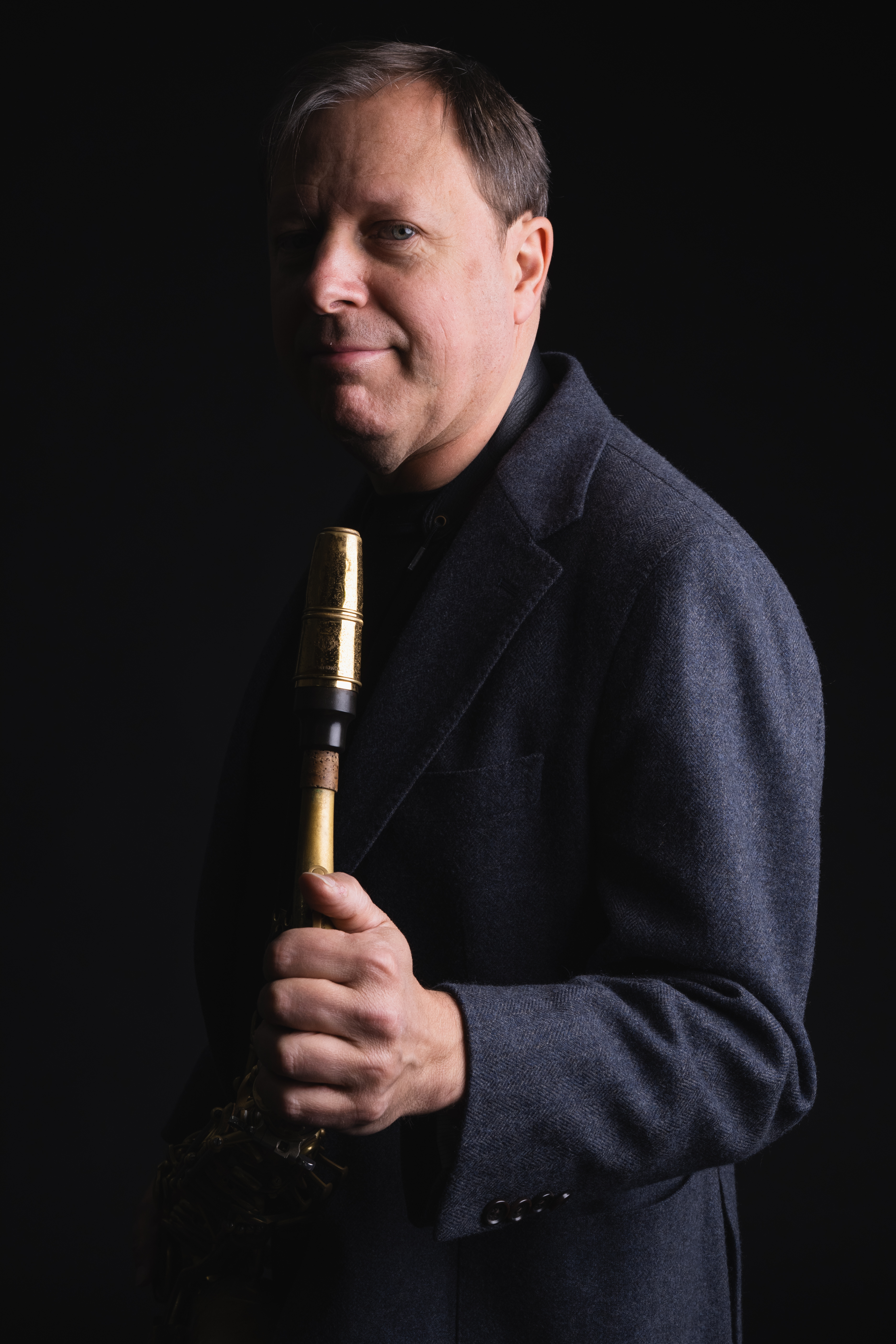
Now comes the distinguished American tenor saxophonist and composer Chris Potter with an album titled Alive With Ghosts Today, a suite of pieces for septet inspired by the continuing resonance of Brown’s story. There’s nothing programmatic about it — no quotes from the Battle Hymn of the Republic (except in the use of “Mine Eyes” as the title of one piece) — but it’s a work that seems somehow marinated in American history, from then to now, in the way jazz somehow always is, being perhaps that turblent story’s most remarkable single outgrowth.
I have a special fondness for medium-sized groups, from seven to 10 pieces, led by people such as Charles Mingus, Slide Hampton, John Surman, Jef Gilson, George Coleman, Keith Tippett, Steve Lehmann and Vijay Iyer. In the right hands, they combine power with flexibility and a range of tone colour. Potter says he was looking for the sound of a “slightly unruly village band”, and besides himself the group is completed by Rane Moore on clarinet, Zekkereya El-Magharbel on trombone, Bill Frisell on guitar, Sara Caswell on violin, Burniss Travis on bass and Nate Smith on drums. It’s an unusual line-up, and a perfect one for his purposes, which was to have “Copland, blues and gospel and African rhythm all living in the same space.”
The eight tracks are carefully wrought, making fine use of the individual timbres, and inevitably of Frisell’s ability to use his guitar and pedals as an orchestral resource, colouring the backgrounds with purpose and restraint. In fact the album that Alive With Ghosts Today most reminds me of is Frisell’s Blues Dream, his classic septet album from 2001, and praise doesn’t come much higher than that. A sense of conciseness in endemic to Potter’s writing, but also a sense of space; density is counterbalanced by ease of delivery. The mood ranges from sombre to playful. sometimes within the same piece. On “Mine Eyes”, Potter produces his finest solo over lively backgrounds before an interlude for trombone, guitar and drums leads to a hymn-like ensemble passage prefacing a return to the nimble theme.
There’s nothing hectoring about Potter’s album, despite its origins. The musical atmosphere is warm and companionable, with just enough surprise to keep you on your toes. But thinking about the source of his inspiration, the parallels with our own world are unavoidable. Acknowledging the complexity of the story, Potter concludes: “I have no easy answers, I only feel that ours is a beautiful, heartbreaking country, where we are still living with these ghosts.” This music, rather than firework displays, military flypasts or cage-fighting contests on the White House lawn, might represent a better way to commemorate America’s 250th birthday.
* Chris Potter’s Alive With Ghosts Today is out now on the Edition label. The photograph of Potter is by Dave Stapleton. Bandscamp link: https://chrispotterjazz.bandcamp.com/album/alive-with-ghosts-today


