Looking for Mr Moonlight
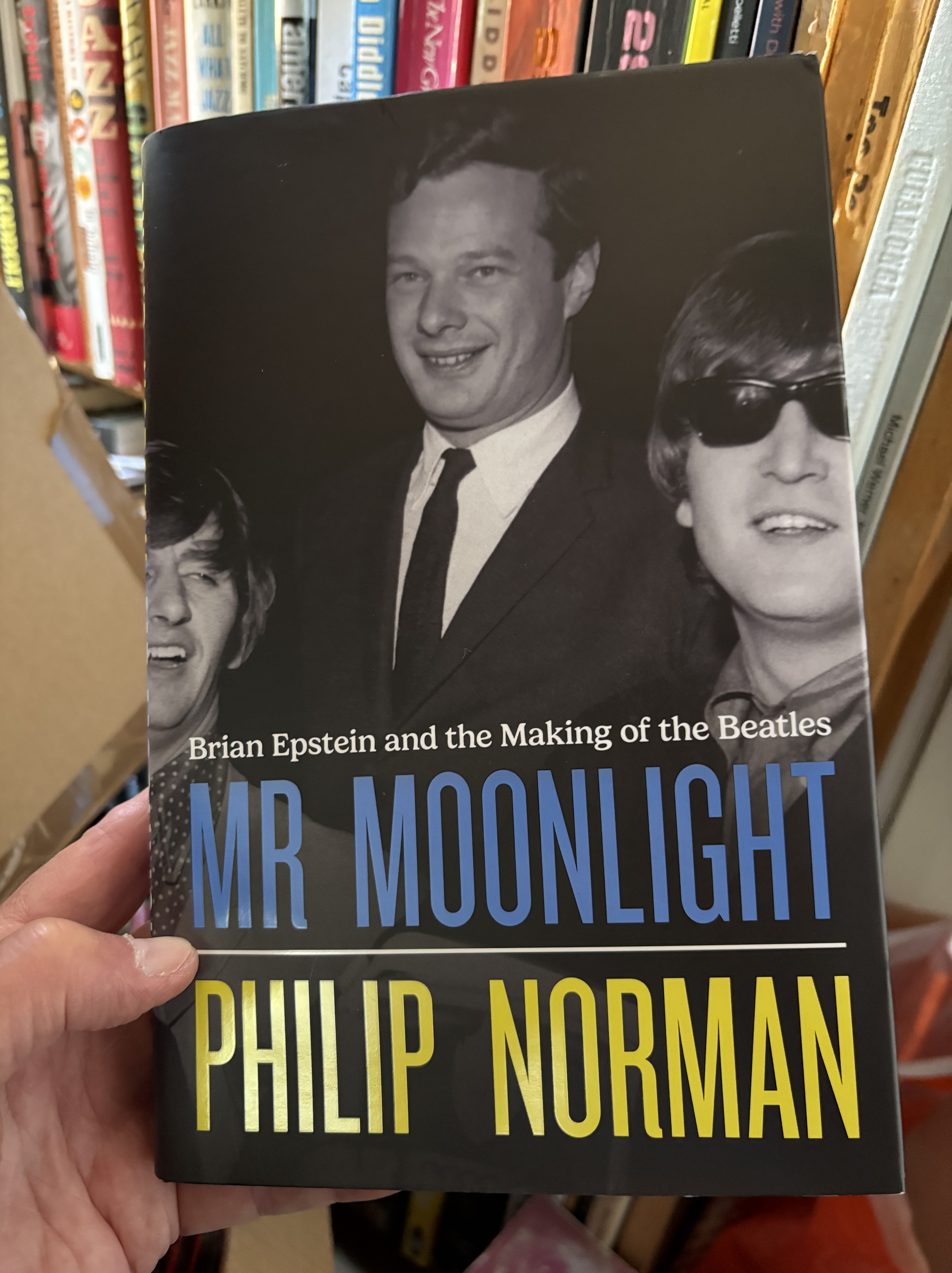
While listening to Philip Norman discussing his new biography of Brian Epstein last night, during a recording of the Books Podcast at the Owl bookshop in Kentish Town, I started thinking not about the author’s revelations — for instance that the Kray twins had once expressed an interest taking over the Beatles’ management — but about the suggestion that Epstein had erected and maintained a protective wall around the group. On the way home I thought about it some more, and it began to seem clear that Epstein’s real impact was of a far greater, although less easily definable, kind.
He may have been a deficient manager in certain important respects, accepting a poor (although industry-standard) recording contract with EMI in 1962 and failing to renegotiate it at the height of Beatlemania, and then royally screwing up the US merchandising rights to Beatle product (wigs, plastic guitars, etc), for which he gave away 90 per cent of the gross. When the producers of A Hard Day’s Night, preparing to offer the group 25 per cent of the film’s receipts, asked him what he wanted, he tentatively suggested seven and a half per cent, which they accepted with alacrity.
But he did give the Beatles something in exchange for his own 10 per cent of their earnings (rising to 15 per cent once they were each making £120 a week). And that something was class.
Not that they didn’t have it, individually and collectively. Their varied but always inquisitive intellects and their shared sense of humour (sardonic, surrealistic, but also warm) were among the aspects of the group that appealed to him, along with their attractive appearance and the irresistible energy of their stage performance. But it was perhaps partly because he came to them as an outsider, with no experience of what he was about to undertake, that he was able to add, without thinking about it, a veneer of sophistication to the presentation that they made to a surprised world between the release of “Love Me Do” in October 1962 and the Ed Sullivan Show in February 1964.
For all Epstein’s commercial missteps, what he never did was cheapen them. He didn’t reduce them to mere members of a stable of acts, like that run by Larry Parnes. He didn’t derail their musical progress by prioritising a series of duff Hollywood movies, as Tom Parker did with Elvis. Having recognised their inherent specialness, he treated them in a way that enhanced it.
A man who loved the theatre and classical music, he understood their adventurous creative instincts. When they made that first film, it was directed by the innovative Dick Lester rather than a Wardour Street hack. When the sleeve art of their second album was being prepared, he guided them towards Robert Freeman, whose photos of John Coltrane he had admired and who listened to the group when they showed him Astrid Kirchherr’s black and white chiaroscuro Hamburg photographs as a potential template. In both cases, Epstein got the Nouvelle Vague resonance and didn’t insist on something more garish or blatantly commercial. And they, in turn, knew that although he was a bit older than them, had short hair and wore a suit and tie, he understood what they were trying to do.
Somehow, partly through the existence as their manager of a hitherto unknown figure who had not risen through the ranks of the London pop scene but was a privately educated member of a well-to-do family from Liverpool’s Jewish community, the world accepted that this group’s ascent to pop stardom was not the result of manipulation, and that Beatlemania was a natural thing. Which, if you happened to be around at the time, you’ll know it was.
Brian Epstein wasn’t the Fifth Beatle. His terrible deals cost them a great deal of money at the time and would lead, after his death in 1967, to schisms and unhappiness. But what he contributed to their rise is worth reconsidering.
* Philip Norman’s Mr Moonlight: Brian Epstein and the Making of the Beatles is published by Simon & Schuster (£30).


