Herbie Nichols at 100
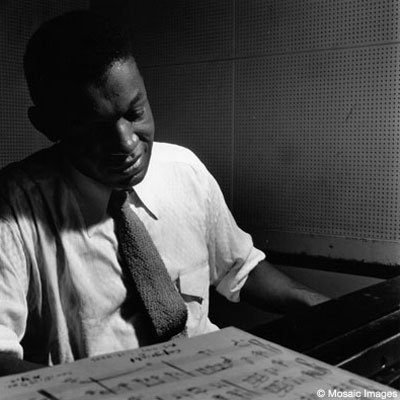
This week the Stone in New York City is hosting a four-night celebration of the centenary of Herbie Nichols, the composer and pianist who remained in obscurity during his lifetime but has since, thanks to the enthusiastic advocacy of such admirers as Roswell Rudd, Misha Mengelberg, Buell Neidlinger, Steve Lacy and George Lewis, been acknowledged as one of the most interesting figures of his era.
I read about Nichols before I heard him, as one of the figures profiled in A. B. Spellman’s great book Four Lives in the Bebop Business, published in 1967, four years after his death from leukemia at the age of 44. By placing his story alongside those of Cecil Taylor, Ornette Coleman and Jackie McLean, all of them much better known, the author granted him a certain standing. In career terms it was a tale of woe, very largely, but it seemed clear that public neglect never dimmed the light of Nichols’s creativity.
Then I got to hear his music — which wasn’t so easy at the time — and, like everybody else who “discovered” him for themselves, immediately recognised his great combination of complete originality and total accessibility. He was kin to Thelonious Monk, quite evidently, and also to Elmo Hope and Dick Twardzik, but with a different outlook.
Here are “23 Skidoo”, “Step Tempest” and “Shuffle Montgomery”, all from the two-volume set of 10-inch LPs recorded for the Blue Note label in 1955, titled The Prophetic Herbie Nichols, with Al McKibbon on bass and Art Blakey on drums (and great abstract cover art by Martin Craig, proving that there was visual life at Blue Note before Reid Miles). And here’s “Love Gloom Cash Love”, the title track of another trio album recorded for Bethlehem three years later, with his old friend George Duvivier on bass and Dannie Richmond on drums.
So that’s Herbie Nichols, born on January 3, 1919 to parents who’d come to New York from St Kitt’s and Trinidad. These pieces are typical in that their characteristic jauntiness seems to be a light disguise for more nuanced feelings. He was great with titles — “House Party Starting”, “Terpsichore”, “S’Crazy Pad”, “Hangover Triangle” — but even better at coming up with combinations of melody, rhythm and harmony that sound completely fresh but also like something that’s been there all your life.
According to Spellman, he wrote a lot of poetry, too, particularly in hard times. I’d love to read that.
* The photograph of Herbie Nichols is by Francis Wolff.







 thebluemoment.com