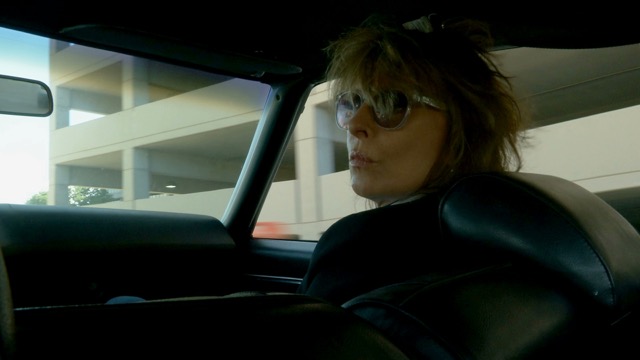
 There’s an hour-long Arena documentary about Chrissie Hynde on BBC4 this week. During a preview of a longer 90-minute version the other day, I remembered that what I always liked about her was the subtlety underlying the ferocious four-piece rock and roll attack of the Pretenders’ music. It was present in February 1979, when — at the urging of my friend and Melody Maker colleague Mark Williams — I went to see them at the Railway Arms in West Hampstead, a room once known as Klooks Kleek but then renamed the Moonlight Club.
Mark had seen them a week before and had already written a rave review in the paper. I followed up with another one a week later — somewhat unusual, certainly for an unknown band, but they were so extraordinary that it seemed worthwhile. Before the end of the month Mark had written a terrific feature, outlining their background: how Chrissie had left Akron, Ohio for London, hooked up with the NME crowd and the punks congregating at the McLaren/Westwood Sex shop in the King’s Road, formed a band with three guys from Hereford, and copped a deal with Real Records, which had the Warner-Elektra-Atlantic promotional muscle behind it. Mark’s piece went on the cover, giving them greater prominence than the news of Dylan’s forthcoming UK tour, a piece on Siouxsie Sioux in Berlin, an interview with Dennis Bovell, and an examination of the future of disco by Davitt Sigerson.
It’s always nice to be knocked out by something new. The set I heard in West Hampstead featured the razor-sharp rock and roll of “The Wait” and “Tattooed Love Boys”, but the song that really grabbed my attention, and suggested that there might be a real originality at work, was “Private Life”. A hypnotic song set against a slow, spare reggae rhythm, it had a brusquely dismissive lyric that demonstrated Hynde’s gift for skewering complex, uncomfortable and sometimes unreliable or contradictory emotions: “Attachment to obligation through guilt and regret / Shit, that’s so wet…” Grace Jones did a good version a couple of years later, with Sly and Robbie, but the original was the one that cut deepest.
Hynde could be brutal, but the subsequent hit singles “Brass in Pocket” and “Kid” quickly showed us the unusual variety of emotional shadings — including tenderness — at her command. She was already a great singer, her strong, deep voice given its impact by a distinctive quaver and an ability to make a note that you didn’t think she was going to reach. And she looked the part, of course: a monochrome dream of black fringe, waistcoat and jeans against a ruffled white shirt.
When she was approached to make the documentary, Hynde said she wouldn’t talk about personal topics since she had covered all that ground in her recent autobiography (Reckless, Ebury Press, 2015). But she agreed to spend time with the director, Nicola Roberts, and the cameraman/editor, Alex Jones, last summer, inviting them not just to her home in London but on trips to Paris, New York and Nashville, and back to Akron, where she could hardly help but talk about her early years, although she is at her most interesting when reflecting on her life today.
Throughout the film she’s as sharp as you’d expect, occasionally self-mocking and, in an appearance on the comedian Sandra Bernhard’s radio show, endearingly silly. There’s a lot of music, with a bias towards the songs from the Pretenders’ latest album, some of them played with the current line-up, but also rewarding stuff from the archive, like a storming version of “Whatcha Gonna Do About It” with the original quartet augmented by Steve Jones of the Sex Pistols.
It’s more than a little sad to watch the footage in which James Honeyman-Scott, one of the most creative lead guitarists of his generation, and Pete Farndon, the bass guitarist, are visibly diminished by the addictions that would end their lives, Honeyman-Scott at 25 in 1982 and Farndon — who brought the musicians into Hynde’s orbit — at 30 the following year. That first band was a wonderful outfit, full of the spirit and inventiveness so apparent in their recordings together.
There’s another noise you hear in this film: the subdued growl emanating from the V8 engine of the metallic green 1970s Pontiac in which Hynde tours Akron, revisiting the topography of her adolescence. It’s the almost-vanished soundtrack of the American highway.
* An hour-long cut of Alone with Chrissie Hynde is on BBC4 this Friday, February 10, at 9pm. The full 90-minute version will be transmitted later in the year.
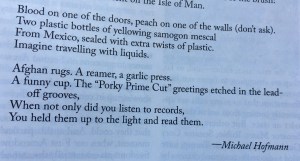 There’s an interesting new poem by Michael Hofmann in the latest issue of the New Yorker. It’s called “Lisburn Road” and it’s about surveying the scattered detritus of a life. In the final stanza there’s a reference that might be puzzling to some of the magazine’s readers: The ‘Porky Prime Cut’ greetings etched in the lead-off grooves…
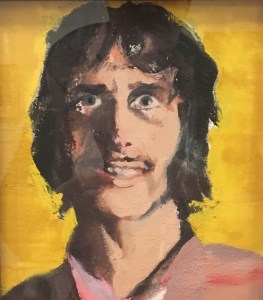 It came as a bit of a surprise to walk into a high-end London art gallery this week and discover a small portrait of Arthur Brown, the madcap rocker of the late ’60s, taking its place in an extensive exhibition of the work of the late English painter Michael Andrews.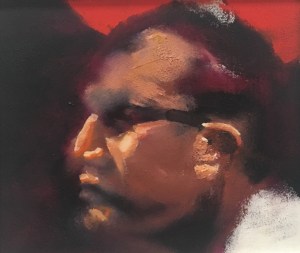
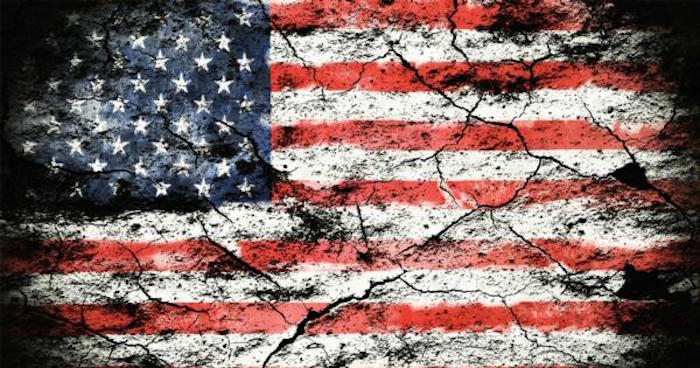 With three hours to go until the inauguration of Donald J. Trump as the 45th president of the United States, the coffee shop I frequent was playing the Staple Singers’ “Respect Yourself”. That’s a record with a lot of American history in it, one way and another: a message delivered by a mixed group of black and white singers and musicians, showing how music can provide encouragement, comfort and even guidance.
 In the final moments of Eat That Question, a documentary in which the director Thorsten Schütte creates a chronological collage of interviews and performance clips from throughout Frank Zappa’s career, we see Zappa with a baton in hand, conducting a piece of his orchestral music. We’re in the early ’90s and, after several years of treatment for prostate cancer, he is close to death. As he waves the stick in a staccato 4/4 pattern, several percussionists play a fascinating jigsaw tattoo. Hearing his score come to life, the composer is clearly entranced. It’s a lovely and touching moment.
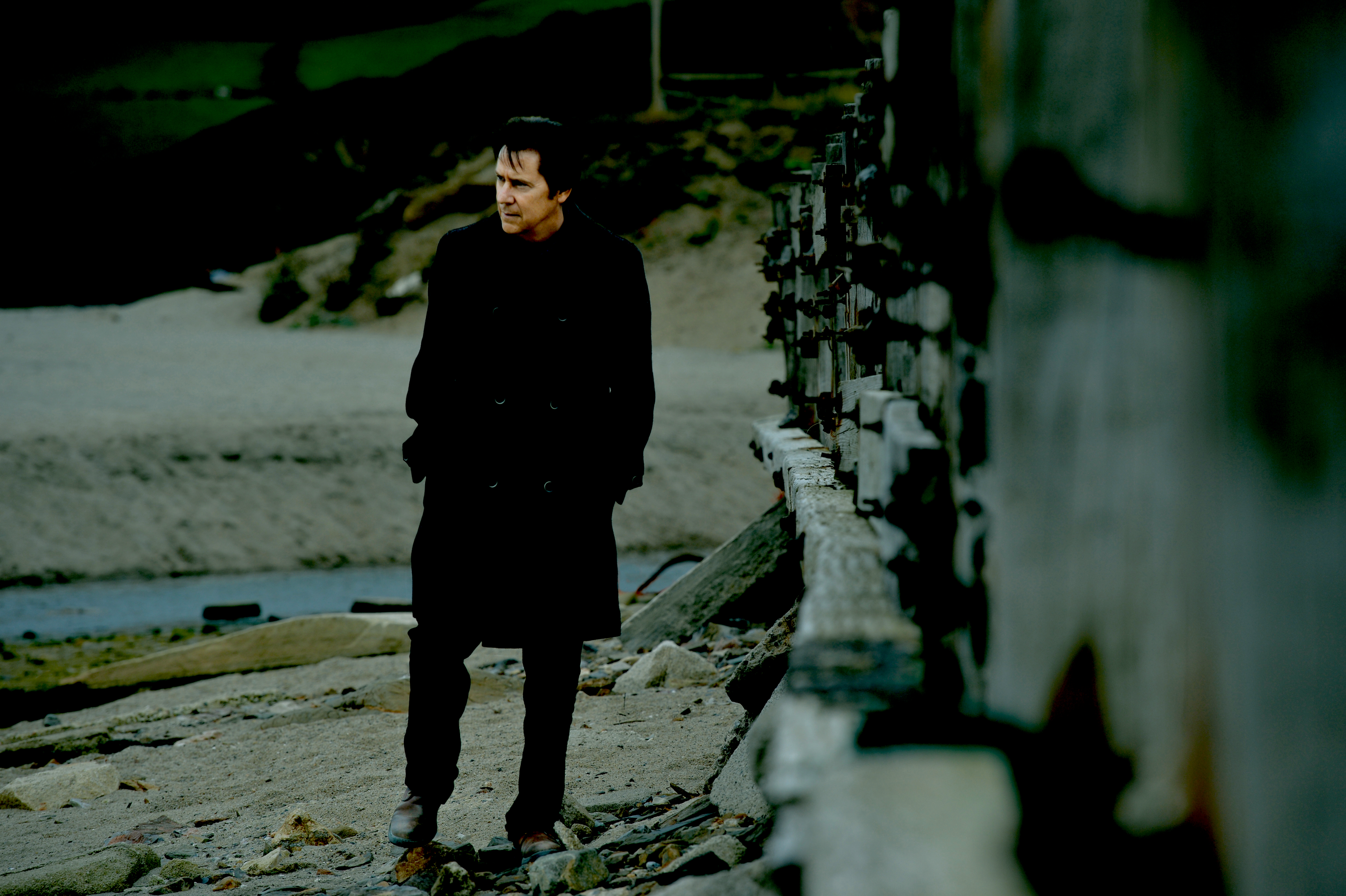 The first time I was impressed by Shakin’ Stevens was in 1970, while idly playing through his debut album with his group, the Sunsets, a bunch of rockabilly hounds from Cardiff, on the cheap sound system in the listening room at the Melody Maker‘s old Fleet Street office. Called A Legend, produced by Dave Edmunds and released on the Parlophone label, it contained one track that I found I needed to hear over and over again: a wild version of
 The most interesting rock music is often made when people from different backgrounds or disciplines are thrown together, united in a desire to create something previously unheard. That was what made the Beatles, the Who, the Velvet Underground and Roxy Music so special, and it lay behind the brilliance of Suicide, too.