Skip to content

Posts from the ‘Jazz’ Category

Before and after Loose Tubes

Graham CollierJazz continues to evolve, as it always has, through a process of emulation and transformation, whether gradual or radical. Take Loose Tubes, the British big band whose youthful spirit and eclectic wit caused a stir almost 30 years ago, and whose successful reunion at the Cheltenham Jazz Festival and Ronnie Scott’s in the last few days has been widely celebrated (here’s John Fordham’s review of the festival gig). Their origins go back to a rehearsal band formed in the early ’80s by the composer Graham Collier, whose generosity in allowing his protégés to bring in their own compositions eventually led to the decision to strike out as a co-operative venture. Since then the members of the band have become mentors and exemplars in their own right. Django Bates, to name the most obvious, has spent much of the last decade teaching at a conservatory in Copenhagen.

Collier died in 2011, aged 74, having played a key role in the phase of British jazz that followed the bebop era. He and Mike Westbrook were the two young composer-leaders who, in the 1960s, nurtured a generation of fine improvisers, including Harry Beckett and John Surman. Now his memory is well served by a 2CD set of two extended pieces that he left behind, now recorded by a fine 15-piece band and issued as Luminosity: The Last Suites on the Jazz Continuum label.

The first piece, The Blue Suite, is explicitly inspired by Miles Davis’s Kind of Blue: the titles of the individual movements include “Kind of So What”, “Kind of Freddie”, “Kind of Sketchy”… you get the idea. But these are impressions, not borrowings. The writing is spare, reflective, full of life and light, free of bombast, offering extensive opportunities to a group of fine soloists, including the tenorist Art Themen, the guitarist Ed Speight and the trumpeter Steve Waterman, urged on by the bassist Roy Babbington and the drummer John Marshall, both once regular Collier sidemen. If I don’t find the second work, Luminosity, quite so invigorating, then that’s because its companion piece sets such a high standard. But the set as a whole makes a good bookend to a Collier collection that starts with his recording debut, the classic Deep Dark Blue Centre album from 1967.

Django Bates’s students in Copenhagen have included Marius Neset, the brilliant young saxophonist whose new album with the Trondheim Jazz Orchestra, Lion (ACT), shows us another aspect of his musical character. These medium-length pieces are written for a 12-piece ensemble, including accordion and tuba, and demonstrate a wide range of resource and an avoidance of anything resembling big-band clichés. Even when the writing is at its most detailed and demanding, there’s never a sense of showing-off. Individually, the inventiveness of Neset’s own playing is matched by that of his colleagues, particularly the bassist Peter Eldh and whichever of the two trumpeters, Eivind Lonning and Erik Eilertsen, takes the solos (unfortunately they aren’t identified). This is music whose innate discipline never conflicts with its powerful sense of exhilaration.

I’m sure Collier would have been thrilled to see the progress made by the members of his old workshop band. And I’ll bet he’d have been equally proud of his role, albeit at one step removed, in Neset’s burgeoning career. In jazz, that’s how it’s supposed to happen. And it still does.

* The photograph of Graham Collier is from the Luminosity package and was taken by Karlijne Pietersma.

Humph and Coe

Humph : John DeakinThis picture of Humphrey Lyttelton rehearsing with his band some time in the 1960s is currently to be seen in a show of the work of John Deakin on the northern fringe of Soho, amid the portraits of Francis Bacon, Lucian Freud, the Bernard brothers and other notable figures of post-war London’s bohemian society. Next to the trumpeter, unidentified, is a young alto saxophonist: none other than the phenomenally gifted Tony Coe, on his way to becoming one of the distinguished musicians ever produced by the British jazz world, although no one seems to talk about him much now.

Three other musicians are visible, and I would guess — although someone will probably put me straight — that they’re the trombonist John Picard, the drummer Eddie Taylor and the bassist Pete Blannin. Humph began his musical life as a New Orleans revivalist, but his approach broadened to encompass mainstream jazz and he employed many excellent musicians who were sympathetic to more modern styles. I’d love to have been present to hear how this line-up sounded the day Deakin, a former Vogue photographer who lived the Soho life to the full, took his camera to record them.

* Under the Influence: John Deakin and the Lure of Soho is at the Photographers’ Gallery, 16-18 Ramillies Street, London W1F 7LW, until July 11.

French cool (encore)

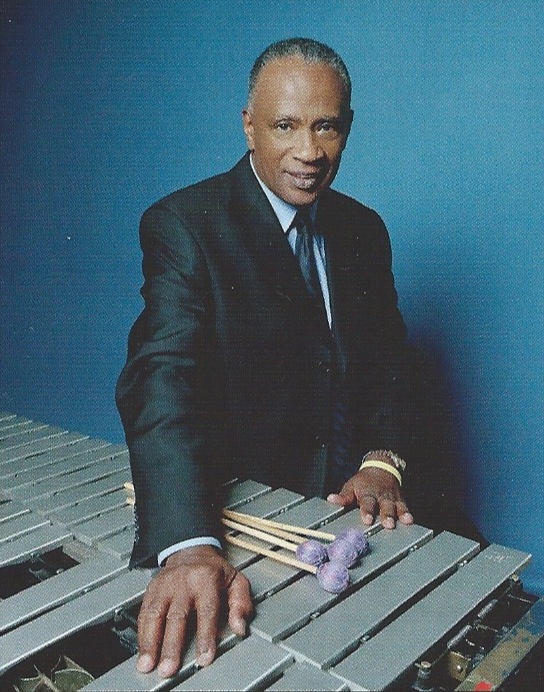
Don WilkersonUnusually, I can remember the exact date I bought this record, and the precise location: July 14, 1963, at the Drug Store on the Champs-Elysées. My friend Dave and I had hitched to Paris during the school holidays, with the intention of heading for the Côte d’Azur and an imagined heaven on earth perfumed with Gauloises and Ambre Solaire and populated exclusively by Françoise Hardy lookalikes.

Our lift dropped us off at the Arc de Triomphe on a warm summer evening. The place seemed lively. Very lively, in fact. Cars were driving up and down sounding their horns non-stop. Wow, we thought. So this is Paris.

We went into the smart new Drug Store, where the record department turned out to have cool stuff you couldn’t get at home, much of it on the sacred Blue Note label. Dave, who was better funded, bought an album: Donald Byrd’s A New Perspective, featuring the wonderful “Cristo Redentor”, with the trumpeter leaning on an E-type Jag in Reid Miles’s classic cover design. I contented myself with an EP: two tracks from Don Wilkerson’s Preach, Brother!, pressed as a seven-inch 45 and repackaged in a nice sleeve to promote the use of one of them, “Camp Meetin'”, as the signature tune for an excellent nightly radio show called Pour ceux qui aiment le jazz, presented by Frank Ténot and Daniel Filipacchi on Europe 1.

Wilkerson, born in Louisiana in 1932 but raised in Texas, joined the band Ray Charles put together in Houston in 1954. He preceded David “Fathead” Newman as the band’s featured tenor saxophonist, and those are his solos you can hear on “I Got a Woman” and “Hallelujah, I Love Her So”. He recorded one album of his own, The Texas Twister, for Riverside in 1960, and three for Blue Note between 1962 and ’63, of which Preach, Brother! (with Grant Green on guitar, Sonny Clark on piano, Butch Warren on bass and Billy Higgins on drums) is the pick. In 1961 he was back with a bigger Ray Charles orchestra on a hugely successful European tour, sharing tenor battles with Newman, and he played the majestic solo on a shattering version — arranged by Quincy Jones — of “Come Rain or Come Shine”, captured in Paris, at the Palais des Sports, just two years before our arrival (and here’s a terrific blog post on that tour).

In his autobiography, Brother Ray, published in 1978, Charles called Wilkerson “one of the best saxophonists of the century. I loved to watch Donald attack Fathead on the stand… it brought out the best in both cats.” He employed him again, albeit briefly on each occasion, in 1962, 1964 and 1978. Michael Lydon’s excellent 1997 biography, Ray Charles: Man and Music, records the fact that disputes over drugs led to Wilkerson’s several departures from the band. After his last release on Blue Note he went back to Houston, where he died in 1986. I love his soulful sound.

And so, on that evening in 1963, we wandered on down the Champs-Elysées. Our only plan was to find a bridge to sleep under, because it seemed like the proper thing to do. But as the hooting and tooting and general gaiety increased, it was starting to dawn on us that something was going on. By the time we reached the Place de la Concorde, where an open-air concert was taking place, the penny had dropped. It was Bastille Day.

Thumbin’ a riff

Jim MullenI could have kicked myself, on arrival at Ronnie Scott’s to see Allen Toussaint a few nights ago,  for misreading the bill and not realising that the evening included an early set featuring a trio led by Jim Mullen, the great Scottish guitarist who was part of the soul band Kokomo and then co-led a fusion band for many years with the late saxophonist Dick Morrissey. The group at Ronnie’s was completed by another guitarist, Nigel Price, and the bassist Mick Hutton. I got there in time to hear only the last couple of choruses of a ballad and a complete “Yardbird Suite”, which closed the set, but that was enough time to appreciate the quality of their interplay, and in particular the appealing contrast between the approaches of Mullen, who has always played with his thumb, and Price, who uses a pick. It was, I suppose, the closest you can get in the 21st century to hearing Wes Montgomery (thumb) jamming with Grant Green (pick).

I was even more annoyed with myself because just a couple of days earlier I’d invested in the new album by the Jim Mullen Organ Trio. It’s called Catch My Drift, it’s released on the Diving Duck label, and it features Mike Gorman on Hammond B3 and Matt Skelton on drums. They play standards (“Deep in a Dream”, “Lonely Town”), the Ellington/Strayhorn “Day Dream”, a couple of Tom Jobim tunes (“Samba de Aviao” and “Esquecendo Voce”), Toots Thielemans’ “For My Lady”, Donald Fagen’s “Maxine”, Chick Corea’s “High Wire”, Georgie Fame’s “Declaration of Love”, and Earth, Wind and Fire’s “You Can’t Hide Love”. Again there’s a Wes Montgomery comparison: the format and the mood are strong reminiscent of the excellent trio with which Montgomery recorded for Riverside in 1959, with the organist Melvin Rhyne and the drummer Paul Parker.

Catch My Drift is not a record that’s going to redraw the boundaries of jazz, but in every other way it’s a beauty. Mullen’s own playing is wonderfully mellow, its air of relaxation almost obscuring its more profound qualities of melodic inventiveness and absolute rhythmic security, while Gorman locates an interesting space between the discreet, economical approach of the aforementioned Rhyne and the more adventurous style of Larry Young. Skelton provides unfailing swing and thoughtful shading; the solo with which he ends “Maxine”, improvising against the organ’s comping, is extremely stimulating, as is his light-fingered workout with the brushes on “Day Dream”.

Mullen, who is now 68, really deserves a lot more credit and attention than he has been given since the end of the Morrissey-Mullen band 25 years ago. The next time I get a chance to hear him in person, I’ll be sure to arrive on time.

(The other good news is that Mullen will be taking part in this year’s Kokomo reunion, along with his fellow guitarist Neil Hubbard, singers Dyan Birch, Paddy McHugh and Frank Collins, Tony O’Malley on keyboards and vocals, Mel Collins on tenor saxophone and Jody Linscott on congas, plus Jennifer Maidman on bass guitar and Ash Soan on drums. They’re playing half a dozen dates in August, including the 100 Club, the Half Moon in Putney and the Richmond Athletic Club.)

* The photograph of Jim Mullen is from the cover of Catch My Drift, and is uncredited.

Georgie Fame: back home in Soho

Georgie Fame 1“I never thought I’d get to sing a Bob Dylan song in Ronnie Scott’s jazz club,” George Fame said tonight, and proceeded to dedicate “Everything Is Broken” to David Cameron’s cabinet. He and his Blue Flames made it sound like a Mose Allison song set to a Horace Silver boogaloo rhythm, an arrangement that worked quite beautifully.

This was the first night of a week’s sold-out residency on Frith Street, and Fame’s serious illness last year meant that it was the first time he and the modern Blue Flames — Guy Barker (trumpet), Alan Skidmore (tenor), Anthony Kerr (vibes), Tristan Powell (guitar), Alec Dankworth (double bass) and James Powell (drums) — had played together in many months. The good news is that the leader was in great form, and that the reunion seemed to have infused the band, which includes his two sons, with a terrific freshness.

Between 1964 and 1966 there was no band I looked forward to seeing visit the Dungeon or the Beachcomber in Nottingham more than this one: the Blue Flames were the coolest of the cool. Put me near a Hammond organ — in my view, an invention to rank with moveable type and penicillin in the history of western civilisation — and I’m not going to stop smiling all night. Back then, the addition of musicians like Eddie Thornton, Mick Eve, Peter Coe, Glenn Hughes, Colin Green, Cliff Barton, Bill Eyden, Mitch Mitchell and Speedy Acquaye guaranteed a blissful experience.

Their successors live up to the legend, and so does Georgie, sprinkling his songs and introductions with anecdotes and references that illustrate his unflagging love of jazz and R&B. There were mentions of Count Suckle’s club on Carnaby Street and of Strickland’s, the jazz record shop on the corner of Old Compton and Dean Streets. Introducing “Preach and Teach” (the B-side of “Yeh Yeh”, the song with which he knocked the Beatles off the top of the charts in 1965), he mentioned its composer, the pianist Johnny Burch, whose wonderful octet — including Jack Bruce and Ginger Baker — happened to be the other featured attraction on the night Fame made his BBC radio debut on Jazz Club. When Dankworth took a lengthy and impassioned solo on the tune, his leader encouraged him with the famous utterances of Charles Mingus on “Oh Lord, Don’t Let Them Drop That Atomic Bomb on Me”: “Don’t let them drop it… stop it… bebop it!”

“Moondance”, in an arrangement borrowed from Van Morrison’s great 1993 live album A Night in San Francisco (on which Fame was the organist), cleverly adapted a chorus of “Blue Moon” to the song’s contours, while Barker’s solo made references to Johnny Coles and to Gil Evans’s arrangement of “It Ain’t Necessarily So” for Miles Davis, and Kerr showed how important he is to the band’s overall sound. Bobby Timmons’ “Moanin'”, the battle hymn of the soul-jazz era, was given a first outing, with Georgie putting lyrics to Lee Morgan’s trumpet solo from the Jazz Messengers’ version and Barker responding with a dramatic solo of his own, and the singer also quoting from Nat Adderley’s “Work Song”. Introducing Willie Nelson’s “Funny (How Time Slips Away)”, a perennial Fame favourite and the last song of the night, he spoke fondly of the late Denny Cordell, who had produced the version on the 1966 album Sweet Things, the last real Georgie Fame and the Blue Flames album; the current arrangement gives it a mid-tempo Chicago soul feel, allowing the singer to namecheck Curtis Mayfield, Major Lance, Billy Stewart, Phil Upchurch and other Windy City greats.

This was a great night on Frith Street, in the old style: a lesson in the kind of authentic hipster cool for which Soho was invented. If somebody were to record the show this week, in the spirit of Fame’s 1963 debut, Rhythm and Blues at the Flamingo, they might find themselves with a candidate for the list of all-time great live albums.

* Quite properly, Ronnie Scott’s doesn’t allow photography while the musicians are performing, but they won’t mind this shot of the stage and Fame’s Hammond organ waiting for the band’s arrival.

Evan Parker w/strings

Evan Parker + 17In Munich for a football match a few years ago, I had a couple of hours to spare in the afternoon and paid a visit to Ludwig Beck, a department store on Marienplatz, the city’s central square. To me it’s a shop remarkable for its vast jazz department, where on the day in question I was able to count no fewer than 72 CDs by the improvising saxophonist Evan Parker: an indication of the esteem in which he is held in some parts of the world.

Tonight at Kings Place in London there was a concert in celebration of Parker’s 70th birthday. (Ten years ago, I interviewed him for the Guardian on the occasion of his 60th: here it is.) Talking to Sebastian Scotney in the current Kings Place magazine, he said this: “I like to have a space with an inspiring and supportive acoustic, a church or a church-like space. What I do in that context is more about intuition than analysis. There are things you try to control, with new combinations of reed behaviour and embouchure and cross-fingering. But that’s the starting point. The complexity of the partials and the overtones and the resonance will always be unique in the moment, and in the particular acoustic of the performance space. The saxophone is such a rich and flexible acoustic source, I will certainly run out of time before I discover all its possibilities.”

The concert featured 18 musicians: Phil Wachsmann, Alison Blunt, Sylvia Hallett and Dylan Bates (violins), Benedict Taylor and Aleksander Kolkowski (violas), Hannah Marshall, Alice Eldridge and Marcio Mattos (cellos), John Edwards, Adam Linson and David Leahy (basses), Django Bates (piano and peck horn), John Russell (guitar), Percy Purseglove (trumpet), John Rangecroft (clarinet), Neil Metcalfe (flute) and Parker himself. The first half consisted of collective improvisations by three quartets and two trios, the most effective of them consisting of Parker on tenor with Edwards and Russell, although Purseglove’s playing with the final quartet (rounded out by Bates, Hallett and Eldridge) sounded like the outstanding individual contribution. But nothing really caught fire: each group featured bowed strings in some form, and there was too little textural variety.

For the second half all 18 musicians were assembled, and it became obvious that what the earlier music had lacked was a bit of mass and density. Parker led off on soprano, chewing up staccato phrases as the rest joined in. There was clearly some form of organisation, although evidently nothing in the way of themes or other notation, and the music gradually assumed tonal and dynamic shapes, sometimes creating an unstated but felt pulse (* see note below).

Again the strings dominated the sound, but the increased heft of the ensemble worked wonders. Occasionally the half-hour piece sounded like a concerto for soprano saxophone and chamber orchestra, but other instruments — notably Metcalfe’s pretty flute, Russell’s scrabbling guitar, Bates’s busy piano and Kolkowski’s weird skeletal viola, with its horn from a wire-recording device attached — periodically worked their way to the fore against the swirls, squalls and slow drift.

Parker dedicated the concert to the memory of John Stevens, the great drummer whom he met in 1966 and with whom he played in the Spontaneous Music Ensemble. As he said in his dedication, Stevens was largely responsible for establishing and nurturing London’s free improvisation scene, which remains a vital field of musical research. The evening ended with a short unaccompanied soprano solo, demonstrating the new instrumental language Parker has been developing since those early days at the Little Theatre Club, one that continues to grow in complexity and richness of meaning.

* Alison Blunt read this and got in touch immediately to say that there had been no form of premeditated organisation.

Paul Bley: alone, again

Paul Bley

As a solo pianist, Paul Bley is a bit of a specialised taste. He doesn’t hypnotise like Keith Jarrett at his best or set the nerves jangling like Cecil Taylor, but his performances create a very distinctive universe in which substance triumphs over obvious displays of emotion or virtuosity. Astringent in tone and devoid of mannerisms, they make you listen closer and better. And here comes another one.

It was the appearance of a couple of records by the Canadian in the initial batches of releases from the ECM label at the beginning of the 1970s that persuaded me the new Munich-based independent label would be worth watching. Those albums, Paul Bley with Gary Peacock and Ballads, were trio sessions recorded by Bley himself in New York a few years earlier and entrusted to Manfred Eicher, ECM’s founder. The first Bley album actually recorded under Eicher’s supervision, with Jan Erik Kongshaug at the controls in Oslo’s Arne Bendicksen studio, came out in 1973. Titled Open, To Love, it was an intriguing solo recital of tunes by Bley and two of his former wives, Carla Bley and Annette Peacock.

Bley has since made many albums for other labels, such as SteepleChase, Soul Note and his own IAI imprint, but ECM’s standards of recording and presentation fit him perfectly. In fact I’ve always felt that his personal aesthetic — refined and somewhat austere but not lacking in passion or swing — helped define that of Eicher’s project. His new album, Play Blue, finds him returning to Oslo, but this time to the Kulturkirken Jakob, a 19th century church turned into an arts centre, where this live recording was made in 2008.

He is 81 now and was 76 when the concert took place, but his playing retains all the fine judgement of line and time and the tensile strength that distinguished the work of his earlier years, along with an exquisite and wholly characteristic ability to skirt the fringes of dissonance. If you were to play this and Open, To Love to someone who had never heard him before, I would defy them to say which was by a man in his fourth decade, and which by one in his eighth.

The record consists of four of Bley’s own compositions and an encore of Sonny Rollins’s “Pent-up House”. “Far North” and “Way Down South Suite”, 17 and 16 minutes long respectively, merge into each other without a break and are intense, discursive pieces full of movement and surprise, kaleidoscopic in their effect on the listener. But I love the more concise “Flame” and “Longer”, which display his unsentimental way with the material of a ballad. I can’t think of another pianist so effective at creating drama by alternating legato and staccato phrases — sometimes within the same arc — while sustaining a strong underlying lyricism, and his wonderfully precise touch is beautifully captured by the recording (four decades after his first ECM session, Kongshaug is once again the engineer).

Bley neither ingratiates himself nor sets out to shock. He just plays, with a sinewy restlessness and an apparently inexhaustible fund of ideas, and he has spent his long career proving that a natural reserve and an innate warmth are not mutually exclusive. I’m pretty sure this will be one of my albums of the year.

* The photograph of Paul Bley is from the sleeve of Play Blue and was taken by Carol Goss.

Julian Arguelles

Julian ArguellesAmid the general euphoria and high-octane wackiness with which the performances of Loose Tubes lit up the London jazz scene in the second half of the 1980s, Julian Arguelles’s saxophone solos were always a highlight: calm, beautifully shaped, emotionally resonant. He was still in his teens, diminutive and boyish-looking, when he first appeared with that extraordinary collective, but his playing already possessed a maturity that suggested a long and rewarding career to come.

After Loose Tubes disbanded in 1990 (they’re reforming in May for dates at the Cheltenham Jazz Festival and Ronnie Scott’s) he formed an octet which made two albums that stand among the most stimulating documents of their time: Skull View (Babel, 1997) and Escapade (Provocateur, 1999) are full of memorable composing, resourceful arranging and fine improvising from the likes of Mike Walker (guitar), Mario Laginha (piano) and Django Bates (tenor horn). Arguelles managed to make the ensemble reflect his own qualities. This is music that manages to be supremely lyrical while staying cliche-free, and in which exquisite textures are coaxed from a seemingly limited palette. If you can find the discs, they’ll repay the investment.

Now he has a new album out: Circularity, on the Rome-based CamJazz label, in which he is joined by the pianist John Taylor, the bassist Dave Holland and the drummer Martin France. Back in 1990 Taylor and France featured on Arguelles’s recording debut as a leader, a quartet album on the Ah Um label called Phaedrus (on which Mick Hutton was the bassist), and the drummer was also present on the octet albums.

Arguelles is 48 now, no longer a precociously gifted youngster but a musician of poise and substance, equally eloquent on his soprano and tenor instruments, fully at home in this A-team company, capable of providing a set of compositions that play to his own strengths while providing a challenge for his companions, each of whom performs to the height of his known abilities. I don’t suppose Taylor has ever played an ungraceful note in his life, while Holland — a US resident since answering Miles Davis’s siren call in 1968 — gives every sign of enjoying the chance to play with compatriots. France keeps the whole thing cooking with a wonderfully light touch and an unflagging rhythmic imagination.

And if, like me, you have a weakness for jazz inflected by what Jelly Roll Morton famously called “the Spanish tinge”, meaning such things as John Coltrane’s “Ole”, Gil Evans’s “Las Vegas Tango”, Albert Mangelsdorff’s “Never Let It End” and Charlie Haden’s “Song for Che”, you’ll enjoy the Arguelles quartet’s “Unopened Letter”, which starts in the time-honoured manner with double-stopped bass strums and soprano trills and works its way through an exemplary seven minutes of intense but never forbidding collective invention.

* The photograph above is from the sleeve of Circularity, and was taken by the recording engineer, Curtis Schwartz. Left to right: John Taylor, Dave Holland, Julian Arguelles and Martin France. 

The N.E.W. thing

N.E.W. liveI could only stay for a single set of the trio called N.E.W. — Steve Noble (drums), John Edwards (double bass) and Alex Ward (guitar) — at Cafe Oto tonight, but it was enough to get excited about. This is an improvising group of ferocious intensity: for my taste, maybe the most effective high-volume band I’ve heard since Tony Williams’s Lifetime set the standard for such adventures more than 40 years ago.

The first piece lasted half an hour, in which everybody played without a break. They work with patterns rather than tempos, usually set by Noble’s relentlessly attacking sticks, mallets or brushes (he also has a way with cymbals that makes me think he’s the post-industrial Billy Higgins). Edwards, surely the most remarkable bassist ever produced by Britain, works off and around the drums, tugging and hammering the strings to produce huge surges of sound and in one passage bowing them above his left hand on the fingerboard while the drummer momentarily toyed  with a light Latin vamp. As for Ward, he is a constant astonishment: Bo Diddley’s “Road Runner”, Jimi Hendrix’s “Star-Spangled Banner”, Sonny Sharrock’s work with Herbie Mann and Last Exit, Robert Fripp’s solo on King Crimson’s “A Sailor’s Tale” and Derek Bailey’s amplified solo pieces — he doesn’t sound like any of them, but they might be some of the sources of inspiration behind the barrage of howling, squealing, chattering and whining but always coherent and compelling noise that he sets up.

They’ve been playing together in this configuration for half a dozen years, and the degree of empathy is phenomenal. You can hear it on their new album, Motion, a vinyl-only release on the Dancing Wayang label, limited to 300 copies (www.dancingwayang.com). The product of a studio session, it can’t possibly convey the impact of hearing them playing to an audience in a small room, but it has other, equally worthwhile qualities.

Try to imagine how a combination of Hendrix, Charles Mingus and Keith Moon might sound, stripped of ego, transported to Dalston in 2014, with modern amplification turned all the way up. If that might be your idea of a good time, don’t miss ’em.

A night of two halves

Christian Wallumrod 2Two great pianist-composers were at work within 400 yards of each other in Dalston last night. It was a tough call, so I compromised. The first half of the evening was spent at the Vortex in the company of the Christian Wallumrod Ensemble. The rest was devoted to a set by the Keith Tippett Octet at the Cafe Oto. Wallumrod was playing compositions from Outstairs, his latest ECM album, while Tippett was performing a recently commissioned suite, The Nine Dances of Patrick O’Gonogon. I was worried that by trying to catch both, I’d miss the best of either. But these were two such exalted experiences that by the end of the night I could only think what a extraordinary feeling it must be to create such music in your head and on paper and then have it brought to life by gifted and dedicated musicians.

Wallumrod’s six-piece band — with Eivind Lonning on trumpet, Espen Reinertsen on tenor, Gjermund Larsen on violin, viola and Hardanger fiddle, Tove Torngren on cello and Per Oddvar Johansen on drums — made a much greater impression on me in person than on record. Or perhaps it would be more sensible to say that they sent me back to Outstairs with a better understanding of what it is they’re doing. But I do think that in this case the live performance provides a vital extra dimension.

This is understated, reflective music, making great use of its Norwegian heritage (many of the themes sound as though they are inspired by folk songs), but the quiet power of the music’s physicality came as a surprise: when you actually witness Wallumrod gently pumping his portable harmonium, or Larsen playing soft-grained double-stops on the Hardanger fiddle, or Reinertsen discreetly using a  slap-tongue technique to turn his saxophone into an extra percussion instrument, or Lonning brushing the mouthpiece across his lips as he exhales to produce shushing sounds and bringing out a four-rotary-valve piccolo trumpet to add a new texture, it helps to bring it to life. A long track from the album, called “Bunadsbangla”, featured Johansen using his hands and a slack-tuned bass drum to produce a kind of Scandinavian Bo Diddley rhythm behind a beautifully structured and voiced horns-and-strings line; I think I speak for everyone in the room when I say that we’d have been happy for that one to have gone on all night.

A quick dash down from Gillett Square to Ashwin Street meant that I missed only the first couple of minutes of Tippett’s octet set; the band was already in full roiling Mingusian mode. This was the third performance of the work, written for Keith’s terrific new London-based band, mostly consisting of recent graduates: trombonists Kieran McLeod and Rob Harvey, saxophonists Sam Mayne and James Gardiner-Bateman, bassist Tom McCredie and the veteran drummer Peter Fairclough, with Ruben Fowler depping for Fulvio Sigurta on trumpet and flugelhorn. For me, the format of an octet often seems to locate the perfect middle ground between the flexibility of a smaller horns-and-rhythm combo and the mass and strength of a conventional big band. Tippett, who is writing and playing with a greater range and eloquence than at any time in his 45-year career, knows how best to exploit its potential to the full.

The nine movements were full of contrast, varying in mood from raucous shout-ups to a tiny, exquisite piano coda, enfolding a hymn-like horn chorale framing short unaccompanied piano improvisations, a kind of jig, and something that roared along at 80 bars per minute (that’s 320 of your “beats”, children), a tempo at which it is hard enough to think, never mind improvise coherently. I particularly loved Sam Mayne’s show-stopping alto, a flugel solo on which Fowler reminded me of the late, great Shake Keane, McLeod’s agile, thoughtful trombone, and the impressive maturity of McCredie, who coped nimbly with the demanding score but was always playing with his heart open. A sense of passion characterised the whole band as they negotiated a composition in which Tippett’s defining streak of lyricism never flagged, even when the music’s operating temperature was at its height.

They’ll be back in Dalston to play the piece again on April 11, this time at the Vortex. Keith is still waiting to hear whether the producers of the BBC’s Jazz on 3 are interested in broadcasting the piece. When he asked them, the response was that they wanted him to send a tape. After four decades in which his consistently distinguished work has brought him acclaim around the world, from Italy and France to Russia and India and South Africa, the gatekeepers of Britain’s jazz principal broadcasting outlet seem to be expecting him to audition. If he felt insulted by such a response, it would be hardly surprising or unjustified.

Last night, anyway, Wallumrod and Tippett — who share a gift for bringing the lessons learnt from jazz to bear on their respective native cultures — received the sort of response they deserve: sustained ovations from attentive listeners who know great music when they hear it, and are properly grateful for the experience.

* The photograph of the Christian Wallumrod Ensemble was taken by Christopher Tribble at Kings Place on their visit to London last year.