 I’ve been reading Message to Our Folks, Paul Steinbeck’s new biography of the Art Ensemble of Chicago, and enjoying in particular the reminder of the impact the group made when they arrived in Europe in the spring of 1969. Their voluntary exile lasted a month short of two years, ending with their return to the US in April 1971. During that time, which was mostly spent in France, they made some important albums (including A Jackson in Your House, Message to Our Folks, the epic People in Sorrow and the soundtrack to the film Les Stances à Sophie) and participated in several significant events, including the five-day Actuel festival in Amougies in October 1969 — intended, as Steinbeck observes, to be continental Europe’s answer to Woodstock and the Isle of Wight — and Joachim-Ernst Berendt’s Free Jazz Meeting in Baden-Baden two months later, where they encountered Kenny Wheeler, Terje Rypdal, Albert Mangelsdorff and many others. They also met the drummer Don Moye, who became their fifth member.
What the Art Ensemble did was free up the idea of how a modern improvising group could go about its business. Their motto — “Great Black Music: Ancient to the Future” — was startling at the time. In terms of form and structure, their unorthodoxy exerted a widespread influence. Doing away with the notion that modern jazz could only be played in groups employing certain instrumental combinations adhering to a particular balance, they made the use of “little instruments” — particularly percussive devices of all kinds — into an essential part of their strategy. Their costumes and face-paint brought a new dimension of theatricality and historical reference to the music, while their use of irony and satire extended its range of gesture and intention.
I was lucky enough to see them a couple of times in the 1970s, at their New York debut in Central Park in 1973 and at the Roundhouse in London half a dozen years later, and they were spellbinding on both occasions. (Brian Case, reviewing the Roundhouse gig in the Melody Maker, said that “it made nonsense of any critical reading, save surrender.”) Two members of that group — the trumpeter Lester Bowie and the bassist Malachi Favors — are now gone, but the spirit of the Art Ensemble suffuses Bells for the South Side, the new album by their former colleague Roscoe Mitchell, the great saxophonist and composer.
This 2CD set was recorded live in September 2015 at the Museum of Contemporary Art in Chicago during a project in celebration of the 50th anniversary of the Association for the Advancement of Creative Musicians, in which Mitchell and the other members of the AEC played a key role. For these performances the leader was joined in a series of four trios and aggregated larger groupings by James Fei (reeds and electronics), Hugh Ragin (trumpets), Tyshawn Sorey (trombone, piano, drums and percussion), Jaribu Shahid (bass, bass guitar, percussion), Tani Tabbal (drums, percussion), William Winant (vibes, marimba, percussion), Craig Taborn (piano, organ, electronics), and Kikanju Baku (drums, percussion).
For those interested in free improvisation and the way it can be directed by a great composer, here are two hours of music that provide a mosaic of marvels, from mysterious rustling and enigmatic flutters to thunderous epiphanies via passages of intense lyricism. Although the individual contributions can be isolated and admired, notably Ragin’s piercingly emotional piccolo trumpet, Taborn’s austere piano and Baku’s wild but beautifully controlled drumming, that’s not really the point. There is a much bigger picture here, just as there was in the Art Ensemble’s work. It reaches a wonderful resolution in a manner that I’m not going to spoil except to say that it achieves its full impact only if you’ve listened to the whole thing — or at least to the whole of the second disc.
As the personnel details suggest, percussion is important here, and it comes imbued with a strong sense of the Art Ensemble’s history. Baku — a young British drummer who wrote to Mitchell asking if he could play with him, and was immediately rewarded with a gig at Cafe Oto — plays Malachi Favors’ percussion set-up, Tabbal plays Moye’s kit, Winant plays Lester Bowie’s military bass drum and Sorey plays Mitchell’s own percussion cage, a thing of visual and aural wonder. The fine detail of the shifting textures is recorded by David Zuchowski and mixed by Gérard de Haro with Steve Lake, the album’s producer, to brilliant effect.
A few weeks ago, as part of a “financial stabilisation” programme, Mitchell was in danger of losing his teaching job at Mills College in Oakland, California. A petition to reverse the decision gained so much support that the college was forced to reconsider, and he remains in post as Darius Milhaud Professor of Music. For those who will come under his tutelage in the future, this is very good news. One way for the rest of us to celebrate might be to listen to Bells for the South Side, a perfect example of the continuing vitality and relevance of his imagination and a wonderful summary of his gift to generations of listeners and fellow musicians.
* Bells for the South Side is released on ECM Records. The photograph of Roscoe Mitchell is taken from the album’s insert. Message to Our Folks is published by the University of Chicago Press. Roscoe Mitchell and the latest configuration of the Art Ensemble of Chicago — with Hugh Ragin, Don Moye and the bassist Junius Paul — return to London for a short residency at Cafe Oto from October 15-17.
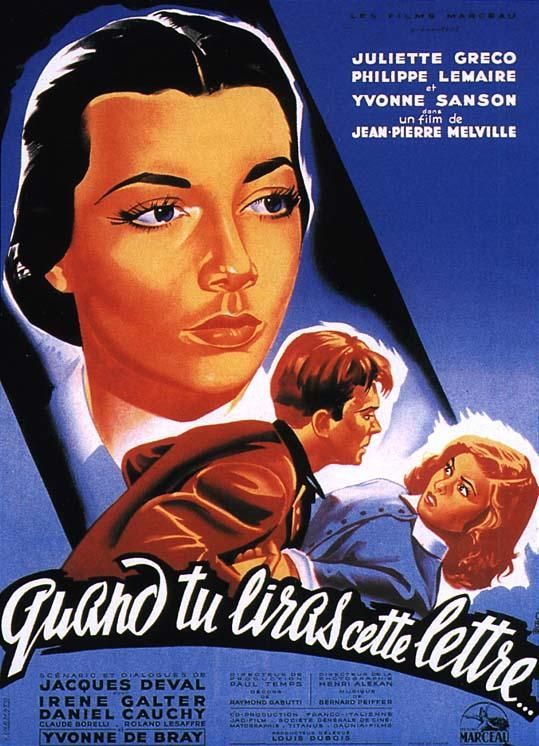 To be frank, I went to see Jean-Pierre Melville’s Quand tu liras cette lettre (When You Read This Letter) at the BFI last night simply out of curiosity to see what sort of a leading actress Juliette Gréco was in 1953. Screened in a beautifully restored 35mm print, the film is an old-fashioned melodrama in which Gréco plays a novice nun who leaves the convent in order to look after her younger sister, the naive victim of a handsome, libidinous rotter. There’s a rape, a murder, an accidental death under the wheels of an express train, a very nice Cadillac Series 62 convertible, and some lovely scenes of the Cannes waterfront before it all got spoiled.
 If you want to convince someone — even yourself — that Bob Dylan is a great singer, a place to go might be “Brownsville Girl”, an 11-minute epic from the otherwise threadbare 1986 album Knocked Out Loaded. More specifically, attend to the first line of the penultimate verse, at 8:51. “Strange how people who suffer together have stronger connections than those who are most content,” Dylan sings in a ruminative and rueful tone, delivering the line in a single breath, exhaling the sentence in such a way as to create a complete design, the internal rhythm gently coiling with a sing-song inflection and a slight but telling deceleration on the last four words, making the sense of it linger after the sound has moved on.
 I’m going to make no apology for returning to the subject of John Coltrane so soon after writing
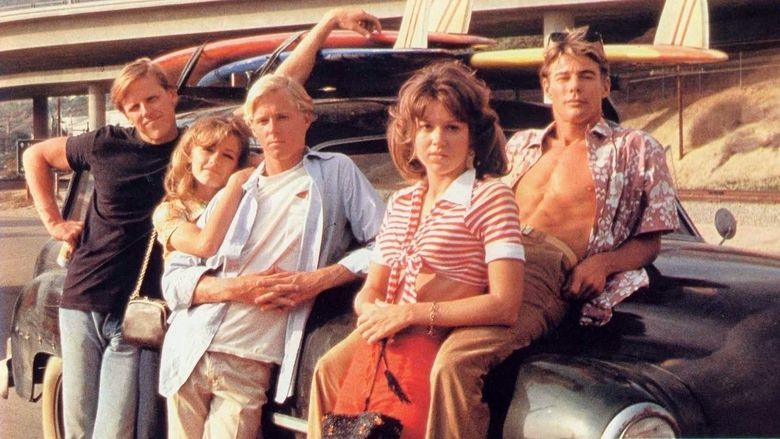
  If you wanted to isolate an individual moment that summed up the curious position of the Beach Boys vis à vis the changing modes of youth culture in 1967, you might come up with the one in “Darlin'”, a single released in that pivotal year, when Carl Wilson sings a phrase written by Mike Love which lands precisely in the space between a letterman’s sweater and a paisley kaftan, between the disappearing culture and the emerging one: “You’re so doggone outtasight…”
 John Coltrane died in a Long Island hospital 50 years ago today. The singularly beautiful photograph above is by the great Roy DeCarava and was included in his wonderful book, The Sound I Saw. It was taken in 1960, and the figure dimly visible in the background is Elvin Jones.

