Keeping it tight
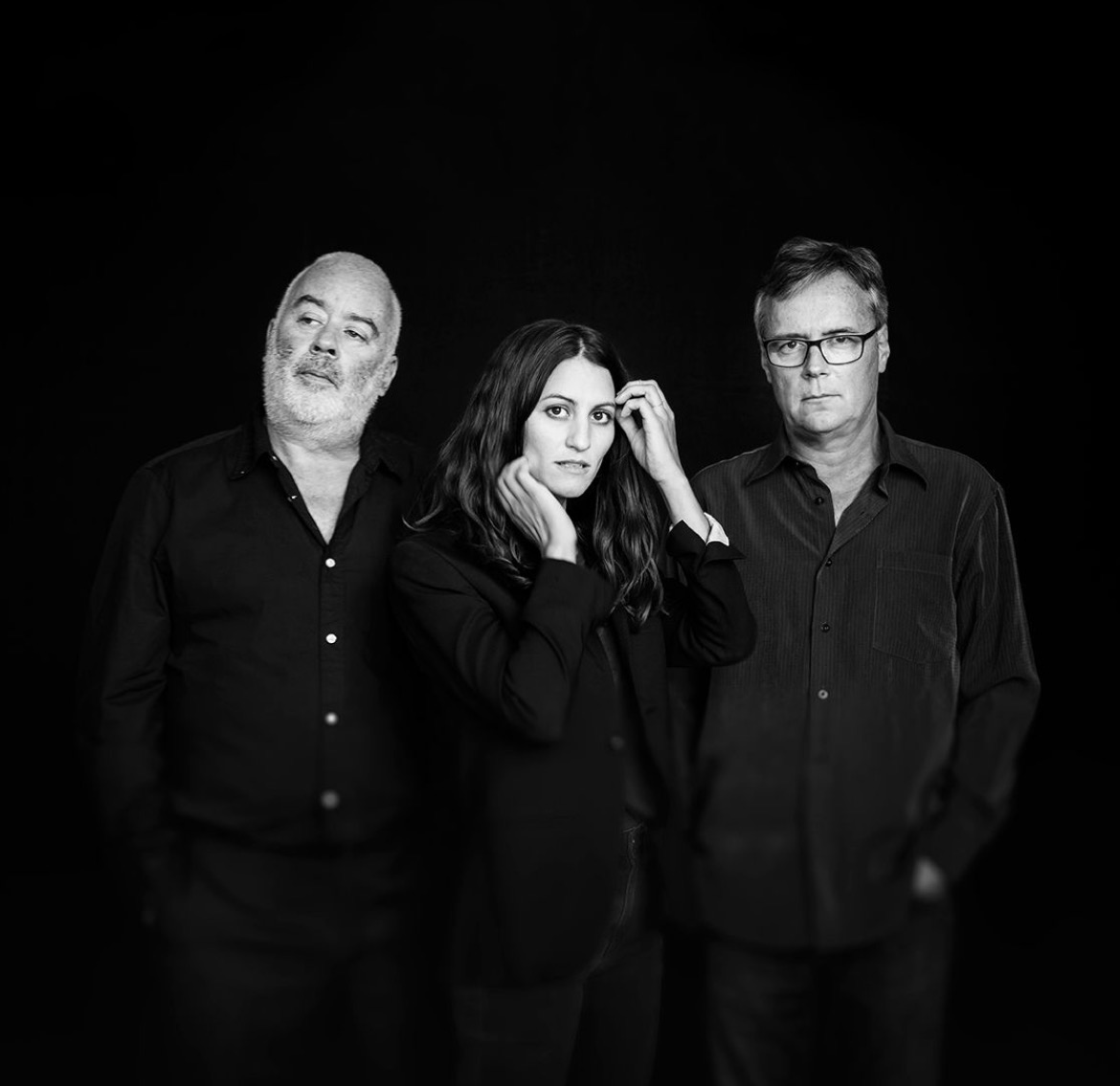
Brevity, a friend of mine once remarked, can contain most things. Two of my favourite pieces of music are “Stay” by Maurice Williams and the Zodiacs and “Desireless” by Don Cherry, which clocked in at 1 minute 36 seconds and 1 minute 22 seconds respectively on their appearances in 1960 and 1973 but lack nothing in richness and enduring fascination. Now comes a Canadian trio calling itself Tiny Sun with an album which consists of 18 pieces, none of them lasting more than two minutes.
I’m aware of Tiny Sun because their guitarist, Don Rooke, is a musician whose career I’ve followed with interest and admiration for many years through his work with Mary Margaret O’Hara and the Henrys. The other members of the line-up, all Toronto-based, are the film and TV composer Jonathan Goldsmith, who plays keyboards, guitar and bass here, and the singer Martina Sorbara, better known as Dragonette for her electropop work.
By contrast with the scale of these miniatures, the gestation of the album was protracted. Tiny Sun began when Rooke sent Sorbara one of several “postcard-sized” pieces of instrumental music he had recorded with Goldsmith and invited her to complete it. That was in 2014, and the pieces have been accumulating ever since.
There are echoes of folk music here, and country music, blended into something always familiar but never classifiable. Sorbara is a wonderfully flexible and expressive singer; the range of material reveals her fine technique and highlights her subtle switches of emotional register. At times I was reminded of the underrated Karla Bonoff. She makes me wonder what there must be in the water of Ontario to produce her as well as MMO’H and Tamara Lindeman. Rooke’s gentle mastery of various guitars — including his beloved Weissenborn lap steel — is employed with his usual economy and immaculate feeling for the moment. Goldsmith supplies transparent textures and warm colours that give each piece its own distinctive atmosphere, holding the shards of emotion that comprise Sorbara’s lyrics in elegant suspension.
Needless to say, nothing outstays its welcome. The conciseness adds point to the soulfulness of “Imagined Love”, the bright bluegrass of “Don’t Fault the Stars for Falling”, the rubato flow of “Fledgling Land”, the unexpected junkyard grunge of “Hieroglyphics”, the delicate balladry of “Silly Way the World Got Spun”, the diaphanous waltz of “Float on the Sea”, and the wry reverie of “Nobody Won’t”. Less is more, it’s sometimes said, and here’s proof.
* Tiny Sun’s album is on Spotify: https://open.spotify.com/artist/33kB8m7192adroRg69n4bA They play their debut concert, with guest musicians, at Koerner Hall in Toronto on May 14.


As you Richard, I love your writing…get a lot from it, can’t wait to check this out on a platform other than Spotify. I know you love music and I know it is difficult to avoid but I beg you and you followers to not use Spotify. Spotify has become the dominant music streaming service in the world, but its business model and corporate decisions have drawn increasing criticism from musicians, journalists, and listeners. Over the years, concerns have emerged about how the platform treats artists, how it manipulates the music ecosystem through algorithms and fake content, and how its leadership invests profits generated from music. Taken together, these issues raise serious ethical and cultural questions about the platform.
Core Problems
1. Extremely Low Payments to Musicians
Spotify pays artists fractions of a cent per stream. Because revenue is distributed by overall platform share, most musicians need millions of streams to earn modest income. The system disproportionately benefits major labels and the platform itself.
2. Algorithmic, Passive Listening
Auto-generated playlists and “lean-back” listening encourage music as background content rather than art.
This incentivizes:
3. Fake Artists and “Ghost” Music
Anonymous stock-music producers and filler tracks often appear in official playlists.
This lowers licensing costs and competes directly with real musicians for attention and revenue.
4. Flood of AI-Generated Music
Millions of AI-generated tracks have been uploaded to exploit streaming payouts.
Effects include:
5. AI Voice Cloning & Impersonation
AI tools can replicate real artists’ voices.
Although impersonation violates platform rules, enforcement is often reactive rather than preventative.
6. Military Technology Investments
Spotify’s leadership has invested hundreds of millions into AI-driven military technology companies.
For many artists, this creates a moral conflict between music culture and weapons development.
If Not Spotify, Then What?
Leaving Spotify doesn’t mean giving up music. Functions can be separated across better platforms.
Avoid YouTube Music As Well
It presents similar structural issues:
Ethical Alternatives
1. Support Artists Directly (Best Option)
Bandcamp
2. Ethical Streaming Services
If you want a subscription catalog:
Qobuz (Often the Best After Bandcamp)
Tidal
Apple Music
3. Discovering Music Without Algorithms
Community Platforms
Music Journalism
Direct Artist Channels
Human curation restores intentional listening.
4. Podcasts Without Spotify
Use open RSS-based podcast apps:
Podcasts were designed to be decentralized — they don’t require Spotify.
RW has written in the past about not supporting Spotify and I’m surprised at his recommendation.
Tell me JH how does Amazon music figure in the ethical stakes?
The list against Amazon would probably be longer than my don’t use Spotify list. Unless there are no other options, I avoid Amazon and buy as local as possible.
John — Good to hear from you. I share your feelings, in that I regard Spotify (whatever Bob Lefsetz might claim) as the invention of the devil and have never gone near it. I mentioned it here because it seemed to be the only way to access this music, which I now learn (via an exchange with Don Rooke) is also available on Apple Music and Tidal. Best, Richard.
I can confirm it is available on most digital platforms. In the past, I would recommend Tidal (which was co-founded by Jay-Z), but since it has been sold to the founder of Twitter, I’m not optimistic. My musician friends say QoBuz is the best for musicians and listeners at the moment. (It is not out on bandcamp sadly)
Nice one. Reminded me of the 2008 Inara George & Van Dyke Parks album “An Invitation”. And, occasionally, of Joanna Newsom. Thank you for this recommendation.
Glad to hear Don is back!
Richard,
Tiny Sun are also on Qobuz.
The songs you reffered to are all on the album Dragonette, already on my favourites for a quiet evening listen.
Kind regards,
Vitor Fragoso
#referred
After reading about Tiny Sun and listening to them the next email appears and it’s Karla Bonoff announcing some California shows.