Remembering Major Lance
When I met Major Lance he was living near Southend, of all places. This was January 1973 and it was not quite a decade since he had raced into the US Top 10 with his first hit, “The Monkey Time”. Now he had just signed with an English company, Contempo Records, run by John Abbey, the proprietor and editor of Blues & Soul magazine. The idea was to capitalise on his hero status with Northern Soul fans by issuing his new cover version of an established dancefloor favourite, Billy Butler’s “The Right Track”, as the label’s first release.
His biggest hits had been cut in Chicago and issued on the OKeh label. Subsequently he had recorded for Dakar, Curtom and Stax, with mixed results. And now he had found his way to Contempo, which was also providing a home for Otis Leavill, his fellow Chicagoan, whom he planned to produce. “I don’t sign long contracts now,” Lance said. “I go for a year, with an option, and if nothing happens, I move on somewhere else.”
He told me how he had found his way into show business as a dancer on the Bandstand Matinee TV show in Chicago. “The dances changed so fast,” he said. “Every month we’d invent something new, and they came and went so quickly that we didn’t even have time to give names to most of them.”
“The Monkey Time” was one that got a name. It was also one of those records that came out of the radio in the autumn of 1963 and changed everything. Others were Martha and the Vandellas’ “Heat Wave”, Marvin Gaye’s “Can I Get a Witness” and the Impressions’ “It’s All Right”. This was before the term “soul music” had come into widespread use; for a while these records and others like them were referred to by UK fans as “new wave r&b”.
The three men who created “The Monkey Time” were Curtis Mayfield, the leader of the Impressions and Lance’s friend from their teenage years in the Cabrini-Green housing project on Chicago’s Near North Side, who wrote the song; Johnny Pate, the jazz bassist turned arranger, whose chart made such powerfully rhythmic use of brass; and the shrewd producer Carl Davis, whose first hit had come a year earlier with Gene Chandler’s “Duke of Earl”. But it was Major’s modest, almost homespun tone that made it so distinctive; he sounded like an ordinary kid having a good time with a new dance craze.
That team was behind a string of hits, all of which are included among the 53 tracks on Ain’t No Soul (In These Old Shoes), a new 2-CD set released by RPM and subtitled “The Complete OKeh Recordings 1963-1967”. They include “Hey Little Girl”, “Um, Um, Um, Um, Um, Um”, “The Matador”, “Rhythm” and “Come See”, as well as great non-hits and B-sides like “Sometimes I Wonder”, “Mama Didn’t Know”, “Gonna Get Married” and “You Don’t Want Me No More”, and a handful of covers of current hits such as “Pride and Joy” and “Land of a Thousand Dances”.
He told me that the good times at OKeh ended when Columbia, the parent label, wanted Carl Davis and his artists to move their operation to New York. Davis refused, stayed put, and started his own label, Dakar (which would do well with Tyrone Davis and Hamilton Bohannon). “It had a lot to do with jealousy inside the company,” Lance said, “and problems that could have been solved but weren’t.”
My favourite of all Major’s OKeh tracks, however, is one I didn’t discover until the early ’70s, when I bought a US promo copy at the original Selectadisc shop on the now-demolished Arkwright Street in Nottingham. It was the singer’s first release on OKeh, and it made so little impact on its home market in the spring of 1963 that it wasn’t even released in Britain. But “Delilah” is one of Curtis Mayfield’s sweetest little story-songs, a typical tale of a country boy trying to charm a city girl with humility and sincerity, perfectly suited to Major’s characteristic tone: “I ain’t got much money / Just a farm on the the outskirts of town / Please don’t think that this is funny / But with you I’d like to settle down…”
Later in his life, Major hit hard times. He stayed with Contempo for a couple of years, touring the Northern Soul clubs, and then went home, where he recorded for Playboy, his own Osiris imprint and Soul, the Motown subsidiary. He served a jail term for cocaine possession, lost most of his sight, and died in 1994.
The new compilation is a good way to remember him. “Delilah” leads it off, and what has always drawn me back to it is the combination of Major’s voice, Curtis’s song, and an irresistible rhythm track, with Al Duncan’s lovely tom-tom figures and Floyd Morris’s jaunty Latin-accented piano fills, hammered in octaves in the upper register and particularly prominent on the fade. It’s just a scrap of a thing, really, but I’d hate to be without it.
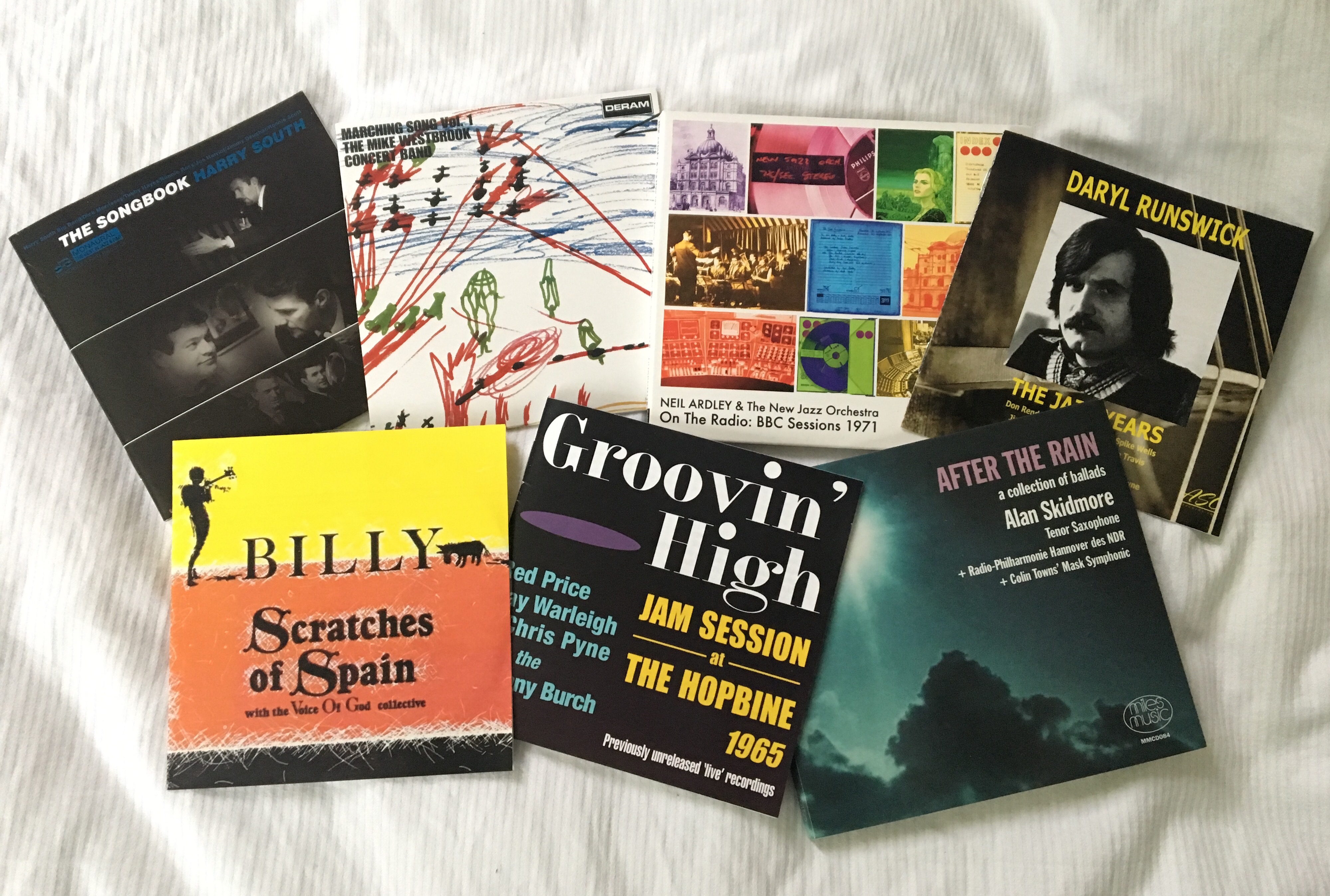 The first instalment of this two-part series dealt with new releases. This one looks at recent reissues and archive discoveries from the second half of the last century.
 The title of this two-part series is a homage to John Muir, a friend of 40-odd years ago. As a BBC radio producer, Muir saved John Peel’s career at the corporation in 1968 by giving him a Radio 1 show called Night Ride. He also booked Roxy Music for their first broadcast on Sounds of the Seventies, and supervised a series titled Jazz in Britain, devoted to the emerging generation of John Stevens, John Surman, Tony Oxley, Trevor Watts, Howard Riley and so on. John died recently, aged 80. I thought of him as being the best kind of BBC person: calm, civilised, culturally literate and unobtrusively fearless. Here are eight new albums by artists he would certainly have booked for a series of Jazz in Britain in 2017. Together they demonstrate that we are experiencing a new golden age of British jazz.
 Donald Trump’s attempt to turn the United States back into the country once shaped by Richard Nixon and J. Edgar Hoover took another step today when he signed a document reversing Barack Obama’s rapprochement with Cuba. There’s probably not much most of us can do about that, except maybe book a holiday there to replace the Americans who will no longer be able to travel to the island so easily, but it’s a good excuse to mention the reissue in expanded form of Introducing… Rubén González, one of the finest albums to come out of the Buena Vista Social Club phenomenon 20 years ago.
 In the Rialto Theatre, Montreux, with only their technicians and a TV crew for company, the Rolling Stones were rehearsing for the Exile on Main St tour. It was May 1972, and the first date in Canada was a fortnight away. The small theatre on the shore of Lac Leman was the kind of setting that always showed them to best advantage, far from the stadiums in which they became a rock and roll circus act. The rhythm section locked in as played “Tumbling Dice”, “Shake Your Hips” and various boogie jams. In those surroundings even a sceptic (which I was) could have listened to them all night.
 Of the handful of Americans who landed in the UK in the 1960s to try and reverse the tide of the British Invasion, none had a more profound impact than Shel Talmy. A 25-year-old studio engineer with virtually no experience as a record producer but with a handful of Beach Boys and Lou Rawls acetates given to him by his mentor, Nik Venet, in order to persuade prospective employers of his bona fides, Talmy arrived from California in the summer of 1962. Dick Rowe, Decca’s A&R chief, was impressed enough to assign him to work with the Bachelors. It wasn’t really his idea of pop music, but when “Charmaine” was a hit, he was on his way. And after that came a handful of sessions that changed the way British pop records sounded.
 One of the gifts of Thomas Morgan, the unassuming 35-year-old bassist from Hayward, California, is to make every collaboration he undertakes sound like a perfect meeting of minds. No wonder Manfred Eicher, the founder of the ECM label, where intimate conversation between musicians is the dominant mode, likes him so much.

 thebluemoment.com