Tyshawn Sorey at St Giles’ Cripplegate
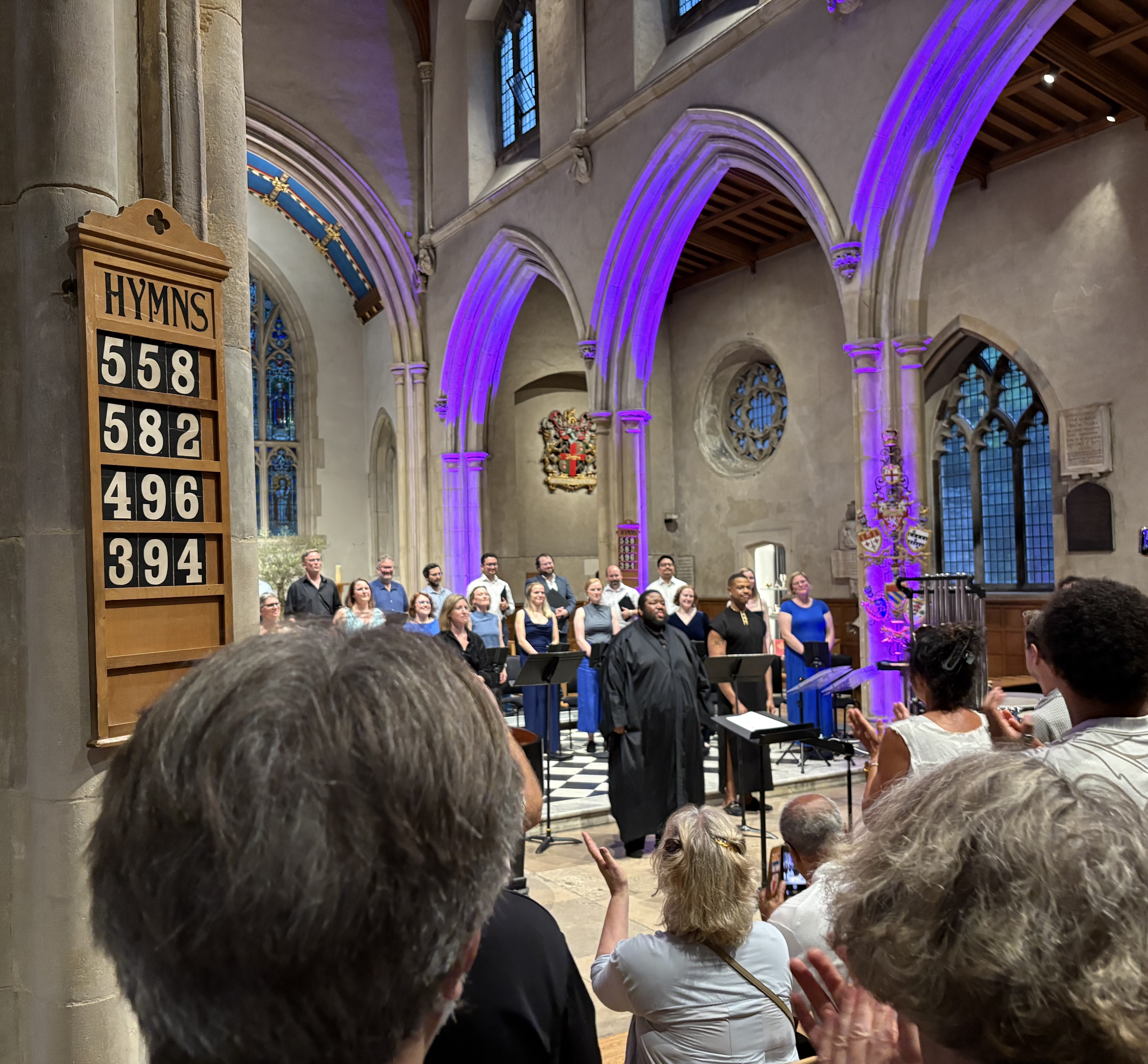
“Monochromatic Light (Afterlife)” is a composition commissioned from Tyshawn Sorey to mark the 50th anniversary of the opening of the Rothko Chapel in Houston, Texas, where 14 of Mark Rothko’s canvases, in varying shades of black, are housed in a non-denominational modernist building. Having worked with the various architects on the design of the octagonal building, Rothko died in 1970, the year before before it was completed, so he was able neither to see the finished chapel nor to hear the 25-minute piece for chorus, viola and percussion composed by the master minimalist Morton Feldman to celebrate its opening.
Sorey’s piece is a homage to his predecessor, employing the same resources but three times longer, with the addition of a solo singer — the bass-baritone Davóne Tines — and a pianist doubling on celesta. It was a finalist for the Pulitzer Prize in Music in 2023, which he won a year later for his “Adagio (for Wadada Leo Smith)”, and a few months after the Houston première it was given a staged performance, with a dance troupe and paintings by Julie Mehretu, in New York. For its London premiére, at the ancient church of St Giles’ Cripplegate, the composition was presented without those additions.
Conducted from a raised seat by the composer, clad in black robes, it began with the sound of tubular bells, played by George Barton, before Ruth Gibson’s viola slid into view, the first hint of what would be a remarkable performance in which she transitioned from ardent (and sometimes paradoxically harrowing) bel canto melodies to tissue-thin harmonics and unsettling shivers of sound. Soon the pianist Siwan Rhys was adding punctuation, sometimes deploying the brighter, more urgent sound of the celesta, while Barton moved between an array of tympani, a vibraphone, a gong and a gran cassa, carefully underlining or italicising what was going on elsewhere with looming rolls or soft strikes.
Already it had become apparent that this was music with a rare sense of space (Feldman’s influence there, of course), a gift to an audience prepared to sit and wait for the composition to assume its overall shape and to take hold. For such listeners, an apparently austere methodology could not disguise the warmth beneath the contemplative surface.
A quarter of an hour had gone, I think, before the entry of the choir. The 20 voices of the BBC Singers, equally divided between women and men, were given a wordless score, all elongated vowels, their collective hums and drones floating like clouds through the music. In one quietly spectacular passage, around the midpoint, they seemed to hang motionless on a cushion of air above a firm but gentle roll on the gran cassa, showing Sorey’s ability to create drama without making a fuss. Harmonically, the frequent use of minor seconds seemed intended not to startle or unsettle but to provoke deeper engagement.
As a late-arriving second voice, a foil for the viola, Tines suddenly emerged as a huge presence within the piece, There were no words from him, just sounds, producing a great range of timbres and showing extraordinary flexibility, until right at the end. Where Feldman placed a “Hebrewesque melody” written when he was a teenager, Sorey added something different: with a leap up the registers, Tines delivered a free variation on the spiritual “Sometimes I Feel Like a Motherless Child”, a staple of black American music since the Fisk Jubilee Singers began performing it in the 1870s before handing it on to Paul Robeson, Mahalia Jackson, Odetta, Richie Havens, Jimmy Scott and countless others.
Twisting the syllables, making the vowels veer and plunge, taking the song to places it had never been before against a rising clamour of tolling piano and clanging bells, the singer and the composer used the final moments to cast the work in a different light. Surely this was a salute to Rothko, who died by his own hand, the victim of untreatable depression, having once expressed a desire to raise painting to the expressive power of music and poetry, and whose work is more widely loved now than it has ever been. An unforgettable evening was given its surprising but perfect closure.
* A recording of Tyshawn Sorey’s “Monochromatic Light (Afterlife)” is available from Dacamera Editions via Bandcamp: https://dacameraeditions.bandcamp.com/album/monochromatic-light-afterlife


