Skip to content

Otis Taylor’s trance blues
Otis TaylorWhen Otis Taylor was 16 years old, back in 1964, he got his picture in the local paper for playing a five-string banjo while riding a unicycle. By coincidence, that was the year in which my fellow bandmates and I, only a year or two older than Taylor, clubbed together to buy a bottle of Johnny Walker Red Label whisky with which to lure John Lee Hooker into talking to us between his sets with Tony McPhee’s Groundhogs at the Elizabethan Rooms in Nottingham, a dance hall above the Co-operative store in the city centre. The coincidence lies in the fact that when I listen to Otis Taylor, I always think of Hooker, a great hero to those of us who were trying with such desperate earnestness, several thousand miles and an entire culture away from the birthplace of the blues, to learn its language.

Taylor, who is now 64, approaches the blues with the same elemental attitude as Hooker. Most of his songs have one chord, sometimes two. Time seems to stop while he plays, as it did with John Lee’s boogies. He comes from a more sophisticated background — his parents, he once told me, listened to John Coltrane and Dave Brubeck, while he spent his early teenage years hanging out at the folklore centre in Denver, Colorado, where the family had moved from Chicago — but his blues, like Hooker’s, stay closer than most to their, and his, African roots.

Taylor came to London in the late 1960s as a solo blues singer, guitarist and banjoist. He supported Fairport Convention at the Roundhouse and was scheduled to record for the Blue Horizon label until a disagreement over musical policy put an end to the plan. He went home and spent the next few decades running an antiques business and a bicycle racing team until resuming his career in the mid-1990s with the first of a string of albums of his “trance blues”, of which My World is Gone (Telarc) is the 13th.

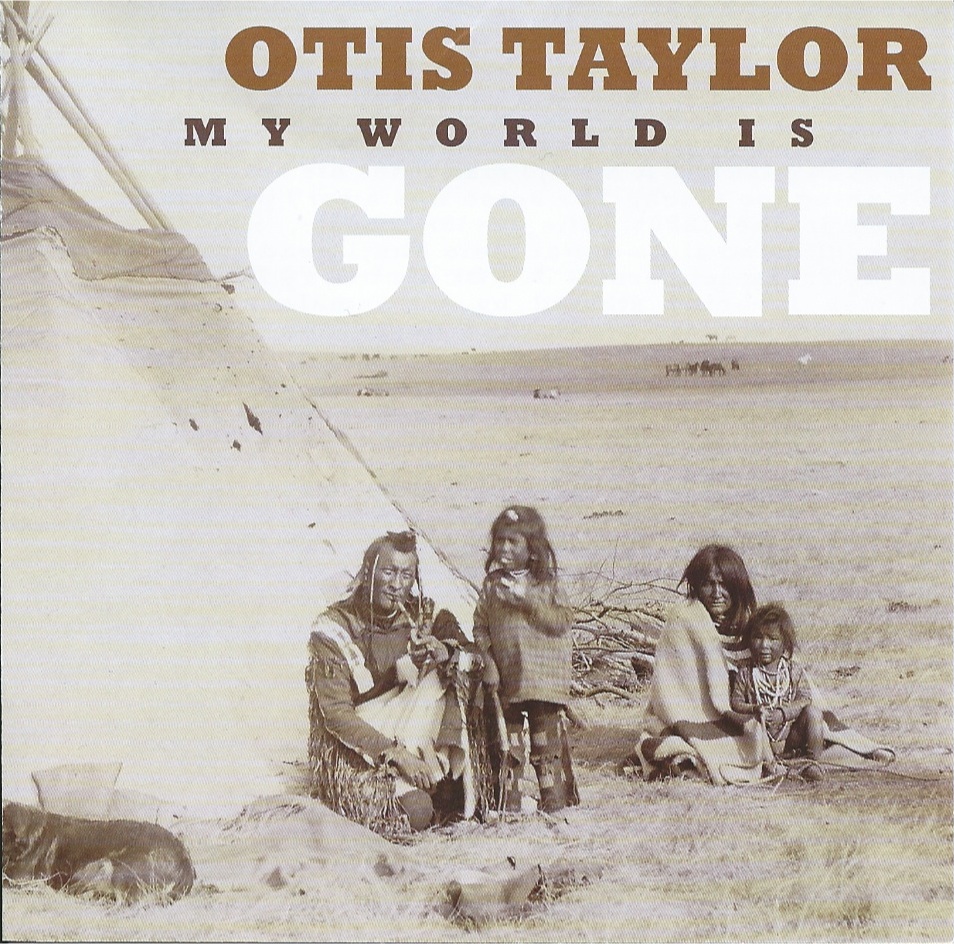
This latest sequence of songs concentrates on the world of the American Indian. Like Harry Smith in the notes to the Anthology of American Music, he adds little glosses to the title of each song: “A man stops drinking, hoping that his lover will come back”, “A Navajo man loses his horse from drinking too much”, or “A young man recounts the tale of his mother’s murder, where men came with crosses in the middle of the night.”

“I used to be told that what I did wasn’t cool,” he told me. “They said, ‘You don’t use chord changes and your songs are depressing. People want chord changes and happy songs.’ But that’s the way it is. Appalachian songs can be pretty depressing, too. Even Dolly Parton gets depressing sometimes.”

The arrangements — for various combinations of guitar, banjo, bass, tuba, drums, fiddle, cornet and organ — are simple but often imaginative. On “Huckleberry Blues”, for example, a flickering banjo strum builds an incessant groove over Todd Edmunds’ mobile funk bass in the manner of the guitar on Isaac Hayes’s Shaft theme, while Ron Miles’s cornet adds a spare, lyrical counterpoint to Taylor’s weathered voice. Brian Juan’s Booker T-ish Hammond B3 is a highlight of “Never Been to the Reservation”.

Almost half a century after my pals and I persuaded Hooker to sit down with that bottle of Scotch, the whole round world is fluent in the language of the blues. Not many of today’s people, however, speak it as convincingly as Otis Taylor, whose authenticity comes not just from his background and his musicianship but from his ability to find the common ground between past and present, and thereby to make his music seem as timeless as the human condition it describes.

One night in Berlin

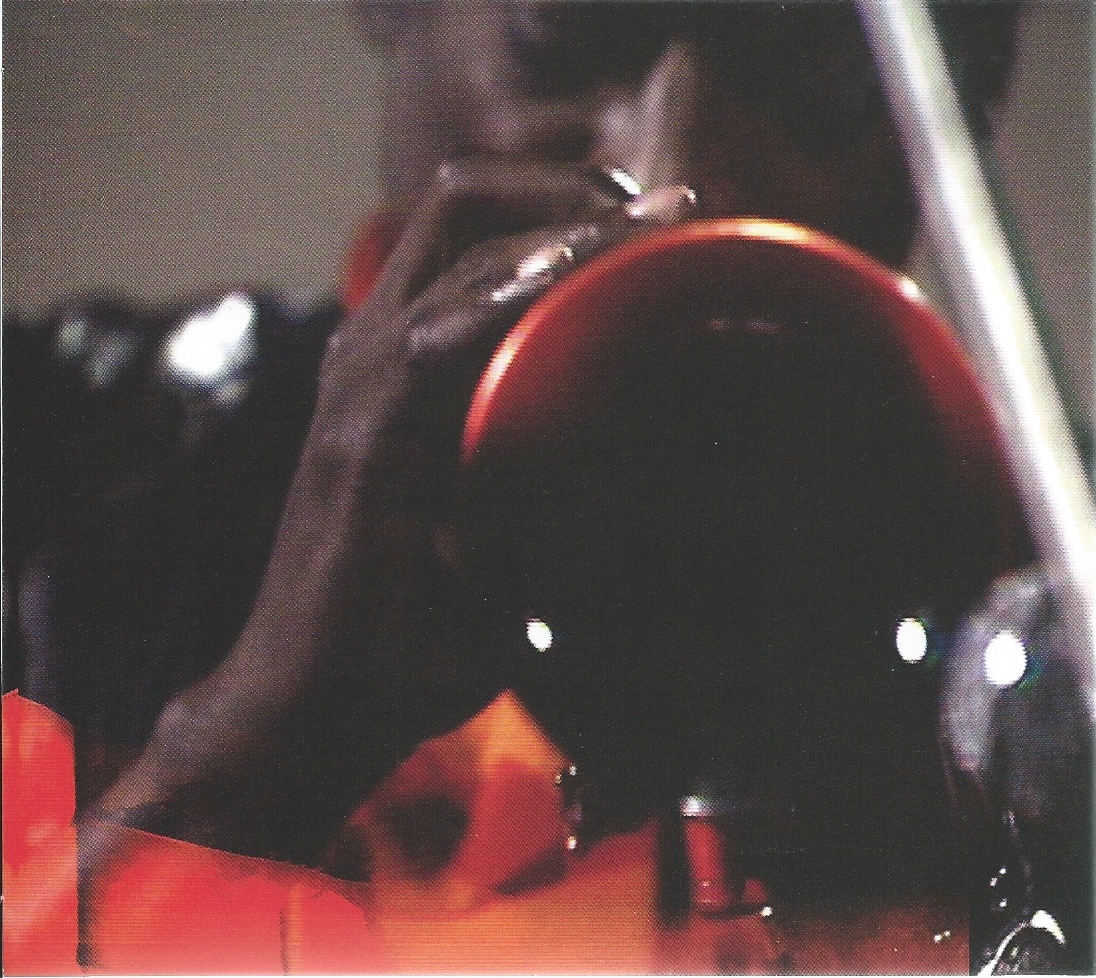
Miles in BerlinAt the start of the film of the Berlin concert which forms a bonus DVD to three audio CDs of the recently released Miles Davis Quintet Live in Europe 1969 set, you can’t help being struck by the impassive demeanour of the musicians as they are announced, one by one, to the audience. Jack DeJohnette doesn’t even look up as he fiddles with the placement of a microphone boom over one of his cymbals. Dave Holland, the young Englishman, is expressionless as he adjusts his double bass. Chick Corea reaches out his left hand to twist a knob above the keyboard of his Fender-Rhodes piano. Wayne Shorter licks his mouthpiece and stares into the middle distance. Meanwhile Miles has already prowled on to the stage, clearly not caring that the spontaneous wave of applause for his arrival has disrupted the MC’s scene-setting introductions. From none of the musicians comes even the tiniest acknowledgement of the audience’s welcome. This is how far the influence of Miles’s own super-cool on-stage deportment had spread, to men a generation younger than him (and, in the case of Corea and Holland, with naturally outgoing temperaments); he, in turn, is taking his wardrobe cues from them.

None of that stops it being a great concert, of course — or half a concert, in fact, since Miles’s group were sharing the bill at that night’s concert with Stan Kenton. You might think it an unlikely combination, even by the eclectic standards of the Berliner Jazztage, and that was how the 2,400-strong audience saw it, too. I remember half of them vociferously expressing their dissatisfaction with Kenton’s set, while those who acclaimed Kenton were clearly disconcerted by what Miles was up to (although their presence can be detected in the film only in the shot of some listeners frowning and shaking their heads as the camera scans the audience while the band leaves the stage). This intolerance was typical of Berlin audiences of the time and seemed particularly impolite since the whole festival, including that evening’s performances, had been dedicated in advance to Duke Ellington, who was due to appear at the same venue the following night in a concert scheduled in celebration of his 70th birthday.

It was my first exposure to Miles in person, and I certainly wasn’t disappointed. Urged on by sidemen who were leading him to the frontier of free jazz, he was spellbinding. Less than a year later, as he veered away from freedom towards an engagement with funk, he would be wanting his musicians to anchor the beat in a much more explicit way. But this was enthralling, a  freewheeling post-In a Silent Way, pre-Bitches Brew journey into abstraction, with a gorgeously oblique version of “I Fall in Love Too Easily” to seduce even those scandalised by the black shirt, trousers and leather waistcoat and the orange and gold scarf in which he took the stage, an outfit to match his black and orange trumpet.

Poor Kenton suffered far worse from the hecklers. He was booed even before he started, and later confessed that the experience had given him a sleepless night. Conducting the specially assembled Berlin Dream Band, a 19-strong multinational emsemble which included the trumpeter Carmell Jones, the trombonists Ake Persson and Jiggs Whigham and the alto saxophonist Leo Wright, he ran through a series of his best known pieces: “Artistry in Rhythm”, “Intermission Riff”, “The Peanut Vendor” and so on. Towards the end, however, he gestured the band to stand down as he performed his personal homage to Ellington, a five-minute variation on “Take the ‘A’ Train” delivered with such sincerity of emotion that the dissenters were temporarily silenced.

From the point of view of the audience’s divided reaction, it was one of the most bizarre concerts I’ve ever attended. The festival’s director, the late Jo Berendt, a man of broad vision and catholic taste, was intensely embarrassed. The following night, however, Ellington took the stage at the head of a band including Cootie Williams, Lawrence Brown, Johnny Hodges, Paul Gonsalves and Harry Carney, and harmony was restored.

Uncloudy day

Pop Staples 3Now I think about it, interviewing Roebuck “Pops” Staples 21 years ago was one of the great moments of my life. How could anyone not feel that way about shaking the hand of a man who, while growing up on a Mississippi plantation, had learnt to play guitar from listening to Charley Patton and Son House?

When Pops Staples and his wife Oceola joined the great northwards migration to Chicago in 1936, they took with them a two-year-old girl who was then their only child: Cleotha Staples, who died last week, aged 78 (here is Dave Laing’s very nice Guardian obituary). Later Cleotha, her brother Pervis and a younger sister, Mavis, would join their father in the Staple Singers, one of the all-time great gospel groups — and one which crossed over to the pop charts with remarkable success.

My favourite of their recordings is their first big hit, the majestic “Uncloudy Day”. Released on Vee-Jay in 1956, with a 15-year-old Mavis taking a spine-tingling solo chorus and only Roebuck’s shivering guitar in support of the singers, it supports Richard Thompson’s theory about the special quality of the vocal blend achieved by blood relatives:

And here, shortly after Pervis left to become a record producer and was replaced by a third sister, Yvonne, is an imperfect but nevertheless wonderful clip of them talking to Don Cornelius and performing their great Stax hit “Respect Yourself” on Soul Train in 1971:

The lost summer of Bill Evans

IntermissionIn How My Heart Sings, his fine biography of the great pianist Bill Evans, published in 1998, Peter Pettinger devotes only a handful of sentences to the months in the summer of 1961 following the death in a car accident of Scott LaFaro, the prodigiously gifted 25-year-old bassist in Evans’s trio. The fatal crash occurred late at night on a country road in upstate New York 10 days after the group had finished a lengthy and historic season at the Village Vanguard. So devasted was Evans that he did not play again for several months: a period in which he came second (behind Thelonious Monk) in the Down Beat critics’ poll, and third in the same magazine’s readers’ poll, which was won by Oscar Peterson. “I didn’t realise how it affected me straight away,” he told the critic Martin Williams. “Musically everything seemed to stop. I didn’t even play at home.”

In fact he retreated into the haven provided first by his brother, Harry Jr, in New York, and then by his father, Harry Sr, and mother, Mary, in Florida. There, his senses deadened by the tragedy and the sense of loss, he seems to have done little except play the odd game of golf with his father (a golf-course owner/manager)  as he waited for the anguish to recede. And it is this period that forms the subject of Intermission, a short novel by the young Welsh writer Owen Martell, just published in the UK by William Heinemann.

In probably the most daring fictionalisation/reimagining of a jazz musician’s life since Geoff Dyer’s But Beautiful, Martell views Evans’s period of withdrawal through the eyes of Harry Jr, Mary, and Harry Sr, interleaving memories of the pianist’s childhood in New Jersey with his relatives’ anxious, half-comprehending attempts to cushion the grief of a man whose distance from their world was exacerbated by the heroin addiction that began three years earlier during his time with the Miles Davis Sextet (a period during which he made a pivotal contribution to Kind of Blue) and would remain with him, on and off, until his death in 1980 at the age of 51. Evans slips in and out of the narrative like a ghost through unlit rooms: even to his family he is a fugitive figure, forever glimpsed sidelong and in shadow.

Martell, whose two previous novels were in the Welsh language, may have come to his subject through their common ethnicity: the pianist’s paternal ancestors were from Wales (his mother was born to immigrants from Ukraine). Occasionally the prose strains too hard for poetic effect but mostly it is suitably limpid and measured, while the author’s approach is consistently respectful of the self-appointed task of inventing the thoughts of real people. Sometimes the cadences recall those of Cormac McCarthy — particularly in the habit of concluding a paragraph with a verbless sentence — but with, of course, a far gentler attack.

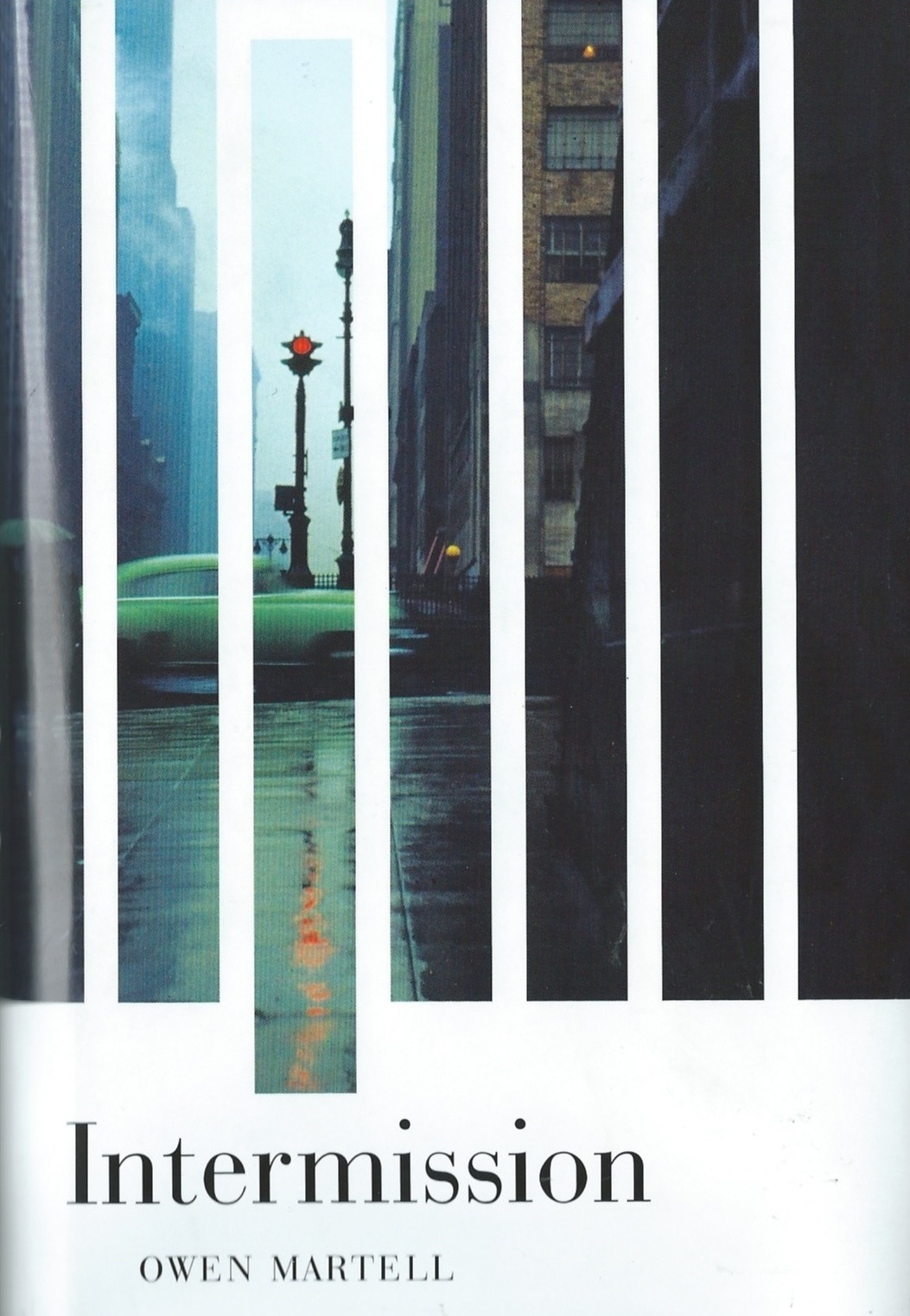
A word should be spared for the elegant cover, by Suzanne Dean, which appropriates the format of Reid Miles’s design for the jacket of Freddie Hubbard’s 1962 Blue Note LP Hub Tones, applying it to a New York street photograph by the late Esther Bubley. It matches the tone of a quiet, perceptive study of a musician whose masterpieces exacted a cruel price.

Something about Mary Wells

Mary Wells book cover

In the hearts of the first generation of Motown fans, there’s a special place for Mary Wells. During the period between 1960 and 1964 she became Berry Gordy Jr’s first female star, lending her voice to a series of songs, the majority of them written and produced by William “Smokey” Robinson, that helped define the company’s sound – and that of soul music itself.

From those days I have precious memories of owning “Two Lovers”, one of Smokey’s masterpieces, on the old black, white and yellow Oriole label, and the later Stateside coupling of “You Lost the Sweetest Boy” and “What’s Easy For Two”, which stands in my estimation alongside Elvis’s “His Latest Flame”/“Little Sister” and the Beatles’ “Strawberry Fields Forever”/“Penny Lane” among the greatest double A-side 45s in pop history.

“You Lost the Sweetest Boy” was an early product of the Holland-Dozier-Holland team, as were like Martha and the Vandellas’ “Heat Wave”, Marvin Gaye’s “Can I Get a Witness” and the Miracles’ “I Gotta Dance to Keep from Crying”, all of which which burst on to the airwaves at around the same time in the glorious year of 1963 to demonstrate how Gordy’s writers and producers were blending their gospel and R&B ingredients with a new pop sensibility.

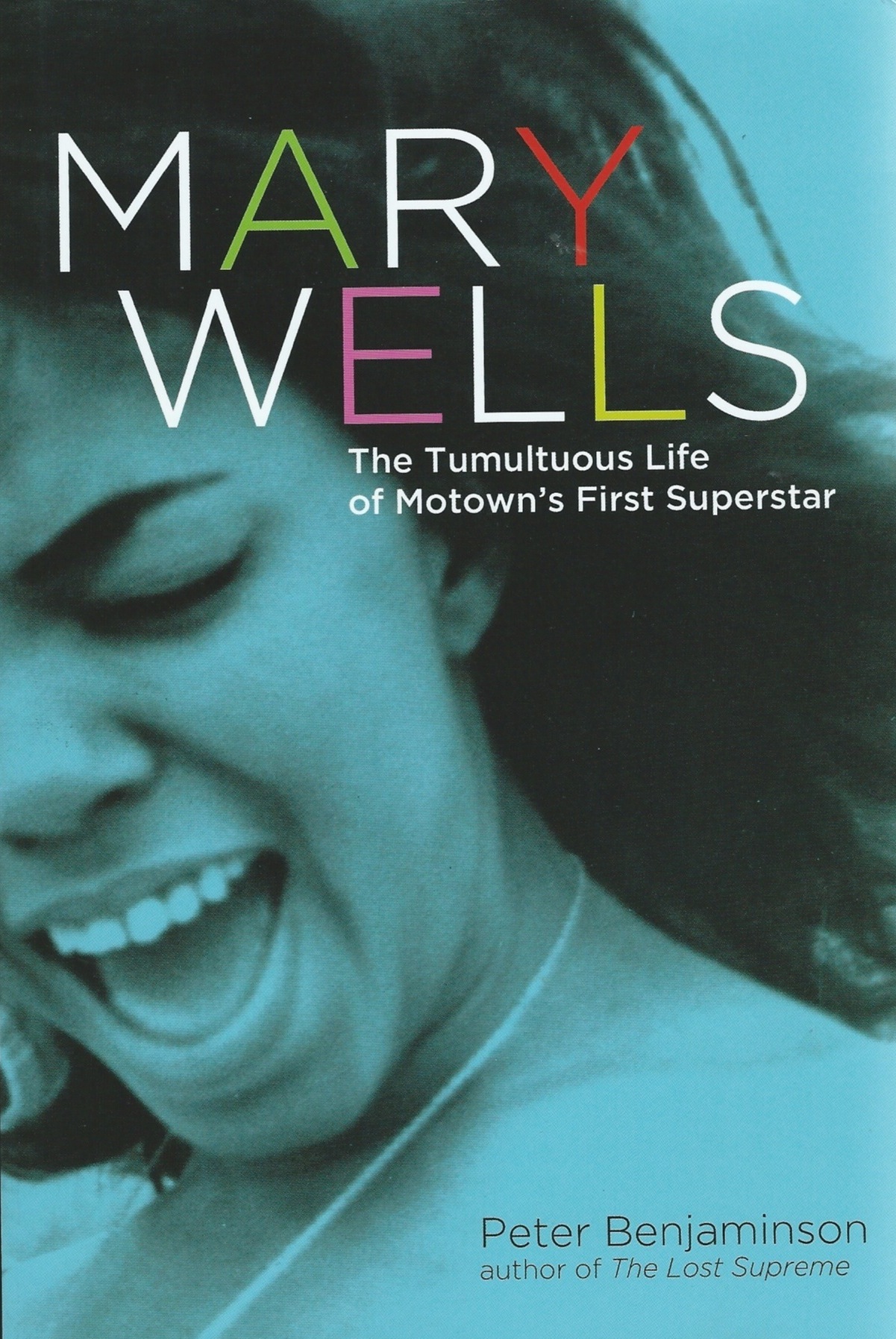
Yet I finished Mary Wells: The Tumultuous Life of Motown’s First Superstar, a new biography by Peter Benjaminson (Chicago Review Press), with very mixed feelings. I knew that Wells’s career had not gone well following the fateful decision to leave Motown after “My Guy” had given her a worldwide smash in 1964. I was aware, too, of a couple of marriages, including one to the man who encouraged her to switch labels from Motown to 20th Century, and another to Cecil Womack, who died earlier this month. And I knew that she had been treated for throat cancer in the 1980s, and had died in 1992, aged 49. But I had no idea of the extent to which a part of her life had been controlled by her various addictions to heroin, cocaine, methadone and alcohol.

Although I’m grateful to Benjaminson for compiling the details of her life, however distressing they may be, I wish he’d also been able to say something interesting about the music that made her famous. So it was with a sense of something like relief that I found a different way of remembering Mary Wells by putting on Something New, a two-CD collection of her obscure and unreleased Motown recordings compiled by Harry Weinger for Universal’s Hip-O Select imprint.

Some of these tracks, shelved when she left Motown and Gordy turned his attention to Diana Ross, turned up in 1966 on an album called Vintage Stock, but most people still won’t be familiar with such treats as “I’ve Got a Story”, a slice of pop-soul heaven written by Marvin Gaye, William Stevenson and Hank Cosby; Holland-Dozier-Holland’s plaintive “Guarantee (For a Lifetime)”; and Smokey’s “To Lose You” and his Miracles colleague Ronald White’s “Forgive and Forget”, both underpinned by light Latin rhythms (as had been “Two Lovers”).

It’s not all great. A couple of unreleased duets with Gaye are hardly spectacular, while the lacklustre versions of 13 standard songs originally intended for an album to be titled The Second Time Around demonstrate that Gordy’s judgement was by no means infallible. But there’s enough here to show that the Beatles were right in 1964 when they invited Wells to join them on tour, making her the first Motown artist to appear on a UK stage.

Stranger in blue suede shoes

This wonderful half-hour French TV film features my favourite incarnation of the Soft Machine at their very best: Mike Ratledge (organ), Kevin Ayers (bass) and Robert Wyatt (drums). After yesterday’s announcement of Kevin’s death, Robert paid him a lovely tribute on BBC Radio 4’s Today programme: Kevin, he said, had no sense of career, in which respect he was the exact opposite of an X Factor contestant. As his A&R man at Island Records for a short time in the mid-’70s, that was also my experience of a man who came closer than anyone else I ever met to incarnating the archetype of the golden hippie.

I’d first encountered Kevin in the days of the Whole World, a wonderful band with David Bedford on keyboards, the teenage Mike Oldfield on guitar, Lol Coxhill on soprano and tenor saxophones, and Robert on drums. They were not, perhaps, the most consistent of performing units, but I remember one night at the old Country Club on Haverstock Hill when they completely lived up to their individual and collective potential.

Muff Winwood had just signed Kevin to Island when I joined the company in 1973, and Muff produced his first Island album, The Confessions of Dr Dream and Other Stories. The next move was mostly my idea, turned into reality at a lunch with Kevin, Brian Eno and John Cale at the old Trattoo restaurant in Abingdon Road (close to the location of the original Biba, trivia fans). I’d signed Cale and Nico, and the June 1, 1974 concert and live album project was conceived as a way of expanding the audience for all of them. Each had a cult following, and deserved more.

During the concert I was in the Island mobile recording truck parked in the street behind the Rainbow, watching John Wood, the great engineer, work the faders, while keeping an eye on the black-and-white TV monitor, which gave us a feed from a single poorly focused camera. So I didn’t actually see the gig. But in the foyer beforehand there was no question that this was a real occasion, a hot ticket for the era’s scenemakers. We got the album into the shops within a month, which was a considerable feat for the time. I wanted it to be like a kind of newsletter. And whatever may be claimed in the otherwise excellent obituary of Kevin in this morning’s Times, they were never supposed to be a “supergroup”. (A couple of years ago Universal got in touch to discuss the idea of a deluxe edition with all the unreleased material, before somebody apparently thought better of it.)

One of the last times I saw Kevin was soon after the Rainbow show and its Manchester sequel, when he invited me to help him make a single and we spent a weekend in the Island studios in the converted laundry at the back of the St Peter’s Square offices. It wasn’t a happy experience. He didn’t know what he was doing, neither did I, and I’ve managed to erase the name of the unfortunate song in question. We both recognised the futility of the attempt, and tacitly decided not to fall out over it. If the experience had a lasting benefit, it was to put an end to any ambitions I might have had to become the next Phil Spector or Jerry Wexler. But anyway, Kevin, thanks for asking me, and sorry I didn’t do a better job.

Sweet home Chicago

A friend asked me today if I liked the Delta blues. Then Ted Gioia, the jazz and blues historian, tweeted a link to a story on chicagopatterns.com which reports that the house Muddy Waters lived in from 1954 to 1973 — in other words, during the years of his prime — is under threat. Appended to the story is a link to a video clip of Muddy and his band at the Newport Jazz Festival in 1960. That famous gig was the source of his great live album, which an older boy brought to play at a lunchtime session of the school jazz society (yes, there were such things) one day in 1961. And that was how, as a 14-year-old, I first heard “I Got My Mojo Workin'”, sung by Muddy with James Cotton on mouth-harp, Otis Spann on piano, Pat Hare on guitar, Andrew Stevens on bass guitar, and left-handed Francis Clay on drums (note the bite out of the edge of his big ride cymbal). Here’s the link to the story. To me, they still look and sound exactly like a band should. Oh yes, I like the Delta blues, and I like what happened to it in Chicago later on, too.

Dave King on the line

An album that claims it was recorded “in a little church in Minnesota for 4 hours on March 13th 2012” is not, of course, guaranteed to be a work of genius. But that’s not a bad way of introducing yourself. And, as it turns out, Dave King’s I’ve Been Ringing You, the album in question, has been my favourite listening for the past few weeks.

King is the drummer with the Bad Plus, a piano trio whose intense, highly sophisticated work I sometimes find easier to admire than to enjoy (they have a new album, too, called Made Possible). But although I’ve Been Ringing You shares the instrumental format of his regular band, it travels to the other end of the aesthetic spectrum, revisiting a selection of the sort of Broadway standards that have formed the staple diet of piano trios for the past 70 years, from Bud Powell via Ahmad Jamal and Bill Evans to Keith Jarrett and Brad Mehldau, yet dealing with them in a completely different way.

This is quiet, careful, ruminative music, built on free interplay around the skeletons of such sublime tunes as Gordon Jenkins’s “Goodbye”, Cole Porter’s “So in Love” and Richard Rodgers’ “People Will Say We’re in Love”. There’s one jazz standard, Ornette Coleman’s “Lonely Woman”, and one original, the title track, which is wholly improvised and credited to all three players. If I say that Bill Carrothers, the pianist, outlines the themes while Billy Peterson, the double bassist, and King produce responses that don’t necessarily follow the conventional harmonic and rhythmic guidelines, then that doesn’t sound particularly interesting. But the sensitivity and lateral-thinking adventurousness with which they react to each other is truly exceptional: it’s one of the few records of its type that I could put on immediately after Bill Evans’s genre-redefining 1961 Village Vanguard recordings without a sensation of anti-climax. And if you want to know how far piano-trio music has travelled in 50 years, compare this approach to Rodgers’s “This Nearly Was Mine” with the great version from 1960 by Cecil Taylor, Buell Neidlinger and Dennis Charles (on The World of Cecil Taylor).

I can’t give you a link to any of the actual music from the album, which is on the Sunnyside label (www.sunnysiderecords.com), but here is an interview with http://www.bebopified, the Minneapolis-St Paul jazz website, in which King describes how the album came about, and here’s a recent interview from Modern Drummer magazine, in which he talks interestingly about his influences.

The Shadow knew

I’ve never forgotten the first time I heard a record created by George “Shadow” Morton, one of the great visionaries of ’60s pop music, who died of cancer in Laguna Beach, California on Thursday, aged 71. It was the Shangri-Las’ “Remember (Walking in the Sand)”, released in 1964, and even to ears prepared by Phil Spector’s records with the Crystals and the Ronettes it seemed to set a new standard in pop records that aspired to be teenage mini-operas.

“Remember” came out on the then-new Red Bird label, owned by Jerry Leiber and Mike Stoller in partnership with the music business hustler George Goldner and the songwriters Jeff Barry and Ellie Greenwich. Here’s how Leiber remembered Morton in a passage from Hound Dog: The Leiber and Stoller Autobiography (Omnibus Press, 2009):  “I called him Shadow… a guy who appeared in the room without you ever realising that he ever walked in. And he was never there when you looked for him. Shadow was elusive. He was good looking and packed a self-invented mythology that intrigued me. For a guy from New York, he spoke with a strange Southern drawl. He had a sweet temperament and was physically as strong as a bull. As a producer, Shadow threw in everything but the kitchen sink. He created a cacophony, but one that made musical sense — and story sense, as well.”

Maybe the most striking story of all was the one told by the Shangri-Las’ Mary Weiss in 1966 in “Past, Present and Future”, their 11th single (and lovingly recreated a few years ago on Agnetha Faltskog’s album My Colouring Book, which I would need only the slightest encouragement to write about at greater length one day). It’s a piece of pop art as striking as anything Roy Lichtenstein ever produced.

Morton didn’t really train on, as they say in horse-racing circles, and effectively bowed out with the New York Dolls’s second album, Too Much Too Soon, in 1974. In between the Shangs and the Dolls, however, he produced the first Vanilla Fudge album, which has always seemed to me to be another pop-art classic: it’s the one in which they take a series of rock and soul classics — “Ticket to Ride”, “You Keep Me Hangin’ On”, “Bang Bang”, “She’s Not There”, “Eleanor Rigby” etc — and slow them right down in order to extract maximum melodrama.

They were a Long Island band with roots in soul and R&B, like the Young Rascals, with whom Morton also did some advisory work, and in Mark Stein they had a devastatingly powerful singer/organist. I saw them at Nottingham University in 1967, the year the album was released, and they were simply perfect. They did the album, of course, but they added a couple more songs which, perversely, they speeded up: I forget the identity of one (it might have been “Gimme Some Lovin'”) but the other was definitely the Yardbirds’ “For Your Love”. It was a great, great gig — but without Morton’s help, they’d probably never have made it out of the Long Island bars.

There’s an excellent New York Times obituary by Margalit Fox here — it reveals that Morton was born in Richmond, Virginia, which explains the Southern drawl, and includes the information that he ended up designing golf clubs. Here is a link to a fine interview (in two parts) conducted by my old friend Lenny Kaye, published in the Melody Maker and now available via the essential http://www.rocksbackpages.com (you’ll need to register). It’s from 1974, when Morton was in the studio with the Dolls (and Lenny had yet to find fame with Patti Smith). “I knew the music business couldn’t exist without me,” he said.

Bricklayers

It’s Reg Presley’s funeral this week. I didn’t know him in the ’60s, but I met him a few times in recent years at a biannual event called the Strummers, Thumpers and Scribblers Lunch (self-explanatory, really). At one of those functions I found myself out on the balcony of the restaurant, listening to a conversation between Reg and Bill Wyman: they were discussing in some detail the finer points of the building’s exterior brickwork. Reg had started as a brickie, and Bill’s dad had been one. Somehow I can’t imagine, in 30 or 40 years’ time, a similar conversation between a Radiohead and a Foal.