Reconsidering the Paris Sisters
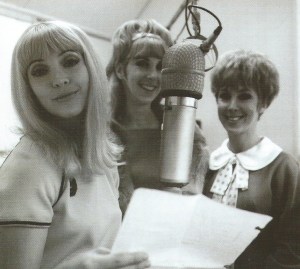 So now we know that Veronica Bennett was not the first lead singer of a female vocal trio to whom Phil Spector proposed marriage. That would be Priscilla Paris, according to the testimony of her sister Sherrell in the sleeve notes to Always Heavenly, the first proper retrospective of the Paris Sisters’ intriguing career, put together by the Ace label from the group’s recordings for several labels between 1961 and 1968.
The youngest of the Filtzer sisters (as they were born) had a voice to which the adjectives “breathy” and “seductive” hardly did justice. If the lusty, gospel-trained Darlene Love existed at one end of the girl-group spectrum, Priscilla defined the other, establishing a template for Shelley Fabares (“Johnny Angel”), Louise Cordet (“I’m Just a Baby”), and many others. The sisters’ “I Love How You Love Me”, a high-school pop ballad in which Spector lightly updated the formula of the Teddy Bears’ “To Know Him Is to Love Him”, was one of the big hits of 1961, and it is remarkable that they never got close to matching its success.
Alec Palao, the erudite and assiduous compiler of this new anthology, demonstrates that the Paris Sisters’ career amounted to more than one hit and one approach. The 25 songs selected here include productions by Terry Melcher, Jack Nitzsche, Nik Venet and Mike Curb as well as Spector, with composer credits that include Barry Mann and Cynthia Weil, Doc Pomus, P.F. Sloan, David Gates and Jackie DeShannon.
Spector had prefaced the come-hither formula of “I Love How You Love Me” with “Be My Boy” and tried to replicate it with “He Knows I Love Him Too Much”. The later producers — Melcher and Nitzsche in particular — moved the sisters towards the more assertive approach of the Crystals and the Ronettes, and several of these tracks belong among the many homages to Spector’s mature style. This Nitzsche-produced version of Mann and Weil’s epically atmospheric “See That Boy” allows Priscilla to open up and show genuine vocal power and flexibility, the result of a full Gold Star echo-chamber treatment rivalling the original by the Righteous Brothers (who did it as “See That Girl”). Venet’s baion-beat restyling of Bobby Darin’s “Dream Lover” is another delightful example. Others, such as the lilting “When I’m Alone With You”, written by Sloan and Steve Barri, and Gates’s “Greener Days”, edge towards a poppish folk-rock.
Most intriguing of all are Priscilla’s own compositions: always accomplished, demonstrating a real sense of drama, and sometimes venturing beyond the merely idiomatic. While “My Good Friend” is done up by Nitzsche as a very successful Spector pastiche, “I Came a Long Way to Nowhere”, “Why Do I Take It From You” and “I’m Me” show a greater range and contain strong hints of authorial soul-searching. They give the composer a chance to show that she could move beyond the doe-eyed mode to show an impressive strength and an interesting vulnerability.
The strangest track is the Sisters’ last recording with Priscilla, “Stand Naked Clown”, composed by Hal Blair (who wrote songs for Elvis’s movies) and Dean Kay (who co-wrote the Sinatra favourite “That’s Life”). Recorded in 1968, produced by Clancy Grass, the group’s manager (later married to Albeth) and the Wrecking Crew guitarist Don Peake (Priscilla’s boyfriend after the break-up of her marriage), it resembles something that Jacques Brel might have written for the Shangri-Las, with a semi-recitative intro against a bowed bass, abrupt switches between bolero rhythms and rubato passages, sudden crescendos, and a wonderfully melodramatic vocal.
There seems to have been a lot more to Priscilla than most of us could ever have suspected from that first and only hit, recorded when she was 16. She left the group in 1968 to pursue a solo career, first in Los Angeles, then in London, and finally in Paris, where she died after a fall in 2004, aged 59. Ace have a compilation of her solo work that I must now investigate. Albeth, the eldest of the sisters, retired to raise a family and died in 2014; she and Sherrell helped Palao in the assembly of this absorbing, hugely enjoyable and often surprising collection.
* The photograph of (left to right) Priscilla, Sherrell and Albeth Paris was taken at Sunset Sound studio in 1966. It appears in the booklet accompanying Always Heavenly.
 Matana Roberts was reminiscing about the first time she played with the great bassist Henry Grimes. It was during the New York blackout of 2004, when she was scheduled to appear at the Jazz Gallery with a group including Grimes and the pianist Vijay Iyer. She had been travelling on the L train from her home in Queens, and it had just emerged from the tunnel under the East River when all power vanished across the length and breadth of the city.
 For many years I dismissed David Bowie as a shallow opportunist. What was he doing that Andy Warhol and Lou Reed, conceptually and musically, hadn’t done with more wit and originality? I saw him at the Greyhound in Croydon in the summer of 1972, supported by Roxy Music in a pub room that can’t have held more than 200 people. He did the Ziggy Stardust thing, he and the band in full costume, and I didn’t care for it much.
 The fact that Mette Henriette, a young Norwegian saxophonist and composer, has made her recording debut with a double CD might seem to align her with the current phenomenon of “muchness” recently identified by the New York Times‘s Ben Ratliff in his
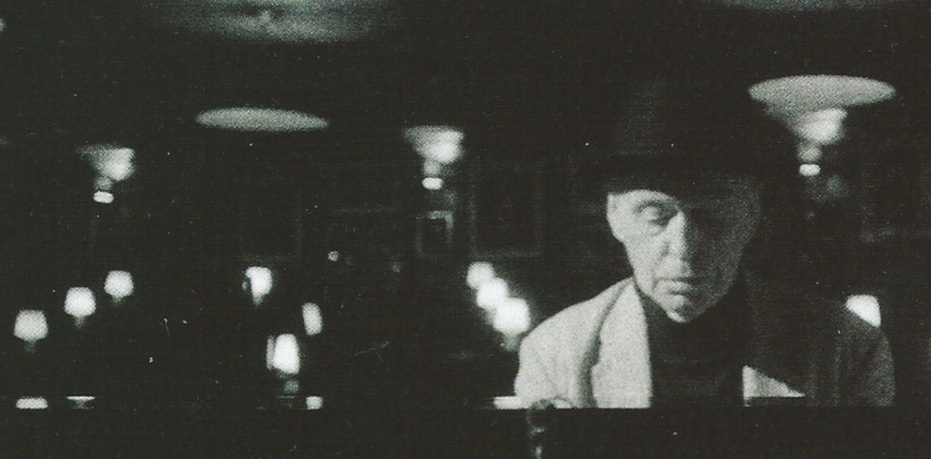 Can it really be true that, as Georgie Fame intimates, we should take the title of his new album seriously? Swan Songs is credited to “Georgie Fame and the Last Blue Flames”. It is, he says, his final recording. “In the twilight of a long career / When dementia’s all I have to fear / If I ever get to lose these blues / I’ve learned to put my life to better use,” he sings, and the compositions with which he fills the album seem designed to provide both a summary and a valediction.
 I heard Sonny Rollins play his sax on the Williamsburg Bridge once and only once live one afternoon so many years ago I can’t recall the walkway’s colour back then. Definitely not the pale red of my tongue when I wag it at myself each morning in the mirror, the walkway’s colour today at the intersection of Delancey and Clinton Streets where I enter it by passing through monumental stone portals, then under a framework of steel girders that span the 118-foot width of the bridge and display steel letters announcing its name. Iron fences painted cotton-candy pink guard the walkway’s flanks, and just beyond their shoulder-high rails much taller barriers of heavier-gauge steel chicken wire bolted to sturdy steel posts guard the fences. Steel crossbeams, spaced four yards or so apart, form a kind of serial roof over the walkway, too high by about a foot for me to jump up and touch, even on my best days playing hoop…
 “What do you want to call this, for now?” Bob Johnston asks Bob Dylan, whose reply to his producer is punctuated by giggles. “This is called… yes… we’ll call it ‘Just a Little Glass of Water’.” And, on January 21, 1966, in Columbia Records’ Seventh Avenue studio in New York City, Dylan and his musicians — Mike Bloomfield and Robbie Robertson on guitars, Garth Hudson on the organ, Richard Manuel on piano, Rick Danko on bass guitar and Sandy Konikoff on drums — launch into the first recorded pass at a song that would become known to bootleggers as “She’s Your Lover Now”.
 thebluemoment.com