Skip to content

Art Ensemble at Cafe Oto

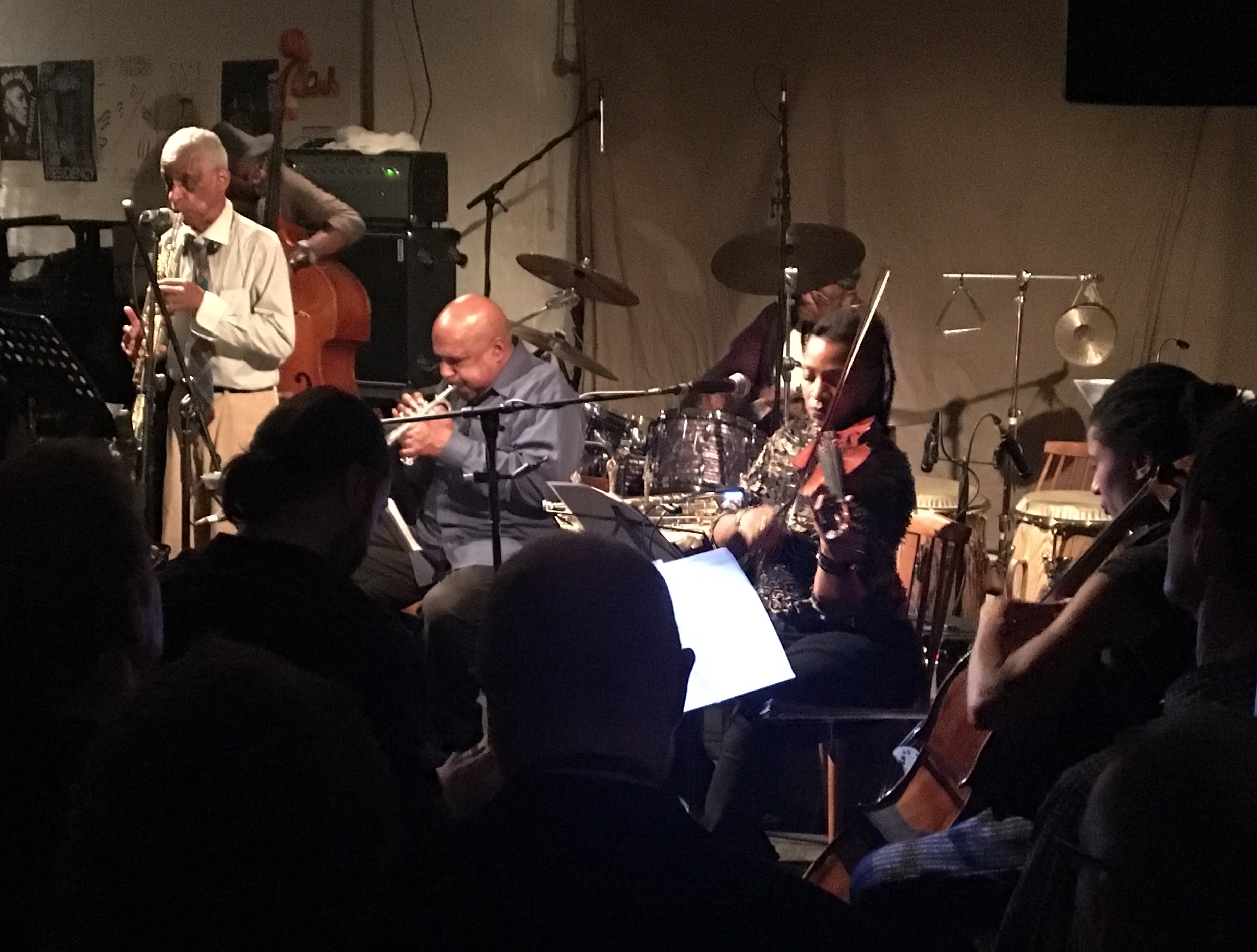
AEC Cafe OtoAmid the strangest weather in 30 years, with sand from the Sahara and dust from Iberian wildfires turning the air in London dark red at lunchtime on the hottest October 16th since records were first kept, there was another surprise awaiting the audience for the second of the Art Ensemble of Chicago’s three sold-out nights at Cafe Oto this week.
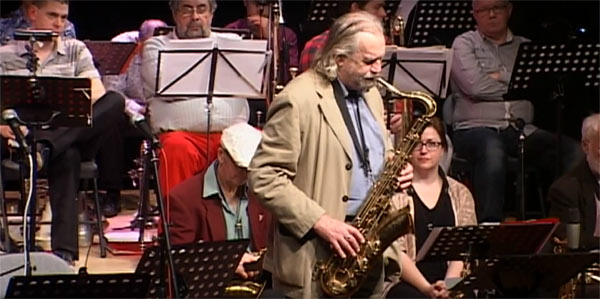
We had bought tickets expecting the regular four-piece line-up of the current AEC: co-founder Roscoe Mitchell (saxophones) and long-time member Famoudou Don Moye (drums and percussion) plus trumpeter Hugh Ragin and double bassist Junius Paul. What we encountered was the band extended to a septet by the presence of Mazz Swift (violin and vocals), Tomeka Reid (cello) and Silvia Bolognesi (double bass, the only one not visible in the photograph above). It was a special treat.

As you would expect, the unbroken 80-minute performance was a mixture of the prepared and the spontaneous, moving easily through contrasting ensemble passages which gave way to solos from each of the participants. The extra string players never felt like a bolt-on extra: they were fully integrated into the ensemble, playing equal roles in the composed passages, in the textured backgrounds and in the long, boilingly intense collective improvisation which prefaced the sign-off with the familiar descending cadences of “Odwalla”.

Mitchell played an astonishing sopranino solo during which he manipulated rapid sequences of harsh cries against a sustained whistling sound. Ragin alternated between regular and pocket trumpets, four-valve cornet and flugelhorn with unfailing relevance. Paul’s wonderfully emotional solo and his fast walking 4/4 with Moye in one passage evoked the spirit of the late Malachi Favors. On the opposite side of the stage, Bolognesi responded with an improvisation making energetic use of the bow. Swift sang with restrained warmth and she and Reid both left, in their solos and in the ensemble, the impression of instrumentalists of great character and inventiveness, virtuosos of unorthodox techniques and startling effects that contributed to the overall scheme. Throughout the set Moye reminded us of what wonderfully subtle and propulsive drummer he is.

The two sustained standing ovations that greeted the end of the set and the brief hymn-like encore were the equal of anything I’ve heard at Cafe Oto. It was an unforgettable end to a day marked by natural wonders.

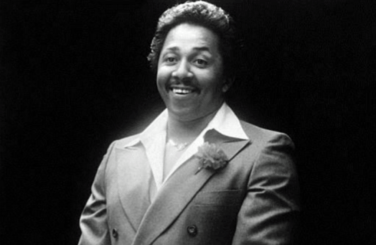
Bunny Sigler 1941-2017

Bunny Sigler.jpg

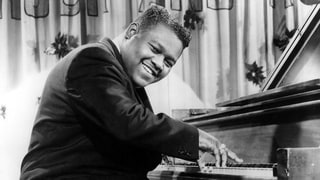
In the world of Philadelphia soul music, Bunny Sigler was a backroom boy who occasionally made it into the spotlight. A writer, producer and backing singer (on Harold Melvin’s “If You Don’t Know Me By Now”, for instance), he also made a handful of interesting singles. Among them, in 1967, was an expanded version of a Shirley and Lee hit retitled “Let the Good Times Roll / Feel So Good”, which became a Northern Soul favourite. The one I love, however, is his 1973 retread of “Tossin’ and Turnin'”, Bobby Lewis’s 1961 smash, which he subjects to the full Philadelphia International treatment: the great MFSB rhythm cooking at maximum heat in Sigma Sound studios, almost certainly with Earl Young on drums, Ronnie Baker on bass, Roland Chambers on guitar and — most gloriously of all — Harold Ivory Williams on delirious gospel keyboards. And there’s a divine moment at 1:50 when Sigler, listing the things that are keeping him awake, wails “There’s a phone out there ringin’ / There’s a group out on the corner singin’… hallelujah!” Enjoy. And read the nice New York Times obit here. RIP, Mr Sigler.

Arthur Jafa at Store Studios

Arthur Jafa 3

Perhaps you’ve already seen Soul of a Nation: Art in the Age of Black Power at Tate Modern. If you haven’t, you should. It’s full of marvellous things, from the paintings of Romare Bearden, Wadsworth Jarrell and Bob Thompson to the photographs of Roy DeCarava and Beuford Smith via posters and murals and a vitrine full of covers of The Black Panther newspaper. One or two of the later rooms aren’t so compelling, and I was unpleasantly jarred by the mystifying inclusion of Andy Warhol’s portrait of Muhammad Ali. But the whole exhibition, curated by Mark Godfrey and Zoe Whitley, tells a great story and seethes with life.

On the other side of the Thames, there’s something strongly related. Installed in a black tent-like structure on the roof of Store Studios as part of Everything at Once, a kind of de luxe pop-up show in an old brutalist office building at 180 The Strand, overlooking the Shard and the National Theatre, Arthur Jafa’s Love Is the Message, the Message is Death is very different in nature and scale but, because of its contemporaneity, even more affecting.

This is a seven-minute collage of snippets of film from all kinds of sources, set to Kanye West’s “Ultralight Beam”. For those, like me, previously unfamiliar with his 30-year career, Jafa is a cinematographer who was born in Mississippi, lives in Los Angeles, has worked with Spike Lee, directed a couple of the videos for Solange’s masterpiece A Seat at the Table in 2016, and exhibited earlier this year at the Serpentine Gallery.

His new work uses newsreel and found film of black Americans marching, worshipping, performing, dancing, and being threatened, beaten and shot by officers of the law. These images are juxtaposed with footage of heroes: Nina and Aretha; Martin and Malcolm; Miles and Trane; Louis and Jimi; the two MJs, Jordan and Jackson; Serena and Lebron; Ali and Louis Farrakhan; and a 17-year-old Biggie Smalls rapping on a Bedford-Stuyvesant streetcorner. Having started with a clip of Barack Obama at the funeral of the murdered Rev. Clementa Pinckney in Charleston, South Carolina, it ends with James Brown in his ’60s prime.

The whole thing has the rawness of a crude assemblage of video grabs. Hardly anything lasts more than a few seconds, an exception being a harrowing sequence of a mother in distress as she’s ordered from her car by police at night and is handcuffed before her young son makes his way towards them with his hands raised. Jafa occasionally intersperses his chosen clips images with close-ups of the sun and footage from monster movies, whose relevance I don’t really understand. (There’s also a curious decision to include the famous clip of Derek Redmond, the British 400-metre runner, limping to the finish of the Olympic semi-final with a torn hamstring, supported by his father, in Barcelona 25 years ago.)

I suppose I could say that Love Is the Message, the Message Is Death doesn’t tell me anything really new, or make me feel any different. But the cumulative power of the collage is moving and shocking, and Kanye West’s spare, gospel-drenched piece provides the perfect musical accompaniment for the emotions evoked by the sometimes beautiful, sometimes brutal images juxtaposed on the screen. In the Observer, the art critic Laura Cumming called it “a devastating ode to black America”, and I can’t do better than that. I watched it through several times without a break, and I expect I’ll go back for more before it disappears.

* Everything at Once, which is organised by the Lisson Gallery and the Vinyl Factory, also includes work by Ai Weiwei, Marina Abramović, Anish Kapoor, Richard Long, Julian Opie and others, and is on until December 10. Soul of a Nation closes on October 22; there’s a CD of music put together by the Soul Jazz label, featuring appropriate music from Don Cherry, Gil Scott-Heron, Joe Henderson and others. There’s a very good interview with Arthur Jafa here, from Interview magazine earlier this year.

Trio Da Kali / Kronos Quartet

Kronos Quartet photographed in Berkeley, CA December 12, 2013©Jay BlakesbergIt’s been my experience that no time spent checking out the Kronos Quartet’s latest activity is ever wasted, and the group’s new album, Ladilikan, in which they accompany Mali’s Trio Da Kali, is a beauty. The meeting between the voice of Hawa Diabaté, the balafon of Lassana Diabaté and the bass ngoni of Mamadou Kouyaté and the violins of David Harrington and John Sherba, the viola of Hank Dutt and the cello of Sunny Yang turns out to sound like something that has always existed, somewhere in the universe.

The primary impression is one of rhythmic vitality, with the quartet locking naturally into the trio’s two instruments to create a thoroughly integrated sextet, providing a lovely setting for Hawa Diabaté’s graceful contralto. In between the vocal passages, the band vamps with delicate power and a groove that is at times almost delirious. Approaching the conclusion of the stunning “Lila Bambo”, they come together in a unison coda that sweeps you off your feet.

Halfway through the album they give us something that might well become a classic. At Harrington’s suggestion, Hawa Diabaté sings Mahalia Jackson’s “God Shall Wipe All Tears Away”, with the original organ accompaniment transcribed for the string quartet; the words are translated into Bambara, the first among more than 40 languages spoken by Mali’s various ethnic groups. The controlled ardour of the voice and the grain of the strings — which together recreate the slightly wheezy sound of a portable harmonium — are irresistible (you can hear a snatch of it in this short trailer).

Meticulously produced by Nick Gold and Lucy Duran for the former’s World Circuit label, Ladilikan could well end up being the album I give to friends and family this Christmas. It’s hard to imagine anyone not loving it.

* Trio Da Kali play at the Musicport Festival in Whitby on October 21, then at Opera North, Leeds (22), St Barnabas Church, Oxford (25) and the Old Church, Stoke Newington,  London N16 (26).

John Jack 1933-2017

John Jack 100 Club 1Jazz never had a more faithful friend than John Jack, who died on September 7 and whose life was celebrated at the 100 Club yesterday, following a committal at the Islington and Camden/St Pancras crematorium. Among those musicians and poets queuing up to pay tribute by through performance were Mike Westbrook and Chris Biscoe (pictured during their duet), Evan Parker and Noel Metcalfe, Jason Yarde and Alexander Hawkins, Steve Noble (with Hogcallin’, one of John’s favourite British bands), Pete Brown and Michael Horovitz. Many others were present, along with scores of faces familiar from countless nights in dozens of clubs down the years, all of us having trouble believing that we won’t be seeing John again with his beloved Shirley at their usual table in the Vortex.

It occurred to me the other day that John probably heard more great music than the rest of us put together, and he knew the value of it. I met him on my first night in London, one Monday in the autumn of 1969. Earlier in the day I had reported for work at the Melody Maker and was told to go and review Westbrook’s band at the 100 Club. It was one of many great Monday nights there over the next few years, and John was a fixture. Maybe those sessions were a continuation of the work he’d done while running the Old Place in Gerrard Street for Ronnie Scott and Pete King between 1965 and 1968, offering a home to the new developments led by the generation of Westbrook, Chris McGregor and John Surman.

“The last of the Soho anarchists” was how the humanist celebrant, Jim Trimmer, described him during the committal ceremony. John was that, and more. He had been a roadie for the Vipers skiffle group; he had tried his hand as a painter; he had worked at the 2 Is, where British rock and roll was born; he had spent time at the Beat Hotel in Paris; he had been a founder member of CND; and much, much more, long before I ever met him. While working at Dobell’s Jazz Record Shop he took a flat opposite, in Charing Cross Road, and there he stayed for the rest of his life — on the side of that lovely street that wasn’t torn down by developers.

I was privileged to be one of his pallbearers, along with Matthew Wright, Mike Gavin and Glyn Callingham, all three of whom had known him when they worked at Ray Smith’s jazz record shop in Shaftesbury Avenue, where John ran his Cadillac Records operation from the basement. His co-worker in that venture was the wonderful Hazel Miller, who had known him longer than any of us and sat alongside Shirley in the chapel. On a beautiful bright day up in East Finchley, it felt like the end of an era.

* Here’s John Fordham’s fine summary of John’s lifehttps://www.theguardian.com/music/2017/sep/24/john-jack-obituary

Sounds of the square

Chorus 1As the shops started to close and the street-food vendors began to disperse, twilight was falling on Deptford High Street. Arriving an hour early for last night’s concert by Mike Westbrook’s Uncommon Orchestra at the Albany Theatre, I heard a strange sound and walked towards it.

It was coming from half a dozen identical large tubular silver metal structures erected in Giffin Square, each of them a tripod about 15ft tall, all topped with horizontal arms that ended in a speaker horn at both ends. The arms rotated gently, like the horns in a Hammond B3’s Leslie speaker cabinet, while emitting soft sustained sounds that, in combination, made me think of Terry Riley’s all-night organ concerts of the 1970s and of Brian Eno’s Bloom, the generative-music software he invented a few years ago to turn your iPhone into a self-activating musical instrument.

Just my kind of thing, in fact, and even more so when the accumulated layers grew into the sort of sound you might expect if you made a loop of the bells of every village church in Tuscany and then re-recorded the results under water. You could wander between the metal structures, and many people did. As the last of the daylight faded, the little red lights on each horn glowed more distinctly, and the sound took on a magical quality.

This, it turned out, was Chorus, a piece by the award-winning sound artist and composer Ray Lee, who specialises in such installations. In its full iteration, Chorus features 14 of the tripods, but six was fine for the intimate space of Giffin Square. The piece had its premiere in Newbury in 2013 and has since been heard in many places, including WOMAD and festivals in Warsaw and Melbourne. I wish Lee would come and park it in my street for a week or two.

* Chorus is on again in Gifford Square, Deptford tomorrow (Saturday, September 30) at 1.30pm, 2.30pm and 3.30pm.

Sandburg/Wilson

Carl Sandburg 2

Carl Sandburg

It’s National Poetry Day, and since I have a weakness for the much abused hybrid known as jazz and poetry that goes back to schooldays, this is a good excuse — if one were needed — to write about Matt Wilson’s new album, Honey and Salt, in which he sets the words of the poet Carl Sandburg to music.

Some people don’t like the star system of reviewing, but it was while reading the August edition of Down Beat in Ray’s Jazz Shop the other day that a five-star lead review sent me across the floor to search out a copy of Honey and Salt. It turned out to be a good tip.

Wilson, a fine drummer familiar in many contexts, whom I last heard with Liberation Music Orchestra, recruited an excellent band for this project: Ron Miles (cornet), Jeff Lederer (reeds and harmonium), Martin Wind (acoustic bass guitar), and Dawn Thompson, who plays guitar and sings on a handful of the 18 selections, plus an interesting group of readers better known as instrumentalists: Christian McBride, John Scofield, Bill Frisell, Rufus Reid, Joe Lovano and Carla Bley. Oh, and the actor Jack Black.

Sandburg (1878-1967) won two Pulitzer Prizes for his poetry, and a third for a biography of Abraham Lincoln. He was from Knox County, Illinois, as is Wilson. Sandburg’s first cousin was married to Wilson’s great-great-aunt. While researching an essay on the poet during his college days, Wilson discovered Sandburg’s interest in jazz.

The poems are dry, pithy, witty and humane, some of them with a powerful resonance in the new century. Here’s one called “Choose”: “The single clenched fist lifted and ready, / Or the open asking hand held out and waiting. / Choose: / For we meet by one or the other.” And here’s one of his best known, called “Fog”: “The fog comes / on little cat feet. / It sits looking / over city and harbor / on silent haunches / and then moves on.” Wilson includes Sandburg’s own recording of “Fog”, accompanying the poet’s gentle voice with mallets on tom-toms.

The arrangements are unfailingly inventive, and the playing of the individuals — particularly the always brilliant Miles — is outstanding. The readers are all terrific, and to Bley falls the privilege of delivering, without accompaniment, the marvellous “To Know Silence Perfectly”: “There is a music for lonely hearts nearly always. / If the music dies down there is a silence / Almost the same as the movement of music. / To know silence perfectly is to know music.” On this evidence, their acute awareness of tone and cadence and expression makes jazz musicians great readers of poetry.

‘The Nightfly’ at Milton Court

The Nightfly at Milton CourtEven though it meant missing the first set of Michael Gibbs’ 80th birthday concert at the Vortex, the idea of hearing Donald Fagen’s first solo album played by the new intake of students on the jazz course at the Guildhall School on Monday night was impossible to resist. The Nightfly is a wonderful album, made by a man in early middle aged in the era of Reagan looking back at how things felt as the era of Eisenhower shaded into that of Kennedy, in that brief period of illusory optimism when prosperity and progress seemed to be the prevailing forces, before the Cuban missile crisis, the civil rights marches and the Vietnam protests took over. I thought it might be interesting to see how it sounded in the era of a president whose name I don’t even want to type out on this blog.

Also I wanted to hear a bunch of young players. And first, as an hors d’oeuvre, came a succession of seven small groups under the supervision of their tutors — Tom Challenger, Yazz Ahmed, Gareth Williams, Gareth Lockrane, Robbie Robson, Barak Schmool and Stuart Hall — playing short pieces based on ideas suggested by the album, each group having the benefit of a mere three hours’ preparation. All were interesting, but my ear was caught most readily by a lovely Mingusian variation on a phrase from “New Frontier” played by Challenger’s septet and by Williams’s sextet arrangement of “Ruby Baby”, which soured the harmonies in a George Russell-ish way and provided space for cracking solos by the altoist saxophonist Albert Hills Wright and the trumpeter James Beardmore.

Introducing the evening, Scott Stroman, a professor in the jazz department since 1983, had reminded us: “These guys didn’t even know each other last week” — the start of the academic year. It hardly seemed possible. There were also fine individual contributions from the fiery tenor saxophonist Asha Parkinson, the astonishingly eloquent pianist Jay Verma, and the assured drummer Zoot Warren.

After the interval came the main course. Malcolm Edmonstone, the head of the Guildhall’s jazz programme, had transcribed and arranged the entire album for a group of 57 students, including 13 singers who shared the lead around and fleshed out the close harmonies, and a load of pianists, guitarists, bassists and drummers who alternated the rhythm section roles.

Under the precise, assertive and invigorating baton of Giles Thornton, the band soared through “I.G.Y.” on Mark Fincham’s confident bass lines, articulated the strut of “Green Flower Street” with crisp power, absolutely nailed the sublime hip-swinging arrangement of “Ruby Baby” (with Parkinson’s tenor again making its mark), glided through the yearning “Maxine”, hustled through “New Frontier” (although there doesn’t seem to be a chromatic harmonica player in the class of ’17), locked into the fingerpopping groove of “The Nightfly”, and sauntered and shuffled through “The Goodbye Look” and “Walk Between Raindrops”.

When you think about it, these young musicians were pitting themselves against the achievements of Marcus Miller, Jeff Porcaro, Larry Carlton, Dean Parks, the Brecker brothers, Greg Phillinganes, James Gadson and the rest of the crew of first-call virtuosi assembled by Fagen back in 1982. The result was joy and exhilaration all the way, delighting the large audience of friends and family assembled in the concert hall at Milton Court.

(And I made it to the Vortex for the second half of Mike Gibbs’ birthday celebration with his 14-piece band, a glorious series of glowing set-ups for soloists like the trumpeter Percy Pursglove, the altoist John O’Gallagher and the guitarist Mike Walker. It was nice to think that some of this year’s Guildhall students will be carving out similar reputations before too long.)

Doubling Downes

Vyamanikal 2

Vyamanikal + 2: Tom Challenger, Alex Bonney, Lucy Railton, Kit Downes

The profound sense of peace that descended over Hall 2 of Kings Place last night as the set by an expanded version of Vyamanikal glided towards its close was unlike anything I’ve encountered all year. The pianist Kit Downes and the tenor saxophonist Tom Challenger, normally a duo in this guise, were joined on the stage by the cellist Lucy Railton and by Alex Bonney, who sat at a laptop. Bonney was processing the music and sounds recorded by Downes and Challenger in 2015 in the small churches of five Suffolk villages, collecting the sounds of organs in various states of repair for an album released last year, and feeding it into the live performance.

In the absence of a church organ, Downes alternated between a piano and a small hand-pumped harmonium. For the better part of an hour the musicians wove tapestries of sound in which individual elements blended seamlessly. There were certainly gorgeous details, but they fade in the memory next to the overall impression of a glowing organic whole.

If there was a kind of English pastoral vibe in the air, it was implicit rather than declarative, and never suffocating. I suppose the most obvious precedent might be some of John Surman’s recordings, from Westering Home onwards, but really this music seemed to stand alone, without need for comparison. As they neared the end, the three instrumentalists stopped playing but the music continued, thanks to Bonney, in a many-layered drone which seemed to distill everything that had been played in the previous 50 minutes. And then came a few moments of silence in which we could find our own way out of the trance.

The first half of the evening had featured Tricko, the duo in which Railton and Downes perform a kind of sui generis cello-and-piano chamber music that manages to be intricate without inducing strain and immediately attractive without becoming winsome. “I’m aware that this music is cripplingly quiet,” Downes said at one point. “If I were listening, I’d probably be asleep by now.” That might indeed be the initial impression. But the longer you listen to them, the more awake you feel.

* Vyamanikal’s album is on the Slip Imprint label. Downes’s solo organ album, Obsidian, will be released by ECM early next year.

Extraordinaire: Cécile McLorin Salvant

Cécile McLorin SalvantTwo years ago I presented Cécile McLorin Salvant and her trio at the Berlin jazz festival. At that point, most of the audience hadn’t heard of the young Franco-Haitian singer who was brought up in Miami before studying classical and baroque music at the conservatory in Aix-en-Provence. To say they were impressed by her performance would be an understatement.

For me, however, the greater privilege was to be present at her soundcheck, when she ran through two or three songs to get the feel of the hall. Among the pieces she ran down was Cole Porter’s “So in Love”, which happens to be one of my favourite songs, thanks largely to Mabel Mercer’s 1956 version. Still in her overcoat (it can be chilly in Berlin in November, and singers need to be careful), she had me transfixed by the way she drew out the song’s elegance with simple, unaffected directness.

A few hours later, during the concert itself, she gave it a very different delivery: much more highly wrought, full of decoration and elaboration and dynamic contrast, making full use of her phenomenal vocal technique and fine imagination. And it didn’t move me nearly as much.

This, I thought to myself, is a brilliant young artist still discovering and celebrating her own extraordinary abilities. At this stage, it’s natural for her to push everything as far as she can. Come back in 20 years’ time, I concluded, and she’ll be singing “So in Love” the way she did at the soundcheck, with an understanding that sometimes less is more.

Her new album, Dreams and Daggers, has a lot of that exuberance, and you can hear its effect on an audience in the tracks recorded live with the trio at the Village Vanguard in September of last year. There’s an almost audible attentiveness and a lot of whooping when, having executed a breathtaking series of vocal aerobatics, she finally brings a song back to earth.

She’s not a show-off, and she doesn’t scat (thank goodness). She has some of the girlish flexibility of the young Ella Fitzgerald, some of Sarah Vaughan’s ability to manipulate her tone in quietly jaw-dropping ways, and some of Betty Carter’s combination of daring and sheer musicianship. That’s a fair old combination. Occasionally she can overdo it, as in a highly dramatised version of “My Man’s Gone Now”, but most of the time her twists and turns are at one with the material.

Her originality will take time to emerge, but it is certainly there. At the moment it reveals itself most clearly in her choice of material, which is built on a foundation of standards — “You’re My Thrill”, “Let’s Face the Music and Dance”, “Mad About the Boy” and so on — but also includes items intended to prod her listeners in interesting ways, through “Si je serais blanche”, from the repertoire of Josephine Baker, “Somehow I Never Could Believe”, Kurt Weill’s setting of Langston Hughes’s lyric, and the feminist irony that bubbles away in her readings of “Never Will I Marry” and “If a Girl Ain’t Pretty”.

She and her brilliant trio — Aaron Diehl (piano), Paul Sikivie (bass) and Lawrence Leathers (drums) — make a formidable unit, particularly on something like a tightly arranged version of “I Didn’t Know What Time It Was”. There are delightfully insouciant treatments of the two ultra-hip Bob Dorough tunes, “Nothing Like You” and “Devil May Care”, recorded by Miles Davis in 1962.

Half a dozen studio-recorded tracks on this 2-CD set feature a string quartet, arranged by Sikivie to add a welcome astringency. By contrast there’s the singer’s penchant for covering the work of the early classic blues singers: here we get lusty versions of Ida Cox’s “Wild Women Don’t Have the Blues” and Bessie Smith’s haughtily dismissive “Sam Jones’ Blues”. “Don’t need your clothes, don’t need your rent,” she sings, “don’t need your ones and twos. Though I ain’t rich, I know my stitch. I earned my strutting shoes.”

By a distance, she is the most interesting jazz singer to come forward in the past couple of decades. The new album reaffirms the impression that her virtuosity, such a double-edged gift, could take her anywhere.

* Dreams and Daggers is released by Mack Avenue Records on September 29.