The Weather Station in Islington
 A few hours ahead of her gig with her band, the Weather Station, at the Lexington pub in Islington last night, the Canadian singer-songwriter Tamara Lindeman tweeted a photograph she’d taken during a walk along the nearby Regent’s Canal. “Sandy Denny in headphones,” she added. Sandy would have been pleased by the compliment and intrigued by her admirer’s performance, and in particular by the way Lindeman managed to make the 50-year-old concept of folk-rock sound brand new.
The Weather Station’s new self-titled album embraces electric guitars in a characteristically modest and subtle way. Lindeman took the stage at a sold-out Lexington with the lead guitarist (and occasional organist) Will Kidman, the bass guitarist Ben Whiteley, and the drummer Erik Heestermans, and made the relatively new approach sound like the most natural thing in the world.
Perhaps the key was her rhythm guitar playing, the core of the sound, the central strum and the enunciator of chord patterns that move between the comfortingly familiar and the ear-teasingly sophisticated, unpushy but generating real momentum behind melodies that are liable to soar at unexpected moments. The other instruments arranged themselves around her with discreet sensitivity, leaving plenty of space for us to appreciate the care with which she modulates her tone and enunciates her extraordinary lines.
There were lots of songs from her last two albums, among them “Way It Is, Way It Could Be”, “I Mined”, “Floodplain”, “Tapes”, “I Could Only Stand By” and “Impossible” (with organ drone and galloping tom-toms) from Loyalty and “Free”, “Thirty”, “Kept It All to Myself”, “Black Flies” and “You and I (On the Other Side of the World)” from the new one. A short central solo acoustic segment expanded to a duo when she was joined for one song by Will Stratton, the American singer-songwriter who had provided a pleasant support set.
What was interesting about seeing her live was the way her lyrics were given, if anything, even greater value. Some of these songs are like the deepest conversations you ever had with someone you care about — and very often they’re like things that were formulated but somehow never got said. On the faster songs she piles lines on top of each other to create a river of thought and feeling. And none of the nuances are lost when she sings them with a band in front of an audience.
Lindeman doesn’t do stage dramatics or ingratiation. When a song ends (and her endings, whether abrupt or lingering, are always worth attention), she tends to make no acknowledgment of applause but goes straight into adjusting her tuning for the next song. Yet there’s no distance between her and her listeners. Although her spoken comments tend to be restricted to dry asides, she radiates a warm intelligence; her fleeting changes of expression — a grimace at a fluffed entrance, a small and mysterious smile now and then — say most of what she needs to convey. By the end of the evening I don’t suppose there was a man or a woman in the place who wasn’t a bit in love with her.
* The Weather Station play tonight (October 24) in the Eagle Inn, Salford and tomorrow at the Music’s Not Dead record shop in Bexhill on Sea (free, 7pm). They’ll be back for another UK tour in January and February. The new album is on the Paradise of Bachelors label.
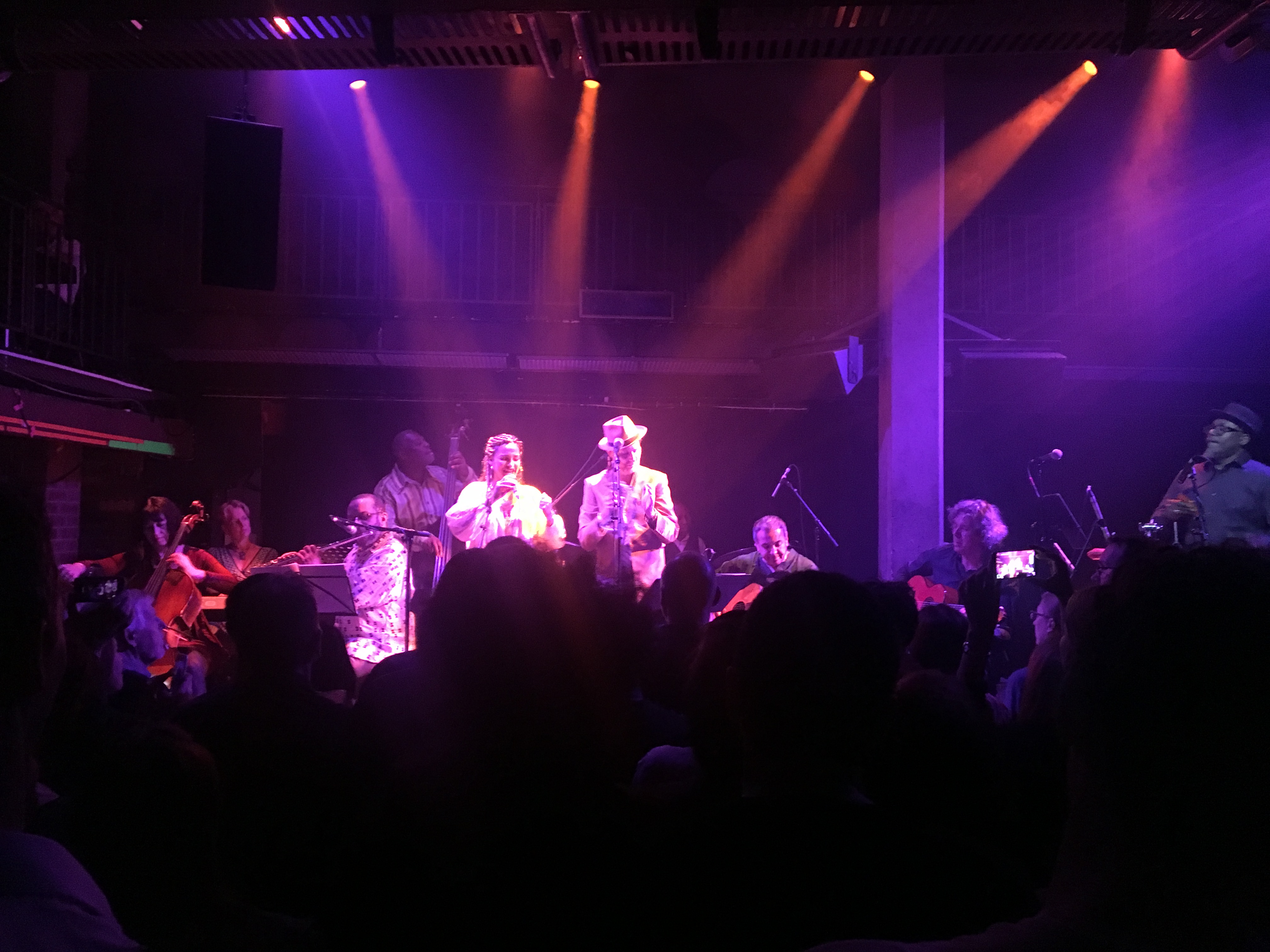 If your name isn’t Van Morrison, it takes some kind of courage to tackle Astral Weeks, one of the sacred texts of the late ’60s. No one has ever really explained how the singer, his American musicians and Larry Fallon, the arranger and conductor, and his producer, Lewis Merenstein, came up with the unique blend of idioms that make the album so distinctive. Jazz, folk, rock and blues are all in there, but so thoroughly metabolised that the eight songs create, for the length of a long-playing record, an idiom of their own. In his lyrics, too, Morrison plunged head-on into a new world of poetic spirituality.
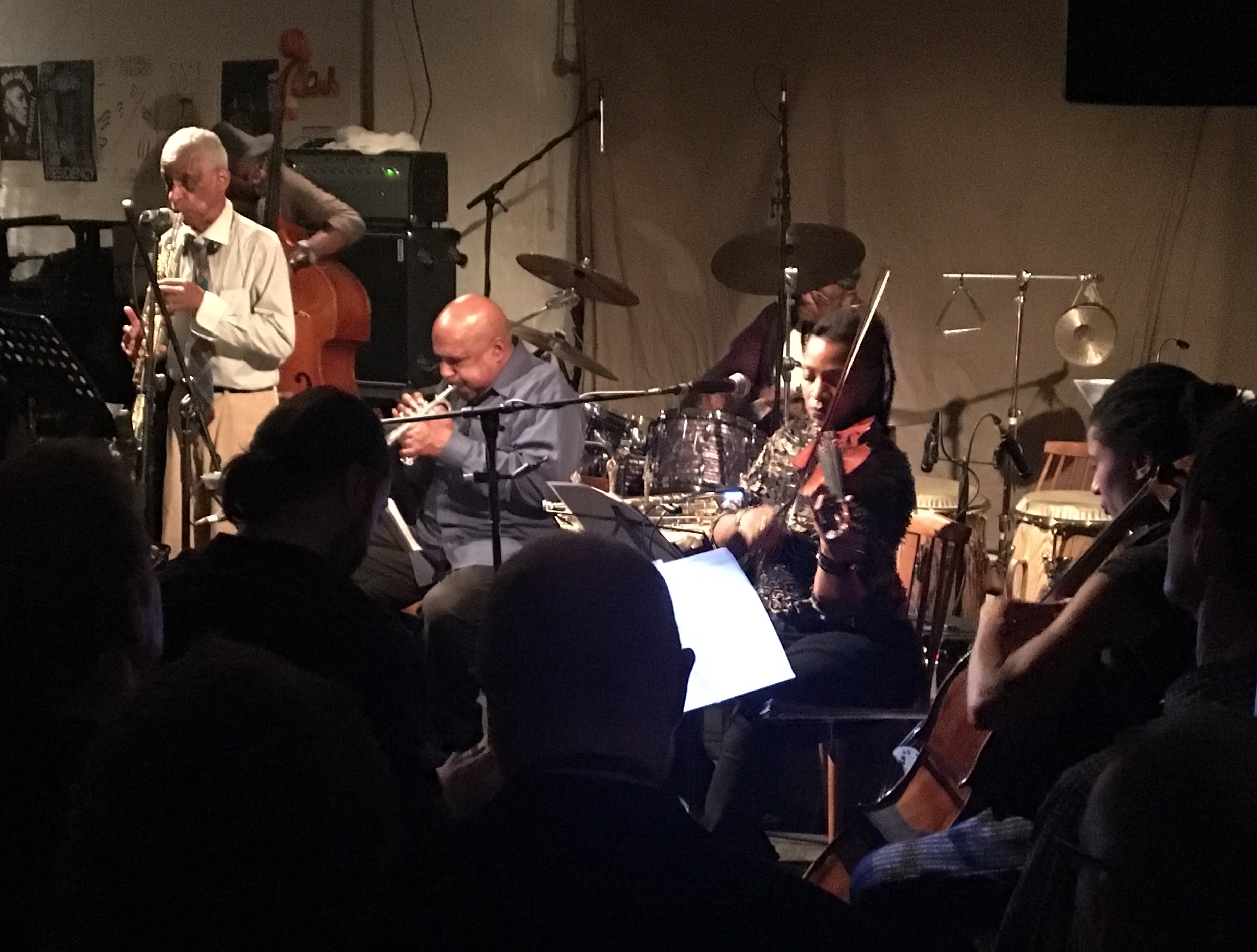 Amid the strangest weather in 30 years, with sand from the Sahara and dust from Iberian wildfires turning the air in London dark red at lunchtime on the hottest October 16th since records were first kept, there was another surprise awaiting the audience for the second of the Art Ensemble of Chicago’s three sold-out nights at Cafe Oto this week.
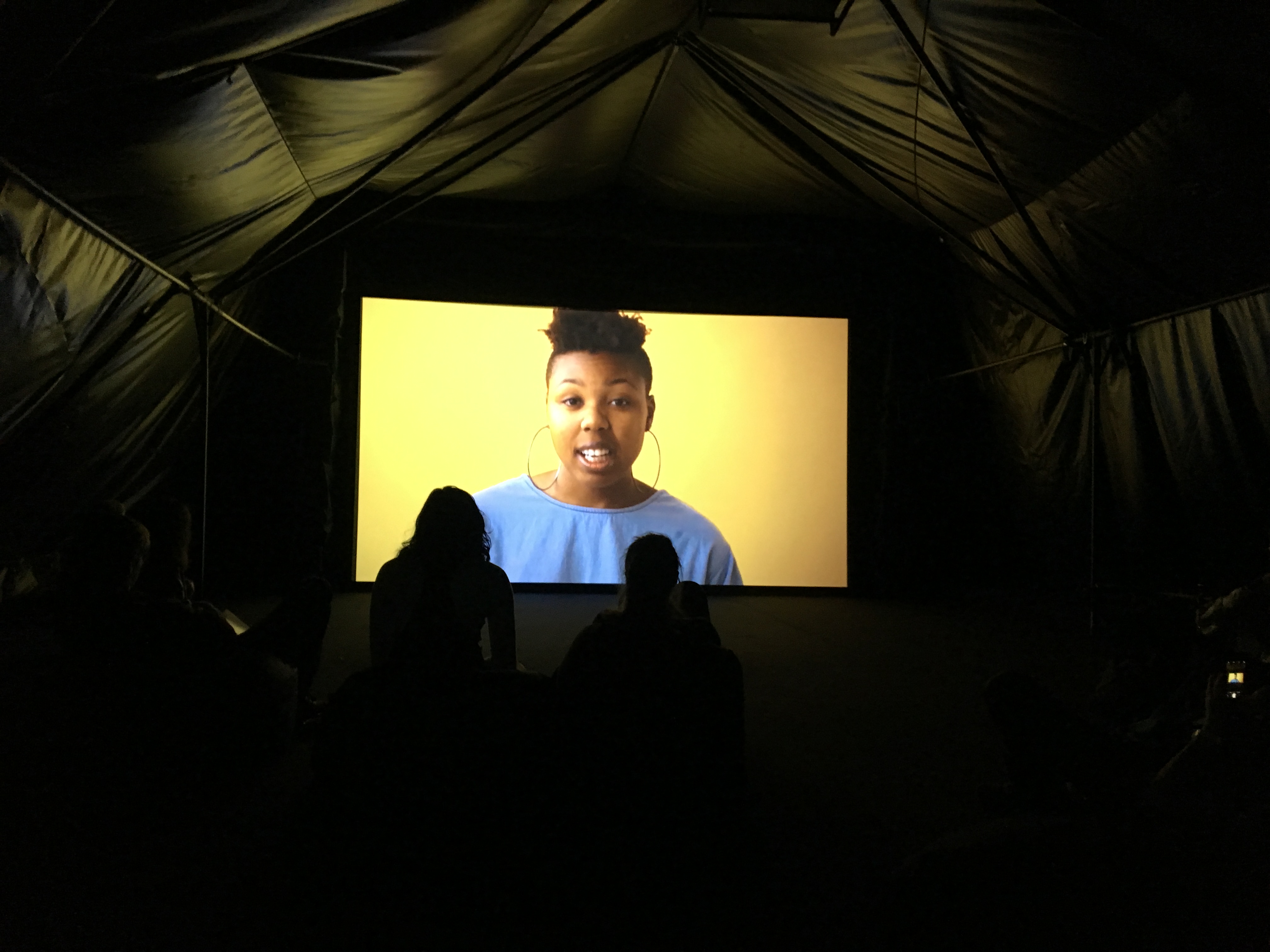
 It’s been my experience that no time spent checking out the Kronos Quartet’s latest activity is ever wasted, and the group’s new album, Ladilikan, in which they accompany Mali’s Trio Da Kali, is a beauty. The meeting between the voice of Hawa Diabaté, the balafon of Lassana Diabaté and the bass ngoni of Mamadou Kouyaté and the violins of David Harrington and John Sherba, the viola of Hank Dutt and the cello of Sunny Yang turns out to sound like something that has always existed, somewhere in the universe.
 Jazz never had a more faithful friend than John Jack, who died on September 7 and whose life was celebrated at the 100 Club yesterday, following a committal at the Islington and Camden/St Pancras crematorium. Among those musicians and poets queuing up to pay tribute by through performance were Mike Westbrook and Chris Biscoe (pictured during their duet), Evan Parker and Noel Metcalfe, Jason Yarde and Alexander Hawkins, Steve Noble (with Hogcallin’, one of John’s favourite British bands), Pete Brown and Michael Horovitz. Many others were present, along with scores of faces familiar from countless nights in dozens of clubs down the years, all of us having trouble believing that we won’t be seeing John again with his beloved Shirley at their usual table in the Vortex.
 As the shops started to close and the street-food vendors began to disperse, twilight was falling on Deptford High Street. Arriving an hour early for last night’s concert by Mike Westbrook’s Uncommon Orchestra at the Albany Theatre, I heard a strange sound and walked towards it.
 Even though it meant missing the first set of Michael Gibbs’ 80th birthday concert at the Vortex, the idea of hearing Donald Fagen’s first solo album played by the new intake of students on the jazz course at the Guildhall School on Monday night was impossible to resist. The Nightfly is a wonderful album, made by a man in early middle aged in the era of Reagan looking back at how things felt as the era of Eisenhower shaded into that of Kennedy, in that brief period of illusory optimism when prosperity and progress seemed to be the prevailing forces, before the Cuban missile crisis, the civil rights marches and the Vietnam protests took over. I thought it might be interesting to see how it sounded in the era of a president whose name I don’t even want to type out on this blog.
 thebluemoment.com