Skip to content

Posts from the ‘Uncategorized’ Category

Michael Brown and ‘Walk Away Renee’

Left BankeMichael Brown died this week, aged 65. He was 16 when he wrote “Walk Away Renee” and recorded it with his group, the Left Banke. Countless hearts have been touched by it in the decades since its first appearance.

I love a song that begins with “And”. The listener is thrown straight into the middle of the singer’s emotions: “And when I see the signs that point one way / The lot we used to pass by every day…” So simple, so graphic, so universal. And there’s the sweet sadness of the last verse: “Your name and mine inside a heart on a wall / Still finds a way to haunt me though they’re so small…”

It seems that Brown wrote the song about the girlfriend of Tom Finn, the group’s bass-guitarist, and the quasi-baroque arrangement of the Left Banke’s version, featuring a string quartet with an alto flute solo, was like a protective screen for the teenage protagonist, whose tone of wounded introspection was perfectly located by the singer, Steve Martin. (Bob Calilli and Tony Sansone – neither of them members of the group — are always credited as co-composers, but since neither seems to have done much else in the way of writing hit songs, you have to wonder about that.) The style of the arrangement was also a reminder that Brown, who played harpsichord on the session, had received a classical training.

He was born Michael Lookofsky, the son of Harry Lookofsky, a noted New York session violinist who appeared on countless albums — including a featured appearance, playing tenor violin, on a great Gil Evans session from 1971. The father owned the studio where the Left Banke recorded their debut single, which was released on the Smash label and made the US top five in September 1966.

Just over a year later came the first great cover version, by the Four Tops, in which the composer-producer team of Eddie and Brian Holland and Lamont Dozier showed their ability to react to new developments by applying their genius to someone else’s song. Brown’s composition inspires one of Levi Stubbs’s finest vocal performances, introduced by that riveting brass fanfare, supported by Eddie Willis’s loosely strummed rhythm guitar and swept along by Benny Benjamin’s finest snare-and-tom-tom fills. And what is that combination featured during the instrumental interlude: muted trumpet and cor anglais, maybe? The textures throughout, and the sense of aural perspective they convey, still inspire astonishment.

Rickie Lee Jones recorded the third great version on her 10-inch album Girl At Her Volcano in 1983. She changes the song’s gender (from “Renee” to “Rene”) and stretches its inbuilt pathos about as far as it will go without disintegrating. As the tempo comes and goes, the singer seems to be slipping in and out of a reverie. It’s one of her most inventive and touching recorded performances. And behind her lovely piano, even the ’80s-style synth washes sound fine.

For me, these are the three indelible versions of a much-covered song which seldom fails to bring the best out of those who take it on. Thank you for that, Michael Brown.

Something trivial (or perhaps not)

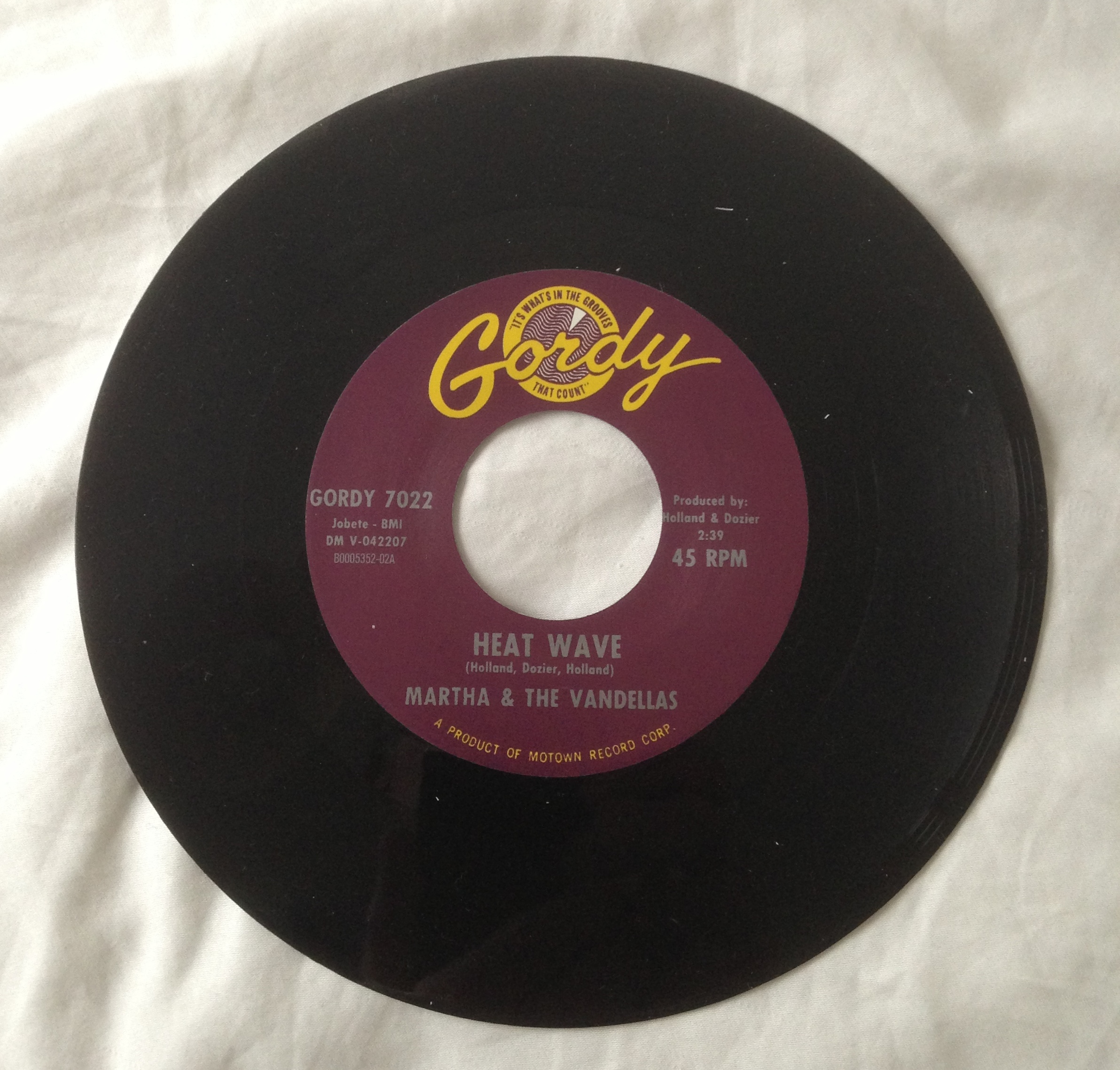
Heat WaveThe first scene of The Theory of Everything is set in an undergraduates’ drinks party. It’s captioned “Cambridge, England, 1963”. In her book Travelling to Infinity, on which the film is based, Jane Hawking tells us that the date of the party at which she first encountered her future husband, the cosmologist Stephen Hawking, was January 1 of that year.

The music being played for these middle-class university students in their sports jackets and cocktail dresses is “Heat Wave”, by Martha and the Vandellas. Which, as it happens, was not even recorded until June 1963. It was released in the US on July 10, and in the UK a couple of months later.

Does it matter that the opening scene of a film supposedly based on a true story contains a resounding distortion? A more subjective opinion on the credibility of the scene’s soundtrack, but one likely to be shared by any British fan of black American music who was around at the time, is that in any case a record like “Heat Wave”, even had it been available, would not have been heard at an undergraduates’ cocktail party. Motown music, a year ahead of its UK breakthrough with the Supremes’ “Where Did Our Love Go”, was still an underground taste in Britain. Someone might have had a copy of “Love Me Do” to put on the Dansette, but “Telstar” or “Bachelor Boy” would have been more likely.

As we know, however, the makers of films based on historical events like to go for “emotional truth” rather than the literal version. They must have persuaded themselves that “Heat Wave” — which does, of course, sound fabulous coming through cinema speakers — would set up the right kind of resonance in the minds of members of the audience who had no first-hand memory of the era. And that, to them, is what counts.

The same thinking was in evidence last week in the final instalment of Bright Lights, Brilliant Minds, a three-part BBC4 series presented by the art historian Dr James Fox on pivotal times in the cultural lives of three major cities: Vienna in 1908, Paris in 1928 and New York in 1951. In the New York episode, Fox had lots of good stuff to examine: abstract expressionism, method acting, bebop, beat literature, the birth of the modern advertising industry. Quite legitimately, the programme chose to focus on five emblematic figures: Jackson Pollock, Marlon Brando, Thelonious Monk, Jack Kerouac and David Ogilvy.

I could just about swallow the modern convention of putting the presenter front and centre, making him a bigger personality than anyone whose art the programme was actually examining. So, for example, we saw Fox evoking Kerouac’s world and work by driving an American car down an endless highway and feeding a big roll of paper into a typewriter. Puerile stuff — but that’s how these things have to be done, or so it seems, in order to get past the commissioning editors.

The warning lights had started flashing, however, as soon as the first piece of music was heard under the opening titles: Charles Mingus’s “Better Git It in Your Soul”. A great piece, of course, and certainly evoking the energy of New York, the city in which it was recorded. “I think it all got started in one remarkable year — 1951,” Fox told us. “This was the year in which the city’s irrepressible creative spirit exploded into life.” Except that “Better Git It in Your Soul” was recorded, as part of the sessions that produced the classic album Ah Um, in May 1959.

There was more great background music to come, all of it used to underscore the events and the atmosphere of 1951. Art Blakey and the Jazz Messengers playing Bobby Timmons’s “Moanin'” — recorded in 1958. Link Wray’s “Rumble” — also from 1958 (and recorded in Washington DC). Percy Faith’s “Theme from A Summer Place” — written for a 1959 film. Gil Evans’s “Where Flamingos Fly” — recorded in 1960. Dave Brubeck’s “Unsquare Dance” — recorded in 1961.

So why, one had to ask, did the programme’s makers shun the music of 1951, about which the presenter waxed so lyrical? Presumably they’d given it a degree of thought, and concluded that the sounds of Charlie Parker’s “My Little Suede Shoes”, Bud Powell’s “Parisian Thoroughfare”, Joe Turner’s “Chains of Love”, or Dizzy Gillespie’s “Tin Tin Deo” — all recorded in 1951 — did not fit their conception of what today’s audience would think of as evoking the cultural phenomenon they were attempting to describe.

I’m not sure that any of this really matters except to those, like me, who fear that once everyone with a first-hand memory of everything that was important to us has gone, a kind of chaos will ensue. But that is, I suppose, how all history eventually comes to be written.


Blue shadows

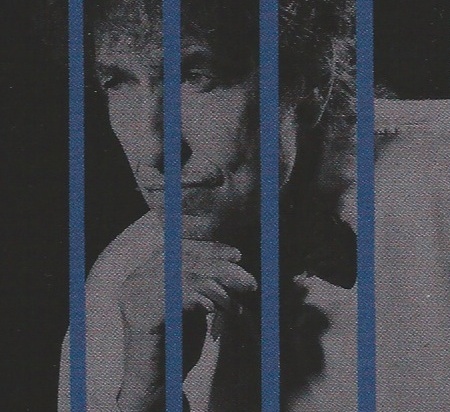
Bob Dylan ShadowsYou only need to pay close attention to the way Bob Dylan delivers the line about “the sunburned hands I used to hold” to understand the value of Shadows in the Night. For me, his version of “Autumn Leaves” is the album’s most fully realised song: against the subdued but glowing accompaniment of pedal steel, acoustic and electric guitars and bowed double bass, out of tempo for all but eight bars in the middle (which include the line quoted above), he immerses himself in Joseph Kosma’s gently falling tune and Johnny Mercer’s beautifully simple lyric and makes the combination, and the emotions they evoke, sound as real as anything he has ever sung.

That’s where he outflanks those who doubt the right of a man lacking in conventional vocal equipment to tackle these songs and to evoke so explicitly the memory of Frank Sinatra. They’re the ones who will point out that Sinatra listened to Jascha Heifetz and Tommy Dorsey and swam lengths underwater in order to develop his breath control, enabling him to deliver those long legato lines without a break. Lacking any of that technical equipment, Dylan brings it off. He makes me see those sunburned hands.

Once that’s accepted, the whole album starts to make sense. As outlined in this fascinating interview with the magazine of the American Association of Retired Persons, his basic decision was to reject the temptation to overdo the arrangements, even down to the omission of a piano, and to rely on the special approach developed by his excellent touring band over recent years. Thus he gives the album both an artistic focus and a freshness missing from most contemporary assaults on the Great American Songbook.

The thing of sliding gently in and out of tempo is a feature of the album. Although never played for drama (you might not even notice it happening), the device is used to stir the songs’ emotions. The approach requires, and gets, the highest degree of sensitivity from his musicians. On three tracks the simple arrangements for a brass trio (trumpet, trombone and French horn) add another unexpected shade to the palette of muted but glowing colours, reminding me of the effect of the horn chart Booker T. Jones created for the playout of “Georgia on My Mind” on Willie Nelson’s classic Stardust.

Dylan seldom shirks a challenge, and the biggest one here is the re-interpretation of “I’m a Fool to Want You”, a song inextricably linked to the doomed affair between Sinatra and Ava Gardner. It’s Sinatra’s confession of emotional helplessness, and probably no one else should attempt it. But Billie Holiday did, unforgettably, on Lady in Satin, and that’s another obstacle Dylan has to surmount. He chooses to open his album with it, too, as Holiday did hers, thus inviting an even more direct comparison. It doesn’t matter.

For me, the whole thing works — even the choice of “Some Enchanted Evening”, the most obvious example of the kind of sentimental romantic Rodgers-and-Hammerstein ballad the young Dylan was supposedly invented to banish for ever. But these observations on love are never obsolete. And in the end, after the shock of hearing Dylan tackle these chromatic melodies and moon-and-june rhymes, it’s impossible not to be moved as this 73-year-old man persuades us that, like Sinatra and Holiday, he knows all about the sweetness and the pain of which he sings. The sunburned hands. That’s what matters.

Farewell to Tin Pan Alley

Denmark StreetTo live in London at the start of the 21st century is to enjoy a double-edged privilege. On the one hand there is access to a quite fantastic variety of creative activities and the energy that sustains them. On the other there is the widening gap between extreme affluence and the lives of ordinary people. The imminent fate of Denmark Street — London’s Tin Pan Alley — is where those two phenomena collide, with unhappy results.

For me, much of London’s remaining attraction lies in those places — a stretch of Berwick Street in Soho, the top end of Marchmont Street in Bloomsbury, the northern extremity of Portobello Road in Notting Hill — where independent and often eccentric enterprises still create a village atmosphere consonant with local history. Sooner or later they’ll all be destroyed by creeping affluence. Denmark Street is the latest to go, about to be suffocated by the gentrificational impact of the new Crossrail station at Tottenham Court Road, a few yards away.

The north side of the street — the side you can see in my photography, taken before Christmas — is to be remodelled by the landowner/developer, who intends to erect luxury apartments in its place. Among the casualties will be several excellent musical instrument shops and the celebrated 12 Bar Club, which is due to close in mid-January.

Separated by Charing Cross Road from the eastern fringe of Soho, Denmark Street was laid out in the 16th century and named after Prince George of Denmark, the husband of Princess Anne, who would reign as Queen of England from 1702-1707. Of the original 20 houses, completed by 1691, eight remain, apparently making it the only street in London to retain 17th century facades on both sides.

Just over 350ft long, in the 18th and 19th centuries its location placed it in close proximity to the “rookery” of St Giles, a warren of tenements notorious for wretched poverty and every kind of vice, commemorated in William Hogarth’s series of coruscating engravings, Beer Street and Gin Lane.

A young composer and song publisher named Lawrence Wright set up his office at No 19 in 1911, and founded the Melody Maker there in January 1926. The launch edition included pieces on “Gramophone Record Making”, “The Banjo in the Modern Dance Orchestra”, and “America’s Idea of English Jazz”. In his front-page mission statement, the new publication’s editor, Edgar Jackson, made a point of  thanking the composer Horatio Nicholls — described as “one of the finest and most popular composers of lighter music, not only in England, but throughout the world” — for “allowing us the privilege of publishing his photograph”. Horatio Nicholls was, in fact, the nom de plume of Lawrence Wright.

Soon Wright’s neighbours included Rose Morris, Campbell Connelly and a small host of other publishers, including the London office of Irving Mills, publisher of Hoagy Carmichael and Duke Ellington. In 1952 the promoter Maurice Kinn founded the New Musical Express at No 5, and two years later the NME began compiling the UK’s first singles chart, a sign of the shift away from the sheet music sales that had hitherto provided the favoured measurement of popularity. Southern Music, Essex Music and Dick James Music were other publishers with addresses in a street that became known as Tin Pan Alley (a name first applied half a century earlier, for similar reasons, to a stretch of West 28th Street in Manhattan).

By the 1960s a number of rehearsal rooms and recording studios had been opened. Regent Sound, at No 4, was where the Rolling Stones recorded “Not Fade Away”, their first big hit, and the whole of their first album. The Gioconda coffee bar at No 9 was a favourite meeting place for scuffling young musicians.

My own memories of Denmark Street towards the end of its heyday include a cup of coffee at the Gioconda with Elton John, who was contracted to Dick James Music and had just recorded what would be his breakthrough album, and a visit one afternoon in August 1970 to a cramped rehearsal room to hear a band called Osibisa. A collection of musicians from Ghana, Nigeria, Trinidad, Grenada and Antigua led by the saxophonist Teddy Osei, they were about to do for African music what Santana had done for Latin music, fusing it with rock in a way that made it highly palatable to young white audiences. Their potential was unmistakeable, and I wrote something about them in the MM. By the time I paid them another visit, six months later, they had released a highly successful debut album and played a gig at Eton College.

In the 1990s there was another reason to visit Denmark Street when my late friend Sean Body turned the ground floor of No 4 into Helter Skelter, a wonderful shop devoted to books about music, new and second-hand. Like Sportspages, an equally unique establishment 100 yards down Charing Cross Road, it would not survive the impact of online retailing.

The 12-Bar opened in 1994 in premises built in 1635 for use as a stables; its audiences have witnessed performances by Bert Jansch, Joanna Newsom, Jeff Buckley, Robyn Hitchcock, K.T. Tunstall, Seasick Steve and many others. Among its last gigs, on January 7, will be the “minimum R&B” of the Falling Leaves.

Rose Morris, amazingly, is still at No 10 and, being on the south side, might even be around to celebrate the centenary of its arrival in the street in 2019. I don’t suppose it matters much that the current proprietors of the restaurant next door, now called La Giaconda, can’t spell their own history.

In this very interesting piece on his blog, The Great Wen, Peter Watts spoke in August to the developer, Lawrence Kirschel of Consolidated Development, who made nice noises about respecting the street’s traditions but whose plans for a performance space and for erecting statues of famous Tin Pan Alley names do not encourage optimism. I think I’d rather Denmark Street disappeared altogether — following another of Kirschel’s properties, the Marquee Club on Wardour Street, into oblivion — than be transformed into a miniature theme park.

2014: the best bits

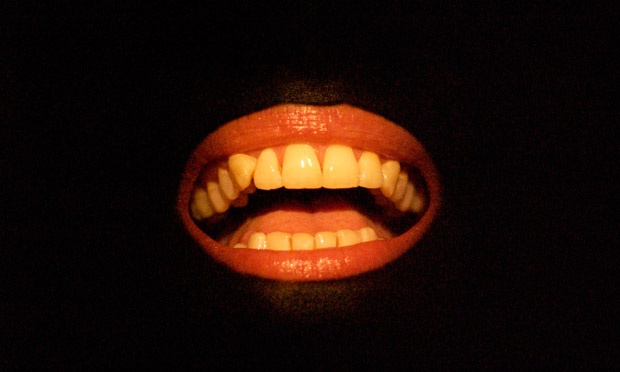
Lisa Dwan The mouth belongs to the actress Lisa Dwan, the only thing visible in an otherwise completely blacked-out Duchess Theatre during her performance of Samuel Beckett’s Not I, staged in London at the beginning of the year (and later in New York). It was part of an evening of three short Beckett monologues, all delivered by Dwan. Footfall and Rockabye were marvellous but Not I was as close to music as speech can get: a rapid-fire 10 minutes carrying a phenomenal emotional charge. There were lots of good things this year, but nothing better than that.

LIVE MUSIC

1. Louis Moholo-Moholo Quartet (Cafe Oto, May)

2. Charles Lloyd’s Wild Man Suite (Barbican, November)

3. Caetano Veloso (Barbican, May)

4. Evan Parker + AMM (Cafe Oto, October)

5. City of Poets (Pizza Express, September)

6. Dylan Howe’s Subterranean (Warwick Arts Centre, October)

7. Daniel Humair Quartet (Berlin Jazz Festival, November)

8. Rowland Sutherland’s Enlightenment (Union Cafe, December)

9. Georgie Fame & the Blue Flames (Ronnie Scott’s, April)

10. The Necks (Cafe Oto, October)

11. Whahay (Vortex, November)

12. Plaistow (Pizza Express, November)

13. Kokomo (Half Moon, Putney, August)

14. René Urtreger Trio (Timothy Taylor Gallery, June)

15. Mike & Kate Westbrook: Glad Day (St Giles in the Fields, February)

16. Allen Toussaint (Ronnie Scott’s, April)

17. Christian Wallumrød Ensemble (Vortex, February)

18. Aki Takase & Alexander von Schlippenbach: Celebrating Eric Dolphy (Berlin Jazz Festival, November)

19. Jan Garbarek + Hilliard Singers (Temple Church, November)

20. Keith Tippett Octet (Cafe Oto, February)

21. Gilad Atzmon Quartet + Sigamos Quartet (Ronnie Scott’s, August)

22. The Pop Group (Islington Assembly Hall, October)

23. Jason Moran/Robert Glasper piano duo (Festival Hall, November)

24. Nick Malcolm Quartet (Vortex, June)

25. Bill Frisell’s Guitar in the Space Age (Barbican, November)

NEW RECORDINGS

1. Ambrose Akinmusire: the imagined savior is far easier to paint (Blue Note)

2. Steve Lehman Octet: Mise en Abîme (Pi)

3. Hakon Stene: Lush Laments for Lazy Mammal (Huber)

4. Peter Hammill: …all that might have been… (Fie)

5.  Mark Turner Quartet: Lathe of Heaven (ECM)

6. FKA twigs: LP1 (Young Turks)

7. Cécile McLorin Salvant: WomanChild (Mack Avenue)

8. Billy Childs: Map to the Treasure (Masterworks)

9. Alexander Hawkins: Song Singular (Babel)

10. Rosanne Cash: The River & the Thread (Columbia)

11. Paul Bley: Play Blue (ECM)

12. Sharon Jones & the Dap-Kings: Give the People What They Want (Dap-Tone)

13. Bobby Hutcherson: Enjoy the View (Blue Note)

14. Lucinda Williams: Down Where the Spirit Meets the Bone (Highway 20)

15. Einstürzende Neubauten: Lament (Mute)

16. Bobby Wellins/Scottish NJO: Culloden Moor Suite (Spartacus)

17. Keith Jarrett/Charlie Haden: Last Dance (ECM)

18. Raymond McDonald & Marilyn Crispell: Parallel Moments (Babel)

19. Lee Konitz/Dan Tepfer/Michael Janisch/Jeff Williams: First Meeting (Whirlwind)

20. Peirani & Parisien Duo Art: Belle Époque (ACT)

21. Ruben Blades: Tangos (Sunnyside)

22. Marc Ribot Trio: Live at the Village Vanguard (Pi)

23: John Zorn: Transmigration of the Magus (Tzadik)

24. Dom Coyote, Emily Barker & Ruben Engzell: Vena Portae (Humble Soul)

25. Louis Moholo-Moholo Unit: For the Blue Notes (Ogun)

ARCHIVE RECORDINGS

1. Bob Dylan: The Complete Basement Tapes (Columbia)

2. John Coltrane: Offering: The Complete Temple University Concert (Impulse)

3. Jon Hassell/Brian Eno: Fourth World Vol 1: Possible Musics (Glitterbeat)

4. Jimmy Giuffre 3 & 4: New York Concerts (Elemental)

5. Spontaneous Music Ensemble: Oliv + Familie (Emanem)

6. Krzysztof Komeda / Andrzej Trzaskowski: Jazz in Polish Cinema (Jazz on Film)

7. Various: The Bert Berns Story Vol 3: Hang on Sloopy (Ace)

8. Mose Allison: Complete Prestige Recordings 1957-59 (Fresh Sound)

9. Duke Ellington: Contrapuntal Riposte (Squatty Roo)

10. Roy Orbison: Mystery Girl Deluxe Edition (Sony Legacy)

11. Don Cherry: Modern Art / Stockholm 1977 (Mellotronen)

12. Miles Davis: At the Fillmore (Columbia)

13. Various: Vamps et Vampire: The Songs of Serge Gainsbourg (Ace)

14. Schlippenbach Trio: First Recordings (Trost)

15. Charles Lloyd: Manhattan Stories (Resonance)

16. Joe Harriott: Southern Horizons / Free Form / Abstract (Fresh Sound)

17. Evelyn “Champagne” King: Action (BBR)

18. Joe Harriott/Amancio D’Silva: Hum Dono (Vocalion)

19. Various: Cracking the Cosimo Code (Ace)

20. Abelardo Barroso & Orquesta Sensacion: Cha Cha Cha (World Circuit)

FILMS: NEW

1. Winter Sleep (Kış Uykusu) (dir. Nuri Bilge Ceylan)

2. The Past (Le Passé) (dir. Asghar Farhadi)

3. Camille Claudel 1915 (dir. Bruno Dumont)

4. Ida (dir. Pawel Pawlowski)

5. Boyhood (dir. Richard Linklater)

6. The Grandmaster (一代宗師) (dir. Wong Kar-Wai)

7. Goodbye to Language (Adieu au langage) (dir. Jean-Luc Godard)

8. Leviathan ( Левиафан) (dir. Andrey Zvyagintsev)

9. American Hustle (dir. David O. Russell)

10. Get On Up (dir. Tate Taylor)

FILMS: DOCUMENTARY

Night Will Fall (dir. Andre Singer)

Finding Vivian Maier (dir. John Maloof & Charlie Siskel)

Bayou Maharajah (dir. Lily Keber)

FILMS: REVIVED

Far from Vietnam (Loin du Vietnam) (dir. Chris Marker with Agnès Varda, Jean-Luc Godard, William Klein, Claude Lelouch, Joris Ivens, Alain Resnais, 1967)

Zabriskie Point (Michelangelo Antonioni, 1968)

BOOKS: MUSIC

1. Marcus O’Dair: Different Every Time: The Authorised Biography of Robert Wyatt (Serpent’s Tail)

2. Mark Ellen: Rock Stars Stole My Life (Hodder & Stoughton)

3. Colin Harper: Bathed in Lightning: John McLaughlin, the ’60s and the Emerald Beyond (Jawbone)

4. Rick Bragg: Jerry Lee Lewis: His Own Story (Canongate)

5. Harvey Kubernik: Turn Up the Radio! Rock, Pop & Roll in Los Angeles 1956-1972 (Santa Monica Press)

6. Richard Havers: Blue Note: Uncompromising Expression (Thames & Hudson)

7. Victor Maymudes & Jacob Maymudes: Another Side of Bob Dylan (St Martin’s Press)

8. David Stubbs: Future Days: Krautrock and the Building of Modern Germany (Faber & Faber)

9. Joel Selvin: Here Comes the Night: The Dark Soul of Bert Berns and the Dirty Business of Rhythm & Blues (Counterpoint)

10. Steve Lowenthal: Dance of Death: The Life of John Fahey, American Guitarist (Chicago Review Press)

BOOKS: FICTION

Patrick Modiano: The Search Warrant (Collins Harvill)

BOOKS: POETRY

David Harsent: Fire Songs (Faber)

EXHIBITIONS

Late Turner: Painting Set Free (Tate Britain, London, September)

Anselm Kiefer (Royal Academy, London, October)

Henri Matisse: The Cut-Outs (Tate Modern, April)

AND FINALLY…

One afternoon in October a bespectacled young man sat down at an upright piano on the concourse of St Pancras International station and played “The Girl From Ipanema” very slowly, as though he were just inventing it, very gently testing the harmonic structure, finding new angles from which to approach the melody. He followed it with a couple of choruses of gospel-blues, investigated with a similar sense of understatement and absolute freshness. Then he got up and walked away.

A Thousand Ancestors

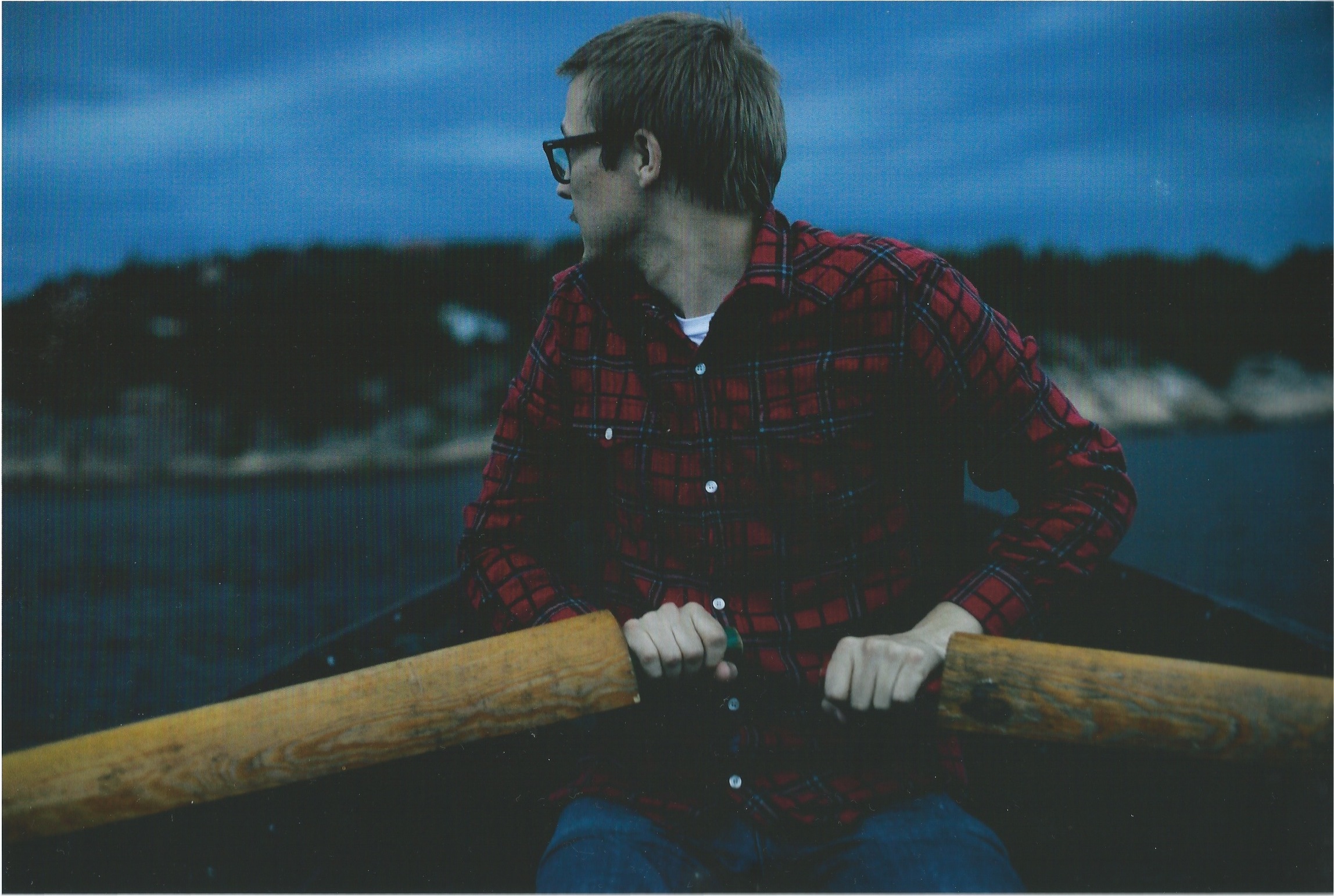
A Thousand AncestorsThe picture of the oarsman was taken by the Costa Rican photographer Michelle Arcila, and is part of project called A Thousand Ancestors, conceived with her husband, the Norwegian bassist Eivind Opsvik, at their base in Brooklyn. The results are out now in a 12×12 box containing 10 of Arcila’s prints and a matching number of Opsvik’s short solo pieces for bass, organ and other instruments, included in both vinyl album and CD forms.

According to a piece on Opsvik’s excellent website (which also includes links to the music he makes in a group called Overseas with the saxophonist Tony Malaby, in a duo with the singer/songwriter Aaron Jennings, and with others), the individual pieces of music correspond to specific images. The artists describe it as “an exploration of family history and the continuing influence of ancestral narratives on the present generation.”

The aim, they say, is to “slow time for the observer, and allow him/her to perhaps uncover distant buried memories of their own during the encounter.” Here’s an example: an image and a piece titled “A Strange Gratitude”.

The images and the music are as easy and rewarding to appreciate separately as together. Arcila’s photographs — whether portraits, landscapes, interiors, or close-ups of flowers and graves — display a cool, poised vision that certainly encourages you to spend time examining them (here’s her Flickr gallery). Opsvik’s miniatures incorporate a certain amount of relatively gentle noisemaking while also featuring solo and overdubbed arco strings in passages of powerful lyricism, sometimes using systems-like structures, occasionally floating free. Like his partners’ photographs, they’re austere but approachable.

Both elements are strong on atmosphere. I’d sign Opsvik up for a film soundtrack tomorrow. And I might very well ask Arcila to shoot it, too.

* A Thousand Ancestors is released on Opsvik’s Loyal label. The details are on his website: eivindopsik.com.

Lush laments in Dalston

Hakon Stene at Cafe OtoIf I had to persuade you to buy one album this year by someone of whom you’ve probably never heard, it would almost certainly be Håkon Stene’s Lush Lament for Lazy Mammal. I wrote about it here in March, and last night Stene brought his four-piece Ensemble to the Cafe Oto.

In addition to the leader on marimbas and guitars, the group comprised Tanja Orning on cello, Heloisa Amaral on piano and organ, and Sigbjørn Apeland on harmonium. They played through the compositions by Laurence Crane, Gavin Bryars and Christian Wallumrød that make up the CD, opening them up to the further possibilities inherent in the act of live performance, even when the performers are reading from a score.

Crane’s gorgeously drifting compositions, such as “Prelude for HS”, and “Blue Blue Blue”, feature dreamlike slow-motion harmonic shifts that, in these tintinnabulating interpretations, made me think of some lost blueprint for the instrumental tracks of the ballads from Pet Sounds. The same composer’s “Bobby J” — which we were told had been inspired by the Tour de France rider Bobby Julich — saw Stene apply his electric guitar to a similar format. The darker colours and hovering surges of Bryars’ “Hi Tremelo” created a mood of subdued ecstasy, while Wallumrød’s two pieces opened up the structures a little, and on one of them, called “Low Genths”, Stene made use of his second marimba, tuned a quarter-tone away from the first. In all, an hour of extremely beautiful and compelling music.

In a modest sort of way, the evening was a showcase for Hubro, the interesting young Norwegian label which released Stene’s album and has a catalogue that also includes recordings by Huntsville, the trio called 1982 (which includes the Hardanger fiddle virtuoso Nils Økland), the piano trio Moskus, Erik Honoré, and others.

An opening set was played by Sigbjørn Apeland, whose Hammond-size single-manual harmonium was placed front and centre of the performance floor so that the audience could watch his hands as he moved between gentle Nordic folk and hymnal elements, at one point tearing and folding pages from what looked like the London Overground timetable and stuffing them between the keys to create middle-register drones on which then he elaborated at the extremes of the instrument’s range. He has a new album, too. It’s called Glossolalia, and if it’s anything like last night’s recital, it will be worth investigating.

Abelardo Barroso

Aberlardo BarrosoI had to laugh the other day when I read an obituary of Oscar de la Renta, the Spanish-born designer of expensive frocks. A man who understood the language of clothes, de la Renta said that he always wore a tie “because I have this complex that if I walk into a place wearing a colourful shirt, someone will stop me and say, ‘I’m sorry, but the Latin band comes through the other door.'” He could have been thinking of Abelardo Barroso — pictured above, in an illustration from the 1950s — and Orquesta Sensación.

Barroso’s story is one with which I was not familiar until the arrival of Cha Cha Cha, a new World Circuit compilation of hits from the latter part of his career. In the 1920s and ’30s, Barroso had been one of Cuba’s most popular singers. Then fashions changed and he hit hard times until a meeting with Rolando Valdes, the leader of Orquesta Sensación, in the mid-’50s restored his fortunes.

His speciality was charanga, Cuba’s popular music before the arrival of salsa. The basic formula is two violins, a flute, piano, bass, two or three percussionists, two or three backing singers, and a lead vocalist who gets a chance to improvise when the band leaves the statement of the song behind and drops into a swaying montuno, or vamp, giving the lead singer a chance to engage in call-and-response improvisations with his chorus. It’s not as brash as Latin music became when trumpets and trombones came along to replace the violins, and it has a special charm, in part deriving from the sense that the singers are engaged in a conversation, whether about that chica who just strolled past or the taste of pancakes with sugar syrup and coconut.

The 14 tracks include “El Manisero” (better known to most of us as “The Peanut Vendor”) and a sweetly mournful song called “La Hija de Juan Simón”, the story of a gravedigger who has to bury his own daughter (listen to it here). There’s also a wonderful thing called “La Reina del Guaguancó”, featuring just voices and percussion weaving around each other in a three-minute masterpiece of raw Cuban soulfulness which will be appreciated by fans of Ray Barretto’s immortal “El Watusi”. It’s worth the price of the album alone.

Barroso was in his fifties when he made these recordings, and in fine voice. He died in 1972, a few years after an operation on his vocal cords had robbed him of his ability to sing. Compiled by World Circuit’s Nick Gold, the man behind the Buena Vista Social Club phenomenon, Cha Cha Cha is a nice way either to remember him or, if you’re like me, to make his acquaintance.

* The painting of Abelardo Barroso is from the booklet accompanying Cha Cha Cha. It is uncredited. 

Pieces of Robert Wyatt

The Amazing BandWhen I read, in the new issue of Uncut magazine, that Robert Wyatt has decided to stop making music, I felt an immediate pang of dismay. So I rang him up to see if he really meant it. His reply was to tell me a little story about the novelist Jean Rhys, who, after a long period of inactivity, responded to her publisher’s gentle suggestion that she might like to write another book by asking him if he’d enjoyed her last one. “Yes, of course,” he answered. “Well, read it again,” Rhys said.

We could all do a lot worse than work our way through Robert’s albums, starting with 1970’s End of an Ear, which includes his fabulous deconstruction of Gil Evans’s “Las Vegas Tango”, and concluding with 2010’s magnificent ‘…for the ghosts within’, on which he shares the credit with the saxophonist Gilad Atzmon and the violinist/arranger Ros Stephen. And we could cherish memories of live performances stretching, in my case, from the Soft Machine at Croydon’s Fairfield Halls in 1970 to Robert’s guest appearance — singing and whistling on “Rado de Nube” and playing cornet on “Song for Che” — with Charlie Haden’s Liberation Music Orchestra as part of Ornette Coleman’s Meltdown season at the Festival Hall in 2009.

We can also read Marcus O’Dair’s Different Every Time, an “authorised biography” of Robert, published today. Diligently researched and sympathetically told, it gives us the best all-round view we’re likely to get of the man who came to attention baring his torso behind a drum kit with Soft Machine everywhere from UFO to the Proms before the accident in 1973, at the age of 28, that cost him the use of his legs and propelled him into a different sort of existence, the one that produced Rock Bottom, “I’m a Believer”, Ruth is Stranger than Richard, “Shipbuilding”, “At Last I Am Free”, Old Rottenhat, Dondestan, Shleep and Comicopera, as well as collaborations with the likes of Carla Bley, Brian Eno, the Raincoats, Scritti Politti, Hot Chip and many others, most of them listed in O’Dair’s discography.

I say “most of them” because I’ve noticed an omission: a 1970 session with the Amazing Band, featuring the great cartoonist/illustrator Mal Dean on trumpet, Rab Spall on violin and accordion, Maia Spall on voice, Mick Brennan and Chris Francis on alto saxophones, Jim Mullen on bass and harmonica and Wyatt on drums and voice. Soon after they recorded it, Robert gave me an acetate of the proposed album, with a sleeve he’d made up himself, featuring the collage you see above. It wasn’t until 1997 that the music — just under 40 minutes of free improvisation — finally saw the light of day, released under the title Roar on the FMR label.

I listened to the acetate again last night and it remains a lovely example of the kind of open-minded, non-idiomatic, anti-materialistic music that was in the air back then. And still is, if you look hard enough. I’m sorry, of course, that seemingly there won’t be any more of it from Robert himself. But what he’s given us is quite enough to be going on with.

* Different Every Time is published by Serpent’s Tail (£20). Robert Wyatt will be talking to Marcus O’Dair at the Queen Elizabeth Hall on November 23, as part of the EFG London Jazz Festival.

A night with Mississippi Records

Mississippi RecordsEric Isaacson lives in Portland, Oregon, where he founded Mississippi Records in 2003, releasing vinyl LPs that anthologised pieces of music from some of the thousands of 78s he had been collecting, building up a picture of vernacular music during the first half-century of recorded sound. As a child, he had created his own Beatles LPs on tape by copying down the running order of each album and recording every track off the radio on cassette before dubbing them into the correct sequence. That occupied him between the ages of seven and 10. After that, he never looked back. Or perhaps that’s not quite the right way to put it.

He was the host of an event at the Cafe Oto in London last night, presenting three of the artists featured on his label: the singer and guitarist Brian Mumford, performing as Dragging an Ox Through Water, the cellist Lori Goldston, who toured with Nirvana in the year before Kurt Cobain’s death, and the lap-steel player Marisa Anderson. But he opened the evening with an illustrated talk titled “A Cosmic and Earthly History of Recorded Music According to Mississippi Records”.

A man of strong opinions, who doesn’t like saxophone solos and thinks that “very little good music” was recorded between 1933 and 1952, in other words between the depths of the Great Depression and the heyday of Moe Asch’s Folkways label, he proved entertaining company. After playing sounds alleged to be those of a dying star and of the potter’s grooves inscribed in a Grecian urn, he reminded us of the epidemic of “laughing” records that proved popular in the 1890s, a phenomenon which survived at least into the 1950s, when I remember listening to Children’s Favourites, the BBC Light Programme’s Saturday-morning show, in the hope that it would feature “The Laughing Policeman”.

The centrepiece of Isaacson’s address came in a 20-minute collage of film clips edited from his own collection, illustrating African American music more or less in the raw. It began with wonderful footage of the Staple Singers (pictured above), with the teenaged Mavis in staggering form, and included bits of Bo Diddley, street and church singers, the Ronettes, James Brown, Sister Rosetta Tharpe and Claude Jeter with the Swan Silvertones before climaxing with Mahalia Jackson singing “Trouble of the World” in front of a congregation including Lana Turner and Sandra Dee during the funeral scene from Douglas Sirk’s 1959 melodrama Imitation of Life. He added with a clip of Nina Simone in riveting free-association mode at the Montreux Jazz Festival (you can find it here, from 37:30 to 44.40).

Of the live performers, I was taken by Lori Goldston’s powerful arco pieces, all skirling double and triple stops, her cello run through a Fender Twin amp, and the way her more delicate pizzicato work made the instrument sound like an oud. Brian Mumford/Dragging an Ox Through Water performed in the dark, without stage lighting, and made me think of what the late guitar visionary Sandy Bull might have sounded like, had he been subjected to the influence of Suicide and Metal Machine Music: tremulous rockabilly vocals completely masked by distortion, heavily reverbed chords bleeding into each other at high volume, a seemingly arbitrary but nonetheless dramatic sense of structure.

The danger is that such music becomes merely picturesque, no more than the sum of its references. Goldston and Mumford get beyond that. But Mavis Staples, Mahalia Jackson and Nina Simone: those are hard acts to follow.