Skip to content

Posts from the ‘Jazz’ Category

Joe Locke’s respite music

Joe LockeJoe Locke says his new album, Lay Down My Heart, is intended “to provide respite for folks who work hard every day and need an opportunity to slow down and be reacquainted with that certain something which eludes most of us in the midst of the whirlwind which is modern life”. We can all do with some of that from time to time.

After Bobby Hutcherson, who performs less frequently nowadays, Locke has a plausible claim to being thought of as the leading contemporary exponent of the vibraphone. In a recent post I wrote of being impressed by his playing on Centennial, Ryan Truesdell’s album of rediscovered Gil Evans arrangements, and by his solo on “The Barbara Song” in particular, and I was sorry to miss him in London recently, when he performed with the orchestra of the Royal Academy of Music. This new recording provides a clear sight of the 54-year-old Californian’s maturity and inventiveness.

It’s a quartet album, and although you probably wouldn’t be able to pick the pianist Ryan Cohan, the bassist David Finch and the drummer Jaimeo Brown out in an identity parade, that doesn’t always matter: their playing here is perfectly attuned to the leader’s conception, and sometimes, even in jazz, you don’t need to be original to sound sparklingly fresh.

The programme starts with a measured version of Bill Withers’ “Ain’t No Sunshine” that sounds like the sort of intelligently soulful jazz that might result if you could get Milt Jackson guesting with the old Ramsey Lewis Trio. But it’s the ballads that are the core of the album, particularly a lovely treatment of “I Can’t Make You Love Me”, a definition of heartbreak from the repertoire of Bonnie Raitt; a reading of Bobby Troup’s “The Meaning of the Blues” that carries only the faintest echoes of the versions Gil Evans devised for Miles Davis’s trumpet (on Miles Ahead) and George Adams’s tenor saxophone (on There Comes a Time); and the slinkiest version of “Makin’ Whoopee” since Dr John and Rickie Lee Jones gave it a whirl a few years back.

I’m going to file this one next to Hutcherson’s Happenings, a 1967 album on Blue Note with a similar quartet format, featuring Herbie Hancock, Bob Cranshaw and Joe Chambers, ready for use on Sunday mornings and in times of stress. It’s not an album to challenge the listener (although a version of Frank Foster’s “Simone” has the darker, more convoluted intensity of some of Hutcherson’s other Blue Note quartet work — on Andrew Hill’s Judgment, say, or his own Oblique). On its own terms, however, it is perfectly satisfying. And, as promised, good for whatever ails you.

* The photograph of Joe Locke was taken by Joseph Boggess and comes from the sleeve of Lay Down My Heart, which is released on the Motema label. 

Ten Freedom Summers / 1

Wadada Leo SmithFifty years ago, a wholehearted embrace of American culture made even those of us 3,000 miles away feel we had a stake in the country’s destiny. So although we may have been neither American, nor black, nor even socially or economically disadvantaged, the March on Washington — which took place on August 28, 1963 — in some way felt as though it involved us, too, even if all we could do was cheer from the sidelines.

Tens of thousands of people gathered in Washington DC this weekend to mark the anniversary. What I’ve been doing is reading my sometime colleague Gary Younge’s fine new book The Speech, which describes the process by which the Rev Martin Luther King came to write his “I Have a Dream” address, and listening to Ten Freedom Summers, a suite by the trumpeter and composer Wadada Leo Smith. If you don’t already know the latter, this is a set of four CDs containing four and a half hours of music divided into 19 individual movements based on themes from the civil rights struggle, performed by Smith’s quartet/quintet and a nine-piece chamber ensemble. Recorded over a three-day period in November 2011 and released last year on the Cuneiform label, it was one of three finalists for this year’s Pulitzer Prize.

The titles of the individual pieces are sometimes suggestive — “Black Church”, “Democracy” — but usually more explicit in their references. “Dred Scott: 1857” is the first movement, referring to the Missouri slave who unsuccessfully sued for his freedom in that year. “Rosa Parks and the Montgomery Bus Boycott: 381 Days” is another. There are references in other titles to Medgar Evers and Emmett Till, to JFK and LBJ, to the Supreme Court justice Thurgood Marshall and to Malik Al Shabazz, better known as Malcolm X.

Unlike some of the music that accompanied the civil rights struggle, from John Coltrane’s miniature masterpiece titled “Alabama” (a threnody for the four black schoolgirls killed in the Birmingham church bombing in September 1963, barely a fortnight after the March on Washington) to Bob Dylan’s “The Lonesome Death of Hattie Carroll”, there is nothing in Smith’s work here that explicitly evokes his subject, no overt gestures that would indicate a relationship to his chosen titles. This does nothing to diminish its extraordinary power.

Smith, who was born 71 years ago in Leland, Mississippi, first came to notice at the end of the ’60s, as a member of the Association for the Advancement of Creative Musicians in Chicago, along with Roscoe Mitchell, Anthony Braxton, Muhal Richard Abrams and others. His bands included the Creative Construction Company, with Braxton and the violinist Leroy Jenkins, and New Dalta Ahkri, whose personnel included  Henry Threadgill, Oliver Lake and Anthony Davis. Along with other members of the AACM, he spent time in Paris in 1969 and became acquainted with the new generation of European free jazz musicians. His many recordings have appeared on the Kabell, Nessa, ECM, Leo and Tzadzik labels, as well as Cuneiform.

As a trumpeter, he had his own character from the beginning. If you wanted a shorthand description, I suppose you could say that he occupies the space between Don Cherry and Lester Bowie. But the originality and substance of his playing are more than enough to command the attention all the way through this mammoth undertaking, in which his is necessarily the dominant voice. I’ve always liked his tone, open or muted, and the crisp assertiveness of his phrasing, and the sense of poise he conveys.

The long-standing nature of his partnership with the pianist Anthony Davis, who appears here, is evident in the closeness of their dialogues. Like Smith, Davis is a quietly original musician who, in his own compositions as well as his playing here, demonstrates complete comfort with the idea of bringing together elements from African American and European musical practices. The basic group is completed by John Lindberg, an exceptional bassist, and two drummers, Susie Ibarra and Pheeroan Ak Laff, who alternate on some pieces and play together on others.

Sometimes Smith employs gestures immediately identifiable as drawn from jazz: “Thurgood Marshall and Brown vs Board of Education” finds Lindberg anchoring the piece with a slow-grooving funky bass figure, while the interplay between Davis and Ibarra on “The Little Rock Nine” is outstanding. Elsewhere the climate resembles that of classical chamber music: passages for flute, harp and strings in “Medgar Evers: A Love Voice of a Thousand Years’ Journey for Liberty and Justice” have a watercolour delicacy that reminds me of Toru Takemitsu. But more often it seems, to employ Duke Ellington’s phrase, beyond category. The chamber group — basically a string quartet plus harp, clarinet, flute, percussion and an extra violin — appears both by itself and with the quartet/quintet. So organic and unselfconscious is Smith’s writing that the frontier between the two groups disappears, as does the line between composition and improvisation.

The prevailing mood, not surprisingly, is soberly reflective. Even so many years after the events Smith is commemorating, there is much to reflect on. This is not a bruising experience;  the writing and playing are characterised by a sustained lyricism. Nevertheless few  will want to absorb all four and a half hours in at one sitting, and it may a take listener years to become as familiar with these individual pieces as with the much shorter jazz classics of earlier eras. But that doesn’t seem to matter. Smith’s work exists on its own terms, a marvellous tribute to its immense subject.

* The photograph of Wadada Leo Smith was taken by Steve Gunther and is from the booklet accompanying Ten Freedom Summers. Gary Younge’s The Speech is published by Guardian Books.

A poem by Roy Kelly

Roy Kelly’s work appears from time to time in the kind of magazines that still print poetry (there’s one of his in this week’s Spectator). He was born in 1949, and Peterloo Poets published a collection of his work under the title Drugstore Fiction in 1987. Having read my piece on Chet Baker, he sent me this. I wanted to publish it before the summer ends, and he was kind enough to give me permission.

THE COOL SCHOOL

The folded parasols stand guard and stand by,

sentinels of the pool and sunbeds, swathes

of white material fluttering, gathered, ready to spring

up and out, defending this tender skin which bathes

in water, and also in damaging rays that fly

through millions of miles to inflame and sting.

And in the pool a figure is moving through

the ruffled, bubbled surface, the illusory

blue depths, trying to improve a swimming action

while remembering a Chet Baker solo,

the shapely lovely logic of all he blew,

placed note by note, as if physical effort had no

part in his disciplined, pretty perfection,

and the needle life some other loser’s story.

Puffing and chugging the salty outdoor pool

the swimmer tries at least to get the breathing right,

economical, smooth, under the watchful white

umbrellas, and Mr Chet, lyrical, pure and cool.

Keith Tippett with poetry and strings

Keith TippettLike many British improvisers of his generation, the pianist and composer Keith Tippett could be forgiven for adopting a mildly jaundiced view of the acceptance he is accorded in his own country, at least as measured in the frequency with which he is invited to play before an audience. But last night, as he opened a three-night residency at the Vortex in East London, there was no mistaking the warmth of the response for a well attended concert that satisfyingly expanded an appreciation of the artistic compass of a man whose past exploits have ranged from compelling solo recitals to those celebrated concerts back in 1971 with the mind-bogglingly variegated 50-piece band he called Centipede.

Last night’s gig began with Tippett accompanying his wife, Julie Tippetts, as she recited five of her poems — although “recited” is not quite the appropriate term, since Julie (nee Driscoll) frequently slipped from speech into improvised song. The bringing together of jazz and poetry is a notion with a history of few successes and many honourable failures; this attempt proved very effective, thanks to the engaging and unpretentious quality of Julie’s writing, the sheer musicality of her voice and the beautifully spare commentary from Keith’s piano. “We’ve never tried that before,” Keith said afterwards, “not even at home.”

The remainder of the evening featured the Elysian Quartet — Emma Smith and Jennymay Logan (violins), Vincent Sipprel (viola) and Laura Moody (cello) — by themselves in Tippett’s first string quartet, written for the group in 2008, and then with the composer in his piano quintet, commissioned by the Kreuzer Quartet almost 20 years ago. Astringent writing in the first and third movements of the quartet made room for thoughtful improvisation — imagine trying to get a string quartet to improvise when Tippett was starting out on his career, 40-odd years ago — counterbalanced by a brief second movement based on a lilting country-dance melody. The quintet was full of the dramatic contrasts that have always characterised his music, ranging from the pastoral through the romantic to the motorik, with a couple of floor-shaking passages in which the strings fought against the roiling bottom octave of the club’s Steinway.

Tonight’s instalment finds him leading a new trio (with the drummer Peter Fairclough and the bassist Tom McCredie) and giving the first performance of a suite for octet, The Nine Dances of Patrick O’Gonogon. On Saturday he and the Elysian Quartet will reconvene for an evening of spontaneous composition. If it continues the way it began last night, this short residency will be go down as a triumph for one of the great figures of contemporary British jazz.

Lee Konitz: the improviser at 85

Lee Konitz 1No musician interrogates a song more thoroughly than the alto saxophonist Lee Konitz: separating its components, wiping off the accumulated dirt and scraping away the rust, holding the bits up to the light, examining them from all angles, and then reassembling them in a more interesting form. He was doing it in 1947, when he made his first recordings with the Claude Thornhill Orchestra, aged 20. He is still doing today, halfway through his ninth decade.

He’s featured on a new CD, Costumes Are Mandatory, released on the HighNote label and recorded in August 2012 with a quartet under the leadership of the pianist Ethan Iverson, noted for his work with the trio The Bad Plus. The bassist Larry Grenadier and the drummer Jorge Rossy complete the group. Together with two other albums released in the past couple of years, Live at Birdland (ECM), recorded in December 2009 with Brad Mehldau, Charlie Haden and Paul Motian, and Enfants Terribles (Half Note), made in June 2011 with Bill Frisell, Gary Peacock and Joey Baron, it provides a view of a great artist in his final years, his work subject to the changes imposed by time and the ageing process.

The late work of a long-lived great artist is always interesting and can provide a fascinating distillation of his or her career-long preoccupations. Sometimes the reduced powers are physical, sometimes they are mental. The painter Willem De Kooning was suffering from a form of Alzheimer’s disease when, in his eighties, he produced a series of strange, pale, almost luminous canvases that seemed like the ghosts of his former work. Fortunately, any reduction in Konitz’s powers is purely physical; the articulation might not be as swift, but the intellect is as sharp as ever.

No longer the fleet-footed musical athlete of his youth, when he and his fellow saxophonist Warne Marsh leapt with such alacrity over the high hurdles set for them by their mentor, the pianist Lennie Tristano, now Konitz deploys his reduced powers to different ends. The last of his strength is being spent on searching his material — almost always drawn from the standard American songbook — for new connections, new angles, new avenues of approach.

My best memory of Konitz is also one of my best memories of music, full stop. It comes from about 30 years ago, and a night at a short-lived jazz club called the Canteen on Great Queen Street in Covent Garden, occupying premises that had formerly been Blitz, the headquarters of the New Romantic movement, would later become a discotheque and now house a lap-dancing club. The Canteen, although ultimately unsuccessful in its attempt to rival Ronnie Scott’s, was for a while a very good place to hear such people as Esther Phillips, Chet Baker and Lee Konitz.

On the night in question Konitz was accompanied by an excellent British rhythm section: the pianist (and composer) Bob Cornford, the young bassist Paul Morgan and the experienced drummer Trevor Tompkins. What I remember most vividly is that one complete set was taken up by a treatment of “On Green Dolphin Street”, the Hollywood film theme composed by Bronislau Kaper in 1947 and rescued just under a decade later by Ahmad Jamal, who was responsible for its subsequent popularity among jazz musicians. Konitz started out by improvising unfamiliar and seemingly arbitrary phrases, inviting the other three musicians to go along with him as he gradually allowed these shreds of melody to take new forms, uncovered the connective tissue between them. This mesmerising process reached its apogee when, after much feinting and seeming disgression, Kaper’s theme gradually began to emerge and was stated for the first time as the piece ended. It was like watching a film of an explosion being run backwards in super slow motion.

Lee Konitz 3He does something similar, at a more compressed and less exalted level, on the version of “What’s New” included in Costumes Are Mandatory, allowing Iverson to lead the way, before entering with a phrase from the theme which is quickly deformed into a series of glancing allusions to the original tune, inventing their own sense as they go along. This is something that used to be called “thematic improvisation”, and it is almost a lost art. His distinctive tone — which once proposed an alternative to the all-pervasive influence of Charlie Parker — may be more fibrous and less robust than in his youth or his prime, and the comparison with Live at Birdland and Enfants Terribles indicates that time is having an inevitable effect, but it remains the perfect vehicle for his thoughts.

Konitz, of course, was a member of Miles Davis’s famous 1948 nonet, the Birth of the Cool band, and another personal memory of his playing comes from 1991, when he appeared at London’s South Bank with a band billed as Re-Birth of the Cool, an attempt by another original member, Gerry Mulligan, to recreate those celebrated sessions. Lew Soloff played Davis’s parts, and the other original present was Bill Barber, the tuba-player. For me, the outstanding impression was left by the way Konitz approached the project: he was the only one not interested in honouring the past by recreating it note-for-note but was intent on playing as though more than 40 years had passed and the world had moved on.

Working as a soloist for hire suits him because it presents him with a constant variety of challenges. That is how he has operated throughout his career, which has never been short of recorded documentation, from those early sides with Thornhill, Davis, Tristano and Stan Kenton through his own albums on Atlantic and Verve, his fascinating and fearless encounters with Martial Solal, Elvin Jones, Albert Mangelsdorff, Kenny Wheeler and countless others, to this most recent crop of albums. As a body of work, it offers not just a vast quantity of great music but a salutary lesson in the value of living in the present.

* The photograph of Konitz at the top is a detail from the cover of the 1955 Atlantic album Lee Konitz with Warne Marsh, taken by William Claxton. The lower photograph is a detail from the cover of Costumes Are Mandatory, taken by John Rogers. For those who want to know more, I thoroughly recommend Lee Konitz: Conversations on the Improviser’s Art by Andy Hamilton, published by the University of Michigan Press in 2007.

Homages to Gil

Gil EvansI often wonder how music would have sounded today had Gil Evans never existed. We celebrated the centenary of Gil’s birth last year, and this year marks the 25th anniversary of his death, but for those of us who love his work he seems ever present, both in the enduring wonder of his own music and in his subtle but persistent influence on others.

A few weeks ago it was announced that Ryan Truesdell’s Centennial, a crowd-funded (via ArtistShare) CD of new recordings of lost or obscure Evans arrangements, had been named record of the year by the US Jazz Journalists’ Association. A New York-based composer, Truesdell secured access to Gil’s archive and delved deep into the arranger’s history for previously unrecorded pieces for Tommy Dorsey (“Dancing on a Great Big Rainbow”) and Claude Thornhill (“Who’ll Buy My Violets?”, “Beg Your Pardon”, “How About You?”), and a version of “Maids of Cadiz” written for Thornhill seven years before it appeared in reworked form on Miles Davis’s Miles Ahead. He does a wonderfully empathetic job of imagining how Gil might have completed work on “Punjab”, a piece which previously only existed in a skeletal rejected version (from the 1964 sessions for the classic The Individualism of Gil Evans).

He also earns my gratitude, in particular, for unearthing a couple of important arrangements written by Gil for a concert with a 24-piece Dream Band at the Berlin Jazz Days in 1971. I was present that night, and I retain a vivid memory of how, although the band was full of excellent musicians, the performance was disappointing and suffered badly from a lack of adequate rehearsal time. Particularly in the days before he espoused electric instruments, Gil’s music was all about nuance and heavily dependent on his musicians’ understanding of his unusual modus operandi, including an approach to conducting that was, shall we say, suggestive rather than prescriptive. Thanks to Truesdell’s diligence, here there are no such problems, and we get an extended 12-minute treatment of “The Barbara Song” (the Kurt Weill tune also featured on The Individualism), now with a thoughtful vibes solo from Joe Locke in place of Wayne Shorter’s immortal tenor saxophone improvisation, and a 19-minute medley of “Waltz”, “Variation on the Misery” and “So Long”. The glistening performances are everything Evans might have wished to hear that night in Berlin, and completely true to his spirit.

If it is one thing to recreate the music he wrote as accurately and sympathetically as possible, it is another to use it as a platform for further exploration, which is what, in his characteristically quiet way, the composer and arranger Mike Gibbs has done on his latest album: Mike Gibbs + 12 Play Gil Evans, released this month on the Whirlwind label. Unparalleled in his devotion to and understanding of Evans’ music, Gibbs has allowed it to colour and inspire his own work for the past 40-odd years, ever since he came to prominence with such compositions as “Family Joy, Oh Boy” and “Sweet Rain”, made famous by Gary Burton and Stan Getz respectively in the late ’60s.

For this new album, recorded in London earlier this year, he takes six of Gil’s arrangements and, rather than using the original charts as Truesdell did, makes his own transcriptions, to which he adds his own variations. I can’t imagine anyone else bringing this off, but from the very start, with “Bilbao Song” (another Weill tune, recorded by Evans on Out of the Cool in 1960), it’s apparent that he is fully capable of adding something new and valuable to what is already a masterpiece. We also get a third great cover version of Gil’s perennially seductive “Las Vegas Tango” (based on Ravel’s “Piece en forme de habanera”), to go with those on Robert Wyatt’s End of an Ear (1970) and Michael Shrieve’s Stiletto (1989), and beautifully enhanced treatments of “Sister Sadie”, “Spring is Here”, “St Louis Blues” and “Wait Till You See Her”.

The album is completed by arrangements of four tunes with no Evans connection: Ornette Coleman’s “Ramblin'”, Carla Bley’s typically enigmatic “Ida Lupino” and Gibbs’ own “Feelings & Things” and “Tennis, Anyone?”. It’s the highest of compliments to say that all 10 pieces maintain a unity of tone, texture and vision, with “Ida Lupino” contrasting a clarinet lead and low brass in a way Gil would surely have loved, while demonstrating just how far from pastiche this exercise is.

The soloists, too, are up to the task. The bassist Michael Janisch, outstanding throughout in partnership with the drummer Jeff Williams, is featured at length on “Bilbao Song”, showing himself to be one of a new breed of player (along with Thomas Morgan and Larry Grenadier) whose renunciation of the desire to play faster, higher and ever more intricate lines acts to the great benefit of the music. Julian Siegel’s tenor saxophone and Mark Nightingale’s trombone are featured to good effect on “Las Vegas Tango”. Robbie Robson adds a light-fingered trumpet solo to “Sister Sadie” and plays the Miles role more than efficiently on “Spring is Here”. The altoist Finn Peters evokes the very different spirits of Coleman on “Ramblin'” and Cannonball Adderley on “St Louis Blues” without being remotely imitative. And the gifted pianist Hans Koller brings his own approach to Evans’ sidelong, minimalist keyboard style.

I’ve gone on at length about these records because, as hard as it been to accept for the past quarter-century, we won’t be getting any more new music from Gil Evans. There wasn’t even nearly enough of it in his lifetime, thanks to the difficulty he always experienced in trying to write quickly or to order. Maybe one way of measuring his stature is to look at what he has inspired in others, and there can’t be much higher praise than to suggest that these two albums belong next to his own.

New brushes and palette

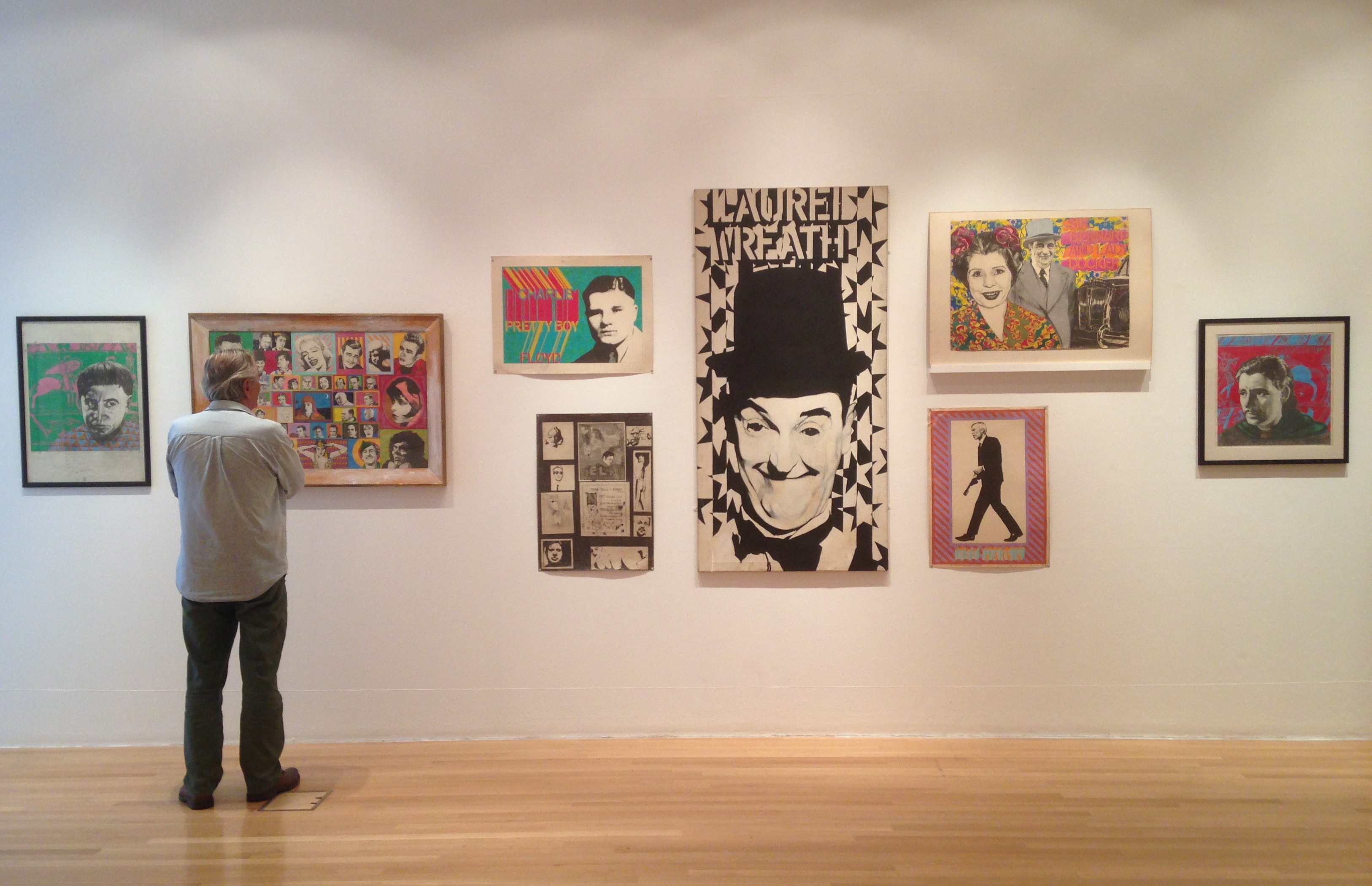
DuryIan Dury may well have been the only pop artist who became his own subject. On the walls of a new exhibition of his paintings, drawings and graphic design at the Royal College of Art in London, where Dury studied in the early ’60s, hang a handful of interesting self-portraits. For his true self-portrait, however, you have to search YouTube for the remarkable official videos for “Hit Me With Your Rhythm Stick” and “Reasons to Be Cheerful, Part 3”, where you will find the artist who invented himself in the medium that best suited him. Nevertheless the RCA show, called More Than Fair, is well worth a visit for the glimpse it provides of a young man who grew up amid the benign ferment of British art colleges half a century ago.

Dury went to Walthamstow School of Art in 1959, studied with Peter Blake, and won a place at the RCA in 1963. This was a time when popular culture was becoming an acceptable subject for fine artists, thanks to the work of Blake, Richard Hamilton and others, and Dury welcomed the opportunity to take on a range of subjects including Hollywood stars, Sonny Liston, celebrity industrialists (Lord and Lady Docker, famous for their Daimler with gold door handles) and the soft-porn nudes who take up just about half the show.

The influence of Blake — who remained a friend — is evident in the presentation of such works as “Flo Diddley” and “Miranda Aureole: The Nipple Princess”, and in the work he did for the Sunday Times Magazine and London Look. Here from the ST Mag (which continually bylined him “Ian Drury”) are spreads devoted to features on “The Immortals” (Bogart, Gable, Harlow, etc) in 1966 and “Lost Heroes” (James Dean) the following year. Rainbow stripes are bursting everywhere, sometimes accessorised with sequins. Titles are roughly stencilled. The energy is unmistakeable, even in the representatives of his commercial work, such as the cover of World Record Club’s “The Wonderful Vera” (Lynn) and the box for EMI’s reel-to-reel tape version of Sinatra Sings of Love.

Four LivesThis didn’t turn out to be the work Dury was put on earth to do, but he was pretty good at it. Curated by Jemima Dury (the artist’s daughter), Julian Balme and Kosmo Vinyl, the show was assembled from the family collection and loans from friends and former colleagues, including Terry Day, the drummer of Kilburn and the High Roads (who contributes a Dury-decorated bass drum head), Davey Payne, the Blockheads’ saxophonist, Andrew King, Dury’s music publisher, and Laurie Lewis, the dance photographer.

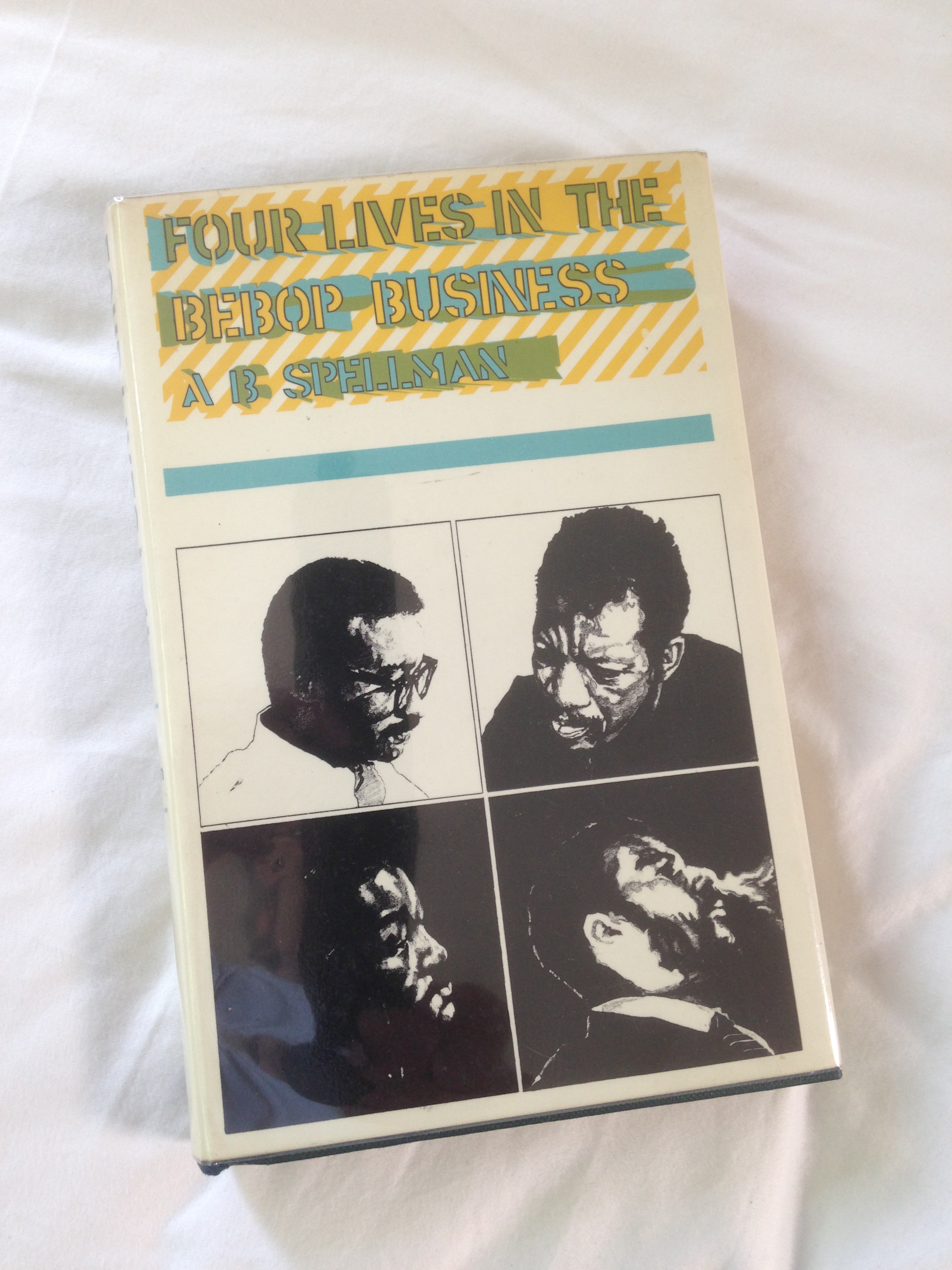
I wish I’d known about the exhibition in advance. Then I’d have lent them my own bit of Duryana: a copy of the first UK edition of A.B.Spellman’s Four Lives in the Bebop Business, published in 1967, for which MacGibbon and Kee commissioned the artist to provide a new cover (above). His ink portraits of Cecil Taylor, Ornette Coleman, Herbie Nichols and Jackie McLean, the subjects of Spellman’s classic quartet of encounters with modern jazz musicians, are perfect, as is the stencilled typography.

The show opened this morning and closes on September 1. Admission is free. Details are here. A new book of Dury’s lyrics, titled Hello Sausages, edited by Jemima Dury and published by Bloomsbury, is on sale in the gallery at a tenner off the £25 price. All in all, it’s worth the trip.

The Brubeck/Bernstein dialogues

Brubeck

It wouldn’t surprise me if you’d never heard, or even heard of, Bernstein Plays Brubeck Plays Bernstein. It isn’t in any of the guides to recommended jazz recordings that I’ve read, and I don’t remember seeing any mention of it in the many excellent obituaries that appeared when Dave Brubeck died, aged 91, last December. Even in an era when his contribution has been handsomely reassessed, it remains a bit of a black sheep in his discography.

Yet it’s always been a record of which I’ve been extremely fond, and it’s a pleasure for me that it has finally made what I believe to be its first appearance on CD (** I’m wrong: see correction below). Even now, however, despite featuring two of Columbia Records’ biggest names of the early 1960s, it has been refused the seal of approval that a release on Sony Legacy represents, and has been shuffled intead down to the budget Hallmark label, which means that although the repackagers have used the original front cover design, today’s buyer isn’t deemed worthy of the sleeve information that came with the original 12-inch LP release.

No matter. The relevant details are to hand. The first side of the album consists of Howard Brubeck’s four-part Dialogues for Jazz Combo and Orchestra,  first performed by the New York Philharmonic and the Dave Brubeck Quartet under the baton of Leonard Bernstein at Carnegie Hall in December 1959 — the month that Brubeck’s Time Out, containing “Take Five”, was released — and recorded the following January 30 at one of Columbia’s two New York studios, probably the deconsecrated Armenian Church on East 30th Street. The second side presents four of Bernstein’s Broadway theatre songs, three of them from West Side Story, recorded a fortnight later by the quartet alone: the classic line-up of Brubeck (piano), Paul Desmond (alto saxophone), Gene Wright (bass) and Joe Morello (drums).

Howard Brubeck was Dave’s older brother, preceding his sibling as a student of the French composer Darius Milhaud at Mills College, a liberal arts institution in the Bay Area (its alumni include Terry Riley, Phil Lesh and Steve Reich). He became Milhaud’s assistant, taught composition at San Diego State College and ended his career as dean of humanities at Palomar Junior College in San Marcos, California. Dialogues appears to be his only recorded composition.

The four movements are titled Allegro, Andante (Ballad), Adagio (Ballad) and Allegro (Blues). Inevitably, the critics of the day assumed that the two Brubecks and their superstar conductor were putting a toe into the waters of the Third Stream, the late-’50s movement created by the musicologist-composer Gunther Schuller, who wanted to find ways of combining jazz with classical music. Most of them criticised it for an absence of obvious musical ambition: what Howard Brubeck did was not to fuse the two forms in an attempt to discover a third, but simply juxtapose them. So for most of the time rather portentous orchestral passages reminiscent of Aaron Copland — stentorian brass, perky woodwind — are succeeded by bits that sound like conventional 1950s jazz-with-strings.

I don’t mind that at all, because the material always feels like it has substance and the players sound as though they’re having fun. I bought it on its release in 1961 and I’ve probably listened to the orchestral piece no more than two or three times in the last 40 years, but I found that I remembered every note. It isn’t profound, but it’s unfailingly intelligent and creative, and sometimes genuinely exciting, and it calls on the full resources of Brubeck and his musicians. Andante (Ballad) has a tune as pretty as brother Dave’s classic “In Your Own Sweet Way”, giving Morello a chance to demonstrate his immaculate brush-work, while Wright sounds pretty much the equal of more highly rated bass-players of the era. Adagio (Ballad) moves from an astringent passage for strings into full-blown romanticism behind Desmond, and the closing movement — although the mention of the blues in the title is a little misleading — finds the quartet achieving a genuine interaction with the orchestra as the intensity builds from a delicious conversation for trumpet and bassoon through angular string figures towards a beautiful moment when the orchestra detonates Desmond into the first of two short but very fine solos over the rhythm section at its swinging best. The closing ensemble climax is prefaced by a 32-bar solo which shows what an unassumingly adventurous pianist Brubeck could be. (It reminded me of a lovely self-deprecatory story he once told about bumping into the avant-garde pianist Cecil Taylor, who told him how much he admired his playing and proclaimed that he saw him as the missing link. “He didn’t say between what and what,” Brubeck said.)

What a pity whoever remastered the recording saw fit to cut off the final chord, leaving no hint of natural reverb — particularly since Columbia’s 30th Street studio was renowned for its inherent properties in that respect. But I suppose that’s what happens when you bang something out on a budget label and flog it for less than a fiver.

Did I say something about the quartet swinging? But isn’t what they were supposed not to do? What rubbish. I saw them at the De Montfort Hall in Leicester during their UK tour in 1962, at the height of their popular success. It was my first direct exposure to American jazz musicians, and they proved that no group including Wright and Morello could fail to swing like the clappers on demand, whatever the material or the environment. And that’s what we find on the tracks minus the orchestra, where their playing is unfailingly excellent, particularly on a luminous version of “Maria”, where — if I’ve got it right — Desmond plays the theme in 4/4 while the rhythm section are playing in three. It’s the sort of rhythmic game for which they became famous with “Take Five”, “Unsquare Dance” and so on, and as usual they settle into a regular four for the solos. The delicacy of Brubeck’s solos throughout these sides is exceptional. He really was a remarkable musician. And Bernstein Plays Brubeck Plays Bernstein doesn’t deserve its obscurity.

* The photograph of the quartet — left to right: Dave Brubeck, Paul Desmond, Gene Wright, Joe Morello — is from the cover of the album.

** Philip Clark (@MusicClerk) kindly points out that Dialogues was reissued in a series of CDs called Bernstein Century, and the whole thing came out in January 2011 via Essential Jazz Classics. I’m afraid I don’t know whether either of those versions preserved a little reverb at the end of the suite.

Catch A Fire redux

Catch A FireLondon felt like an oven as I made my way to the South Bank to watch Gary Crosby’s augmented Jazz Jamaica celebrate the 40th anniversary of Catch A Fire last night. It reminded me of the evening of September 20, 1972, when I landed at Palisadoes Airport in Kingston, Jamaica and experienced Caribbean heat for the first time, about to discover the way it transports you into a different reality.

Chris Blackwell, the founder of Island Records, whom I had not met before, picked me up at the terminal in a Mini Moke, which also contained the American photographer Lynn Goldsmith. We drove along the Palisadoes, the long spit of land than encloses Kingston Harbour, to Port Royal, the old pirate headquarters — or what was left of it by the earthquakes of 1692 and 1907. It was quiet, and it was hot, and we got out of the Moke by the seafront, where goats were settling down for the night and men were selling fish from glass-fronted wooden cases. Blackwell bought us each a piece of fried snapper and a can of cold Red Stripe from a bar made out of corrugated iron sheets. It seemed like heaven

The following day we went to Dynamic Sound studios, where Toots and the Maytals were trying to record “Tumbling Dice”, a task only marginally impeded by the fact that Toots didn’t know the words and was making them up as he went along. This gave me the chance to witness one of the great rhythm sections at work: Hucks Brown (guitar), Gladstone Anderson (piano), Winston Wright (organ), Jackie Jackson (bass) and Winston Grennan (drums), each of them doing exactly what you hoped he’d do. Particularly Hucks Brown, playing those unique little stuttering, flickering single-string fills that had distinguished Paul Simon’s “Mother and Child Reunion” a few months earlier.

I was shown around Trenchtown the next morning by Joe Higgs, the singer who had mentored the young Wailers, teaching them how to sing harmony. Joe was an older man, a calm, charming, deep-voiced Rasta. He gave me a copy of his new 45, “Let Us Do Something”, and took me to Bob’s Tuff Gong record shack at 127 King Street, one block across from Orange Street, where I bought copies of the Wailers’ “Trenchtown Rock” and their latest release, “Satisfy My Soul Jah Jah”. That afternoon Blackwell and I went to Half Way Tree, where he had an appointment at the Aquarius record store with Herman Chin Loy, a young producer, who played us some pretty wild acetates on which he wanted to make a deal; they may have been the ones that surfaced the following year on the first of his Aquarian Dub LPs.

That evening we met up with Harry Johnson — the famous Harry J — who removed a Smith & Wesson from the glove compartment of his Oldsmobile and placed it in a shoulder holster concealed by his lightweight jacket before ushering took us to his studio on Roosevelt Avenue. I remember it as a bungalow surrounded by lawn and trees. Inside, amid a thick fug of ganja, were Bob Marley, Peter Tosh, Bunny Livingstone, Aston Barrett and Carlton Barrett, laying down the track of “Slave Driver”, whose lyric would provide the title for Catch A Fire.

I knew about the Wailers. Back in 1966 I’d bought two of their early singles, “Put It On” and “He Who Feels It Knows It”, on the old Island white label. I loved the songs, the rhythms and, most of all, the harmonies. But this was a quite different sort of experience: thanks to the Barrett brothers (my second great rhythm section in two days), the music had a dark churn of a kind I’d never heard before, somehow lazy and energised at the same time. The vocals were equally stunning: Marley’s lead was mesmerising, the harmony work piercingly gorgeous.

Blackwell had done something unprecedented in the annals of Jamaican music. At a time when musicians sold the rights to their singles for 25 Jamaican dollars, he had advanced the Wailers several thousand pounds in order to make an album, bringing the economics of production and promotion developed in rock music to the world of reggae. And this was his first exposure to the result of what most people in the Jamaican music business saw as an outrageous and hopeless gamble. But Blackwell was always a talented gambler, and almost as soon as he walked through the studio door he knew that this one had come off.

The quickest and simplest way of explaining the effect of all this on me is to say that when I got home, a couple of days later, I sat down to write a piece suggesting that in Bob Marley, Jamaica had a musician whose effect might one day be comparable to that of Marvin Gaye, Sly Stone and Curtis Mayfield. Not wrong there. Catch A Fire came out six months later, in its strikingly ingenious (and expensive) Zippo cover, beginning the process that, within three years, turned Marley into an international superstar and cultural symbol and made reggae into an wordwide lingua franca.

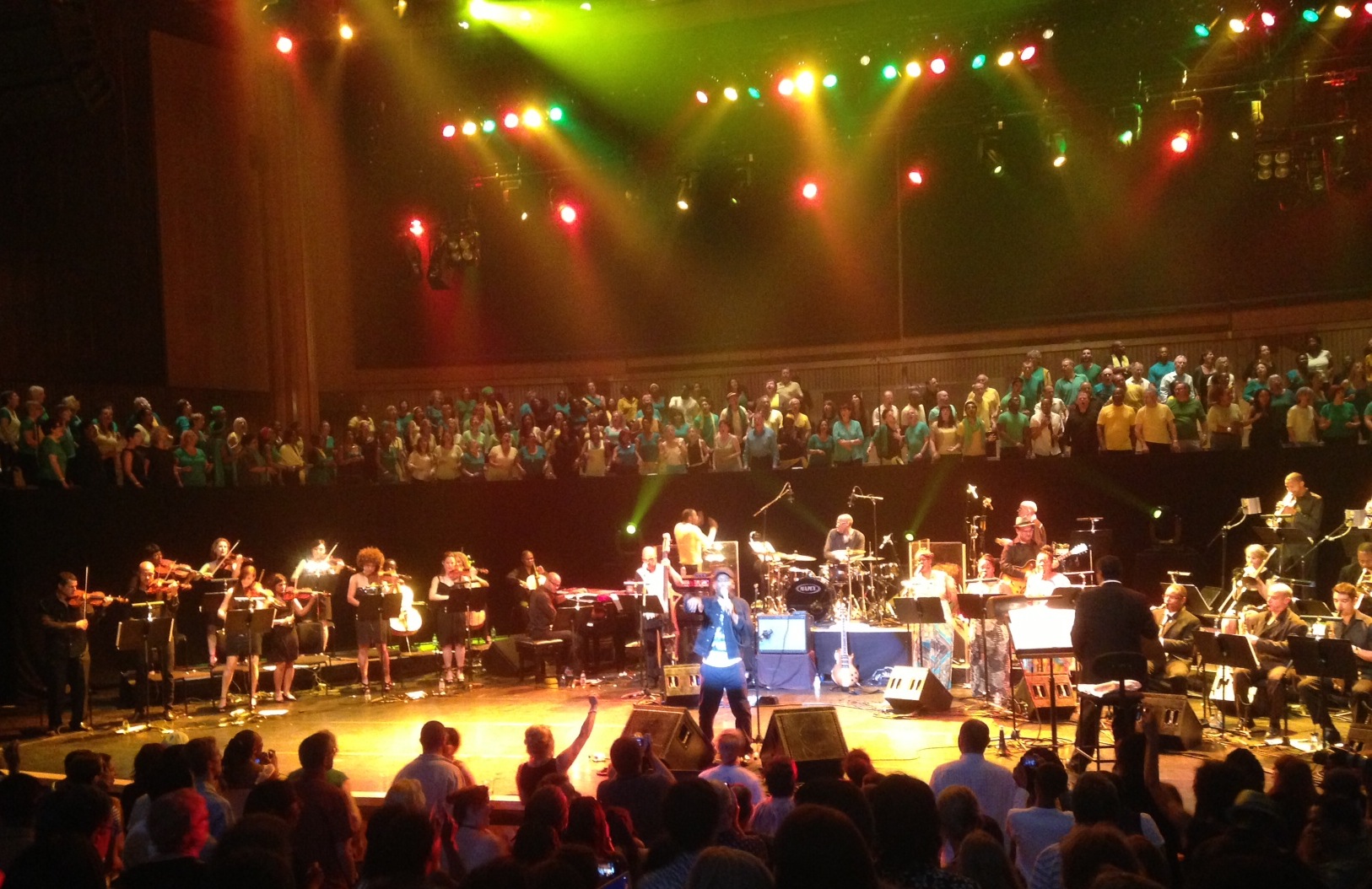
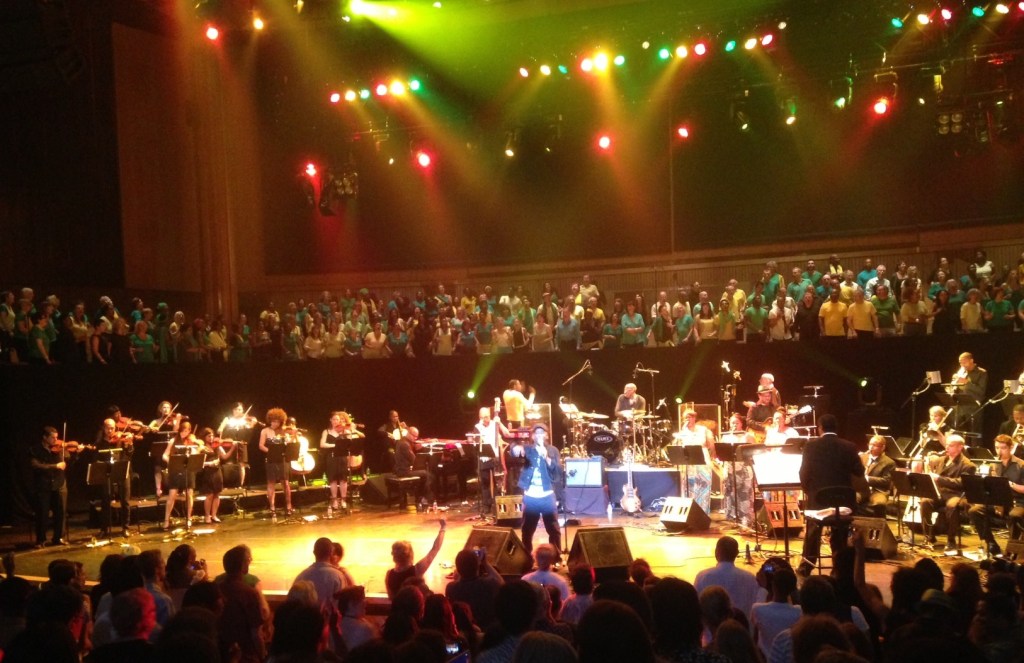
That’s a long way of getting round to talking about last night’s gig at the Festival Hall, but it might help to explain why I found it so moving when the 21-member Jazz Jamaica All Stars, the 12-piece Urban Soul string ensemble, the 240-person Voicelab choir, the conductor Kevin Robinson, the choirmaster Mark De Lisser and the singer-guitarist Brinsley Forde launched into “No More Trouble”. In that moment, in that song’s combination of baleful cadences and stare-down optimism, the summoning of musical and spiritual powers was at its most intense: spine-tingling at the start, overwhelming by the finish.

They played the album all the way through, Jason Yarde’s arrangements making use of all the available resources: the strings on Tosh’s “Stop That Train”, an acapella coda for the three female backing singers (Zara MacFarlane, Keisha Downie and Rasiyah) on “Baby, Baby We’ve Got a Date”, the best guitar solo I’ve heard this year from Robin Banerjee on “Concrete Jungle”, a fine Latin piano solo from Ben Burrell on “Midnight Ravers”, a rousing violin duel between Stephen Hussey and Miles Brett on “Stir It Up”, the tenor saxophone of Denys Baptiste and the trumpet of Yazz Ahmed swapping phrases on another Tosh song, “400 Years”. And the other great solo of the night, by the tenorist Patrick Clahar, on “No More Trouble”.

They finished with three songs from Marley’s later repertoire: “One Love”, “Redemption Song” — sung by Brinsley Forde with just the strings for company — and “Lively Up Yourself”. Brinsley deserves the highest praise for a performance in which he evoked the spirit of the great man without exaggeration and without pushing himself forward, becoming just another member of a unique and hugely life-affirming organism. Quite a night.

A visit to 131 Prince Street

Ornette in SoHo

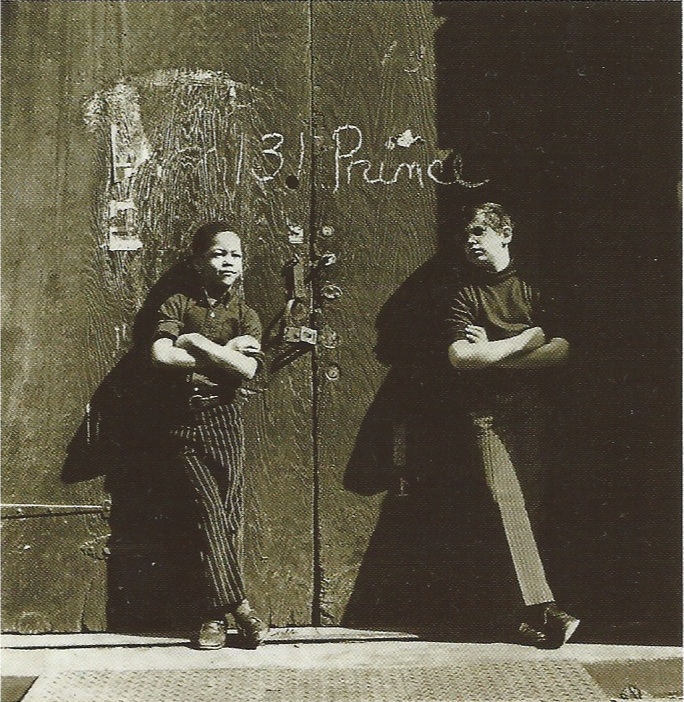
When I visited Ornette Coleman’s SoHo loft in early 1973, the threat of eviction was already hanging over him. The great saxophonist and composer had lived at 131 Prince Street since the late ’60s, when the district’s historic buildings had been under threat of demolition to make way for the proposed Lower Manhattan Expressway. Now the expressway scheme had been abandoned, and the neighbours were getting restless. They didn’t like the idea of a jazz musician living in their midst, it was said. Particularly one who had turned his ground floor into a performance space, which he called Artists House. And real-estate agents were looking for a way of freeing up properties in a district whose beautiful but semi-derelict five-storey cast-iron buildings were about to make the transition from light industry to highly desirable residences and retail spaces.

The next SoHo loft I visited, on Greene Street in 1981, was occupied by David Byrne and Twyla Tharp, who had just collaborated on The Catherine Wheel, and the metamorphosis didn’t stop there. In 1999, Rupert Murdoch and his new wife, Wendi Deng, paid £6.5m for a triplex apartment at 141 Prince Street, five doors from Ornette’s old pad; six years later they sold it for almost $25m. For the last 20 years the streets have been lined with high-end clothes shops and expensive restaurants, and the sidewalks thronged with tourists. Like a lot of places into which developers and exploiters follow artists, SoHo lost its character on the path to prosperity.

One day in 1970, Ornette invited an audience of acquaintances and colleagues to attend a recording by his then-current quartet: Dewey Redman (tenor), Charlie Haden (bass) and Ed Blackwell (drums). The result was issued a couple of years later as an album called Friends and Neighbors on Flying Dutchman, a short-lived label run by the producer Bob Thiele, who had recorded Coleman (and John Coltrane and Albert Ayler) on Impulse in the ’60s. Now Ace Records in the UK has acquired the rights to Thiele’s catalogue, and Friends and Neighbors — which has always been hard to find, although I have a CD of the album reissued by BMG France a dozen years ago — is among the first releases. The photograph above, by Ray Ross, is from the cover.

The album starts in a rather eccentric fashion with the two short parts of the title piece, originally released — unlikely as it may seem — as a 45rpm single. On the first part, the audience chants a simple lyric based on the title, “Give Peace a Chance”-style, over a bouncy Blackwell second-line backbeat, either side of solos from Ornette’s screechy violin and Redman’s saxophone. The second part has no singing, and Ornette switches to alto saxophone; the groove persists, with Haden outstanding despite the murky sound.

The aural fog clears entirely for the remaining four pieces,all devoted to the quartet, among which the two extended tracks, “Long Time, No See” and “Tomorrow”, deserve to occupy an important place in Coleman’s discography. The intimacy of the interplay between alto and drums during Ornette’s six-minute solo on the former track is outstanding even by the standards of these particular players, with Blackwell giving a lesson in medium-up tempo swing. Ornette’s trumpet appears on the brief “Let’s Play” but he returns to the alto for “Forgotten Songs” and for “Tomorrow”, where the always underrated Redman leads off with a striking solo employing multiphonics and Ornette contributes another outstanding improvisation in collaboration with the endlessly stimulating rhythm team.

My visit to 131 Prince Street three years later yielded one of the most singular and intense musical experiences of my life. A group of  half a dozen jazz writers from around the world were paying a visit to Coleman, who responded by inviting his house guest, the great pianist Abdullah Ibrahim, to play for them. If you’ll indulge me, here’s how I described it from memory a few years later, in the introduction to a book called Jazz: A Photographic Documentary:

The South African seated himself at the grand piano in the middle of the light, spacious loft while the visitors drew up their chairs in a semi-circle around him. He placed his hands together, bowed his head for a moment, and then he began. Perhaps he played for 10 minutes, perhaps for half an hour. Nobody in that room would have been able to say which.

He began with a hymn tune tune direct from the African Methodist Episcopal Church in which he worshipped and sang as a child; a slow, wise tune, its melody moving with a graceful inevitability, supported by simple harmonies that resonated with the richness of entire choirs. Then he changed gear, into a dance tune that moved to a swaying, sinuous beat and gathered momentum until it sounded like a whole township stepping out. Changing up again, his hands began to hammer great tremolos at both ends of the keyboard, the air in the room seeming to shimmer and the floor to shudder as his big fingers rolled harder and harder in a gigantic crescendo until suddenly bright treble splashes fell across the dark patterns like bursts of sunlight piercing a storm. Now pure energy took over, the melodies broken into abstract angular figures which leaped and tumbled and fought with a ferocious energy, bypassing the logic centres of the brain to reach some place that responds only to kinetic stimuli. 

Just when it seemed that the intensity might burst the windows, Ibrahim backed off, returned to the double-handed tremolos, rewound slowly and with infinite care through the dance tune and the hymn, and deposited us back where he had found us, in silence — except that the silence now sounded completely different.

Soon after that Ornette was obliged to close Artists House. Around 1975, he was finally evicted altogether.