Skip to content

Posts from the ‘Jazz’ Category

‘Porgy and Bess’ revisited

Porgy 2

As he surveyed the ranks of musicians preparing to play Gil Evans’s score for Porgy and Bess at St John’s, Smith Square last night, Nick Smart knew that he had everything he needed: a 21-piece orchestra including the correct complement of French horns (three), bass clarinets (three), flutes of various sizes (four, when necessary), and a quartet of wonderful trumpeters — Henry Lowther, Martin Shaw, Steve Fishwick and Freddie Gavita — prepared to hand around the role of soloist. Since that soloist was, of course, Miles Davis, the task facing the four men was not without its challenge.

Smart also had the benefit of dealing with Evans’s actual score. As John Billett, the concert’s promoter, pointed out in his introduction, even the best intentioned reproductions of Evans’s pieces for Davis have been forced to make do with transcribed versions which inevitably miss some of the infinite subtlety of the original orchestrations. Thanks to the Evans family’s generosity, last night’s orchestra — consisting of alumni of the Royal Academy of Music, where Smart is in charge of the jazz programme — were able to work from the notes as Gil wrote them.

Of the three much loved albums Davis and Evans recorded together between 1957 and 1960, Porgy and Bess may be the most ambitious and fully realised, the pinnacle of the highly original approach to large-ensemble music that the arranger had been developing since his days with the Claude Thornhill band in the 1940s. Sixty years later, the richness and variety of gesture Evans applied to George Gershwin’s show tunes remain a source of wonder. And it can only be said that, under Smart’s direction, last night’s ensemble did the score complete justice in both execution and spirit.

To watch and listen as the ensemble brought Evans’s unorthodox instrumental deployments and love of dynamic contrast to life was a delight, from the whispered accompaniment of the French horns behind the trumpet solo on “It Ain’t Necessarily So” to the sudden brassy flares of “Prayer”. To hear each trumpet soloist pay the proper homage to Davis without forfeiting his own character was enormously impressive (and I’m not going to compare them: they were all outstanding). To admire the way Jeremy Brown coped with the bass lines written for Paul Chambers and the restrained panache with which Ed Richardson attacked the drum parts played in the studio by Philly Joe Jones and Jimmy Cobb was hugely impressive. Nor can one forget the trumpeter who didn’t solo: George Hogg, who played Ernie Royal’s lead parts with perfectly judged power and precision.

The nave of St John’s was packed for the occasion. The sessions for the original album took place in Columbia Records’ studio on East 30th Street in New York City, in a deconsecrated Armenian Orthodox church whose dimensions created a famously perfect natural reverberation. Apart from a hum that briefly emerged late in the set, the amplified sound in the former Anglican church in Westminster, built in 1728, severely damaged in the war and then restored as a concert hall, was equally sumptuous, revealing all the fine detail of the scoring.

This was the last night of the EFG London Jazz Festival, and earlier in the evening the pianist Chris Ingham had led a sextet through downscaled versions of pieces from Miles Ahead, the first of the three Davis/Evans albums. They included “Blues for Pablo”, “New Rhumba”, “Maids of Cadiz”, and a rearrangement of “The Duke” on which the combo managed to sound like a big band, and there was also a lively account of “Boplicity”, an earlier Evans arrangement for Davis’s 1948 Birth of the Cool nonet. Paul Higgs played the Miles parts on trumpet and flugelhorn with great finesse, flanked by two outstanding saxophonists, Jamie O’Donnell on alto and Colin Watling on tenor.

A long relationship with the music that Gil Evans and Miles Davis made together a lifetime ago tends to create an unusually strong emotional bond. Probably the greatest tribute that can be paid to the evening at St John’s is that the listener emerged with that bond not only confirmed but strengthened. Congratulations, then, to everyone involved in a sublime experience.

Soweto Kinch’s ‘The Black Peril’

Soweto Black Peril 2

Soweto Kinch doesn’t really do unambitious. That’s certainly true of The Black Peril, his 70-minute work for 18-piece band, string quartet, narration/rap, back-projected film and four dancers, which received its world premiere at the EartH arts centre in Dalston last night. The piece is a commission from the University of Hull, the EFG London Jazz Festival and the London Symphony Orchestra, all of whom could feel satisfied as their judgement was endorsed by the prolonged applause from a near-capacity crowd.

It was an absorbing, multi-faceted and often exhilarating experience as Kinch created a portrayal of the condition of people of African origin arriving on alien shores and attempting to make new lives in the early years of the 20th century. So many narrative strands were going on at once — visual, musical, verbal — that it was hard to disentangle and make sense of them on first exposure, particularly when so little of Kinch’s extended raps and the occasional audio clip of a voice from history was as audible as he would surely have intended. This morning I’ve been listening to the CD, which is just out and makes it possible to appreciate more clearly the historical connections he is making.

I suppose I went along for the music, first of all, and was amply rewarded by richly detailed writing that spanned the jazz spectrum from ragtime to no-time with a fluency and empathy that prevented the occasional bursts of wah-wah brass, chinking banjo, fruity tuba and New Orleans-style clarinet from feeling like mere pastiche. Kinch’s own alto saxophone playing burst through to brilliant effect from time to time, switching at will between his normal modernist voice and an early-jazz timbre. The distinguished orchestra also included Byron Wallen (trumpet), Rosie Turton (trombone), Giacomo Smith (clarinet) and Xhosa Cole (tenor), supported by the superlative rhythm section of Robert Mitchell (piano), Sonia Konate (guitar, banjo), Junius Paul (bass), Makaya McCraven (drums) and Yaheal Onono (congas and other percussion). The writing for the string quartet — whose members were drawn from the ranks of the LSO — was beautifully integrated.

And then there were the dancers: four of them, one woman and three men, dressed in period clothes acting out narratives in which the most minimal props — some chairs, a few sacks, a Union Jack — were used to echo and amplify the scenes from old newsreel film projected onto big screen at the rear of the stage: scenes of disembarkation, of street life, of troops marching off to war, of children dancing for coins in the street, and of dancers demonstrating the Charleston and the Black Bottom. Jade Hackett’s choreography, superbly executed, was a highlight of the evening.

At the end I had an unexpected feeling: I’d like to have sat through it alongside Charles Mingus. Within the teeming universe of this work, Kinch mirrors so many of the emotions and strategies that Mingus explored in his work, from miniatures like “My Jelly Roll Soul” through “Fables of Faubus” to the larger scale of “Epitaph”, while moving them forward into a new century through a subtle infusion of contemporary rhythms and attitudes. Mingus, too, had huge ambitions, often frustrated more by circumstances — a black jazz musician of his generation wasn’t encouraged to venture outside a circumscribed world — than by his volcanic temperament. Would he have admired The Black Peril? I’m sure of it.

Berlin in London

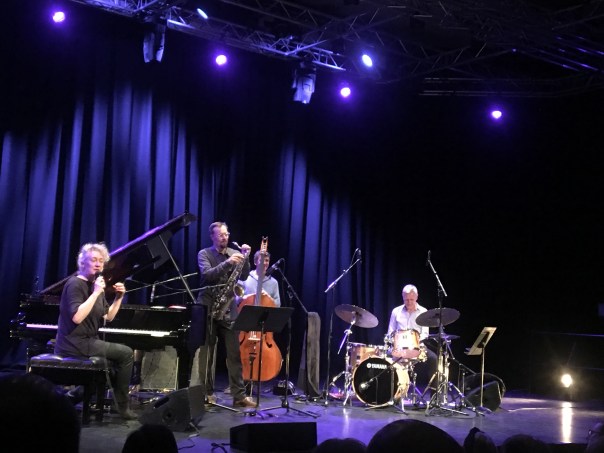
Lucia Cadotsch Purcell 2

One of the dividends from three years of going back and forth between London and Berlin was an insight into the phenomenal amount of interesting music being made in the German capital by young musicians of many nationalities. In my first year I went to the Jazz Kollektiv festival in a Turkish theatre in Kreuzberg and heard a trio called Speak Low, led by the Swiss singer Lucia Cadotsch and completed by two Swedes, the bassist Petter Eldh and the tenorist Otis Sandsjö. While Cadotsch delivered standards — “Don’t Explain”, “Willow Weep For Me”, “Strange Fruit” — in a clear, steady voice somewhere between jazz and cabaret and all the more powerful for a sense of understatement, Eldh and Sandsjö used the extended instrumental vocabularies of free jazz to provide a dynamic underpinning. It felt fresh and creative.

Last night they played in London for the first time in three years, mixing material from their first album, released by Yellowbird/ENJA in 2016, with songs from their forthcoming release, due next year. What they demonstrated was how the strength of the original concept is providing a platform for further explorations. They chose to perform the songs grouped together mostly in twos and threes, so that Randy Newman’s “I Think It’s Going to Rain Today” bled into Kurt Weill’s “Speak Low” and Brian Eno’s “By this River” prefaced “Wild Is the Wind”. The most ambitious of these sequences linked Henry Mancini and Norman Gimbel’s “Slow Hot Wind” with Bob Haggart and Johnny Burke’s “What’s New” and a real surprise, Tony Williams’ “There Comes a Time” (which provided the title track for an unjustly neglected Gil Evans album of the mid-’70s). Other songs heard during the course of the 70-minute set included Duke Ellington’s “Azure”, “Black Is the Colour of My True Love’s Hair”, Rickie Lee Jones’s “So Long” and, as a delicious encore, Mancini and Johnny Mercer’s “Moon River”.

Every time I’ve seen them, I’ve been struck by the way they gradually draw an audience into the spell of their music. Sandsjö uses circular breathing and false fingerings to create skeins of feathery-toned notes that can function either as an obligato or a countervoice, while Eldh deploys the combination of strength and mobility that make him one of the most compelling of all current bassists, with the kind of emotional generosity that once belonged to Charlie Haden. Both were given the opportunity to create lengthy unaccompanied passages of startling inventiveness. As for Cadotsch, she deploys none of the usual tricks and only the barest minimum of gestures but relies on the quiet confidence of her delivery to create the tension between her poised, free-floating phrasing and the often roiling contributions of the others. It’s a brave project, but I’ve yet to see it fail to work its magic, and last night at the Purcell Room was no exception.

Julia Hulsmann Purcell

On Sunday afternoon, in the same intimate South Bank recital hall and also as part of the EFG London Jazz Festival, another Berlin-based band, the all-German quartet led by the pianist Julia Hülsmann, played a set that came very close to perfection in its balance of thoughtful writing and expressive improvising. Based on the contents of their new ECM album, Not Far From Here, the material included compositions by Hülsmann, the tenorist Uli Kempendorff, the bassist Marc Muellbauer and the drummer Heinrich Köbberling, all of them outstanding. They played two covers: Leslie Feist’s lovely waltz “The Water” (familiar from an earlier album, In Full View) and David Bowie and Pat Metheny’s “This Is Not America” — which, as Hülsmann gently pointed out, is a song that carries greater resonance today than its composers could have foreseen when they wrote it in 1985 for the spy film The Falcon and the Snowman.

Nik Bärtsch at the Barbican

Nik Bartsch Barbican

This is how is began, with a seven-foot Steinway marooned on a dais in a lagoon of water installed on an enlarged stage at the Barbican Hall, silhouetted against a rhombus of light projected on to the back wall. As the house lights dimmed to blackness, the Swiss pianist and composer Nik Bärtsch, as usual shaven-headed and dressed in the black robes of a ninja monk, emerged from the wings and made his way to the instrument across a causeway which was then removed by stagehands. Bärtsch settled himself before launching into an hour-long piece called When the Clouds Clear, a “light and sound poem” created in conjunction the London-based visual artist Sophie Clements.

Bärtsch’s music is utterly sui generis: a highly personal version of minimalism that is most often expressed with the other musicians of his quintet Ronin, a project developed over almost 20 years at weekly sessions in a Zurich club that he co-owns. Each of his compositions is titled “Modul” and given a number. This mirrors the seemingly industrial precision with which they are conceived and performed, based on small melodic cells and exacting rhythmic overlays whose teasing syncopations generate tension, but it gives no idea of the emotion generated when, on a sudden shouted cue, one locked groove instantly gives way to another, the intensity rising exponentially.

All this was reflected in his unaccompanied playing last night, opening with a single repeated note tested for overtones and modified for attack and decay before evolving through an hour of contrasting moods and densities, often displaying his highly personal use of the prepared-piano techniques now common among those of his and subsequent generations of acoustic keyboard improvisers. Bärtsch can stun a note so that it acts like a rimshot from Philly Joe Jones or Clyde Stubblefield, laying it against a frantic weave of arpeggiation or letting it punctuate in a moment of silence. Sometimes he reached inside the instrument to make it hiss or growl, before building fantastic cataracts of sound that forfeited all note-definition and seemed about to burst the walls of the auditorium.

Sophie Clements’ lighting and projections began with minimalistic monochrome geometries creeping across the set before she introduced backdrops of waves and skies, washed in blue or grey. This seemed worryingly literal — waves of water, waves of sound — but only for the briefest moment until it became apparent how beautifully the visuals and the music were creating (to paraphrase Wallace Stevens) something beyond them, but themselves. Towards the end, drops of water began to fall from the roof into the lagoon: an illusion of the elements invading the music. (There was some wry amusement about this afterwards, given that parts of Britain had spent the week battling floods.)

The  austere, almost hieratic air of Bärtsch’s music and self-presentation is utterly deceptive; its end product is human warmth, and the prolonged ovation he shared with Clements was generated by art that, for all its refinement of technique and conception, communicated on the most immediate level. I’d be surprised if there were a soul in the hall who, having absorbed a genuinely extraordinary experience, wouldn’t have been happy to sit through it all again straight away.

* Nik Bärtsch and Sophie Clements were appearing on the first night of the 2019 EFG London Jazz Festival. This was the second performance of When the Clouds Clear, which was co-commissioned by the Enjoy Jazz Festival and the Barbican and received its première in Mannheim earlier this year.

The essential Terri Lyne Carrington

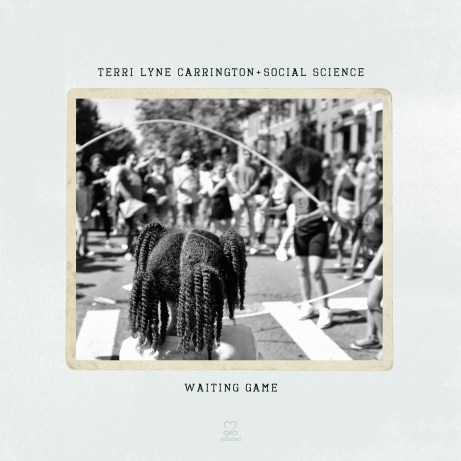
TLC Waiting Game Cover3000R

What does it mean when a critic describes an album as “essential”? After all, you can live a full and satisfying life without ever hearing A Love Supreme, Eli & the Thirteenth Confession or Blood on the Tracks, all of which would justify the conventional use of that epithet. But sometimes it’s the word that’s closest to what you want to suggest. And that’s how it is with Waiting Game by Terri Lyne Carrington + Social Science, an album which looks deep into the soul of 21st century America and comes up with something that, like all the best protest music, locates sparks of hope amid the darkness and despair it portrays.

For those unfamiliar with Carrington, she is a 54-year-old drummer, composer and bandleader noted for her work with Cassandra Wilson, Wayne Shorter, Herbie Hancock and many others. She began playing drums at home in Massachusetts, aged seven, on a kit handed down from her grandfather, who had played with Fats Waller. At 11 she received a scholarship to Berklee College of Music in Boston; at 18 she was in New York and playing at the highest level.

Waiting Game is a suite that, blending songs of protest with cutting-edge African American music, takes its place in the line stretching from Max Roach’s We Insist: Freedom Now Suite through Marvin Gaye’s What’s Going On to Ambrose Akinmusire’s Origami Harvest. To the core six-piece Social Science band — Debo Ray (vocals), Kassa Overall (MC), Morgan Guerin (saxophones, bass, EWI), Matthew Stevens (guitar) and Aaron Parks (piano and keyboards) — Carrington adds guest appearances from singers, rappers and MCs including Mark Kibble, Rapsody, Meshell Ndegeocello, Raydar Ellis and Maimouna Youssef, plus the trumpeter Nicholas Payton, the bassists Esperanza Spalding and Derrick Hodge, and others.

The songs are contributed by all the members of the group. Although the words  — dealing with oppression and the rights of women, gay people, Native Americans, political prisoners (in the widest definition of the term) and others — are often confrontational, the music is easy to love. The grooves are slinky, the textures have a warm glow, the voices often soothe and seduce. While Rapsody fires up “The Anthem” with righteous fervour, Debo Ray croons Joni Mitchell’s “Love” (which applies gender reassignment to the famous verses from 1 Corinthians Ch. 13) with the sweetness of a Minnie Riperton. Stevens’s lucid guitar improvisations are a frequent delight, particularly on his own composition “Over and Sons”, which runs on the kind of perfectly lubricated rollers that would have Donald Fagen purring.

That’s the first CD. There’s a second, containing a 42-minute instrumental suite in four sections, titled “Dreams and Desperate Measures”. It seems to have been improvised by Carrington, Parks, Stevens, Guerin and Spalding, with the addition of a very spare orchestration — by Edmar Colón — for three violinists, a cellist, a clarinetist and a flautist. Ebbing and flowing quite beautifully, slowly changing with the light, it quietly compels the listener’s attention. You feel like you’re sitting in the middle of an intimate conversation, or — in places — a chamber-music version of Bitches Brew.

“Music transcends, breaks barriers, strengthens us, and heals old wounds,” Carrington says in a statement accompanying the album. If that’s a proposition which can ever be proved, here — in an album as good as anything I’ve heard all year — is some persuasive evidence.

* Terri Lyne Carrington will be at Kings Place on Saturday as part of the EFG London Jazz festival, she and Social Science Community performing Waiting Game at a 7pm concert before being joined by British guests — including the saxophonist Soweto Kinch and the trumpeter Emma-Jane Thackray — for a 9pm show. Information: efglondonjazzfestival.org.uk

Binker in the Round

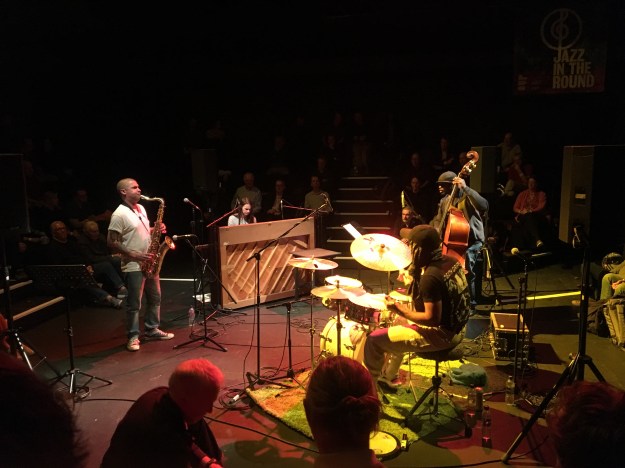
Binker in the Round 1

It takes a brave bandleader to offer Sarah Tandy the first solo of the set. And when the pianist was presented with that opportunity while depping for Joe Armon-Jones in Binker Golding’s quartet at Jazz in the Round at the Cockpit Theatre on Monday night, she made the most of it. As she can do, she simply took flight, pulling together the strands of the opening theme, focusing the efforts of the whole band and raising the intensity to a level sustained for the next 40 minutes.

It took four of them to bring that off, of course. Not just Tandy or Golding, whose playing seems to have reached a new level of authority in the past year, but the band’s bassist, Dan Casimir, who deploys a huge tone and a massive drive, and its drummer, Sam Jones, who is loose and sharp at the sane time and has a lovely way of infusing eights with a triplet-based feel (and who managed to make an adroit recovery when his bass-drum pedal flew off just as Golding’s tenor solo was building in the climactic “Fluorescent Black”).

They played tunes from Golding’s new album, Abstractions of Reality Past and Incredible Feathers, whose delightful title owed something, he said, to the poet Emily Dickinson: “‘Hope’ is the thing with feathers — That perches in the soul — And sings the tune without the words — And never stops — at all — ” It was, he added, the result of his desire to make something more melodic than the music he created in his duo with the drummer Moses Boyd and its various extensions.

How well he has succeeded. The album is like a modern version of a tenor-and-rhythm session by someone such as George Coleman or James Clay at the zenith of the hard-bop era: original themes that are strong and complex, full of immediately attractive twists and turns, blowing that is fierce but constantly aware of the need to build a narrative. Occasionally, as in “Exquisite She-Green”, there is a Monkish angularity that seeps into the solos. A ballad like “You, That Place, That Time” is not afraid to explore a glowing but always alert lyricism. Others, like “Fluorescent Black” and the Latin-inflected “I Forgot Santa Monica”, have a built-in swing that allows the musicians to take off and show us the extent of their old-school chops while making it clear that they have new things to say.

Tandy on the live gig provided a rewarding contrast with Armon-Jones’s work on the album: the former constantly launching her combination of soulfulness and rhapsody, fingers flying as she goes deeper and deeper, the latter a virtuoso of funky feeling, with a surprise in every bar and making each one count towards the whole.

The gig had the Cockpit audience roaring its approval. The album is a beautiful (and very beautifully recorded) document capturing a young London musician’s discovery that there’s more than one way for his generation to wreck the house. Most highly recommended.

* Abstractions of Reality Past and Incredible Feathers is out now on the Gearbox label.

Ancestral voices

Coin Coin 4


Run, baby, run — run like the wind.

That phrase is a recurring motif of Coin Coin Chapter Four: Memphis, the latest instalment of Matana Roberts’ meditation on personal history and cultural memory. The words are those of “Daddy”, and they appear in various contexts, from schoolyard races to a sighting of men in strange robes and hoods.

The emotional loading of that phrase and the image of a black child running, whether out of pleasure or terror, is at the centre of Roberts’s latest piece of “panoramic sound quilting.” Each chapter so far (she plans an eventual total of 12) has had a different trajectory and texture, and this is no exception.

The narrative core is drawn from the story, told to Roberts by her maternal grandmother, of a Memphis woman named Liddie  — “who for moment of a long lifetime ago, lived in a Tennessee wood, alone, a small person yet ungrown/unknown… her father murdered by weak men in white hoods, her mother dying somewhere unknown… alone…”

Roberts is a beautiful reader and narrator, as anyone who has attended her solo concerts will know. Her strong, alert voice rises naturally out of the music and can render sombre material powerful but never portentous or hectoring. Here she devises settings that fall somewhere between the black country brass and string bands of the early 20th century — braying trombone, rollicking fiddle, wheezing accordion, twanging jaw harp — and the free jazz of the 1960s. There’s an Aylerish exultation to the use of traditional cadences, most obviously in the flights of Roberts’ own alto playing and the scrabbling, plicketing electric guitars of Hannah Marcus and Sam Shalabi. (The bassist Nicolas Caloia and the drummer/vibraphonist Ryan Sawyer are the other members of the core group.)

Snatches of folk songs and gospel hymns slip in and out of this sound-quilt, alongside hints of “St Louis Blues”, “This Little Light of Mine” and “Tennessee Waltz”. They are the ghosts of an unquiet past in a restless, troubled present, brilliantly evoked in the latest episode of this monumental work.

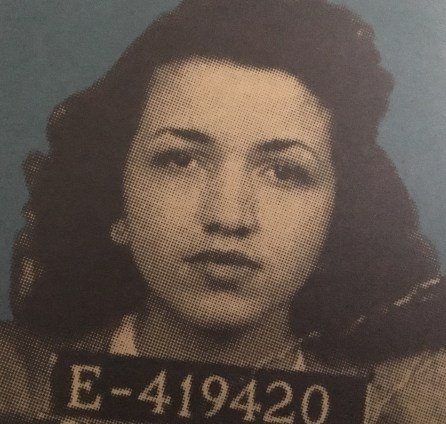
* The photograph is of Matana Roberts’s grandmother and is from the front cover of Coin Coin Chapter Four: Memphis. The album is out now on the Constellation label. I’ve made a couple of factual corrections to this piece in response to Matana Roberts’s comment.

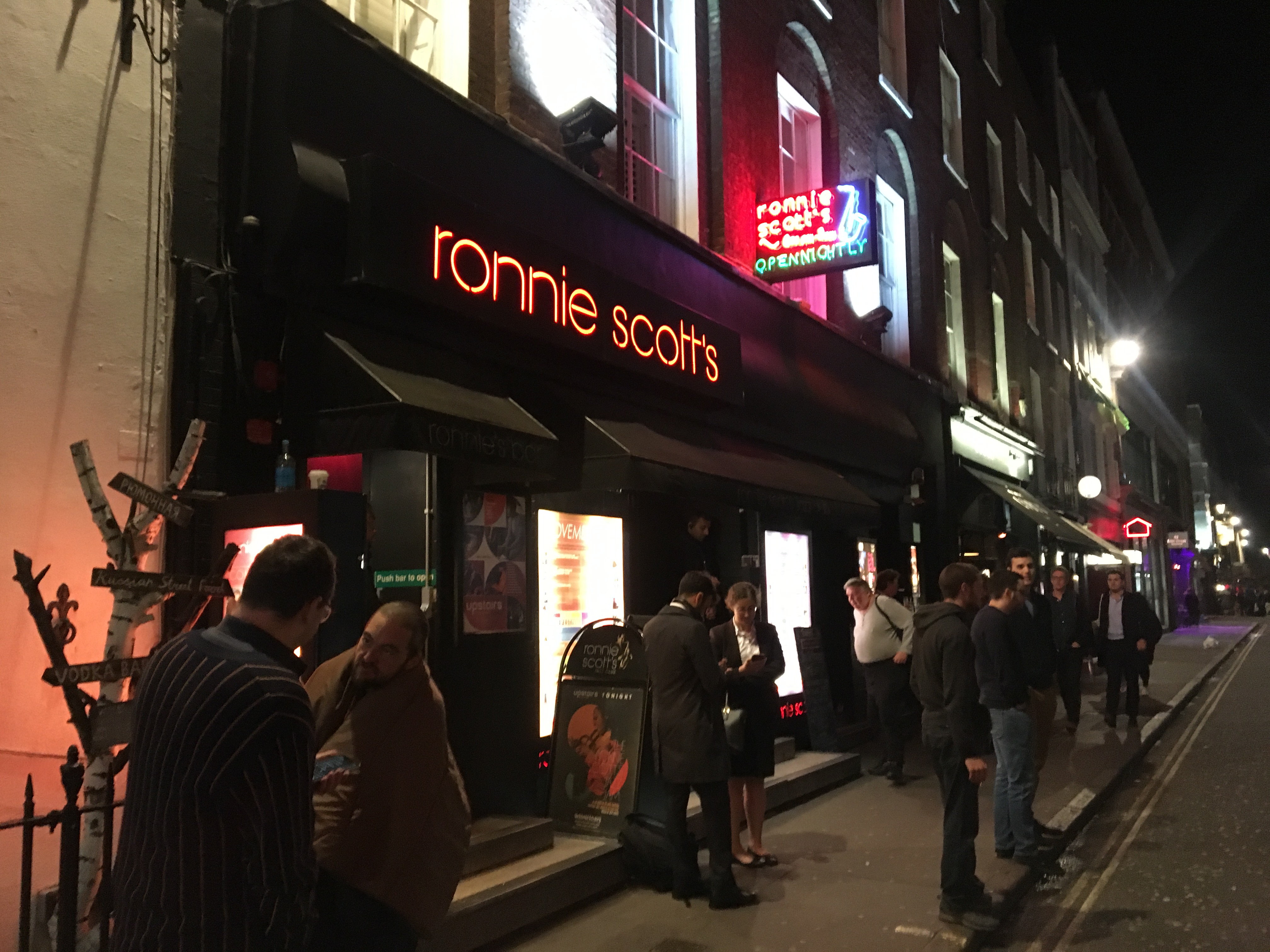
Ronnie Scott’s at 60

Ronnie's

It was in search of some old and occasionally neglected jazz feelings that I went to Ronnie Scott’s this week to hear Joey DeFrancesco’s trio. Temporarily, I’d had enough of watching brilliant young conservatory-trained jazz musicians squinting at sheet music. And enough of entire evenings of jazz without a single bar in a swinging 4/4. A temporary condition, as I say. But it demanded a fix of something different.

I was also thinking about the club’s 60th anniversary, which falls on October 30. I never went inside the original Gerrard Street basement premises, although as a teenager on a trip to London I was able to stand on the street one night, by the top of the stairs, and listen to the sound of Sonny Rollins whenever the door opened. From 1969 on, however, I was a regular visitor to 47 Frith Street, usually on Monday nights, when a new band would begin its season of two, three or sometimes four weeks and I’d be along to review it for the Melody Maker or The Times.

The first of countless memorable nights there was to hear the star-studded Thad Jones-Mel Lewis Big Band. Another early one, in July 1971, was the opening of a fortnight by Herbie Hancock’s Mwandishi sextet: a night no one present is likely to have forgotten. First for the exalted music produced by a group rounded out by Eddie Henderson (trumpet and flugel), Julian Priester (trombone), Benny Maupin (tenor), Buster Williams (bass) and Billy Hart (drums), second for the Swahili names Hancock had persuaded them to adopt, and third for the fact that they were the first jazz group to travel with their own sound system and mixing engineer. The sound at Ronnie’s was always decent, but this, in terms of subtle gradations of individual and collective timbre, was on another level.

So there was a nice historical echo in seeing the great Billy Hart at the drums with DeFrancesco this week, doing exactly what I hoped and knew he’d do, which was to swing like mad. It made me think of all the great drummers I’d seen on that stage, from Kenny Clarke through Art Blakey and Elvin Jones to Billy Higgins, while standing beside the bar that used to run alongside the left-hand wall of the club.

That bar isn’t there any more. Neither are Ronnie or Pete King or the other members of staff, front of house and backroom, who were fixtures in those days. The club went through a bad time when Pete sold it to Sally Greene and her partners after Ronnie died, but the new owners saw it through some difficult years and kept the faith. The booking policy gradually recovered its integrity and the audiences came back. Now it’s full just about every night with listeners who — unlike many of the expense-account businessmen of the ’70s — respect the music, respond with enthusiasm and don’t chatter during the quiet bits.

Inevitably, it’s more expensive than it used to be. But have you tried running a jazz club in Soho, where cherished institutions disappear every week, thanks to the greed and ignorance of landlords and developers? The fact that it’s not just surviving but flourishing is remarkable, as is the willingness of the management to supplement the main programme with jam sessions and showcases for younger musicians — something that Ronnie and Pete always tried to do. I’m not sure I’ll ever quite get used to having to sit down in a place where I spent several decades leaning against the bar, but it’s no great hardship.

The pianist Robert Glasper was making a serious point a couple of years ago when he said that by filling the walls of a jazz club with framed photos of dead musicians, you kill the music’s spirit. You can see why a young musician would come to that conclusion. But when I walk in from Frith Street nowadays, I can still feel the spirits of Ronnie and Pete and the disturbingly glamorous Roxy Beaujolais on the front desk and dapper Jimmy Parsons the greeter and Martin the maitre d’ and Fat Henry Cohen in the cloakroom and Gypsy Larry, whose role was a mystery, as well as those of the musicians in the pictures, all of whom went to make it what it was — and, quite miraculously, still is.

Bill Frisell at Cadogan Hall

BillSolo_Adjusted

“If somebody makes a so-called mistake,” Bill Frisell says near the end of the promotional film for his new album, “that can be the most beautiful thing that happens all night, if everybody’s open to what that sound is and embraces it and makes it sound good. If everyone’s watching out for each other and everyone feels like they can take a risk, it gives the music a chance to keep going and evolving.”

Last night at Cadogan Hall it was his turn to flub an ending, the mistake quickly finessed by his three colleagues — the singer Petra Haden, the cellist Hank Roberts and the bass guitarist Luke Bergman — with grace and smiles. And right there was the humanity of any music in which Frisell has a hand.

His mission to demonstrate and explore the consanguinity of all forms of American vernacular music — from Charles Ives to Thelonious Monk, from Hank Williams to Henry Mancini, from Muddy Waters to the Beach Boys — was accomplished many years ago, but with Harmony, the title of his first album on the Blue Note label, it seems to have reached another peak. The empathy, flexibility and modesty of this quartet make it an ideal vehicle for another exercise in creative juxtaposition.

The concert began quietly, with Haden’s beautifully plain voice enunciating the wandering, wordless, childlike line of Frisell’s “Everywhere”. The first high point came with Stephen Foster’s “Hard Times”, on which Roberts and Bergman joined Haden in the sort of three-part Appalachian harmonies guaranteed to strike instantly at a special place in the emotions. There was a wholehearted ovation for that. “Lush Life”, fiendishly difficult to sing, was another highlight; also included in last year’s solo concert at the same venue and on Epistrophy, his recent live duo album with the bassist Thomas Morgan, Billy Strayhorn’s great ballad is clearly a preoccupation, and its intense chromaticism brought out the Jim Hall influence in Frisell’s work on his double-cutaway semi-acoustic instrument.

There was an interesting recasting of “On the Street Where You Live” (from My Fair Lady) and a lovely harmonised version of the traditional “Red River Valley”, interspersed with little instrumental pieces making sparing use of the guitarist’s loops and effects. The set ended with a segue from Pete Seeger’s “Where Have All the Flowers Gone” into David Bowie’s “Space Oddity”, rendered in full and apparently without ironic intent. For an encore, demanded with fervent enthusiasm, they returned to stand at the microphones and deliver “We Shall Overcome”, inviting us to join in; well, at least now they know what English hymn-singing sounds like.

It was a mystery that, for the latest project from this great musician, a hall which was packed for his solo appearance a year ago should be so thinly populated last night. Perhaps the concert was badly advertised. The album is not yet out, which probably didn’t help. But anyone who wasn’t there missed a quietly remarkable night.

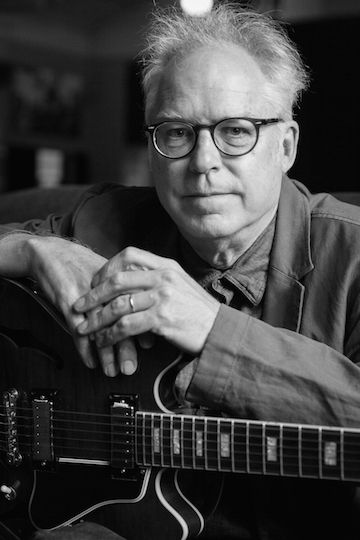
* Harmony is out on November 1. Epistrophy was released by ECM earlier this year. The photograph of Bill Frisell is by Monica Frisell.

Another me, another way

Another me 3

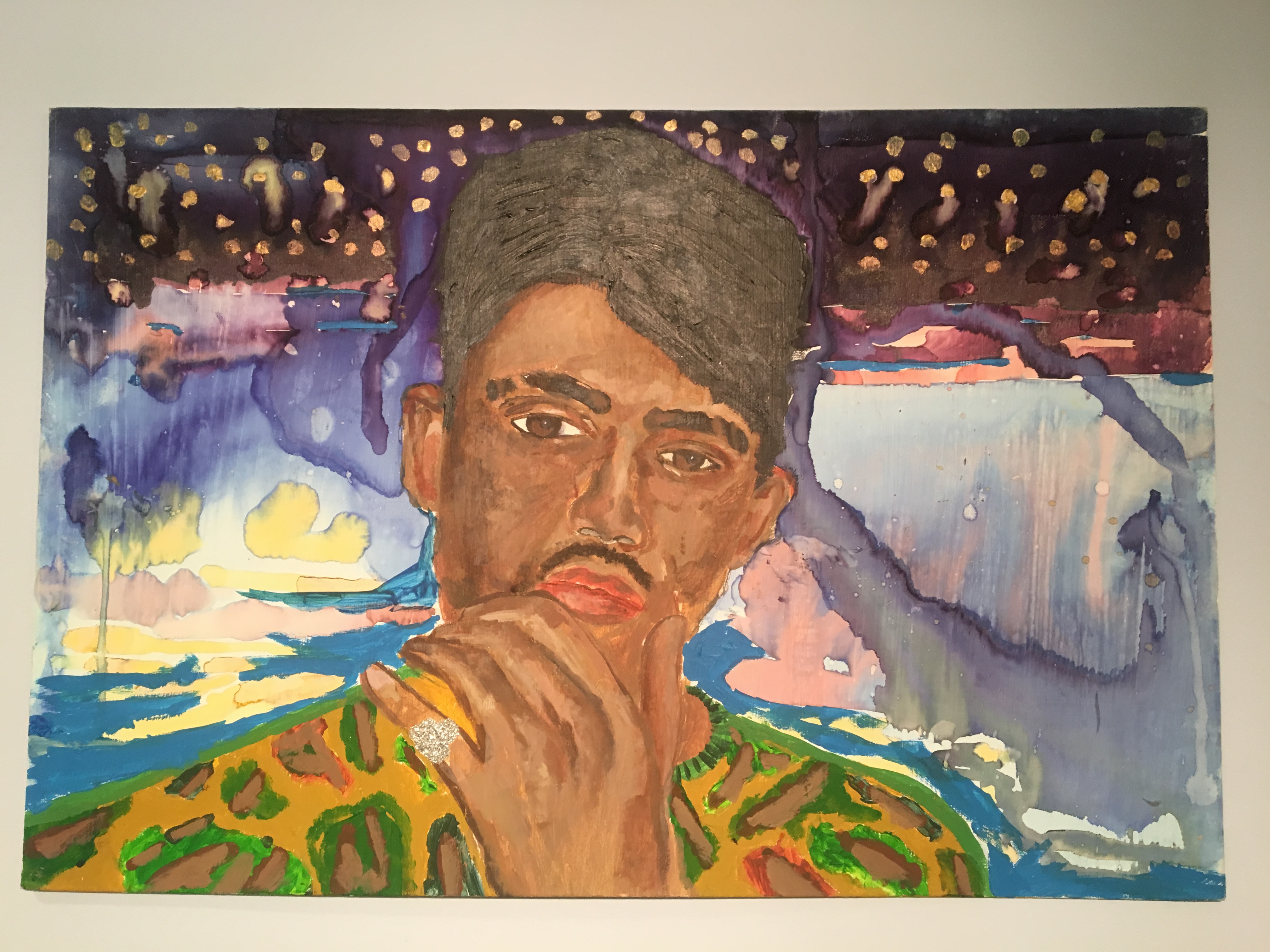
The self-portrait above was painted by an inmate of Vinney Green Secure Unit, a young offenders’ facility in Bristol. It’s part of “Another Me”, an exhibition of artworks by people incarcerated within the criminal justice system, currently on show in the Spirit Level rooms at the South Bank centre, below the Festival Hall. It caught my attention when I noticed that it had been curated for the Koestler Arts foundation by Soweto Kinch, the brilliant composer, saxophonist and bandleader. Anything Kinch is involved in tends to be worth your time, and “Another Me” is no exception.

At Koestler Arts’ building in Wormwood Scrubs, he went through 7,610 entries submitted in 52 categories from UK prisons and British prisoners abroad. His selection spans a range of media, from conventional painting and photography to wall-poetry, music of various genres (which you can hear through headphones), all ranging from the sombre to the defiantly whimsical. There’s a particularly extraordinary piece made from used nitrous oxide canisters found in various London locations — outside a school, an off-licence, a night club, a hospital — and labelled and framed in the style of Victorian museum objects under the title “Nitrouonites: Future Fossils”. As you walk around, you’ll hear the sound of drifting saxophones and electronics: a non-invasive but gently atmospheric sound installation specially devised by the curator.

Many of the works display great technical skill, but I was struck by the one at the top of this piece, a particularly eloquent and moving articulation of the exhibition’s theme. As another of the artists writes in a commentary on his own self-portrait, the title of show “suggest(s) so many possibilities, reflecting on past actions or future selves. It speaks of the masks we all use in our day-to-day lives. Our best selves, our worst. Perhaps most powerfully it suggests change is possible — there can always be another me, another way.”

* Another Me is at the Spirit Level exhibition space of the Royal Festival Hall until November 3. Soweto Kinch performs his new work The Black Peril at Hackney EartH on November 22 with an ensemble including the drummer Makaya McCraven, the bassist Junius Paul and members of the LSO, as part of the EFG London Jazz Festival.