Gato Barbieri 1932-2016
 At some point in his career, Leandro “Gato” Barbieri became a sound. A great sound, for sure, its hoarse urgency bursting with Latin passion, but he learnt that he needed to do little more than apply it to the theme he wrote in 1972 for Bernardo Bertolucci’s Last Tango in Paris to satisfy his large core audience.
Maybe that film was the watershed. He had arrived in New York from Buenos Aires in the mid-’60s as an unknown tenor saxophonist and plunged straight into the maelstrom of the avant-garde, bringing a voice as distinctive as that of another saxophone incomer, John Tchicai. Barbieri was heavily featured on Don Cherry’s first two brilliant albums for Blue Note, Complete Communion and Symphony for the Improvisers, quickly followed by his debut as a leader, In Search of the Mystery, recorded for ESP Disk’ with a quartet including the cellist Calo Scott. He was a featured soloist on Michael Mantler’s “Communications #8″from the seminal Jazz Composers Orchestra double-album in 1968, which meant equal billing with Cherry, Cecil Taylor, Pharaoh Sanders, Roswell Rudd and Larry Coryell. The following year he was a prominent contributor to Charlie Haden’s first Liberation Music Orchestra album, and was featured on Escalator Over the Hill, the epic “chronotransduction” by Carla Bley and Paul Haines, released in 1971.
He made an impression on all of them, with a powerfully vocalised tone and the sort of confident delivery necessary to hold his own in such strong company. Decades later we could hear how he sounded stretching out in a club environment back in 1966 on recordings made at the Café Montmartre in Copenhagen, featuring Cherry’s quintet with Karl Berger on vibes, Bo Stief on bass and Aldo Romano on drums, released in three volumes by the renascent ESP between 2007-09.
The special pungency of his playing also derived, consciously or not in the listener’s mind, from the knowledge of his South American background: this seemed to be the sound of liberation movements across the continent. Barbieri strengthened the connection with tune titles such as “Tupac Amaru”, named after the Inca leader murdered by the Spanish invaders and to be found on a 1971 Flying Dutchman album called Fenix, reissued a couple of years ago on BGP, and “Viva Emiliano Zapata”, from an excellent biggish-band album of the same name, released on Impulse in 1974.
I saw him live just once, at the Montreux Jazz Festival in 1971, in a performance later released on Flying Dutchman as El Pampero, with Lonnie Liston Smith on keyboards, Chuck Rainey on bass guitar, Bernard Purdie on drums, and Nana Vasconcelos and Sonny Morgan on percussion. (Rainey and Purdie were present at the festival as members of King Curtis’s band, but played with several other artists.) It was a powerful set, but for me it lacked the profundity of the work he’d done with the free-formers.
A year later Last Tango was making him famous, and he took the fork in the road that leads to a more radio-friendly aesthetic. But then in 1982 I saw a film destined to be much less successful, Matthew Chapman’s Strangers Kiss, which starred Peter Coyote and Victoria Tennant and a Barbieri soundtrack that I liked much better. The music had the familiar backstreet-tango-bar vibe, but it felt as though it was playing a more organic part in the movie. It seems to have disappeared so completely that I might have imagined it.
He died on Saturday, aged 83. If you go to http://www.gatobarbierimusic.com, you’ll find a link to clips from his most recent album, New York Meeting, a quartet session recorded five years ago in a straight-ahead style. There had been health problems, but that sound was still there.
* The photograph of Gato Barbieri was taken by Francis Wolff at Don Cherry’s Complete Communion session on Christmas Eve, 1965. There’s another one from the same occasion in The Blue Note Years: The Jazz Photography of Francis Wolff, published by Rizzoli in 1995.
 It’s 14 years since Jessica Ferber, who had just graduated in sociology and photography from the University of Vermont, was handed a few boxes of photographic prints and negatives and other bits and pieces left by a recently deceased resident of a homeless shelter. She was asked if she wanted to do something with them. They would occupy much of her time for the next decade as she sorted through the material, began the painstaking process of restoration, and then raised funds via Kickstarter to complete the work and to secure publication in book form.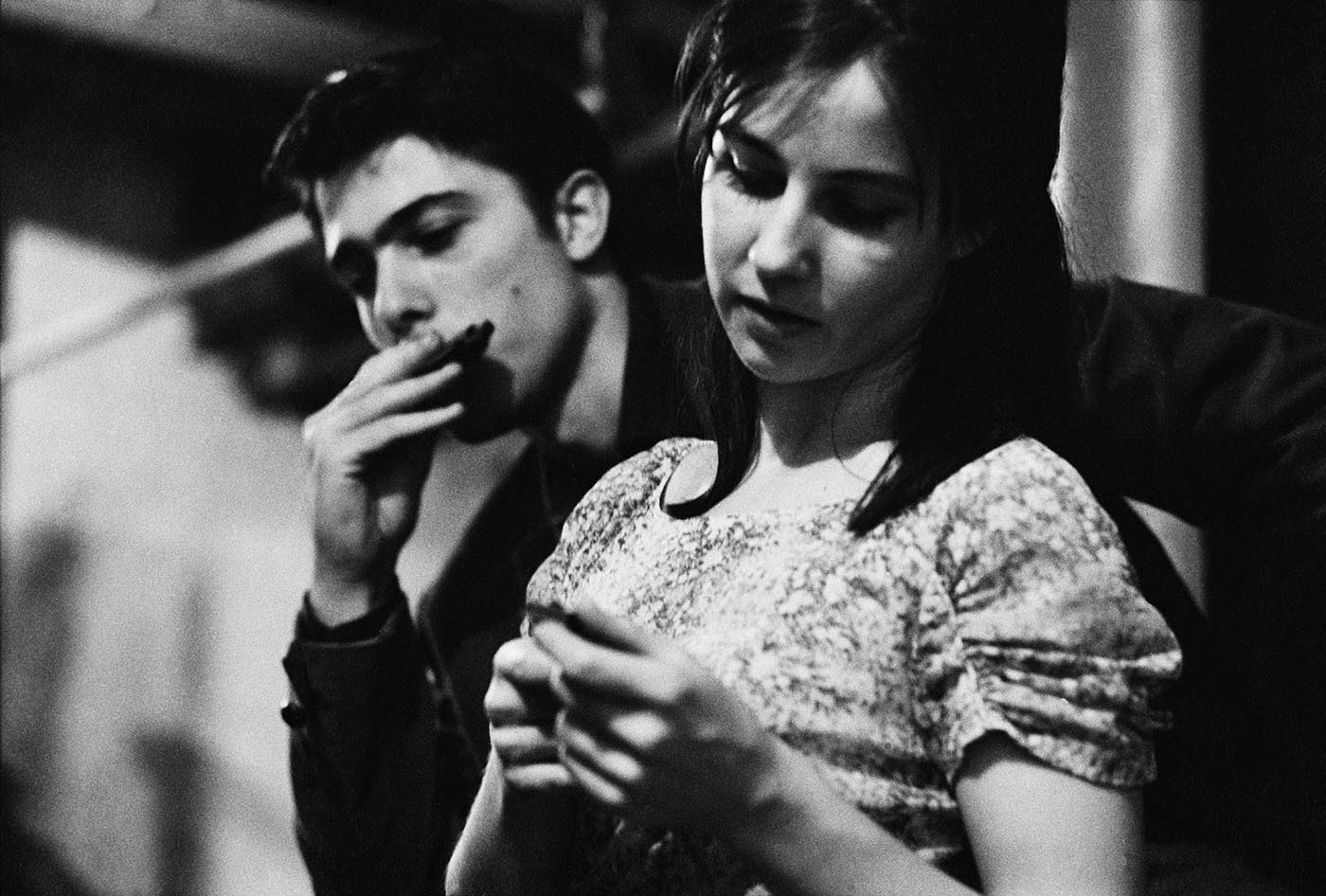
 Keith Emerson died the other day, aged 71, apparently by his own hand. According to Mari Kawaguchi, his partner of more than 20 years, he had been thrown into a depression by the effect of nerve damage on his ability to play his keyboard instruments, with a series of concerts in prospect. Whatever one’s opinion of Emerson’s work, it is extraordinarily sad that his career should seemingly have ended in that particular form of defeat. Of one thing there was no doubt: his love of music.
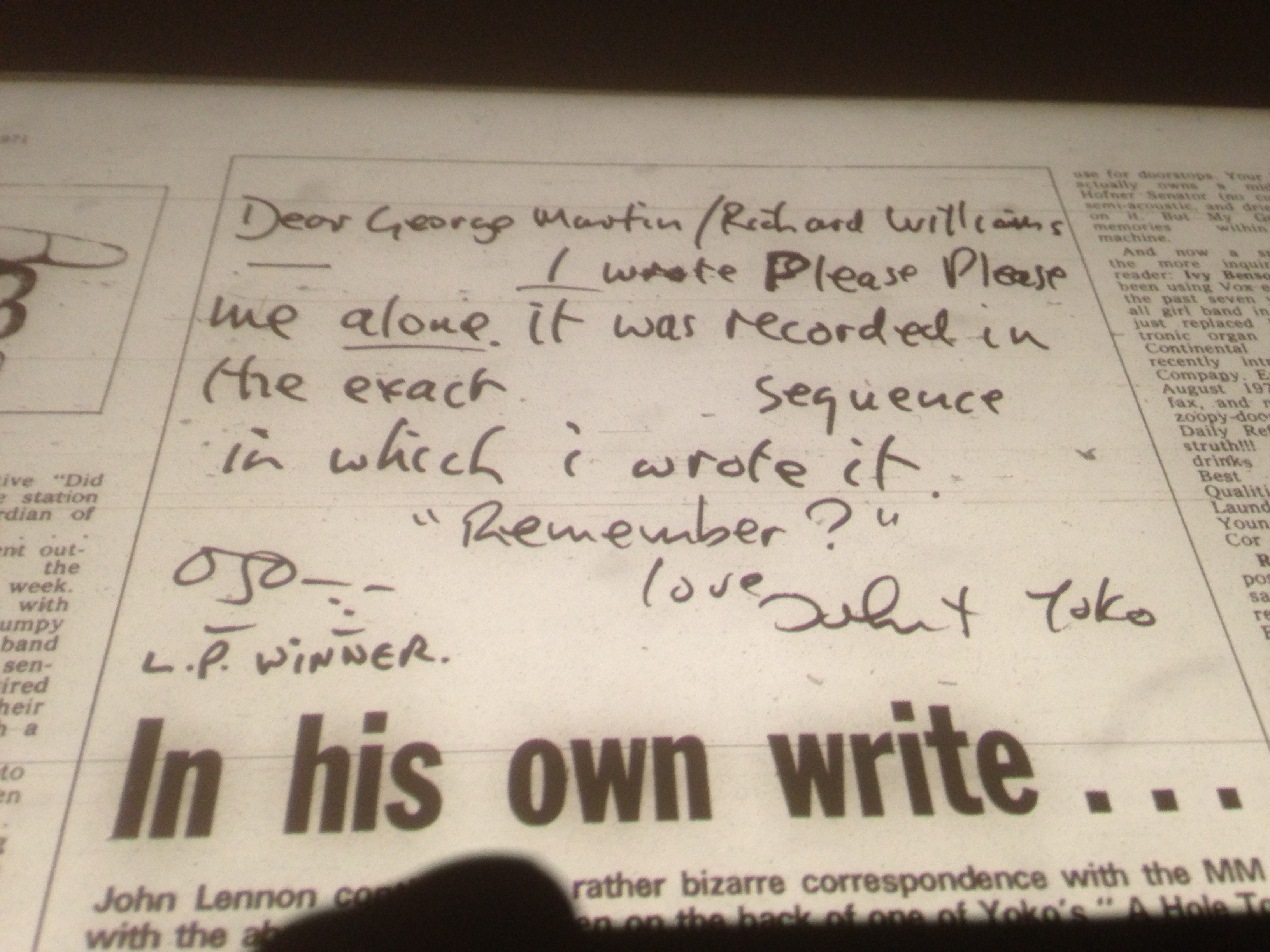 Forty five summers ago, George Martin granted me a long interview for the Melody Maker. It was a very enjoyable experience: he was most courteous of men, and his answers were full of fascinating detail, with the occasional gentle indiscretion. He spoke in some depth about his experience of working with the Beatles, all the way from “Love Me Do” to Abbey Road, and the result was published in three parts, on August 21 and 28 and September 4, 1971. Lennon and McCartney were at war with each other that year, and some of what he said got up John’s sensitive nose, provoking a couple of letters from New York, the first of which you can see above. But when I asked Martin about the making of “A Day in the Life”, he responded with a very thorough and interesting description, giving a vivid snapshot of the creative relationship between the producer and the four young men he always referred to as “the boys”, a partnership based on his willingness to entertain their interest in taking risks and their respect for his experience and integrity. Had he, I asked, been responsible — as rumour then had it — for sweeping up several seemingly disconnected musical episodes from the studio floor and sticking them together to create a masterpiece?
 It’s pretty strange that the man best known for “Ahab the Arab”, “Bridget the Midget” and “Everything is Beautiful” should have written and recorded one of the most striking protest songs of the 1960s. That, at least, is how I’ve always thought of Ray Stevens’ “Mr Businessman”.
 It’s 30 years today since Richard Manuel took his own life in his room at the Quality Inn motel, Winter Park, Florida, a few hours after a gig. Born 42 years earlier in Stratford, Ontario, Manuel was both the owner of one of the most emotionally direct and affecting voices in the history of rock and roll and a member of what had been, by common agreement of most of the people I know, its finest band.
 Jez Nelson’s monthly Jazz in the Round nights at the Cockpit Theatre in Marylebone are as good a way to hear improvised music in London as anyone has yet devised. A couple of hundred listeners settle themselves down in mini-bleachers on all four sides of the floor, where the musicians set up to face each other, creating an unusual degree of intimacy radiating through 360 degrees. As a member of Empirical — I think it was Nathaniel Facey, the alto saxophonist — told last night’s audience, it makes you play differently. In a good way.
 thebluemoment.com