Skip to content

Matana Roberts in Alphabet City

The StoneMatana Roberts was reminiscing about the first time she played with the great bassist Henry Grimes. It was during the New York blackout of 2004, when she was scheduled to appear at the Jazz Gallery with a group including Grimes and the pianist Vijay Iyer. She had been travelling on the L train from her home in Queens, and it had  just emerged from the tunnel under the East River when all power vanished across the length and breadth of the city.

The passengers were allowed to get out and clamber up to the surface, and she set off to cross Manhattan to the club, which in those days had its home on the west side. She got there to discover that she and Grimes were the only members of the band who had made it to Hudson Street. In response to the situation, they played duets for stranded workers. Afterwards she walked all the way back to Queens. “I would never wear heels again,” she said. “You never know when you might have to walk home.”

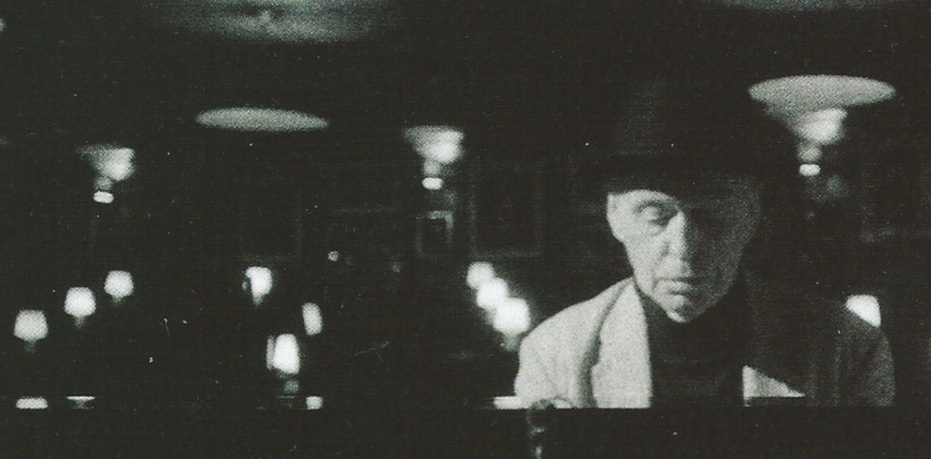
She told the story on Sunday, the last night of the season she was curating at the Stone, John Zorn’s bare-bones performance space in Alphabet City, on the corner of Avenue C and 2nd Street (seen in the photograph above). Twice nightly for six days, with a different line-up for each show, she invited groups varying in size from three to six members to improvise together for an hour or so. I made it to four of the shows, and some of the musicians I missed included the pianists Myra Melford and Jason Moran, the flautist Nicole Mitchell, the cellist Tomeka Reid, the trumpeter Peter Evans and the guitarist Liberty Ellman.

The first show I caught featured Roberts with Iyer and the koto player Miya Masaoka, creating three-part inventions of great delicacy and intricacy, the set culminating in a short piece in which they discovered a swelling, hymn-like lyricism. The following night I was impressed by the contributions of the trumpeters Nate Wooley, in the first set, and Forbes Graham, in the second.

Roberts was at pains to explain how important this season, first proposed two years ago, was to her. I suspect that the penultimate set, the one that featured a quartet including Grimes, the guitarist Kyp Malone and the drummer Mike Pride, offered particular satisfaction. Malone, she said, was one of the first people she played with after she arrived in New York. Pride had pointed her towards the paid work that kept her going. “And Mr Grimes,” she added, “has been an inspiration for ever.”

With Pride using bells and gongs as well as his regular kit and Malone flicking out fast-moving note clusters while Roberts deployed her throaty tone in a series of powerful incantations, the blend of textures and the rapt mood of the opening passages reminded me that Grimes had been a participant on Pharaoh Sanders’ Tauhid, a favourite (and nowadays somewhat under appreciated) album from 1966. But then the players stepped up their intensity, Roberts responding with passionate cries recalling Albert Ayler. It was a wonderful performance, full of wisdom and empathy, with Grimes — who turned 80 in November — a marvel throughout.

Regular readers of this blog will know that I think very highly of Matana Roberts (I wrote about her last year here and here). At the Stone she led off every performance that I saw with great energy, and listened to her colleagues with the same intensity with which she played. She could be proud of the whole mini-season, but of that hour on Sunday in particular.

★★★★★

David Bowie blackstarFor many years I dismissed David Bowie as a shallow opportunist. What was he doing that Andy Warhol and Lou Reed, conceptually and musically, hadn’t done with more wit and originality? I saw him at the Greyhound in Croydon in the summer of 1972, supported by Roxy Music in a pub room that can’t have held more than 200 people. He did the Ziggy Stardust thing, he and the band in full costume, and I didn’t care for it much.

Those particular songs still don’t do anything for me, but time sometimes dissolves prejudices and now I can see that what I took to be shallowness and opportunism were aspects of what we call the pop process: the way things evolve through mimesis and metamorphosis, adapting to their time. And the response to the sudden news of his death leaves no doubt of the profound impact he had on people whose lives were then in the process of being formed.

It wasn’t until the time of the Berlin trilogy that I started to take him seriously, but then he lost me again. I went to see him again at Wembley Arena in the early ’80s, and he looked to me like a man who’d run dry. But I liked the records he made with Nile Rodgers — if you’ve seen Frances Ha, you’ll know the wonderful sequence in which Greta Gerwig’s character skips through the streets of New York to the sound of “Modern Love” and the whole cinema seems to lift about a foot off the ground.

This morning I found myself going into Soho to buy his new album, queuing behind a bunch of people doing exactly the same thing. I could tell you that I was going to buy it today in any case, and it would be true: the idea of Bowie working with jazz musicians sounded intriguing, if not necessarily guaranteed to work.

I’m listening to blackstar now, and it’s hard to escape the feeling that Bowie knew exactly what he was doing when he scheduled its release. It sounds like the supremely elegant farewell of an artist standing squarely on the platform of his past achievements in order to reach still further, one last time. It’s worthy of the famous line from Macbeth: “Nothing in his life became him like the leaving of it.”

It isn’t jazz, of course, or anything like it. The skills of the musicians are put to a different purpose. In the mesh of textures created from the available palette, in the brilliant settings of his allusive lyrics, in the masterful sense of pacing (listen to the closing of “Lazarus”), in the aching poignancy of “Dollar Days” (“If I never see the English evergreens I’m running to/It’s nothing to me/It’s nothing to see”), in the purposeful channeling of energy and the constant sense of newness from start to finish, this sounds like Bowie music at its most fully realised and powerfully affecting. What a way to say goodbye.

Natalie Cole 1950-2015

Natalie Cole’s death last week, at the age of 65, reminded me of her part in one of the most surreal and exhilarating evenings of my life, when she joined a company of distinguished American gospel singers and musicians for a performance in a 17th century church in the English Midlands.

The date was November 27, 1980, and the place was All Saints’ Church in Northampton, rebuilt with 1,000 tons of timber donated by King Charles II after a fire had laid waste to the town centre in 1675. It made an interesting environment not just for the performers but the congregation, consisting of personnel from the various US Air Force bases dotted around that part of England in the Cold War era.

Invited by the producers of a TV programme called In the Spirit, these men and women played an important role in an event that also featured the Reverend James Cleveland and his Southern California Community Choir and the soloists Dorothy Norwood and Marion Williams, plus a first-class rhythm section: organ, piano, guitar, bass and drums. I took my father — a Church of England parson, and a music lover, who I correctly thought would be intrigued by the experience — and my friend and colleague Simon Frith. Apart from the TV crew, we were probably the only white faces in the place.

As you can hear from the nine-minute clip, Cole’s rendering of “Just a Closer Walk With Thee” was well received. She was, after all, still basking in the glow of her 1975 dancefloor hit, “This Will Be”. On the night, however, I remember thinking that she didn’t seem entirely natural in this context: by comparison with the great female gospel singers, she sounded a little shrill and insubstantial. But she certainly gave it what she had, and you can watch the beautiful sway of the robed choir to the band’s 12/8 rhythm.

To see and hear James Cleveland — one of the founding fathers of modern gospel music — was to witness a masterclass in the manipulation of a willing congregation. When he delivered his purring rewrite of Barry Manilow’s “I Write the Songs”, featured three years earlier on his Grammy-winning Live at Carnegie Hall album, he wrecked the house almost as comprehensively as the Great Fire of Northampton 305 years earlier.

Her royal majesty

In case you’re among the very few people who haven’t already seen it, here is Aretha Franklin serenading the annual Kennedy Centre Honors ceremony in Washington DC earlier this month. She’s there to sing “(You Make Me Feel Like a) Natural Woman” to Carole King, who wrote the song with her then-husband, the lyricist Gerry Goffin, in 1967.

King was one of five honorees (the others were George Lucas, Rita Moreno, Cicely Tyson and Seiji Ozawa). She was also serenaded by James Taylor  with “Up on the Roof” and Janelle Monae with “Will You Love Me Tomorrow” and “One Fine Day”. But, as you can see, Aretha blew the roof off the place with a performance that works on more levels than I can count.

To see her once again accompanying herself at the piano is simply wonderful. I think it was the late Jerry Wexler, the producer of her Atlantic sessions, who observed that the relationship between Aretha’s voice and her piano-playing was the foundation of her great recordings (it was also Wexler who offered Goffin and King the phrase “natural woman” as an idea for a song). Just listen to the way she delays and phrases the second half of the line “When my soul was in the lost-and-found…” And when she stands up, drops her coat and lets rip, for a few seconds this 73-year-old woman is once again that prodigy, barely into her teens, who regularly brought the congregation at her father’s Baptist church in Detroit a little closer to heaven.

Try keeping a dry eye. Barack Obama couldn’t. He may have his faults, but he’ll be missed when he’s gone. This is one of the moments for which his presidency — and the reign of the Queen of Soul — will be remembered.

Mette Henriette

Mette Henriette 5The fact that Mette Henriette, a young Norwegian saxophonist and composer, has made her recording debut with a double CD might seem to align her with the current phenomenon of “muchness” recently identified by the New York Times‘s Ben Ratliff in his review of 2015, in reference to the popular appetite for such recent large-scale works as the saxophonist Kamasi Washington’s self-explanatory The Epic and the novelist Elena Ferrante’s Naples tetralogy (I’d add the 12-hour reading of Robert Fagles’ Iliad at the Almeida Theatre and the British Museum in August). But the hour and a half of music on Mette Henriette’s two discs consists mostly of a sequence of miniatures, some lasting less than a minute.
The scale of the music isn’t really important. What matters is that it makes an immediate impact, albeit a subtle and sometimes oblique one. Mette Henriette Martedatter Rølvåg — to use her full name — manipulates space and texture like a watercolourist, allowing tones to blend and separate with a sure touch, hinting at melody, harmony and rhythm without getting too explicit about anything.

The first disc is performed by a trio in which she is joined by the pianist Johan Lindvall and the cellist Katrine Schiott. Limpid, restrained and conversational, this is a kind of jazz-inflected chamber music that has distant and almost certainly unconscious roots in the music of the Chico Hamilton Quintet in the 1950s and the Jimmy Giuffre Trio of the early ’60s (the one with Paul Bley and Steve Swallow), although it doesn’t sound remotely like either of them.

So far, so good. But the impact is greatly intensified on the second disc, where Mette Henriette assembles a 13-piece ensemble in which the members of the trio are augmented by trumpet, trombone, three violins, viola, a second cellist, bandoneon and drums (the only names familiar to me being those of the trumpeter Eivind Løning, the drummer Per Oddvar Johansen and the members of the Cikada Quartet). The music they make is quietly ravishing, again often devoid of familiar components but finding a compelling beauty in the juxtaposition of abraded or squeezed sounds. Occasionally space opens for the leader’s saxophone solos, bred amid the culture of free improvisation encouraged by the open-minded conservatory at which she studied in Trondheim. On the eight-minute “I”, the longest track, she demonstrates a wonderful poise as her improvisation unfurls, changing trajectory with a sense of contained drama.

In terms of her arrangements, you never find yourself thinking, “Oh, there’s a string quartet” or “There’s a piece of writing for the horns.” What you’re hearing is an answer to the question she asked herself during her days as a student: “How could I sculpt something that would move the free improvisation in a different direction?” The result is a music that sometimes glows, sometimes rustles, sometimes shimmers, sometimes looms, sometimes evaporates.

“I” and the other long track, the six-minute tone poem “Wind on Rocks”, show that not everything has to be miniaturised and that she can handle a sonnet as well as a haiku. Throughout the album, however, concision and compression are brilliantly exploited. There’s as much music in the one minute and 53 seconds of the track called “Off the Beat” as in some people’s entire albums.

All in all, it’s one of the best things I’ve heard this year — and, as you might have surmised, it’s difficult to describe. So let’s simplify the task with a clumsy but not inaccurate analogy. If Wayne Shorter had been born a woman in Norway around 25 years ago, this is the music he (or rather she) might be making today.

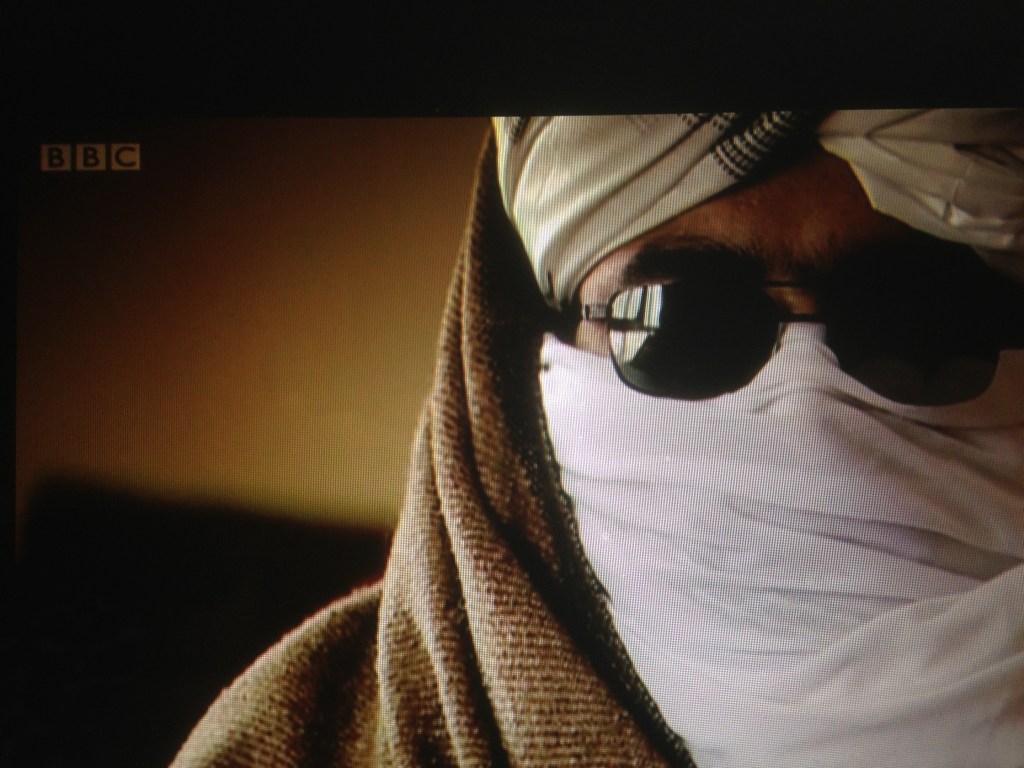
* Mette Henriette: Trio/Ensemble is out now on ECM. The photograph is by Anton Corbijn.

2015: The best bits

Bitter Lake 1

Bitter Lake, a documentary directed by Adam Curtis and available all year on BBC iPlayer, spends two and a half hours examining the half-hidden history of the last 70 years and offers a profoundly troubling catalogue of epic miscalculations, very few of them committed in innocence. Assembling a mosaic of footage from many sources, and using music — from Messaien to This Mortal Coil — quite brilliantly to counterpoint his chosen images, Curtis examines the deep causes of recent events in Afghanistan, Iraq, Libya and Syria. The film’s existence, and its availability, makes a conclusive argument on behalf of independent public service broadcasting. If you haven’t seen it, here it is: http://bbc.in/1zbQoGX

LIVE MUSIC

1. Steve Lehman Octet (Bimhuis, Amsterdam, February)

2. Matana Roberts (OSLO, Hackney, October)

3. The Necks (Kaiser Wilhelm Memorial Church, Berlin, November)

4. Ambrose Akinmusire Quartet (Pizza Express, July)

5. Giovanni Guidi Trio (Rosenfeld Porcini Gallery, April)

6. Bob Dylan (Royal Albert Hall, October)

7. Discreet + Oblique: The Music of Brian Eno (Barbican, September)

8. Sophie Agnel/John Edwards/Steve Noble (Vortex, March)

9. Jason Pierce/Wm Eggleston’s Stranded in Canton (Barbican, July)

10. Julia Holter (Islington Assembly Hall, November)

11. Annette Peacock (Cafe Oto, November)

12. Nik Bärtsch’s Rhythm Clan (Kings Place, November).

13. Alexander Hawkins Trio (Cafe Oto, April)

14. Yazz Ahmed (Canary Wharf Jazz Festival, August)

15. Paal Nilssen-Love’s Large Unit (Cafe Oto, May)

16. Selvhenter (A l’Arme Festival, Berlin, August)

17. Binker & Moses (Foyle’s, September)

18. Amok Amor (Vortex, November)

19. Cécile McLorin Salvant (Ronnie Scott’s, June)

20. Björn Lücker’s Aquarian Jazz Ensemble (Jazzahead, Bremen, April)

NEW ALBUMS

1. Kendrick Lamar: To Pimp a Butterfly (Aftermath/Interscope)

2. Charles Lloyd: Wild Man Dance (Blue Note)

3. The Weather Station: Loyalty (Paradise of Bachelors/Outside Music)

4. Matana Roberts: Coin Coin Chapter Three: River Run Thee (Constellation)

5. Mette Henriette: Trio/Ensemble (ECM)

6. Bob Dylan: Shadows in the Night (Columbia)

7. Kronos Quartet: Sunrise of the Planetary Dream Collector: Music of Terry Riley (Nonesuch)

8. Eddie Prevost etc: 3 Nights at Cafe Oto (Matchless)

9. Myra Melford: Snowy Egret (ENJA/Yellow Bird)

10. Julia Holter: Have You in My Wilderness (Domino)

11. Georgie Fame: Swan Songs (Three Line Whip)

12. Don Henley: Cass County (Virgin)

13. Tyshawn Sorey: Alloy (Pi)

14. Mural: Tempo (Sofa Music)

15. The Henrys: Quiet Industry (own label)

16. Ryan Truesdell/Gil Evans Project: Lines of Color/Live at Jazz Standard (ArtistShare)

17. The Pop Group: Citizen Zombie (Freaks R Us)

18. Tore Brunborg: Slow Snow (ACT)

19. Drifter: Flow (Edition)

20. Eyebrow: Garden City (Ninety&Nine)

REISSUE/ARCHIVE

1. The Staple Singers: Faith & Grace: A Family Journey 1953-1976 (Stax)

2. Bob Dylan: Bootleg Series Vol 12 / The Cutting Edge (Sony Legacy)

3. Georgie Fame: The Whole World’s Shaking 1963-66 (Polydor)

4. Miles Davis: Miles at Newport 1955-1975 (Columbia Legacy)

5. Don Cherry: Modern Art/Stockholm 1977 (Mellotronen)

6. Various: Rastafari: The Dreads Enter Babylon 1955-83 (Soul Jazz)

7. Various: Jon Savage’s 1966 (Ace)

8. Graham Bond: Live at the BBC and Other Stories (BBC)

9. John Coltrane: So Many Things (Acrobat)

10. The Velvet Underground: Loaded (Atlantic)

FEATURE FILMS (NEW)

1. Marshlands (dir. Alberto Rodríguez)

2. Timbuktu (dir. Abderrahmane Sissako)

3. Eden (dir. Mia Hansson-Love)

4. Straight Outta Compton (dir. F. Gary Gray)

5. Love & Mercy (dir. Bill Pohlad)

FEATURE FILMS (REVIVED)

1. Hou Hsiao Hsien season (BFI)

2. L’Eclisse (dir. Michelangelo Antonioni)

DOCUMENTARIES

1. Amy (dir. Asif Kapadia)

2. The Black Panthers: Vanguard of a Revolution (dir. Stanley Nelson)

3. Sinatra: All or Nothing at All (dir. Alex Gibney)

4. The Wrecking Crew (dir. Danny Tedesco)

5. Atomic (dir. Mark Cousins)

THEATRE & DANCE

1. Oresteia (Almeida, July)

2. Robert Wilson in Samuel Beckett’s Krapp’s Last Tape (Barbican, June)

3. Richard Alston Dance Company: Overdrive (The Place, June)

EXHIBITIONS

1. Agnes Martin (Tate Modern)

2. William Kentridge: More Sweetly Play the Dance (Marian Goodman)

3. David Jones: Vision and Memory (Pallant House Gallery, Chichester)

4. Richard Diebenkorn (Royal Academy)

4. Robert Gumpert: The Bridge (Menier Gallery)

5. Peter Lanyon: Gliding Paintings (Courtauld Institute)

NOVELS

1. Everything by Patrick Modiano, including The Search Warrant, Honeymoon, Out of the Dark and Suspended Sentences

MUSIC BOOKS

1. Barbara Frenz (tr. J. Bradford Robinson): Music to Silence to Music: A Biography of Henry Grimes (Northway)

2. Richard Goldstein: Another Little Piece of My Heart (Bloomsbury)

3. Jon Savage: 1966 (Faber & Faber)

4. Simon Spillett: The Long Shadow of the Little Giant: The Life, Work and Legacy of Tubby Hayes (Equinox)

5. Tom Jones (w/Giles Smith): Over the Top and Back (Michael Joseph)

Georgie Fame’s Swan Songs

Georgie Fame Swan SongCan it really be true that, as Georgie Fame intimates, we should take the title of his new album seriously? Swan Songs is credited to “Georgie Fame and the Last Blue Flames”. It is, he says, his final recording. “In the twilight of a long career / When dementia’s all I have to fear / If I ever get to lose these blues / I’ve learned to put my life to better use,” he sings, and the compositions with which he fills the album seem designed to provide both a summary and a valediction.
He sounds like he’s saying goodbye, at the age of 72, with a reasonably light heart. “I did my time with Van the Man / ‘Cos that’s the kind of fool I am,” he tells us in the same song, “The Diary Blues”. The album opens with a fragment of brass band music, which is how he started in his Lancashire youth, and a Caribbean-styled song reminds us of the days of “Humpty Dumpty” and “Dr Kitch”. He pays tribute to the late arranger and composer Steve Gray, a friend with whom he wrote a musical called Singer, in a song called “Gray’s March”, and to his mentor, Mose Allison, in the witty “Mose Knows”.

There’s a lesson in hip phrasing in the way Fame delivers these lines at a rapid tempo, every stressed, stretched and syncopated syllable adding to or adjusting the momentum on the fly: “He’s a country boy / Made his home in the city / At once bold and coy / Sometimes sombre, always witty / And his canny observations put to melody / Were meant to be heard by folks like you and me / A man so wise, indeed a sage / Who never fails to surprise when he walks on stage / You can raise the roof, you can tear it down / Don’t be square, just be there when Mose Allison’s in town…”

The 12 tracks — 10 of them written by Fame — canter through most of the familiar modes, from shuffle to swing, with space for a lovely ballad called “Lost in a Lover’s Dream”. The “Last Blue Flames” — Guy Barker (trumpet), Alan Skidmore (tenor), Anthony Kerr (vibes), Tristan Powell (guitar), Alec Dankworth (bass), James Powell (drums and Ralph Salmins (percussion) — acquit themselves with the customary excellence, particularly on a finger-snapping instrumental piece called “Spin Recovery” which sounds like something Lee Morgan and Lonnie Smith might have cooked up circa 1967.

Many of us will be hoping that this isn’t the end. But if it is, there’s further consolation to be found in the release of The Whole World’s Shaking, a five-CD box containing all Fame’s recordings for the Columbia label between 1963 and 1966, including the albums Rhythm and Blues at the Flamingo, Fame at Last, Sound Venture and Sweet Things, plus many singles, EPs, out-takes and BBC broadcasts — 106 tracks in all, very nicely packaged, including a handsome book with an extensive sleeve essay from Chris Welch. I’ve always thought of Fame at Last, with its exquisite version of “Moody’s Mood for Love”, as a perfect album, so it’s good to have it available in this form, with so much else besides, like the moment Colin Green cuts into “Last Night” with the guitar riff from “Nowhere to Run”, or Bill Eyden’s triplet figures on “Green Onions”, or Jimmy Deuchar’s muted trumpet obligato on the gorgeous “Lil’ Darlin'”. Oh, I could go on. I just hope he does.

* Swan Songs is released on Fame’s own Three Line Whip label. The Whole World’s Shaking is on Universal/Polydor. The photograph is taken from the sleeve of the new album.

The Bridge

Sonny Rollins 1I heard Sonny Rollins play his sax on the Williamsburg Bridge once and only once live one afternoon so many years ago I can’t recall the walkway’s colour back then. Definitely not the pale red of my tongue when I wag it at myself each morning in the mirror, the walkway’s colour today at the intersection of Delancey and Clinton Streets where I enter it by passing through monumental stone portals, then under a framework of steel girders that span the 118-foot width of the bridge and display steel letters announcing its name. Iron fences painted cotton-candy pink guard the walkway’s flanks, and just beyond their shoulder-high rails much taller barriers of heavier-gauge steel chicken wire bolted to sturdy steel posts guard the fences. Steel crossbeams, spaced four yards or so apart, form a kind of serial roof over the walkway, too high by about a foot for me to jump up and touch, even on my best days playing hoop…

That’s an early passage from one of the best things I’ve read in a magazine this year, a short story called “Williamsburg Bridge” by John Edgar Wideman. I don’t always buy Harper’s magazine, but I seldom regret it when I do and the November issue was worth all of the €12.50 it cost at an airport news stand last week just for that piece alone, an extended monologue delivered by a man perched high on the bridge, with his back to the water, having removed all his clothes except his undershorts, preparing to jump off while allowing his mind to run through the thoughts that prefaced that decision.

Wideman, aged 74, is a novelist whose past honours include the PEN/Faulkner award and a MacArthur fellowship, the so-called “genius grant”. The several mentions of Sonny Rollins by the protagonist of “Williamsburg Bridge” take me back to the time I first got interested in jazz, around 1960, when Rollins was on his self-imposed sabbatical, reassessing his own work in the light of innovations of John Coltrane and working it all out en plein air on the iron structure over New York’s East River, where he could sometimes be glimpsed (and heard). It was part of an attempt to change his life, a regime that included giving up smoking, practising yoga and studying Eastern religions.

He re-emerged in 1961. The New Yorker‘s Whitney Balliett went to hear him and famously proclaimed: “Sonny Rollins isn’t merely back; he’s looming.” The following year Rollins marked his comeback with a very fine album called The Bridge, which — despite the obvious reference to his unconventional sabbatical — surprised critics by its conservative approach. He was accompanied by the guitarist Jim Hall, the bassist Bob Cranshaw and the drummer Ben Riley on a programme of standards and originals. At a time when Coltrane, Cecil Taylor and Ornette Coleman had thrown jazz into a ferment, there was no sign here that Rollins had returned to action with a plan to play them at their own game. (That would come a few months later, when he recruited Don Cherry and Billy Higgins into a quartet that adopted some of Coleman’s freedoms.)

The point of this, however, is to recommend Wideman’s story. The reader is never quite sure whether the protagonist — a writer, we learn — is really up there on the bridge, preparing to jump, or perhaps lying safely in his bed visualising the possibility, or even just writing a story about someone readying himself for the act. But, like one of those stream-of-consciousness improvisations in which Rollins used to specialise, scrolling through his thoughts with absolute confidence and unshakeable internal logic, it takes a grip and doesn’t let go.

* You can read the story here: http://harpers.org/archive/2015/11/williamsburg-bridge/  The photograph of Sonny Rollins is adapted from the cover image of The Bridge, taken by Chuck Stewart.

‘She’s Your Lover Now’

Bob Dylan She's Your Lover Now“What do you want to call this, for now?” Bob Johnston asks Bob Dylan, whose reply to his producer is punctuated by giggles. “This is called… yes… we’ll call it ‘Just a Little Glass of Water’.” And, on January 21, 1966, in Columbia Records’ Seventh Avenue studio in New York City, Dylan and his musicians — Mike Bloomfield and Robbie Robertson on guitars, Garth Hudson on the organ, Richard Manuel on piano, Rick Danko on bass guitar and Sandy Konikoff on drums — launch into the first recorded pass at a song that would become known to bootleggers as “She’s Your Lover Now”.

What turned out to be the best version — which we now know to have been take 15 — was included on a couple of the early bootlegs I bought in 1969/70: Forty Red White & Blue Shoestrings and GWW: Seems Like a Freeze Out. It’s a song I quickly grew to love, seeing it as part of the “revenge” series that began with “Like a Rolling Stone” and continued with “Positively 4th Street” and “Can You Please Crawl  Out Your Window?”, although for years I wrongly imagined it to have been recorded in Nashville during the sessions than began on February 14 and yielded the bulk of what became Blonde on Blonde.

Now, thanks to the release of the $599 18-CD “collector’s edition” of The Bootleg Series Vol 12: The Cutting Edge, we know how hard Dylan worked on this song before abandoning it at the end of the day. Indeed, we know how hard he worked on many of his songs. The many takes that were needed before “Like a Rolling Stone” emerged from its chrysalis were not the exception. On this evidence, any idea of Dylan’s attitude to the recording process as being one based primarily on intuition and spontaneity would be seriously to underrate his interest in detailed development.

As with several of his songs, mostly notably “Like a Rolling Stone” , “She’s Your Lover Now” began life in a rather stately triple metre before finding its ultimate destiny in a fast 4/4. (The many takes of “One of Us Must Know (Sooner or Later)”, for example, begin with a voice-and-piano sketch in 6/8 before making the change almost immediately.)

In terms of format, “She’s Your Lover Now” probably the most complicated song he ever wrote: by my amateur calculation its structure settles on A-A-B-C-D-A-E, where A is 8 bars, B is 13 (yes!), C is 8, D is 10 and E is 8. The contrasting cadences and their associated harmonic suspensions make perfect sense, but they must have been hell for the musicians to remember, particularly while trying to keep up with Dylan’s constantly changing attitude to the song’s metre and tempo, which by take 4 has temporarily settled on a rather plodding rock backbeat.

Between takes 10 and 11, with Dylan having taken over at the piano, we hear Johnston, with Dylan’s approval, suggesting a “double beat”: a fast 8/8 instead of the soggy 4/4. Immediately the song reveals its true personality. But the take breaks down, and Dylan is not satisfied. “It’s not together, man,” he says. “Just play it together. Just make it all together. You don’t have to play anything fancy or nothing. Just together. Okay?”

He also massages the lyric as he works through the song, most significantly changing the key line from “You’re Her Lover Now” quite late in the process, while experimenting with different stresses in his phrasing. Take 15 goes further than its predecessors and builds a terrific momentum until breaking down as he sings “Now your mouth cries wolf…”, possibly having run out of words.

At the end of the session, clearly having abandoned hope of getting it right with the band that day, he lays down a version alone at the tack piano. “Last take, any time,” Johnston says. “Okay,” Dylan replies. “It’s not going to be really exactly right.” He’s still exploring, and we can hear how, left to his own devices, he finds a 12/8 feel that somehow synthesises and incorporates all previous metrical variants. He would never return to the song, leaving us with a fascinating work-in-progress document of one that didn’t quite make it.

* The photograph is by Jerry Schatzberg and is included in the Collector’s Edition of The Cutting Edge (purchase details: bobdylan.com).

Annette Peacock at Cafe Oto

Annette Peacock 2“I live alone,” Annette Peacock told the audience as she settled at the piano stool on Monday evening. “So I talk to myself.” The sense of a continuous interior monologue is always present in the work of this most original composer and performer, and so it was throughout the second of her two nights at Cafe Oto.

She took the stage in semi-darkness. Like Bob Dylan these days, she prefers to do without a frontal spotlight. Still slender and seemingly lithe at 74, she was wearing a grey fur hat pulled down to her eyebrows and a dark tailored jacket, possibly velvet, with ruched shoulders; she looked like something from Tolstoy, as though she’d just come indoors from a snow-covered St Petersburg street in the 1850s.

But this was Dalston in 2015, and the audience rewarded her hour-long set with such keen appreciation that it felt as though Annette Peacock’s time has come at last. Not that she is probably much concerned, having been through several brushes with fame since she arrived in Europe in 1971 with her then husband, the great Canadian jazz pianist Paul Bley, promoting the music in which they (mostly she) explored the possibilities of the Moog synthesiser.

Drawing on five decades’ worth of compositions, she dramatised her lyrics by alternating between her low speaking voice and that striking upper register. The ever-present sense of the erotic, explicit and implicit, was supercharged by the cold reverberations of her stark piano phrases, often picked out with the contrapuntal effect of a single-note line in each hand, sometimes against the background of digital string sounds from her Roland synthesiser — a pleasantly kitschy effect reminiscent of Angelo Badalamenti’s soundtracks — and the occasional rhythm pattern from a drum machine.

The set included “The Succubus” from 1979’s The Perfect Release and “b 4 u said” from An Acrobat’s Heart, the album with a string quartet released by ECM in 2000, and “Nothing Ever Was, Anyway”, first recorded by Paul Bley in 1968 and 28 years later by Marilyn Crispell (on both occasions with Gary Peacock, Annette’s first husband, on bass). There might also have been songs from 31:31, the album she quietly released on her own Ironic label in 2009, but since a new copy nowadays costs a minimum of £184 on Amazon, I’m unable to tell you that.

For her last song, she cued up a slow-jam backing track of funk bass and percussion. She sang for a while, then got up, and — while her pre-recorded voice and the instruments continued — walked quietly through the audience and away.

* The photograph was taken shortly after Annette Peacock had left the stage. Here is a track from 31:31, with an accompanying film directed by Dale Hoyt. Her first album, originally called Revenge, recorded in 1969, released in 1971 and then credited to the Bley-Peacock Synthesiser Show, has just been reissued by Peacock on her own label and under her own name, retitled I Belong to a World That’s Destroying Itself, after one of her songs. I would also recommend Annette, the album of her tunes played by Paul Bley, Gary Peacock and the trumpeter/flugelhornist Franz Koglmann, recorded in 1992 and most recently reissued on the HatHut label in 2010.