Skip to content

Radiohead’s ‘A Moon Shaped Pool’

Since its 11 songs include previously unreleased compositions whose origins date back to 1995, 2000 and 2008, I suppose it’s just a coincidence that Radiohead’s A Moon Shaped Pool sounds like exactly the music the world needs at moment: reflective, sometimes sombre, but not ashamed to offer the consolation of beauty.

In my view, Radiohead keep getting better and better, and this is a work of great maturity. While, on the surface, regret and apprehension are the album’s dominant emotions, the music is subtly laced with a sense of hope that derives from the elegance of the songwriting and the inventiveness of the finely textured settings.

There isn’t a song and scarcely even a note here that I don’t love, but at this early stage (I waited until the CD release before buying it) I’m particularly taken with “Desert Island Disk” and “The Numbers”, both of which Thom Yorke sings against backings based on acoustic or near-acoustic guitar. The electronic washes on the former are typical of the care and imagination with which all the pieces have been assembled by the band and their producer, Nigel Godrich, while the latter introduces its bedrock minor-to-major strum via a brief visit to the land of Alice Coltrane.

If you haven’t already heard the lovely “Daydreaming”, click on it above to hear a good example of the ingredients coming together in a sonic collage which demonstrates that the work begun by the Beatles and George Martin is not yet exhausted. Throughout the album, Jonny Greenwood’s arrangements for string orchestra and female voices are like an additional limb of the band rather than a bolt-on extra.

A Moon Shaped Pool succeeds in one of the greatest tasks that art can attempt, which is to expand the personal into the universal. To the violence and bitterness and cynicism that surround us in this strange, misshapen and unfamiliar moment of history, it represents a quiet rebuke and — as much as art can be — an antidote.

The Sokratic method

Sokratis Sinopoulos's lyraGenerally speaking, the chances of one of the gigs of the year taking place as part of an academic seminar titled “Sounds of the Hellenic World, Ancient & Modern” would probably be pretty slim. But that’s what happened yesterday evening at King’s College London, when the Greek lyra virtuoso Sokratis Sinopoulos brought his quartet — completed by Yann Keerim (piano), Dimitris Tsekouras (double bass) and Dimitris Emanouil (drums) — to make their UK debut in the Great Hall in front of an audience whose members had spent the day discussing Homer, Xenakis, Keats and Satie’s Socrate.

The traditional lyra is a tiny instrument which stirs big emotions. It has three strings, tuned by large wooden pegs, and its pear-shaped body contains its fingerboard. Today’s performers usually tune the strings a fifth apart and play it with a violin bow. Sinopoulos tunes his strings to a fifth and a fourth. (See footnote)

I first heard him as a member of the Charles Lloyd group that performed Wild Man Dance at the Barbican in 2014 and then in Berlin last November (a recording of the piece’s premiere, at the Jazztopad festival in Warsaw in 2013, was released by Blue Note). The lyra added a wonderful extra colour to the band (as did the cembalom of Lukács Miklós), and Sinopoulos’s solos were impressive. So I jumped the opportunity to attend last night’s concert.

The quartet’s first album, Eight Winds, was released by ECM last year, and they played several pieces from it, together with a couple of new ones. The live performance added an extra dimension of immediacy to compositions that had already made a strong impression on record, ranging from keening laments through elegant romantic melodies to exuberant dances.

But it was the sound of the lyra that filled the listeners’ hearts. Played straight, it more or less resembles a violin. Its available range of timbre and texture, however, is very different. Sometimes, when Sinopoulos bows near the bridge, the parched tone makes the instrument sound as though it’s been sitting on a windowsill under a burning Greek sun for a thousand years, left to gather dust and memories.

* In the original version of this post, I described Sinopoulos’s instrument as a Cretan lyra, and said that he followed the modern practice of tuning in fifths. A couple of readers challenged the description, so I checked with Sokratis himself. There are several variants of the lyra, he pointed out. His the very similar  Constantinople lyra — but he adds: “I prefer to name my instrument just ‘lyra’, which for most Greeks connects directly to the Cretan lyra, which is the most popular of all.”

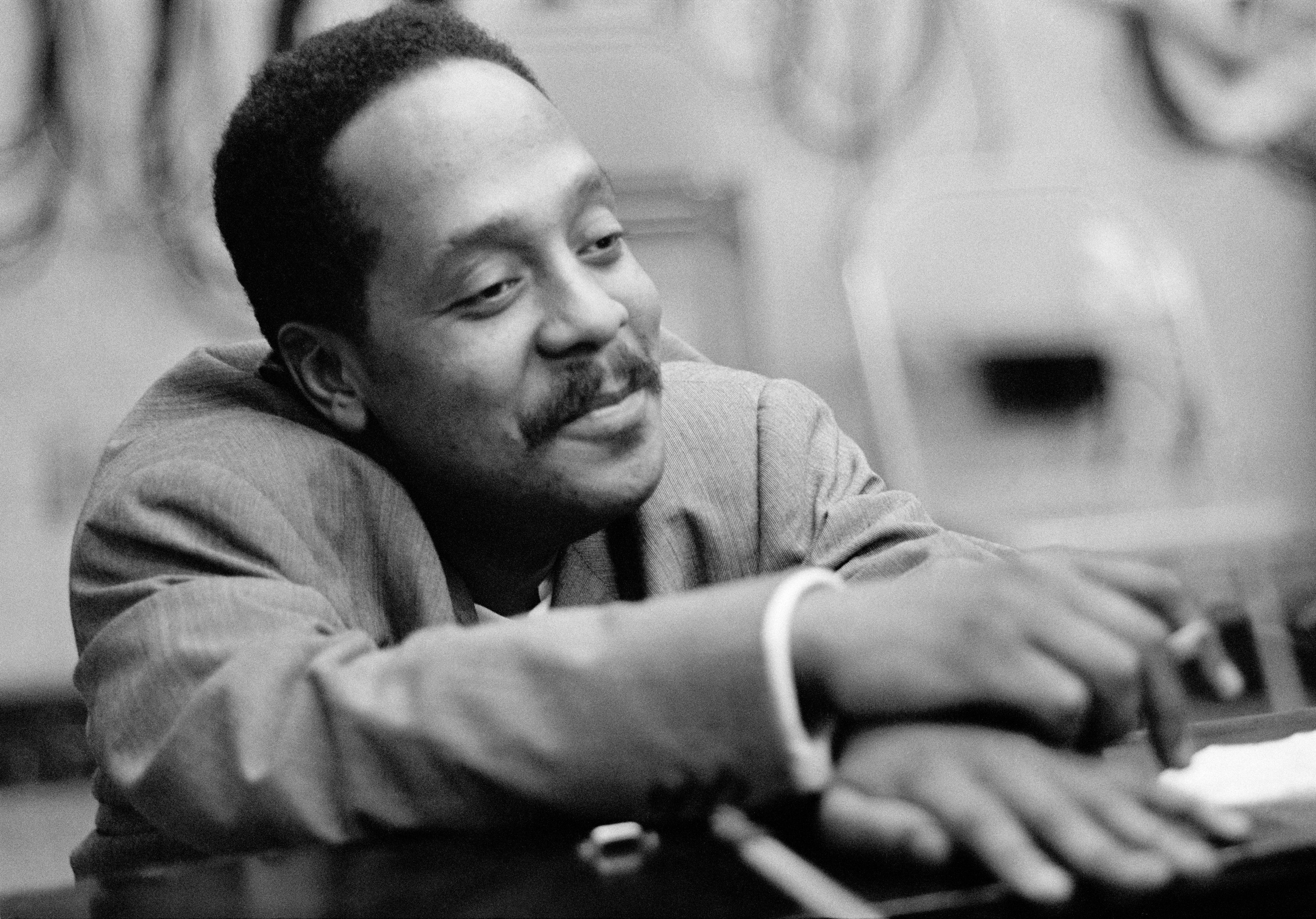
Bernie Worrell 1944-2016

I saw Bernie Worrell twice, and both occasions were memorable. The first time was with Talking Heads at Hammersmith Palais in 1980: after starting the set as the basic four-piece with “Psycho Killer”, they added musicians at regular intervals until they’d become (I think) a 10-piece and were whomping out a kind of supercharged avant-funk. The second was at the Knitting Factory in NYC sometime in the mid-’90s, soon after the club had moved to Tribeca, with Third Rail, a band featuring Bill Laswell on bass guitar, James Blood Ulmer on guitar, Worrell and Amina Claudine Myers on keyboards, and — on this night, as I recall — Ronald Shannon Jackson on drums.

Like everyone, however, I’ve listened to Worrell on countless records. And the one that always sticks out is Parliament’s “Chocolate City”, which he co-wrote in 1975 with George Clinton and Bootsy Collins, and to which he contributes absolutely superlative gospel-funk piano. It’s among the most powerful records of its era, not just musically — taking that fractured funk pioneered by Sly Stone to a new level — but in its message, both tough and witty, about the potential upside of “white flight” from the cities (specifically Washington DC) to the vanilla suburbs:

“And when they come to march on ya, tell ’em to make sure they got their James Brown pass / And don’t be surprised if Ali is the White House / Reverend Ike, Secretary of the Treasury / Richard Pryor, Minister of Education / Stevie Wonder, Secretary of Fine Arts / And Miss Aretha Franklin, the First Lady…”

And this, of course: “They still call it the White House, but that’s a temporary condition, too.”

Listen to it again, and marvel at the sheer creativity involved in piecing the whole thing together. And then listen once more, this time just for the piano, the binding ingredient of the track, digging in against the guitars of Garry Shider, Eddie Hazel and others, and the trumpet and tenor of Randy and Mike Brecker, then dancing free in the last minute and a half. Hard to believe that it’s more than 40 years old.

Archive treasure from Harry Beckett

Harry Beckett 2Harry Beckett was ordering a drink at the bar of the Beachcomber Club in Nottingham one night in 1965, relaxing between sets with Herbie Goins and the Nightimers, when I plucked up the courage to address him. The Nightimers were an excellent jazz-inflected soul band — their personnel also included former Blue Flames Mick Eve on tenor saxophone and Bill Eyden on drums, with Mike Carr on Hammond organ — and I wanted to tell their trumpeter how much I’d enjoyed his solo on their set-opening version of Lee Morgan’s “The Sidewinder”. Showing the good humour and courtesy which would become familiar over the years, Harry was happy to chat to a new fan.

A few years later I felt privileged when he asked me to write the sleeve notes for two of his early albums, Flare Up (Philips, 1970) and Themes for Fega (RCA, 1972), which featured the likes of Mike Osborne, Alan Skidmore, John Surman and John Taylor. The last time I saw him, a short time before his death in 2010, aged 75 (actually 86: see Gerard Tierney’s comments below the line), was at the Red Rose in Seven Sisters Road, on a night when he and Ingrid Laubrock were guest soloists with Spring Heel Jack.

One of the most distinctive London-based improvisers of his generation, he enjoyed a reputation within the jazz community that was never matched by wider public recognition. His membership of bands led by Graham Collier and Chris McGregor, as well his various solo projects, meant that his work was quite effectively documented, but much remains to be exposed to today’s listeners, particularly sessions recorded for BBC Radio.

A new vinyl album titled Still Happy represents the rescue from archive obscurity of a session recorded for Radio 2’s Jazz Club in 1974. It contains three tracks, totalling just under 30 minutes of music, and features some of his regular musical companions: the saxophonists Alan Wakeman and Don Weller, the electric pianist Brian Miller, the bass guitarist Paul Hart, the drummer John Webb and the conga player Robin Jones.

This was the era of Bitches Brew, Weather Report and Nucleus, and Harry’s music reflected the trend towards 8/8 rhythms and one-chord vamps. The rhythms here are funky and the tunes (“Bracelets of Sound”, “Still Happy” and “No Time for Hello”) are straightforwardly melodic and memorable. The title track in particular builds up a terrific head of steam as the session gathers pace.

Harry’s work on trumpet and flugelhorn possessed characteristics that, although immediately identifiable, are hard to summarise. Superficially there was a variation on the little-boy-lost quality that Kenneth Tynan ascribed to Miles Davis, blended with some of the untethered lyricism of Don Cherry: an unusual combination of deep poignancy and an irrepressible optimism. Two other factors, however, were of equal importance. The first was the Barbadian-born Harry’s very personal intonation, something he shared with a number of musicians of Caribbean origin who turned to jazz in that era. The second was his freedom from the restrictions of rhetoric, by which I mean that his solos did not proceed in the expectation of climax or even resolution but existed from moment to moment, climaxes sometimes arriving and disappearing within a single phrase, so that the improvisations were ordered on a kind of micro-cellular level. By 1974, too, it was impossible to miss the closeness of his engagement with the prevailing rhythmic flow.

Harry’s presence is greatly missed, along with the unique voice of his trumpet. There can never be too much of his work available on record, particularly when it is of the quality of this release, which is warmly recommended.

* Still Happy is released on a new label called My Only Desire. I’d be delighted to hear from anyone who can identify the origin of the photograph above.

Bruce Springsteen at Wembley

Bruce River Wembley

Is it a fan’s wishful imagination, or does Bruce Springsteen reserve something special for the start of his London shows? I think back, in particular, to the spellbound harmonica and piano introduction to “Thunder Road” in a pin spot at Hammersmith Odeon in 1975 and the cathartic, eyes-closed rush through “Born to Run” at Wembley Arena six years later. Last night at Wembley Stadium it was a wholly unexpected solo-at-the-piano version of “Does This Bus Stop at 82nd Street” from Greetings from Asbury Park, N.J., slowed down, like he did with “For You” in ’75, but still a little trip back to the unshadowed wordspinning joy of youth: “Mary Lou, she found out how to cope / She rides to heaven on a gyroscope / The Daily News asks her for the dope / She says, ‘Man, the dope’s that there’s still hope.'”

If that was one for the fans, so was the next: “Seeds”, which I don’t believe he plays all that often. First the harsh voice against the stripped rockabilly guitar, and then an eruption of full-tilt rock and roll thunder — a thousand guitars, a hundred horns, the shout of a Hammond organ, the implacable backbeat, the measured walk of the bass, all churning on and on and on towards some invisible horizon — that reminds you of exactly what this music can do, in the right hands. And the realism of the lyrics: a man drags his family across the country, searching for work, seeing the homeless men by the railroad track, listening to the children’s “graveyard cough”. And watching the world of other men go by: “Big limousine, shiny and black / You don’t look forward, you don’t look back.”

“Sorry, son, it’s gone, gone, gone,” the job-seeker is told. What hasn’t gone is Springsteen’s magical ability to make an audience both dance and think, sometimes in the same song. Over the next three and a half hours of a wonderfully warm evening there were many more moments of contrast between exhilaration and reflection, from the dedication of “Tougher Than the Rest” (a gorgeous duet with Patti Scialfa) to Muhammad Ali to the fury of “Death to My Hometown”, from “Sherry Darling” to “Candy’s Room”, from “You Can Look (But You Better Not Touch)” to “American Skin (41 Shots)”. That last one resonates even more powerfully than it did when he wrote it in 1999, prompted by the shooting of the unarmed Amadou Diallo, a 23-year-old street peddler from Guinea, by four plain-clothes officers of the New York Police Department who were later acquitted of second-degree murder. Last night he gave it full justice in a sombre, intense reading that was, for me, the centrepiece of the concert.

Billed as a tour revisiting The River, it has become something much less specific and more inclusive, although half a dozen songs from that great 1980 double album studded the set (I was sorry he didn’t include “Wreck on the Highway”, but you can’t have everything). This being an arena, the sound was never going to be more than an approximation, albeit a powerful one, of how he and the E Street Band can sound. The salient bits — the lead vocals, Nils Lofgren’s howling guitar solo on “Because the Night”, Jake Clemons’ invocation of his late uncle on “Jungleland”, Charles Giordano’s keyboard salute to Danny Federici on “Hungry Heart” — were fully audible, of course, but you’d wish that everyone hearing them on this tour could also know their impact in halls of more modest size and human scale — like Hammersmith Odeon, to which he returned with the Seeger Sessions show a few years ago — where giant screens are not required and the musical nuances of which they’re capable might be fully explored.

Still, one thing a Springsteen show never lacks is a sense of intimacy. And as it had begun, so it ended: Bruce alone with the audience, strapping on an acoustic guitar to summon our collective history with “Thunder Road”, just as he did on his last visit three years ago but somehow different and still the perfect closure to yet another night invested with so much emotion that every song had the weight of an encore.

Musica franca

Evan & Alex 1 Alexander Hawkins and Evan Parker were two of the winners at the recent Parliamentary jazz awards: the former for being the instrumentalist of the year, the latter for, well, being Evan Parker. Last week they appeared together at the Vortex. Alex is 35; Evan is 72. What they gave us was a demonstration of the special ability of jazz-based free improvisation to span the generations without forcing the younger man to play the older man’s music, or vice versa. Musica franca = lingua franca, you might say.

I heard one and a half sets. The first reminded me of what those famous Cecil Taylor quintet tracks on Into the Hot, “Pots” and “Bulbs”, might have sounded like if you’d taken out Jimmy Lyons, Henry Grimes and Sunny Murray, leaving only Taylor and Archie Shepp. Evan was a little gruffer than usual, while Alex produced octave-doubled figures that leapt and darted with precise aim. The whole 40-odd minutes sounded like two painters working their brushes in rapid up-strokes. It was urgent and practically unstoppable — until they contrived the most elegant of endings.

The first half of the second set was more mellow and discursive, with a stronger sense of an underlying blues tonality, putting me in mind of how Charlie Rouse and Thelonious Monk might have sounded without a rhythm section. I don’t usually like this shorthand way of writing about music, by describing one musician in terms of another. But those comparisons were what went through my head when I was listening, and they’re only intended in the most impressionistic sense.

Anyway, you can hear for yourselves what they sound like, in all the many dimensions that they bring to their dialogue through a quite magical degree of empathy, in a very fine CD called Leaps in Leicester, recorded last year at Embrace Arts in that city. A long track called “The Shimmy”, dedicated to the late Tony Marsh, contains powerful elements of the approach I heard in the first set.

During the interval they joked that, given the recent success of Leicester’s football team, they should plan a European tour to take in all the places where City are drawn to play in next season’s Champions’ League. Which, who knows, might mean a gig in Cardiff next May, to coincide with the final. (Anyone who finds analogies between jazz and football frivolous or distasteful is directed to an observation by Jean-Luc Godard, who said that listening to free jazz reminded him of the great Hungarian side of the 1950s. So maybe the best comparison is between Evan Parker and Ferenc Puskás. I can’t imagine Evan objecting to that.)

* Leaps in Leicester is out now on the Clean Feed label.

The real rhythm and blues

ChessWilko Johnson’s new autobiography, Don’t You Leave Me Here, received an eloquent recommendation from Mark Ellen in the Sunday Times at the weekend. To coincide with its publication, Universal’s Spectrum imprint is issuing a 40-track double CD set compiled by the former Dr Feelgood guitarist called The First Time I Met the Blues: Essential Chess Masters. Its appearance prompted me to dig out the records you see above: three 45s from my all-time Top 100 box, plus two magnificent albums, all licensed for release in the UK on the Pye International label in the early ’60s.

That red and yellow label still triggers an emotional response, particularly when the centre and the paper sleeve carry the “R&B Series” logo, as the copy of Sonny Boy Williamson’s “Help Me” pictured above does. Why it didn’t also appear on records like Tommy Tucker’s “Hi-Heel Sneakers” and Bo Diddley’s “Mama Keep Your Big Mouth Shut” is a question that someone out there might be able to answer.

It’s a good compilation, equally valuable to those who no longer have their original copies and to newcomers who would like a compact introduction to a golden age of Chicago rhythm and blues. There are masterpieces here: Muddy Waters’s “Hoochie Coochie Man”, Little Walter’s “My Babe”, Howlin’ Wolf’s “Smokestack Lightnin'” and “Goin’ Down Slow”, Sonny Boy’s “Don’t Start Me to Talkin'”, John Lee Hooker’s “I’m in the Mood”, Chuck Berry’s “Memphis, Tennessee” — the songs that those of us who were in British R&B groups in 1963-65 were required to know.

Muddy’s “I Can’t Be Satisfied” — recorded in 1948 with Ernest “Big” Crawford’s stand-up bass accompanying the singer’s bottleneck guitar, the two of them sounding like the whole band Waters was soon to assemble — remains one of the great moments in American popular music: magical and mysterious, a perfect integration of voice and instruments, an endlessly fascinating essay in rhythmic subtlety. “Louisiana Blues”, from a band session two years later, runs it close in that respect. It’s interesting to think about the way these particular tracks sounded before a drummer came in to tie down the beat: they float so loose and free (Elgin Evans is credited on “Louisiana Blues”, but his contribution is practically subliminal).

In some ways, however, my favourite among the 40 tracks has to be “Hi-Heel Sneakers”: a record that, in the early weeks of 1964, any young person with the slightest pretension to coolness simply had to own. It amazes me now that this modest little 12-bar blues could become not just a mod classic in the UK but such a big hit on the pop charts: No 11 in the US (Billboard), where it had the benefit of a huge number of black record-buyers, and No 23 in Britain (Record Retailer), where it didn’t.

Tucker (born Robert Higginbotham in Springfield, Ohio) sang and played organ on his own song. That exquisite and unforgettable guitar intro seems to have been played by Dean Young from Ripley, Tennessee — a member, along with bassist Brenda Jones and drummer Bo Tolliver, of Tucker’s regular band, who negotiated a then-fashionable chord pattern that echoed Jimmy Reed’s “Shame Shame Shame” and Marvin Gaye’s “Can I Get a Witness”. The producer, Herb Abramson (an original co-founder of Atlantic Records with Ahmet Ertegun), wisely left them to get on with it. They cannot have dreamed for a single instant that it would still be listened to and loved more than half a century later.

* This post originally credited the new compilation to the Ace label. Once the error was pointed out, I corrected it. The relevant label is Spectrum.

Bob Dylan’s ‘Fallen Angels’

Bob Dylan walking stickWhen the Great Director pulls back to frame the ultimate long shot of Bob Dylan’s career from start to finish, it will be interesting to see what the perspective tells us about his two albums of standards associated with Frank Sinatra. My suspicion is that last year’s Shadows in the Night and the new Fallen Angels will be seen as parallel works to the pair of albums, Good As I Been To You and World Gone Wrong, with which, in the early 1990s, he revisited the blues.

Those sessions, recorded in the simple solo acoustic format of his first four albums, seemed to declutter his mind. They were followed by Time Out of Mind, Love and Theft and Modern Times, which contained some of his most creative post-’60s work. And I was struck, listening to him at the Albert Hall last October, by how the decision to deal with songs written by the likes of Richard Rodgers and Irving Berlin appeared to have influenced his attitude to the business of singing itself.

You don’t mess around with “Autumn Leaves” or “I’m a Fool to Want You”. You sing them properly or you don’t sing them at all. Dylan seemed to accept that imperative, and to be using it to refine his own delivery. His phrasing has always been exceptionally inventive, but he took the opportunity offered by these old songs to concentrate equally on tonal inflection and the meaning of the lyrics. The effect could be heard in concert when he included a handful of his own songs: “Blowing in the Wind”, “She Belongs to Me” and “Tangled Up in Blue” were treated by their author with a new respect for their original characteristics.

Fallen Angels follows the format of Shadows in the Night, employing his regular small band to create a gentle matrix of guitars and double bass plus brushes. With echoes of Western Swing, the Hot Club of France and Hollywood noir, the format allows Dylan to present these songs from an original point of view. If the new album doesn’t quite match the impact of its predecessor, if it feels a little lacklustre by comparison, that may be something to do with the loss of the element of surprise. But in the greater scheme of things, its significance may not be apparent until we see what he does next.

* A note on the packaging: Ever since Columbia’s art department stopped being in charge of the way Dylan’s new releases look, his albums have been characterised by their shoddy appearance and careless annotation (by contrast with the fastidious approach to the Bootleg Series, of course). Fallen Angels is typical in that respect. It’s all very well being a law unto yourself, but it’s impossible to forgive the failure to credit the composers of such jewels as “Come Rain or Come Shine” (Harold Arlen and Johnny Mercer), “All or Nothing at All” (Arthur Altman and Jack Lawrence),  or “Polka Dots and Moonbeams” (Jimmy Van Heusen and Johnny Burke).

Elephant9 in the room

Elephant9For an hour or so at Ronnie Scott’s last night, I had the illusion of being in a different place and time: the Middle Earth club in Covent Garden, perhaps, or Implosion at the Roundhouse, or the Temple (formerly the Flamingo), back at the end of the 1960s or the very dawn of the ’70s. Once or twice I had the feeling that if I looked around, John Peel would sitting nearby. The creators of this sensation were a Norwegian trio called Elephant9, who find their inspiration in that era’s jazz-influenced progressive rock, as exemplified at its best by the three-piece version of Soft Machine or Tony Williams’s Lifetime.

Their keyboardist is Ståle Storløkken, a graduate of the celebrated Trondheim conservatory, and better known to me as a member of the improvising group Supersilent. The last time I saw him, a few years ago, was in the church of St Martin-in-the-Fields, where he was playing the pipe organ in a duo concert with his Supersilent colleague, the trumpeter Arve Henriksen (about whom I wrote, quite coincidentally, here last week). The drummer is Torstein Lofthus, a graduate of the Norwegian academy of music in Oslo, and the bass guitarist is Nikolai Hængsle Eilertsen, who is also a member of BigBang and the National Bank.

Maybe the best way of describing Elephant9 is to say that if you took Emerson, Lake & Palmer or Atomic Rooster and replaced their personnel with more interesting musicians playing more interesting compositions, you’d have something close to what we heard in Soho last night. I knew them only from their first album, but that record — Dodovoodoo, released on the Rune Grammofon label in 2008 — made me want to go and see what they were like in person.

Shaggy-haired and dressed-down in the style of the typical early-’70s jazz-rocker, they certainly looked the part. They were ferociously loud from time to time, and the structures of the music were sometimes relatively unsophisticated (even when they were playing in 10/4), but the volume and the simplicity were for a purpose, and there was always a feeling of substance and variety. The serpentine melodies seemed designed to lead somewhere, the thundering rhythm patterns were never merely bludgeoning, and the riffs provided an effective launching pad for Storløkken (playing Hammond B-3 organ and Fender-Rhodes electric piano, with the occasional use of heavy distortion on both) to build lengthy solos of genuine excitement. Impressionistic solo keyboard interludes added contrast to a set built around extended medleys of original material.

All in all, they provided an enjoyable and surprising reminder of why, in such bands as Egg and East of Eden, the jazzier end of British progressive rock once seemed to hold out hope for the future. Sincere congratulations, then, to Elephant9. Finding a way out of what once seemed like a dead end is quite an achievement.

* In the photograph above, from left to right: Nikolai Hængsle Eilertsen, Ståle Storløkken and Thorstein Lofthus.

A place of worship

Arve Henriksen 2During a public conversation at the ICA a couple of weeks ago, Brian Eno mentioned his interest in churches as potential performance spaces. After all, he pointed out, they were built with the idea of providing an environment for reflection. The truth of his words was evident in London last night, when the Norwegian trumpeter Arve Henriksen presented the music from his 2014 album Places of Worship in the Jerwood Hall at LSO St Luke’s, the deconsecrated and repurposed Anglican church built in Clerkenwell by Nicholas Hawksmoor and John James in 1733.

Thanks to a painstakingly sympathetic restoration, there isn’t a nicer place in London to listen to music. It certainly provided the perfect setting for Henriksen’s marvellous invention, a sequence of impressionistic pieces inspired by churches, chapels, cathedrals, cemeteries and other such places around the world, in which he was joined for this concert — and for the other dates of a short UK tour — by the guitarist Eyvind Aarset and the sound artist Jan Bang, both of them long-time collaborators, with lighting and projections by the artist Anastasia Isachsen.

Each musician had a table full of laptops and other sound-modifying tools, among them Henriksen’s mini-keyboard  and iPad, Aarset’s filters and looping devices, and Bang’s mixer and various other boxes of tricks, with a grand piano also at hand. There was a great deal of live sampling as they went about the job of re-imagining the pieces from the original album, creating soundscapes over which Henriksen could deploy his regular and pocket trumpets and his poignant counter-tenor voice.

The sounds shifted constantly in light, density and texture, making me wonder why we spend so much time listening to music that sounds the same all the way through — and also why anyone might ever have thought that electronically generated sounds necessarily robbed music of human warmth.

Henriksen’s extraordinary range of exquisite trumpet sonorities, from chapel-band brass to Zen-temple shakuhachi, found their perfect foils in Aarset’s great subtlety (including a perfect solo that consisted of widely spaced pings) and Bang’s artful manipulation of the available sonic material, including the establishment of unobtrusive rhythm beds. As the music and its visual accompaniment took shape over the course of an unforgettable 70 minutes, the hall itself, with its grey stone walls and pale columns, seemed like an equal participant in the act of creation.