Skip to content

Michel Legrand 1932-2019

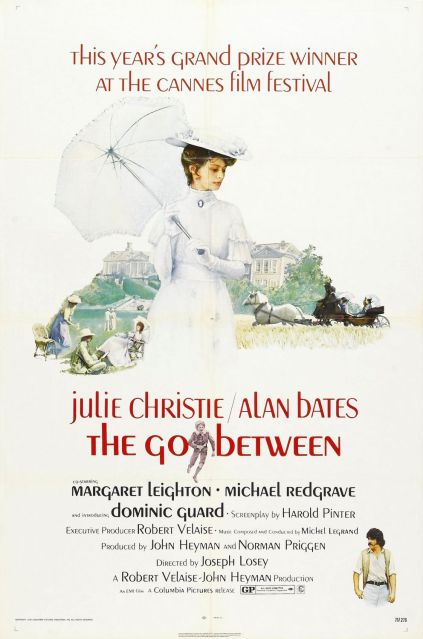
go_between_xlg


Last summer I discovered that Michel Legrand, who died on Saturday, was one of those interview subjects who present you with the problem of what to leave out. We had an hour together in his apartment in the Marais, an hour packed with stories. When I wrote the piece up for the Guardian, some of them had to be omitted for reasons of space and continuity. Here’s one that began when he talked about scoring movies.

When I write music, my music talks. It’s not a music that says nothing, a tapestry where nothing happens, like most of the composers. Such a bore. I always wrote adventurous, original, different. But it happened a few times that producers or directors…

He fell silent. I prompted him. They didn’t like what you gave them? May I have an example?

For instance, I did one score for Joseph Losey on The Go-Between. Joe called me. He lived in London, I was in Paris. He said, ‘I’ve finished a movie called The Go-Between and I’d love you to write the score.’ So I fly to London. I love the movie. I said to Joe, ‘It’s extraordinary. It’s the best film you ever made.’ So we go to his house and before we have dinner together he played a record for me, saying, ‘This is the type of music that I want in my movie.’ And I heard it. Strings, with a tenor sax screaming, bleeding, like the music in bordellos. So I said to Joe, ‘That’s what you want?’ He said, ‘Yes.’ I said, ‘Goodbye!’ He said, ‘But what would you do?’ I said, ‘I don’t know yet – but that I would never do, because it’s not good for your movie at all.’ He thought for a bit and said, ‘Do it. Do what you want. I trust you.’

“So I go back home and write. Six weeks later I go back to record and the first cue he says, ‘No, it’s not for my film.’ I said, ‘Joe, I’ve finished. I recorded every single thing.’ I said, ‘I know you hate it, but you asked me to score your movie so in return you owe me to put it in your film. Call me and I’ll come back and if it’s really a catastrophe, we’ll find a solution.’ November, no news. December, no news. January, no news. Joe Losey never used the telephone. Much too modern for him. He communicated through telegrams. March, not a word. Then I see in the French papers that The Go-Between represents England in the Cannes festival. May, publicity everywhere. At the end of the festival, he wins the Palme d’Or.

“So the next morning I received a 100-line telegram saying, ‘Michel, this is exactly what the film wanted. I’m sorry for my behaviour.’ I send him back a huge telegram saying, ‘Dear Joe – I hate you. I used to love you. Not any more. I don’t want to work with you any more. Forget me.’ So what happened after that, some stars in London who worked with Joe, every time he showed the movie with my music in private screenings, everybody said the score’s extraordinary – and he hated it. Finally he said, ‘I might be wrong.'”

Did you work with him again?

“Yes.”

* Here is John Fordham’s excellent obituary. Here is my Legrand interview as it appeared in the Guardian. And here is the Go-Between music. 

Que Vola?

cu301148

It’s so cold this morning that I’m typing this with gloves on (fingerless ones, knitted by my daughter, since you ask). But all the ambiant heat I need is being provided by the debut CD from a Franco-Cuban band called Que Vola?, who stir new and inspiring life into an old formula.

The Cuban influence on jazz has been coming and going for the best part of a century, getting its biggest boost in the 1940s, when the immortal conguero Chano Pozo joined the Dizzy Gillespie big band. The story of Que Vola? — literally, “what flies?”, or “wha’ happen?” in the vernacular — began in 2012, when the trombonist Fidel Fourneyron visited Havana and was seized by a desire to blend jazz horns with the deep rhythms he was hearing in clubs.

Back in Paris, he added three Cuban percussionists — Adonis Panter Calderón, Ramón Tamayo Martínez and Barbara Crespo Richard — to an assembly of local musicians: Aymeric Avice (trumpet), Hugues Mayot and Benjamin Dousteyssier (saxophones), Bruno Ruder (electric piano), Thibaud Soulas (double bass) and Elie Duris (drums). As I say, it’s not a particularly new idea, but Fourneyron has come up with a different sound, a new set of textures and balances, as you can hear here and here. The effect is something akin to Grounation, the classic album in which Count Ossie and the Mystic Revelation of Rastafari fused nyabinghi rhythms with post-bop jazz soloists 45 years ago.

What makes Fourneyron’s approach different from most earlier Latin-jazz fusions, I think, is that he accepts the Cuban rhythms at their most complex and sophisticated. He doesn’t try to water them down for a popular audience, even one familiar with salsa, but matches them to the complexity and sophistication of the contemporary jazz musician. What, really, could be closer to the spirit of Dizzy Gillespie and Chano Pozo?

* Que Vola? is released on January 25 on the Nø Førmat label. The band will appear at EartH (Evolutionary Arts Hackney) in Stoke Newington on April 10, with Oumou Sangaré and Gérald Toto.

Joseph Jarman 1937-2019

joseph jarman

By a coincidence that seems extraordinary, at least to me, Joseph Jarman’s death on Wednesday, at the age of 81, took place two days after a group of London-based artists had performed his 1966 poem-with-music “Non-Cognitive Aspects of the City” to a packed audience at Cafe Oto. Dante Micheaux read Jarman’s words beautifully, sharing the stage with the singer Elaine Michener, Byron Wallen on trumpet, Jason Yarde on saxophones and electronics, Alex Hawkins on piano, Neil Charles on bass and Mark Sanders on drums. It was a surprising and welcome choice in an unbroken two-hour set that also included works by Jeanne Lee, Eric Dolphy, Archie Shepp and Jayne Cortez. (Here is Mike Hobart’s excellent FT review of the gig.)

Jarman, who died in a New Jersey home for actors, spent his last decades as a teacher of Shin Buddhism, having significantly reduced his involvement in musical performance from about 1993 onwards. He’ll be best remembered as a founding member of the Art Ensemble of Chicago, which evolved in the mid-’60s out of Roscoe Mitchell’s quartet and Muhal Richard Abrams’ Experimental Band, in both of which he played. This made him an early member of Chicago’s Association for the Advancement of Creative Musicians, now into its sixth decade.

Like many other great musicians — including Gene Ammons, Bo Diddley, Johnny Griffin, Dinah Washington, John Gilmore, Nat King Cole, Richard Davis, Eddie Harris, Freddie Below, Wilbur Ware and Johnny Hartman —  he had been taught at DuSable High, on Chicago’s South Side, by the legendary Captain Walter Dyett, the school’s music instructor from 1935 to 1962. His instrument at that time was the snare drum, which he played in the school band.

He began studying the saxophone and woodwinds while stationed in Germany with the US Army from 1955 to 1958. On returning to Chicago he met Mitchell and Malachi Favors, and his course was set. He became part of a music that absorbed, metabolised and reimagined everything from the country blues to John Cage, breaking down the conventions and creating new approaches. The impact of their arrival in Europe in 1969, together with Anthony Braxton, Wadada Leo Smith and others, has yet to be properly assessed.

I was fortunate enough to hear the Art Ensemble on several occasions in what I suppose we think of as their classic incarnation — notably in Central Park’s open-air Wollman Auditorium in 1973, their first New York concert, when they played the epic “People in Sorrow”, and at the Roundhouse in London later in that decade — and on both occasions I had my consciousness rearranged in a very fulfilling way. With their slogan “Great Black Music: Ancient to the Future”, they took ownership of what they were doing with a visionary confidence that continues to exert an influence on new generations.

In her book As Serious As Your Life, Val Wilmer describes Jarman as “poet, philosopher and polemicist as well as musician.” On his last studio recording with the Art Ensemble, Sirius Calling (Pi, 2004), he opened a saxophone-and-drums duet with Don Moye by speaking these words:

Every day is a perfect day

Every moment a perfect moment

Every second a perfect second

We can see complete darkness simply by closing our eyes

We can see complete light by truly opening our eyes

* The photograph of Joseph Jarman is from the cover of his first album, Song For (Delmark, 1967), and was taken by Joe Banks.

Mark Lockheart’s ‘Days on Earth’

mg_8846-750x500

Most of the interesting new big-band music these days tends to be of the experimental variety, from Darcy James Argue to Ingrid Laubrock. Too much is the kind of warmed-over bombast you get from people steeped in the tradition of Stan Kenton, Buddy Rich and the University of North Texas Lab Band. So it’s always welcome to come across someone using the established language to say new things, as Mark Lockheart does with great success in Days on Earth, a large-scale work for sextet and orchestra premiered at Milton Court in London last night.

Lockheart (above), the saxophonist and composer who first attracted attention with Loose Tubes 30 years ago and has since played with Polar Bear, Perfect Houseplants and others, was leading the distinguished core group, which included John Parricelli (guitar), Liam Noble (piano), Tom Herbert (bass), Seb Rochford (drums). John Ashton Thomas conducted the 33-piece Guildhall Studio Orchestra: 14 violins, four violas, three cellos, harp, four woodwind, six brass and percussion.

Normally I don’t like doing that jazz-critic thing of describing a piece of music by triangulating it with a couple of other things it resembles, but I don’t see the harm in mentioning here that Lockheart, whether he meant to or not, has drawn together aspects of Eddie Sauter’s work behind Stan Getz on Focus with Gil Evans’s setting for Wayne Shorter on “The Barbara Song”. Which is not to suggest that Lockheart’s seven-part suite is a concerto for tenor saxophone and orchestra, which it is not, or that it reflects the early 1960s, the time when those works were made. The infectious grooves alone — and there are many of them scattered throughout Days on Earth — are definitely contemporary.

The use of his resources to create new textures, however, would do credit to Sauter or Evans. I heard some imaginative groupings; two examples would be bass clarinet and double bass repeating a staccato motif as an undercurrent, and a clarinet against harp and plucked cellos . The big ensemble passages were perfectly integrated and, thanks as much to the skill and enthusiasm of the students in the orchestra as much as the pros in the rhythm section, swung like mad. That wouldn’t have happened half a century ago.

Days on Earth was conceived as a big statement: “a defining moment for me,” the composer says, “not just in the scale of the instrumental forces but also the culmination of many musical (and life) journeys.” Without burdening the listener, in both live and recorded forms it feels like a thoughtful outpouring of human emotions, choosing to deploy beauty as a response to confusion, carefully channeled through great artistry. Lockheart’s own tenor solos were exquisitely formed and perfectly flighted — it’s no news that he has a singularly beautiful tone — and some of the students, including the violinist Nicole Petrus Barracks and the harpist Lise Vandersmissen, made striking individual contributions.

Before the interval, Lockheart led nine other student musicians through five of his earlier pieces, showcasing the powerful bass of Joe Lee and the alto of Asha Parkinson, whose quietly intense closing solo — a moment of wonderfully understated drama — reminded me of how impressive she was in the Guildhall School’s concert presentation of Donald Fagen’s Nightfly a couple of years ago.

Pretty much a five-star evening, then, which really deserves to be repeated. And in its CD form, recorded at Mark Knopfler’s British Grove studio and released next week on the Edition label, Days on Earth is definitely a five-star album, demanding a place at the forefront of Britain’s extremely active contemporary jazz scene.

Herbie Nichols at 100

herbie-nichols

This week the Stone in New York City is hosting a four-night celebration of the centenary of Herbie Nichols, the composer and pianist who remained in obscurity during his lifetime but has since, thanks to the enthusiastic advocacy of such admirers as Roswell Rudd, Misha Mengelberg, Buell Neidlinger, Steve Lacy and George Lewis, been acknowledged as one of the most interesting figures of his era.

I read about Nichols before I heard him, as one of the figures profiled in A. B. Spellman’s great book Four Lives in the Bebop Business, published in 1967, four years after his death from leukemia at the age of 44. By placing his story alongside those of Cecil Taylor, Ornette Coleman and Jackie McLean, all of them much better known, the author granted him a certain standing. In career terms it was a tale of woe, very largely, but it seemed clear that public neglect never dimmed the light of Nichols’s creativity.

Then I got to hear his music — which wasn’t so easy at the time — and, like everybody else who “discovered” him for themselves, immediately recognised his great combination of complete originality and total accessibility. He was kin to Thelonious Monk, quite evidently, and also to Elmo Hope and Dick Twardzik, but with a different outlook.

Here are “23 Skidoo”, “Step Tempest” and “Shuffle Montgomery”, all from the two-volume set of 10-inch LPs recorded for the Blue Note label in 1955, titled The Prophetic Herbie Nichols, with Al McKibbon on bass and Art Blakey on drums (and great abstract cover art by Martin Craig, proving that there was visual life at Blue Note before Reid Miles). And here’s “Love Gloom Cash Love”, the title track of another trio album recorded for Bethlehem three years later, with his old friend George Duvivier on bass and Dannie Richmond on drums.

So that’s Herbie Nichols, born on January 3, 1919 to parents who’d come to New York from St Kitt’s and Trinidad. These pieces are typical in that their characteristic jauntiness seems to be a light disguise for more nuanced feelings. He was great with titles — “House Party Starting”, “Terpsichore”, “S’Crazy Pad”, “Hangover Triangle” — but even better at coming up with combinations of melody, rhythm and harmony that sound completely fresh but also like something that’s been there all your life.

According to Spellman, he wrote a lot of poetry, too, particularly in hard times. I’d love to read that.

* The photograph of Herbie Nichols is by Francis Wolff.

A Christmas song

The last time I did a Christmas post on this blog, in which I listed my seasonal favourites, William Brown wrote in to mention his choice, which comes from a live radio concert by Laura Nyro in 1990. I’ve been listening to Laura for 50 years, since the release of Eli and the Thirteenth Confession in 1968, and she’s more important to me with each passing year. Since I’ve written about her before, at some length, I won’t repeat my thoughts. I’ll just let her wish everybody reading this, on my behalf, a merry Christmas — and, although she doesn’t mention it, a happy new year.

Joe Osborn 1937-2018

150px-Joe_Osborn_for_Wikipedia

As a first-call bass guitarist in Los Angeles in the second half of the 1960s, Joe Osborn played on some of the era’s most memorable hits, including “California Dreamin'”, “Windy” and “MacArthur Park”. Osborn, who died at his home in Lousiana on December 14, aged 81, formed a particularly strong partnership in the Hollywood studios with the pianist Larry Knechtel and the drummer Hal Blaine.

Born in Mound, Louisiana, Osborn started life as a guitarist and spent two years playing with Bob Luman in Las Vegas before joining Ricky Nelson’s band in 1960 and moving to LA. Since the guitarist was James Burton, Osborn switched to bass and played on such Nelson hits as “Travellin’ Man”. In 1964 his studio career had already begun when he became part of the minimalist rhythm section on the Lou Adler-produced Johnny Rivers at the Whisky A Go Go, whose party vibe, captured by the engineer Bones Howe, made it — and the single taken from it, Chuck Berry’s “Memphis” — a giant hit. Osborn went on to play on many more of Rivers’ (now underrated) albums, right up to LA Reggae and Blue Suede Shoes in the early ’70s, and on many of Howe’s subsequent productions, usually alongside Blaine. “Hal and Joe had the lock and the feel,” Howe said in Harvey Kubernik’s book Turn Up the Radio!

He played a Fender Jazz Bass, whose narrow neck suited his fingers, mostly with a pick. Apparently he didn’t change his flat-wound strings for 20 years. There was plenty of competition on his instrument in the Hollywood studios — from Carol Kaye, Ray Pohlman, Lyle Ritz, the multi-talented Knechtel and others, some of them with jazz training — but he was valued for his southern rock ‘n’ roll chops. His later work included Simon and Garfunkel’s “Bridge Over Troubled Water” (with Knechtel on piano) and all the 5th Dimension’s hits, including “Wedding Bell Blues”, “Let the Sunshine In/Aquarius” and the sublime “One Less Bell to Answer”.

Here is a very nice little two-minute tribute, and here is a short interview. As with a lot of great session musicians, the true extent of his contribution will probably never be adequately measured.

2018: the best bits

Girl from the North Country 2

Sheila Atim (photograph: Manuel Harlan)

Girl from the North Country

Outside of the Rogers-and-Astaire films and Jersey Boys — and Broadway’s contribution to the American songbook, of course — musicals have never played much of a part in my life. I went to the opening night of Conor McPherson’s Girl from the North Country at the Old Vic in January only because I was asked to write a piece about how the playwright had responded to the invitation to build an evening around Bob Dylan’s songs. I got a pleasant surprise. The play was a little predictable and sometimes melodramatic. But Alan Berry, the musical director, and Simon Hale, the orchestrator, arranger and musical supervisor, had taken McPherson’s pleasingly eccentric selection and recreated them as something standing apart from a story set in Duluth, Minnesota – Dylan’s birthplace – around the time of the Depression, but entirely of a piece with the atmosphere. A little band played beautifully behind the singing of the cast, which was uniformly excellent – and in the case of Sheila Atim, delivering “Tight Connection to My Heart”, something rather more than that. I enjoyed it so much that when it transferred to the West End, I went back and was not inclined to change my view.

Here are the other things I particularly enjoyed this year:

Live performances

1 Ry Cooder (Cadogan Hall, October)

2 Mavis Staples (Union Chapel, July)

3 Ingrid Laubrock’s Anti-House (Cafe Oto, May)

4 Amir ElSaffar + Rivers of Sound (Kings Place, November)

5 Louis Moholo-Moholo Quartet (Cafe Oto, October)

6 Mary Halvorson Octet (Haus der Berliner Festspiele, November))

7 Nérija (Elgar Room, Royal Albert Hall, March)

8 Nels Cline 4 (Vortex, April)

9 Richard Thompson (Richmond Theatre, August)

10 Anthony Braxton’s ZIM Music (Cafe Oto, May)

11 Bill Frisell (Cadogan Hall, November)

12 Irreversible Entanglements (Haus der Berliner Festspiele, November)

13 Tony Malaby (Vortex, May)

14 Elaine Michener’s Sweet Tooth (St George’s, Bloomsbury, February)

15 Peter Hammill (Queen Elizabeth Hall, April)

16 The Necks (Cafe Oto, October)

17 Hamid Drake / Yuko Oshima (Haus der Berliner Festspiele, November)

18 Kit Downes / Tre Voci / Southbank Gamelan (Union Chapel, February)

19 Jamie Branch’s Fly or Die (Cafe Oto, November)

20 Martin Speake Quartet (Vortex, April)

New albums

1 Ambrose Akinmusire: Origami Harvest (Blue Note)

2 Moses Boyd Exodus: Displaced Diaspora (Exodus)

3 Arve Henriksen: The Height of the Reeds (Rune Grammofon)

4 Betty LaVette: Things Have Changed (Verve)

5 Tyshawn Sorey: Pillars (Firehouse 12)

6 Marc Ribot: Songs of Resistance 1942-2018 (Anti-)

7 Louis Moholo-Moholo’s Five Blokes: Uplift the People (Ogun)

8 Swing Out Sister: Almost Persuaded (SOS)

9 Mary Halvorson: The Maid with the Flaxen Hair (Tzadik)

10 The Necks: Body (ReR)

11 Barre Phillips: End to End (ECM)

12 Mike Westbrook: Starcross Bridge (hatOLOGY)

13 Michael Mantler: Comment c’est (ECM)

14 Geir Sundstøl: Brødløs (Hubro)

15 Lio: Lio Canta Caymmi (Crammed Discs)

16= Brian Eno: Music for Installations (Opal)

16= Bryan Ferry: Bitter-Sweet (BMG)

18 Jon Hassell: Listening to Pictures (Ndeya)

19 Peter Hammill: From the Trees (Fie)

20 Lewis Wright: Duets (Signum Classics)

Archive / reissue albums

1 Negro Church Music (Man in the Moon)

2 Charles Mingus: Jazz in Detroit / Strata Concert Gallery/ 46 Selden (BBE)

3 André Hodeir: Essais (Fresh Sound)

4 Eric Dolphy: Musical Prophet (Resonance)

5 John Coltrane: Both Directions at Once (Impulse)

6 Mike Westbrook: In Memory of Lou Gare (Westbrook)

7 Chuck Jackson: The Best of the Wand Years (Ace)

8 Don Cherry: Studio 105, Paris 1967 (Hi-Hat)

9 Shirley Ellis: Three Six Nine (Ace)

10 Keith Jarrett / Gary Peacock / Jack DeJohnette: After the Fall (ECM)

Feature films

1 A Woman’s Life (Une Vie) (dir. Stéphane Brizé)

2 Shoplifters (dir. Hirokazu Kore-eda)

3 Cold War (dir. Pawel Pawlokovski)

4 The Guardians (Les Gardiennes) (dir. Xavier Beauvois)

5 Loveless (dir. Andrey Zvyagintsev)

6 Jeune Femme (dir. Léonor Serraille)

Books: non-fiction

1 Berlin 1936 by Oliver Hilmes (The Bodley Head)

2 Left Bank by Agnès Poirier (Bloomsbury)

3. Moneyland by Oliver Bullough (Profile)

Books: fiction

Warlight by Michael Ondaatje (Jonathan Cape)

Books: poetry

The Long Take by Robin Robertson (Picador Poetry)

Books: photography

New York Scenes by Fred W. McDarrah (Abrams)

Exhibitions

1 Ilse D’Hollander (Victoria Miro Mayfair)

2 Jean-Michel Basquiat: Boom for Real (Barbican)

3 The Age of Jazz in Britain (Two Temple Place)

4 London 1938 (Max Liebermann Villa, Wannsee)

5 Journeys with ‘The Waste Land’ (Turner, Margate)

YouTube

Childish Gambino: “This is America”

Lana Del Rey: “Venice Bitch”

Poem: Listening to Miss Peggy Lee

7622ffdee4d7cc753be675d134204

When Peggy Lee recorded “The Folks Who Live on the Hill” in 1957, the song — with music by Jerome Kern and words by Oscar Hammerstein II — was already 20 years old. Arranged by Nelson Riddle, conducted by Frank Sinatra, the recording became a Lee classic. I saw her perform it on The Perry Como Show, broadcast weekly by the BBC in the days when there were only two TV channels. On the surface, Lee and Riddle turned the song into a reassuring vision of the white-picket-fence America of the Eisenhower era. I heard that, too, but I found myself, young as I was then, responding to something deeper, more ambiguous, containing both optimism for adulthood and a hint of anxieties to come. The poet Roy Kelly seems to have experienced a similar reaction. Roy writes for The Bridge, the Bob Dylan magazine; his long piece on the ‘Mondo Scripto’ exhibition is in the next issue. His book Bob Dylan Dream: My Life with Bob was published in 2015. I’m grateful for his permission to publish this new poem, and I hope you like it as much as I do. RW


ON LISTENING TO MISS PEGGY LEE SING

THE FOLKS WHO LIVE ON THE HILL


By Roy Kelly


The song I heard as a child

and ever since, beautiful Fifties America

art song, popular and commonplace

in anyone’s Sunday kitchen,

coming out of radios as if it never

could end, that time, that childhood.

An arranged figure lifting

and repeating, horns and strings

in melancholy grandeur;

not the tune but inextricable

precursor to its unfolding,

to the appearance of her voice,

small and clear, steadfast, intimate,


close as a whisper rising into

the narrative of melody,

the story of a union to come,

Darby and Joan who used to be

Jack and Jill, woven and layered

in the resonance of words and music,

the grief at the core of happiness,

tears in the heart of all things,

so that for years I never hear it

but my eyes brim, my throat swells to closing.

Genius art song of Fifties America

informing me of a life that might have been

and the future I have now,


the family I am blessed with now,

in a story we need to tell each other

of how it is loving and being loved,

as she loved and was loved, wishing

on a world that lives in songs,

memory and imagination a focused vision,

childhood and old age meeting

in her voice, her eternal clarity,

the unison that moved me to tears

and will again though I forget she is dead,

the uplifting splendour of the everyday

coming alive on anyone’s radio

as if these moments never will end.

Eric Dolphy, still out there

Eric Dolphy - Photo by © Hans Harzheim

When I think about Eric Dolphy, I wonder what he would be doing now, had he not died of undiagnosed diabetes in a Berlin hospital in 1964, aged 36. Quite a lot of the more adventurously astringent music to be heard today at Cafe Oto in London, The Stone in New York or Sowieso in Berlin could be described as Dolphyesque, in that it launches itself from a jazz platform in search of a relationship with other idioms, in particular the techniques of various forms of modern classical music.

He would have turned 90 this year, and there’s no doubt that he would have used those lost years productively, extending his already formidable vocabulary on alto saxophone, bass clarinet and flute, continuing to develop a personal improvising voice that — like his great contemporary Ornette Coleman, but in a very different way — moved beyond the influence of Charlie Parker, and exploring the possibilities of new instrumental groupings and compositional techniques. Just imagine a Dolphy quintet album with Ambrose Akinmusire, Alexander Hawkins, Thomas Morgan and Tyshawn Sorey!

A new release from Resonance Records provides a fine illustration of the things he was up to in the couple of years before he died, and of how modern he still sounds. After an apprenticeship with Chico Hamilton, Dolphy came to the attention of the jazz world primarily through his work with John Coltrane and Charles Mingus, but he found a path to his own music, to be heard on such albums as Out There (Prestige, 1960), the marvellous series of quintet recordings at the Five Spot with Booker Little from 1961 (also Prestige), and the celebrated Out to Lunch! (Blue Note, 1964).

The Resonance collection, called Musical Prophet and currently available as a triple vinyl set, is based on two days of studio sessions supervised by the producer Alan Douglas for his own label in New York over two days in July 1963. The sessions featured various instrumental combinations from a pool of mostly young players: Woody Shaw (trumpet), Sonny Simmons (alto), Prince Lawsha (flute), Clifford Jordan (tenor), Bobby Hutcherson (vibes), Richard Davis or Eddie Kahn (bass), J. C. Moses or Charles Moffett (drums), and the veteran Garvin Bushell on bassoon. It seems to have been typical of Dolphy’s generosity of spirit that he made solo space for other musicians who played his instruments (Simmons in particular), and featured compositions other than his own.

Two albums, Conversations and Iron Man, were issued from these sessions, but the new set also contains outtakes of all the original tracks, and more besides. Given the relatively small size of Dolphy’s output during his short recording career, anything new is particularly welcome, and it’s a treat to hear — for instance — a pithier version of Lawsha’s Caribbean-inflected “Music Matador”, two extra takes of the solo alto treatment of the standard “Love Me”, and the astonishingly inventive solos by Dolphy and the 18-year-old Shaw on an alternate take of “Mandrake” that is stronger than the one originally selected.

There’s also a bonus track from another session: a 15-minute piece called “A Personal Statement”, originally included under the title “Jim Crow” on an album culled from random tapes left by Dolphy with some friends and released by Blue Note in 1987 under the title Other Aspects. It now transpires that this striking piece was written by the pianist Bob James for his own trio, plus Dolphy and a counter-tenor, David Schwarz, and recorded in Ann Arbor, Michigan, in March 1964, shortly before Dolphy left for what turned out to be his final trip to Europe. The fact that Dolphy didn’t write it, and that James would soon (after recording a trio album for ESP) turn away from the avant-garde towards an engagement with the more commercial form of jazz that made him famous, doesn’t make it any less interesting; it also means that Dolphy recognised the promise in these young musicians, who were students at the time.

For me, however, the heart of this set is the second of its six sides, entirely devoted to duets between Dolphy’s bass clarinet and the bass of Richard Davis: two virtuosi in conversation. The first of the three tracks, the originally released 13-minute take of “Alone Together”, is a known masterpiece (and there is another take, previously unreleased, on the final disc). The second and the third pieces, two takes of a composition by the pianist Roland Hanna called “Muses for Richard Davis”, slowly explore the timbral relationship between the two instruments with enormous care, subtlety and beauty. You can ignore the track breaks and treat the side as one half-hour piece: half an hour of genius.

* Musical Prophet: The Expanded 1963 Studio Session is out now as a vinyl limited edition and will be released on CD on January 25. The photograph above, by the German jazz photographer Hans Harzheim, appears in the lavish booklet, along with the work of Francis Wolff, Val Wilmer and other photographers, and many essays and interviews with musicians whose lives Eric Dolphy touched.