Skip to content

Tammi Terrell 1945-1970

Tammi Terrell

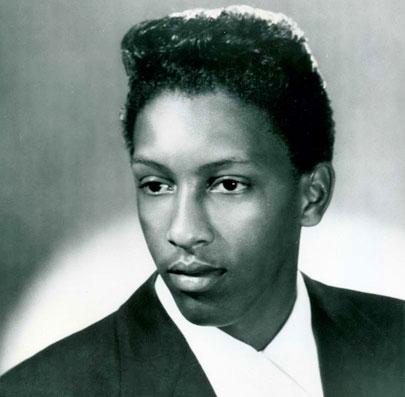
Fifty years ago, on March 16, 1970, Tammi Terrell died at the age of 24, following several operations for brain cancer. Her illness had become dramatically apparent on the night, two and a half years earlier, when she collapsed into the arms of her singing partner, Marvin Gaye, on stage at the Hampton-Sydney College in Virginia. Earlier in 1967 the teaming with Gaye had finally given her success: three consecutive Top 20 hits with “Ain’t No Mountain High Enough”, “Your Precious Love” and “If I Could Build My World Around You”. There would be others in the agonising months between that first collapse and her death, including “If This World Were Mine”, “Ain’t Nothing Like the Real Thing” and “You’re All I Need to Get By”.

Neither a diva nor a natural soul sister, Tammi Terrell was hard for the A&R and songwriting teams at Motown Records to place as a solo artist. She turned out to be a girlfriend, which is why her records with Gaye were so effective.

It’s also how she is remembered, which makes it interesting to listen to Come On and See Me: The Complete Solo Collections, a two-CD anthology compiled 10 years ago by Harry Weinger for the Hip-O Select label. Adding pre-Motown material and rare, unreleased and live tracks from her Hitsville USA days to her one solo album (titled Irresistible), the collection leaves the listener wondering why she never achieved success in her own right.

Born Thomasina Montgomery to a middle-class Philadelphia family, she won a talent contest at the age of 11. Four years later the New York producer Luther Dixon signed her to Scepter Records, whose headline artists included the Shirelles and Dionne Warwick. Scepter shared Motown’s habit of rotating the same backing track among different singers until a combination clicked. So it’s interesting to hear Tammy Montgomery — as she had become — singing to the same track of Dixon’s “If You See Bill” that would turn up on Warwick’s debut album two years later, and revoicing the Shirelles’ “Make the Night a Little Longer”, written by Gerry Goffin and Carole King. There’s also a version of Burt Bacharach and Bob Hilliard’s “Sinner’s Devotion” which virtually defines Scepter’s variation on the uptown soul sound.

In 1963 she joined James Brown’s touring company and recorded a couple of his songs, “I Cried” and “If You Don’t Think”, for his Try Me label. The association was ended, according to Daphne Brooks’ excellent sleeve note, when her family discovered that their daughter was in an abusive relationship with Brown. Back in New York she recorded four sides for Chess Records’ Checker subsidiary with the producer Bert Berns, including “If I Would Marry You”, a co-composition by the singer and the producer in which they attempt to reproduce the magic of Inez and Charlie Foxx’s “Mockingbird”. The anthology includes an unreleased version of the song in which Tammy is joined at the microphone by Jimmy Radcliffe (he of “Long After Tonight Is All Over”) in a pre-echo of her work with Gaye.

Tammy was performing at Detroit’s 20 Grand nightclub, a favourite of Motown artists and staff, when she was heard by Berry Gordy Jr, who promptly signed her up — maybe as a replacement for the recently departed Mary Wells, his first female star, perhaps glimpsing the potential to develop a similar girlish sweetness — and renamed her Tammi Terrell. She was put to work with the producer/songwriter team of the experienced Harvey Fuqua and the novice Johnny Bristol, but first two years with the label, 1965 and 1966, yielded only two singles: “I Can’t Believe That You Love Me” and “Come On and See Me”. Today it seems bizarre that neither was a hit — particularly the second of them, with its irresistible syncopated chorus and every other element of the classic mid-’60s Motown sound present and correct.

The 18 rare, unissued and unfinished studio tracks on the second disc contain plenty of further examples of Motown in its prime years, while demonstrating the efforts being made to establish an identity. On the driving “I Gotta Find a Way (To Get You Back)” the producer Norman Whitfield seems to be trying to cast her as the new Martha Reeves. She was even sent to Los Angeles to record “Oh How I’d Miss You” with Hal Davis and Frank Wilson and an unidentified male singer joining the chorus — another hint of things to come. A song called “Lone Lonely Town”, written and produced by Mickey Gentile and Mickey Stevenson, became a Northern Soul favourite when it escaped the vaults many years later. “Give In, You Just Can’t Win”, another Fuqua/Bristol effort, and “All I Do Is Think About You”, co-written (and later re-recorded) by Stevie Wonder, are such perfect Motown records that it’s hard to believe they didn’t make it past the label’s weekly quality control meeting.

Her time at Motown, however, was disrupted by an affair with David Ruffin, again accompanied by allegations of abuse. In Susan Whitall’s valuable oral history Women of Motown, Brenda Holloway remembered the woman she called her best friend at the label: “She was a very, very sad, sad little person who was looking for love, and she paid the price for the love she didn’t have. She was a beautiful woman, but she was looking for love and she paid the price. Maybe she felt guilty because of her looks. They feel guilty because they can get anyone they want. But once you get them, is this what you really want? After you find out about the person you’ve attracted, you can’t shake loose. And she just got attached to the wrong people. She was vulnerable because her heart was exposed.”

Before the hits with Gaye – written by Nick Ashford and Valerie Simpson — finally brought her into focus, Motown had certainly put some promotional muscle behind her solo career. The Hip-O Select set finishes with a recording made of part of her showcase appearance at the Roostertail, another popular Detroit night spot, on September 19, 1966. By opening with Lerner and Lowe’s “Almost Like Being in Love”, from the 1940s musical Brigadoon, she reminds us of Gordy’s desire to guide his female singers towards the middle of the road. A medley including “What a Difference a Day Makes”, “Runnin’ Out of Fools” and “Baby Love”, saluting Dinah Washington, Aretha Franklin and her labelmate Diana Ross, is also intended to show her versatility. But the live versions of her first two singles have the Motown road band and backing singers operating at full power behind a 21-year-old Tammi Terrell whose poised delivery suggests what she might have achieved, given time.

Bryanesque

Bryanesque

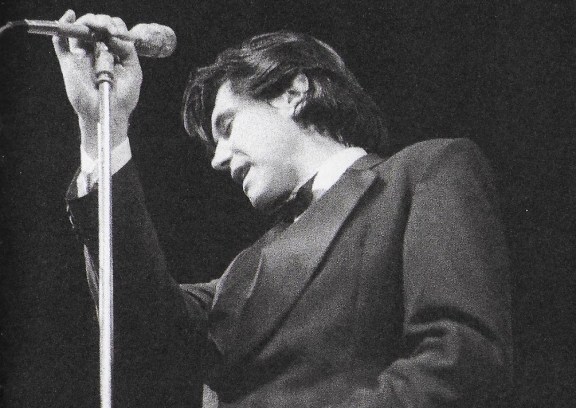
Only a month after writing about the release of Bryan Ferry’s 1974 Albert Hall concert, last night I found myself back in practically the exact same seat I occupied 46 years ago, watching Ferry, midway through the first of three concerts, step into a cone of light to deliver “Don’t Think Twice, It’s All Right” with just the guitars of Tom Vanstiphout (acoustic) and Chris Spedding (almost subliminal Telecaster) for company.

I thought about a recent conversation with my friend Caroline Boucher (once of Disc & Music Echo), who remarked on the extra-special quality of Ferry’s singing on his 2007 album of Dylan covers, Dylanesque. He’d recorded “Don’t Think Twice” five years earlier, on Frantic, accompanied by Colin Good’s piano. Last night’s version was very different: almost unbearably tender in execution and spirit, it formed a pair with the Dylan cover that followed it, “Make You Feel My Love” (which was on Dylanesque). When he launched the familiar roar of “Hard Rain” half an hour later, it was tempting to think of Ferry as the Bard of Hibbing’s most interesting interpreter.

“Don’t Think Twice” was the point at which the concert pivoted away from its opening sequence of a dozen non-hits into the drive towards the encores. Highlights of the first half for me were the unstoppable groove of “You Can Dance” (from Olympia), the slinkier seduction of “Your Painted Smile” (from Mamouna), and the glorious shifts from minor-key verse into the deceptively sunny Europop chorus of “Hiroshima” (from Frantic).

The second half was the formula beloved of Ferry’s wider audience: “Avalon” and “Dance Away”, “Love Is the Drug” and “Street Life”, “Hard Rain” and “The ‘In’ Crowd”, “Virginia Plain” — still a stunning piece of pop art, worthy of his mentor, Richard Hamilton — and “Editions of You”, all delivered with style and energy. Throughout, Ferry received exemplary support from his dozen musicians, notably Neil Jason on bass guitar, Luke Bullen on drums and Jorja Chalmers — Louise Brooks dressed as Catwoman — on various saxophones. If this was a last night out before the coronavirus shuts everything down, then it wasn’t a bad way to finish.

A happy birthday

Steve Beresford 1

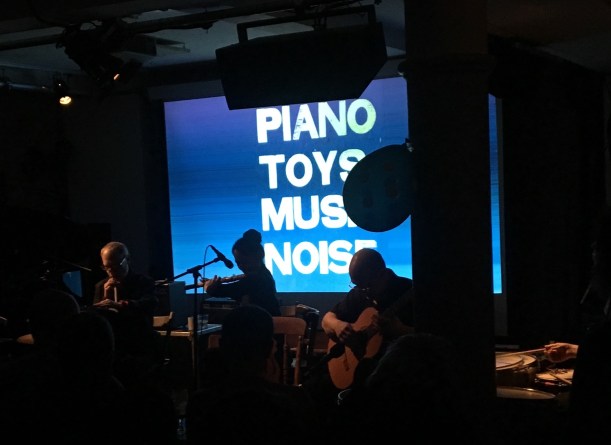
The pianist Steve Beresford is celebrating his 70th birthday this weekend with three shows at Cafe Oto, mixing and matching friends and colleagues each night under the rubric PIANO TOYS MUSIC NOISE. The bill is a fine reflection of the generosity of spirit that has made Steve a key figure in the London scene for four and a half decades, whether as a collaborator with Derek Bailey, the Flying Lizards, John Zorn, Tristan Honsinger, Evan Parker, the Dedication Orchestra and countless others or in his role as a senior lecturer at the University of Westminster.

Last night I particularly enjoyed a half-hour set by a quartet of musicians (pictured above) who hadn’t played as a unit before. Douglas Benford played various instruments, including bowls and a miniature harmonium; Hyelim Kim played a taegum, a big-bore bamboo flute from Korea; Martin Vishnik played an acoustic guitar; and Crystabel Riley played a drum kit with no cymbals and two bass-drum pedals. It was the sort of collaboration that gives free improvisation a good name: all four musicians listening hard, giving each other space, alert to signs, not afraid to gives cues of their own. The playing was exquisite, making effective use of the silence, the breathy sounds and the bell tones that this music has absorbed from Far Eastern idioms (most obviously Buddhist rituals), grounded in Riley’s truly extraordinary contribution: an underscore of rumbling and tapping, permanently in movement without seeming restless or overbearing, always alert to shifts in the music’s density and trajectory and ready to orchestrate, with Vishnik’s help, a truly gorgeous ending.

Steve himself played first with the violinist Satoku Fukuda and later with David Toop and Peter Cusack, his old colleagues from Alterations. Tonight and tomorrow the programmes will include a performance of John Cage’s “Indeterminacy”, Steve’s duo with the violinist Mandhira De Saram, and the pianist Pat Thomas playing Ellington. Not a bad birthday party, all told.

* Details of tonight’s and tomorrow’s programmes on the venue’s website: http://www.cafeoto.co.uk/events/

The state of things

Robert Cray etc 2

One characteristic of despotic governments is an urge to suppress or deride art that does not serve their own purpose; hence Hitler’s persecution of “degenerate art” and Stalin’s enthusiasm for socialist realism. We haven’t quite reached that stage, but the political role of artists of all kinds grows more important in times such as these. Here are four new recordings with something to say.

1 Robert Cray Band: “This Man”

In his excellent new album, That’s What I Heard, Cray and his producer, Steve Jordan, explore a variety of approaches with great success (for example, there’s a gorgeous version of “You’ll Want Me Back”, which Curtis Mayfield wrote for Major Lance in 1966). But one track really stands out. On “This Man” he takes a standard blues trope — a stranger arrives in the singer’s home and tries to steal his woman — and turns it to a different use. The groove is down and funky, the mood ominous. “Who is this man in our house? / Who is this man? Better get him out! / We’ve got a problem, he’s gotta go / If he don’t leave, we can’t live here no more / If we want to save our home, better get him out.” Next verse: “When I come home from work, there he is again / Talkin’ loud, talkin’ trash, and it’s always something about him…” I don’t think it’s hard to identify the connection we’re being invited to make. The refrain goes “Get him out! Get him out! Get him out!” If songs could win elections…

2 Irreversible Entanglements: Who Sent You?

As well as being probably the finest solution yet devised to the eternal problem of how to blend jazz and poetry in a way that satisfies the requirement of both, Chicago’s Irreversible Entanglements are also a great protest band. Camae Ayewa — sometimes known as Moor Mother — rivals Matana Roberts as an eloquent writer and spellbinding declaimer of poetic texts. The musicians — Aquiles Navarro (trumpet), Keir Neuringer (alto saxophone), Luke Stewart (bass) and Tcheser Holmes (drums) — bring the open lines and flexible interplay of Ornette Coleman’s classic quartet and the explicit cultural grounding of Eddie Gale’s Ghetto Music into the 21st century. Who Sent You?, the collective’s second album, presents the coolly controlled sound of an angry and insurrectionary America that will not be silenced.

3 Pat Metheny: From This Place

With “This Is Not America”, co-written with Lyle Mays and David Bowie in 1985 for the movie The Falcon and the Snowman, Pat Metheny created a piece whose resonance has grown over the intervening three and a half decades, whether you’re listening to the original or to the version by Charlie Haden’s Liberation Music Orchestra on the album Not in My Name. The undertone of his latest album, even in its most lyrical moments, is one of disquiet. The oncoming twister pictured on the cover looms as the music begins with a long, complex, multi-sectioned piece called “America Undefined”. There is wonderful playing throughout by the pianist Gwilym Simcock, the drummer Antonio Sànchez and — particularly — the marvellous bassist Linda May Han Oh, against discreet and effective orchestral arrangements on some pieces. Grégoire Maret adds lovely harmonica, and the title track features Meshell Ndegeocello singing Alison Riley’s lyric: “From this place I cannot see / Heart is dark / Beneath rising seas…”

4 Jasper Høiby: Planet B

The Danish bassist and composer probably best known for his work with Phronesis assembles a different multinational trio to tackle climate change and related social issues. The British saxophonist Josh Arcoleo and the French drummer Marc Michel are more than ready for the challenge of the exposed format, helped by the inventiveness of Høiby’s compositions and his subtle use of electronics — and by the sparing inclusion of words spoken by thinkers including Ram Dass, Grace Lee Boggs, Charles Eisenstein and Jiddu Krishnamurti. Their speech is incorporated with the lightest of touches, providing a framework within which the music speaks in its own language. “If we could truly collaborate with our fellow man,” Ram Dass says, “there would be enough to go around for the world.” Music that relies on unselfish collaboration has much to teach tyrants, actual and would-be.

* The Robert Cray Band’s That’s What I Heard is on the Thirty Tigers label. They tour the UK from April 30 to May 16, starting in Bexhill-on-Sea. Irreversible Entanglements’ Who Sent You? is on IARC/Don Giovanni. They play the Corsica Studios, London on March 10. Pat Metheny’s From This Place is on Nonesuch. Jasper Høiby’s Planet B is on Edition Records.

The lost promise of Jesse Belvin

JESSEBEL-Nice15

Sixty years ago last month, the singer Jesse Belvin was travelling with his wife Jo Ann from a show in Little Rock, Arkansas, where he had performed at the city’s first integrated show, to his next engagement in Dallas, Texas, a journey of 300 miles. In the early hours of the morning they were outside Hope, Arkansas on I-30 when their driver, a friend named Charles Ford, veered into the wrong lane and ran head-on into an oncoming car. All three occupants of Belvin’s Cadillac were killed, as were those in the other car, a couple from Milwaukee.

Belvin was 27, already established as a key figure on the Los Angeles R&B scene, with a new RCA Records contract and realistic ambitions of crossing over a much wider audience. His smooth voice and musicianship allowed him to deliver a grown-up Broadway song as convincingly as a greasy teenage ballad. Had he survived, we might never have heard of Sam Cooke — who signed with RCA immediately after Belvin’s death — or Marvin Gaye, whose background and aspirations were very similar.

Born in San Antonio, Texas, Belvin had moved to South Los Angeles with his mother at the age of five. He sang in church, becoming a choir leader during his teens, before gravitating to the local doo-wop scene. At 20, he had a hand in writing “Earth Angel”, a massive hit for the Penguins and a doo-wop template. The song’s authorship was long disputed, but it seems to have had its origins in Belvin’s habit of sketching a snatch of a song and passing it on for other hands to complete. He may even have written the whole thing. The Fiestas’ “So Fine” was his, even though it’s usually credited to Johnny Otis, as was “Dream Girl”, a hit for Belvin in 1952 when recorded for one of the small labels run by the Hollywood record store owner John Dolphin.

He had also joined the band of the popular tenor saxophonist Big Jay McNeely, who had put together a vocal group — three men and one woman — called Three Dots and a Dash . Leaving McNeely in 1953, he re-recorded “Dream Girl” as a duo with Marvin Phillips, a fellow Dot, for Art Rupe’s Specialty label; released under the names of Jesse and Marvin, the song enjoyed even better sales. That success, however, was temporarily derailed by a draft notice.

Two years later, on returning home from army service, he resumed his activities within the LA scene, working with a variety of vocal groups, including the Feathers, the Chargers, the Cliques and the Sheiks, and alongside such ambitious young men as Johnny “Guitar” Watson, Charles Wright and his cousin Tony “Nite Owl” Allen. A set of demos recorded the ’50s show a mastery of a variety of R&B styles to match that of his LA contemporary Richard Berry, the versatile composer of “Louie Louie”.

Late in 1956 he recorded another doo-wop ballad, the gorgeous “Goodnight My Love (Pleasant Dreams)”, for the Bihari brothers’ Modern Records. George Motola had written the outline of the song, but invited Belvin to add a middle eight and polish it up. Declining a credit, Jesse asked instead for $400 — which was provided, in exchange for half the song’s copyright, by another songwriter, John Marascalo. Featured every night as the closing music to Alan Freed’s radio show, it became a long-lasting favourite.

In 1958 he was signed to RCA by the jazz trumpeter and bandleader Shorty Rogers, then in charge of the label’s West Coast A&R department. This was his break, giving access to big budgets and big promotion, with the eye on the audience captured by Nat King Cole. His first album, Just Jesse Belvin, featured rather anonymous MOR arrangements by Ray Martin and Dennis Farnon on songs like “My Funny Valentine” and “Secret Love”. His version of “Volare” was released as a single; not his finest hour, it fared poorly in competition with Domenico Modugno and Dean Martin.

Shorty Rogers put the great Marty Paich in charge of the arrangements for his second album, giving the singer more stimulating settings and a band including such jazz greats as the trumpeters Conte Candoli and Jack Sheldon, the alto saxophonist Art Pepper, the pianist Russ Freeman and the drummer Mel Lewis. The album was titled Mr Easy, and its versions of “What’s New” and “Angel Eyes” stand comparison with the best ballad singers of the era. In this environment Belvin showed immaculate control of his suave tenor voice and a beautifully understated gift for phrasing a line.

I was exaggerating, of course, when I suggested that we’d never have heard of Sam Cooke or Marvin Gaye. But were you to spend a day with Belvin’s legacy, recorded between 1952 and 1959, you might agree that this was an artist of prodigious quality who, until fate struck, was on course for a great career. And there’s no telling where it might have led.

* Jesse Belvin’s recordings are collected on The Blues Balladeer (Specialty); Goodnight My Love (Ace); a fascinating album of unreleased 1958 demos titled So Fine (Night Train); and Guess Who: The RCA Victor Recordings (Ace), which includes Just Jesse Belvin and Mr Easy. The latter is also available coupled on a single CD with Ethel Azama’s Cool Heat on the Fresh Sound label. Much of the information in the above post is gleaned from sleeve notes by Steve Propes, Ray Topping, Jim Dawson and Tony Rounce, whose ischolarship is gratefully acknowledged.

Revisiting Eric Burdon

Eric Burdon 1

The memory of hearing Eric Burdon sing “House of the Rising Sun” with the Animals at the Odeon, Nottingham one summer night in 1964 — a week or two before it was released as a single — is as clear as yesterday. In some ways it was the precursor of a new kind of rock music. But to Burdon, as he explains in a new biographical documentary shown on BBC4 this weekend, it meant something different. When Alan Price, the group’s organist, took credit for the words (traditional) and the arrangement (borrowed by Bob Dylan from Dave Van Ronk), it damaged the singer’s faith in music as a collective endeavour: all for one and one for all.

Luckily, although the animosity towards Price is still burning fiercely more than half a century later, it didn’t cause Burdon to end his career. As Patti Smith, Bruce Springsteen and Steve Van Zandt testify in the programme, post-Price Animals hits like “We Gotta Get Out of This Place” and “It’s My Life” were nothing short of inspirational to the next generation. But as the decades went by, there was always a sense that Burdon, one of the great English R&B voices of the ’60s, never quite recaptured the same level of fulfilment.

The hour-long Eric Burdon: Rock and Roll Animal, directed by Hannes Rossacher, is a co-production by the BBC with ZDF and Arte. There are interesting passages on his apprenticeship at the Club A Go Go in Newcastle, his relationship with Jimi Hendrix, his time in San Francisco and his collaboration with War — who dumped him, he claims, because he was the white guy in the band (there was actually another, the harmonica-player Lee Oskar). There’s quite a lot of stuff about his 50-odd years of living in California, and we see him cruising through the desert in some ’70s gas-guzzler or other.

We leave him, weathered but unbowed, with his new American band — new in 2018, anyway, when the film was made — preparing to record an album. He sings “Across the Borderline”, the great song written in 1981 by Ry Cooder with Jim Dickinson and John Hiatt for the soundtrack of Tony Richardson’s The Border, a film about immigrants. Originally sung by Freddie Fender, it subsequently found its way into the repertoires of Springsteen, Bob Dylan, Jackson Browne and Willie Nelson. It suits Eric Burdon just fine.

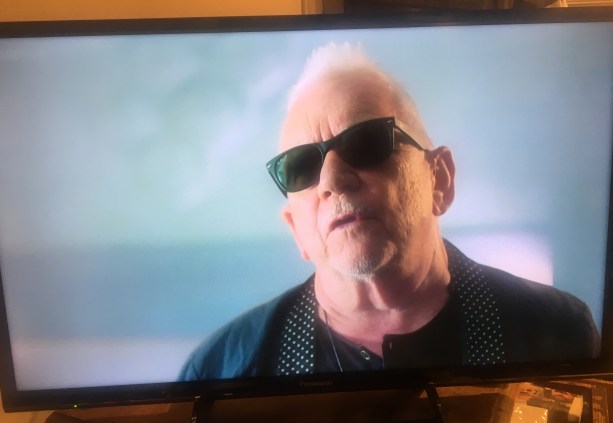
* The screen-grab is from Eric Burdon: Rock and Roll Animal, which can be watched on BBC iPlayer until the end of March.

‘Mercy’

87231110_601807310600115_5444768176836143691_n

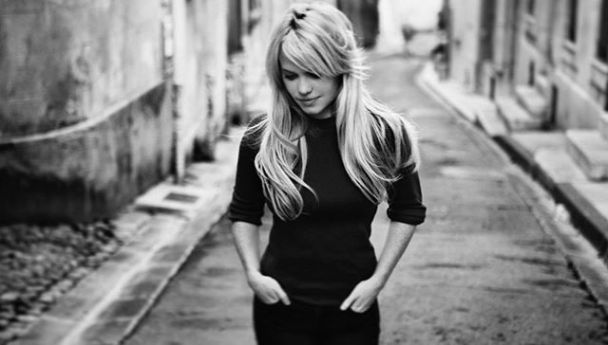
I’d imagine that a large number of people, on reading Duffy’s Instagrammed description of her recent problems, will have reminded themselves of what a great record “Mercy” was, and still is. When it came out in 2008, I must have heard it dozens of times before the penny dropped: it’s actually a 12-bar blues.

Well, not quite. The verse is a 12-bar which stays on the tonic in bars 5 and 6 and is extended to 16 by repeating bars 9-12. The chorus is a straight 12-bar. And I love that the tune, the singing, the weird hard-rubber bass, the cheap organ sound and the guitars — including that devastating bent double-stop against silence after the breakdown — are all drenched in the blues, an updated version of the Thames Delta sound of the early ’60s.

OK, have a guess: how many times has a 12-bar blues topped the UK pop chart? Off the top of my head, I could think of only the Stones’ “Little Red Rooster” — straight from the Thames Delta! — in 1964. So I looked through all the UK No 1s from 1952-1999, and I could find only Mungo Jerry’s “In the Summertime” and “Baby Jump” and T. Rex’s “Hot Love” that fit the spec (before you ask, “Hound Dog” only made it to No 2 for Elvis in 1956). Curious, isn’t it, that the basic foundational template of so much popular music should be so thinly represented?  If someone else wants to check through the last 20 years, be my guest — and please let me know if you find anything.

Anyway, all best wishes to Duffy. That “Mercy” link has been clicked almost 80 million times. And maybe, to paraphrase Ornette Coleman, this is when the blues leave.

Jon Christensen 1943-2020

JonChristensen

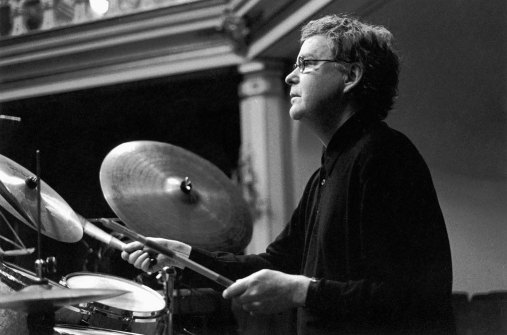
On two occasions I was fortunate enough to be in very close proximity to the playing of the Norwegian drummer Jon Christensen, who has died at the age of 76 after a distinguished career that included collaborations with Keith Jarrett, Charles Lloyd, George Russell, Bobo Stenson, Jan Garbarek, Tomasz Stanko and many others, most of them gathered under the ECM umbrella.

The first occasion came around 25 years ago when Stenson’s trio, with Anders Jormin on bass, played the Pizza Express. It was with this group — which can be heard on the albums Serenity (1998) and War Orphans (2000) — that Christensen showed how he had added something of Billy Higgins’s lift and swing to the colouristic approach pioneered by Paul Motian. His wonderful subtlety was also evident on the second occasion, at the Jazzahead! festival in Bremen five years ago, when he played with the guitarist Jakob Bro and the bassist Thomas Morgan, two musicians of matching depth and transparency.

He was a master of sticks, mallets and brushes. For Bro, Morgan, Stenson, Jormin and any of the countless other improvisers with whom he played over the decades, I can’t imagine there were many better gifts than the knowledge that you’d be sharing a bandstand with a musician of such profound sensitivity.

* The photograph of Jon Christensen is © Roberto Masotti / ECM Records.

Lyle Mays, soundpainter

As Falls Wichita

This September it will be 40 years since Lyle Mays and Pat Metheny went into a studio with the producer Manfred Eicher to piece together the 20-minute work that gave its name to an album: “As Falls Wichita, So Falls Wichita Falls”. A sidebar to their work together as members of the Pat Metheny Group, it soon became recognised as a remarkable free-standing piece of work.

Crudely put, it functions as the soundtrack to an imaginary film: starting with the babble of voices — a sports crowd? a street market? a political demonstration? — and the thrumming of a bass guitar, evolving into gorgeous tunes built sometimes simply of chords, sometimes of melodies whistled or played on a berimbau (a heartbreaking twang). All sorts of soundscapes are evoked, and all sorts of weather, through textures that are constantly shifting and blending. The sound of Metheny’s various guitars and Mays’s keyboards and synths is of its time, but timeless, too. The berimbau is played by Nana Vasconcelos, who also contributes percussion and is the only other musician present.

It’s a beautiful American tone poem, epic in its sweep but also intimate in its approach to the listener. Later in the decade Metheny’s group would record the great “Last Train Home”, which felt then, and still feels, like a coda to the longer piece.

Lyle Mays died on February 10, aged 66, after a long illness. “As Falls Wichita, So Falls Wichita Falls” is likely to live as long as people are still listening to the recorded music of the twentieth century.

* The album As Falls Wichita, So Falls Wichita Falls was released in 1981 on the ECM label. The photograph, taken by Klaus Frahm (father of Nils), is from the cover.

Bryan Ferry at the Albert Hall, 1974

Bryan Ferry Albert Hall

My most powerful memory of Bryan Ferry’s debut as a solo artist at the Albert Hall, four and a half decades ago, is of a blonde woman sitting just along the row from me in the ringside seats. She was in her early thirties, I’d guess, tanned and expensively dressed and coiffed; she’d arrived by herself, carrying a bouquet of flowers. After each song, she rose to her feet and shouted “Bravo!” several times, as if we were at the Royal Opera House. I think she might have been German, possibly Austrian or Swiss. At the end of the encore she reached under her seat to retrieve the bouquet, which she hurled towards the stage. It seemed a clear sign that Ferry had made a decisive move away from the college and club circuit on which Roxy Music had made their reputation, and had acquired a new audience in the process.

Now a recording of that night at the Albert Hall in December 1974 — one of three concerts making up a short tour, the others being at Newcastle City Hall and Birmingham Odeon** — has finally been released, and it fully captures the sense of occasion. Barely two years after Roxy’s debut album had made them the object of mingled wonder and scorn, their singer now had two solo albums behind him and was confident enough to present himself alone in the spotlight in the country’s most famous concert hall.

Musically, it was a lavish production: John Porter and Phil Manzanera on guitars, Eddie Jobson on piano and violin, John Wetton on bass, Paul Thompson on drums, plus three female backing singers (one of them Vicki Brown, formerly of the Vernons Girls and the Breakaways), and a large orchestra, conducted by Martyn Ford, including Chris Mercer and Ronnie Ross on saxophones, Martin Drover on trumpet and Malcolm Griffiths on trombone. It sounded big at the time, and I’d guess not much 21st-century post-production was needed to make it sound impressive today.

The repertoire is mostly drawn from those two solo albums, from the arch teenage pop of the Paris Sisters’ “I Love How You Love Me” and Lesley Gore’s “It’s My Party” via the howling rock and roll of “Sympathy for the Devil”, “(You’re So Square) Baby I Don’t Care” and “A Hard Rain’s a-Gonna Fall” to the grown-up cocktail-hour balladry of “Smoke Gets in Your Eyes” and “These Foolish Things”. There are a couple of originals: “Another Time, Another Place” and “A Really Good Time”.

For me, the biggest successes are Ferry’s daring covers of two of my all-time favourite records: the Beach Boys’ “Don’t Worry Baby” and the Miracles’ “The Tracks of My Tears”. You tamper with the masterpieces of Brian Wilson and Smokey Robinson (and their co-writers) at your peril, but Ferry treated them with affection, respect and imagination. I remember being in AIR Studios on Oxford Street during the sessions for These Foolish Things — the first solo album — and listening to a playback of “Don’t Worry Baby”, during which I was particularly struck by the guitar solo, played by Porter. Ah yes, Ferry said — he’d told his old Newcastle University friend to start the solo at the bottom of the lowest string and finish, eight bars later, at the top of the highest. It was a perfect example of the application of art-school thinking to pop music. The Miracles song is rendered beautifully, with one minor niggle: I wish he’d sung “You’re the permanent one” — the way Smokey did — rather than “You’re the only one”, as subsequent interpreters (including Gladys Knight) have done.

Maybe the most successful piece of all is “The ‘In’ Crowd”, a Top 20 hit for Ferry earlier in 1974, in which he gives Dobie Gray’s Mod-era anthem a thorough update: those implacable opening electric-piano chords, the screeching, chopping guitars of Porter and Manzanera, the double-beating thunder of Wetton and Thompson, and a vocal speaking directly to party people from Bigg Market to Saint-Tropez. As the song ends and the applause erupts, I’m almost sure I can detect a German-accented shout of “Bravo!”

* The photograph of Bryan Ferry, © Michael Putland, is from the jacket of Live at the Royal Albert Hall 1974, released by BMG.

** The piece originally suggested that Ferry played three consecutive nights at the Albert Hall. Not so. Thanks to Andrew Harrison for the correction.