Skip to content

Posts from the ‘Uncategorized’ Category

Postscript: A benefit for Kenny Wheeler
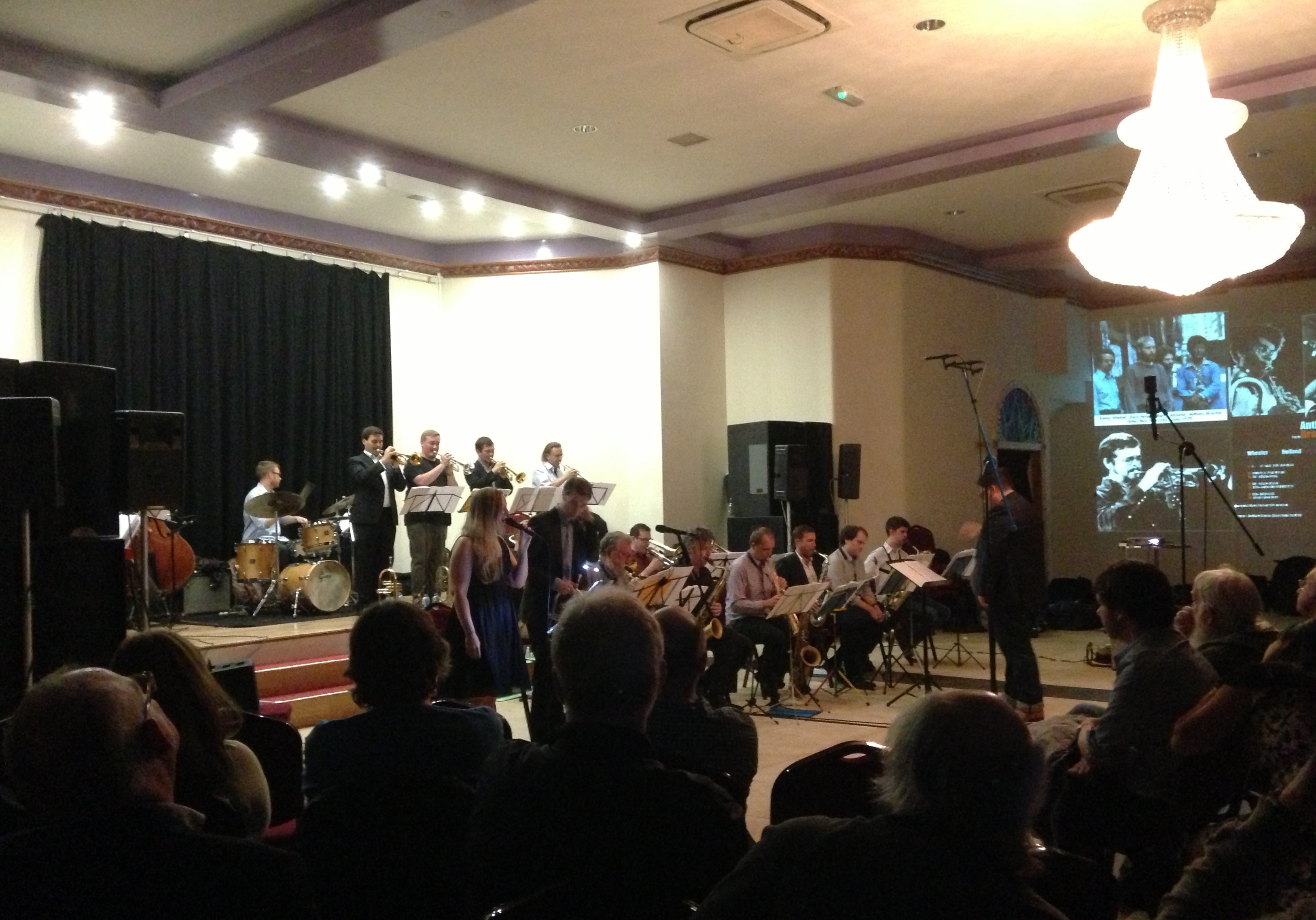
Reuben Fowler Big Band 2The concert organised for the benefit of Kenny Wheeler in East London on Friday night ended with an astonishing set from the Reuben Fowler Big Band. The 22-strong outfit played three of Wheeler’s compositions — “The Jigsaw”, “Sea Lady” and The 2005 Suite — and mastered their complexities with a verve and precision that would have delighted the composer, had his health permitted his attendance at the old Dalston Odeon cinema, now known as Epic.

Fowler, only 24 years old, left his trumpet in its case on this occasion but proved to be an adept conductor, exerting a degree of control that allowed the music to breathe. He began his musical life in brass bands in his native Yorkshire, which may be why he responded at an early age to Wheeler’s music, with its love of brass sonorities (here articulated by five trumpeters, all doubling flugelhorn, and four trombones). 

Wheeler’s role was played successively by Steve Fishwick, Martin Shaw and George Hogg, all of whom performed with distinction, as did Brigitte Beraha, singing the parts originally written for Norma Winstone. Evan Parker’s soprano saxophone introduction to “Sea Lady” was even more striking than on its original appearance as part of Wheeler’s 1990 ECM album, Music for Large & Small Ensembles. The suite, written by Kenny for his 75th birthday tour and originally featuring Lee Konitz, has never been recorded; that oversight should be rectified as soon as possible, preferably with the musicians who did it such justice on Friday.

The evening also included a remarkable set by the Alison Blunt Ensemble, in which the violinist led her dozen musicians — all strings, with the exception of Mark Sanders on drums and Neil Metcalfe on flute — produced striking interpretations of some of Wheeler’s compositions, with the benefit of a mere hour’s rehearsal but much empathy and spirit. 

A lot of people had taken considerable trouble to make this a memorable event, not least Parker, the principal organiser, and Blanca Regina, whose projections on a side wall provided a constant reminder of the evening’s subject. All the money raised will go towards defraying the costs of health care for Kenny and his wife, Doreen. When I wrote a piece on this blog in advance of the concert, some readers abroad asked how they could make a contribution. There is now a PayPal account for that purpose; its email address is friendsofkennywheeler@gmail.com. Go to http://www.paypal.com and click on “Send Money”.

A benefit for Kenny Wheeler

Kenny WheelerFew important musicians have made more noise with less fuss than the trumpeter, flugelhornist, composer and bandleader Kenny Wheeler. A vital figure on the British scene since his arrival in London from his native Canada in 1952 at the age of 22, he emerged from early employment with dance bands to create a reputation that flourished despite a temperament for which such words as “modest” and “retiring” seem entirely inadequate.

Kenny is a musician of immense range. I’ve been listening to some of his early work lately, with the saxophone-playing racing driver Buddy Featherstonhaugh’s excellent pianoless quintet of 1956, which recorded a couple of EPs for Pye, and also to his classic ECM album of 1997, Angel Song, with a fabulous quartet completed by Lee Konitz, Bill Frisell and Dave Holland. In between he contributed to any number of great records, among which I particularly cherish two classics of the early British avant-garde, as nurtured at the Little Theatre Club: the Spontaneous Music Ensemble’s Karyobin (Island, 1968) and Tony Oxley’s The Baptised Traveller (CBS, 1969). 

Problems with his own and his wife’s health have meant that, at the age of 84, Kenny has been unable to play for some months. For his benefit, his old friend and colleague Evan Parker has organised a concert tomorrow night — Friday, August 15 — at a place called Epic, 13-15 Stoke Newington Road, London N16 8BH (admission £12-£10). A stone’s throw from the Vortex and Cafe Oto, the gig will feature the altoist Ray Warleigh’s quartet, a group with Parker, Steve Beresford, Olie Brice and Mark Sanders, the Alison Blunt Ensemble (including the violinists Dylan Bates and Phil Wachsmann), and Reuben Fowler’s big band playing some of Kenny’s charts.

Kenny won’t be playing, but John Coxon of Spring Heel Jack — with whom he also recorded to great effect — will be at the turntable between the sets, playing some of his records and reminding us of his audacious imagination, as well as the purity of tone and elegance of articulation that put him alongside Booker Little in a line of trumpeters stretching from Joe Wilder to Ambrose Akinmusire. 

* The photograph of Kenny Wheeler was taken by W. Patrick Hinely (Work/Play) for the booklet accompanying Angel Song (ECM 1607).

Rubén Blades: time and tango

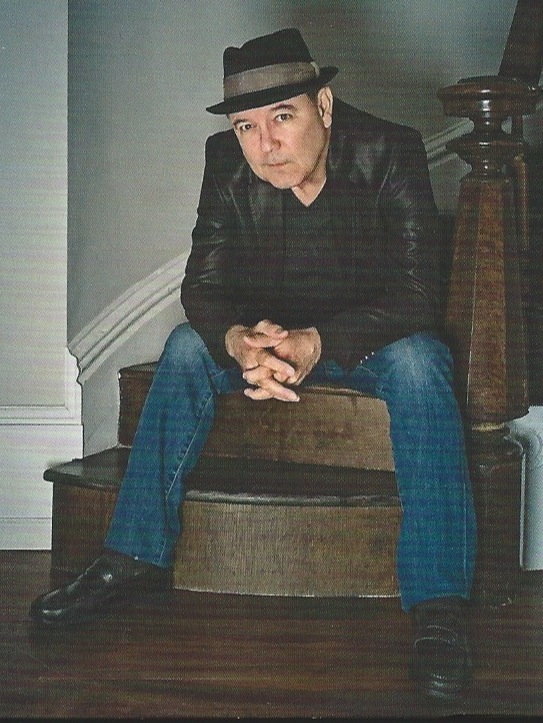
Ruben BladesRubén Blades is one of the most interesting survivors of the salsa explosion of the 1970s. Born in Panama City in 1948, the son of a Cuban mother and a Colombian father, he moved to New York in his mid-twenties, joining Jerry Masucci’s stable of emerging stars at Fania Records, he had started work in the classic manner, with a job in the company’s mail room.

Barely on the radar at the time I was trying to get a British audience interested in salsa via a couple of Island compilations of Fania material in the mid-’70s, he would soon be enjoying success via collaborations with Larry Harlow, Ray Barretto and Willie Colón, and through regular appearances with the the hugely popular Fania All-Stars. His song “El Cantante”, recorded by the brilliant but ill-fated Hector Lavoe, became a massive hit, and his 1978 album with Colón, Siembra, was for a while the most successful album in the history of salsa, said to have sold 25 million copies.

With a great-uncle who had fought against Spain in Cuba’s war of liberation, Blades’ compositions often displayed a strong political consciousness. In 1984 the A&R people at Elektra Records saw his potential to reach a wider audience. Soon after moving from Fania to his new home he recorded Escenas, with a new band called Seis del Solar, winning a Grammy for best Latin album. There was another one in 1988 for Antecedente, one my favourite albums of that decade.

While making these records he followed up his law degree from the University of Panama with a masters from Harvard. He also pursued an acting career, appearing in Robert Redford’s The Milagro Beanfield War, Spike Lee’s Mo’ Better Blues, and several other films. In 1994 he stood for the presidency of Panama, winning 18 per cent of the vote, and 10 years later he served a term as the country’s minister of tourism.

But he never stopped making music, and now he has released a new album, which sees him exploring the music of one of the countries of Latin American with which he does not, so far as I know, have ties of blood. Tangos consists of well known Blades songs recast in the Argentinian idiom by the arranger and conductor Carlos Franzetti, using a variety of means: a group of four bandoneon players accompanied by a string orchestra, a classic tango nuevo quintet (à la Astor Piazzolla), and the City of Prague Symphony Orchestra. 

Familiar pieces such as “Juana Mayo”, “Pablo Pueblo” and “Pedro Navaja” fit perfectly into this new format. “Perhaps these tunes were always tangos,” Franzetti remarks in his brief sleeve note. In some cases, like gorgeous opening “Paula C” and closing “Tiempos”, they gain in drama from the elegant orchestrations, which inspire Blades to a series of exceptional vocal performances, his tone and phrasing beautifully controlled. Almost 80 years after the great Carlos Gardel died in an air crash in Medellín, Rubén Blades unexpectedly presents himself as a thoroughly credible heir.

* The photograph of Rubén Blades is taken from the cover of Tangos and was taken by Vincent Soyez.

Charlie Haden 1937-2014

Charlie HadenThe night before Barack Obama’s first US presidential election, back in November 2008, Charlie Haden’s Liberation Music Orchestra opened a week’s residency at the Blue Note on West 3rd Street in Greenwich Village. It was 40 years since the ensemble had begun its mission of performing politically conscious music, and before the first set began Charlie told the audience about a remark made by Joe Daley, the band’s long-serving tuba player, in the dressing room while they were readying themselves. “If Obama gets elected,” Daley asked Haden, “can we call it a day?”

Everyone laughed, not least the band. And when I went back the following night, with Obama’s success assured, the set was infused with a special sense of joy. But there was no question of calling it a day. Six months later most of them were in London, chosen by Ornette Coleman to appear during the Meltdown festival at the Festival Hall, where their numbers were rounded out by Jason Yarde (alto), Andy Grappy (tuba), the incandescent young Shabaka Hutchings (tenor) and Robert Wyatt, who sang Silvio Rodriguez’s “Rabo de Nube” and played cornet on a spellbinding version of Haden’s “Song for Che”, first heard on the band’s self-titled debut album, which is one of the great classics of large-ensemble jazz (or any kind of jazz, for that matter). 

Both in New York and London they concentrated on material from what I guess will turn out to be their final album, 2005’s Not in Our Name, with which they brought their protests home in pieces like Pat Metheny, Lyle Mays and David Bowie’s “This Is Not America”, Ornette’s “Skies of America”, a sardonic treatment of “America the Beautiful”, a wonderful recasting of Samuel Barber’s Adagio for strings, and Bill Frisell’s “Throughout”, which at the Blue Note featured the tenors of Chris Cheek and the amazing Tony Malaby. As ever, the music was arranged by Carla Bley.

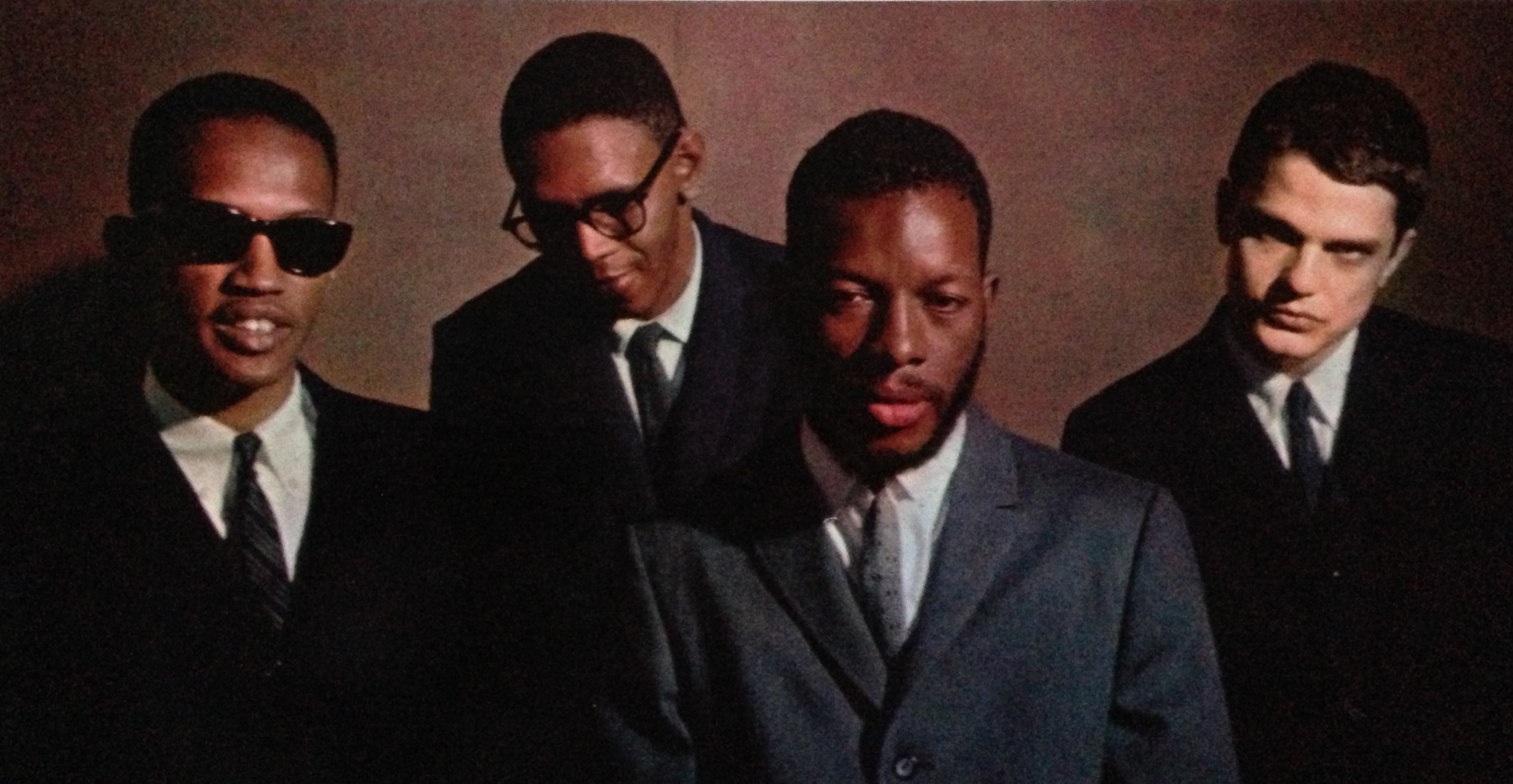
Charlie Haden died on Friday, aged 76. For more than 50 years he was one of the most important musical figures in my life, ever since I first clapped eyes on him as the skinny white kid over on the right hand side of the Lee Friedlander’s photograph on the cover of Ornette’s This Is Our Music. It’s still probably the coolest picture of a group of musicians ever taken, but there was much more it than that. I loved his sound on the double bass, which was dark without being heavy, the resolute economy (probably no great modern bassist played fewer notes) that sometimes gave way to dark strummed solos, and the way he seemed to be able to follow the improvisations of Ornette and Don Cherry so closely despite the absence of formal guidelines. (If you want to know how that happened, read Ethan Iverson’s fascinating 2008 interview with Haden here.)

Mostly, however, it was the sheer weight of emotion he conveyed in every note he played and in everything played by any band he led or with whom he performed. The Atlantic recordings of Ornette’s 1959-60 quartet are up there with Armstrong’s Hot Fives and Sevens and Parker’s Dials and Savoys, of course. But I also loved the way his Quartet West delved into the noir moods of post-war Los Angeles (particularly on Haunted Heart in 1991 and Always Say Goodbye in 1993), his collaborations with pianists such as Paul Bley, Hampton Hawes, Hank Jones, Chris Anderson, Kenny Barron and Keith Jarrett (notably on the recently released Last Dance), and the albums by Old and New Dreams in the late ’70s and early ’80s.

And, of course, there are the Liberation Music Orchestra’s five albums, four made in the studio and one live, essential documents reflecting current and historical liberation struggles in Spain, Central and South America, South Africa, Portugal and its colonies Mozambique, Angola and Guinea, and elsewhere. Here were the songs and hymns of the International Brigade, the Sandinistas, the MPLA, the ANC: this was music that mattered, its attention firmly fixed a greater scheme of things. It was an attitude that got Haden arrested by the Portuguese secret police while on tour with Coleman in 1971.

He was unique, absolutely, but he was also completely emblematic of the very best of America’s musical gift to the world. Born in Shenandoah, Iowa, he spent much of his childhood singing country and folk songs with the Haden Family Band, a background he revisited six years ago in Ramblin’ Boy, a well received album that featured his son, Josh, who leads the band Spain, his triplet daughters, Rachel, Petra and Tanya (whose own bluegrass album appeared a few months ago), and many other guests, including Ricky Skaggs, Vince Gill, Jerry Douglas and Bruce Hornsby. From those beginnings he made his way to the leading edge of jazz at a very early age.

He had a wonderful life and a marvellous career, despite health problems that began with childhood polio, and he left so much for us to enjoy and to contemplate. I suppose if any single performance sums him up, it must be his playing on Ornette’s “Ramblin'”, recorded in October 1959 and released the following year on Change of the Century. Haden had just turned 22, and no one had heard anything like this before: the daring combination of harmonically free 4/4 walking and a powerful strumming that seemed to carry the echoes of all sorts of folk music. That combination of sophistication and deep soulfulness turned out to be typical. Thanks, Charlie, for all of it.

Caetano Veloso: an exile’s return

They were not, by a long way, the artistic highlights of the remarkable set with which Caetano Veloso enthralled a capacity house at the Barbican last night, but the two songs he wrote during his time in London 45 years ago had a special poignancy when performed in the city to which he and his pal Gilberto Gil were exiled in 1969, having been released from prison and deported by Brazil’s military government. He included them among his encores. In one, “Nine Out of Ten”, he sang about walking down Portobello Road, listening to reggae and feeling alive. The other, “London, London”, had a sweet final line about gazing at the sky, looking for flying saucers, with which the audience joined in, perhaps lost in their own memories.

For Veloso and Gil, London was a cold and not always welcoming place, although at least it offered them safety. No one took much notice of the presence of these two pioneers of the Tropicália movement, which infused traditional Brazilian sounds with the harsher modes of Anglo-American rock music and carried a political message. Veloso will have been all too familiar with last night’s rain and the dropping temperature, but the city is a different place in the 21st century. After a couple of songs he said that he was now going to make an introduction in English: “There must be two or three here, right?”

Indeed, the Barbican was packed with his compatriots, and on the day after the anti-immigration UKIP party’s success in the European elections, this was a good place to be. If Veloso really wanted to know how London has changed since his two-year exile, he could also take a drive through the north-western suburb of Harlesden, perhaps on his way to a football match at Wembley, and see the number of cafes and other businesses established by the Brazilian community, with names like O Estadio and O Jogo, their signs and frontages mostly painted in the green and gold of the bandeira.

A large proportion of Veloso’s set was devoted to songs from his most recent album, Um Abraçaço, delivered with the help of a skilled and sensitive three-piece band. I loved the gorgeous “Coração Vagabundo” (which you can hear here in a version with the great harmonica player Toots Thielemans) and his ardent acapella version of “Tonada de Luna Llena”, by the Venezuelan composer Simón Diaz, which Pedro Almodóvar used in his 1995 film The Flower of My Secret. Veloso’s seamless shifts from falsetto to his natural tenor register and back again were, with his lovely loose dancing and eloquent gestures, among the highlights of an enchanted evening. I hope he felt at home.

LA stories

Carol ConnorsMy Los Angeles is a place of myths and legends, all bathed in the glow of an endless neon sunset. It’s where the young trumpeter Dupree Bolton, barely into his teens in the early 1940s, secreted articles of his clothing night after night in a suitcase hidden backstage at a Central Avenue club so that when the right day presented itself he could leave home without telling his parents and go on the road with Jay McShann’s band. It’s the El Monte Legion Stadium, outside the city limits, where young blacks, whites and Latinos mingled, avoiding LA’s bylaws against mixed dances, to hear the DJ-turned-impresario Art Laboe presenting great doo-wop outfits like the Penguins and Don Julian and the Meadowlarks. It’s the image of Art Pepper, just out of jail, trudging up an Echo Park hillside in baking afternoon heat, wearing a check sports jacket and carrying his alto saxophone. It’s Richie Valens recording “Donna” at Gold Star Studios, with that perfect echo. It’s Ornette Coleman, Don Cherry, Paul Bley, Charlie Haden and Billy Higgins inventing the future at the Hillcrest Club on Washington Blvd. It’s Brian Wilson, with the rest of the Beach Boys off on tour, concocting miracles of sound in a series of Hollywood studios. It’s photographs like the one above, which shows the young singer and songwriter Carol Connors, formerly known as Annette Kleinbard when she sang lead on the Teddy Bears’ “To Know Him Is to Love Him”, celebrating the gift of an AC Cobra from its inventor, the racing driver Carroll Shelby, whose jovial challenge — “If you write a song about my car and it goes to number one, I’ll give you one” — had sent her home to write “Hey Little Cobra” for the Rip Chords (she’s holding up the sheet music).

This is not just my Los Angeles. It’s Harvey Kubernik’s, too. The difference is that Harvey’s LA is real. It’s where he was born, and where he grew up in the 1960s. He attended Fairfax High, listened to Hunter Hancock on KGFJ, B. Mitchel Reed on KFWB and Wolfman Jack on XERB, and saw the Beach Boys at a record store appearance in Culver City in 1962 and the Seeds at the Valley Music Center in 1967. He even danced, so he says, on Dick Clark’s American Bandstand. He watched the whole parade pass by: the Byrds, Love, the Doors, Johnny Rivers, Sonny and Cher, the Wall of Sound, the Monkees, Buffalo Springfield, and on and on. He’s been writing about it for 40-odd years. And, best of all, he’s retained every drop of enthusiasm for the place and its history, much of which is to be found between the covers of his latest book: Turn Up the Radio! Rock, Pop and Roll in Los Angeles 1956-1972, published by Santa Monica Books.

It’s a large-format book and the photographic content is extremely rich (those familiar with Harvey’s earlier volume, Canyon of Dreams, will know what to expect). But the oral history is the point, and there is no one better to convey it than an indefatigable interviewer with an enviable contacts book. “I conducted over 200 interviews for this book over 38 years,” he writes, and although there are big names here, such as Johnny Otis, Roger McGuinn, Michelle Phillips, Lou Adler and Herb Alpert, some of the most fascinating testimony comes from session musicians like Hal Blaine, Julius Wechter, Jim Keltner and Joe Osborn, producers like Russ Titelman, Jim Dickson and Bones Howe, industry figures like Russ Regan and Lester Sill, and scenemakers like Henry Diltz and Rodney Bingenheimer.

Maybe you don’t want a book containing Titelman’s story about how he was studying sitar at the Kinnara School of Music when he met Lowell George, who was then playing shakuhachi. Or the view — shared by Phil Spector and Andrew Loog Oldham — that “Good Vibrations” represented not a liberation but a trap for Brian Wilson. Or the guitarist Elliot Ingber (who became Winged Eel Fingerling of Captain Beefheart’s Magic Band) talking about how he felt like he was “landing on another planet” when, as a teenager, he made the bus journey from Hollywood to John Dolphin’s record shop in Watts, where he was able to discover the playing of Lowman Pauling with the “5” Royales and Hubert Sumlin with Howlin’ Wolf. But if you do, this is it. Because there’s one of those on almost every page.

* The photograph appears in Turn Up the Radio! and is from the collection of Carol Connors.

Hakon Stene

Hakon Stene 2Normally I wouldn’t be telling you now about an album that’s several weeks away from its release date, but in the case of Hakon Stene’s Lush Laments for Lazy Mammal I can’t wait that long. Since I first put an advance copy on the CD player, it’s been a struggle to listen to anything else. No space — workroom, car, outdoors — seems complete at the moment without its shimmering textures.

Stene is a Norwegian percussionist of considerable experience in all kinds of music.  He was a founder of a group called asimisimasa, performing the work of modern classical composers such as Brian Ferneyhough and Alvin Lucier, and he’s currently a research fellow at the Norwegian Academy of Music in Oslo, developing new repertoire for multi-percussion. I went to see him at the Queen Elizabeth Hall last week, performing the Danish composer Simon Steen-Andersen’s Black Box Music with the London Sinfonietta, and I’m sorry to say I didn’t enjoy it at all. But the experience didn’t change my feelings about his album.

Lush Laments for Lazy Mammal — to be released next month on the Oslo-based Hubro label, also the home of Huntsville, one of my favourite bands, and the interesting experimental guitarist Stein Urheim — consists of six compositions by the British composer Laurence Crane and one apiece by Gavin Bryars, Christian Wallumrod and Stene himself. They’re played by Stene on regular and quarter-tone vibraphones, bowed marimba, electric guitar, acoustic guitar with e-bow, electric keyboards and piano, with appearances by Tanja Orning (cello), Hans Christian Kjos Sorensen (cembalom) and Heloisa Amaral and Wallumrod (pianos).

I suppose you’d call this minimalist music, in the sense that there isn’t much going on here in terms of incident and gesture. What the pieces have in common, apart from the overall texture imposed by the keyboards and tuned percussion instruments, is a desire to isolate and exalt the process of modulation. This is a strongly tonal music from which virtually everything has been removed except the simple and repetitive chord changes, which are allowed to occur regularly but free from an explicit pulse, exposing the harmonic shift as the principal trigger mechanism for the emotions, as it is in so many kinds of music.

Here is Stene talking about his decision to play instruments other than the percussion for which he is known: “I am definitely not to be regarded as a guitarist any more (and absolutely not as a pianist!), but all my experience as a contemporary percussionist, where one must constantly adjust oneself to new playing situations and instruments, somehow makes it feasible. I don’t approach these instruments, for example the piano, as an altar, but as a tool for playing these relatively simple pieces. This is the kind of attitude that percussionists often have: instruments are tools one uses in order to produce a particular sound.”

It’s hard to find a language in which to write about this music. In its meditative tone and the beauty of his textures, it reminds me strongly of my favourite pieces by Morton Feldman, “Rothko Chapel” and “For Samuel Beckett”. It’s also reminiscent of some of the Necks’ work. And some of it (like Crane’s “Blue Blue Blue” — here’s a snatch of it) reminds me of what happens when the Beach Boys’ more experimental records are stripped right down to the basic rhythm track. So it might be best just to leave you with a couple more examples. Here’s Crane’s “Prelude for HS”, the first track from the album, with Stene on vibraphone, Orning on cello and Wallumrod on piano. And here’s Stene’s gorgeously ecstatic version of Crane’s “Riis”, on which he plays everything. You’ll get the idea pretty quickly. To me, this is a wonderfully pure distillation of what music can do.

* The photograph of Stene is from his website: http://www.hakonstene.net.

2013: the best bits

haus der kunstI can’t remember a year in which I heard more wonderful music in person, a high proportion of it in Dalston — at Cafe Oto and the Vortex — or at this year’s excellent London Jazz Festival. Bob Dylan’s “Forgetful Heart” on the first night of his return to the Albert Hall, the Necks’ second set on the last of their three nights in London, the rediscovery of John Williams’s Stoner, the ambition and magnificence of The Great Beauty, and a last chance to see Picasso’s Child With a Dove: these are things for which I’ll remember the past 12 months. I’ll probably never get over missing Arve Henriksen perform Andrew Smith’s Norwegian Requiem at St Luke’s, but here are the highlights of the things I did manage to listen to, watch, read and see.

LIVE

1. Wadada Leo Smith at Cafe Oto (November)

2. Paolo Conte at the Royal Festival Hall (November)

3. The Necks at Cafe Oto (November)

4. Bob Dylan at the Royal Albert Hall (November)

5. Alexander Hawkins Septet at Kings Place (March)

6. Amarcord Nino Rota at the Royal Festival Hall (November)

7. Keith Tippett + Elysian String Quartet at the Vortex (August)

8. Bruce Springsteen at Wembley Stadium (June)

9. Marc Ribot at Cafe Oto (October)

10. Burt Bacharach at the Royal Festival Hall (July)

11. Paula Morelenbaum at Snape Maltings (October)

12. Bryan Ferry Orchestra at the Royal Centre, Nottingham (October)

13. Booker T Jones at Ronnie Scott’s (August)

14. Television at the Roundhouse (November)

15. Compositions by Dobrinka Tabakova at the Warehouse Studio, London SE1 (April)

NEW RECORDINGS

1. The Necks: Open (RER)

2. Arve Henriksen: Places of Worship (Rune Grammofon)

3. Booker T Jones: Sound the Alarm (Stax)

4. Dave King Trio: I’ve Been Ringing You (Sunnyside)

5. Carla Bley/Andy Sheppard/Steve Swallow: Trios (ECM)

6. Boz Scaggs: Memphis (429 Records)

7. John O’Gallagher: The Anton Webern Project (Whirlwind)

8. Giovanni Guidi: City of Broken Dreams (ECM)

9. Willie Nelson: To All the Girls… (Legacy)

10. Mike Gibbs: Mike Gibbs + 12 Play Gil Evans (Whirlwind)

ARCHIVE RECORDINGS

1. John Coltrane: The Complete Sun Ship Sessions (Impulse)

2. Elvis Presley: Elvis at Stax (RCA Legacy)

3. Don Cherry: Live in Stockholm (Caprice)

4. Beach Boys: Made in California (Capitol)

5. Miles Davis Quintet: Live in Europe 1969 (Legacy)

6. Harry Miller: Different Times, Different Places (Ogun)

7. Dionne Warwick: We Need to Go Back: The Unissued Warner Bros Masters (Real Gone/Rhino)

8. The Band: Live at the Academy of Music 1971 (Capitol)

9. Velvet Underground: White Light/White Heat (Verve)

10. Various: Beating the Petrillo Ban (Ace)

FILMS: NEW

1. The Great Beauty (dir. Paolo Sorrentino)

2. Much Ado About Nothing (dir. Joss Whedon)

3. Something in the Air (dir. Olivier Assayas)

4. A Late Quartet (dir. Yaron Zilberman)

5=. Bayou Maharajah (dir. Lily Keber) and Muscle Shoals (dir. Greg Camalier)

FILMS: REVIVED

1. Nothing But a Man (dir. Michael Roemer)

2. Classe Tous Risques (dir. Claude Sautet)

3. Point Blank (dir. John Boorman)

BOOKS: FICTION

1. John Williams: Stoner (Vintage)

2. James Salter: All That Is (Picador)

3. Owen Martell: Intermission (William Heinemann)

BOOKS: MUSIC

1. The Jazz Standards by Ted Gioia (Oxford)

2. Eminent Hipsters by Donald Fagen (Jonathan Cape)

3. Kansas City Lightning by Stanley Crouch (Harper)

EXHIBITIONS

1. Becoming Picasso: 1901 (Courtauld Gallery, London)

2. Sean Scully: Triptychs (Pallant House Gallery, Chichester)

3. ECM: A Cultural Archaeology (Haus der Kunst, Munich)

* These lists were inspired by those that Stewart and Barbara Tray produced over the last few years, for their own enjoyment and that of their friends. They are dedicated to the memory of Barbara, who died last year. Stewart’s 2013 list is head by Quercus, the collaboration between June Tabor, Iain Ballamy and Huw Warren (ECM). The photograph is one I took outside Munich’s Haus der Kunst during the exhibition ECM: A Cultural Archaeology last February, in the early weeks of this blog. It was great to see Don Cherry on the poster.

Pauline Boty’s colouring book

Pauline Boty colouring bookIt’s been a long wait, but at last there is a good exhibition devoted to the work of Pauline Boty, the pioneering Pop Art painter who made a fleeting impression in company with her friends Peter Blake, Derek Boshier and others in the early Sixties but died of cancer in 1966, aged 28, before she had a chance to mature as an artist or to establish herself in the mind of the public.

Boty’s physical beauty (she was a perfect Sixties blonde in the genre of Julie Christie and the model Susan Murray) led her to part-time work as an actress and a model. It certainly distorted perceptions of her work and made it harder for her art to be accepted on its own terms, although those terms included a constant willingness to investigate the meaning of her own attractiveness — and that of other women, including Marilyn Monroe and Monica Vitti — in a world dominated by the male gaze.

Here, if you haven’t seen it before, is a short clip that features her from Ken Russell’s Pop Goes the Easel, a profile of the group of artists among whom she lived and worked, made in 1962 for Monitor, the BBC’s weekly arts programme. And here is Michael Bracewell (whose informative book about the art-school origins of Roxy Music, Re-make/Re-model, you might have read) talking about Boty’s painting “The Only Blonde in the World” in the Tate Shorts series. Sabine Durrant, writing for the Independent on Sunday‘s Review section 20 years ago, brought a lot of information to light, and her piece is still probably the best biographical overview.

What on earth, you might ask, does this have to do with music? Well, the painting in the photograph above, currently hanging as part of the exhibition at the Pallant House Gallery in Chichester, is called “My Colouring Book”, and when Boty painted it in 1963 she was inspired by the hit song of that name, a lovelorn pop ballad which became a hit in 1962 in three different versions, by Barbra Streisand, Sandy Stewart and Kitty Kallen. (Nine years ago Agnetha Faltskog made it the title track of a solo album about which I wrote in enthusiastic terms here last May.)

Boty takes the song’s lyric and adapts a format popular among the girls’ pop comics of the era (Romeo, etc), creating a series of cartoon frames illustrating a selection of its lines. She doesn’t do what Roy Lichtenstein did, copying the comic-book approach by making the illustration a straightforward visual rendering of the text: she does something less literal, more allusive. The denouement comes with the painting of the male figure in the frame at the bottom right-hand corner of the painting, illustrating the song’s concluding lines: “This is the man whose love I depended upon / Colour him gone” in the official version, but she changes it to “This is the boy, the one I depended upon / Colour him gone.” I like her version better.

In one of the captions accompanying the exhibition, the curator remarks: “She did not adopt the cool detachment expected of Pop artists and, speaking of a ‘nostalgia for now’, gave form to the emotional experience of the female fan.” An important job, I’d say, and this fine painting is a good example of her success. I hadn’t seen it before, probably because it comes from the collection of contemporary art at the Museum Sztuki in Lodz, Poland. Like all her work, it has an open-hearted quality undamaged by the years.

* The exhibition Pauline Boty: Pop Artist and Woman, curated by Sue Tate and first seen at the Wolverhampton Art Gallery earlier this year, is at the Pallant House Gallery in Chichester, West Sussex (www.pallant.org.uk) until February 9. There’s a good catalogue.

Dylan at the Albert Hall

Bob Dylan Albert HallOn the way in to the Albert Hall tonight, I told a friend that, what with the inconsistent quality of his recent tours and the cost of tickets on the grey market, this might be the last time I would be seeing Bob Dylan live. The first half didn’t do a great deal to change my mind. It had its moments, most of them when Dylan was not at the piano, where his erratic contribution seemed to muddy and confuse the ensemble sound. A brusque “Things Have Changed” gave the evening a challenging statement to start with, and “Pay in Blood” and “Love Sick” seethed with a sullen power, but “Duquesne Whistle” was a bit of a mess and a metrically refracted version of “Tangled Up in Blue” wasn’t exactly a treat. After the interval, however, the lights seemed to come on — the lights inside the music, that is, since the highly effective low-level stage illumination seldom varied.

The band found its range straight away on “High Water (For Charley Patton)”, Dylan delivered a rather beautiful “Simple Twist of Fate”, he growled effectively through “Early Roman Kings”, and then came the moment I’ll treasure. Everything came into focus on “Forgetful Heart”, the lovely ballad he wrote with Robert Hunter for Together Through Life: his voice, the band (with the brilliant Donny Herron on violin) at their gentlest and most discreetly responsive, the melody, the lyric, the restrained harmonica-playing. I’ve been going to see him in concert since 1965, and for me this ranked with “It’s Alright, Ma” from that year at Sheffield City Hall, “Like a Rolling Stone” at Earl’s Court in 1978 and “Barbara Allen” at the NEC in 1989.

“Scarlet Town” was almost as good, another example of the marvellously warm and alert support given to him by Charlie Sexton (lead guitar), Stu Kimball (rhythm guitar), Tony Garnier (bass), George Recile (drums) and Herron on pedal steel and rhythm guitars, mandolin and banjo as well as fiddle. At these moments you could hear the sound Dylan is after nowadays: a wonderfully flexible blend of bluegrass, Western swing and Chicago R&B. And it was a treat to watch the musicians catching each others’ eyes as they tried to predict the dynamic shifts and unpredictable endings, mostly with success. And by this time, too, his piano-playing had sorted itself out.

There were seven songs from Tempest included in the set list, and Dylan delivered them with such a persuasive sense of an engagement in his own creative present that if I didn’t have it already, I’d be out buying it this morning. “Roll On, John”, not a song I’d previously cared for much, turned out to make a perfect finale. So probably not the end of the affair, then.