Skip to content

Posts from the ‘R&B’ Category

Elvis at 80

ElvisHad he lived, Elvis Presley would have been 80 on Thursday, January 8, 2015. I first heard “Heartbreak Hotel” when I was at boarding school, aged nine, in 1956. I understand what John Lennon meant when he said that Elvis died the day he had his hair cut and put on a military uniform, but I never believed it. All but one of my 10 Elvis favourites come from the post-army period. Here they are. You might find the choice a little eccentric. Baby, I don’t care…

1. “Beyond the Reef”

Written by Jack Pitman, a Canadian songwriter, during a visit to Hawaii in 1946, “Beyond the Reef” was covered by Bing Crosby in 1950 and by the Ventures (as an instrumental) in 1961. Elvis recorded it on May 27, 1966 at RCA Studios in Nashville, during the sessions that produced the sacred album How Great Thou Art (as well as his cover of Dylan’s “Tomorrow Is a Long Time”, which almost made this list). It remained unreleased until 1971, when it surfaced as the B-side of “It’s Only Love”;  in 1980 it appeared on a four-CD set titled Elvis Aron Presley. Elvis sings the verses as an extra member of the Jordanaires, emerging to sing lead only on the bridge. On the surface it’s a bit of Polynesian-style kitsch. A little deeper down, it’s a singularly beautiful record of which Ry Cooder would have been proud.

2. “(Marie’s the Name) His Latest Flame”

I love Elvis when he finds the spaces between genres. This great UK No 1 hit from 1961 takes the Bo Diddley beat and turns it into pure pop music, just like Buddy Holly did with “Not Fade Away”. Acoustic rhythm guitars, what might be a stand-up bass, the drummer using brushes — and, in the bridge, a switch to a fast shuffle, with Floyd Cramer pounding an eight-to-the-bar piano figure. And a tragic little story of heartbreak in the lyric. The song is by Mort Shuman and Doc Pomus, who also wrote the other side of the 45: “Little Sister”. Along with “Strawberry Fields Forever”/”Penny Lane”, it’s the greatest double A-side in history.

3. “(You’re So Square) Baby, I Don’t Care”

Jerry Leiber and Mike Stoller wrote this for Jailhouse Rock in 1957. I imagine they borrowed the title from Out of the Past, Jacques Tourneur’s 1947 classic film noir, in which Robert Mitchum, in a clinch with Jane Greer, is reminded of her relationship with a powerful mobster and the trouble that might ensue. “Baby,” he drawls, “I don’t care…” As told by Elvis, the story is very different: “You don’t like crazy music, you don’t like rockin’ bands / You just want to go to a picture show and sit there holding hands…” But the teenage soap-opera words are undercut by the backing, which exemplifies that “crazy music” to the max, with an ominously throbbing intro and the most brutally abrupt ending ever.

4. “The Promised Land”

I’ve talked about this song, and Elvis’s great version of it, here (and elsewhere). Written by Chuck Berry in 1964 and recorded by Presley at the Stax studio in Memphis in 1973, it was perhaps the last genuinely creative act of his life, brilliantly abetted by James Burton and Johnny Christopher on guitars, David Briggs on piano, Per Erik Hallin on electric keyboard, Norbert Putnam on bass guitar and Ronnie Tutt on drums.

5. “Sweet Angeline”

Another from the Stax sessions, with a slightly different line-up (including the MGs’ Duck Dunn on bass guitar and Al Jackson Jr on drums), this ballad was written by Chris Arnold, David Martin and Geoff Morrow: three British songwriters. I love the song, for the way it brings the best out of Elvis and for the way the bass fill towards the end of the second bar gives it the hook that makes you play it over and over again.

6. “The Girl of My Best Friend”

More pure pop, this time from 1960 and the pens of Sam Bobrick and Beverley Ross. Not released as a single by Elvis until 1976, when it made the UK top 10. Ral Donner had the US hit.

7. “Reconsider, Baby”

A very nice version of Lowell Fulson’s classic blues, from the Elvis is Back! album in 1960, with the singer on rhythm guitar.

8. “Dark Moon”

I’ve got this on a 1999 RCA CD called Elvis: The Home Recordings. The song was written in 1957 by Ned Miller (later famous for “From a Jack to a King”), and was recorded in a country version by Bonnie Guitar and a poppier rendition by Gale Storm. Singing with his pals to the accompaniment of his own guitar, apparently in his LA house in Bel Air in 1966 or ’67, Elvis finds an irresistible groove.

9. “It’s Now or Never”

All the bells and whistles — the full Neapolitan, in fact — on this remake of Eduardo di Capua’s “O Sole Mio”, the new English lyric written by Aaron Schroeder and Wally Gold and recorded on April 3, 1960, the day before “The Girl of My Best Friend”. If you agree with Lennon, it’s exactly the sort of thing you’ll hate. Those were the days when I used to write the week’s No 1 in my diary every Saturday night, and I’m not going to apologise.

10. “A Mess of Blues”

From the same session as “It’s Now or Never”, and a No 2 hit in the UK in 1960. Another Pomus/Shuman classic and an early reminder that, even with his hair still shaved army-style, the King still had it.

Happy birthday, Elvis.

* The fine photograph was taken by Lloyd Russell Sherman and appeared on the cover of the 1985 LP Reconsider, Baby.


Mr Brown, Mr Bart and Mr Byrd

Get On UpOn the way to see Get On Up, Tate Taylor’s new James Brown biopic, in a cinema in Victoria this week, I realised that I was walking past a construction site where once had stood the last place where I saw a performance by the film’s subject. It was the end of the 1970s, and the place was the Venue, a medium-sized joint with an uninspiring name but an excellent atmosphere. I saw all kinds of people there, from the McGarrigle sisters to Sun Ra, via Gary U.S. Bonds and Joe Ely. And the Godfather of Soul was in terrific form that night, not far past his untouchable prime.

Taylor’s movie features a fine central performance by Chadwick Boseman. He doesn’t become his character in the way Jamie Foxx became Ray Charles a few years ago, but you can’t take your eyes off him. He and the brothers Jamarion and Jordan Scott, eight-year-old twins from Mississippi who play Brown at various stages of his childhood, are tackling the story of a complex man.

There are too many artful devices — Brown talking directly to the camera, the boy suddenly appearing in place of the man in a scene from his adult life, various games with flashbacks and original footage — to make it work as a straightforward narrative. At times it seems as though the scriptwriters, Jez and John-Henry Butterworth, were influenced more by the multi-faceted approach of Todd Haynes’ I’m Not There than by traditional modes of storytelling, but they don’t go the whole way.

Like Taylor Hackford with Ray, the director of Get On Up makes the sensible decision to stick with the original music: what you see is actor-musicians miming, very convincingly, to the real tracks, from “Please Please Please” to “The Payback”. And on a cinema sound system it sounds great, particularly in a reconstruction of the scene from the 1965 teen flick Ski Party where he debuts “I Got You (I Feel Good)” (here’s the original), and in a great recreation of a Paris concert in, I think, 1971 (original here).

It’s a long film at two and a quarter hours, but even that isn’t enough in which to tell the story properly. Give the great documentary maker Ken Burns 1o hours of television time and there might be a chance. Whether or not it works in every dimension, however, Taylor’s film certainly succeeds in two areas. There’s a fruitful concentration on Brown’s relationships with Bobby Byrd, an original member of the Famous Flames who became his right-hand man, and with Ben Bart, his trusted (white) agent, who dropped dead on a golf course in 1968. And the early scenes of Brown’s life as a child — first in a shack in the Georgia pines while his parents’ relationship was falling apart, and then as a kind of mascot in a brothel — make us think about what he endured on the way to becoming one of the most influential musicians of the 20th century.

In September 1969, 10 years before that gig at the Venue, Charlie Gillett and I interviewed him (for the Record Mirror and the Melody Maker, respectively). We asked him if, at a time of continuing racial unrest in the United States, with the echoes of the shots that killed Martin Luther King still reverberating, he believed that he had some role and influence as a leader.

“If I can use my position to bring about better understanding,” he told us, “I should take advantage of the opportunity. I want people to respect other people, to see that all kinds of different people, yellow, black, are people! To see that there are all ways of living, and they can exist side by side. I hope I can help to bring people closer together.”

The day after I saw the film, riots broke out again in Ferguson, Missouri and elsewhere across the USA in response to the decision not to prosecute the white police officer who shot and killed Michael Brown, an unarmed young black man. For all its frequent moments of exhilaration, Get On Up is also a reminder that, beneath the surface, not much has really changed. Or at least much less than we might have hoped.

* The photograph is of Chadwick Boseman as James Brown in Get On Up.

The Promised Land calling…

Fifty years ago this month the folks at Chess Records were preparing the release of a new Chuck Berry album called St Louis to Liverpool, containing the first new recordings since his release from jail a few months earlier. The album’s title, of course, acknowledged the effect of the British Invasion: the sudden takeover of the US charts by the Beatles, the Dave Clark 5, Freddie and the Dreamers, and others. Berry could hardly fail to have taken notice, since most of them were playing his songs.

Among the new numbers on the album was one I believe to be among his half-dozen finest: “The Promised Land”, the story of a poor boy making the trip from his home in Norfolk, Virginia to a new life in Southern California. The journey takes him through the Carolinas, Georgia, Alabama, Mississippi, Louisiana and Texas, where — in Houston, with the aid of friends — he’s put on a jet plane for the final leg of the journey, over New Mexico and on to touchdown in Los Angeles.

The form of it is inspired by Bobby Troup’s “Route 66”, made famous by Nat King Cole but chopped and channeled by Berry into a beat-group classic. He wrote his new song in prison, and was initially turned down when he asked for a road atlas of the US to help him with the geography, on the grounds that it might help him escape. After an appeal to the governor, the request was eventually granted.

The trick of the song is that, like the journey it describes, it never turns back on itself. There’s no chorus. Nothing is repeated. The title emerges only in the song’s very last thought. As well as precise geographical information, it’s full of beautiful details — the through-train ticket on the Midnight Flyer, the silk suit, the T-bone steak à la carte — and whole lines that, once you heard them, you never forgot, like that amazing penultimate verse: “Swing low, chariot, come down easy / Taxi to the terminal zone / Cut your engines and cool your wings / And let me make it to the telephone…”

It’s a song that seems quintessentially American, perhaps especially to a non-American who fell in love with that culture when it was at its jet-engined, tail-finned, jukebox and blue jeans height. I happen to harbour a special reverence for the version Elvis cut at the Stax studio in Memphis in December 1973, because (as I wrote in a piece in my book Long Distance Call) the combination of singer and song seems to incorporate so many myths and legends, dreams and desires. And, of course, Elvis sings the hell out of the song, like he’d written it or lived it. He really is the boy whose first instinct, on arriving in the place where he plans to make a new life, is to call home.

At the top you’ll find a YouTube clip of the man who wrote the song delivering his masterpiece in a TV studio in Paris, I’d guess during his European tour in January 1965. The pick-up rhythm section would obviously rather be playing “How High the Moon”. There’s a lovely moment when the stand holding the vocal microphone collapses. Towards the end of the song the bass-player retunes his D and G strings in mid-flow with a rather unnecessary fastidiousness. And Mr Berry is, as ever, his own sweet-and-sour self, a true genius of rock and roll.


Remembering Laura Nyro

Laura Nyro 1Laura Nyro had missed her intended flight from New York to London, forcing her to take a plane that arrived at six o’clock in the morning. Now here she was, barely 12 hours later, warming up before recording a performance in front of an invited audience in a small auditorium at the BBC’s Television Centre, for a series called In Concert.

This was in May 1971, three months after she had made her British debut at the Royal Festival Hall, giving a solo concert in which the first set was performed by her then boyfriend, Jackson Browne, who was also appearing in the UK for the first time. It had been a wonderful recital: she started with “Stoney End”, included “Timer”, “Been on a Train”, “Emmie”, “Map to the Treasure” and “Christmas in My Soul”, read a poem called “Coal Truck”, and finished with a lovely medley of “He’s Sure the Boy I Love” and “Spanish Harlem”. Such range, such composure, such deep connection with her audience seemed exceptional in one who was still only 23 years old.

She readied herself for the BBC’s cameras in a voluptuously flowing mauve and lilac dress with lace half-sleeves: a typically dramatic costume. As she sat at the piano, I was struck by the way that she could turn her head to look like at one moment like a exquisitely soulful contessa from a Velasquez painting and at the next like a lusty young maid from one of Chaucer’s tales.

As well as her manager of the time, Richard Chiaro, there was a new boyfriend along for the ride. “You’ve got to sit somewhere I can see you,” she told him. But a few minutes later she was scolding him for singing along while she ran through some of her numbers.

In such an intimate setting, the evening was unforgettable: opening with a medley in which “Ain’t Nothing Like the Real Thing” sandwiched “Natural Woman”, she sang “Buy and Sell”, “Stoned Soul Picnic”, the then-unrecorded “I Am the Blues”, “Christmas in My Soul”, a medley of “Timer”, “Ooo Child” and “Up on the Roof”, and “Mother Earth”; she delivered “Stoney End” as an encore. It was transmitted on BBC2, but in the intervening years it seems to have vanished. Long ago I asked Alan Yentob, a senior arts person at the corporation, to see if he could unearth it, but there was no trace.

It was 23 years later, in November 1994, that Laura made her final British appearance, accompanied by her three backing singers in the ideal 19th century Gothic environment of the Union Chapel in Islington. The set finished with her lovely version of “Walk on By”. And then she was gone, to be carried away by ovarian cancer in 1997 at the age of 49.

She remains a powerful and enduring presence among those who fell under the spell of her extraordinary talent. One of those fans is Billy Childs, an American jazz pianist — known for his work with Freddie Hubbard and Dianne Reeves, among others — who has just released an album called Map to the Treasure, on Sony’s Masterworks label, in which his arrangements of 10 Nyro songs are delivered by different singers.

It’s a risky undertaking. Nyro’s first success came with other people’s versions of her songs (the Fifth Dimension’s “Stoned Soul Picnic” and “Wedding Bell Blues”, Blood Sweat & Tears’ “And When I Die”, Barbra Streisand’s “Stoney End”, Three Dog Night’s “Eli’s Coming”), but it didn’t take long for her listeners to realise that the composer’s own versions far outstripped those of her interpreters. Nyro’s full-strength personality suffused her writing, as became apparent in her two masterpiece albums, Eli and the Thirteenth Confession (1968) and New York Tendaberry (1969), and their successors. Only she could properly explore the duality of the Madonna/streetchild persona (which she encouraged through her choice of jacket photos for those two albums). So to attempt cover versions at this stage of the game might seem otiose. Who, after all, can add anything new to such cherished pieces as “The Confession” and “Upstairs by a Chinese Lamp”?

Amazingly, Childs manages it — not by attempting to match or emulate the raw, romantic power of the originals, but by looking for facets of the songs to which he can apply his considerable resources, and by recruiting a group of singers who do not set out to sound like Nyro but bring their own voices, along with an unmistakeable admiration for the source of the material.

A string quartet appears on every track, with guests soloists featured alongside the singers: Wayne Shorter’s soprano saxophone with Esperanza Spalding on “Upstairs by a Chinese Lamp”, Chris Botti’s trumpet with Shawn Colvin on “Save the Country”, Steve Wilson’s alto saxophone with Susan Tedeschi on “Gibsom Street”, and Jerry Douglas’s dobro with Alison Krauss on “And When I Die”. Childs is the pianist throughout, supported by the impeccable rhythm team of Scott Colley (double bass) and Brian Blade (drums).

Childs jumps in straight at the deep end by opening the album with “New York Tendaberry”, one of Nyro’s most personal songs, delivered by the operatic soprano Renée Fleming and the cellist Yo Yo Ma. So right away you know we’re not in for a set of mere recreations. The beauty of Fleming’s tone and the sensitive formality of her phrasing takes the piece away from Nyro’s uptown-soul sensibility and into a different dimension.

That’s one of the highlights. Another comes straight afterwards, with Becca Stevens’s equally poised but comparatively uncorseted tilt at “The Confession”. At the centre of the whole thing, in structural and emotional terms, is Rickie Lee Jones: out of all the singers in the project, she is the one who most resembles Nyro in style and delivery (and, as she has often said, is most influenced by her), making her perfectly suited to bring out the tragedy of “Been on a Train”, helped by a most imaginative arrangement for the string quartet. Her presence makes me wish Childs had also called upon Mary Margaret O’Hara, the other singer I think of as an heir to Nyro’s legacy.

But once you get the measure of what Childs is up to, there isn’t a bad track here. What he gives us is a beautifully conceived and meticulously executed song cycle, a fitting tribute to one of the most original and gifted artists of our time. Yes, it’s a carefully polished thing, far more polished than Nyro’s own records ever were, but that polish is no superficial gloss: it’s the patina of a profound respect. And beneath it beats the heart of an extraordinary woman.

Laura Nyro BBC ticket

* The photograph of Laura Nyro comes from the cover of her 1984 album Mother’s Spiritual and was taken by Irene Young. The ticket for the 1971 BBC TV concert is mine. Anyone who loves Nyro’s music and hasn’t already read Michele Kort’s excellent biography — Soul Picnic: The Music and Passion of Laura Nyro, published by Thomas Dunne Books in the US in 2002 — should do so. And here, for free, is a link to an interesting piece by an academic, Patricia S. Rudden, from a 2006 edition of the newsletter of the Emily Dickinson Society (you’ll need to scroll down to the third page). Clips of Nyro on YouTube tend to get taken down quickly, but here’s a beauty: her performance of “Poverty Train” at the Monterey Pop Festival in 1967, giving the lie (despite a lame band of session men) to the myth that it was a total disaster. And here’s a real oddity from 1969.

Sweet home Kokomo

Kokomo stage 2A Kokomo reunion would always have been high on the wants list of anyone who saw them in their 1970s heyday, when they were consistently the hottest live experience London’s small venues had to offer. This summer it turned into reality, and last night their short tour reached the Half Moon in Putney: just the sort of intimate, informal joint they once rocked, and which they can still sell out with ease.

It wasn’t quite the original line-up. Mel Collins is in the US with King Crimson, Jody Linscott is in Japan, Terry Stannard is long retired, Alan Spenner is no longer with us and, sadly, Dyan Birch was unwell. But Nigel Hitchcock, Frank Tontoh, Glen LeFleur and Jennifer Maidman took the places of Collins, Stannard, Linscott and Spenner on tenor saxophone, drums, congas and bass guitar respectively, while Helena-May Harrison, from the evening’s support band, Man May’d, stepped into the space left by the missing singer at a couple of hours’ notice to bring a fine voice and an irresistible vivacity to the show.

As with any classic vehicle, there were a few creaks and glitches along the way before the oil had fully circulated around the mechanism, but the storming two-hour set would have satisfied anyone’s expectations. The band warmed up with “Tee Time”, an old favourite instrumental, before the singers arrived for “Third Time Around”. Tony O’Malley took over Birch’s lead part on “Yes We Can”, Paddie McHugh stopped the show with “Angel” just as he used to do, and Frank Collins conducted the soul choir on “With Everything I Feel in Me”. Neil Hubbard and Jim Mullen supplied contrasting guitar solos of the highest quality, while Hitchcock did the Don Wilkerson/Fathead Newman thing to great effect. Maidman and Tontoh meshed beautifully on “Lonely Town, Lonely Street” and “I Can Understand It”. The audience needed no urging to join in on a celebratory new song called “Back at the Bag”.

They encored with a rolling “Sweet Home Kokomo” and a bit of crisp audience participation on “The Ghetto”. Two hours didn’t seem nearly enough for all the catching up they and we have to do.

* Left to right in the photograph: Tony O’Malley, Neil Hubbard, Helena-May Harrison, Paddie McHugh, Frank Collins, Jim Mullen and Nigel Hitchcock. At the gigs they’re selling a CD put together from a two-track tape recorded at the Venue in 1981: it’s a lovely souvenir and is downloadable at cdbaby.com.


Love Motown

Love Motown“My Cherie Amour” has never been a favourite song of mine. In terms of the Motown catalogue alone, there are scores, probably hundreds, I think of with greater fondness. But Beverley Skeete and Noel McKoy changed that at the Festival Hall on Saturday night, when the Stevie Wonder chestnut was sung by the duo in a captivatingly elaborate arrangement that featured Gary Crosby’s Jazz Jamaica All-Stars augmented by 15 horns and a dozen strings.

The occasion was a concert titled Love Motown, a follow-up both to Jazz Jamaica’s Motorcity Roots album of 2008 and last year’s celebration of the 40th anniversary of the Wailers’ Catch a Fire. Like the latter event, it featured the big band — mostly drawn from Crosby’s Tomorrow’s Warriors project — plus the 200-member Voicelab choir, whose enthusiasm was channelled to good effect.

This was not about cover versions. It was about creative reinterpretation through the lens of an Anglo-Caribbean sensibility, using the special qualities of the Jazz Jamaica musicians. So Crosby’s bass and Rod Youngs’ excellent drumming evoked Aston and Carlton Barrett rather than James Jamerson and Benny Benjamin, often jettisoning the factor that distinguished the original — the riff on which Holland, Dozier and Holland built “This Old Heart of Mine”, for example — and setting the song free.

Bobby Womack 1944-2014

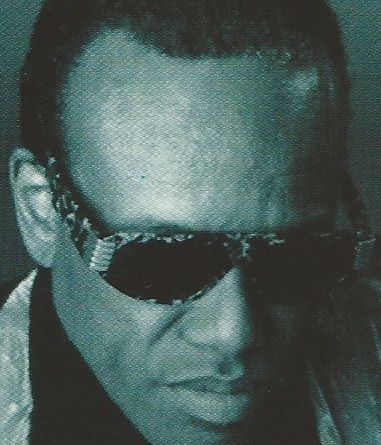
Bobby WomackBy and large, I love the same Bobby Womack songs as everybody else: “Across 110th Street”, of course, and “I Can Understand It”, “That’s the Way I Feel About Cha”, “Woman’s Gotta Have It”, “I’m in Love”, “(You’re Welcome) Stop on By”, “If You Think You’re Lonely Now”, “Secrets”, “Surprise, Surprise” and so on. But there’s also a kind of secret favourite: a song called “Cousin Henry”, from an album titled Resurrection.

It’s one of those soul songs written in the aftermath of the Vietnam war. Like Curtis Mayfield’s epic “Back to the World”, it opens and closes with the ambient sound of the battlefield, as if the listener is being dragged into a recurring nightmare. It tells the story of a veteran who, on his return home, finds no honour or solace: an individual life twisted and destroyed by history. Womack’s sandpaper baritone is at its most affecting, echoed by Stevie Wonder’s typically melodic harmonica solo. An uncredited banjo frails away in the background, rooting the story in the memory of a different and more innocent world, contrasting with the martial chorus of “Hup-two-three-four” punctuating the verses.

Maybe you know it. If you don’t, it’s here. When I think of Bobby Womack, it’s what runs through my head.

* The portrait of Bobby Womack is from the insert to Resurrection, which was released in 1994 on the Continuum label. The photographer is not credited.


Two gentlemen of soul

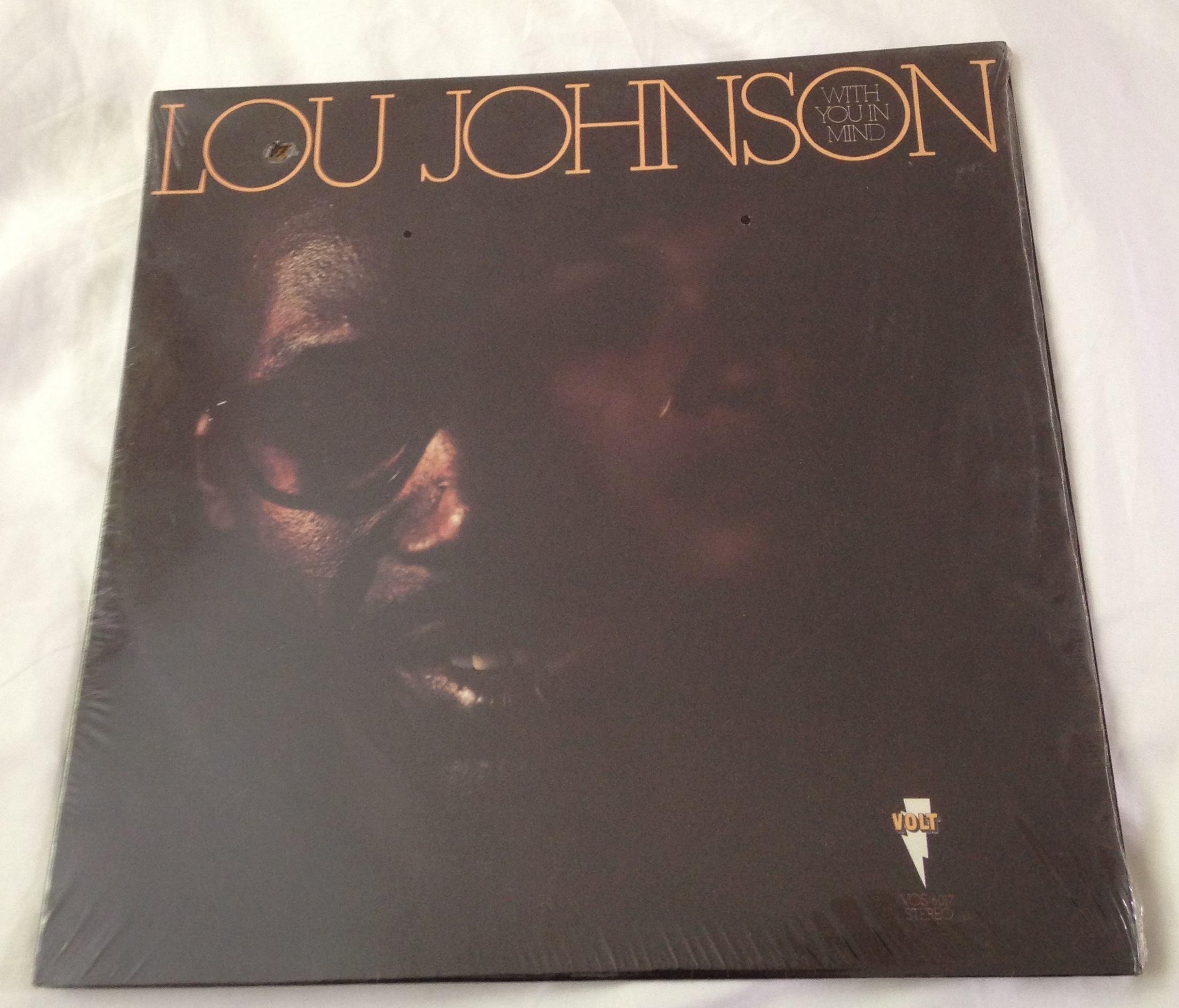
Lou Johnson

While I was interviewing Allen Toussaint at length recently, for a piece published in the current (July 2014) issue of Uncut, I asked the great man which of his many songs was his favourite. Well, he replied, he’d have to say “Southern Nights”: “It’s like a little movie to me, every person in it is a real story of what happened then, when I was six or seven years old.” Then, after a pause, he added: “If I have a song that I consider more of a serious song, there’s one that no one would know but me called ‘Transition’. No one would ever know that, but it’s the most serious. If I was going to grade myself on how did you do as a songwriter, I would probably put that down.”

I told him that I’d be looking for it. He shrugged, as if to say, “Don’t bother.” Which, of course, made me all the keener to find it.

The version I discovered — there may be others — is hidden away on an album by Lou Johnson called With You in Mind, released on the Volt label, a Stax subsidiary, in 1970. That made me particularly happy since Johnson has been one of my favourite singers since I first heard his original versions of “(There’s) Always Something There to Remind Me”, “The Last One to Be Loved”“Reach Out for Me” and “Kentucky Bluebird (A Message to Martha)” in the early ’60s. He’s one of that breed of smooth-but-gritty uptown soul singers — also including Chuck Jackson, Jerry Butler and Jimmy Radcliffe — who could slip into a Bacharach-David song as if it were a made-to-measure suit.

Born in New York City in 1941, Lou Johnson should have been the male Dionne Warwick. He had Bacharach’s songwriting, arranging and producing genius on his side at exactly the right moment. Somehow it didn’t happen, and he remained in relative obscurity. A couple of years ago Ace Records collected his Big Hill/Big Top sides — the Bacharach material and much more, including a stunningly different version of “Walk On By” produced by Toussaint in 1966 — on a CD titled Incomparable Soul Vocalist, and his 1968 album for Atlantic’s Cotillion subsidiary, Sweet Southern Soul, produced by Jerry Wexler and Tom Dowd at Muscle Shoals (with arrangements by Arif Mardin), was reissued in 2004 on the Water label. It’s all worth hearing.

With You in Mind was his last recording. It has never been reissued, either on vinyl or CD, for reasons that — according to Tony Rounce, the world expert on matters pertaining to Lou Johnson — are to do with a dispute over ownership of the tapes. I’d guess that argument has its roots in the original release, which came at a time when Stax had lost its entire back-catalogue to Atlantic Records and was desperate to rebuild. Presumably they leased the master from Sansu Enterprises, the production company Toussaint ran with his partner, Marshall Sehorn, who gets a co-production credit. It would be interesting to see what the contract said.

The first surprise was that “Transition” is eight minutes and 19 seconds long: an unusually epic scale for a songwriter associated throughout his hit-making career, from “Mother-in-Law” to “Lady Marmalade”, with three-minute miracles. It’s a multi-part song, quite heavily arranged and orchestrated, beginning with Toussaint’s solo piano (which shadows Johnson’s voice throughout) but evolving to include elaborate scoring for horns, strings and a backing choir as well as a full rhythm section (including that infallible trademark of quality, the electric sitar). With all its tempo and dynamic changes, it reminds me of a Broadway musical — in a good way, I hasten to add. It’s a song of self-discovery and redemption with the occasional touch of great soul-music lyric-writing: “Can we take the bad times / Just like the glad times / Can we take the bitter with the sweet / In the house on the street of love.” It finishes with an intriguingly enigmatic climax, Johnson in full bebop scat-flow while a trumpeter and the electric sitarist develop a free-jazz jam, leading to a strings-only fade pitched somewhere between Gyorgy Ligeti and “I Am the Walrus”.

The other nine tracks are less ambitious but equally congenial, driven along by Toussaint’s expert house rhythm section (the Meters, basically) and horns. At the other end of the extreme from “Transition” is a tight little song called “Crazy About You” written by the Meters’ guitarist, Leo Nocentelli, a bit of classic ’70s pre-disco soul with fantastic bass-playing (take a bow, George Porter) and a horn-driven breakdown that I’d describe as beautifully reminiscent of Eddie Kendricks’s “Girl You Need a Change of Mind” were it not for the fact that Kendricks’s dancefloor classic lay a couple of years into the future. Toussaint’s “Who Am I?” is another beauty, sung against a fine New Orleans groove, as is “The Beat”, a laconically funky piece on which the writer/pianist/arranger/co-producer can also be heard double-tracking the backing vocals. The best of the lot might be a tortured southern-style ballad called “Nearer”, which would have been worth a place on one of the late Dave Godin’s Deep Soul anthologies.

Toussaint and the Meters, Bacharach and David, Wexler and Mardin: no one can say that Johnson wasn’t given the platform for a successful career. It just didn’t happen. Apparently he’s spent the last few decades living in Los Angeles, not far from the airport, occasionally playing piano in clubs but refusing all invitations to perform for his fans in Europe (the hip-swivelling “Unsatisfied”, a 1965 Big Top recording, is a Northern Soul favourite).

A peculiarity of With You in Mind is that no one seems to have tuned the piano, which sounds a fraction out. In fact that may be a fault of the vinyl pressing, both of the one I acquired on eBay and of those that people have used to upload on to YouTube. It certainly seems unlikely that Toussaint, such a meticulous man, would have put up with a slightly desafinado instrument on one of his own productions. In my view, however, it only adds to the character of the recording. If I ever have the good fortune to meet him again, I’ll ask him about it.

It’s not at all hard to imagine Toussaint and Johnson getting on well together. The former is a gentleman, and the latter sings like one. It would be great if someone could sort out the legal problems and make their fine and overlooked collaboration available once again.


The soul of the disco machine

Eveelyn %22Champagne%22 KingA certain machine-like quality was one of the things that people liked about some of the best records of the disco era. Exemplified by Giorgio Moroder’s Munich-manufactured four-on-the-floor, it gave you a beat that was never going to quit. But the release of Action: The Evelyn “Champagne” King Anthology 1977-1986 provides me with an excuse to listen to the record I treasure most from that period, one most notable for its human qualities.

“Shame”, King’s first big hit, was a great dance record to which you could — and can — sit down and listen for hours. It’s one of those records whose inner construction is endlessly fascinating. There’s the subtle contrast between touches of acoustic and Rhodes piano, the way the mobile bass line pushes against the almost laconic feeling of the drums (with a “wet” tom-tom backbeat on the bridge, à la Willie Mitchell), the extra urgency provided by the congas, the keening, raw-toned alto saxophone — and most of all the two rhythm guitars, their insistent background flickering and chattering behind Ms King’s assured vocal.

She was 14 years old when the producer Theodore “T.” Life heard her singing while she was helping her mother clean the restrooms at the Philadelphia International studios. Two years later, signed to RCA, she had her hit. The song was written by John Fitch and Reuben Cross, and it tapped into a combination of sadness and defiance in the teenager’s voice.

I’ve been listening to it regularly for the best part of 40 years without knowing the identity of the musicians responsible for that wonderful rhythm track. Reading the anthology’s excellent sleeve notes, I started to do a bit of research. The producer Theodore “T.” Life used the New Jersey band Instant Funk, who had been discovered by Bunny Sigler and would have their own hit a couple of years later with “I Got My Mind Made Up (You Can Get It Girl)”. As far as I can work it out, at the time they recorded “Shame” they were Dennis Richardson (keyboards), Kim Miller and possibly George Bell (guitars), Raymond Earl (bass guitar), Scotty Miller (drums) and Charles Williams (congas), with Johnny Onderlinde on alto saxophone. Let’s give them some.

King had a few more hits during her decade with RCA, but there would never be anything else quite like “Shame”. The anthology contains the 6:33 12-inch mix, which is how this classic is best appreciated. Here it is. Clear the floor and clear your mind.

* The uncredited photograph of Evelyn “Champagne” King is from the booklet accompanying Action, which is released on Big Break Records.

Allen Toussaint takes requests

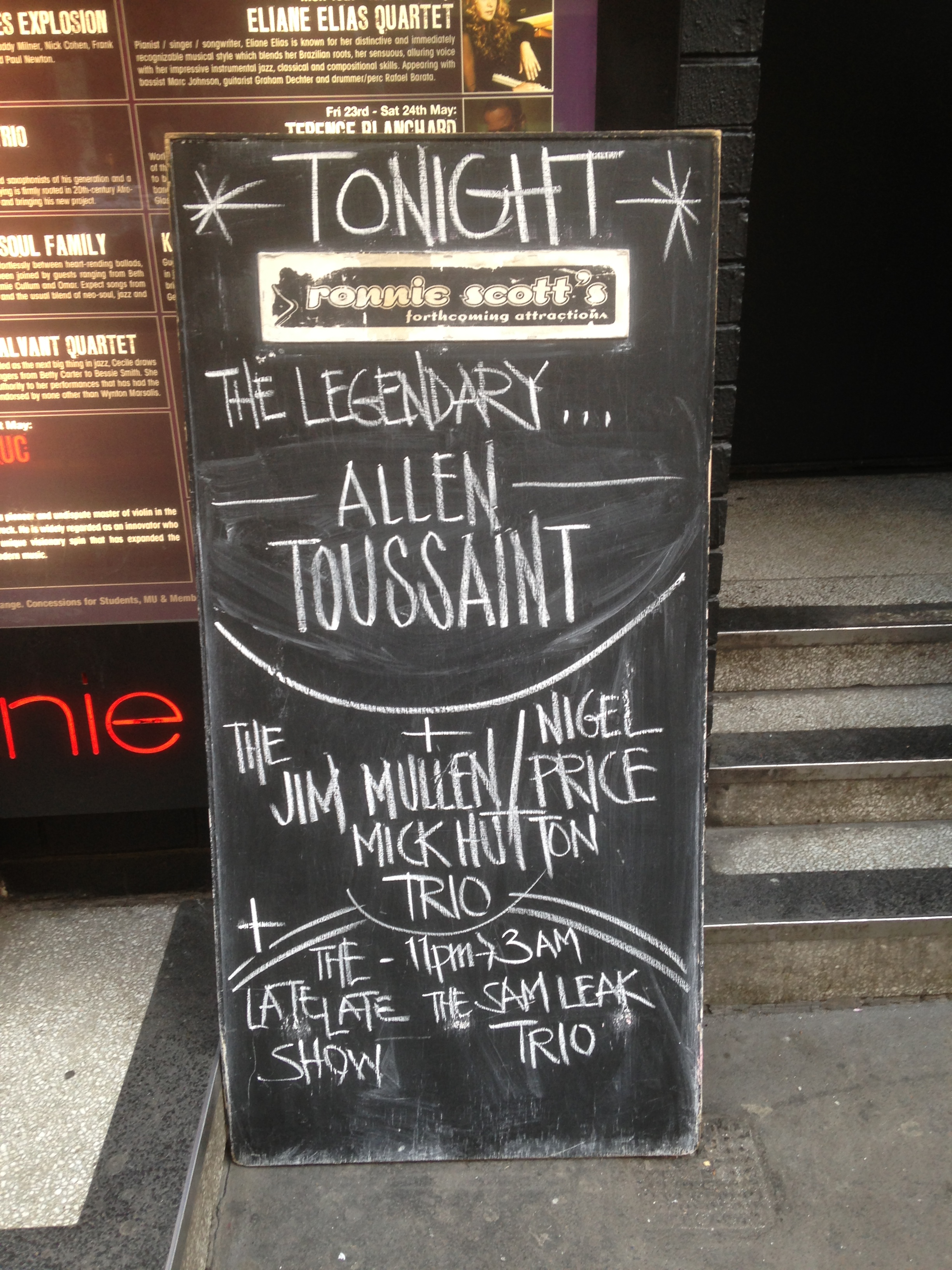
Allen ToussaintSomething magical happened at the very end of Allen Toussaint’s solo show at Ronnie Scott’s last night. A very enthusiastic fan in the front row, who had been permitted to sing most of the lead vocal on “Brickyard Blues” earlier in the set, invited Toussaint to play “On Your Way Down” — a song that appeared on his album Life Love & Faith in 1972 and was unforgettably covered by Little Feat on Dixie Chicken a year later — as his encore. The great man complied, and immediately led us into territory we had not visited in the preceding hour and a half.

Much of his performance — including a medley of the hits he wrote for Ernie K-Doe, Benny Spellman and Lee Dorsey in the early ’60s, and other classics such as “Shoorah, Shoorah”, “Sneakin’ Sally Through the Alley”, “Yes We Can”, “Southern Nights” and “What Do You Want the Girl to Do” — had been genial, expansive, discursive, showcasing his wonderfully witty and flexible New Orleans-bred piano playing. There was also a sweetly elegiac rendering of Jesse Winchester’s heartbreaking “I Wave Bye Bye”, which Toussaint recorded for the tribute album to the singer-songwriter last year, and a gorgeously plain “St James Infirmary”, as heard on his most recent album, The Bright Mississippi (2009).

But the encore was something different. For a couple of minutes we were transfixed by a 76-year-old master’s journey to the essence of the music with which he has lived his life: to the heart of the blues, of which “On Your Way Down”, with the sober elegance of its contours and its wry reflection on the human condition, is one of the very greatest examples.