Skip to content

Posts from the ‘Jazz’ Category

77 Charing Cross Road

Dobell's bagIf I’d known they were going to end up in a frame on an art gallery wall, I would have hung on to a few of the bags holding the albums I carried away from Dobell’s Jazz, Folk & Blues record shop in the 60s and 70s. In design terms, they were classics of their era: cool, clean-lined, high-contrast graphics for a cool, clean-lined, high-contrast time. And there they were on Tuesday evening at CHELSEA Space, a small gallery inside the  Chelsea College of Art and Design, at the private view of an exhibition devoted to the history of Doug Dobell’s shops, in particular the one he ran at 77 Charing Cross Road.

A good crowd of hipsters turned up for the launch, including the photographer Val Wilmer, whose work lined one of the walls, the poet Hugo Williams, and lots of faces familiar from jazz clubs down the decades. Put together by Donald Smith, the gallery’s director of exhibitions, and Leon Parker of the British Record Shop Archive, the show features dozens of fascinating images, some of the old shop signs and fittings, posters and memorabilia, and even one of the original record players from the listening booths.

The premises at 77 Charing Cross Road had been opened by Dobell’s grandfather as an antiquarian bookshop in 1887. When Doug came out of the army at the end of the Second World War he asked his father if he could sell jazz 78s from a corner of the premises, and before long the discs had taken over from the second-hand books. He started a small record label, 77 Records, and everyone knows the story of how Bob Dylan recorded in the basement there with Richard Farina and Eric von Schmidt in January 1963 under the nom de disque of Blind Boy Grunt. In 1965 Doug took over the next-door premises, No 75, and turned it into a folk and blues department.

The shop survived until 1980, when the developers moved in: the entire west side of Charing Cross Road was demolished, to be replaced by a hideous piece of architecture housing fast-food joints and tourist souvenir shops. I cannot walk down it today without glancing across at the opposite side, where the original buildings survive along with some of the bookshops that gave the street its unique character, and cursing such wanton destruction. Eventually Dobell’s found a new home a couple of minutes away, in Tower Street, which lasted from 1981 until 1992, three years after Doug’s death.

My own experience of Dobell’s began in 1963, on a day trip to London, and it was not an entirely happy one. I was in search of two recent releases from members of the early-60s avant-garde: My Name is Albert Ayler (including an incomparable version of “Summertime”, which you can hear here) and Ken McIntyre’s Year of the Iron Sheep. The rather intimidating bearded man behind the counter was able to put his hands on both albums, but while taking the money from his schoolboy customer he couldn’t resist adding a word of appraisal: “McIntyre’s all right,” he said, “but that bloke Ayler can’t play at all.”

I’m afraid it coloured my view of the place a little, and in the years that followed I was more likely to be found a few minutes away buying records from Ray Smith at Collett’s, first in New Oxford Street and later at the junction of Shaftesbury Avenue and Monmouth Street. But the exhibition is highly enjoyable, conveying a real sense of time and place. I’ve still got that treasured copy of My Name is Albert Ayler, the object of such lofty scorn 50 years ago. I think I’ll play it now.

* The exhibition runs until May 18 at CHELSEA space, 16 John Islip Street, London SW1, just down the road from Tate Britain. There are talks on April 17 and May 15 and a special event on April 20, which is Record Store Day UK. Details: http://www.chelseaspace.org
Still chasin’ the Trane

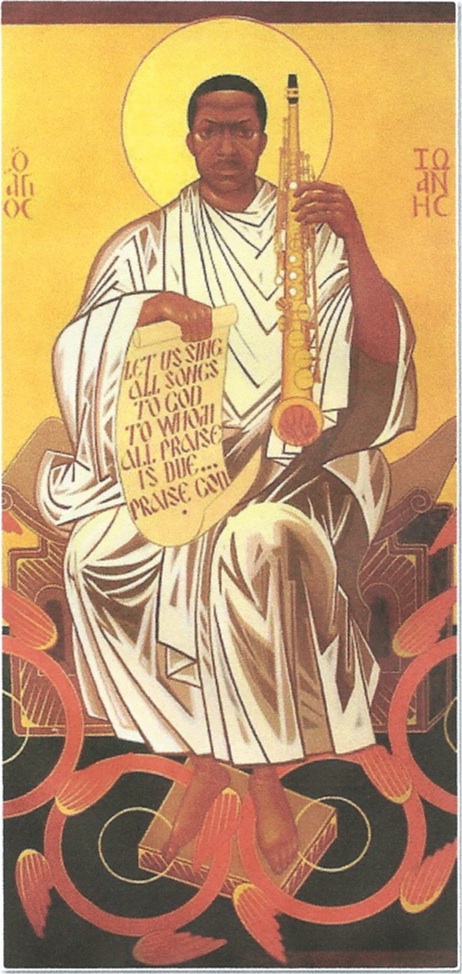
Coltrane iconThere’s something about John Coltrane that makes obsessives of us all, from the people who set up a religion in his name 40 years ago (still flourishing as the St John Will.I.Am Coltrane African Orthodox Church on Fillmore Street in San Francisco, and here is one of their icons) to fellow musicians: I remember visiting the great saxophonist Evan Parker’s house many years ago and looking enviously at the shelf containing what appeared to be the complete works, including a row of immaculate orange Impulse album spines.

Forty five years after his death, every time I walk into a record shop I still head to the Coltrane section in the hope that I’ll discover he’s done something new — and if that’s too much to ask, then maybe someone will have unearthed a previously unknown session or concert tape, like the fascinating 1960 audience recording from the Jazz Gallery in New York which made its appearance a couple of years ago. It featured a hitherto unheard (at least by me) prototype version of what would become Coltrane’s classic quartet, with McCoy Tyner on piano, Steve Davis on bass and Pete LaRoca on drums, the last two eventually to be replaced by Jimmy Garrison and Elvin Jones.

One day the well will run dry, and every note Coltrane played during his two decades of professional activity will be available in some form or other. But that may take a while, to judge from the entries in The John Coltrane Reference, an 800-page large-format soft back volume just published by Routledge in the UK. It will set you back around £40, but the depth of scholarship exhibited by the four authors — Chris DeVito, Yasuhiro Fujioka, Wolf Schmaler and David Wild — and their editor, Lewis Porter, makes the outlay seem a bit of a bargain.

A sort of catalogue raisonee of his career, the book is divided into two halves. The first is a chronology, listing all known public appearances, with as many details of location and personnel as possible, sometimes enhanced by extracts from relevant newspaper and magazine articles. The second is a discography, which appears to list every known reissue: a formidable undertaking. The first section begins with his stint with the band of the trumpeter King Kolax in 1947 and ends with his final concert, at Baltimore’s Famous Ballroom for the Left Bank Jazz Society in May 1967, two months before his death. The second opens in 1946, when Coltrane was still in the services, with an informal session recorded by a US Navy band on the Hawaiian island of Oahu, and ends with an unreleased session for Impulse at Rudy Van Gelder’s New Jersey studio 10 days after the Baltimore date.

There is a section of photographs, some of them previously unknown to me, along with reproductions of early record labels (including 78s under the leadership of Dizzy Gillespie, Gay Crosse, Earl Bostic and Johnny Hodges) and concert and club advertisements. There is also a page of his original contract with Prestige Records, containing a reminder that musicians were once paid their royalties on only 90 per cent of the records sent out from the pressing plants, because it was assumed, in the days of brittle shellac, that one in 10 would be broken before the shipment reached the stores (an arrangement that, to the industry’s great discredit, was maintained well into the 1970s).

All this might seem like a version of stamp-collecting, were Coltrane’s legacy not so rich in meaning and beauty. What this apparently dry work of reference does is send the listener back to the music, hungry for more.

The home of the hits

RW & Ornette

Since everybody else seems to have shared their memories of Television Centre, the home of most of the BBC’s visual output for the past half-century, which the corporation finally abandoned to the developers today, I might as well join in. It was from that distinctive building in Shepherds Bush that the first series of The Old Grey Whistle Test, which I presented, was broadcast live on Tuesday nights in 1971-72, and here is a photograph (by Robert Ellis) of Ornette Coleman being interviewed by me on the programme in 1972.

Ornette was not your typical OGWT guest. He was in London to record his symphonic work, Skies of America, at Abbey Road with the LSO, and I had to plead a bit with the producer, Mike Appleton, to get him on the show. It was one of my happiest moments of the series, along with the appearances of Curtis Mayfield and John Martyn, and the night Dr John came into the studio and, in the guise of Mac Rebennack, sat down at an upright piano and spent a mesmerising 10 minutes working his way through the history of New Orleans keyboard styles. And who would not have cherished the night Captain Beefheart arrived to present his paintings to the world? They were strikingly excellent, and gave an indication of the direction he would take when he re-adopted the identity of Don Van Vliet a few years later.

A lot of the series wasn’t so much fun for me, particularly some of interviews (notably those with a near-psychotic Jerry Lee Lewis, a sneery Mick Jagger and a sarky Randy Newman — each one no doubt a justified response to my indifferent interrogational technique). That’s why I called it quits at the end of the first series and returned to the typewriter. I thought the programme needed someone more extrovert to front it. Mike, however, chose to hand the baton to Whispering Bob, who was even quieter than me. It wasn’t for a couple of decades that Jools Holland and his producer Mark Cooper came along with Later, which in its early days was almost exactly the kind of programme I’d have liked the OGWT to be: musicians playing live, without many restrictions.

That first series was broadcast from a studio called Presentation B, which measured 32ft by 22ft and had been designed for reading the news. Somehow bands managed to crowd into it, along with a couple of big old 1950s-style cameras, while the production staff occupied a control room the size of a phone box. And Curtis Mayfield’s wonderful band turned their amps all the way down to 1 but managed to make their short set sound and feel like the best gig happening anywhere in the world that night.

The price of a masterpiece

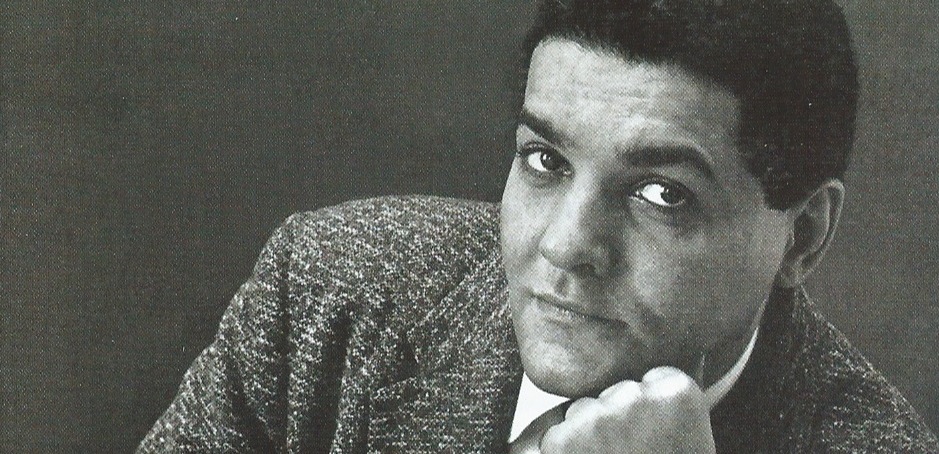
George RussellSometime last year I stopped at a service station halfway up the M1 and, while paying for my petrol, picked up a four-CD set of Northern Soul favourites. Mood and location were behind the impulse purchase. I needed cheering up, and I was close enough to Nottingham to be thinking fondly about 1960s nights at the Dungeon and the Beachcomber, when the sounds of Stax and Motown laid the foundations for what later transpired in the clubs of the north.

And then I realised what I was getting: 100 tracks for £9.99. In other words, 10p a track. And these were pieces — including the famous Wigan Casino “3 before 8” triptych of Dean Parrish’s “I’m On My Way”, Tobi Legend’s “Time Will Pass You By” and Jimmy Radcliffe’s “Long After Tonight Is All Over” — for which collectors parted with fortunes in their original 45rpm vinyl incarnations. It made me wonder about values, intrinsic and acquired. Although this was not a bootleg set, the chances of any of the surviving artists seeing even the tiniest fraction of my £9.99 seemed remote. And it also made me question whether you could possibly feel as strongly about something for which you’d paid 10p as I did when I paid six shillings and eight pence for my new copy of “Long After Tonight Is All Over” on the Stateside label back in 1965.

I’ve been thinking about that again recently since buying a couple of multi-disc sets devoted to jazz artists of the post-bop era on a label called Real Gone Jazz. Today’s purchase, for the princely sum of £6.99 at Soul Jazz Records in Soho, was of a four-CD set containing “seven classic albums” by George Russell (pictured above), the pianist, composer and bandleader who was partly responsible for guiding Miles Davis in the direction of modal jazz and Kind of Blue. There’s nothing misleading about Real Gone’s description of the contents of their package: besides being out of copyright, the seven albums — New York NY, Jazz in the Space Age, Stratusphunk, George Russell Sextet in Kansas City, Ezz-thetics, The Stratus Seekers and The Outer View — are indeed authentic classics, for which Russell’s British admirers were prepared to pay premium import prices on their first appearance between 1959 and 1962.

Russell leads a big band on the first two albums, with John Coltrane and Bill Evans among the sidemen. The remaining five titles are by his sextet (and, in one case, a septet), which I rank alongside the quartets of Coltrane and Ornette Coleman, the Bill Evans-Scott LaFaro-Paul Motian trio and Charles Mingus’s Jazz Workshop among the most stimulating small groups of their era. As a composer, Russell took bebop in new and provocative directions: his tunes have strong outlines and interesting implications for improvisers. As a bandleader, he persuaded young musicians to produce their very best work: the trumpeters Al Kiger and Don Ellis, the trombonist David Baker and the saxophonists John Pierce, Dave Young and Paul Plummer are all outstanding on these sessions, with Eric Dolphy making an indelible mark as a guest on the Ezz-thetic date. The bassist Steve Swallow — before he took up the electric instrument — and the drummer Joe Hunt formed an alert and swinging rhythm section, one of the most effective of the time. And the startingly original 12-minute version of “You Are My Sunshine” on The Outer View, with Sheila Jordan taking the vocal, is a masterpiece by any standard.

It’s nothing short of amazing to be able to acquire such stuff for so minimal an outlay, a real gift to listeners who might just be setting off into the foothills of this music, even though they won’t be getting the benefit of the full recording information (not even the composer credits), the excellent sleeve notes by such sympathetic critics as Joe Goldberg and Martin Williams, or the beautiful sleeves commissioned by Riverside’s Orrin Keepnews from the gifted designer Ken Deardoff. I just hope that those acquainting themselves with these albums for the first time, all at once, come to value them as much as we did when we saved up for the expensive imports on the Riverside or US Decca labels, our purchase of the individual LPs, spaced over a period of months and years, giving us the chance not just to keep pace with the personal evolution of an outstanding musician but to absorb, memorise and cherish every single note.

Grooving on a tone row

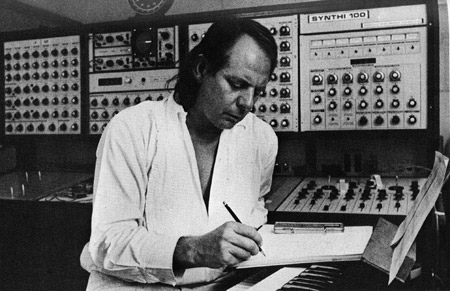
StockhausenThe name of Karlheinz Stockhausen was a cool one to drop in the more advanced zones of rock and jazz at the end of the ’60s. Thanks to the British cellist and arranger Paul Buckmaster, the effect of the German composer’s thinking was even felt by Miles Davis. When Buckmaster introduced the trumpeter to works including Gruppen, for three orchestras, the electronic piece Telemusik, and Hymnen and Mixtur, which blended both approaches, the consequences could be heard in On the Corner, the 1972 album in which Miles (and his producer, Teo Macero) applied new ideas about structuring recorded music to the trumpeter’s rapidly evolving love of funk.

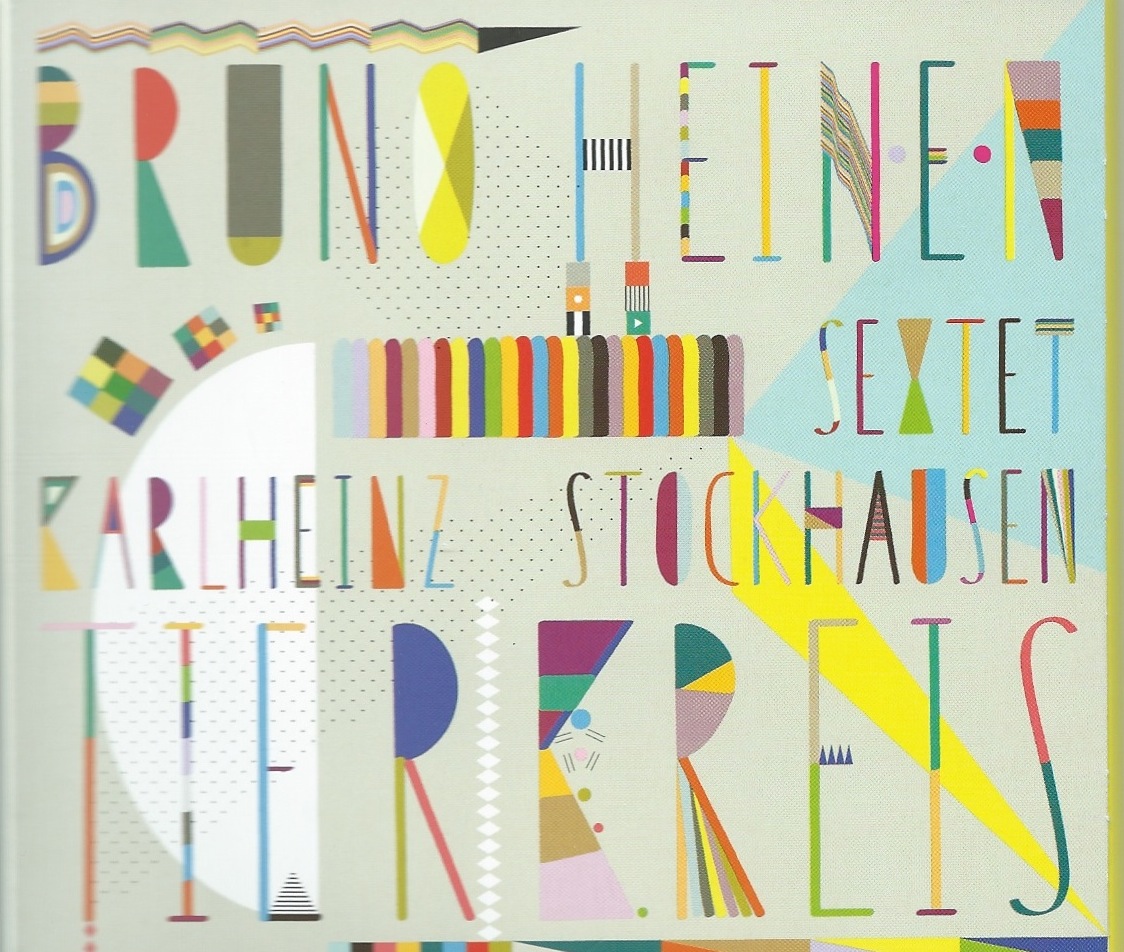
Stockhausen died in 2007, aged 79. Some of his pieces will be featured at the South Bank in London later this year as part of the festival titled The Rest is Noise, after Alex Ross’s best-selling history of classical music in the 20th century. And now comes a version of his Tierkreis, written in 1974-75, arranged for jazz sextet by the UK-based pianist Bruno Heinen and released on the Babel label.

TierkreisTierkreis is a 12-tone composition based on the signs of the zodiac: 12 separate movements, each based on its own tone row. It was originally written for a dozen musical boxes, as part of a theatre piece, which is probably why its individual melodies are uncharacteristically approachable (and have been sneered at as being childish). Stockhausen stipulated that it could be played by any instrument or combination of instruments, and there are recorded versions for solo piccolo, trumpet, double bass, violin, guitar and trombone, and many sizes and types of ensemble, from a duo of tenor voice and synthesiser to the Strasbourg percussion group and the BBC Symphony Orchestra. It is, perhaps, the most popular single work to have issued from the famously knotty world of dodecaphony.

The rare attempts to bring jazz and serialism together have not always ended happily, although the 1964 album New Directions by the British composer David Mack (and featuring the flugelhornist Shake Keane) has its admirers. Bruno Heinen’s version of Tierkreis meets the challenge of serialism while remaining extremely approachable, not least because the voicings for trumpet (Fulvio Sigurta), tenor saxophone (Tom Challenger) and bass clarinet (James Allsopp), and the grooves supplied by Andrea di Biase’s bass and Jon Scott’s drums, are not a million miles away from the result of Herbie Hancock’s decision to pare away some of the shock elements of the Miles Davis Quintet of the mid-’60s, of which he was a member, and produce the beguiling and much-imitated melodicism of the Maiden Voyage album.

If that makes it sound a bit bland and derivative, it’s neither of those things. Heinen, whose English mother, a violinist, and German father, a cellist, both worked with Stockhausen, and who now teaches at the Guildhall School of Music, sounds completely at ease with the challenge. He also has a handful of interesting soloists: Sigurta delivers his agile, unpredictable phrases with a bright, cornet-like tone, Scott shows himself capable of producing an unusually absorbing drum solo, and Allsopp could be the latest in a short line of bass clarinettists — Eric Dolphy, John Surman, Rudi Mahall — to give the instrument an authentic and original jazz voice.

It’s more than half a century since Gunther Schuller presided over the Third Stream movement, a short-lived attempt to bring jazz and classical music together in mutually fruitful collaboration, often derided despite successes with John Lewis’s “Three Little Feelings”, George Russell’s “All About Rosie” and Ornette Coleman’s Jazz Abstractions LP. But where frontal assault failed, stealth and individual initiative eventually succeeded: works like Russell’s subsequent Electronic Sonata for Souls Loved by Nature (written in 1968), Coleman’s symphonic Skies of America (1972), Wadada Leo Smith’s majestic Ten Freedom Summers (released last year) and this new version of Tierkreis show that the instinct was fundamentally sound.

Maxwell Davis: LA confidential

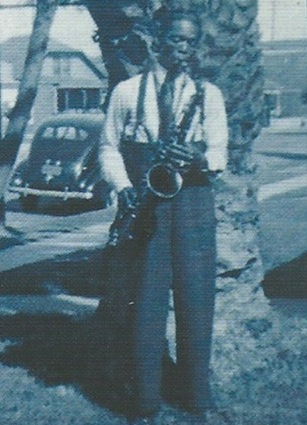
Maxwell DavisWandering amid the ruins of HMV’s Oxford Street store this week, browsing the half-empty CD racks in a jazz and blues section now relegated to the rear of the basement, I came across genuine treasure: a three-disc set on the Fantastic Voyage label titled Wailin’ Daddy: The Best of Maxwell Davis 1945-59. It had one of those big blue Xs on the cover to alert customers that here was an item marked down in what amounts to the chain’s fire sale: so for a tenner, I got myself 89 tracks of music from that era when jazz and R&B were almost indistinguishable from each other, and when Los Angeles’ Central Avenue must have seemed like heaven.

Maxwell Davis isn’t one of the better known musicians of his era, but he was a key figure. Born in Kansas in 1916, he arrived in LA as a 20-year-old saxophonist with eyes to make a name for himself on the local scene. Having switched from alto to tenor, he secured a job playing with and arranging for the Fletcher Henderson orchestra — until Henderson relocated to New York, where he became Benny Goodman’s arranger, and the band was no more.

It was after World War Two that Davis established his key credentials as a talent scout and organiser of recording sessions. His ability as an A&R man became highly valued by the heads of such local R&B-slanted labels as Aladdin, Modern, RPM and Specialty, not least because he was capable of hiring session musicians, providing them with head arrangements, and taking the tenor solos that were then almost obligatory, whether in raucous, bar-walking mode on an up-tempo number or in more subdued fashion on a ballad or a slow blues.

Dave Penny, the compiler and annotator of this exemplary collection (which was released a couple of years ago, and from which the photograph above is taken), points out that no less an authority than the lyricist and R&B fan Jerry Leiber once estimated that, between Davis’s arrival in LA and his death from a heart attack in 1970, he must have been responsible for a hundred hit records. Those we know about include such classics as Percy Mayfield’s “Please Send Me Someone to Love”, Joe Liggins’ “Pink Champagne” and Amos Milburn’s “Chicken Shack Boogie”, none of which appears on this anthology, presumably being too familiar to qualify for inclusion. Instead, much of the pleasure of Wailin’ Daddy resides in the chance to discover such comparative obscurities as La Melle Prince’s “Get High”, Crown Prince Waterford’s “Love Awhile” and Cordella De Milo’s “I Ain’t Gonna Hush”, although there are also tracks by Big Joe Turner, Louis Jordan, Jimmy Witherspoon, Helen Humes, B.B. King and T-Bone Walker.

Davis made his career as a high-class back-room boy, but he certainly possessed the instrumental chops to have survived in straight-ahead jazz, had he so wished: tracks here with the young Charles Mingus, the boogie pianist Pete Johnson and others leave no doubt about that. On the first disc, which is devoted to singles released under his own name, there are two tracks on which he trades choruses with Marshall Royal, later to become famous as Count Basie’s stalwart lead altoist, and he suffers not at all by comparison.

But my favourites are four instrumental tracks recorded for Modern in 1949 with a hot little eight-piece band featuring Jake Porter (trumpet), Jack McVea (alto), Davis (tenor), Maurice Simon (baritone), one “A McCoy” (piano), Chuck Norris (guitar), Red Callender (bass) and Lee Young (drums): the highlights are the rolling “Boogie Cocktails”, a forerunner of James Brown’s “Night Train”, and “Belmont Special” and “Bristol Drive”, the greasiest of shuffles. There aren’t many places I’d rather be transported back to than a Central Avenue club on a hot night in the summer of ’49, listening to that lot holding forth for the assembled hipsters, flipsters and finger-poppin’ daddies.

One night in Berlin

Miles in BerlinAt the start of the film of the Berlin concert which forms a bonus DVD to three audio CDs of the recently released Miles Davis Quintet Live in Europe 1969 set, you can’t help being struck by the impassive demeanour of the musicians as they are announced, one by one, to the audience. Jack DeJohnette doesn’t even look up as he fiddles with the placement of a microphone boom over one of his cymbals. Dave Holland, the young Englishman, is expressionless as he adjusts his double bass. Chick Corea reaches out his left hand to twist a knob above the keyboard of his Fender-Rhodes piano. Wayne Shorter licks his mouthpiece and stares into the middle distance. Meanwhile Miles has already prowled on to the stage, clearly not caring that the spontaneous wave of applause for his arrival has disrupted the MC’s scene-setting introductions. From none of the musicians comes even the tiniest acknowledgement of the audience’s welcome. This is how far the influence of Miles’s own super-cool on-stage deportment had spread, to men a generation younger than him (and, in the case of Corea and Holland, with naturally outgoing temperaments); he, in turn, is taking his wardrobe cues from them.

None of that stops it being a great concert, of course — or half a concert, in fact, since Miles’s group were sharing the bill at that night’s concert with Stan Kenton. You might think it an unlikely combination, even by the eclectic standards of the Berliner Jazztage, and that was how the 2,400-strong audience saw it, too. I remember half of them vociferously expressing their dissatisfaction with Kenton’s set, while those who acclaimed Kenton were clearly disconcerted by what Miles was up to (although their presence can be detected in the film only in the shot of some listeners frowning and shaking their heads as the camera scans the audience while the band leaves the stage). This intolerance was typical of Berlin audiences of the time and seemed particularly impolite since the whole festival, including that evening’s performances, had been dedicated in advance to Duke Ellington, who was due to appear at the same venue the following night in a concert scheduled in celebration of his 70th birthday.

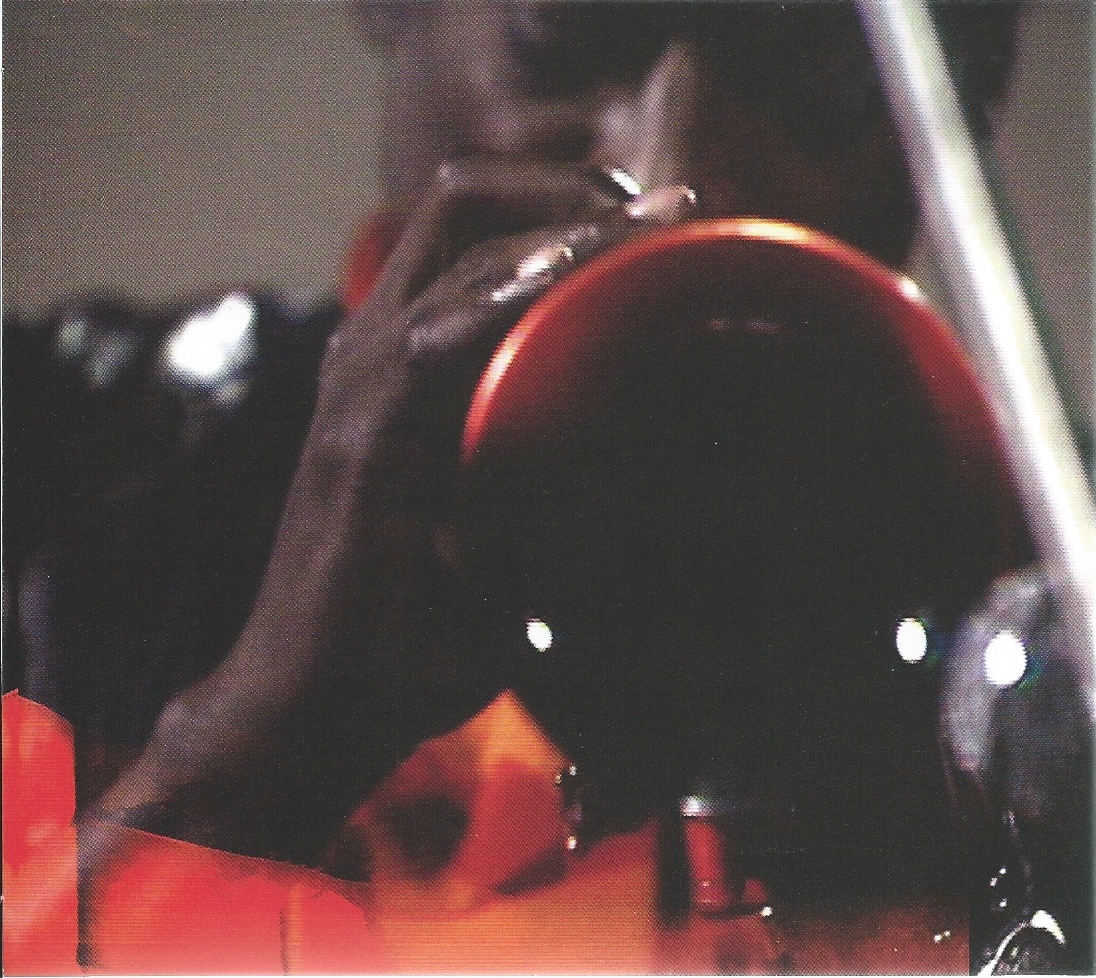
It was my first exposure to Miles in person, and I certainly wasn’t disappointed. Urged on by sidemen who were leading him to the frontier of free jazz, he was spellbinding. Less than a year later, as he veered away from freedom towards an engagement with funk, he would be wanting his musicians to anchor the beat in a much more explicit way. But this was enthralling, a  freewheeling post-In a Silent Way, pre-Bitches Brew journey into abstraction, with a gorgeously oblique version of “I Fall in Love Too Easily” to seduce even those scandalised by the black shirt, trousers and leather waistcoat and the orange and gold scarf in which he took the stage, an outfit to match his black and orange trumpet.

Poor Kenton suffered far worse from the hecklers. He was booed even before he started, and later confessed that the experience had given him a sleepless night. Conducting the specially assembled Berlin Dream Band, a 19-strong multinational emsemble which included the trumpeter Carmell Jones, the trombonists Ake Persson and Jiggs Whigham and the alto saxophonist Leo Wright, he ran through a series of his best known pieces: “Artistry in Rhythm”, “Intermission Riff”, “The Peanut Vendor” and so on. Towards the end, however, he gestured the band to stand down as he performed his personal homage to Ellington, a five-minute variation on “Take the ‘A’ Train” delivered with such sincerity of emotion that the dissenters were temporarily silenced.

From the point of view of the audience’s divided reaction, it was one of the most bizarre concerts I’ve ever attended. The festival’s director, the late Jo Berendt, a man of broad vision and catholic taste, was intensely embarrassed. The following night, however, Ellington took the stage at the head of a band including Cootie Williams, Lawrence Brown, Johnny Hodges, Paul Gonsalves and Harry Carney, and harmony was restored.

The lost summer of Bill Evans

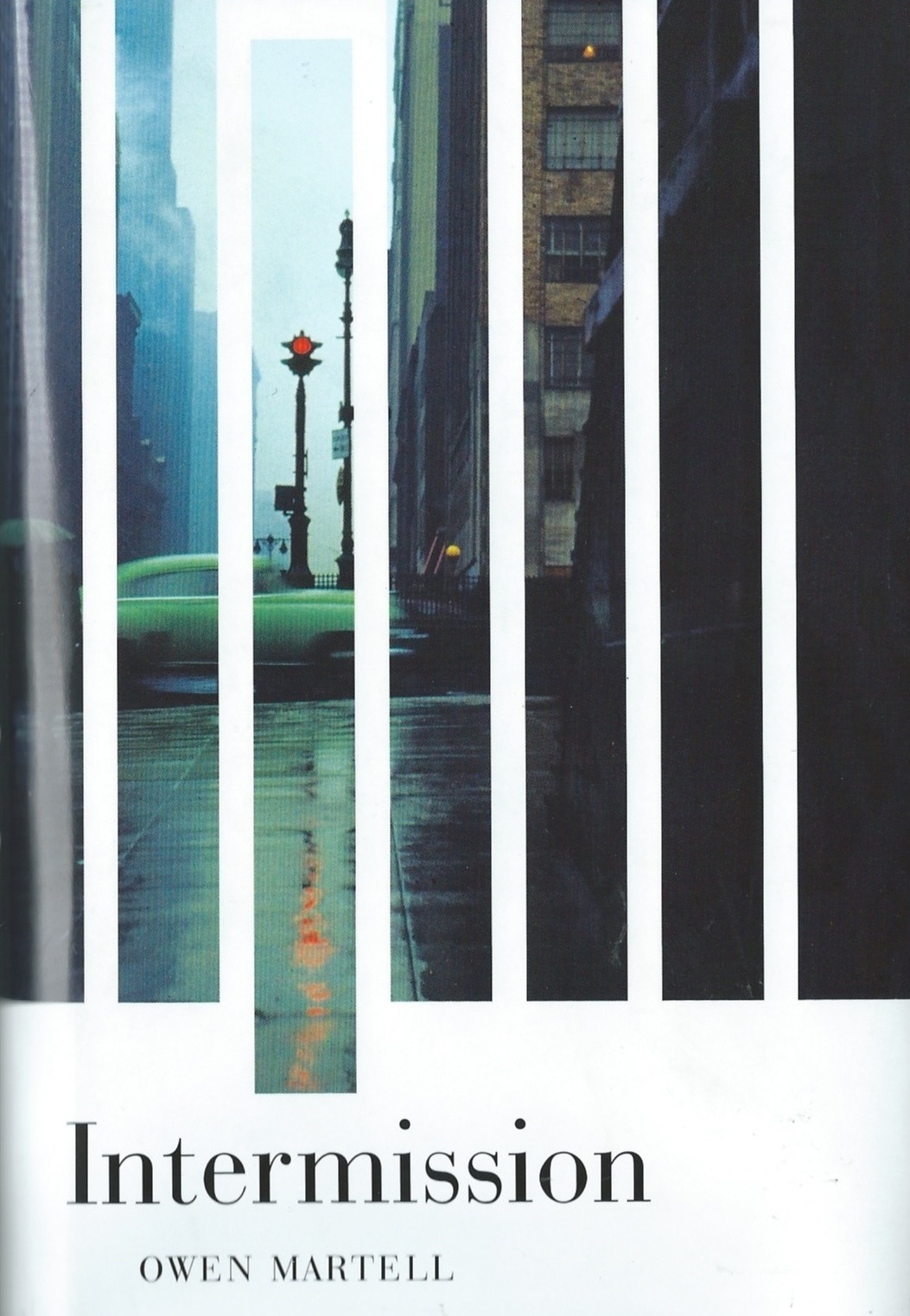
IntermissionIn How My Heart Sings, his fine biography of the great pianist Bill Evans, published in 1998, Peter Pettinger devotes only a handful of sentences to the months in the summer of 1961 following the death in a car accident of Scott LaFaro, the prodigiously gifted 25-year-old bassist in Evans’s trio. The fatal crash occurred late at night on a country road in upstate New York 10 days after the group had finished a lengthy and historic season at the Village Vanguard. So devasted was Evans that he did not play again for several months: a period in which he came second (behind Thelonious Monk) in the Down Beat critics’ poll, and third in the same magazine’s readers’ poll, which was won by Oscar Peterson. “I didn’t realise how it affected me straight away,” he told the critic Martin Williams. “Musically everything seemed to stop. I didn’t even play at home.”

In fact he retreated into the haven provided first by his brother, Harry Jr, in New York, and then by his father, Harry Sr, and mother, Mary, in Florida. There, his senses deadened by the tragedy and the sense of loss, he seems to have done little except play the odd game of golf with his father (a golf-course owner/manager)  as he waited for the anguish to recede. And it is this period that forms the subject of Intermission, a short novel by the young Welsh writer Owen Martell, just published in the UK by William Heinemann.

In probably the most daring fictionalisation/reimagining of a jazz musician’s life since Geoff Dyer’s But Beautiful, Martell views Evans’s period of withdrawal through the eyes of Harry Jr, Mary, and Harry Sr, interleaving memories of the pianist’s childhood in New Jersey with his relatives’ anxious, half-comprehending attempts to cushion the grief of a man whose distance from their world was exacerbated by the heroin addiction that began three years earlier during his time with the Miles Davis Sextet (a period during which he made a pivotal contribution to Kind of Blue) and would remain with him, on and off, until his death in 1980 at the age of 51. Evans slips in and out of the narrative like a ghost through unlit rooms: even to his family he is a fugitive figure, forever glimpsed sidelong and in shadow.

Martell, whose two previous novels were in the Welsh language, may have come to his subject through their common ethnicity: the pianist’s paternal ancestors were from Wales (his mother was born to immigrants from Ukraine). Occasionally the prose strains too hard for poetic effect but mostly it is suitably limpid and measured, while the author’s approach is consistently respectful of the self-appointed task of inventing the thoughts of real people. Sometimes the cadences recall those of Cormac McCarthy — particularly in the habit of concluding a paragraph with a verbless sentence — but with, of course, a far gentler attack.

A word should be spared for the elegant cover, by Suzanne Dean, which appropriates the format of Reid Miles’s design for the jacket of Freddie Hubbard’s 1962 Blue Note LP Hub Tones, applying it to a New York street photograph by the late Esther Bubley. It matches the tone of a quiet, perceptive study of a musician whose masterpieces exacted a cruel price.

Dave King on the line

An album that claims it was recorded “in a little church in Minnesota for 4 hours on March 13th 2012” is not, of course, guaranteed to be a work of genius. But that’s not a bad way of introducing yourself. And, as it turns out, Dave King’s I’ve Been Ringing You, the album in question, has been my favourite listening for the past few weeks.

King is the drummer with the Bad Plus, a piano trio whose intense, highly sophisticated work I sometimes find easier to admire than to enjoy (they have a new album, too, called Made Possible). But although I’ve Been Ringing You shares the instrumental format of his regular band, it travels to the other end of the aesthetic spectrum, revisiting a selection of the sort of Broadway standards that have formed the staple diet of piano trios for the past 70 years, from Bud Powell via Ahmad Jamal and Bill Evans to Keith Jarrett and Brad Mehldau, yet dealing with them in a completely different way.

This is quiet, careful, ruminative music, built on free interplay around the skeletons of such sublime tunes as Gordon Jenkins’s “Goodbye”, Cole Porter’s “So in Love” and Richard Rodgers’ “People Will Say We’re in Love”. There’s one jazz standard, Ornette Coleman’s “Lonely Woman”, and one original, the title track, which is wholly improvised and credited to all three players. If I say that Bill Carrothers, the pianist, outlines the themes while Billy Peterson, the double bassist, and King produce responses that don’t necessarily follow the conventional harmonic and rhythmic guidelines, then that doesn’t sound particularly interesting. But the sensitivity and lateral-thinking adventurousness with which they react to each other is truly exceptional: it’s one of the few records of its type that I could put on immediately after Bill Evans’s genre-redefining 1961 Village Vanguard recordings without a sensation of anti-climax. And if you want to know how far piano-trio music has travelled in 50 years, compare this approach to Rodgers’s “This Nearly Was Mine” with the great version from 1960 by Cecil Taylor, Buell Neidlinger and Dennis Charles (on The World of Cecil Taylor).

I can’t give you a link to any of the actual music from the album, which is on the Sunnyside label (www.sunnysiderecords.com), but here is an interview with http://www.bebopified, the Minneapolis-St Paul jazz website, in which King describes how the album came about, and here’s a recent interview from Modern Drummer magazine, in which he talks interestingly about his influences.

Bryan Ferry’s Jazz Age

It’s a pleasure to see Bryan Ferry’s The Jazz Age getting approving coverage from publications as diverse as the New York Times and Jazz Journal (where Dave Gelly raves about it in the current issue). When Bryan invited me to write the sleeve note, and told me that the project involved restyling old Roxy Music songs — “Do the Strand” and “Avalon” among them — in the idiom of 1920s jazz, I wasn’t entirely sure that this was a good idea. But then he sent me some MP3s and the more I listened to them, the more convinced I became that he and his musical director, Colin Good, had tried something very imaginative and succeeded admirably. Everybody who’s listened to it properly seems to love it. There was a launch party a few weeks ago, at which the band played and Bryan sang one number (which he doesn’t do on the record). It would be good to see them get a week’s residency at some suitable dive in the West End. Here’s a clip of them playing “The Only Face” live: